Essential Insights into CNC Manufacturing: Precision and Innovation
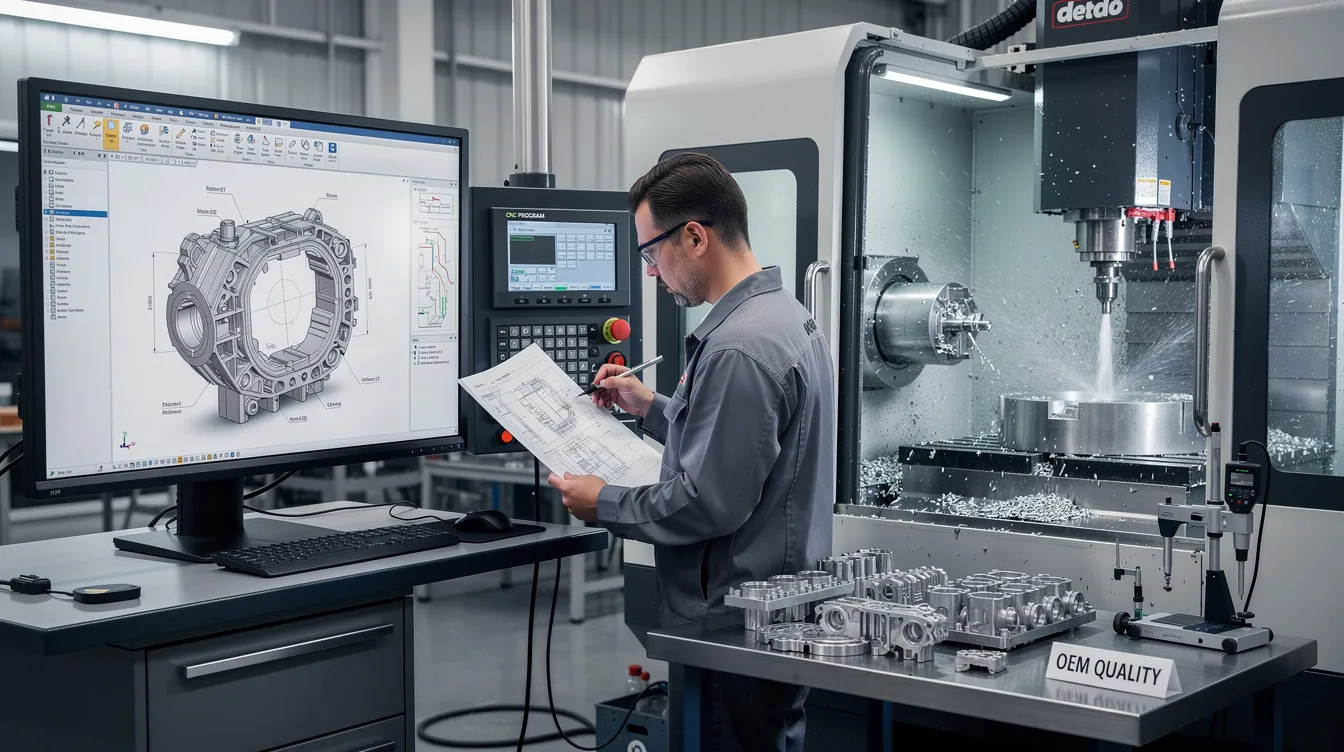
CNC Manufacturing: From CAD Design to Finished OEM Parts
Every precision component in an aircraft, a surgical tool, or a consumer electronic device passes through a shared production method: cnc manufacturing. This guide walks through how computer numerical control transforms raw material into finished OEM parts, covering the workflow phases, core processes, material choices, and what to look for when selecting a manufacturing partner.
What Does CNC Stand For in Manufacturing?
CNC stands for “Computer Numerical Control,” a term describing how computer software drives machine tools to cut, shape, and finish parts with repeatable precision. In modern manufacturing, CNC replaced manual machining with digital automation, making it possible to hold tolerances and produce complex geometries that manual labor and handwheel adjustments simply cannot match consistently.
CNC machining automates mills, lathes, and multi-axis machining centers by feeding them digital programs rather than relying on an operator to guide every cut. CNC machines operate on 3-axis or 5-axis systems to achieve high accuracy, allowing the cutting tool to approach a workpiece from virtually any angle. This is what makes multi axis milling and intricate contouring feasible even on small, high-value components.
At the heart of every CNC machine are machine instructions written in g code and m code. G code controls tool paths, feed rates, and spindle speeds, while M code manages auxiliary functions like coolant flow and tool changes. Together, these computerized controls ensure that every pass of the cutting tool follows the exact same path, part after part, with minimal variation.
Common types of cnc equipment include 3-axis and 5-axis machining centers, CNC turning centers with live tooling, and dedicated multi-axis mills. At Anebon Metal Products Limited, founded in 2010 in Dongguan, China, these machines form the backbone of OEM production across a wide array of industries including aerospace, automotive, medical, and electronics.
CNC machines can operate continuously, 24/7, with minimal human intervention, a capability often called “lights-out” manufacturing. Automated fixtures, pallet loaders, and automatic tool changers keep machines running through overnight shifts, producing precise parts for the aerospace industry, medical device manufacturers, and the electronics industry without downtime. This capacity for uninterrupted operation is one reason CNC has become indispensable for high volume production across various industries.
Key Phases in the CNC Manufacturing Workflow
The cnc machining workflow moves through five core phases: CAD design, CAM programming, machine setup, machining, and quality inspection. Each phase feeds into the next, and skipping steps or cutting corners at any stage risks scrap, rework, or missed delivery dates.
At Anebon, this workflow starts when an OEM customer submits a design for review. Engineers provide DFM (Design for Manufacturability) feedback on the CAD files, then move through cam programming, fixturing, machining, and inspection before packaging parts ready for assembly. Under ISO 9001:2015 and ISO 14001:2015 systems, every phase is documented with material certificates, inspection reports, and process logs for full traceability.
Lead times scale with complexity. Rapid prototyping of simple aluminum or steel parts typically takes 5–7 working days. Production runs for small to medium batches require 2–4 weeks, while large or regulated-industry orders with tight tolerances, specialized materials, or secondary operations may stretch to 4–6 weeks.
CAD Design and CAM Programming
CNC manufacturing begins with computer aided design cad, where OEM engineers supply models in formats like SolidWorks, CATIA, or STEP files. Anebon’s engineering team reviews these for manufacturability, flagging issues such as thin walls prone to warping, undercuts requiring extra setups, or sharp internal corners that limit tool access. A bracket with 1 mm walls in aluminum, for example, might need added radii or increased thickness to machine reliably.
Once the cad design is approved, cam software converts the digital model into executable g code and m code toolpaths. CNC machining uses CAD and CAM software for precise programming, and familiarity with CAD and CAM software is essential for CNC technicians running these systems. Specific cam programming parameters include cutting strategy (roughing versus finishing), step-down, step-over, coolant type, and tool engagement angles, all tuned to the material. Aluminum allows high speed spindle rates and aggressive feed per tooth, while titanium demands slower speeds and conservative depths of cut.
Accurate computer aided manufacturing programming is the foundation for achieving tight tolerances down to ±0.002 mm on critical sealing faces, bearing fits, and aerospace surfaces.
Machine Setup and Tooling
Before machining begins, technicians complete the machine setup by installing fixtures such as vises, chucks, or custom jigs, then establishing work offsets and tool length offsets. Proper fixturing is essential: a part that shifts even slightly mid-cut will fail dimensional checks.
Typical tooling at Anebon includes carbide end mills for high material removal in aluminum and steel, drills and reamers for hole features, boring bars for internal diameters, and thread mills or taps for threaded holes. For turning operations, indexable inserts with specialized coatings like TiAlN handle stainless steel and harder alloys.
Automatic tool changers play a critical role in multi-operation jobs, especially on 5 axis CNC machining centers. A small aerospace bracket requiring outer profile milling, hole drilling, and thread tapping from two faces might use eight or more tools in a single clamping. Correct setup minimizes runout and vibration, directly improving surface finish and dimensional accuracy.
Entry into CNC setup and operation roles typically starts with practical training. CNC technician training requires a high school diploma or GED, and CNC machining programs offer hands-on training in machine operation. Many technicians also gain experience through internships and apprenticeships that provide practical experience in CNC machining.
Machining, Monitoring, and Inspection
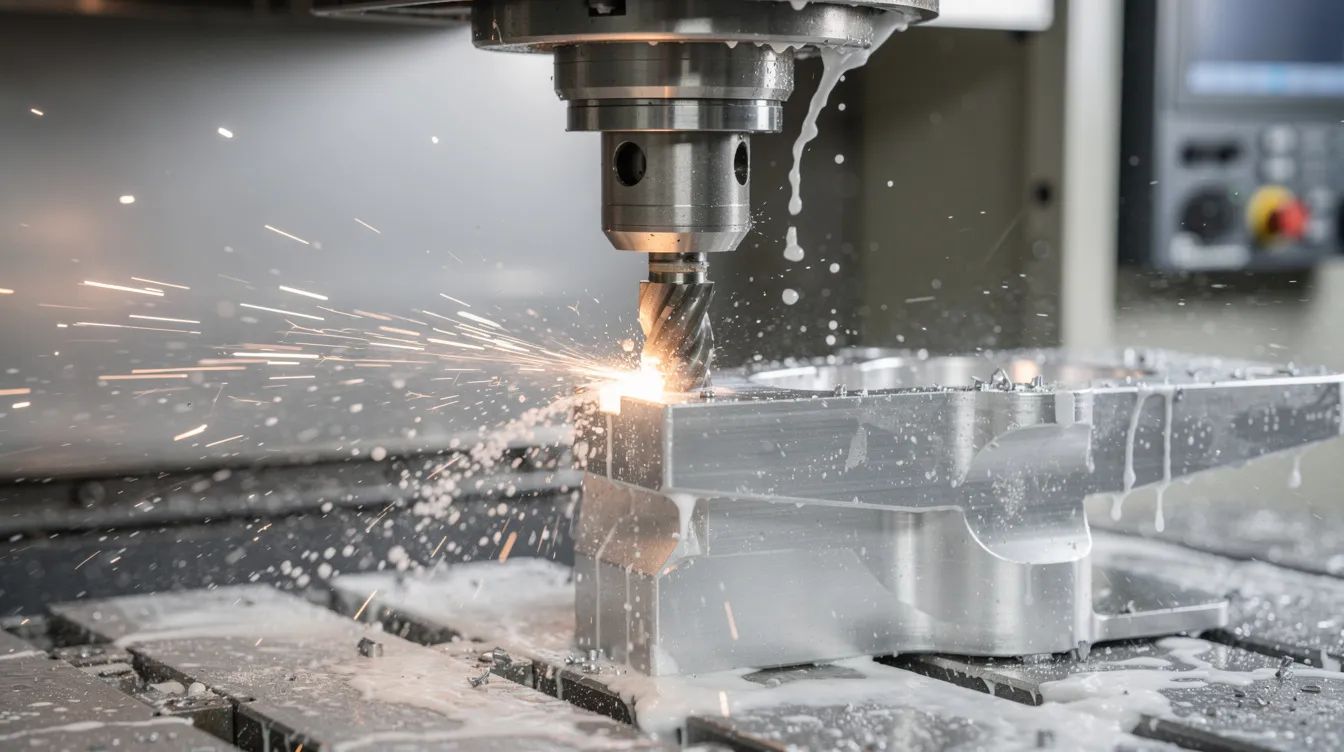
With g code loaded, the CNC machine executes multiple operations: milling pockets and contours, turning diameters, drilling holes, tapping threads, and boring internal features. In-process monitoring catches problems before they ruin parts. Probing cycles verify datum features between operations, tool wear compensation routines adjust for gradual degradation, and operators perform periodic checks during longer runs to guard against thermal drift.
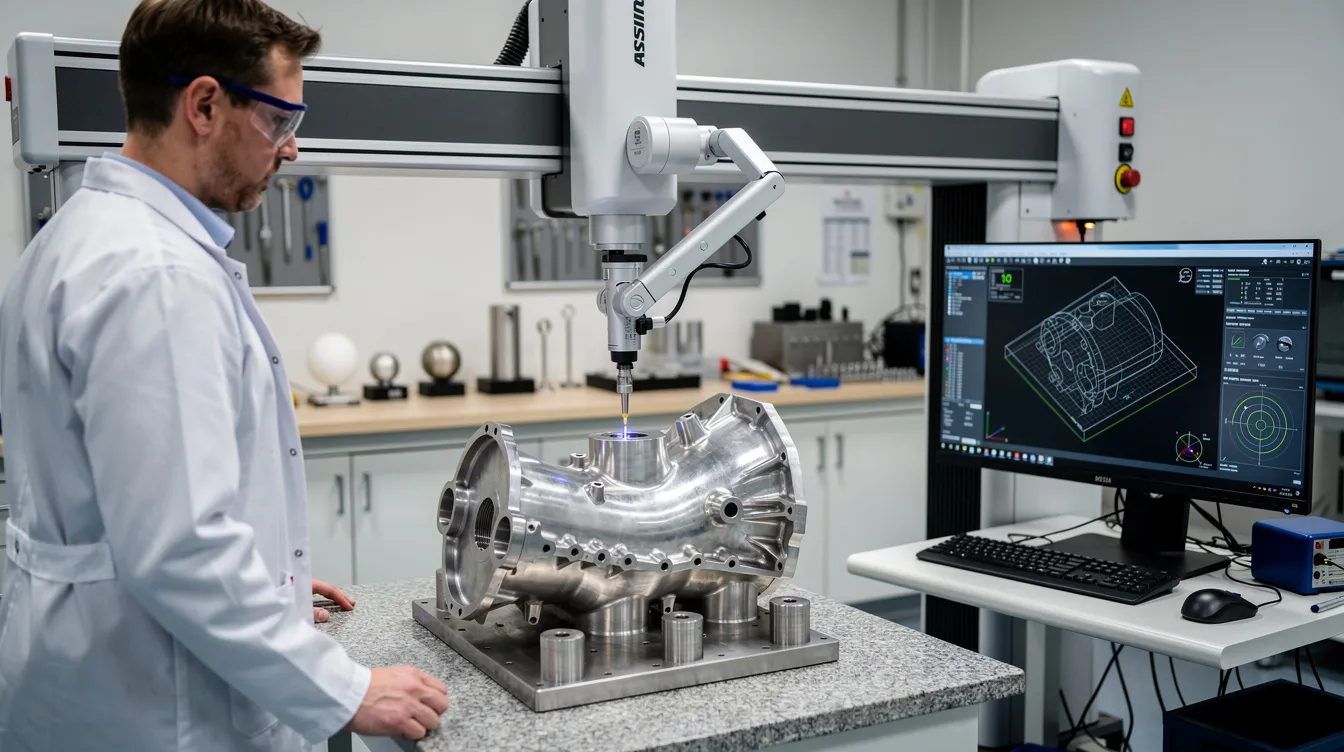
Inspection at Anebon uses digital calipers and micrometers for quick verification, Coordinate Measuring Machines (CMMs) for complex geometry, and optical systems for surface and edge quality. CNC technicians can achieve tolerances as tight as ±0.0002 inches on critical features, with standard OEM work typically held to ±0.01 mm.
Inspection results feed directly into documentation for regulated industries. First Article Inspection (FAI) reports per AS9102 and PPAP packages for automotive customers include full dimensional data, material certifications, and process capability analysis. Post-processing of finished parts may include quality checks and surface finishing before final shipment.
Core CNC Machining Processes
CNC machining encompasses a family of cnc machining processes: milling, turning, drilling, tapping, and complex multi-axis work. Beyond these, CNC plasma cutting machines cut through metal using ionized gas, CNC laser cutters use focused laser beams for high precision cutting, CNC router machines are ideal for cutting and engraving softer materials like carbon fiber and wood, CNC Electrical Discharge Machines shape conductive materials using electrical discharges, and CNC routers and plasma cutters facilitate rapid prototyping. Process selection depends on part geometry, tolerance requirements, material hardness, and order quantity.
Anebon selects manufacturing processes based on customer requirements, and hybrid routings often combine machining with die casting or sheet metal fabrication to optimize cost at higher volumes. The same machines handle prototypes, small batches, and mass production, with fixtures and toolpaths adapted for each scenario.
CNC Milling
CNC milling is the most common CNC machining process. CNC milling machines use rotary cutting tools to shape materials while the workpiece remains stationary, operating on 3-axis, 4-axis, or 5-axis machining centers. Typical operations include facing, pocketing, contouring, 3D surfacing for mold cavities, and integrated drilling cycles.
Anebon mills a range of components: aluminum electronic housings, 7075-T6 aerospace brackets, and stainless steel medical fixtures. For complex components with undercuts and features on multiple faces, 5-axis cnc milling eliminates repositioning, cutting setup time and cumulative error. CNC machining enables complex geometries that traditional methods can’t achieve, which is why robotics and aerospace OEMs rely on it for intricate structural parts.
Achievable surface finishes reach Ra 0.8 µm or better with finishing passes, and sealing or aerodynamic surfaces can hit Ra 0.4–0.8 µm. High speed roughing followed by fine finishing passes balances production time with surface quality.
CNC Turning
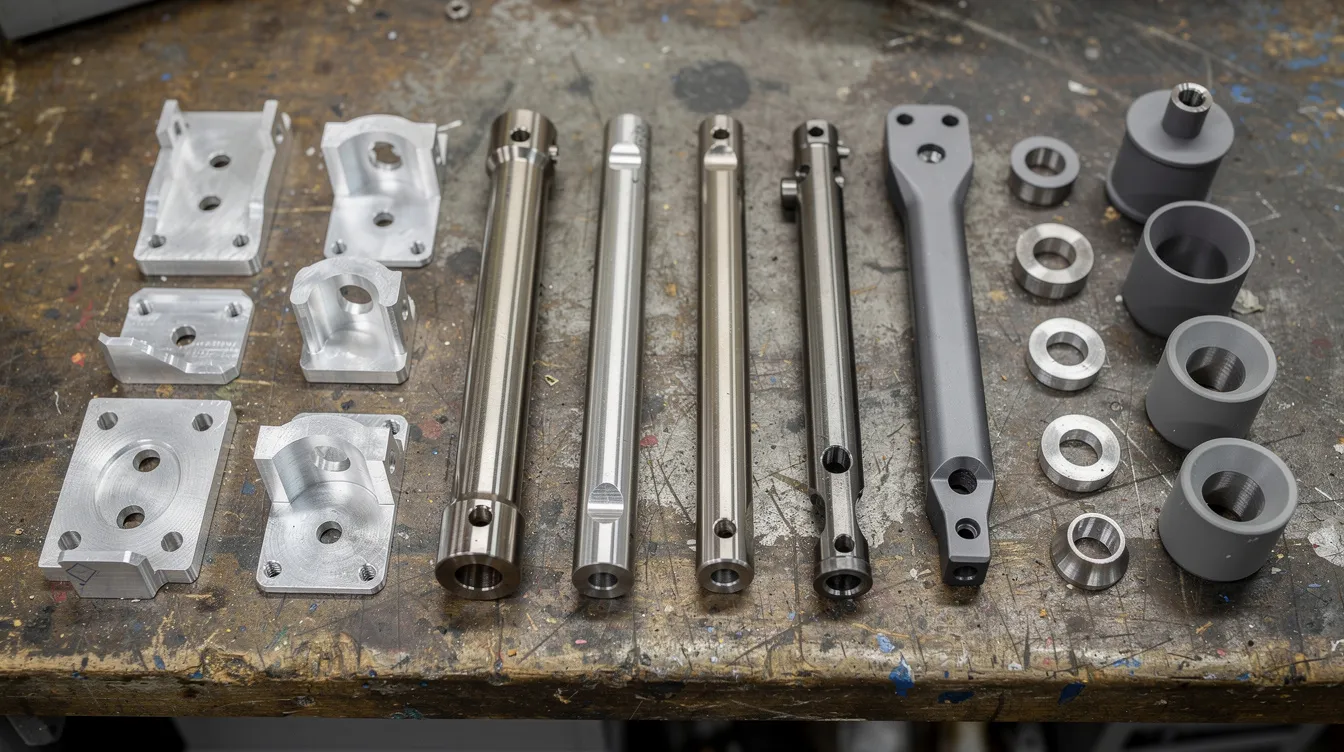
CNC turning rotates the workpiece while a stationary cutting tool shapes outer diameters, inner bores, and features like grooves and threads. CNC lathe machines turn cylindrical parts by rotating the workpiece, making this process ideal for shafts, bushings, pins, threaded connectors, and automotive spacers requiring concentricity and smooth surfaces.
Anebon produces precision turned components including stainless steel valve bodies and brass connectors for fluid handling systems. Modern CNC lathes include live tooling and sub-spindles, allowing drilling, milling, and tapping in the same machine, which reduces setups and cumulative positioning error. The result is excellent roundness and cylindricity, with diameter tolerances commonly held to ±0.005–0.01 mm, suitable for high-volume OEM production where the workpiece rotates at controlled speeds for consistent results.
Secondary Operations: Drilling, Tapping, and Finishing
Drilling, countersinking, reaming, and thread tapping are frequently integrated into cnc milling or turning cycles, keeping multiple operations in a single setup. Common thread standards include metric (M) and imperial (UNC/UNF), verified using go/no-go thread gauges. Accurate hole position and thread quality are critical for assemblies in the electronics and aerospace industry, where even minor misalignment causes fit failures.
After machining parts, Anebon applies secondary operations such as chamfering, deburring, and surface treatments including anodizing, nickel plating, bead blasting, and polishing. Combining these operations under one roof reduces cumulative error, shortens lead time, and simplifies logistics for OEM clients.
Materials and Surface Finishes in CNC Manufacturing
Material choice drives the performance, cost, and regulatory compliance of every OEM part. CNC machines can process a wide range of materials including metals and plastics, and Anebon machines aluminum, stainless steel, carbon steel, titanium, brass, copper, and engineering plastics like PEEK and POM.
Different industries favor certain materials: the aerospace industry uses titanium and high-strength aluminum, medical device manufacturers prefer 316L stainless steel for biocompatibility, and the electronics industry often specifies copper alloys for thermal management. Anebon advises on material selection during RFQ, factoring in machinability, local stock availability in Dongguan, and cost trade-offs. Common surface finishes include anodizing, hard anodizing, powder coating, nickel or chrome plating, and mechanical polishing.
Metals for CNC Machining
Aluminum grades 6061-T6 and 7075-T6 dominate lightweight structures. 6061 offers excellent machinability and is widely stocked, while 7075 provides higher tensile strength for payload-critical aerospace brackets, though at greater cost and reduced weldability.
Stainless steels such as 304 and 316L serve corrosion-resistant applications in medical, marine, and food equipment, while 17-4 PH delivers higher strength for demanding mechanical environments. Anebon machines stainless steel ring parts and similar components for fluid systems and structural assemblies.
Titanium alloys, particularly Ti-6Al-4V (Grade 5), offer exceptional strength-to-weight ratio for aerospace and high-performance automotive parts. However, titanium material cost runs 5–10× that of aluminum, and machining is 5–8× slower, requiring low cutting speeds (30–90 m/min) and high-pressure coolant. Carbon and alloy steels like 4140 fill roles requiring hardness and wear resistance for gears, shafts, and structural components, along with other materials chosen for specific mechanical properties.
Plastics and Specialty Materials
Engineering plastics such as POM (Delrin), PEEK, ABS, and nylon serve insulating and lightweight roles in electronic devices and medical applications. CNC machining is essential for producing medical devices and implants, and PEEK surgical instrument components exemplify how plastics meet biocompatibility requirements without injection molding tooling costs.
CNC machining of plastics is ideal for low-to-medium volume parts where mold tooling would be too costly or too slow for development timelines. Plastics are sensitive to heat and clamping pressure, so Anebon adjusts cutting data and fixturing to prevent deformation. Some projects combine metal and plastic parts, all produced and inspected under the same quality framework.
Industries That Rely on CNC Manufacturing
Anebon serves overseas OEMs across aerospace, medical, automotive, electronics, robotics, and industrial machinery sectors. CNC machines also manufacture durable parts for the oil and gas industry, where components face extreme pressure and corrosion environments. The ever increasing demands of these regulated and high-performance sectors make CNC’s precision, repeatability, and material versatility cnc machines offer a foundational capability.
Aerospace and Defense Applications
The aerospace industry uses CNC for crafting aircraft components including structural brackets, housings, fittings, and fasteners. Common aerospace materials at Anebon include 7075-T6 aluminum, titanium alloys, and stainless steels for high-strength, lightweight engine parts and airframe fittings. Aircraft like the Boeing 787 and Airbus A350 rely heavily on CNC-produced metallic fittings to integrate composite structures into the overall airframe.
Traceability is non-negotiable. Every flight-critical component requires documented material certificates, detailed first article inspection reports, and consistent tolerances across production runs. Anebon’s experience supplying aerospace-grade parts for overseas OEMs means the documentation infrastructure, from mill test certificates to ballooned CMM reports, is already in place.
Medical, Automotive, and Electronics Industry
CNC machining is essential for producing medical devices and implants, including surgical instrument components, fixture blocks, and housings that demand biocompatible materials and burr-free surfaces. Smooth finishes and dimensional precision are critical because these parts interact directly with patients or sterile environments.
In the automotive sector, CNC machining produces engine parts for the automotive industry along with transmission components, EV battery housing frames, and custom fixtures. The oil and gas industry similarly depends on CNC for valve bodies, connectors, and structural fittings exposed to harsh service conditions.
For electronics, CNC machines create printed circuit boards in the electronics sector along with heat sinks, EMI shielding enclosures, and precision mounting hardware. Since 2008, top consumer electronics brands have used CNC-milled aluminum housings for laptops and tablets, a trend that drove demand for high speed, fine-feature machining. Anebon handles both small precision features and larger mechanical structures within the same facility, supporting customer satisfaction across the full spectrum of component sizes.
Benefits of CNC Manufacturing with Anebon
While CNC machining in general delivers precision and repeatability, Anebon combines these with speed, flexibility, and robust quality control. CNC manufacturing reduces human error and increases efficiency, and when paired with Anebon’s integrated die casting and sheet metal capabilities, OEM clients get a single source for complex assemblies.
Precision, Repeatability, and Tight Tolerances
CNC machines achieve tolerances as tight as ±0.0002 inches, with Anebon routinely holding ±0.002 mm on critical features when the design and material allow. Stable machines, controlled thermal environments, and calibrated CMMs ensure that the first article and the last piece in a multi-thousand-part batch meet the same specifications. CNC manufacturing enables consistent quality across large-volume production runs, which reduces fit issues in assemblies and saves OEM customers significant time during integration and testing.
Speed, Scalability, and Prototyping-to-Production
Anebon’s CNC prototyping service turns around simple milled or turned parts within 5–10 working days depending on complexity. CNC machining reduces production time compared to traditional methods, and the same CNC programs scale from a handful of prototypes to thousands of production parts with minimal rework. Digital CAD/CAM workflows and version control allow quick design revisions without new hard tooling, making iterative R&D practical and affordable.
Cost Control, Waste Reduction, and Sustainability
Optimized toolpaths and nesting strategies remove material efficiently, and CNC processes minimize material waste by maximizing material usage from each billet or bar. Anebon’s ISO 14001:2015 certification covers responsible management of cutting fluids, chip recycling, and energy consumption. Right-first-time machining driven by thorough DFM review and strong cam programming lowers scrap and rework rates. Redesigning a part to reduce wall thickness within structural limits, for instance, can cut both raw material cost and cycle time without sacrificing performance.
Selecting a CNC Manufacturing Partner
Choosing the right CNC supplier affects cost, lead time, and reliability across the entire product lifecycle. The decision should weigh certifications, machine capabilities, materials expertise, communication quality, and experience in your specific industry.
Certifications, Quality Systems, and Experience
Anebon holds ISO 9001:2015 for quality management and ISO 14001:2015 for environmental management, both audited and maintained since the company’s founding in 2010. These certifications ensure documented process control, calibrated equipment, and environmental responsibility. When evaluating any CNC partner, ask for sample quality documentation such as inspection reports, material certificates, and process capability data. Suppliers familiar with industry-specific requirements like FAI, PPAP, and full traceability for complex parts add measurable value for regulated programs.
Capabilities, Communication, and Project Management
Working with a manufacturer that offers CNC machining, die casting, sheet metal fabrication, and surface finishing under one roof eliminates coordination headaches and reduces lead time. Anebon assigns dedicated project contacts, provides regular production updates, and flags design or scheduling issues before they become problems.
When assessing a potential partner, evaluate sample lead times, responsiveness to design changes, and clarity in quotations. For multi-component projects, such as a robotics assembly combining a CNC-machined motor housing with sheet metal brackets and die cast structural parts, a single-source manufacturer manages the interfaces, tolerances, and finishing specifications across every part.
If you are ready to create parts for your next project, send your CAD files and requirements to Anebon for a detailed CNC machining quote. Whether you need a single prototype or a scaled production run, the team is equipped to move from your digital model to finished components with the precision, speed, and documentation your program demands.