Essential Guide to Using a Laser Cutter Brass for Precision Projects
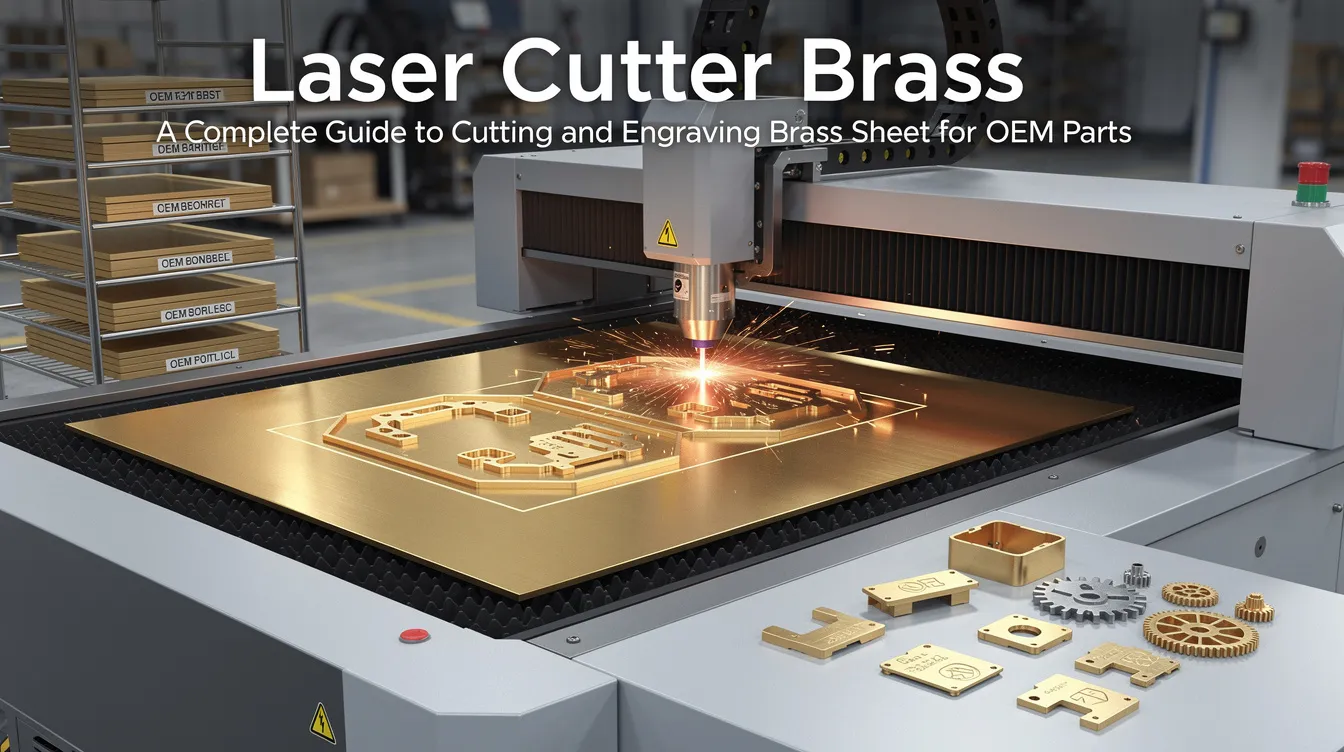
Laser Cutter Brass: A Complete Guide to Cutting and Engraving Brass Sheet for OEM Parts
Introduction to Laser Cut Brass for OEM Applications
Laser cut brass refers to brass sheet that has been profile-cut or surface-marked using focused laser energy, producing precision components and decorative parts with clean edges and repeatable accuracy. Brass combines excellent corrosion resistance and electrical conductivity with a distinctive golden appearance, making it a versatile brass material for both engineering assemblies and design-driven projects. The material brass has a shiny surface and good abrasion resistance, and it requires minimal post-processing after fabrication-qualities that keep it in demand across electronics, automotive, medical, and architectural applications.
Anebon Metal Products Limited has used fiber laser systems alongside CNC machining to produce custom brass parts for overseas OEMs since 2010. This article covers brass laser cutting and brass laser engraving for prototypes and production runs, with practical guidance on design, tolerances, alloy selection, and industrial use.
How Brass Laser Cutting Works
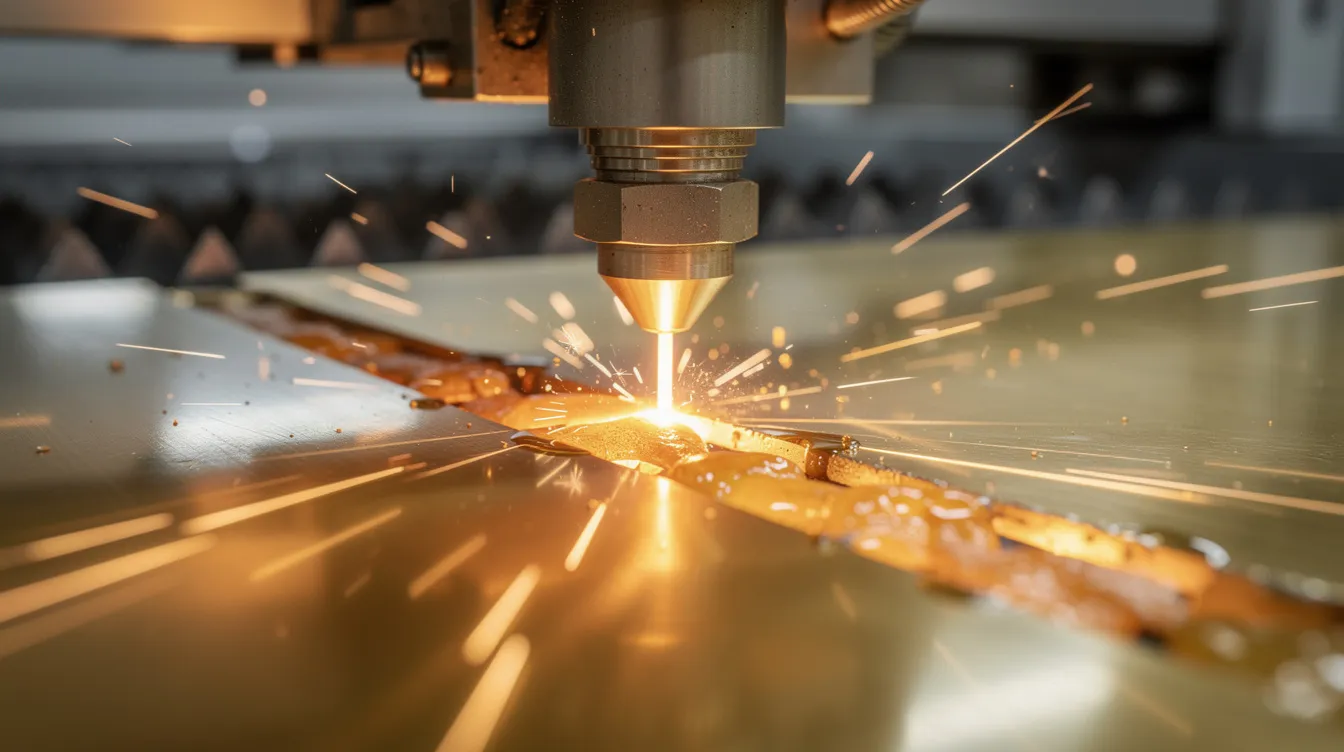
Brass laser cutting uses a high-energy laser beam focused onto a brass sheet surface and an assist gas to melt and expel molten metal, creating a precise kerf. The process yields structural conductive components from brass-unlike aesthetic cuts from non-metals-because the material retains its mechanical and electrical properties through the cut zone.
Here is the step-by-step cutting brass process:
-
The brass laser focuses onto the upper surface of the sheet, concentrating laser energy into a spot roughly 0.1–0.3 mm wide.
-
Localized heating brings the brass to a molten state. Brass must be molten for effective laser cutting to proceed.
-
High-pressure nitrogen or compressed air ejects the melt downward through the kerf. Using compressed nitrogen as an assist gas prevents molten brass from fusing back together and avoids oxidation.
-
A CNC gantry or motion system moves the cutting head along programmed paths at controlled speed.
The difference between cutting and engraving brass is straightforward: cutting fully separates profiles through the entire sheet thickness, while engraving removes only a thin surface layer for marks, textures, or logos.
Typical brass sheet thickness ranges for fiber laser cutting span 0.3–6 mm in standard production. Thinner foils and thicker plates (up to 12–16 mm on high-power machines) require special setup. Laser cutting brass helps in achieving intricate geometries without specialized tooling, but experienced sheet metal fabricators are recommended because of the reflectivity and heat control demands that brass presents.
Brass Laser Engraving vs. Laser Cutting
When specifying brass parts, OEM engineers must decide between brass laser engraving-for surface identification and decoration-and full-depth laser cutting brass for profile separation. Many projects use both on the same part.
In the engraving process, the laser beam parameters are adjusted to vaporize or ablate the brass surface, creating marks, textures, serial numbers, or logos without penetrating through the part. Typical engraving depths range from 0.01 to 0.2 mm depending on the application. You can produce high-contrast black markings or remove material when using lasers, which gives engineers flexible options for contrast and readability.
Engraving brass is widely used for nameplates, control panels, jewelry, promotional products, and industrial traceability marks. Laser engraving creates intricate designs on brass jewelry and allows for precise custom stamps on brass tooling and dies.
Compared to cutting, engraving requires less laser power, introduces less heat into the part, and has looser thickness tolerance requirements. Cycle time is generally shorter per feature. Anebon can combine laser cut brass profiles with laser engraved branding or identification on the same brass parts, saving assembly steps and reducing lead time.
Choosing the Right Laser Type for Brass
Brass is a highly reflective material at infrared wavelength ranges, which makes the choice of laser type critical for safe, efficient brass laser cutting and brass engraving. The wrong laser source wastes energy, produces poor results, and risks equipment damage.
Fiber laser is the primary choice for brass. Its shorter wavelength of approximately 1064 nm is more readily absorbed by copper–zinc alloys than longer wavelengths. Fiber lasers offer better absorption on reflective surfaces compared to CO2 lasers for cutting brass, delivering high energy density and excellent beam quality. Once the brass surface begins to melt, reflectivity drops further and absorption improves, enabling a stable cut. Engraving or cutting bare brass requires a fiber laser or MOPA laser due to high reflectivity.
Diode lasers operate at various types of wavelengths and can mark brass indirectly using a laser marking spray or coating to improve absorption. However, diode lasers generally lack the higher power output needed for efficient industrial cutting of brass sheet.
CO2 lasers emit at 10.6 μm, where brass has very poor absorption and high reflectivity. Back-reflected light can damage laser optics and the resonator. CO2 is usually limited to marking brass with special compounds rather than direct cutting or engraving.
For engineers specifying laser cut brass parts: assume fiber laser processing unless a specific architecture demands otherwise, particularly for production volumes and tight tolerances.
Brass Material Options and Properties for Laser Processing
Not all brass alloys behave the same under a laser. Grade selection affects cut quality, formability, appearance, and electrical performance, so material tests are advisable whenever switching alloys.
Common brass sheet alloys for laser processing include:
|
Alloy |
Composition |
Key Characteristics |
|---|---|---|
|
260 brass (CuZn30) |
~70% Cu, 30% Zn |
260 brass offers the best strength and ductility among brass grades; a great choice for forming |
|
CuZn37 (CW508L) |
~63% Cu, 37% Zn |
Good formability, moderate strength, balance of machinability and corrosion resistance |
Key mechanical and physical properties relevant to brass laser cutting include thermal conductivity, reflectivity at the operating wavelength, yield strength, and hardness. Brass has high thermal conductivity, which can lead to warping or melting at high heat if parameters are not controlled. Different brass alloys may react differently to laser settings, requiring material tests before production runs. Brass is ideal for applications requiring smooth motion and clean conductivity, from precision turned connectors to sliding contact surfaces.
Anebon typically works with brass sheet in thicknesses from 0.3 to 6 mm and surface finish options including unfinished, brushed, vibrated, and polished. Each finish interacts differently with brass laser engraving readability-brushed surfaces tend to produce better contrast than mirror-polished ones.
Process Parameters and Best Practices for Cutting Brass Sheet
Optimized laser parameters are essential for achieving a clean cut with minimal dross and consistent dimensions when you cut metal like brass. Even small deviations in power, speed, or gas pressure can shift edge quality significantly.
Power and speed. Brass laser cutting requires a power setting at maximum capacity for the material thickness in use. Cutting brass requires higher laser wattage as thickness increases:
-
0.5–1.5 mm brass → 1–2 kW
-
2–3 mm → 2–3 kW
-
4–5 mm → 3–4 kW
-
Over 6 mm → 6 kW or greater energy output
Cutting speed should be set 10–20% below the machine maximum for the given thickness to maintain a stable melt pool. A slower speed ensures reliable through-cutting. Brass maintains its cut line better than aluminum but requires more localized heat and power due to its chemical properties and thermal conductivity.
Focus position. Optimal focus is at or slightly above the upper surface of the brass sheet. This initiates melting quickly without driving excessive heat into the part. Autofocus cutting heads improve consistency across a full bed size.
Assist gas. Nitrogen is preferred for oxidation-free, bright edges. Using nitrogen gas prevents oxidation when cutting brass with a laser. Compressed air is a cost-effective alternative but may introduce slight discoloration. Oxygen is rarely used for brass due to alloy chemistry.
Feature guidelines. Minimum hole diameter should be equal to or greater than material thickness. Web width between features should also meet or exceed thickness. Spacing between cuts needs enough room for gas flow and heat dissipation.
High precision and clean edges are achieved when using appropriate fiber laser settings for brass, but reaching that point requires parameter validation for each alloy batch and surface condition.
Design Guidelines for Laser Cut Brass Parts
Good DFM reduces cost, lead time, and rejection rates for brass parts. Understanding what the laser cutting process can and cannot deliver in brass helps engineers design right the first time.
Tolerances. Laser cutting brass achieves tolerances of ±.005 inches (approximately ±0.1 mm) on profile cuts in sheets up to about 6 mm. For tighter features, Anebon can combine laser cutting with CNC milling to hit ±0.05 mm or better on critical surfaces.
Kerf compensation. Kerf width in brass runs 0.1–0.3 mm depending on thickness and laser settings. For press-fits, slots, and tab-and-slot assemblies, offset tool paths accordingly-external profiles inward, internal features outward.
Corner radii and intricate patterns. Avoid sharp inside corners that concentrate heat and create dross buildup. Minimum internal fillet radius should equal the material thickness or 1.5× thickness for thin brass sheet components. This preserves structural strength and prevents micro-cracking.
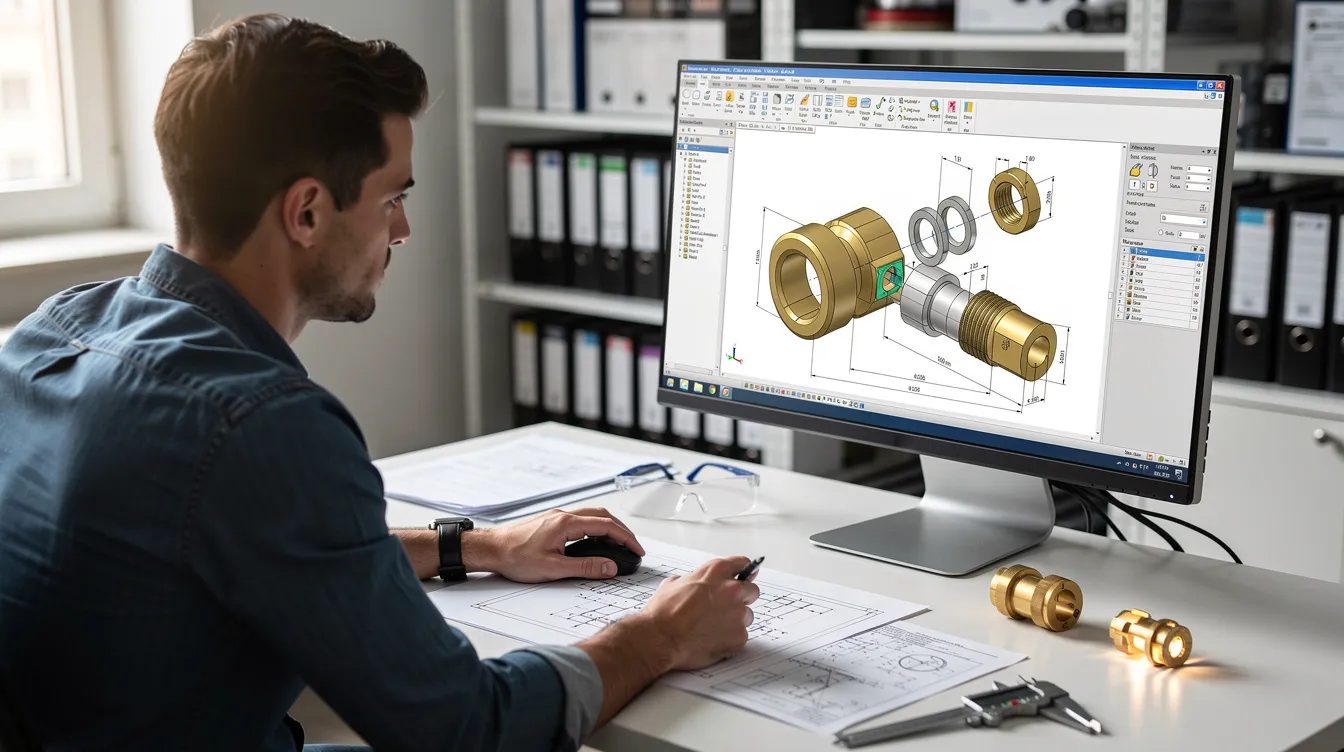
Engraving artwork. Vector images are preferred for producing sharp text and logos in laser engraving. Supply artwork as DXF or DWG with true curves rather than segmented polylines.
Anebon’s engineering team provides DFM feedback on new brass laser cutting projects, including recommendations on material thickness selection, fixture strategy, and whether secondary machining is warranted for critical dimensions.
Laser Engraving Brass: Methods and Applications
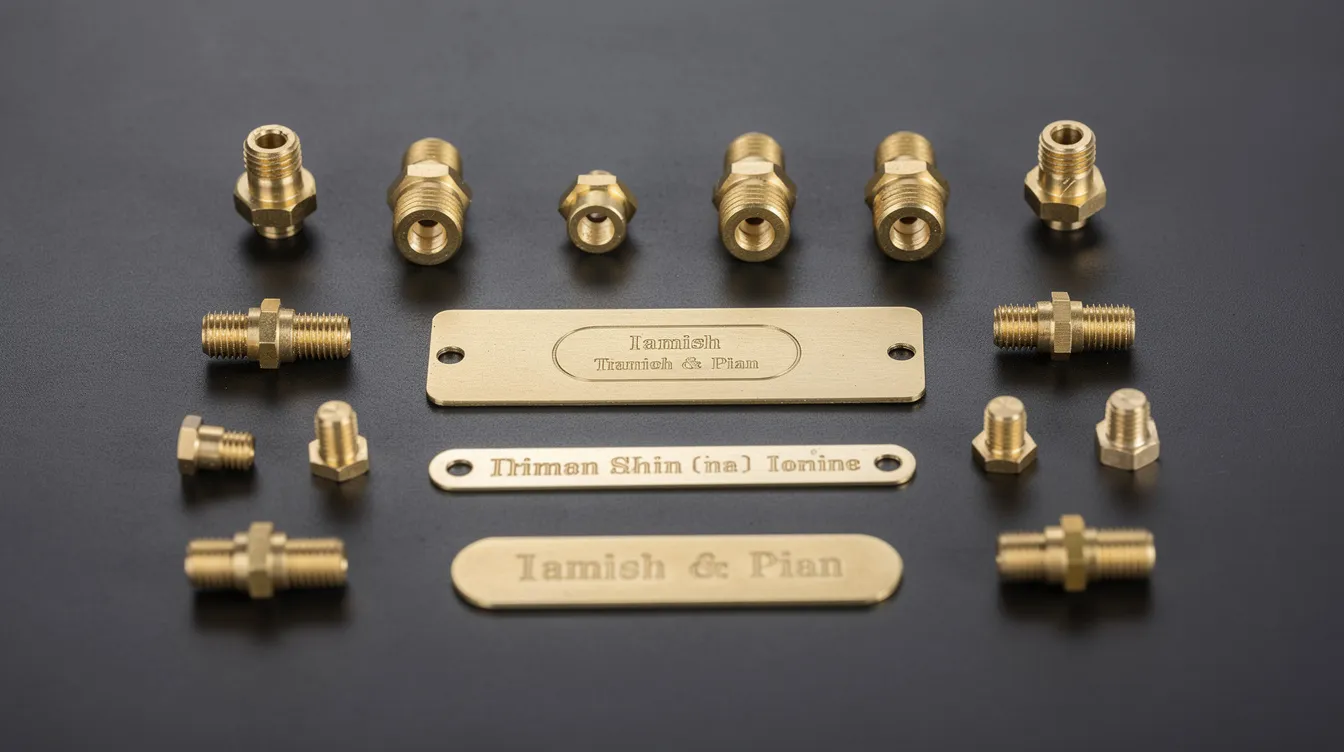
Brass laser engraving adds functionality-labels, scales, regulatory marks-and branding like logos and intricate patterns to precision metal parts. Laser engraving enhances the aesthetic appeal of brass products while also serving practical identification needs.
Direct fiber laser engraving on bare brass produces permanent marks by ablating surface material. A laser engraving machine with fiber source can achieve deep engraving for industrial marks or shallow engraving for decorative textures. Turning off air assist during the engraving process leads to cleaner results on brass because it prevents re-depositing of debris into the engraved channel. Fiber lasers are the most effective for marking or engraving brass directly.
Indirect methods include applying a laser marking spray or coating layer to the brass surface before engraving with a laser engraver. The coating absorbs the laser energy and bonds to the metal, producing high-contrast marks even on highly reflective polished surfaces. This approach works when deeper contrast is required without deep material removal.
Typical OEM and commercial applications include:
-
Instrument panels and connector housings with part numbers
-
Valve bodies with pressure and flow markings
-
Jewelry blanks with fine details and custom monograms
-
Corporate awards and signage
Brass is ideal for durable signage and nameplates because of its excellent corrosion resistance and appearance over time. Brass laser engraving is used for marking industrial components across aerospace, medical, and electronics sectors. Anebon can engrave sequential serial numbers, QR codes, and regulatory marks to support traceability requirements.
Surface Finishes for Laser Cut and Engraved Brass
Post-processing protects brass against tarnish and enhances appearance after laser cut and engraving operations. For OEM parts exposed to handling or weather, finishing is typically mandatory.
Mechanical finishes:
|
Finish |
Description |
Best For |
|---|---|---|
|
Vibrated |
Mass tumbling for uniform matte texture |
General industrial parts |
|
Sandblasted |
Matte/satin with controlled roughness |
Non-glare panels |
|
Brushed |
Directional grain, satin look |
Decorative hardware, nameplates |
|
Mirror polish |
High-gloss reflective surface |
Premium jewelry, luxury trim |
Protective finishes include clear lacquer, varnish, nickel or chrome plating, and conversion coatings. These slow oxidation on exposed brass components and maintain the desired surface appearance.
Engraving brass after brushing produces high contrast because the engraved channel disrupts the directional grain. Engraving before applying a protective coating seals the mark and preserves contrast long-term. Specify these sequences in engineering drawings and RFQs to ensure the correct order of operations.
Industrial and Design Applications of Laser Cut Brass
Laser cut brass parts serve both functional and decorative roles across multiple industries, from precision electronics to architectural interiors.
Engineering applications include electrical contacts, EMI shields, precision shims, and small mechanical linkages. The laser cutting process yields structural conductive components that retain the material’s electrical and thermal properties. Brass is ideal for applications requiring smooth motion and clean conductivity in assemblies like connectors and switch terminals.
Design and architectural uses include decorative panels, inlays set into wood or stone, signage, logo plates, and high-end interior hardware such as door plates and cabinet pulls.
OEM-relevant examples for Anebon’s customers include:
-
Robotics connectors and bus bars
-
Medical device nameplates with regulatory engravings
-
Automotive switch bezels with engraved legends
-
Electronics front panels combining cut profiles with engraved text
Brass is often preferred over aluminum or stainless steel when the project requires solderability, superior electrical conductivity, or the warm golden aesthetic that only copper-zinc alloys deliver. Where aluminum oxidizes quickly and steel offers a cooler tone, brass provides the right balance of performance and visual impact.
Limitations and Challenges in Brass Laser Cutting
Cutting brass with lasers presents specific technical challenges that differ from processing steel or aluminum. Acknowledging these up front leads to better designs and fewer production surprises.
Reflectivity. Brass is highly reflective, which can damage the laser if settings are not controlled. Back-reflected light at the 1064 nm wavelength can harm fiber laser optics and the beam delivery path. Dedicated protective optics, controlled piercing sequences, and surface preparation help mitigate this risk. Laser cutting brass offers high precision and clean edges but is challenging due to reflectivity.
Heat-affected concerns. Despite brass’s high thermal conductivity, the concentrated heat input needed for cutting can cause edge discoloration, micro-burrs, or slight warping on thin brass sheet if parameters are not optimized.
Fumes. Brass releases toxic zinc fumes when laser cutting, necessitating good ventilation and proper fume extraction equipment in the cutting area.
Thickness and feature limits. Extremely thick plates (above 12–16 mm) or ultra-fine features smaller than the material thickness may be better suited to CNC machining, photo-etching, or combined processes. Part size also influences feasibility-very large panels may exceed optimal bed size for high-precision work.
Anebon mitigates these issues using tuned parameters, in-process quality control, and secondary operations like deburring, precision milling, and edge finishing when the application demands it.
Anebon’s Brass Laser Cutting and Fabrication Capabilities
Anebon Metal Products Limited is an ISO 9001:2015 and ISO 14001:2015 certified precision manufacturer based in Dongguan, China, serving overseas OEMs since 2010.
Key brass-related services include:
-
Fiber laser cutting of brass sheet (0.3–6 mm standard, thicker by arrangement)
-
Brass laser engraving for logos, serial numbers, and regulatory marks
-
CNC milling and turning of brass parts for critical tolerances
-
Integration with die casting or sheet metal assemblies
Achievable tolerances reach ±0.1 mm on laser-cut profiles and ±0.05 mm or better with secondary CNC machining. Rapid prototyping lead times run as short as a few days; production schedules depend on volume and finishing requirements. Complete OEM brass parts ship with surface treatment included.
Anebon supports design engineers and R&D teams in aerospace, medical devices, automotive, electronics, and industrial machinery.
Getting Started: From Brass Sheet Design to Finished Parts
Here is the typical project flow for laser cut brass at Anebon:
-
Material and thickness selection – Choose the brass alloy and gauge based on functional, mechanical, and aesthetic criteria.
-
Design upload – Submit 2D drawings (DXF, DWG) or 3D CAD files (STEP, IGES) with dimensions, tolerances, finish notes, and quantity.
-
DFM consultation – Anebon’s engineering team reviews designs and provides feedback on feature spacing, tolerance feasibility, fixture strategy, and cost optimization.
-
Quotation – Pricing covers cutting, engraving, machining, finishing, and shipping.
-
Prototyping and validation – Sample parts produced for fit, form, and function verification.
-
Production scaling – Approved designs move to full runs with in-process inspection and final QC.
-
Preferred file formats: DXF, DWG for 2D; STEP, IGES for 3D
-
Quantity ranges: single prototypes through thousands of pieces
-
Include notes on visible faces, finish type, and any regulatory marking requirements
Consolidating laser cutting, CNC machining, and finishing with one supplier like Anebon reduces your supplier count and overall project lead time. Request a quote or engineering review for your next brass laser cutting project by contacting Anebon’s team with your drawings and specifications.