Essential Guide to Understanding Machined Parts and Their Applications
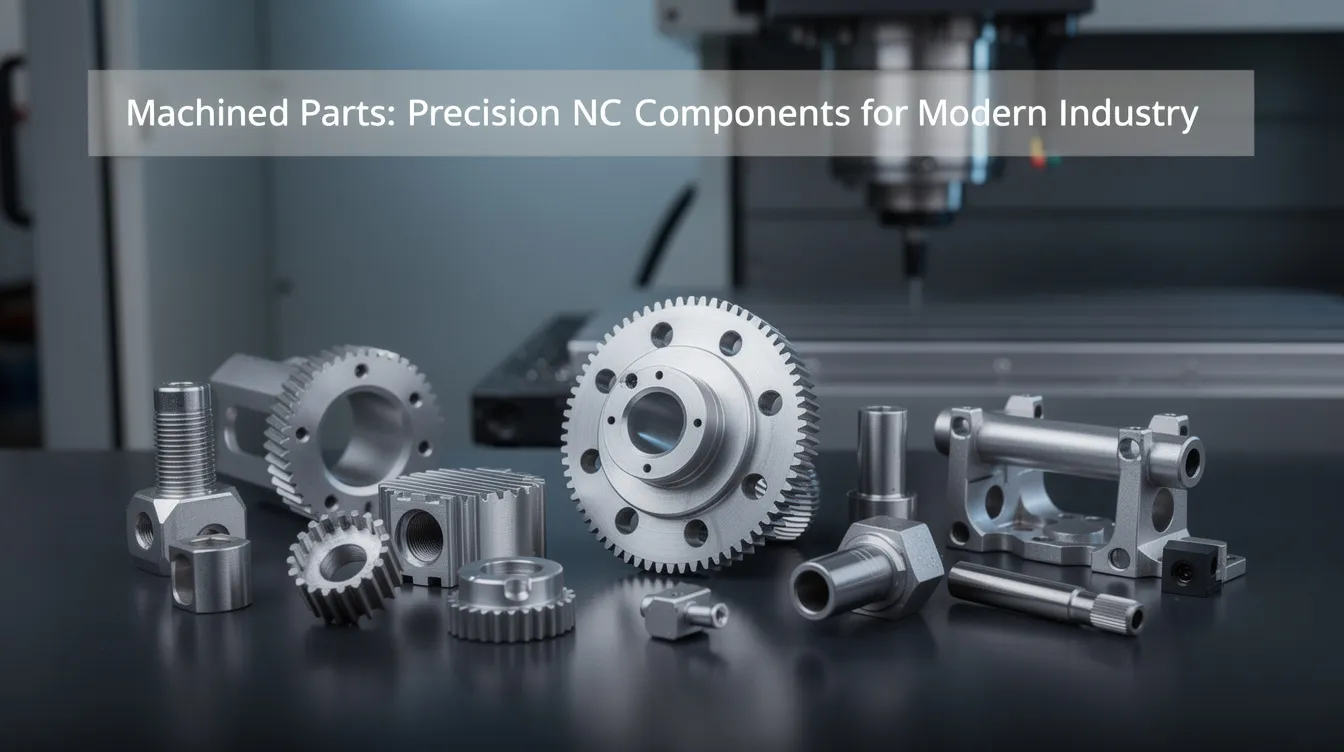
Machined Parts: Precision CNC Components for Modern Industry
Introduction to Machined Parts
Machined parts are components created through machining, a subtractive manufacturing process that removes material from metal or plastic stock to produce finished shapes with precise dimensions. Key machining techniques include milling, turning, drilling, and grinding, each suited to different part geometry and feature requirements. CNC technology automates high precision machining, allowing manufacturers to hold tight tolerances and produce complex geometries that manual methods struggle to replicate. Common materials used for machining include metals, plastics, and composites, giving engineers a diverse range of options to match performance and cost requirements across many industries.
Anebon Metal Products Limited, founded in 2010 in Dongguan, China, provides cnc machining services for overseas OEMs spanning aerospace, medical devices, automotive, consumer electronics, robotics, and industrial machinery. Whether the job calls for a single prototype or thousands of production parts, cnc machines use multi axis milling and turning centers to remove material from bar, plate, or billet stock and deliver custom parts to specification.
What machined parts are:
-
Components shaped by material removal from material stock using cutting tool paths controlled by software
-
Made from metal parts (aluminum, steel, titanium, brass) or plastic parts (ABS, nylon, PEEK, Delrin)
-
Produced through a manufacturing process that achieves the desired geometry with repeatable accuracy
Who needs them:
-
Design engineers developing custom components for regulated or performance-critical products
-
R&D teams running rapid prototyping cycles before committing to injection molding or die casting tooling
-
Procurement teams sourcing production parts with certified quality and traceable materials
What Are CNC Machined Parts?
CNC machined parts are components produced by computer numerical control milling and turning processes, where automated cutting tool movements follow digitally programmed instructions to shape raw material into finished forms. CNC machining uses automated cutting tools for precision manufacturing, replacing the manual hand-wheel adjustments and template-guided operations of traditional machining with software-driven repeatability. The shift from manual numerical control systems in the 1940s–50s to today’s digitally integrated CNC platforms has transformed what a machine shop can deliver in terms of speed, consistency, and geometric complexity.
At Anebon, typical equipment includes 3-axis, 4-axis, and 5-axis CNC machining centers, CNC lathes with live tooling, and secondary equipment like grinders. This range of machinery supports everything from simple prismatic blocks to intricate aerospace housings. Online cnc machining simplifies sourcing for global customers: you upload a cad file, receive DFM feedback highlighting potential cost and manufacturability improvements, and get a quote for custom manufacturing, often within a day or two.
Key advantages of CNC over manual methods:
-
Automation – Programmed toolpaths eliminate operator variability
-
Repeatability – CNC machining allows for high repeatability in production, ensuring identical results across multiple parts
-
Flexibility – Over 50 materials can be machined using CNC technology, from soft plastics to hardened alloys
-
Tight tolerances – Down to ±0.002 mm at Anebon; CNC machines can achieve tolerances as tight as +/-0.001 inches
Common Materials for CNC Machined Parts
Material selection drives nearly every downstream decision in the cnc machining process, from cutting tool choice and feed rates to achievable surface finish and part lifespan. Engineers balance mechanical properties like tensile strength and wear resistance against machinability, raw cost, weight, and environmental factors such as corrosion resistance or performance at extreme temperatures. CNC machining can produce parts from over 50 different materials, and Anebon stocks or sources the most commonly specified grades for its OEM clients.
CNC machining applications in aerospace, medical, and consumer electronics each push material choices in different directions: lightweight aluminum alloys for drone frames, biocompatible titanium for implants, corrosion resistant stainless steel for marine hardware, or chemical resistance-optimized PEEK for sterilizable surgical guides. Anebon provides material certificates (EN, ASTM, or equivalent) on request for regulated industries.
Material families commonly machined:
-
Aluminum alloys – 6061-T6, 7075-T6
-
Stainless steels – 304, 316, 17-4PH
-
Carbon steel and alloy steel – mild steel, 4140
-
Brass and copper – C360, C110
-
Titanium – Ti-6Al-4V, CP Grade 2
-
Engineering plastics – ABS, POM/Delrin, nylon (PA6/PA66), PEEK, PC, PMMA
-
Other materials – PVC polyvinyl chloride, epoxy resin composites (for specialized fixtures)
Key Metal Materials
Aluminum is the most frequently machined metal in CNC shops worldwide. Aluminum alloys like 6061-T651 are commonly used in CNC machining for housings, structural brackets, and heatsinks, offering good strength, stable thermal behavior, and excellent machinability. For high-stress applications such as drones, motorsport fixtures, and aerospace brackets, 7075-T6 delivers significantly higher strength at the cost of slightly reduced corrosion resistance and increased tool wear. Machined aluminum is increasingly used due to its lightweight properties, making it a go-to for weight-sensitive designs. Anebon produces a wide variety of CNC machined aluminum parts across all these applications.
Stainless steel offers excellent machinability and uniformity, with grades like 304 and 316 providing outstanding corrosion resistance for food processing equipment, marine hardware, and surgical instruments. Grade 17-4PH adds precipitation-hardened strength for valve components and high-load medical devices, though it generates more heat during metal cutting and accelerates tool wear.
Alloy steels like 4140 deliver high toughness and fatigue strength, ideal for shafts, gears, and structural components. Mild steel remains the most economical option for brackets and frames where weldability matters and corrosion is managed with coatings like powder coating or plating.
Brass is easy to machine and corrosion resistant, making it a staple for precision valve bodies, gear components, and connectors. Copper is highly ductile and extremely electrically conductive, valued for heatsinks, bus bars, and parts requiring high electrical conductivity or thermal conductivity.
Titanium has a high strength-to-weight ratio and corrosion resistance, making it essential for aerospace structural fasteners and medical implants where biocompatibility matters. However, titanium’s low thermal conductivity and tendency toward work hardening make it one of the most challenging metals to machine. Raw material costs for Ti-6Al-4V run roughly USD 15–30 per pound versus $2–4 for 6061 aluminum, and machining cycles can be 5–10× slower.
Engineering Plastics for Machined Parts
Plastics are chosen for machined parts when low weight, chemical resistance, electrical insulation, or compatibility with small-run custom manufacturing outweigh the need for metallic strength. Anebon can advise on plastic material selection to balance machinability, dimensional stability, and cost, especially for rapid prototyping runs where design iteration speed matters.
-
Structural / prototyping – ABS for housings, enclosures, and cosmetic prototypes; cost-effective and easy to machine with sharp edges and smooth finishes
-
Wear and low friction – POM (Delrin/Acetal) for gears, bushings, and sliding components; nylon (PA6, PA66) for wear parts requiring good mechanical properties. Nylon has high tensile strength and low moisture absorption relative to other engineering polymers
-
High temperature and high strength – PEEK for medical, aerospace, and chemical process parts operating at high temperatures, offering outstanding chemical resistance and sterilizability
-
Optical and transparent – PC (polycarbonate) and PMMA (acrylic) for clear covers, light guides, and consumer electronics lenses, where surface finish and clarity are paramount
How CNC Machined Parts Are Made: From CAD to Finished Component
Machining removes material to achieve precise shapes, and the journey from a customer’s design concept to a finished part follows a structured workflow. Advanced machining methods enable the production of complex geometries in a single setup, reducing handling and improving accuracy. At Anebon, the CNC machining service workflow covers every stage:
-
RFQ submission – Customer provides STEP/IGES files and 2D technical drawings specifying tolerances, surface finish, material, and quantity
-
DFM review – Anebon’s engineers analyze the design for manufacturability, flagging costly features and suggesting alternatives
-
CAM programming – Software converts CAD data into optimized toolpaths, selecting feeds, speeds, and cutting tool geometry for the chosen material
-
Machine setup – Fixtures, tools, and work offsets are configured; a dry run or simulation confirms collision-free operation
-
Machining – CNC milling and cnc turning operations execute the programmed toolpaths, with in-process monitoring
-
Inspection and QA – Dimensional verification against drawing requirements using calibrated instruments
-
Finishing and shipping – Surface treatments applied as specified, parts packaged with documentation and shipped
Design Review and DFM Feedback
Anebon’s design-for-manufacturing review examines every feature of a part for producibility before a single chip is cut. The goal is to catch costly decisions early: unnecessary tight tolerances, deep pockets requiring extended-reach tools prone to deflection, non-standard custom threads, and undercuts that demand additional setups or EDM.
Early DFM feedback often reduces both cost and lead times. Suggestions may include increasing fillet radii to match standard tool diameters, relaxing non-functional tolerances to general tolerances, or splitting extreme geometries into multi-part assemblies.
Main DFM checkpoints:
-
Part geometry – tool access, undercuts, deep pocket aspect ratios
-
Tolerance – critical versus non-critical dimensions; use of GD&T datums
-
Surface finish – as machined versus post-processed (anodized, polished, plated)
-
Material – machinability, dimensional stability, cost
-
Quantity – setup amortization for low vs. high volume
CNC Programming, Setup, and Machining
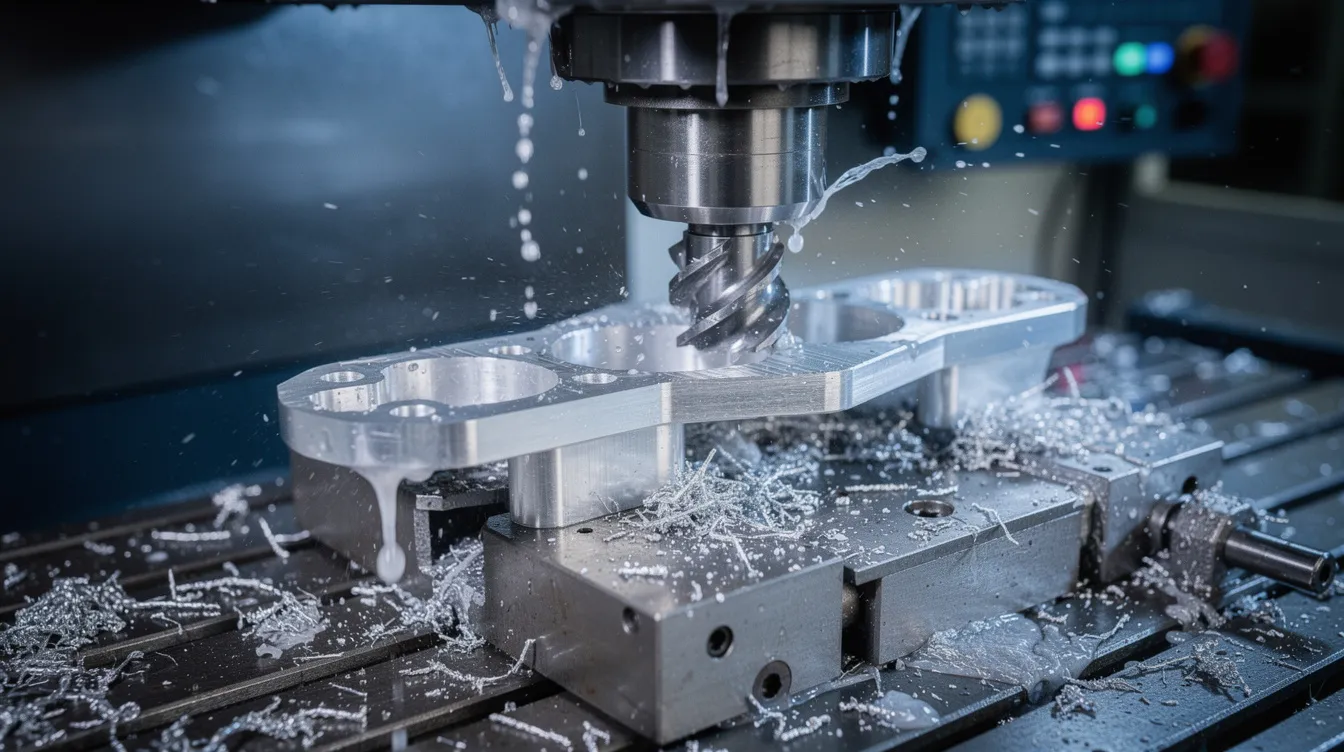
CAM programmers generate G-code that defines every tool movement, spindle speed, and feed rate for the cnc machine. Tool selection depends on material: coated carbide inserts for stainless steel and titanium, high-speed steel or uncoated carbide for aluminum, and diamond-coated or single-flute tools for plastics to avoid melting.
Machine setup involves selecting vises or custom fixtures, installing cutting tools, setting work offsets, and running a dry cycle to verify clearance. Drilling creates holes in the workpiece during dedicated operations or as part of a combined milling cycle, while tapping, reaming, and boring refine features to final size.
CNC milling typically uses a 3-axis system for cutting prismatic parts, but multi axis machines (4- and 5-axis) tilt and rotate the workpiece or spindle to reach features on multiple faces without re-clamping. Milling uses rotating cutting tools to create complex shapes, pockets, and profiles. Turning produces cylindrical parts by rotating the workpiece against a cutting tool, handling shafts, bushings, and threaded fittings with excellent concentricity.
Inspection, General Tolerances, and Quality Assurance
Anebon holds ISO 9001:2015 and ISO 14001:2015 certifications, providing a systematic framework for quality control and environmental management that overseas OEMs expect from a qualified precision machine shop. These certifications cover process control, supplier qualification, and continuous improvement.
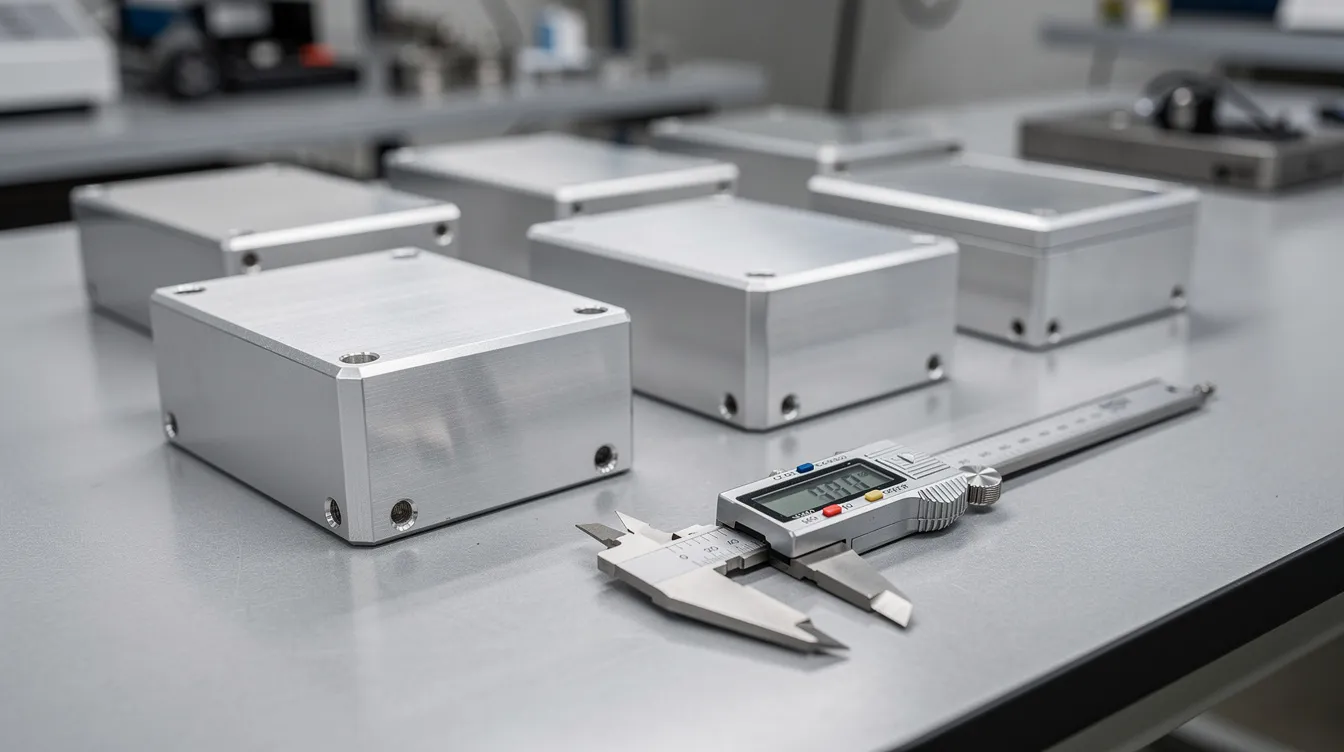
When drawings do not specify tighter limits, general tolerances apply – typically ±0.05–0.10 mm for milled features and ±0.05–0.15 mm for turned diameters. Critical features can be held much tighter on request. Precision machining achieves tolerances as low as 4 microns, and CNC machines can achieve position accuracy down to millionths of an inch on high-end equipment. Precision machining ensures consistent dimensions across multiple parts, which is essential for interchangeability in assemblies.
Dimensional inspection tools include micrometers, calipers, pin gauges, and coordinate measuring machines (CMM) for complex 3D verification. Critical dimensions, surface roughness (Ra), and hardness values are documented in inspection reports such as FAI (First Article Inspection) or PPAP formats tailored to OEM requirements. Anebon routinely machines to tight tolerances down to ±0.002 mm for high precision applications.
CNC Machining Processes Used for Machined Parts
The cnc machining process encompasses several distinct operations: cnc milling, cnc turning, drilling, tapping, boring, grinding, and multi axis machining. Compared to traditional machining in manual shops, modern CNC delivers higher productivity, tighter repeatability, and the ability to meet tight tolerances across production runs. Machining is a subtractive manufacturing process at its core – every operation involves controlled material removal to reach the desired geometry.
Anebon offers both rapid prototyping and production machining, combining multiple processes in-house alongside die casting and sheet metal fabrication for hybrid projects.
-
CNC milling – Flat surfaces, 3D contours, pockets, slots
-
CNC turning – Shafts, spacers, bushings, threaded connectors
-
Drilling and tapping – Through and blind holes, threaded features
-
Grinding – High precision surface finishes on critical interfaces
-
5-axis machining – Complex aerospace and medical components in one setup
CNC Milling
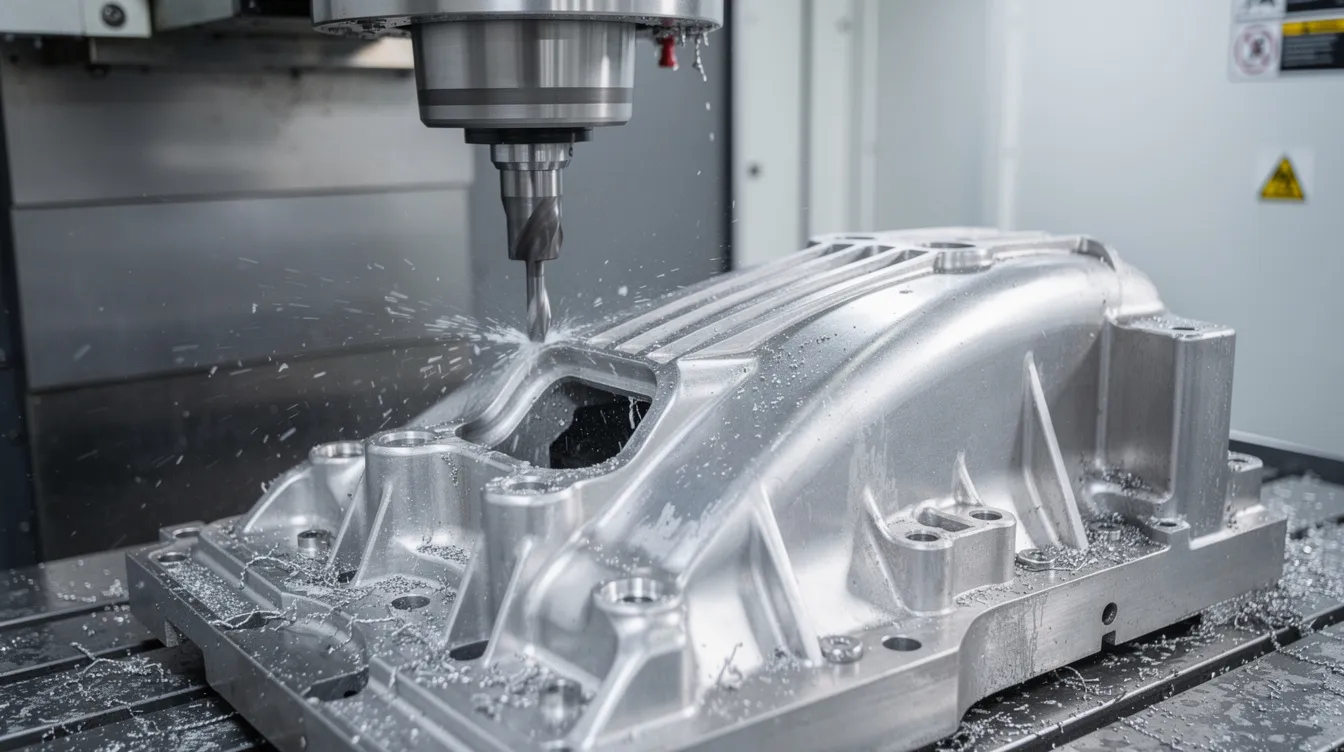
CNC milling handles the broadest range of part geometry in a typical machine shop. Milled parts create flat surfaces and 3D shapes, from simple plates and brackets to intricate manifolds and heatsinks with thin walls and deep pockets. Three-axis milling covers the majority of prismatic work, while 5-axis milling allows machining of multiple faces in one setup – ideal for aerospace brackets, turbine housings, and complex consumer electronics frames that would otherwise require multiple fixtures and operations.
Anebon’s milling centers handle parts up to approximately 800 × 500 × 400 mm, covering most OEM component sizes. Surface finishes achievable directly from milling range from Ra 3.2 µm for roughed features down to Ra 0.8–1.6 µm with fine finishing passes; further improvement is available through polishing or grinding as secondary operations.
CNC Turning
CNC turning is the process of choice for rotational parts: shafts, spacers, bushings, threaded connectors, and hydraulic fittings. Turning produces cylindrical parts with excellent concentricity, fast cycle times at high volumes, and strong dimensional control along diameters and shoulders.
Live-tool CNC lathes combine turning with milling to add flats, keyways, cross holes, and complex end features in one setup – reducing handling, improving accuracy, and shortening lead times. This approach produces precision turned components for applications across many industries.
-
Automotive – Powertrain shafts, sensor housings, fuel system fittings
-
Medical – Instrument pins, bone screw blanks, endoscope components
-
Industrial machinery – Rollers, actuator shafts, coupling sleeves
Secondary Machining and Finishing Operations
Machined parts often require post-processing for surface finishing and appearance improvement. Secondary operations refine features and prepare parts for their operating environment:
-
Drilling and reaming – Drilled parts enhance or create holes for precise assembly; reaming brings hole diameters to final size with tight tolerances
-
Tapping and thread milling – Produce custom threads (internal and external) for fastener interfaces
-
Counterboring and countersinking – Create recesses for bolt heads and flush-mount fasteners, removing sharp edges
-
Grinding – Grinding achieves high-precision surface finishes using abrasive wheels, critical for bearing journals and sealing surfaces
-
Anodizing – Type II and Type III (hardcoat) for aluminum; adds corrosion resistance and wear resistance
-
Plating – Zinc or nickel plating for steel parts; improves corrosion resistance and appearance
-
Powder coating – Durable, even finish for housings and enclosures exposed to handling or weather
-
Bead blasting and polishing – Cosmetic finishes for visible components; polishing for sealing or optical surfaces
Specifying finish early affects material choice and dimensional allowances. Plating thickness, anodize buildup, and masking requirements all influence final part dimensions, so coordinating with Anebon’s engineering team during design review avoids rework.
Applications of CNC Machined Parts Across Industries
Machined parts are critical where slight deviations could result in failure – from aircraft engine mounts to surgical instruments to high-speed sensor assemblies. CNC machining is widely used in aerospace and medical industries, and its reach extends across automotive, electronics, energy, and robotics. Precision machining is essential for aerospace and medical applications where safety margins are non-negotiable. Industries often require custom machined parts for specialized applications that off-the-shelf components cannot satisfy.
-
Aerospace – Structural brackets, valve bodies, turbine hardware, fasteners. Aerospace applications require high-precision components that can withstand extreme conditions, with tolerances often ±0.005–0.02 mm and materials like titanium and high-grade aluminum. Anebon supports these requirements with certified material traceability.
-
Medical devices – Implant components, bone screws, surgical instrument bodies, sterilizable housings. Medical applications demand high precision and biocompatibility, driving use of Ti-6Al-4V ELI, 316L stainless, and PEEK.
-
Automotive – Engine brackets, sensor housings, transmission components, fuel system fittings. Automotive applications utilize machined components for performance and efficiency across powertrain and chassis systems.
-
Consumer electronics – Enclosures, heatsinks, internal mounts, connector housings
-
Industrial machinery and robotics – Precision gears, actuator bodies, fixture plates, linear guide mounts
-
Energy and marine – Valve bodies, subsea fittings, pump housings in corrosion resistant alloys
-
Laboratory and measurement – Sensor housings, calibration fixtures, optical mounts
Key industries for machined parts include aerospace, automotive, medical, and industrial machinery. CNC machining is used in aerospace, automotive, and medical industries at volumes ranging from single prototypes to full-scale OEM programs. CNC machining can produce parts in volumes from 1 to 100,000 units, adapting to demand without the tooling investment of other methods like die casting or stamping.
Consumer Electronics and High-Precision Enclosures
CNC machined aluminum and stainless steel enclosures are standard in smartphones, wearables, cameras, and audio devices. These parts demand both tight dimensional control for internal snap fits and threaded holes and flawless cosmetic surfaces visible to end users.
CNC milling creates thin-walled housings with internal bosses, precise cutouts for connectors and buttons, and complex contours that define a product’s identity. Anodizing and bead blasting deliver consistent color and texture across batches, a non-negotiable requirement for brand-critical consumer products. Anebon supports rapid prototyping of enclosure designs before clients move to higher-volume methods, maintaining consistent look and feel from first article through production.
Prototyping, Low-Volume, and Bridge Production
CNC machining enables rapid prototyping without dedicated tooling, making it the fastest path from concept to physical part for components that may later transition to injection molding, die casting, or stamping. Machined parts are essential for rapid prototyping with minimal lead times, and high-precision CNC machining can produce parts in as little as one day for urgent development cycles. CNC machining can produce parts in as little as one day when geometry and material allow.
Bridge production fills the gap between prototype approval and volume tooling delivery: CNC machined parts serve initial market launches or pilot builds while long-lead molds or dies are fabricated. CNC machining is cost-effective for low-volume production runs, with no minimum order quantities, quick design changes, and identical material properties between prototype and early production.
-
Typical timeline – CAD to parts within 1–5 days for simple prototypes; 1–3 weeks for complex multi-operation parts with finishing
-
Volume flexibility – Single pieces to hundreds; scale to thousands as demand grows
-
Transition support – Anebon can machine both metal and plastic prototypes, then help transition designs to die casting or sheet metal when volumes justify the tooling investment
Design Considerations for High-Quality Machined Parts
Good design reduces machining time, cost, and risk while improving consistency in cnc machined parts. Collaboration between your design team and Anebon’s engineers early in the project delivers the best outcomes.
-
Geometry and tool access – Ensure cutting tools can reach all features without extreme overhang or special fixturing
-
Wall thickness and stiffness – Maintain minimum walls (≥0.8 mm aluminum, ≥1.5 mm most plastics) to avoid deflection and chatter
-
Tolerance strategy – Tighten only where function demands it; use general tolerances elsewhere
-
Material selection – Match material to load, environment, and finish requirements from the start
Tolerances and General Tolerances
Distinguish between functional critical tolerances and general tolerances when dimensioning your parts. Only tighten where performance demands it – bearing bores, mating interfaces, sealing surfaces, and alignment features. CNC machining achieves tolerances of +/-0.001″ to +/-0.005″ as standard capability. Precision machined parts can achieve tolerances as low as 4 microns on select features with appropriate equipment and environmental control.
Realistic ranges to specify:
-
General tolerances – ±0.05 mm for most non-critical dimensions (per ISO 2768 medium or fine)
-
Precision fits – ±0.01–0.02 mm for press fits, sliding fits, and alignment features
-
Ultra-high precision – ±0.002–0.005 mm available at Anebon for bearing bores, optical interfaces, and critical assemblies
Tightening from ±0.05 mm to ±0.01 mm can double machining cost due to slower feeds, additional passes, and increased inspection time. Include datum schemes, GD&T callouts, and clear notes for surface finish and flatness on your 2D drawings to eliminate ambiguity in the machining process.
Geometry, Tool Access, and Minimum Feature Sizes
CNC milling tool diameters and lengths impose practical limits on achievable internal radii, pocket depths, and wall thicknesses. Internal sharp edges are not possible with standard end mills – the tool radius always leaves a fillet. Achieving true sharp internal corners requires EDM or a design change.
-
Internal corner radii – Minimum equal to tool radius; specify ≥R0.5 mm where possible
-
Pocket depth-to-width ratio – Keep below 4:1 to avoid tool deflection and chatter
-
Minimum hole diameter – 1.0 mm for drilling; smaller features may need EDM or micro-machining
-
Thin walls – ≥0.8 mm for aluminum; ≥1.0 mm for steel; ≥1.5 mm for most plastics
-
Deep features – Consider splitting into multi-part assemblies when part geometry pushes beyond standard tooling reach
Material Selection and Surface Finish Requirements
Mechanical loads, operating environment (corrosion, temperature), regulatory constraints, and cosmetic expectations should drive material selection from the earliest design phase. Matching materials to finishes avoids costly rework:
-
6061-T6 – General structural parts; anodize for corrosion resistance and color
-
7075-T6 – High-stress aerospace brackets; chemical conversion or anodize
-
316 stainless – Marine or medical environments; passivation for corrosion resistance
-
PEEK – Sterilizable components for medical or food contact; typically as machined or polished
-
Polished surfaces – For seals, sliding interfaces, and optical mounts
-
Bead-blasted and anodized – For visible housings in consumer electronics requiring uniform appearance
-
Ground surfaces – For sliding fits and bearing journals requiring low friction
Involve Anebon early for advice on pairing materials with coatings and finishes to meet lifecycle and cost targets. A material drop down in the online quoting process lets you compare options quickly during the RFQ stage.
Why Partner With Anebon for CNC Machined Parts?
Anebon delivers precision cnc machining, die casting, and sheet metal fabrication from rapid prototyping through mass production, all under one roof. Since 2010, the company’s Dongguan-based manufacturing facilities have served overseas OEMs and R&D teams across aerospace, medical, automotive, electronics, and industrial sectors.
-
Certifications – ISO 9001:2015 and ISO 14001:2015 for quality and environmental management
-
Tolerances – Capable of holding ±0.002 mm on critical features
-
Materials – Metals, plastics, and composites; over 50 material options with certificates available
-
Processes – CNC milling, cnc turning, die casting, sheet metal; online cnc machining services for streamlined quoting
-
Engineering support – DFM review, responsive communication in English, end-to-end project handling
Capabilities, Lead Times, and Service Model
Anebon’s CNC machining parts capability covers a wide range of sizes, materials, and volumes:
-
Milling – Parts up to ~800 × 500 × 400 mm on 3- to 5-axis centers
-
Turning – Diameters up to ~300 mm; lengths to ~500 mm on CNC lathes with live tooling
-
Volumes – From single prototypes to production runs of thousands
-
Lead times – Prototypes typically 3–7 business days; production orders 2–4 weeks depending on complexity and finishing. Machining services cover both standard and expedited timelines.
-
Quality infrastructure – CMM, optical measurement, hardness testing, surface roughness gauges; detailed inspection reports (FAI, PPAP, or custom formats)
-
Communication – Dedicated project engineer, regular updates, support for design iterations
How to Get Started: Requesting a Quote for Machined Parts
Getting a quote from Anebon is straightforward:
-
Prepare your files – Export your 3D model as STEP or IGES and your 2D drawing as PDF, with tolerances, surface finish, and critical dimensions clearly called out on technical drawings
-
Specify requirements – Material, quantity, general tolerances or tighter specs, surface treatments, and any compliance needs (RoHS, REACH)
-
Submit – Upload files via the Anebon website or send directly by email; typical response time is 1–2 business days
-
Review DFM feedback – Anebon’s engineers will flag any features that could be optimized, suggest alternative approaches using cnc machining advantages, and confirm pricing
-
Iterate and confirm – Approve the quote, finalize design, and Anebon handles the rest from programming through inspection and shipping
Include information about your application, target timeline, and any regulatory requirements to speed up engineering review. Anebon can propose design adjustments to reduce cost or improve manufacturability without changing function – because the best machined parts start with a conversation between your design team and the people running the machines.
Ready to move forward? Submit your next CNC machined parts project to Anebon and get engineering feedback within days.