Essential Guide to Plastic CNC Machining for Prototypes and Parts
Plastic CNC Machining: Materials, Processes & Applications
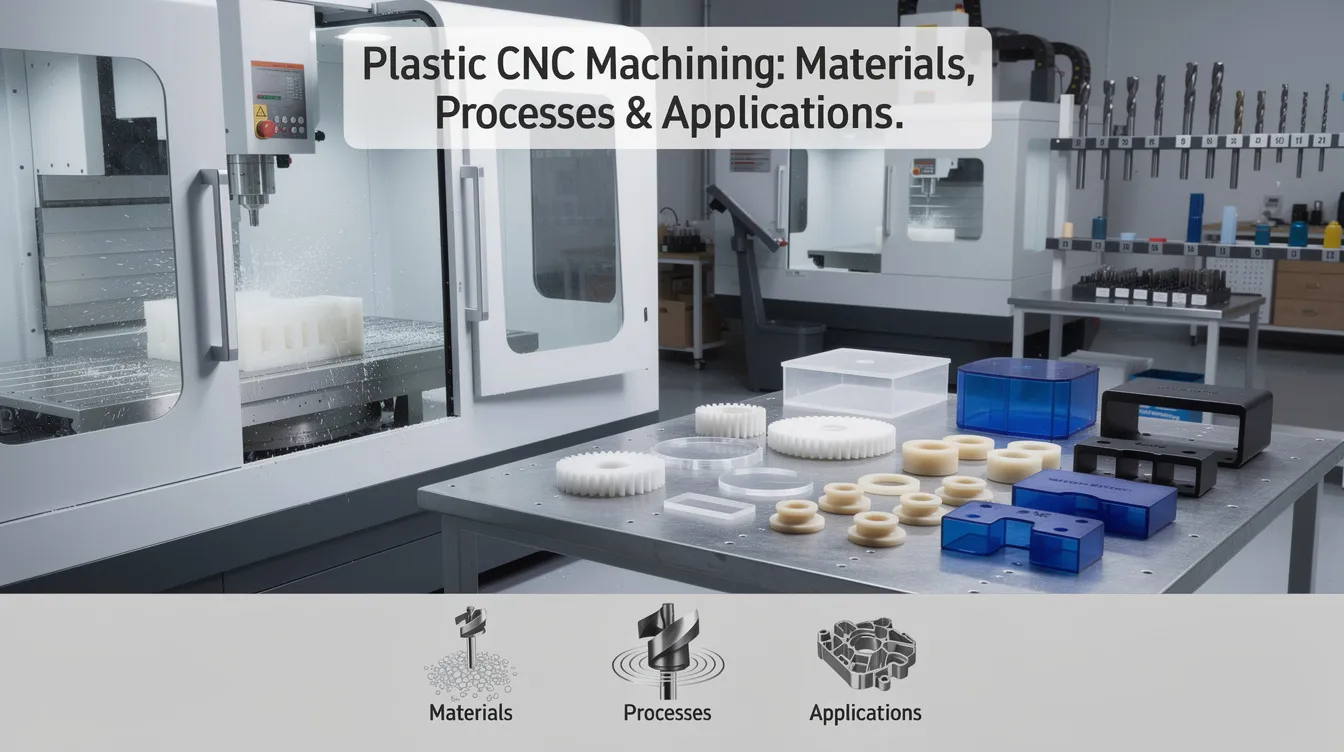
Plastic CNC machining is a subtractive manufacturing process where computer-controlled cutting tools shape engineering plastics from solid stock into finished components. For design engineers who need precision plastic parts without the cost and delay of custom molds, it remains one of the most practical paths from concept to hardware.
Quick Overview: Plastic CNC Machining at Anebon
CNC machining allows for dimensional accuracy often tighter than injection molding, making it the preferred method for low-volume and high-precision plastic parts. CNC machines allow for rapid prototyping from digital designs, and CNC machining enables rapid production from CAD designs within days. CNC machining also eliminates the need for expensive custom tooling, so design teams can iterate without financial risk.
Anebon Metal Products Limited, founded in 2010 in Dongguan, Guangdong, China, offers cnc plastic machining from rapid prototypes through full production with tolerances down to ±0.002 mm. Anebon is ISO 9001:2015 and ISO 14001:2015 certified, serving overseas OEMs across aerospace, medical devices, automotive, electronics, robotics, and industrial machinery.
Compared to injection molding, cnc machining is ideal for small and mid-sized batches and complex geometries where mold costs cannot be justified. Key benefits include:
-
Tight tolerances across a wide range of plastic materials (ABS, POM, Nylon, HDPE, Polycarbonate, PEEK, and more)
-
Fast lead times from days rather than weeks
-
No mold investment, making design changes cost effective
-
Strong DFM support from Anebon’s engineering team
Can Plastic Be CNC Machined? Fundamentals and Advantages
Modern 3-, 4-, and 5-axis CNC machines can precisely machine many plastics, not just metals. CNC machining requires CAD and CAM software for automated tools that cut, drill, and shape solid blocks, rods, or sheets of plastic into finished parts. CNC machining provides superior accuracy over traditional manual machining methods, and CNC machines can produce intricate geometries that manual tools cannot achieve.
This subtractive approach differs fundamentally from injection molding (which requires cavity tooling) and 3D printing (which builds layer by layer). CNC machining can produce high-quality surface finishes without post-processing in many cases, and it offers high precision for complex geometries that would be difficult or impossible with manual methods.
Anebon uses both cnc milling and CNC turning centers to produce parts such as housings, manifolds, jigs, optical components, and insulating parts. CNC machining facilitates testing of mechanical and thermal properties using final production-grade plastic, which is critical for engineering validation.
Typical achievable tolerances for machined plastic range from ±0.05 mm as standard to ±0.025 mm on materials like Delrin and PEEK, while softer materials like HDPE hold looser ranges around ±0.1–0.25 mm.
Key Machining Considerations for CNC Plastic Parts
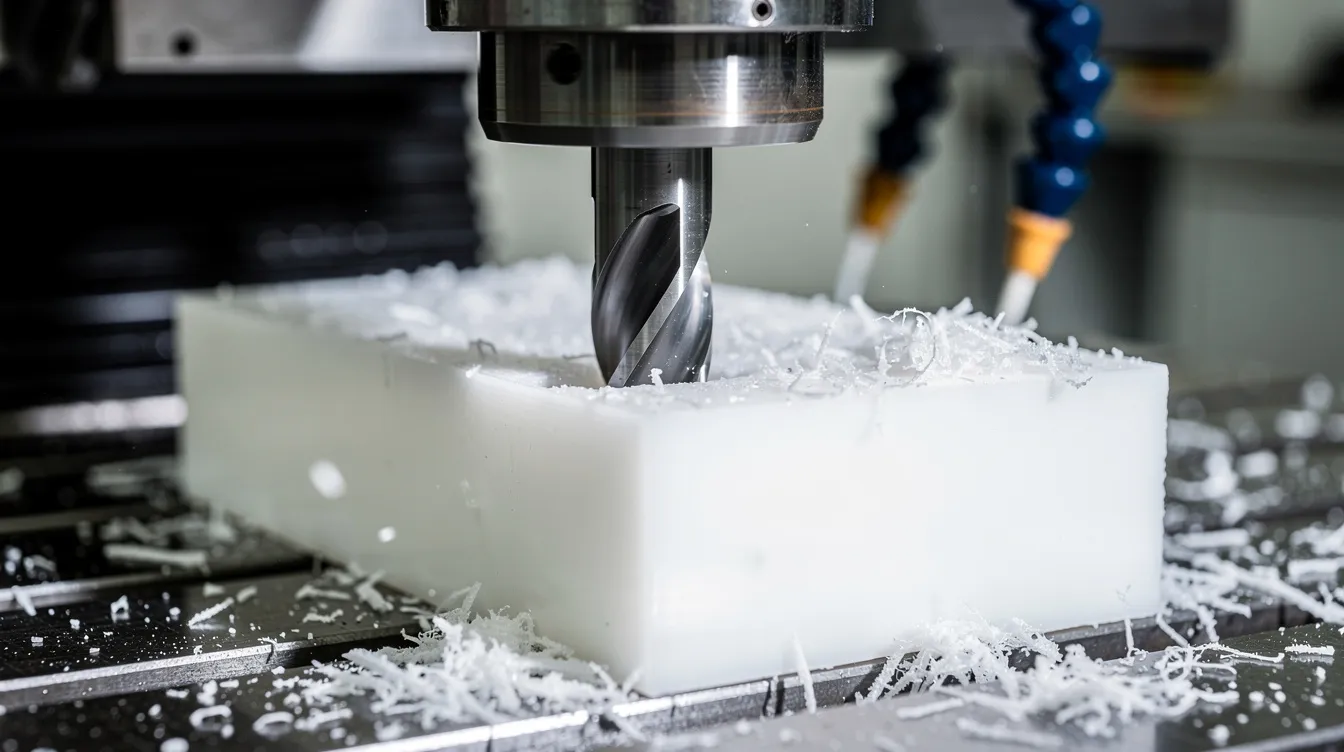
Plastic behaves very differently from aluminum or steel on a cnc machine. Plastics require specialized handling due to thermal sensitivity, lower stiffness, and different chip behavior.
-
Thermal behavior: Plastics have lower melting points and higher thermal expansion than metals. HDPE melts around 120–130 °C, and POM softens well before its 175 °C melting point. Excessive heat from cutting tools causes melting, stress cracking, or warping.
-
Clamping and distortion: Over-clamping soft plastics deforms parts. Soft jaws, vacuum fixtures, and support pads help prevent warping during machining.
-
Sharp cutting tools and feeds: Sharp tools, optimized spindle speeds, and appropriate coolants (often air blast or mist rather than flood coolant) prevent chip welding and poor surface finish.
At Anebon, process parameters are tuned per material-different strategies for acetal versus high density polyethylene versus polycarbonate-and validated during first-article runs. Reliable cnc plastic machining depends on controlling heat, using sharp tools, clearing chips efficiently, accounting for moisture absorption in hygroscopic plastics, and allowing for stress relief when needed.
Material Properties: Choosing the Right Plastic for CNC Machining
Selecting the right material is the single most consequential decision in any plastic machining project. Material properties like mechanical strength, thermal stability, wear resistance, and chemical resistance directly affect both machinability and part performance.
Key criteria engineers should evaluate:
-
Mechanical properties (tensile strength, high stiffness, impact resistance)
-
Thermal properties (heat resistance, thermal expansion)
-
Chemical resistance and corrosion resistance
-
Electrical insulation requirements
-
Dimensional stability and low moisture absorption
-
Optical clarity or color needs
-
Cost and stock availability
Not all plastics machine the same way. Some cut crisp and clean (POM, PMMA), while others tend toward gummy or burr-prone behavior and require specific milling tool strategies and polymer handling. For very tight tolerance cnc plastic parts, semi-crystalline engineering plastics like Delrin or PEEK are preferred. For low cost, low-load parts, materials like HDPE or PP can be ideal and serve as an economical alternative.
Most Common Plastics for CNC Machining
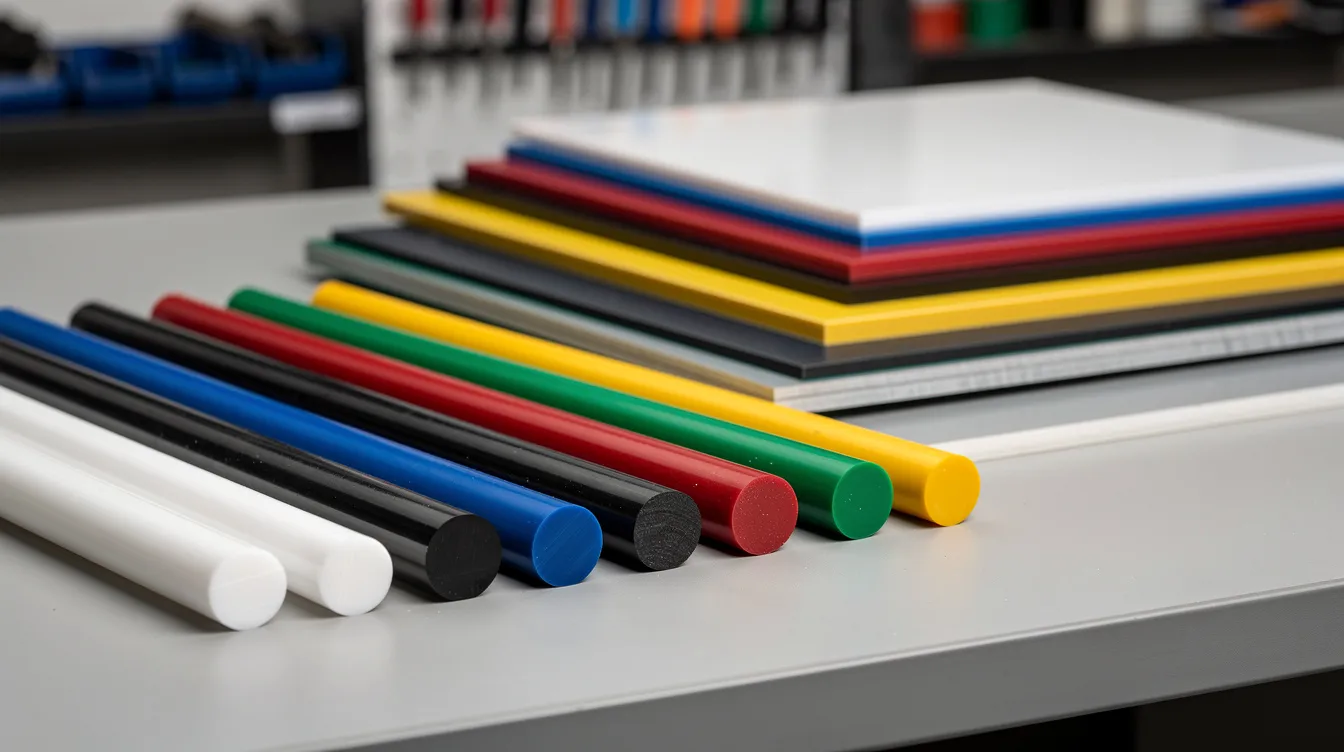
Commonly machinable plastics include Delrin, Acrylic, Polycarbonate, Nylon, and PEEK. Below are the most widely used materials Anebon machines, each compatible with cnc milling and CNC turning. The list is not exhaustive-Anebon can source specialty grades including flame-retardant, glass fibers–reinforced, or carbon-filled variants on request.
ABS CNC Machining
ABS is an economical, impact resistant thermoplastic and one of the easiest plastics to machine, widely used for prototypes and pre-injection molding samples.
-
Benefits: Good machinability, stable general tolerances, easy to paint and glue, good impact resistance at room temperature, suitable for cosmetic and functional prototypes
-
Drawbacks: Limited chemical resistance, softens at relatively low temperatures (~85–100 °C HDT), surface can scratch, not ideal for heavy loads or UV exposure
-
Applications: Electronics enclosures, consumer product housings, automotive interior trim prototypes, design verification models before injection molding
Nylon (PA) CNC Machining
Nylon 6/6 is strong and durable, suitable for various applications as a lightweight alternative to metal parts. It maintains strength and rigidity under heavy loads.
-
Benefits: High strength-to-weight ratio, excellent wear resistance, good sliding characteristics for bushings and gears, available in glass-filled grades for added stiffness
-
Drawbacks: Nylon can absorb moisture significantly (1.2–3% by weight), causing dimensional swelling of 1–2% linear. Internal stresses can cause warping if not relieved.
-
Applications: Gears, pulleys, wear pads, rollers, bearings, structural components in automotive and industrial machinery
Anebon recommends pre-drying Nylon stock and designing dimensional allowances for humidity-driven shifts in tight-tolerance assemblies.
Acrylic (PMMA) CNC Machining
Acrylic is a transparent plastic with excellent optical clarity, often used as a lighter alternative to glass under trade names like Plexiglas.
-
Benefits: Outstanding optical clarity, good UV stability, suitable for polished or vapor polishing optical surfaces, good abrasion resistance relative to many plastics
-
Drawbacks: Brittle-prone to cracking in thin walls or sharp corners, machined surfaces are hazy unless post-polished, sensitive to aggressive solvents
-
Applications: Display windows, light pipes, lenses, indicator panels, fluid-handling sight glasses in medical and laboratory equipment
Anebon can provide flame or vapor polishing of acrylic cnc machined plastics to restore transparency.
POM / Delrin CNC Machining
Acetal is excellent for tight tolerance machining. POM (acetal) and DuPont’s Delrin offer a slippery surface, high stiffness, and low friction properties, making them among the most popular cnc machined plastic parts in precision engineering.
-
Benefits: Excellent dimensional stability, low moisture absorption (~0.2–0.5%), outstanding machinability, low friction and excellent wear resistance, stable mechanical properties across a wide temperature range
-
Drawbacks: Poor bonding/adhesion due to low surface energy, potential warping in thin sections from internal stresses, hazardous off-gassing if overheated
-
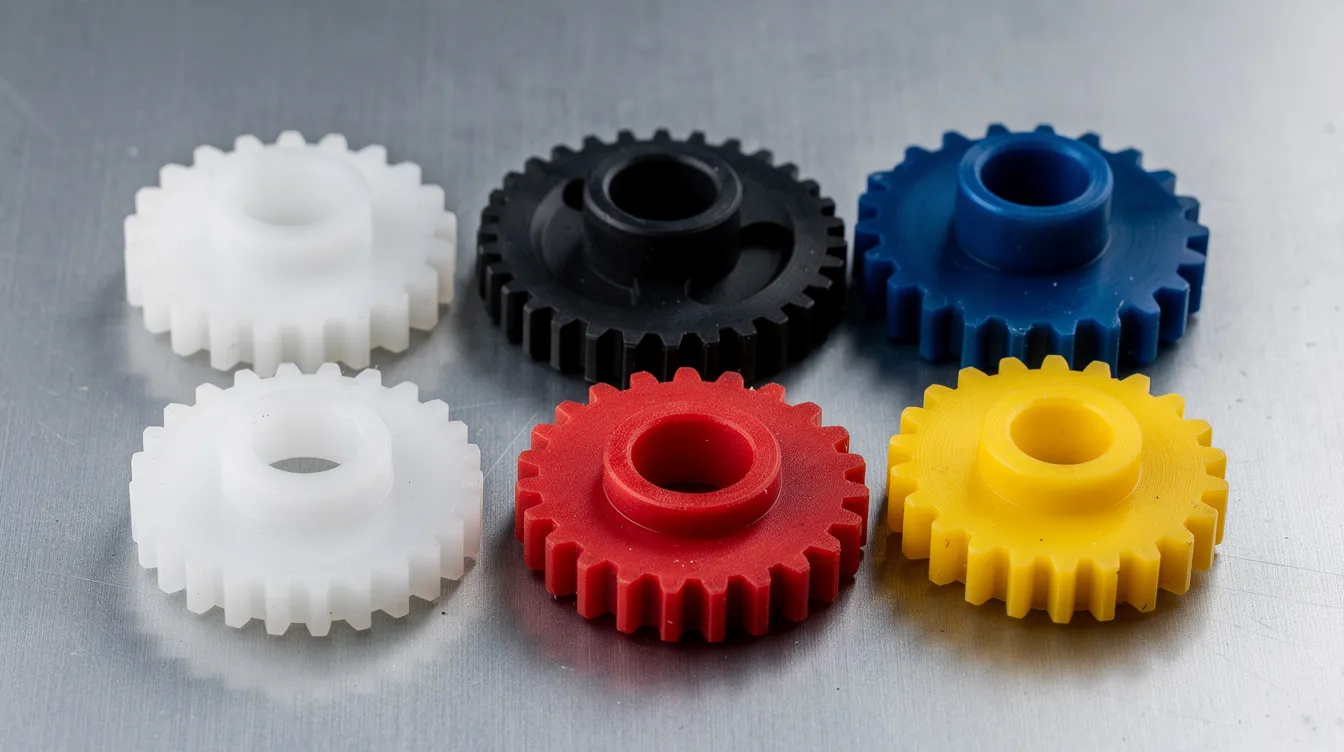
Applications: Precision gears, bushings, cams, valve components, jigs and fixtures, motion components in automation and robotics
For customers needing tight tolerances and low friction without lubrication, Anebon often recommends POM as a first-choice strong plastic.
HDPE (High-Density Polyethylene) CNC Machining
HDPE is known for its chemical resistance and electrical insulation. It is commonly used for chemical tanks and packaging materials.
-
Benefits: Lightweight, corrosion resistant across a wide range of chemicals, good low-temperature impact performance, naturally low friction, competitive raw material cost
-
Drawbacks: Relatively low tensile strength (~26–33 MPa), susceptibility to creep and stress cracking under sustained load, lower dimensional accuracy than engineering plastics
-
Applications: Tanks, manifolds, cutting boards, piping and fittings, plugs and seals, lightweight electrically insulating components
Anebon tunes cutting tools geometries and feeds for HDPE to minimize burrs and achieve clean edges on this soft material.
Polycarbonate (PC) CNC Machining
Polycarbonate has excellent impact resistance and optical clarity, making it a viable option whenever a part must not shatter. It offers high impact resistance that few other transparent plastics can match.
-
Benefits: Outstanding impact strength, good heat resistance (HDT ~125–140 °C), inherent flame resistance in many grades, good transparency when polished
-
Drawbacks: Prone to scratching without hard coatings, sensitivity to some solvents and stress cracking, potential for internal stresses if poorly machined
-
Applications: Safety guards, machine covers, light diffusers, windows, instrument lenses, protective shields in machinery and medical devices
PEEK and Other High-Performance Plastics
PEEK is highly resistant to heat and chemicals and is ideal for high-performance aerospace applications. It is used in aerospace, medical, and automotive applications where different plastics simply cannot survive the environment.
-
Benefits: High strength at high temperature (continuous service up to ~250 °C), excellent chemical resistance, very good wear and fatigue properties, can replace metals in demanding designs to improve wear resistance
-
Drawbacks: Material cost is 7–20× higher than Delrin or Nylon ($180–300/ft for 2-in rod), requires careful heat management and sometimes annealing, longer lead times for specialty grades
-
Applications: Aerospace brackets, medical implants, high-load bushings and seals, semiconductor equipment, pump parts
Anebon also machines PPS, PVDF, PTFE, PVC, and G-10/FR4 laminates on request.
How CNC Plastic Machining Compares to Injection Molding
CNC machining is more cost-effective than injection molding for low volumes-typically 1 to a few thousand parts per design. Injection molding offers the lowest per-part cost at high volumes but requires expensive molds ($10,000+) and weeks of lead time. CNC machining allows for design adjustments without hardware changes, handles thicker sections and undercuts without mold-release constraints, and works with many plastics that may not be injection-moldable.
Choose cnc plastic machining when you need:
-
Low-volume or bridge production
-
Frequent design changes
-
Large or thick-walled parts
-
Specialty plastics (PEEK, PTFE, filled grades)
Choose injection molding for stable, high-volume production where tooling costs amortize across thousands of units. Anebon offers both CNC machining and die-casting / sheet metal services and can help evaluate cost crossovers.
Design Guidelines for Plastic CNC Parts
Smart design for manufacturability reduces cost, machining time, and risk of warping in cnc machined plastic parts.
-
Wall thickness: Minimum 1.5–2.0 mm for ABS and POM; thicker for brittle materials like acrylic
-
Internal radii: Match available milling tool diameters (1–3 mm) to reduce stress concentrations
-
Threads: Use threaded inserts in soft plastics; minimum M3 thread size recommended
-
Part size: Very large parts may require segmenting and assembly
Anebon provides DFM feedback on uploaded CAD files, including suggestions to improve machinability and stabilize tolerances.
Cutting Tools, Heat Control & Process Optimization
Anebon optimizes cutting tools and parameters specifically for each plastic to produce parts with consistent, repeatable quality. Single-flute or two-flute cutters work best for low-melting plastics like HDPE, while multi-flute tools suit harder materials like POM or glass-filled grades. CNC machines can perform multiple operations without resetting manually, improving efficiency.
Heat is managed through high feed rates at moderate spindle speeds run at high speeds only when the material permits, sharp cutting edges, and air blast or mist cooling. Workholding balances secure clamping with minimal deformation using soft jaws and vacuum fixtures. Anebon validates settings during first-article inspection and maintains internal process databases for each material.
Applications of CNC Machined Plastics Across Industries
CNC machined plastics are lightweight compared to metals, corrosion resistant, and electrically insulating-properties that make them essential across high-tech industries. Aerospace applications utilize CNC machining for lightweight components from high-performance plastics like PEEK.
-
Medical devices: Produced with precise dimensions and biocompatibility using CNC machining-sterilizable PEEK instruments, polycarbonate housings, POM fluid connectors
-
Aerospace & UAVs: PEEK brackets, insulating spacers, lightweight structural elements replacing metal parts for weight reduction
-
Automotive & e-mobility: Nylon bushings, POM gears in actuators, HDPE and PP components in chemical dosing systems
-
Electronics & robotics: ABS and polycarbonate enclosures, POM precision gears in automation equipment, custom sensor mounts
-
Industrial machinery: Polycarbonate guards for machine safety standards, HDPE chemical handling components, PTFE seals and wear strips
Anebon frequently combines cnc plastic machining with metal machining or sheet metal fabrication for hybrid assemblies-for example, plastic insulators inside aluminum housings.
Tolerances, Quality Assurance & Inspection for Machined Plastics
Holding tight tolerances in plastic cnc machining requires understanding of material behavior and robust quality systems. CNC machining supports tight tolerances of +/-0.005 in (0.127 mm) as a general capability, with high accuracy down to ±0.02–0.05 mm on Delrin/POM and PEEK under controlled conditions.
Anebon’s QA infrastructure includes ISO 9001:2015–certified processes, incoming material inspection, in-process checks, and final inspection using CMMs and calibrated gauges. For moisture-sensitive plastics like nylon, temperature and humidity are controlled during measurement.
-
Material certificates and lot traceability for regulated industries
-
First article inspection (FAI) documentation
-
Support for PPAP, FAIR, or custom test protocols for critical cnc plastic machining parts
Post-Processing & Surface Finishing for Machined Plastics
Many cnc machined plastics benefit from secondary operations for improved aesthetics, functionality, or assembly. The final product often depends on selecting the right finishing route.
-
Finishing: Deburring, sanding, polishing, vapor polishing for acrylic and polycarbonate, bead blasting for matte textures
-
Coatings: Painting, laser engraving, hard coatings for polycarbonate, anti-static or anti-UV treatments
-
Assembly: Installing threaded inserts, press-fitting bearings, combining plastic and metal parts
Not all finishes suit every plastic-some coatings adhere poorly to POM and some solvents craze polycarbonate. Designers should specify surface finish requirements (Ra values, gloss level, cosmetic zones) to ensure cost effectiveness.
Sustainability, Recycling & Environmental Considerations
Anebon is ISO 14001:2015 certified and actively manages environmental impact from plastic machining operations. Recycling millable plastics reduces environmental impact and waste, and many plastics (POM, ABS, HDPE) can be sorted and sent to recyclers. Polycarbonate is one of the most commonly recycled plastics globally.
Mechanical reprocessing retains quality for future use of plastics, while closed-loop recycling transforms polymers back into monomers for high-purity re-use. Bio-based plastics are gaining traction as eco-friendly alternatives and can be evaluated when mechanical and regulatory requirements permit. Lighter plastic components also reduce energy consumption in automotive, aerospace, and robotics applications over their service life.
How to Get a Quote for CNC Plastic Machining with Anebon
Getting started is straightforward: upload your 3D CAD file and 2D drawings, specify your plastic material or performance requirements, quantities, and target delivery dates. Anebon’s engineering team reviews the design, provides DFM feedback, and proposes suitable materials and surface finishes where needed.
Quotes include unit pricing for different volumes, lead time estimates for prototypes versus production, and any special fixturing charges. Available production models range from rapid prototyping to bridge production and ongoing batch supply with scheduled releases for overseas OEMs.
Whether you need a single machined plastic prototype or a recurring production run of precision cnc machined plastic parts, Anebon delivers fast response times, English-language engineering support, and global shipping from Dongguan, China. Request a quote for your next plastic cnc machining project and put Anebon’s experience across plastics, metals, sheet metal fabrication, and die casting to work for your team.