Essential Guide to Metal Stamping Techniques and Best Practices
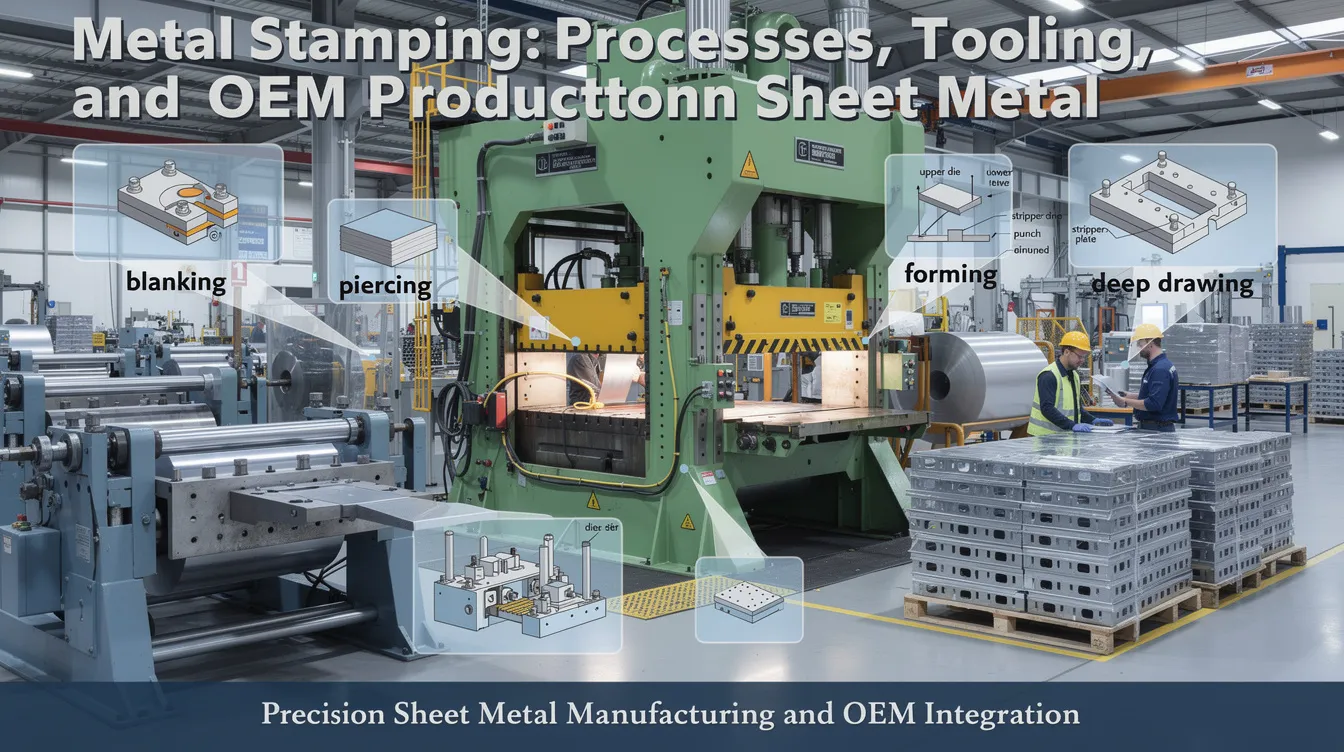
Metal Stamping: Processes, Tooling, and OEM Production with Sheet Metal
Metal stamping transforms flat sheet metal into precision components at scale. This guide walks through the core processes, tooling strategies, material options, and quality systems that make stamping one of the most efficient manufacturing methods available to OEM engineers today.
Introduction to Metal Stamping
Metal stamping is a cold-forming manufacturing process in which flat sheet metal – supplied as coil or pre-cut blanks – is shaped into functional components using matched tooling (dies and punches) driven by high-tonnage presses. No melting is involved. Instead, the material is deformed below its recrystallization temperature through operations like cutting, bending, drawing, embossing, and flanging. The result is high repeatability, tight tolerances, and dramatic cost advantages at volume.
This article is written from the perspective of Anebon Metal Products Limited, an ISO 9001:2015 and ISO 14001:2015 certified manufacturer founded in 2010 in Dongguan, China. Anebon serves overseas OEMs with precision metal fabrication – including CNC machining, die casting, and sheet metal stamping – from rapid prototyping through full-scale production.
Before diving deeper, here are key terms that will recur throughout:
-
Sheet metal – flat metal stock, typically 0.1 mm to 6 mm thick, used as coil or blanks.
-
Metal stamps / tooling / dies – hardened tool steel components (punches, dies, inserts) that shape the workpiece.
-
Stamping press – the machine delivering controlled force to open and close tooling.
-
Stamping process – the sequence of operations applied to sheet metal to create finished parts.
-
Progressive die stamping – a method where coil-fed strip advances through multiple stations in a single die.
Custom metal stamping serves various industries including medical devices, and examples of stamped parts in 2024–2026 products include:
-
Automotive brackets, clips, and trim pieces
-
Medical device enclosures and housings
-
Electromagnetic shielding cans in electronics
-
Battery contact terminals for EVs and portable devices
-
Robotic chassis and frame components
Metal stamping is used in the automotive industry, aerospace, and dozens of other sectors where Anebon supports projects from initial prototypes to long-run production.
The Basics of Metal Stamping and Sheet Metal
Unlike CNC machining, which removes material via cutting tools, stamping deforms material cold – preserving grain structure and enabling far higher throughput once tooling is ready. Compared to die casting, stamping avoids melting and pouring, yielding lower energy costs for thin or shallow geometries. Additive manufacturing excels at complex internal features but is orders of magnitude slower for flat prismatic parts at volume.
High-speed mechanical presses are used in metal stamping methods to apply tonnage to flat sheet metal fed from a coil or as individual blanks. In a single stroke, the press drives a punch into a die to cut or form the desired shape. Metal stamping includes techniques like punching and bending, along with several other core operations:
-
Blanking – cutting a flat shape from strip or sheet
-
Punching / piercing – creating a hole or slot
-
Bending / flanging – forming angles or extended lips along an edge
-
Forming – general shaping beyond simple folds
-
Coining – high-pressure compression for precise surface features
-
Embossing – raising or lowering features relative to the main surface
-
Deep drawing – pulling metal into a cavity to create depth
Typical thickness ranges vary by application: electronics parts often use 0.1–0.5 mm foil-like material; automotive body panels run 0.7–2.0 mm; and structural medical or industrial components may reach 2–6 mm. Coil-fed operations improve throughput for high-volume OEM production, while manual or robotic loading of blanks suits short-run or complex jobs.
Key Steps in the Metal Stamping Process
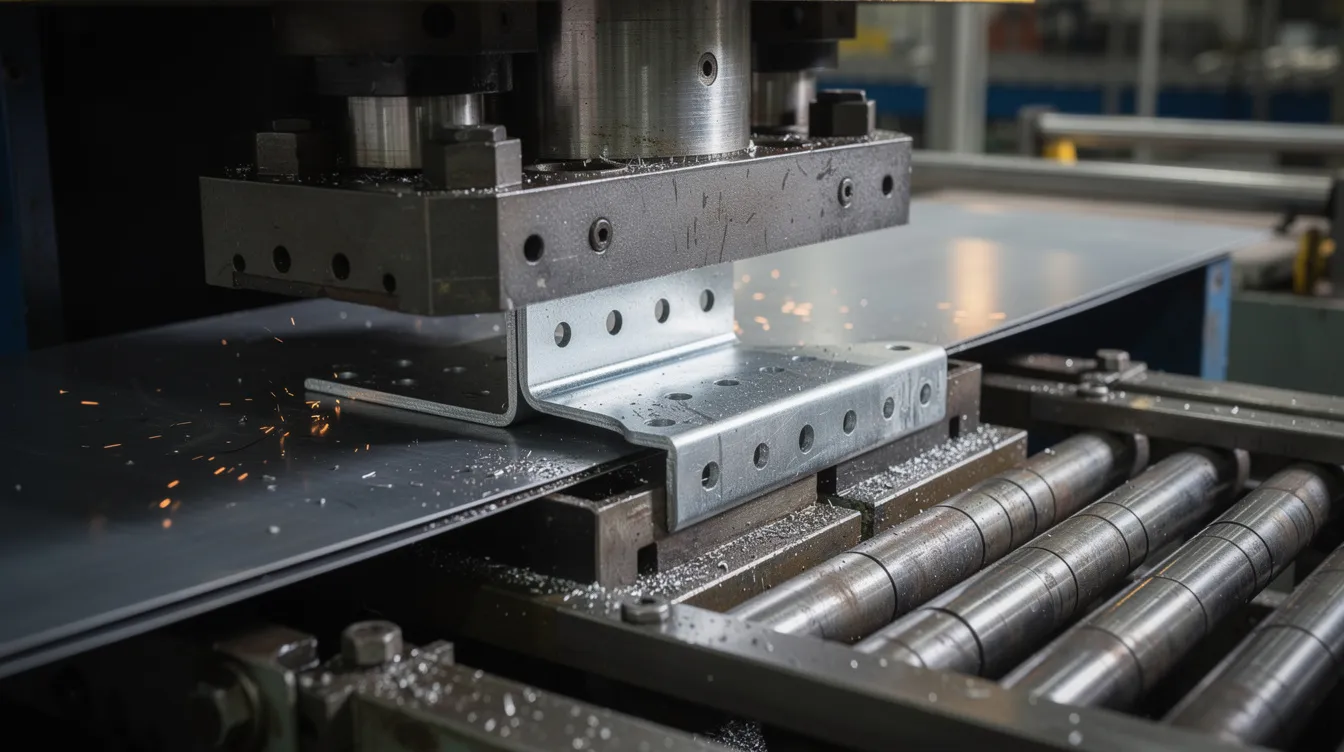
The stamping process is a chain of interdependent phases – design, tooling, trial runs, production, quality control, and packaging – and a successful end product demands care at each stage.
Here is how an OEM project typically flows at Anebon through various steps:
-
Design intake – The customer provides 3D CAD files (STEP, IGES) and 2D dimensioned drawings.
-
DFM review – Engineers flag features problematic for stamping (holes too close to an edge, sharp bend radii, excessive forming depth).
-
Material selection – Grade, temper, and thickness are chosen to balance formability, strength, and cost.
-
Tool design – Strip layout, station sequence, die geometry, and scrap management are planned.
-
Tool build – Dies and punches are manufactured via CNC milling, wire EDM, and grinding.
-
Sampling – First articles are produced and dimensionally inspected.
-
Approval and production – Upon client sign-off, full production begins.
Before entering the press, flat sheet metal or coil undergoes preparation: shearing to size blanks, leveling to remove coil curvature, and deburring edges to prevent defects. Metal stamping processes can include automated coil feeding to maximize efficiency during high-volume runs.
Press tonnage must be calculated carefully. A practical formula: tonnage ≈ sheet thickness × cut perimeter × material shear strength (roughly 70–80% of tensile strength). Under-tonnage risks tool damage, burrs, and excessive springback. Over-tonnage wastes energy and accelerates wear.
-
Anebon integrates secondary operations – tapping, spot welding, riveting, or nut insertion with inserts – in-line or immediately after the primary stamping stroke to reduce handling and compress lead time.
Types of Metal Stamping Processes
The high-volume stamping method choice depends on part geometry and production volume, along with tolerance requirements and cost targets. Here are the main categories and their best-fit applications:
|
Method |
Best For |
Example Parts |
|---|---|---|
|
Single-hit / line dies |
Low–medium volume, simple shapes |
Small brackets, cover plates |
|
Progressive die stamping |
High volume, small complex parts |
Connectors, terminals, clips |
|
Transfer stamping |
Large, deep, or multi-feature parts |
Structural automotive panels |
|
Fourslide / multislide |
Small parts with multi-axis bends |
Springs, clips, small hardware |
|
Deep draw |
Hollow or cup-like shapes |
Housings, tanks, enclosures |
Transfer die stamping is best suited for larger complex structural parts where blanks are mechanically transferred between stations rather than held in a carrier strip. Four-slide stamping produces intricate small parts with minimal scrap by using slide forming techniques that approach the workpiece from multiple directions simultaneously – fourslide stamping employs four tools for simultaneous shaping.
Trade-offs are significant: progressive dies carry high upfront tooling costs (10–20 weeks for design, build, and try-out) but deliver extremely low piece prices at volume. Single-hit dies are cheaper but slower. When features or tolerances exceed what pure stamping can achieve economically, Anebon often combines stamping with CNC machining or laser cutting.
Progressive Die Stamping
Progressive die stamping is the go-to solution for high-volume, high-precision production from coil-fed strip. A coil is uncoiled, leveled, and fed into the die. The strip advances station by station with each press stroke – each station performing a different operation such as piercing, forming, coining, or cut-off.
Progressive die stamping uses multiple stations for complex parts, and one press stroke produces one complete part per strip lane. At 200 strokes per minute, a line can output roughly 12,000 parts per hour. Specialized terminal or lead frame lines can exceed 1,000 strokes per minute.
Part types ideally suited to this method include:
-
Electrical terminals and lead frames
-
Automotive clips and fasteners
-
Battery contacts for EVs
-
Miniature springs and shielding cans
Anebon designs and manufactures progressive dies using CAD/CAM, CNC machining, and wire EDM. Blanked or pierced features in typical progressive dies hold tolerances of ±0.13 mm, while precision dies on critical dimensions can reach ±0.025–0.05 mm. Control of work hardening across stations is essential for maintaining consistent material properties throughout the strip.
Deep Draw and Complex Forming of Flat Sheet Metal
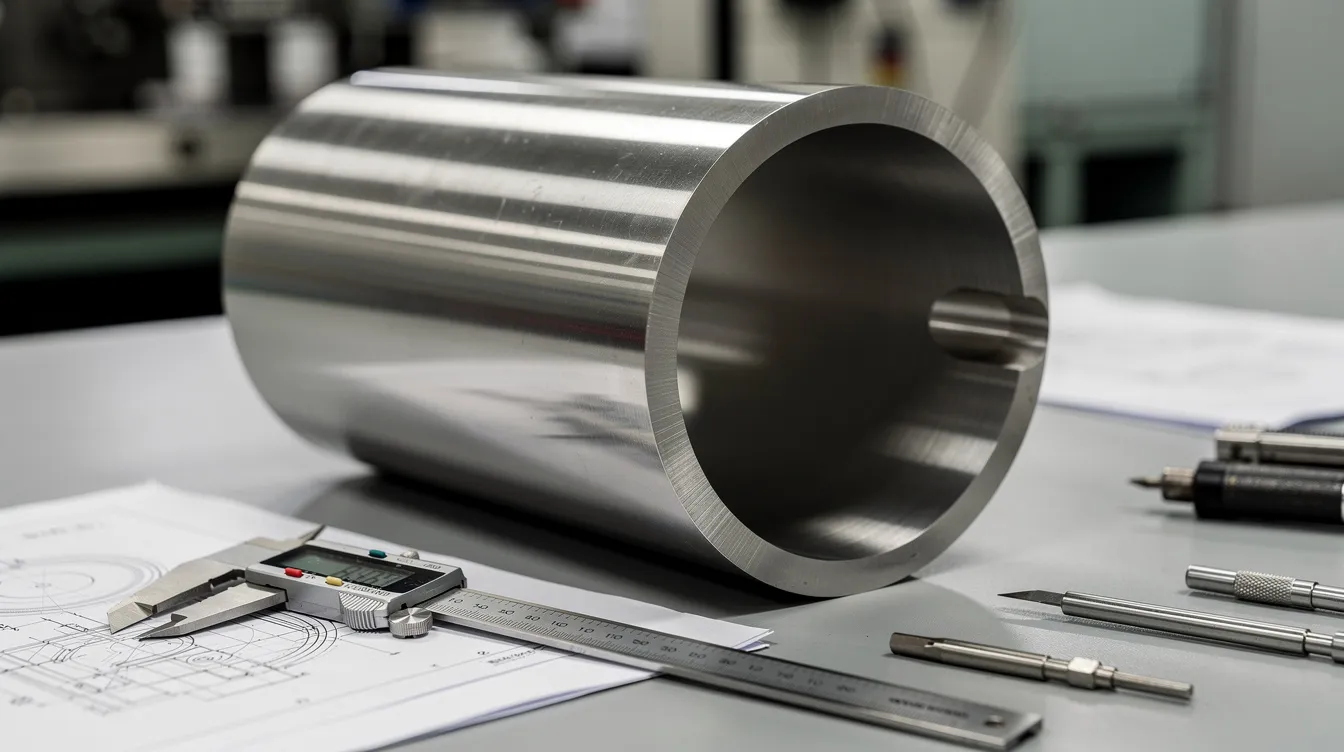
Deep drawing is a forming method that pulls a flat sheet metal blank into a die cavity to create a part whose depth exceeds its smallest opening diameter. Deep drawing forms parts deeper than their diameter, producing seamless components that eliminate welds and improve both strength and appearance.
Use cases include sensor housings, medical device enclosures, automotive fuel system components, and stainless steel containers. Deep drawing is ideal for creating complex automotive components where a welded assembly would be heavier, weaker, or more expensive.
What makes deep draw demanding:
-
Material flow control – Blank holders and draw beads regulate radial flow to prevent wrinkling. Oil-based lubricants reduce friction between the workpiece and die surface.
-
Thinning and cracking risk – Material is stretched and deformed significantly; monitoring thinning prevents tearing.
-
Intermediate annealing – When the material has been strain-hardened beyond formability limits during heat treating cycles, annealing re-softens it for subsequent draws.
Anebon combines deep draw with secondary trimming, piercing, and CNC machining where precise interfaces or threads are needed. Compared to turning or machining a part from solid stock, deep drawing offers substantial material savings and shorter cycle times for appropriate geometries.
Tooling and Metal Stamps: Design and Manufacturing
In an industrial context, “metal design stamps” refer not to jewelry making or leather craft tools, but to the hardened dies, punches, and inserts that shape sheet metal under extreme force. (While the term “stamps” also appears in jewelry, wood, and leather working contexts – and hobbyists may watch for sale or sold listings on craft marketplaces – industrial stamping tooling is an entirely different category of equipment serving unique needs in precision manufacturing.)
Tooling design uses CAD/CAM technology for precision. Anebon’s workflow begins with 3D die modeling, strip layout optimization, and simulation of material flow to minimize scrap and balance punch loads. A single tool 3D model can contain hundreds of parts – from die shoes and punch plates to guide pins, springs, and individual inserts.
Tool steel selection depends on the stamped material and required die life:
-
D2, H13, S7 – common tool steels for various stamping techniques
-
Carbide inserts – used in high-wear areas for extended life
-
Coatings (TiN, TiCN, PVD) – reduce friction, galling, and wear on forming surfaces
CNC machining ensures high precision in die manufacturing. The complete tooling process involves high-precision CNC milling and turning, surface grinding, wire EDM for intricate profiles, and polishing to achieve die clearances typically around 5–10% of sheet thickness per side. Heat treatment and coating extend tool life, and regular maintenance schedules – sharpening, regrinding, alignment checks – keep progressive die programs running for millions of strokes.
Design for Manufacturability (DFM) in Stamped Parts
Design for manufacturing (DFM) feedback is important in precision fabrication – good stamping design can reduce total cost and improve part performance more than any other single factor. Anebon provides suggestions and DFM feedback early, before tool build, to help engineers adjust CAD models for better strip layout, part nesting, and reduced scrap.
Core DFM rules for stamping:
-
Minimum web widths – Material between features (hole to hole, hole to edge) must be sufficient to prevent tearing.
-
Hole-to-edge distance – Generally at least 1–1.5× material thickness.
-
Bend radii – For mild steel, minimum bend radius ≈ 1× thickness; for high-strength or spring materials, 2× or more to avoid cracking. Grain direction matters: bending parallel to the grain at tight radii risks fracture.
-
Bend height – Bend height must be at least 2.5 times the material thickness to ensure the die can grip and form the flange reliably.
-
Tolerancing strategy – Tight tolerances can be as precise as ±0.002 mm in manufacturing, but applying this across every feature inflates tooling complexity and costs. Reserve ultra-tight callouts for mating surfaces, contact interfaces, or critical alignment features.
Materials for Metal Stamping and Surface Treatments
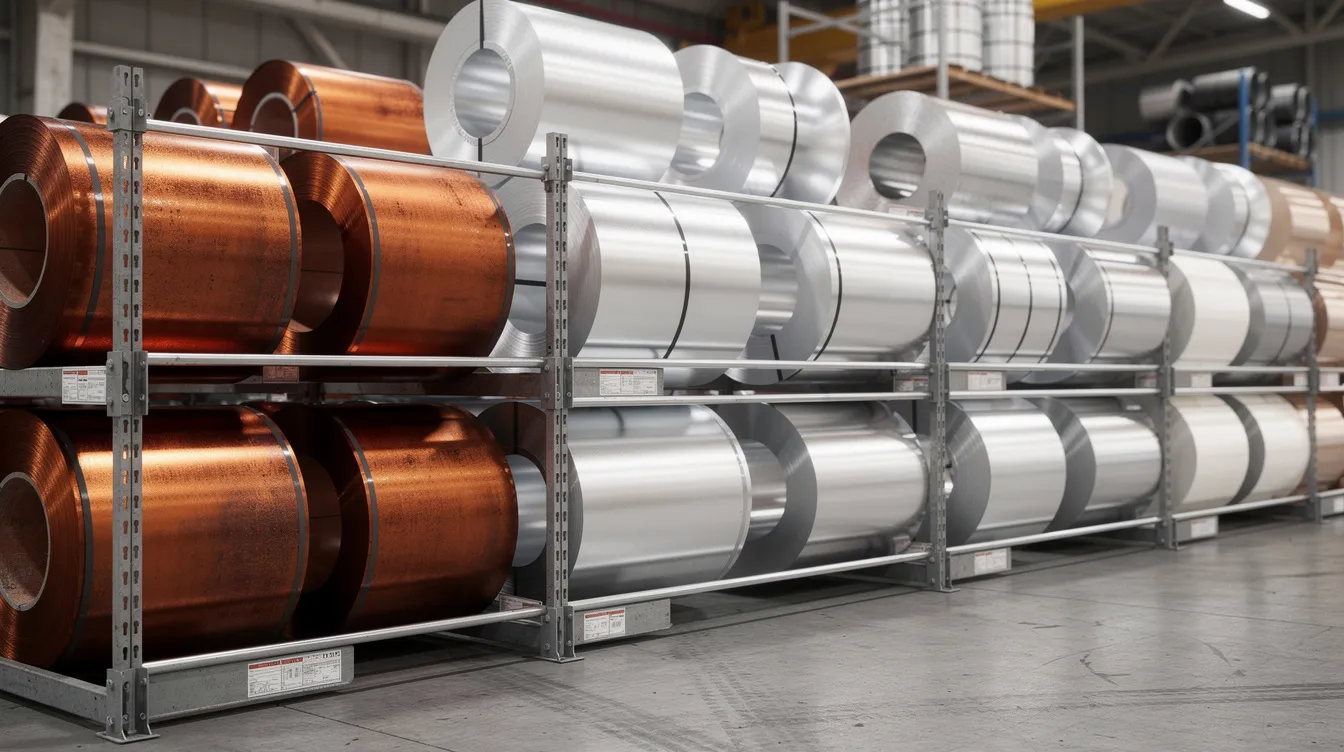
Sheet metal selection is driven by mechanical performance, corrosion resistance, electrical properties, and cost. Here are common materials Anebon works with across many alloys and grades:
-
Carbon steels (SPCC, SPHC) – economical, good formability; steel alloys are commonly used in automotive metal stamping
-
Stainless steel (304, 316, 301) – corrosion resistance, medical and food-grade suitability
-
Aluminum alloys (5052, 6061) – lightweight, good corrosion resistance
-
Copper, brass, phosphor bronze – electrical conductivity for contacts and leads
-
Beryllium copper – used for aerospace and electrical applications where high strength, fatigue resistance, and conductivity are required in combination
-
Spring steel, iron-based alloys – for specific shapes demanding high resilience
Material hardness and temper affect formability and springback. Annealed (soft) stock is preferred for deep drawing; half-hard or cold-rolled conditions suit parts requiring spring-back resistance but demand more generous bend radii.
Typical surface treatments coordinated with stamping:
-
Zinc or nickel plating for corrosion protection
-
Anodizing for aluminum components
-
Electrophoretic painting and powder coating
-
Passivation for stainless steel
Anebon coordinates RoHS- and REACH-compliant finishes to enhance part performance and meet medical, aerospace, and electronics OEM requirements.
Short-Run, Prototyping, and Hybrid Stamping Solutions
Not every project starts at 100,000 pieces per year. Anebon bridges sheet metal fabrication and stamping, supporting both rapid prototypes and long-term production. Short run stamping minimizes tooling costs for small projects by using approaches such as:
-
Soft tooling – less hardened steel or aluminum dies for limited runs
-
Modular dies – reconfigurable, adjustable for design iteration
-
Laser-cut blanks paired with simple forming tools and partial hand operations
-
Hybrid methods – combining CNC bending or CNC machining with basic stamping for low-volume or very complex components
Consider these scenarios: a 2025 medical device startup needs 500 prototypes of a stamped stainless steel enclosure to validate form and fit. Using soft tooling with machining finishes, Anebon can deliver prototypes for testing without the cost of a full progressive die. Or an EV supplier iterating bracket designs before committing to production tooling – laser-cut blanks and simple bend dies let them drill down on details before the final tool investment.
Learnings from prototypes – on springback, material behavior, and surface finish – feed directly into final die design, ensuring a smooth transition from pilot lots to mass production.
Quality Assurance and Dimensional Control in Stamping
Dimensional stability and repeatability are non-negotiable for stamped parts entering automated assembly lines. Quality assurance is critical for high-precision custom parts, and quality assurance processes minimize defects in metal stamping through systematic control at every stage.
Key quality tools Anebon uses:
-
Incoming material inspection – verifying chemistry, hardness, thickness, and surface condition of every coil or sheet lot
-
First Article Inspection (FAI) – dimensional verification of initial samples against drawings
-
PPAP (Production Part Approval Process) – when required by automotive or other OEM standards
-
SPC monitoring – statistical process control on critical dimensions to detect drift or tool wear before it produces nonconforming parts
Measurement equipment includes coordinate measuring machines (CMMs), optical projectors, 2D vision systems, hardness testers, and surface roughness gauges. ISO 9001:2015 certification ensures quality management standards across Anebon’s operations, while ISO 14001:2015 certification focuses on environmental management standards – governing waste handling, chemical management, and coating emissions.
Packaging and logistics for overseas OEMs receive equal attention: anti-corrosion packaging, separator layers to prevent scratching, batch and date traceability labeling, and export-ready cartons or pallets.
Metal Stamping vs. Other Manufacturing Processes
Choosing the right method starts with an honest comparison. Metal stamping excels for high-volume production of relatively thin, prismatic parts where most features lie in a few planes and material utilization matters. Once tooling is amortized across 25,000–50,000+ parts per year, per-piece costs drop dramatically compared to alternatives.
However, stamping is not always the answer:
-
Low volumes (under ~10,000 units/year) – CNC machining or general sheet metal fabrication may be more cost-effective without die investment
-
Thick or highly 3D parts – die casting or 5-axis machining often wins
-
Complex internal cavities – casting or injection molding may be more appropriate
Anebon offers all these services – CNC milling, CNC turning, 5-axis machining, die casting, and sheet metal fabrication – and can propose hybrid process routes to optimize cost and lead time. Engineers who consult Anebon early in their design cycle benefit from objective, process-agnostic recommendations driven by manufacturability and lifecycle cost rather than any single method.
Getting Started with Anebon for Metal Stamping Projects
If you are an OEM engineer, R&D team, or procurement manager with upcoming stamped part projects, Anebon’s engineering team is ready to help you move from concept to production.
To get a fast and accurate quote, prepare the following details:
-
2D/3D CAD files (STEP, IGES, DXF)
-
Annual volume estimates
-
Target launch date (e.g., Q2 2027)
-
Preferred materials and surface finishes
-
Industry-specific standards (ISO 13485 for medical, IATF 16949 expectations for automotive supply chains)
From initial RFQ submission, Anebon typically delivers DFM feedback within days, followed by a complete tooling proposal and timeline. The company supports flexible shipping and logistics solutions for overseas clients, including trial shipments, batch deliveries, and long-term supply arrangements.
Whether your projects require 500 prototypes or 5 million stamped parts per year, Anebon can access the right combination of stamping, machining, and finishing to meet your requirements. Request a quote today or contact Anebon’s engineering team to discuss your sheet metal and metal stamping needs in detail.