Essential Guide to High Precision Die Casting Techniques and Benefits
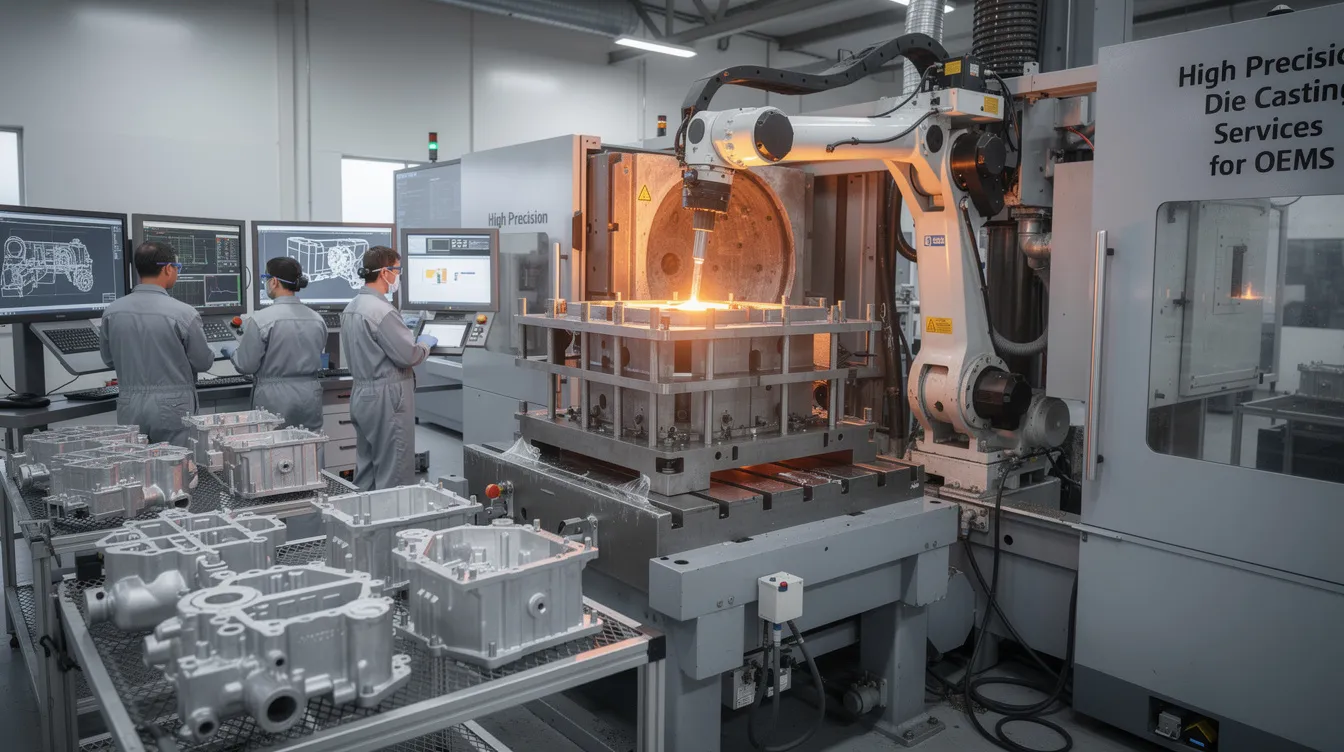
High Precision Die Casting Services for OEMs
Introduction: What “High Precision” Really Means in Die Casting
High precision die casting is a cost effective manufacturing process that forces molten metal into reusable steel molds under high pressure, producing complex and intricate metal parts with dimensional accuracy that other metal casting process methods simply cannot match. For design engineers evaluating suppliers, “high precision” should come with numbers attached-not marketing language.
In concrete terms, high precision die casting delivers dimensional tolerances down to ±0.05 mm on as-cast aluminum features (tightened to ±0.02 mm with localized post-machining), and a smooth surface finish with Ra values between 1.6–3.2 µm directly from the die. Industry leaders achieve tight tolerances of ±0.002 inches for aluminum through optimized tooling and controlled process parameters. Anebon Metal Products Limited has been providing precision CNC machining and die casting from Dongguan, China since 2010, serving overseas OEMs across automotive, aerospace, medical devices, and consumer electronics.
Combining high pressure die casting with precision CNC machining is what makes this approach practical. The casting delivers the near-net-shape geometry-ribs, bosses, thin walls, complex shapes-while targeted machining refines only the critical datum surfaces, sealing faces, and mounting interfaces. The result: high quality parts produced at volume with minimal material waste and lower cost per piece than full subtractive machining.
High Pressure Die Casting: Core Process for High Precision
High pressure die casting operates at 1,000 to 20,000 psi, injecting molten metal into hardened steel dies to create complex parts with fine details and consistent wall thickness. This casting process is characterized by high-speed production and superior surface finishes, making it the dominant method for producing structural components and housings across various industries.
The process is optimized for mass production of thousands of parts per hour-die casting can produce parts at speeds up to 9,000 per hour on high-cavitation zinc tools. It yields high-strength parts with smooth surfaces, reducing secondary machining requirements significantly.
Key technical characteristics of Anebon’s die casting service include:
-
Injection pressure range: 1,000–20,000 psi depending on alloy and part geometry
-
Achievable wall thickness: 1.0–3.0 mm for aluminum; thinner for zinc alloys
-
Part weight range: die casting can produce parts weighing from 450 grams to 14 kg
-
Typical applications: automotive transmission housings, 5G base station enclosures, drone motor mounts, EMI-shielding covers
-
Post-cast integration: in-house CNC machining cells for tight tolerances on critical features
-
Excellent repeatability shot-to-shot, enabled by rigid tool steel dies and real-time process monitoring
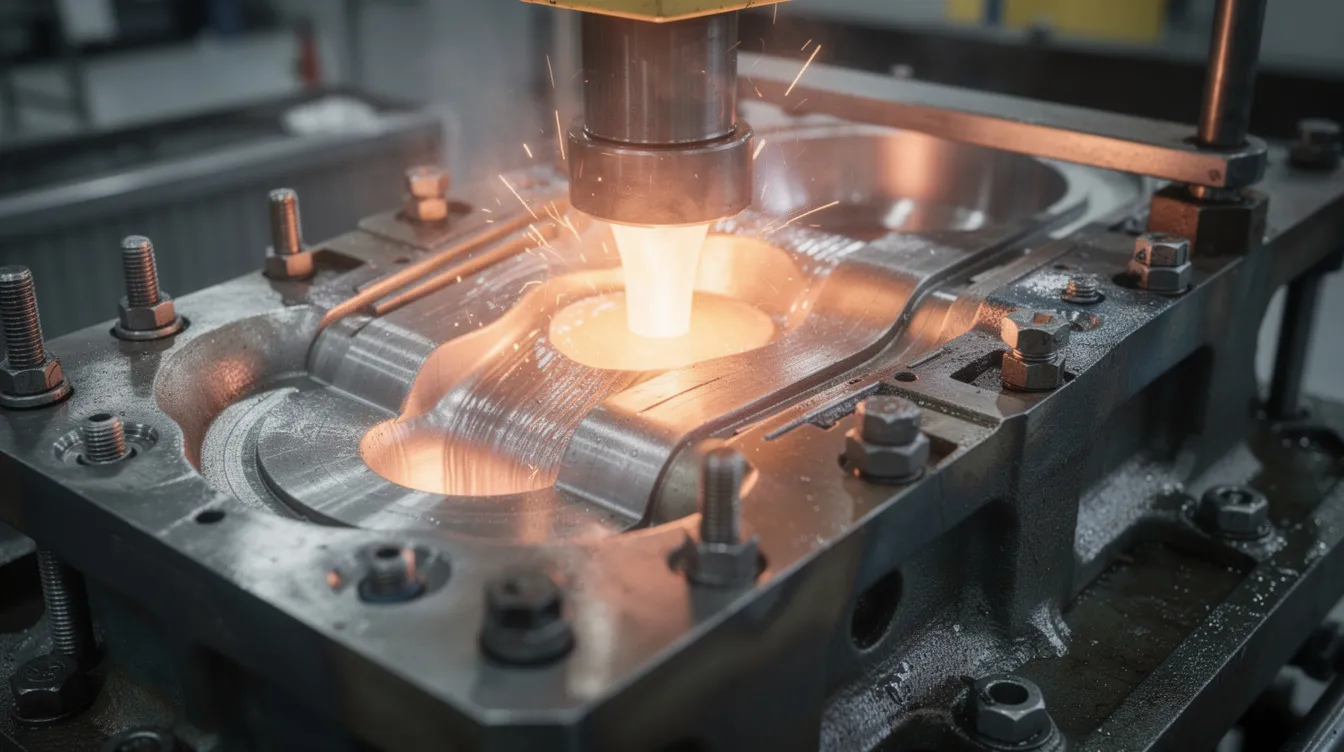
Cold Chamber vs. Hot Chamber for High Precision Results
The choice between cold chamber and hot chamber processes directly impacts achievable precision, cycle time, and which die casting metals you can use.
-
Cold chamber die casting is suitable for high-melting-temperature alloys such as aluminum A380, ADC12, and magnesium AZ91D. Metal is ladled from a separate furnace into the shot chamber, then injected at pressures up to 150 MPa. Cycle times run 20–60 seconds. This process handles structural components requiring good mechanical properties and corrosion resistant performance.
-
Hot chamber die casting is limited to low-melting-point alloys like zinc Zamak 3 and Zamak 5. The injection system sits immersed in molten metal, enabling cycle times as short as 3–15 seconds and extremely fine details on small, intricate features. Learn more about how the hot chamber die casting process works.
-
Precision impact: hot chamber zinc parts often hold ±0.01–0.02 mm on small features; cold chamber aluminum parts achieve ±0.05–0.10 mm as-cast, tightened with selective machining.
Anebon selects the process based on alloy, annual volume, feature size, and cost effectiveness targets-then confirms tolerance bands against your drawing requirements.
Key Steps in the High Precision Die Casting Process
Die casting involves a carefully sequenced series of operations where precision controls at each step determine whether the finished part meets specification. Here is the workflow Anebon follows:
-
Die design and tooling: Using computer aided design and flow simulation with thermal analysis to optimize gates, runners, venting, and cooling channels. This predicts and helps eliminate porosity, cold shuts, and shrinkage before cutting steel.
-
Die preparation: Premium H13 tool steel dies with hardened inserts, polished cavity surfaces, and controlled die temperature via water or oil circuits (maintained within ±2–5°C of target).
-
Melt quality control: Aluminum melt temperature held at 660–700°C; alloy chemistry verified; degassing and filtering to remove oxides and inclusions.
-
Injection: Controlled shot speed profiles and pressure to fill the die cavity completely while minimizing turbulence. The casting machine executes a repeatable injection curve shot after shot.
-
Solidification and cooling: As metal cools and metal solidifies uniformly, conformal cooling channels prevent differential shrinkage and warpage.
-
Ejection and trimming: Parts ejected with controlled force; excess metal (runners, overflows, flash) trimmed and recycled.
-
Secondary operations: Selective CNC machining of critical datums, drilling, tapping, and surface treatment as required.
Anebon’s engineering team provides Design for Manufacturability feedback-typically within 24–48 hours of receiving an RFQ-helping customers optimize fillet radii, draft angles, and wall thickness for stable, repeatable production.
Vacuum-Assisted and Advanced Die Technologies
Vacuum-assisted casting minimizes porosity for stronger parts by evacuating the die cavity before injection. Vacuum-assisted die casting reduces porosity in cast parts from typical levels of ~4.8% down to ~2.8%, while shrinking average pore size significantly. This enables heat treatment and welding of castings that would otherwise fail due to gas entrapment-critical for EV powertrain housings and medical device enclosures. Read more about what vacuum die casting involves.
Advanced die features that maintain precision over long runs include:
-
Conformal cooling channels (sometimes produced via additive manufacturing in tool inserts) for uniform die temperature
-
Precision-ground parting lines to minimize flash and maintain dimensional consistency
-
Hardened inserts in high-wear zones such as gate areas and thin-wall transitions
-
Optimized venting and overflow systems to improve density in critical sections like mounting bosses and sealing surfaces
These technologies are what separate a standard die cast part from a high precision one suitable for aerospace brackets, medical pump bodies, and EV structural frames.
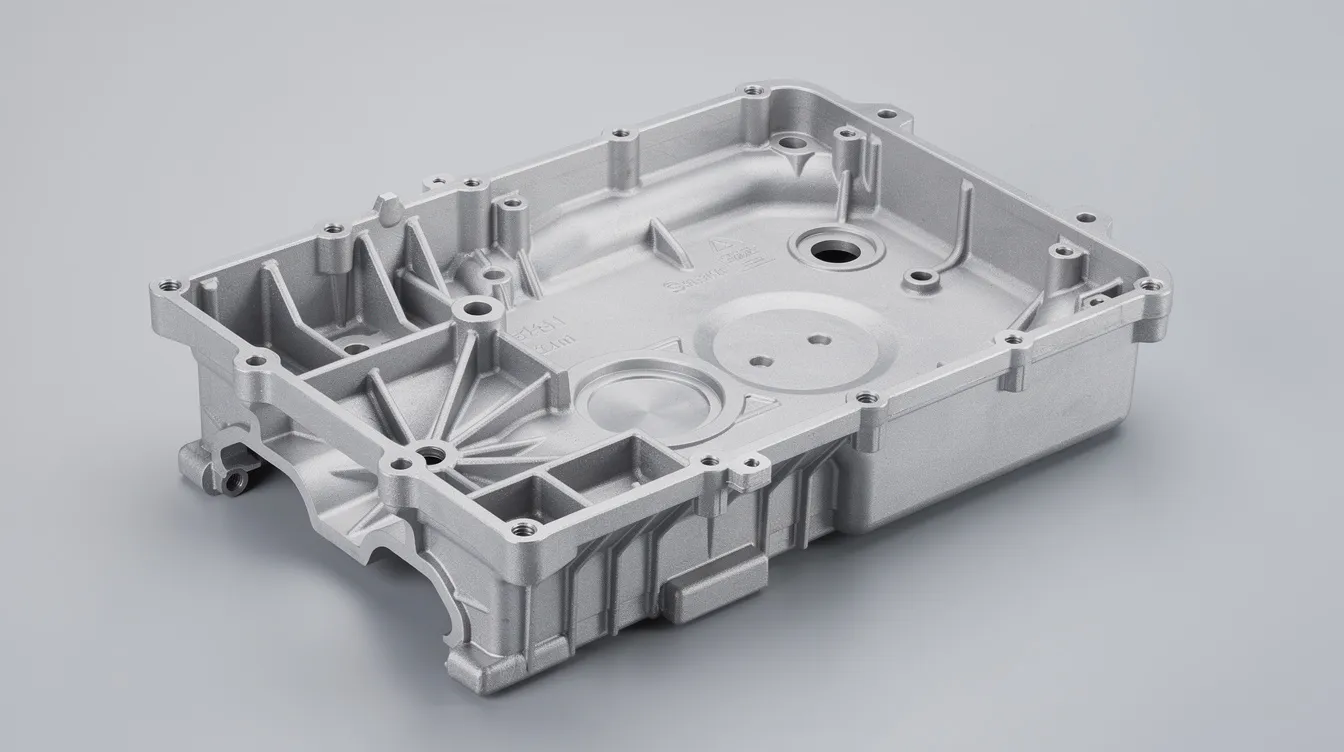
Metals and Alloys for High Precision Die Castings
Common materials used in high precision die casting include aluminum, zinc, and magnesium, with limited use of copper-based alloys for parts requiring high electrical conductivity. Alloy selection directly determines fluidity, shrinkage behavior, corrosion resistance, machinability, and achievable feature resolution.
From a sustainability standpoint, these die casting metals are highly recyclable. Runners and overflows are routinely re-melted in-house, reducing material waste and production cost.
Aluminum High Pressure Die Casting
Aluminum alloys dominate precision die casting for automotive, electronics, and industrial applications because of their unique properties: favorable strength-to-weight ratio, good thermal conductivity (ideal for heat sinks with high thermal dissipation needs), and solid corrosion resistance with appropriate surface treatments.
Anebon’s aluminum alloy high pressure casting capabilities cover:
-
Alloys: A380, ADC12 for general-purpose castings; 6061 in hybrid cast-machined workflows where higher strength is needed
-
Wall thickness: thin-wall sections down to ~1.0–1.5 mm in production
-
Recyclability: aluminum die castings are 100% recyclable without property loss, and aluminum is 100% recyclable without property loss across multiple re-melt cycles
-
Temperature performance: aluminum alloys can withstand high operating temperatures, making them suitable for under-hood automotive and power electronics applications
-
Post-casting: CNC milling and drilling achieve tight datums, true position, and surface flatness for critical mounting interfaces
Zinc and Magnesium Precision Die Casting
Zinc alloys (Zamak 3, Zamak 5):
-
Zinc alloys are known for their improved castability and excellent fluidity
-
Zinc alloys in die casting offer minimal shrinkage during solidification, and zinc alloys exhibit minimal shrinkage during solidification-enabling as-cast tolerances of ±0.01–0.02 mm on small features
-
Zinc die casting can produce parts with impressive detail: connector shells, gear components, miniature mechanical assemblies
-
Ideal for producing small, high-detail components at very high cycle rates via hot chamber machines
Magnesium alloys (AZ91D):
-
Magnesium alloys are 75% lighter than steel, making them compelling for drone frames, handheld medical devices, and portable electronics housings
-
Approximately 33% lighter than aluminum at similar volume
-
Slightly looser as-cast tolerances than zinc, but with significant weight savings that justify the trade-off
-
Requires protective atmospheres during melting; coatings recommended for corrosion resistance in exposed environments
Both metals benefit from high pressure die casting for high volume production of complex geometries. Anebon provides guidance on coatings and material properties optimization based on your application’s weight, precision, and cost targets.
Designing for High Precision: DFM Guidelines
High precision starts in the CAD model. Good die casting design reduces variation, porosity, and post-machining-keeping projects cost effective from prototype through production. High precision die casting enables the creation of complex shapes that are hard to achieve with other methods, but only when the geometry respects the physics of the process.
Key DFM points:
-
Maintain uniform wall thickness to avoid differential cooling and shrinkage
-
Avoid heavy sections that create internal porosity; core out thick areas
-
Use fillets instead of sharp corners to improve metal flow and die life
-
Apply appropriate draft angles (typically 1–3°) to all surfaces parallel to die pull
-
Locate parting lines strategically to minimize flash on cosmetic or functional surfaces
-
Hold only the tight tolerances that are functionally required-over-specifying adds cost
-
Define machining stock areas on drawings for critical datums that need post-cast finishing
-
Die casting allows for complex geometries with fewer secondary operations when DFM is applied early
Anebon’s engineering team reviews your 3D models and returns DFM feedback within 24–48 hours, aligning design intent with achievable process windows.
Minimum Wall Thickness, Flatness, and Tolerance Capability
-
Minimum wall: ~1.0–1.5 mm for aluminum in production; zinc can go thinner (~0.6–0.8 mm); actual limits depend on flow length, part size, and alloy
-
As-cast linear tolerances: ±0.10–0.20 mm for most features under 150 mm; die casting achieves tight tolerances of ±0.002 inches for aluminum on critical features with premium tooling
-
Post-machined tolerances: ±0.02–0.05 mm on datum surfaces, sealing faces, and bore diameters
-
Flatness: as-cast flatness depends on die rigidity and ejection stresses; machined sealing surfaces can achieve 0.05–0.10 mm over 25 mm
-
Cost trade-off: moving from standard to precision-grade tooling may increase tooling cost by 40–60%, so apply tight tolerance zones selectively
Send 3D models (STEP/IGES) and 2D drawings so Anebon can quote confirmed tolerance bands based on actual geometry and your chosen manufacturing process.
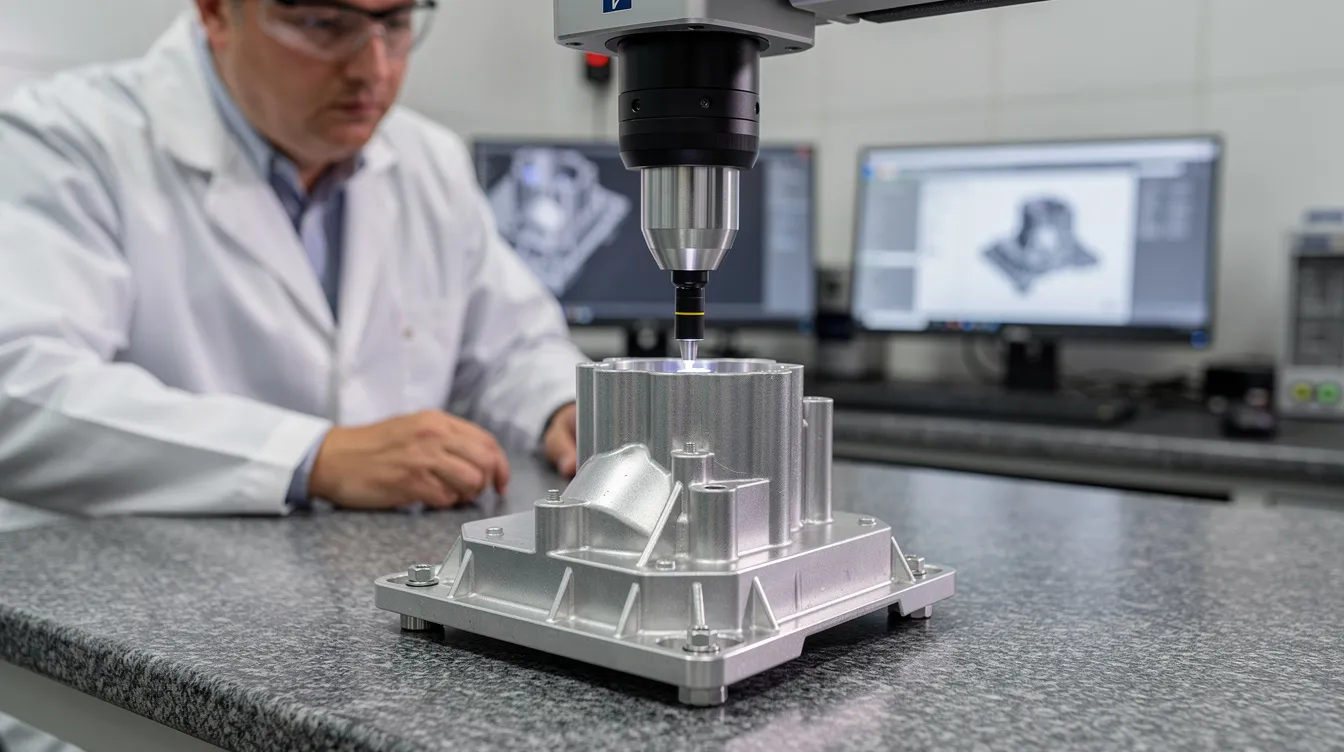
Quality Assurance in High Precision Die Casting
Tight process monitoring and quality control are essential for achieving high precision in die casting. Anebon operates under ISO 9001:2015 and ISO 14001:2015 certifications, with a quality system spanning incoming material inspection, in-process checks, and final inspection before shipment.
QA tools and methods include:
-
CMM inspection for critical dimensions and GD&T verification
-
Optical measurement for profile and contour checks
-
Hardness testing (Rockwell, Brinell) per material specification
-
In-house X-ray inspection ensures defect-free castings on critical components; CT scanning available for full volumetric porosity analysis
-
Spectro analysis tests metal composition for quality assurance, verifying alloy chemistry on every heat
-
Statistical Process Control (SPC) on key dimensions to maintain tight tolerances over long production runs
-
Documentation: material certifications, PPAP or FAIR reports on request for automotive, aerospace, or medical customers
Surface Finishes and Corrosion Protection
Anebon provides a range of finishes for die cast parts, either in-house or through qualified partners. For a deeper dive, see our guide to surface treatment processes.
-
Shot blasting / vibratory finishing for uniform matte texture
-
Powder coating for durable color finishes on automotive brackets and outdoor housings
-
Anodizing (Type II, Type III) for certain aluminum alloys-adds corrosion resistance and a clean aesthetic
-
Chromate conversion for lightweight corrosion protection on non-cosmetic surfaces
-
Nickel or chrome plating for polished zinc parts in consumer goods
High precision surfaces (sealing faces, mating interfaces) are typically CNC machined after casting, then masked during coating to preserve dimensional accuracy. A die lubricant applied during the casting cycle also helps release cast parts from the mold cleanly, preserving as-cast surface quality.
Applications and Industries for High Precision Die Castings
High precision die casting is used in industries such as automotive, aerospace, and electronics-anywhere manufacturers need to produce parts with complex geometries, tight tolerances, and reliable material properties in large quantities.
-
Automotive: EV motor housings, gearbox covers, chassis structural components-requiring dimensional precision for assembly fit and corrosion resistance
-
Aerospace: brackets, sensor housings, avionics enclosures-demanding low porosity and traceable quality documentation
-
Medical devices: pump bodies, imaging equipment frames, surgical instrument housings-where surface finish and biocompatibility coatings matter
-
Consumer electronics: heat sinks, EMI-shielding enclosures, laptop and tablet frames-leveraging high thermal conductivity and thin walls
-
Robotics & industrial machinery: gearbox housings, sensor mounts, actuator covers-requiring good mechanical properties under cyclic loading
-
Low pressure die casting also finds application where reduced air pressure filling reduces porosity risk significantly, particularly for larger, thicker-walled components. Low pressure die casting uses 7 to 30 psi for metal injection, contrasting sharply with HPDC pressures.
Die Casting vs. Other Manufacturing Processes
Understanding when to use high precision die casting versus alternatives helps engineers and procurement teams make informed decisions. For a detailed comparison, see our die casting vs. investment casting guide.
Process – Tooling Cost – Per-Piece Cost – Tolerance – Best Volume Range
-
HPDC – High – Low – ±0.05–0.10 mm as-cast – 5,000+ units/year
-
Sand casting – Low – Medium – ±0.5–1.0 mm – 1–1,000 units
-
Investment casting – Medium – Medium-High – ±0.10–0.25 mm – 100–10,000 units
-
CNC machining – Low (no hard tooling) – High – ±0.005–0.02 mm – 1–5,000 units
-
Forging – High – Medium – ±0.25–0.50 mm – 1,000+ units
High pressure die casting provides significantly tighter tolerances than sand casting and delivers a far superior surface finish (Ra 1.6–3.2 µm vs. 12.5–25 µm for sand). However, high initial tooling costs are a limitation of high precision die casting for low-volume production-tooling typically requires 3,000–10,000+ pieces to amortize effectively.
Anebon often uses a hybrid approach: rapid prototypes via CNC machining, then transition to high pressure die casting once the design is frozen and volumes justify tooling investment. Parts produced via multiple cavities in a single die further reduce per-piece cost at scale.
When to Choose High Precision Die Casting
Key decision triggers:
-
Annual volumes above 3,000–5,000 pieces where tooling amortization makes die casting a lower cost option than machining
-
Part consolidation opportunities-replacing a multi-piece machined assembly with a single die cast housing to eliminate assembly steps and reduce weight
-
Complex geometries with intricate features that would require expensive multi-axis machining setups
-
Weight reduction goals-switching heavy steel brackets to lightweight aluminum die castings
-
Consistent quality at scale-where you need to produce parts with identical dimensions across tens or hundreds of thousands of units
Anebon can evaluate your drawings and provide comparative cost models-machined vs. die cast-for realistic volumes and life-of-project economics.
Why Work with Anebon for High Precision Die Casting?
Anebon Metal Products Limited brings over a decade of experience as a precision die casting and CNC machining partner for overseas OEMs. Located in Dongguan’s robust manufacturing ecosystem, we combine advanced die casting with CNC milling, CNC turning, 5-axis machining, and sheet metal fabrication to deliver complete sub-assemblies-not just individual cast parts.
What sets Anebon apart:
-
Quote turnaround: typically 24–48 hours from receiving your CAD files
-
Flexible volumes: from rapid prototypes (1–50 pieces via CNC) to full-scale die cast production runs of 100,000+ annually
-
Certified quality: ISO 9001:2015 and ISO 14001:2015 certified, with full traceability and documentation for automotive, aerospace, and medical supply chains
-
Engineering support: DFM feedback, tolerance optimization, and material selection guidance through every stage of your product lifecycle
-
One-stop capability: casting, machining, finishing, and inspection under one roof-reducing lead times and communication overhead
Send your STEP or IGES files along with 2D drawings to receive a detailed quotation and DFM report. Whether you’re launching a new product or optimizing an existing one, Anebon’s precision die casting team is ready to help you hit your tolerance, quality, and cost targets.