Essential Guide to Effective Machining Fixtures for Precision Work
Machining Fixtures: A Practical Guide for High‑Precision CNC Workholding
Introduction: Why Machining Fixtures Matter in CNC Machining
Every precision part starts as a block of raw material and a CAD model. Between those two things sits the fixture-the device that bridges digital intent and physical reality on the shop floor. Machining fixtures are custom-built workholding devices used in manufacturing to locate, support, and secure a workpiece so that cnc machining, cnc milling, turning, drilling, and grinding operations produce geometry that matches the drawing, every single time.
Fixtures ensure precise workpiece positioning during CNC machining, and stable fixtures reduce dimensional inaccuracies in machined parts. Without them, even the most expensive machine tool and the sharpest cutting tool cannot reliably hold the tolerances that modern OEM parts demand. Fixtures also enhance operator safety by securing workpieces during machining, preventing parts from shifting or ejecting under heavy cutting forces.
Industries like aerospace, medical devices, automotive, electronics, and robotics rely on precision fixtures daily. Think titanium surgical housings, aluminum avionics brackets, stainless steel gears, die-cast automotive housings, and compact electronic enclosures. In batch production and mass production, cnc fixtures improve production efficiency by minimizing setup time and letting operators focus on quality rather than re-measuring every part.
At Anebon Metal Products Limited, we have designed and manufactured custom cnc fixtures and fixture plates at our facility in Dongguan since 2010, supporting tolerances down to ±0.002 mm for overseas OEM clients across all of these industries.
What Is a Machining Fixture?
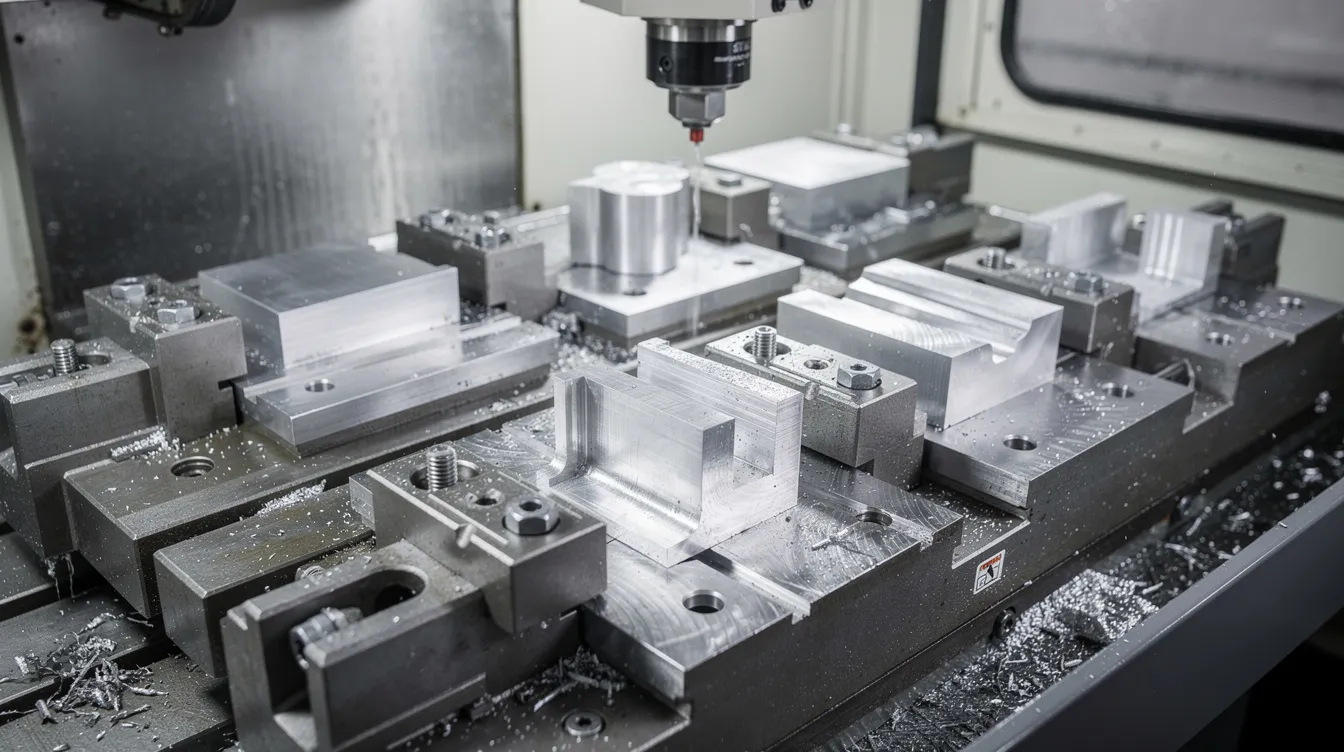
A machining fixture is a device that accurately locates and rigidly supports a workpiece during machining operations, without guiding the cutting tool. This distinction matters: jigs guide cutting tools while fixtures support workpieces. Fixtures do not guide tools like jigs do. Jigs are typically lighter than fixtures for easier handling, and they are commonly found in manual or semi-automatic drilling setups where a drill bit needs physical guidance through a hardened bushing. In modern cnc machining, the CNC program handles tool positioning, so the fixture’s job is purely to hold the part in the correct position.
A fixture consists of a few basic elements:
-
Base body – typically a plate, block, or frame bolted to the machine table, providing the structural backbone.
-
Locating surfaces and pins – hardened datum features that position the workpiece relative to the machine coordinate system (work offsets like G54–G59).
-
Supports – rest pads or adjustable screws that prevent deflection under cutting loads.
-
Clamps – mechanical, pneumatic, or hydraulic devices for firmly holding the part without distortion.
Fixtures absorb heavy vibrations and cutting forces exerted by the machine tool, which is why rigidity is a core design requirement. Consider a concrete example: a plate fixture holding an aluminum 6061 gearbox housing for 5-axis milling. The fixture’s locating pins register against two machined datum bores, a flat face rests on three support pads, and two toe clamps apply force from above-leaving the top and sides fully accessible for the cutting tool to reach all five faces in a single setup.
Common Types of Machining Fixtures and Where They’re Used
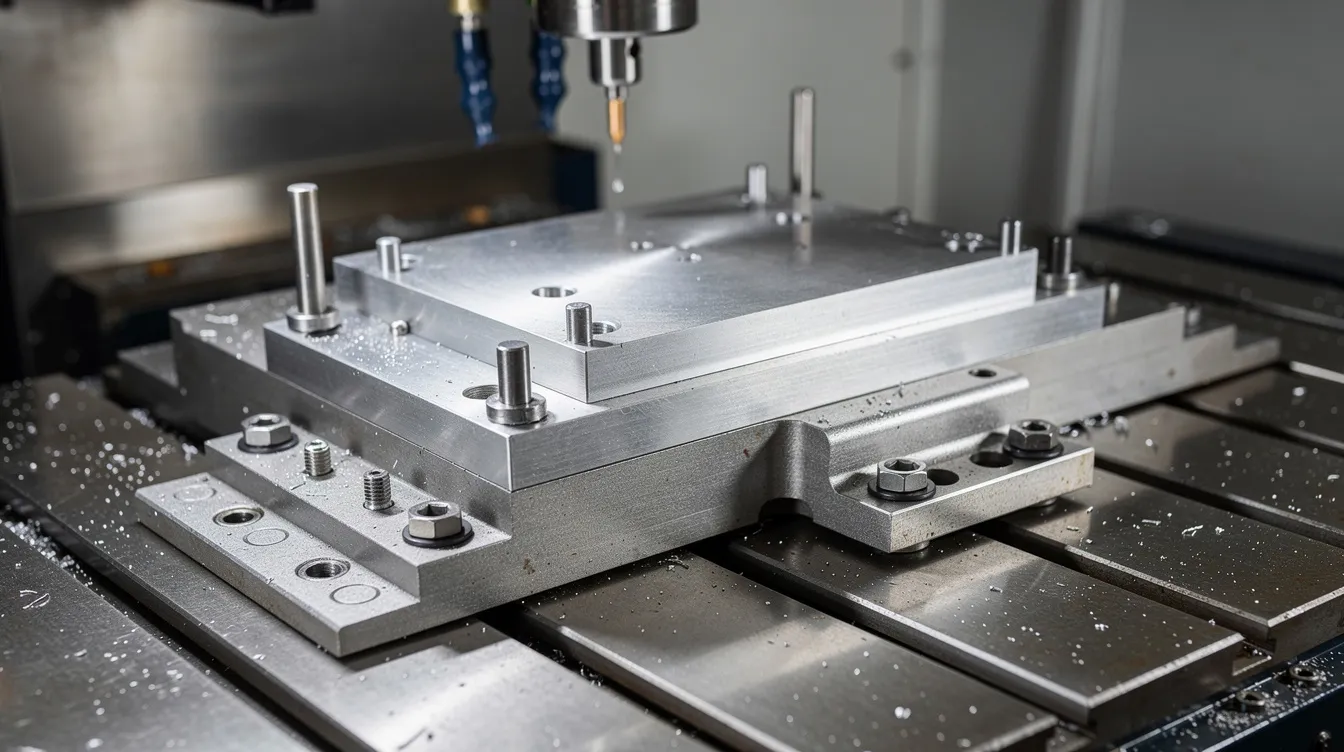
Fixtures are used across virtually every machining operation, and common types of machining fixtures include vise fixtures and jig fixtures, along with dozens of specialized variants. The right choice depends on the machine, the workpiece geometry, and the required tolerance. Many fixtures hold multiple parts at once or allow for quick-release clamping to speed up batch production.
Here is an overview of the most common types grouped by operation:
-
Milling fixtures – fixture plates with grid-pattern mounting holes, vise fixtures with custom soft jaws, and dedicated nests for prismatic parts. Milling fixtures include rotary table and vise fixtures. Typical tolerance capability: ±0.01 mm for precision bores, ±0.02–0.05 mm for general features.
-
Turning fixtures – three-jaw and four-jaw chucks, collet chucks, expanding mandrels, and custom faceplates. Turning fixtures include faceplates, chucks, and mandrels. Concentricity targets of ≤0.01 mm TIR are common for automotive shaft components.
-
Drilling fixtures – plate-style fixtures that locate the part for CNC hole patterns, and traditional drill jigs with hardened guide bushings for manual or semi-automatic operations. Drilling fixtures guide the drill bit for accurate hole placement in high-volume runs.
-
Grinding fixtures – magnetic chucks for flat ferromagnetic parts, precision V-blocks for cylindrical workpiece shapes, and custom nests for hardened inserts. Grinding fixtures include centerless and magnetic chuck fixtures. Surface finish targets of Ra 0.1–0.4 μm and flatness within 0.005 mm are typical.
-
Modular fixtures – modular fixture systems built from interchangeable components (base plates, risers, clamps, stops) that adapt to different workpiece shapes and various sizes without building a new fixture from scratch.
-
Vacuum fixtures – for thin or delicate parts like aluminum panels or implant covers, where mechanical clamping would cause distortion.
-
Welding fixtures and welding jigs – used before or after machining to hold fabricated assemblies in precise location during welding, ensuring joint alignment before final cnc machining of mating surfaces.
Machining Fixtures by Operation: Milling, Turning, Drilling, and Grinding
Beyond the general typology above, fixtures can be classified more specifically by machining process. Each process imposes different forces, speeds, and access requirements on the fixture. At Anebon, we typically design different fixture families for aluminum cnc milling, steel turning, and precision grinding operations to optimize cycle time and accuracy for each machining operation.
Milling Fixtures and Fixture Plates for CNC Milling Operations
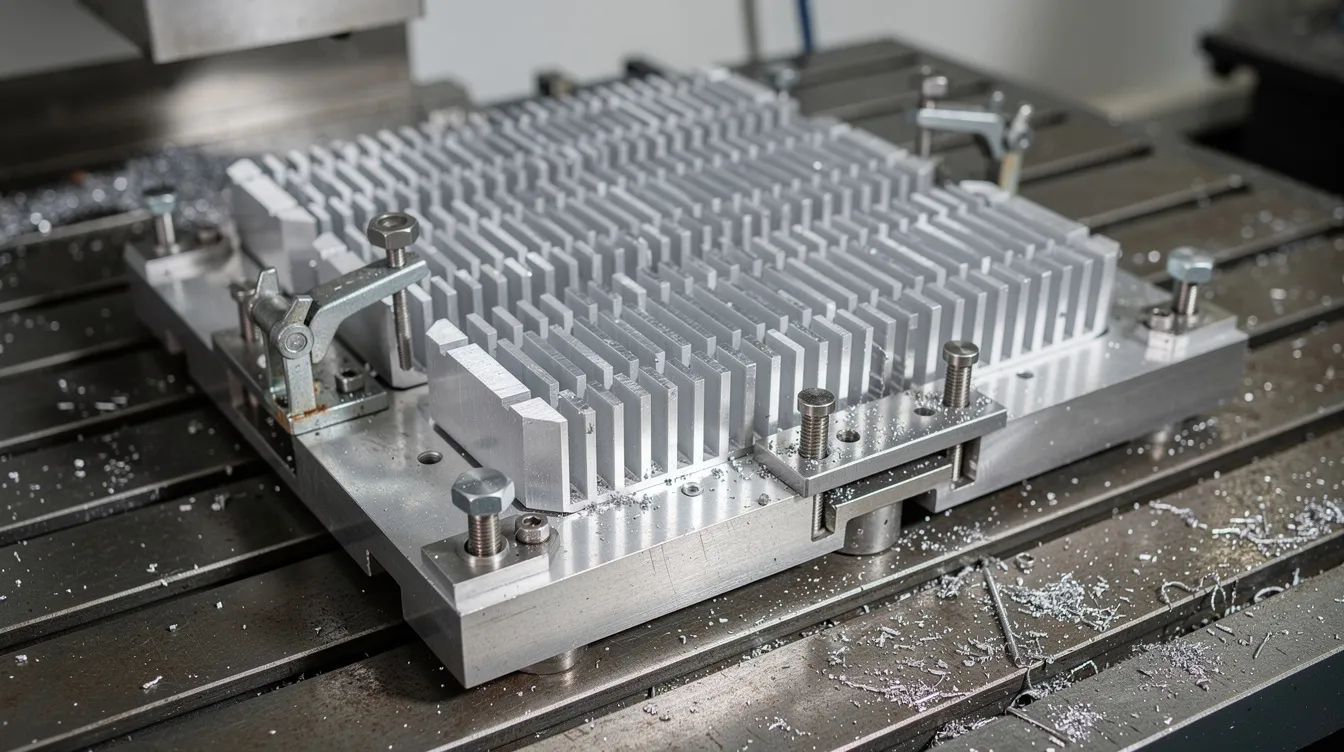
Milling fixtures are the workhorses of cnc milling operations on vertical and horizontal machining centers. The most versatile option is the fixture plate: a standardized aluminum or steel plate with a grid pattern of threaded holes and dowel bushings that enable fast changeover and repeatable setups. Fixture plates are commonly found in shops that handle a mix of part numbers because they support design flexibility-you simply reposition clamps and stops for each new part.
A concrete example: a 400 × 400 mm steel fixture plate mounted on a 3-axis VMC holding four aluminum heatsinks per cycle. Each heatsink is located against two dowel pins and a face stop, then secured with toe clamps. The operator loads all four parts, runs the program, and unloads in under 12 minutes total.
For more complex geometry, dedicated milling fixtures or vise fixtures with machined soft jaws allow cnc milling of brackets, electronic housings, and detailed shapes on 3-axis and 5-axis machines. Specific locating elements ensure accurate positioning for cuts, threads, and bored features. Typical clamping methods include toe clamps, strap clamps, and modular stops-each chosen based on access needs and cutting forces.
Turning and Chucking Fixtures for CNC Lathes
Turning fixtures focus on concentricity and axial location rather than multi-face access. The workpiece spins at high speed rotation, so the clamping fixture must grip securely without introducing runout. Standard options include three-jaw chucks (self-centering), four-jaw chucks (independent adjustment), collet chucks (for small parts and bar stock), and custom soft jaws machined to match the part’s outer or inner profile.
For a medical tube requiring a finished inner diameter of 8.00 mm ±0.01 mm, a custom expanding mandrel fixture locates the tube on its OD while the boring bar finishes the ID in a single cnc turning setup. This eliminates re-chucking and keeps TIR below 0.01 mm. Fixtures ensure repeatability, accuracy, and operator safety during machining operations, especially when parts spin at thousands of RPM.
At Anebon, we often combine soft jaws and custom stops to complete multiple features-OD, ID, grooves, threads-in one chucking, which reduces runout errors and keeps lead time short for precision turned parts.
Drilling Fixtures, Boring Jigs, and Hole‑Making Support
Drilling fixtures securely locate the part on the machine table so that hole patterns are produced in the correct position without manual layout. On CNC machining centers, the program controls the drill bit position, so the fixture’s role is purely workholding. In traditional or semi-automatic environments, drill jigs with hardened guide bushings physically direct the drill bit into predefined locations. Jigs are used for guiding tools in predefined locations, while fixtures handle location and clamping only. Boring fixtures help angle the boring tool correctly for operations like precision bore finishing.
Example: a steel plate drilling fixture positions 500-unit batches of electronics chassis for 50 identical mounting holes (Ø4.2 mm pilot, Ø6.8 mm counterbore). The same fixture handles tapping, counterboring, and reaming through sequential tool changes-no re-clamping required. This approach produces identical parts with consistent hole spacing across the entire production run.
Fixtures for Grinding Operations and Surface Finishing
Grinding operations demand fixtures that minimize vibration and thermal distortion to achieve fine surface finishes. Removing material at micron-level depths means even small fixture deflections show up as waviness or taper in the finished part.
Magnetic fixtures use magnets to secure ferromagnetic parts without mechanical clamps, leaving the entire top surface accessible for the grinding wheel. For non-ferromagnetic materials or other materials like aluminum and titanium, dedicated grinding nests with precision V-blocks or vacuum plates are used instead.
Example: a magnetic fixture plate finish-grinds injection mold inserts made from hardened tool steel for a medical device application. The fixture maintains flatness within 0.005 mm across 100 mm and achieves Ra 0.2 μm surface finish. At Anebon, we use grinding fixtures particularly when finishing stainless and tool steel precision parts after cnc milling and heat treatment, where heat resistance and dimensional stability of the fixture material are critical.
Key Elements of Fixture Design for CNC Machining
Good fixture design starts with a few core principles: accurate location, rigid support, sufficient clamping, effective chip evacuation, and safe operator access. Fixtures provide reliable reference surfaces for consistent machining, and fixtures reduce human error during machining processes by eliminating the need for manual measurement at each setup.
The classic “3-2-1″ locating method works like this: three points define the primary datum plane (constraining one translation and two rotations), two points define the secondary datum (one translation, one rotation), and one point defines the tertiary datum (final translation). Together, all six degrees of freedom are locked down. This approach matches how part drawings define datums, which means the fixture’s locating scheme aligns directly with the GD&T callouts the inspector will verify.
Anebon offers DFM and fixture design consulting for overseas OEMs, helping optimize fixture concepts to match part geometry, annual volume, and the planned machining process.
Locating, Supporting, and Clamping Components
Fixture components fall into three functional categories:
-
Locators – hardened dowel pins, machined datum surfaces, or V-blocks that define where the part sits. Example: two Ø6 mm ground dowel pins pressed into a fixture plate, engaging reamed holes in the part, establishing X-Y position within ±0.005 mm.
-
Supports – rest pads, adjustable jack screws, or spring-loaded plungers that prevent deflection without defining position. Example: carbide-tipped rest buttons under a cast iron material bracket to resist cutting loads without wearing.
-
Clamps – toggle clamps, toe clamps, strap clamps, or pneumatic clamps that apply force to lock the part against locators. Hydraulic or pneumatic fixtures deliver rapid, consistent clamping force, which is essential in automated cells.
Separating locating and clamping functions avoids over-constraining the part. When clamps also try to “locate,” they can push the part off-datum. A real example: redesigning a clamping fixture for a thin 2 mm aluminum cover reduced warping by 60% simply by relocating clamps near stiff ribs instead of unsupported free edges-a lesson in how clamping force optimization directly affects part quality.
Materials and Construction of CNC Fixtures
Fixture material selection depends on the application:
-
Tool steel (4140, D2, A2) – for high-wear, high-force fixtures. Quenched and tempered 4140 at ~HRC 28–32 provides excellent durability for long-life clamping surfaces and locating pads. Chemical resistant coatings like nitriding extend service life further.
-
Mild steel (1018, 1045) – for fixture bodies where extreme hardness isn’t needed. Cost-effective, easy to weld and machine. Often used for welding fixtures and larger structural frames.
-
Aluminum (6061-T6, 7075-T6) – lightweight, corrosion-resistant, fast to machine. Ideal for fixture plates in medium-volume work and where fixture weight matters (large plates, manual handling). Anodizing improves wear and surface hardness.
-
Cast iron – excellent vibration damping and wear resistance. Cast iron material is sometimes used for large grinding fixture bases where thermal stability matters.
-
Engineered plastics (Delrin, PEEK) – for contact surfaces on delicate parts to prevent scratching or marring.
At Anebon, we typically machine fixture bodies from steel or aluminum on our own cnc machines, sometimes combining machined and welded elements. Surface treatments like black oxide, nitriding, or anodizing for aluminum fixture plates improve wear and corrosion resistance over long production runs.
Power Sources: Mechanical, Pneumatic, Hydraulic, and Magnetic Clamping
The force source determines how fast and consistently the fixture clamps:
-
Mechanical (screws, cams, toggle clamps) – low cost, no external power needed. Best for low-volume setups, prototyping, and situations with design flexibility requirements. Trade-off: slower cycle times.
-
Pneumatic (air cylinders, pneumatic clamps) – fast actuation, consistent force. Ideal for medium-volume electronics and small parts where quick cycling matters. Typical clamping force: 200–2,000 N per cylinder.
-
Hydraulic (cylinders, swing clamps) – highest force density. Used for heavy automotive castings, large steel forgings. Example: a hydraulic fixture clamping a die-cast aluminum gearbox housing for multi-side cnc milling in a 24/7 cell since 2022.
-
Magnetic (permanent or electro-permanent chucks) – for flat ferromagnetic workpieces in grinding operations. Zero obstruction on the top surface.
Modular fixtures are highly flexible and perfect for varying part sizes, especially when combined with standard clamping elements that fit across multiple fixture plates. Integration with automation and robots often favors pneumatic or hydraulic quick-acting clamps that reduce cycle time and operator intervention.
How Fixtures Improve CNC Machining Accuracy, Speed, and Cost
The impact of good cnc fixtures on part quality and shop economics is measurable. Fixtures improve accuracy and reduce labor costs in machining by eliminating manual alignment steps. Fixtures allow for faster setup times in machining operations-they allow operators to swap out parts instantly without manual measuring, which is critical when running batch production of hundreds or thousands of pieces.
Three concrete benefits stand out:
-
Reduced setup time – switching from manual vises to a dedicated fixture plate reduced changeover for an electronics bracket from 40 minutes to 10 minutes per batch.
-
Improved repeatability – using fixtures enhances repeatability in production runs because the same locating features position every part identically.
-
Higher cutting parameters – a rigid fixture lets you push feed rates and depths of cut that would cause chatter in a weaker setup, directly improving production efficiency.
One study found that fixture redesign reduced non-cutting time by 22–41% for batch sizes of 50–500 parts-a bigger gain than simply increasing machine tool spindle speed.
Multi‑Part and Multi‑Side Fixturing Strategies
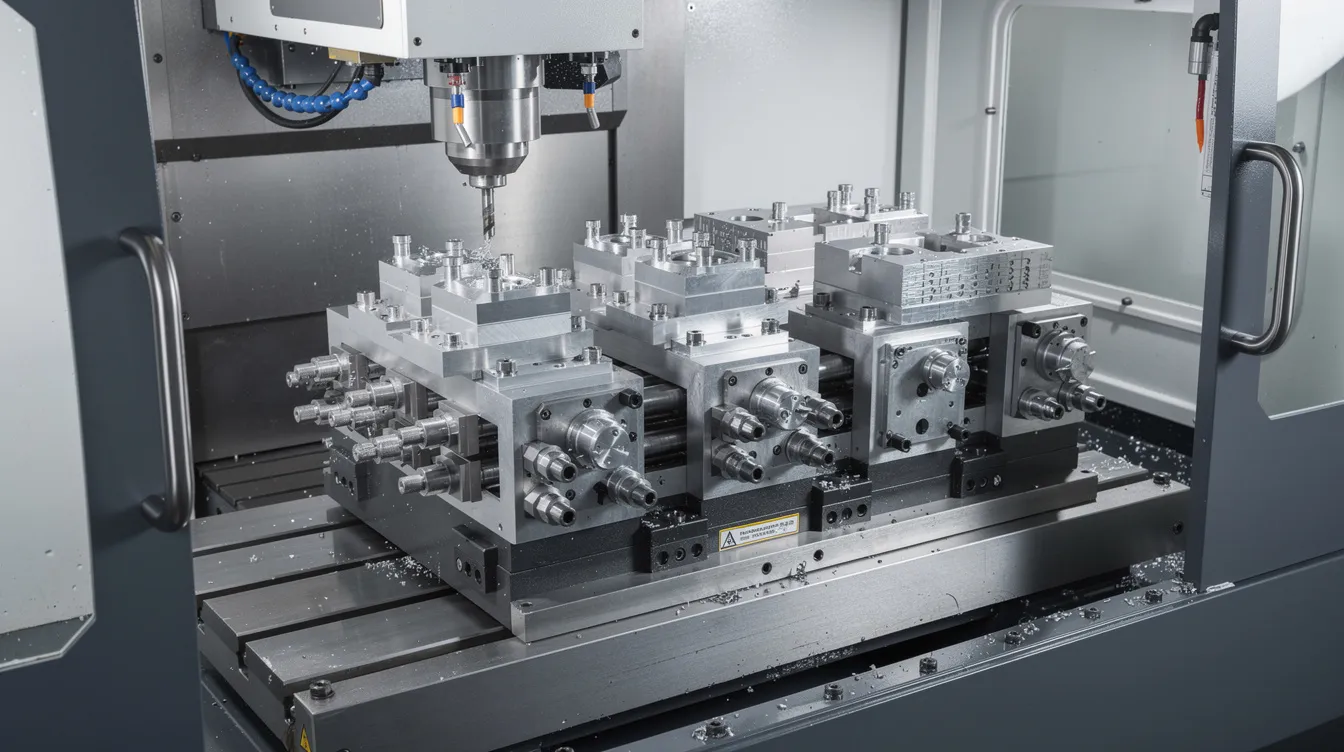
Loading multiple identical parts on a single fixture plate, tombstone, or right angle plate maximizes spindle utilization. Instead of machining one bracket at a time, a four-sided tombstone fixture on a horizontal machining center can hold 16 aluminum valve bodies per cycle, each finished in two clampings. The spindle never waits for the operator.
Multi-side fixturing is equally powerful: designing fixtures that allow complete machining of several faces in one or two setups on 4-axis and 5-axis machines eliminates tolerance stackup from re-clamping. In one documented Ti-6Al-4V bracket case, moving from three setups to a single 5-axis setup reduced worst-case positional deviation from ~0.02 mm to 0.004–0.008 mm.
At Anebon, we often start with flexible modular fixtures for prototyping, then move to dedicated production fixtures once the part design stabilizes-a modular vs. dedicated decision we help customers make early in the process.
Error Sources and How Good Fixture Design Reduces Them
Fixtures reduce human error during machining processes, but the fixture itself can introduce errors if designed or maintained poorly. The main culprits:
-
Datum transfer errors – each re-clamping introduces ~0.005–0.008 mm misalignment. Over three setups, that can exceed tight tolerance budgets.
-
Clamping distortion – applying force to unsupported thin walls flexes the part. Relocating clamps toward stiff features solves this.
-
Thermal expansion – the machine, fixture, and part all expand differently as temperatures change during a production run. Spindle warm-up protocols and mid-run offset compensation help.
-
Chips on locating surfaces – a single trapped chip can shift the part by 0.02–0.05 mm. Chip-relief grooves machined into rest pads prevent this.
-
Fixture wear – locating pins and support surfaces degrade over time. Regular inspection and replacement protect accuracy.
A practical example: adding hardened rest pads and chip-relief grooves to a small plate fixture for stainless steel connectors in 2023 eliminated location shifts that had caused a 3% scrap rate in previous runs.
Fixtures that look “good enough” on paper can still fail in production if chip management and maintenance are ignored.
Custom CNC Fixture Design at Anebon Metal Products Limited
Anebon’s in-house capability covers the full cycle: design, CNC machine, validate, and iterate custom fixtures for OEM customers from first prototype to mass production. Since 2010, our team in Dongguan has produced custom cnc fixtures and fixture plates supporting medical implant housings, automotive transmission components, robotic arm brackets, and consumer electronics enclosures.
Our ISO 9001:2015 and ISO 14001:2015 certifications influence every step-fixture design documentation, material traceability, validation records, and maintenance schedules are all controlled. When clients send us a new part, our engineers collaborate with their design teams to review part geometry, annual volume, and machining process requirements, then propose fixture concepts with DFM feedback. Machining fixtures improve accuracy and precision in manufacturing, and we treat fixture design as a first-class engineering deliverable, not an afterthought.
If you need a fixture concept for a new part, share your 3D CAD model and annual volume, and we’ll propose a solution within days.
From CAD Model to Production Fixture: Our Design Workflow
Our typical fixture workflow follows a structured sequence:
-
Receive 3D CAD and drawing – analyze datums, tolerances, and GD&T callouts.
-
Choose fixture type – plate, vise jaws, tombstone, or drilling fixture based on geometry and volume.
-
Create fixture CAD – design locating features, supports, and clamps in SolidWorks or equivalent.
-
Simulate – run CAM simulations to verify that the fixture supports all planned machining operations and toolpaths before steel is cut. Process design reviews catch interference issues early.
-
Manufacture and test – machine the fixture, perform first-article inspection, and iterate if needed.
Typical timeline: 5–10 working days for a first-article prototype fixture for a new aluminum part, depending on complexity. A recent example: in early 2025, we designed a modular fixture for a European robotics OEM to hold three different bracket variants on the same base plate, using shared dowel locations and interchangeable components for each variant’s unique clamping needs.
Balancing Rigidity, Flexibility, and Cost in Fixture Design
Three competing objectives shape every fixture decision: maximum rigidity and precision, flexibility for design changes, and overall budget. The right balance depends on where you are in the product lifecycle.
-
Prototyping / low volume (1–500 pieces) – standard aluminum fixture plates and off-the-shelf clamps. Fast, low cost, high design flexibility. Accept slightly looser tolerances if the part allows it.
-
Mid-volume (500–5,000 pieces) – semi-dedicated fixtures with machined locating features on a standard base plate. Moderate investment, good accuracy.
-
High volume (5,000+ pieces/year) – fully dedicated hardened steel fixtures optimized for one part. Maximum rigidity, fastest cycle, lowest per-part cost over the production run.
A real progression: we started with a standard aluminum fixture plate for 200 prototypes in 2023, then upgraded to a hardened steel dedicated fixture for a 50,000-piece annual order in 2024. Quick-change locating systems and zero-point clamps bridge the gap when customers need frequent part switching on the same cnc machine.
Best Practices and Common Mistakes in Machining Fixture Selection
Getting fixture selection right up front avoids expensive rework later. Here are the practices that separate smooth production from frustrating scrap:
-
Match the fixture to the machine envelope – verify that the fixture fits the machine table (e.g., a 500 × 300 mm table on common VMCs) with room for clamp access and coolant flow.
-
Plan for chip evacuation – coolant channels, chip-relief grooves, and fixture geometry that directs chips away from locating surfaces.
-
Maintain fixtures on schedule – ignoring fixture maintenance (cleaning locating surfaces, checking clamping force, replacing worn pins) is the single most common cause of accuracy drift over long production runs.
-
Document everything – setup sheets with photos, torque values, and locating-pin replacement intervals reduce costs when operators change.
-
Design for loading ergonomics – if an operator must wrestle a heavy fixture or awkwardly position a part, operator safety and cycle time both suffer.
Fixtures improve operator safety by stabilizing workpieces during every machining operation, but only if the fixture itself is well-maintained and properly documented.
How to Choose the Right Fixture Concept for Your Part
Start from part geometry and work outward:
-
Low-volume prototype bracket in 7075-T6 – use a standard vise with machined soft jaws. Minimal fixture cost, fast turnaround. Accept ±0.05 mm on non-critical features.
-
Medium-volume stainless steel shaft (500/year) – custom soft jaws on a CNC lathe chuck, possibly a collet fixture for high precision. Target ≤0.01 mm TIR.
-
High-volume die-cast aluminum housing (10,000+/year) – dedicated hydraulic clamping fixture on a horizontal machining center. Amortize fixture cost over the run to reduce costs per part.
-
Thin aluminum cover plate needing vacuum workholding – vacuum fixture with minimal mechanical backup. Prevents distortion while achieving full-surface finish access.
CNC milling vs. cnc turning vs. grinding operations change fixture needs fundamentally: milling demands multi-axis access and heavy clamping for roughing, turning requires concentricity and high speed rotation resistance, and grinding demands vibration-free rigidity. When contacting Anebon, share your expected batch sizes, material, and drawing tolerances so we can recommend the best approach.
Interchangeability and Compatibility Between Different CNC Machines
Fixtures are not always interchangeable across cnc machines. Differences in worktable size, T-slot spacing, zero-point systems, and spindle access mean that a fixture designed for a 400 × 800 mm VMC may require adapter plates or re-drilling to fit a 300 × 600 mm table in another plant.
To improve compatibility:
-
Use standardized fixture plates with consistent hole patterns (e.g., 50 mm grid spacing with M10 threads) across machines of the same class.
-
Adopt locating keys that register the fixture to the machine table’s T-slots at a known position.
-
If customers plan to use fixtures on their own equipment as well as at Anebon, specify the machine model and table dimensions so we can design mounting holes and interfaces that work in both locations.
-
Document coordinate systems and setup instructions with each fixture so it can transfer between sites without trial-and-error alignment.
Future Trends in Machining Fixtures and Workholding Technology
Future trends focus on automation and adaptability in fixtures. The fixture of 2026 and beyond will be smarter, faster to reconfigure, and more tightly integrated with digital manufacturing systems. Fixtures are expected to become more intelligent and efficient as sensor technology and software tools mature.
Key developments shaping the near future:
-
Smart fixtures with embedded sensors – load cells, displacement sensors, and temperature probes built into the fixture body to monitor clamping force and detect part shift in real time. Early applications exist in aerospace and semiconductor manufacturing.
-
3D printing enables rapid prototyping of customized fixtures – additive manufacturing produces lightweight, conformal fixture inserts with internal cooling channels. Especially useful for low to medium volume cnc machining where various shapes change frequently.
-
VR/AR technology will optimize fixture design and assembly validation – engineers can visualize fixture-workpiece-tool relationships in virtual space before committing to fabrication, reducing design iterations.
-
Zero-point clamping systems – standardized quick-change interfaces that let operators swap fixture plates in under 60 seconds with ≤0.005 mm repeatability.
-
Automation reduces manual intervention and shortens setup times – robotic loading combined with automation-ready fixtures enables lights-out production in high-mix environments.
At Anebon, we are gradually adopting simulation-driven fixture design and considering hybrid solutions that combine machined steel bases with 3D-printed inserts for delicate or complex contact surfaces.
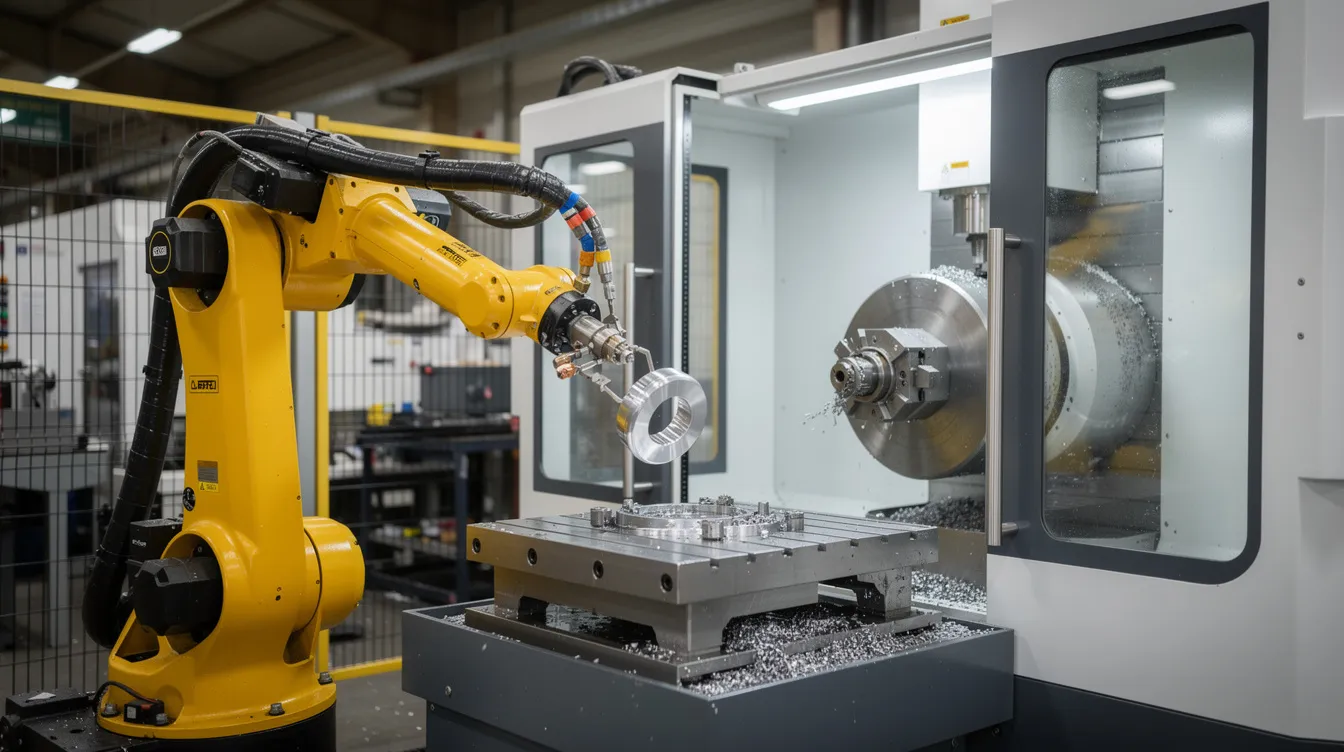
Integrating Machining Fixtures into Automated CNC Cells
Fixtures used with robots and pallet pools must meet specific requirements beyond what manual setups demand:
-
Clear gripper access zones so the robot can load and unload without collision.
-
Repeatable locating features (dowel pins, zero-point interfaces) that achieve ±0.005 mm or better without operator adjustment.
-
Misload prevention-poka-yoke features like asymmetric locating pins or sensor verification to confirm the part is seated correctly before the cycle starts.
Example: a robotic cell using standardized fixture plates with dowel-based location swaps aluminum parts every few minutes on a 5-axis machine. Quick-change pallets support high-mix, low-volume production typical of overseas OEM prototypes and small production batches. Anebon can design fixtures with automation in mind when customers indicate plans for robotic integration or palletized systems.
Conclusion and How Anebon Can Support Your Machining Fixture Needs
Machining fixtures are the foundation of repeatable, high-precision cnc machining across milling, turning, drilling, and grinding operations. The right fixture type for your machining process-whether it’s a simple vise, a vacuum plate, or a fully automated hydraulic system-directly determines part quality, cycle time, and per-piece cost. Investing in solid fixture design early, and maintaining fixtures throughout the production run, protects your quality investment and helps reduce labor costs over the long term.
Anebon Metal Products Limited brings in-house fixture design and manufacturing, tight tolerance capability down to ±0.002 mm, broad material experience spanning aluminum to titanium to tool steel, and ISO-certified processes to every project. Whether you need a flexible modular setup for 50 prototypes or a dedicated high-volume fixture for 50,000 annual pieces, our engineering team is ready to help.
Ready to get started? Share your 3D CAD files, drawing tolerances, and expected annual volume with our team. We will propose a fixture concept, provide DFM feedback, and deliver a complete machining quote-so your next production run starts right.