Essential Guide to Deep Hole Drilling Machines and Their Applications
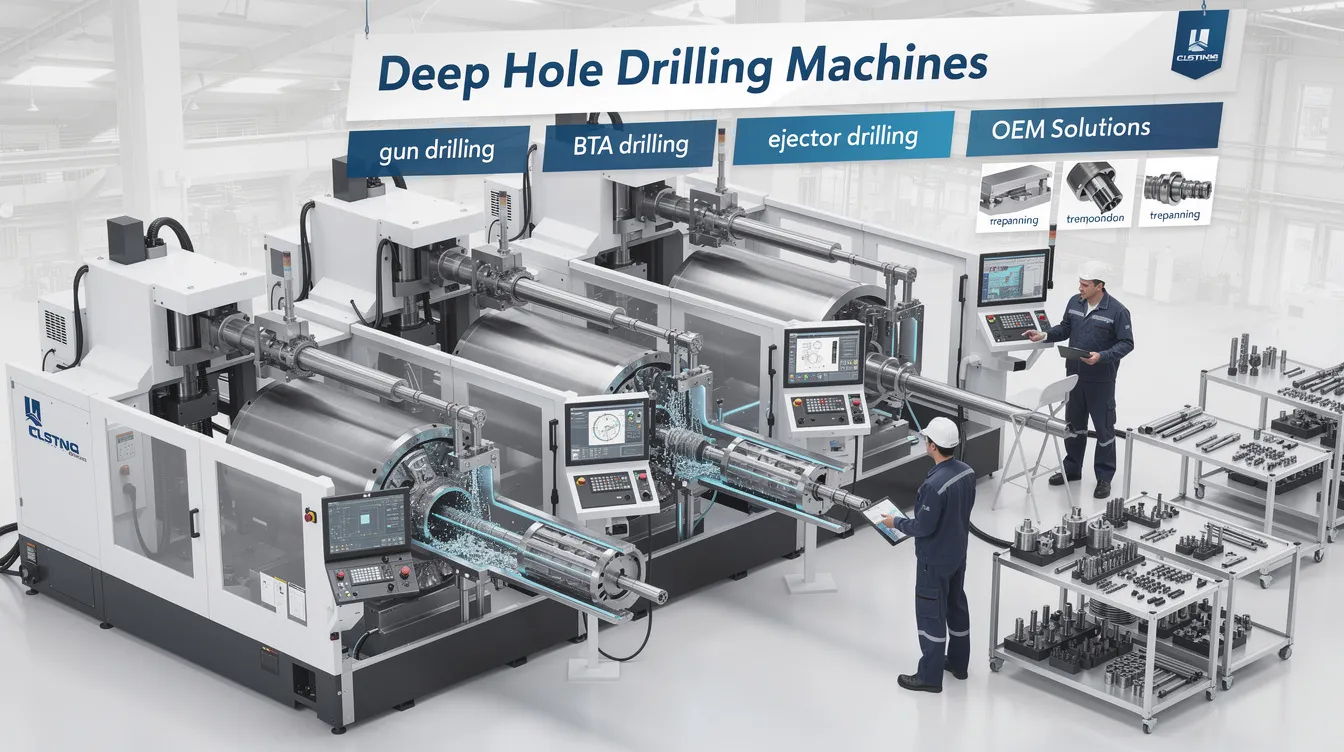
Deep Hole Drilling Machines: Methods, Applications & OEM Solutions
Introduction to Deep Hole Drilling Machines
In industrial machining, a deep hole is any bore whose depth exceeds ten times its hole diameter-a depth to diameter ratio greater than 10:1. At these ratios, conventional drilling with standard twist drills becomes unreliable. Chips pack in the flute, heat builds without escape, and slender tools deflect, producing holes that wander off center. Deep hole drilling machines are essential in automotive, aerospace, and medical industries precisely because they solve these problems by design.
This article focuses on industrial deep hole drilling machines-gundrilling machines, BTA deep hole drilling systems, ejector setups, and trepanning rigs-used in OEM production to produce deep holes in demanding components. These machines are crucial for manufacturing components that require long internal bores, from fuel injection rails to turbine shafts.
The four primary deep hole drilling methods break down as follows. Gun drilling uses a single flute tool with internal coolant delivery to drill small, precise holes. BTA drilling (named after the Boring and Trepanning Association) employs a multi-edge head with a drill tube for larger diameters. Ejector drilling uses a double-tube system that can retrofit onto standard CNC lathes. Trepanning cuts a ring rather than the full cross-section, saving power on very large diameters.
Anebon Metal Products Limited offers precision CNC machining and can integrate or subcontract deep hole drilling processes as part of complete OEM part production, delivering finished components ready for assembly.
Key benefits of deep hole drilling machines include:
-
Higher accuracy and maintaining straightness over extreme depths
-
Superior chip evacuation through engineered coolant flow paths
-
Tighter hole diameter control, delivering tight tolerances and superior surface finishes
-
Capability on tough materials like titanium, Inconel, and hardened steels
What Is Deep Hole Drilling?
Deep hole drilling is a machining process for producing holes with depth-to-diameter ratios typically above 10:1, often reaching 100:1 or more. Deep hole drilling machines can achieve depth-to-diameter ratios up to 400:1 in specialized setups. For example, a Ø8 mm hole drilled to 600 mm depth yields an L/D of 75:1-well beyond what any standard twist drill can handle.
The typical diameter range spans from micro holes around 0.2–0.5 mm up to large bores exceeding 1,000 mm. Most OEM parts fall in the 1–60 mm range for gun drilling applications, while BTA systems handle larger diameters.
The basic drilling process involves a rotating tool (or rotating workpiece), linear feed into the material, and continuous internal coolant or cutting oil supply for chip removal. Three core challenges define why this process demands dedicated equipment:
-
Chip evacuation: chips must travel long distances out of the hole; clogging causes scratching, tool wear, or breakage
-
Heat management: cutting over long depths generates heat that distorts both tool and workpiece, degrading surface finish
-
Tool deflection and guidance: long, slender tools tend to wander; guide bushings and pads are required to produce straight holes
Deep hole drilling machines address all three by combining rigid spindles, guide bushings at the hole entry, and high-pressure coolant units delivering 30–200 bar depending on the method.
Working Principles of Deep Hole Drilling Machines
The design of every deep hole drilling machine integrates motion control, tool guidance, and coolant delivery into a unified system. These elements work together to keep the hole straight and the surface finish consistent across the full drilling depth.
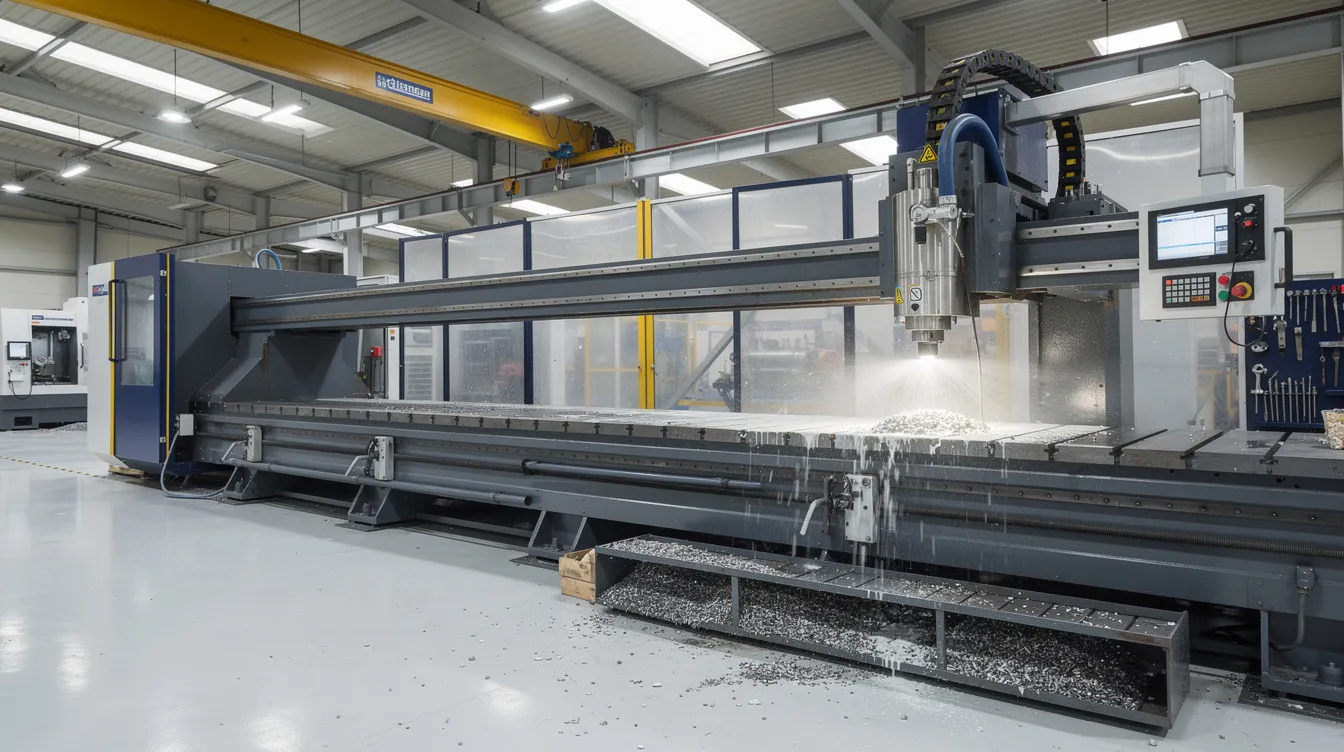
Motion and feed control vary by configuration. Rotational methods include gundrilling and counter-rotation for maximum straightness-some machines rotate the workpiece against the tool direction to cancel deflection forces. Feed is controlled via CNC controls, ensuring high repeatability and process consistency. Deep hole drilling tools feature extended, high-precision shanks for stability, while steady rests and drill brushes support the drill string to ensure straight holes.
Guide bushings and guide pads sit at the hole entry, preventing the tool from deflecting or vibrating as it advances. In gun drilling, carbide guide pads ride against the bore wall, simultaneously aligning the tool and burnishing the surface. Without this guidance, long tools wander, producing taper and poor cylindricity.
The coolant system is central to every deep hole drilling technology. Coolant lowers heat and friction during drilling, clears chips from the cutting area, and improves tool longevity by reducing wear. High-pressure coolant is essential for deep hole drilling-machines require dedicated high-pressure coolant systems delivering oil or emulsion at 30–200 bar. Coolant must be pumped in large quantities for effective lubrication, with flow rates matched to hole diameter and depth.
Advanced machines monitor spindle load, coolant pressure, and coolant flow in real time, providing process feedback to detect tool wear or chip packing before process failures occur.
Key Deep Hole Drilling Methods
This section compares the most common deep hole drilling methods used on modern hole drilling machines. Each method suits different combinations of hole diameter, depth, and material. For a broader overview, see this guide to the top six deep hole processing systems used by experts.
Gun drilling uses a single cutting edge tool-a single tube system-with a V-shaped gullet and internal coolant channel. Coolant in gundrilling flows through the tool itself, flushing chips back along the external groove. Gundrilling machines are ideal for holes 1 mm to 50 mm in diameter, with single-lip deep hole drilling effective for diameters of 0.5 mm to 40 mm. Specialized setups can achieve L/D ratios up to 200:1. Gun drilling is the go-to for small, highly accurate holes in automotive, aerospace, and medical device components.
BTA deep hole drilling uses a head with multiple cutting edges mounted on a drill tube. Coolant enters around the tool outside; chips exit through the internal tube-the core bta drilling principle. BTA drilling is suitable for holes 20 mm to 250 mm in diameter, and BTA drilling machines can produce holes from 6 mm to 2,000 mm in diameter in specialized configurations. BTA drilling employs multiple cutting edges for faster material removal, making it ideal for larger diameters where productivity matters.
Ejector drilling is a double-tube system where coolant flows between the outer and inner tubes, creating a Venturi effect that draws chips through the inner tube. This method allows deep hole operations on standard machine tool platforms without a full BTA setup, though at some cost to rigidity and cycle time. Typical diameters range from 18–200 mm.
Trepanning cuts an annulus rather than removing the full cross-section, leaving a solid core. This saves cutting power and material on very large hole diameters-typically 300 mm and above-and is common in energy and heavy-industry applications for shafts and thick plates.
In summary: gun drilling suits small to medium diameters at extreme L/D; bta drilling excels at larger diameters with high metal removal rates; ejector drilling fills the gap for shops without dedicated machines; and trepanning is the choice when diameters are very large and full-bore cutting is impractical. Material hardness, required tolerances, and production volume all influence which of these other drilling methods is most suitable.
Gundrilling Machines vs. BTA Deep Hole Drilling Machines
Engineers choosing between these two machine types should start with part requirements: hole diameter, depth, material, and tolerances.
Gundrilling machines excel at small to medium diameters where high precision matters. Gundrilling is best for holes 1 mm to 50 mm in diameter, and gundrilling uses one cutting edge for precision. Applications include fuel rails, injection nozzles, medical instruments, and aerospace pins. For example, a Ø6 mm × 300 mm bore in an aerospace component-L/D of 50:1-is a textbook gun drilling job requiring tight tolerances on diameter and runout.
BTA deep hole drilling machines handle larger diameters and higher feed rates. BTA drilling is suitable for heavy components like hydraulic cylinders, rolls, and oil and gas equipment. A Ø120 mm × 1,500 mm hydraulic cylinder barrel, for instance, demands BTA drilling for its higher throughput and robust chip management.
Key differences at a glance:
-
Tool: gun drill has one cutting edge with guide pads; BTA head has multiple cutting edges with indexable inserts
-
Coolant delivery: gundrilling delivers coolant through the tool; BTA sends coolant around the tool, evacuating chips through the drill tube
-
Diameter: gun drilling covers roughly 1–50 mm; BTA covers 20–250 mm in standard production, with special tools extending beyond
-
Depth: gun drilling can reach 200×D or more for small diameters; BTA production typically runs to about 100×D
Choose machines based on material type and hole size requirements-there is no single machine tool that optimally covers both ranges.
Capabilities of Modern Deep Hole Drilling Machines
Modern CNC deep hole drilling machines combine gundrilling or BTA systems with advanced cnc controls, making them capable of high precision OEM production across many industries.
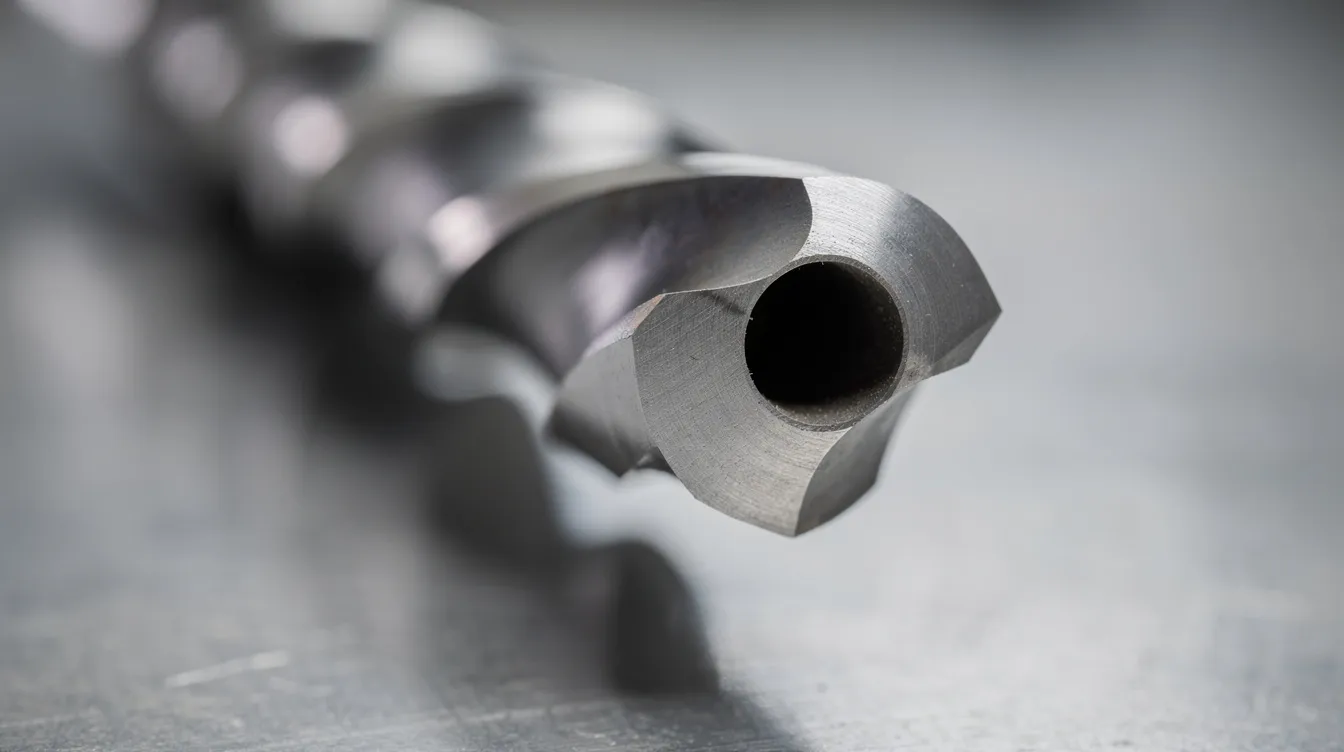
Hole diameter and depth: Micro gundrilling starts at about 0.5 mm. General industrial gun drilling covers 3–65 mm. BTA systems handle 16–500+ mm. Typical maximum depth ratios in production range from 30×D to 100×D, with specialized gun drilling setups pushing to 200×D or beyond.
Accuracy and surface finish: Dedicated machines achieve IT8–IT9 diametral tolerances in production, with precision gun drilling capable of IT7. Surface finish values typically fall in the Ra 0.4–1.6 µm range for gun drilling in steel, and Ra 0.8–6.3 µm for BTA depending on whether it is a roughing or finishing pass. Straightness deviations run about 0.05 mm per 100 mm at moderate L/D ratios. They handle a wide variety of materials including hard alloys.
Materials: Deep hole drilling machines process stainless steels, Inconel, titanium, hardened tool steels, and aluminum alloys. Tooling, coolant type, and cutting data must be selected specifically for each material group to maximize tool life and efficiency.
Productivity and automation: Multi-spindle configurations drill parallel holes simultaneously. Automatic loading systems and in-cycle probing reduce cycle time and ensure repeatability across high-volume OEM runs.
Deep Hole Drilling in Key Industries
Deep hole drilling machines are embedded in the supply chains of virtually every precision manufacturing sector.
Aerospace: Deep hole machining is used in aerospace to manufacture precise parts like landing gear. Deep hole drilling is also used in aerospace for turbine shafts, fuel system manifolds, and internal cooling passages requiring long, straight channels with full traceability. For applications involving vibration-sensitive deep bores, specialized techniques further improve straightness.
Automotive: The automotive industry uses deep hole drilling for engine blocks and crankshafts, along with camshafts, fuel injection rails, and transmission shafts. Production volumes demand reliable, repeatable deep hole drilling processes with minimal downtime. Approximately 45% of global deep hole drilling demand comes from automotive manufacturing.
Medical: Medical tools like surgical instruments are made using deep hole drilling. Micro deep hole drilling produces cannulated instruments, bone screws, and implants in stainless steel and titanium, where clean surface finish and burr-free holes are critical for biocompatibility.
Energy and heavy industry: The energy sector uses deep hole drilling for turbine shafts and hydraulic parts. Deep hole drilling machines create precise holes in oil and gas tools such as drill collars and downhole equipment. BTA and trepanning dominate for large-bore power generation components.
Mold and die: Cooling channels in injection molds, extrusion dies, and long spindles all rely on deep hole drilling to produce holes with precise geometry for uniform thermal management.
Selecting the Right Deep Hole Drilling Machine or Process
For many OEMs, the decision is not about owning a metal cutting machine tool but choosing the right process and manufacturing partner.
Material type: High-strength alloys and heat-resistant superalloys demand carbide or coated carbide tooling, optimized coolant, and reduced feed rates. Gun drilling and BTA drilling each interact differently with material hardness-consult your machining partner early.
Hole diameter and depth: A practical rule of thumb: below approximately 20 mm diameter, consider gundrilling first; above 20–25 mm, compare BTA options. Ejector systems fill the middle ground when dedicated BTA machines are unavailable.
Precision and surface finish: For general OEM tolerances (IT8–IT9, Ra 1.6–3.2 µm), deep hole drilling alone is often sufficient. For hydraulic-grade bores requiring Ra below 0.4 µm, plan for honing or roller burnishing after drilling.
Production volume: Pilot runs of 1–100 pieces favor gun drilling with lower tooling cost. At 10,000+ pieces per year, BTA with indexable inserts and automated loading reduces cost per hole significantly. Custom CNC machining solutions can bridge the gap.
Machine reliability: Robust coolant systems, chip handling, and tooling support from experienced suppliers minimize downtime in continuous production.
How Anebon Integrates Deep Hole Drilling into OEM Manufacturing
Anebon Metal Products Limited is a precision CNC machining, die casting, and sheet metal fabrication company founded in 2010 in Dongguan, China, serving overseas OEMs across many industries.
Anebon does not sell deep hole drilling machines. Instead, the company uses deep hole drilling methods-in-house or with qualified partners-as part of turnkey part manufacturing. CNC milling, CNC turning, and 5-axis machining are combined with deep hole drilling to deliver complete, ready-to-assemble components.
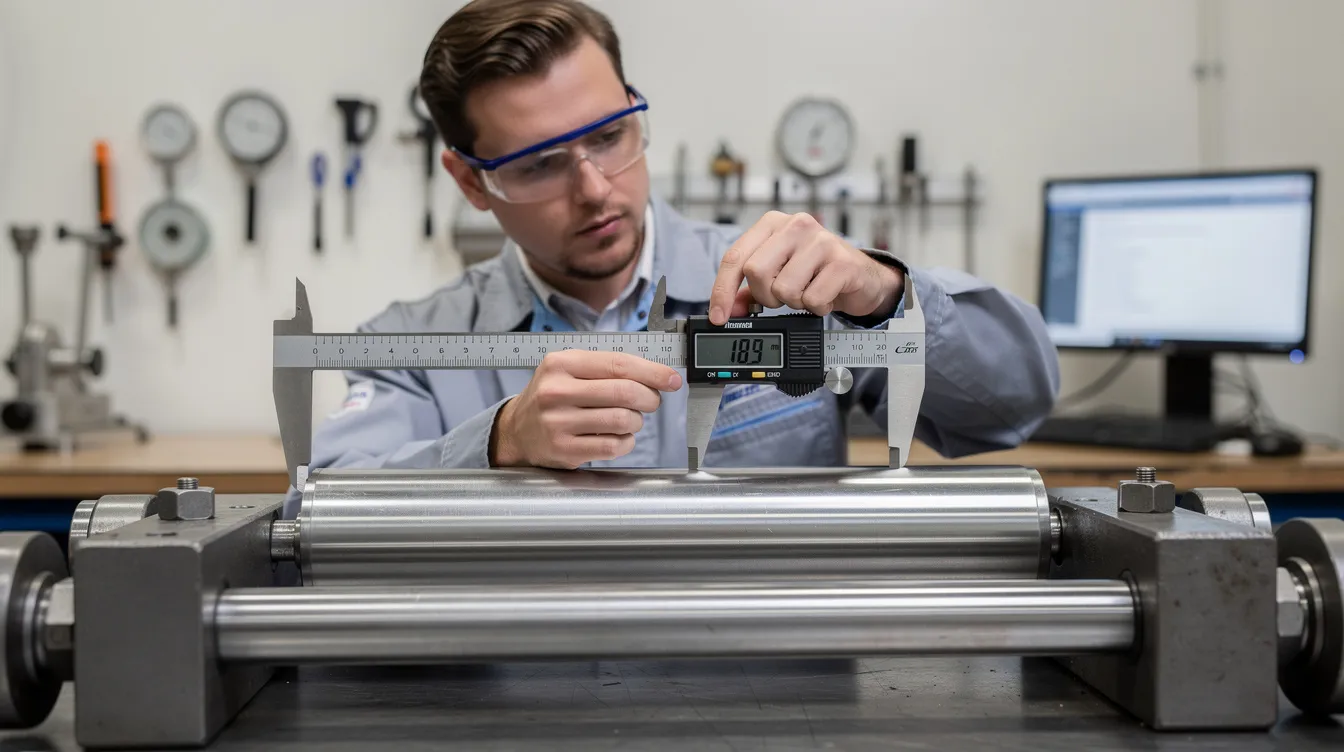
Anebon holds tolerances as precise as ±0.002 mm on critical features, aligning with demanding deep hole projects. Certifications include ISO 9001:2015 and ISO 14001:2015, with quality assurance practices such as CMM inspection and surface finish measurement for deep drilled bores.
Typical parts Anebon supports include aerospace brackets with internal channels, medical device housings requiring gun drilling, and hydraulic manifolds needing multiple intersecting deep holes.
Design for Manufacturability (DFM) in Deep Hole Drilling
Involving manufacturing engineers early avoids costly redesigns. A bore that shifts from 18 mm to 20 mm diameter might move from borderline gun drilling to stable BTA, saving time and money.
-
Hole geometry: Maintain sufficient wall thickness, avoid intersecting holes too close to entry, and provide pilot chamfers for tool alignment
-
Hole diameter and tolerance: Slight diameter adjustments can shift a part to a more stable, cost-effective drilling process; don’t over-specify IT grades unless function demands it
-
Material selection: Consider machinability ratings and heat treatment sequences; perform heat treatment before final drilling on long parts to minimize distortion
-
Fixturing and part handling: Part length, weight, and symmetry affect clamping; workholding must prevent movement as cutting forces over long depths create significant torque
-
Stress relief: Performing stress-relief treatments before final deep hole drilling reduces distortion on long workpiece geometries
Anebon provides DFM feedback during quoting and prototyping stages. Engineers can submit technical drawings for review, and the team will optimize deep hole features alongside other CNC operations.
FAQ: Deep Hole Drilling Machines & Processes
What is the difference between gun drilling and BTA deep hole drilling? Gun drilling uses a single cutting edge with coolant delivered through the tool-best for diameters of 1–50 mm. BTA drilling uses multiple cutting edges with coolant flowing around the tool and chips exiting through an internal tube-best for diameters of 20–250 mm and higher metal removal rates.
Can deep hole drilling machines handle tough materials like titanium and Inconel? Yes. With appropriate carbide or coated carbide tooling, high-pressure coolant, reduced feed rates, and rigid setups, deep hole drilling machines drill titanium, Inconel, and hardened steels. Tool life monitoring is critical in these materials.
How accurate are deep hole drilling machines in terms of hole diameter and straightness? Production tolerances typically fall within IT8–IT9, with straightness deviations around 0.05 mm per 100 mm at moderate L/D ratios. Final accuracy depends on part design, material, and whether finishing operations like honing follow drilling.
What information does Anebon need to quote a deep hole drilling project? Material type and hardness, hole diameter and depth, tolerances on diameter and straightness, surface finish requirements (Ra/Rz), annual production volume, applicable standards (aerospace, medical, etc.), and a 2D drawing or 3D model.
What are typical lead times for prototyping? Anebon can support rapid prototypes in small runs (1–100 pieces) with shorter lead times, then scale to full production with optimized tooling and process qualification once designs are validated.
Conclusion & Call to Action
Deep hole drilling machines and drilling methods-gun drilling, BTA, ejector, and trepanning-are indispensable for modern OEM components with high depth-to-diameter ratios. The right combination of machine, tooling, and process engineering determines whether a part meets its accuracy, surface finish, and cost targets.
Anebon Metal Products Limited serves as an ISO-certified precision manufacturing partner, integrating deep hole drilling with CNC machining, die casting, and sheet metal fabrication to deliver complete solutions for overseas OEMs.
Ready to move forward? Send your 2D drawings and 3D models (STEP, IGES) to Anebon’s engineering team for a deep hole drilling feasibility review and fast quotation-including DFM feedback to optimize your design before production begins.