Essential Guide to CNC: Understanding Its Role in Modern Manufacturing
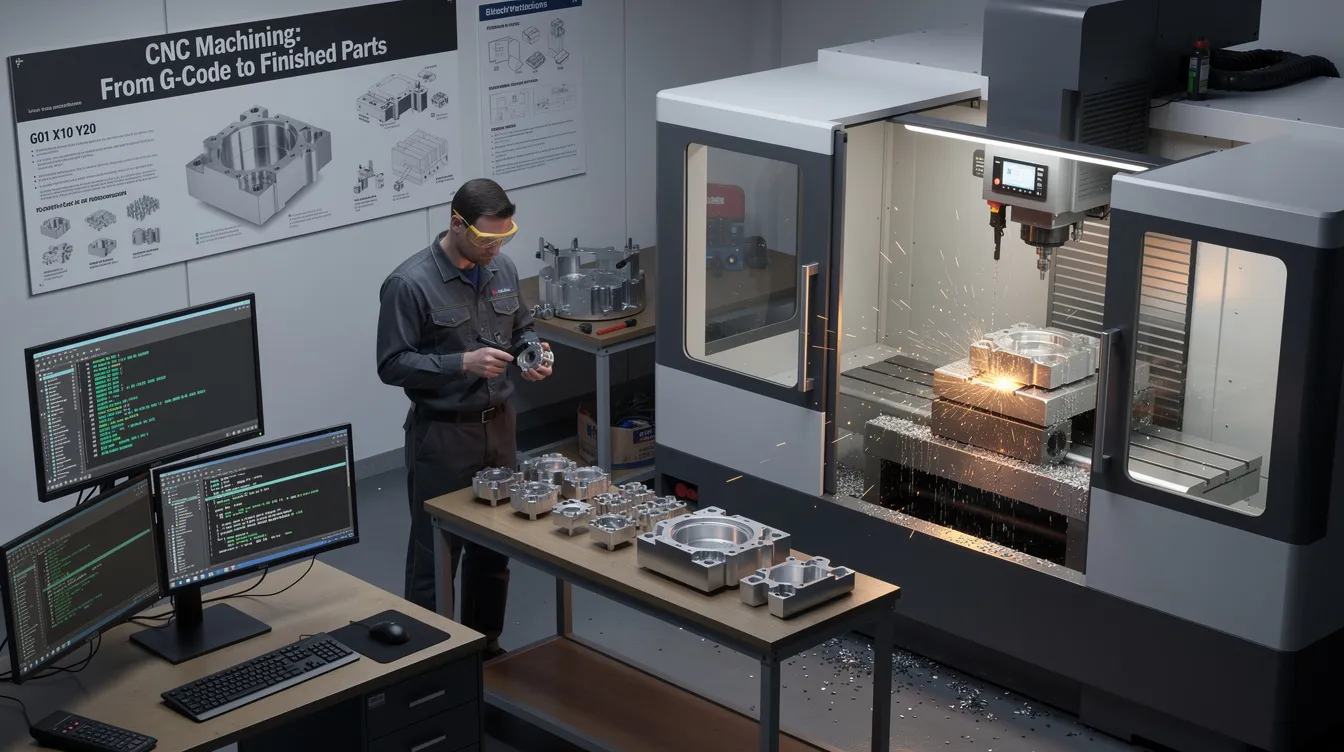
CNC Machining: From G-Code to Finished Parts
CNC stands for computer numerical control, and it represents one of the most significant shifts in how parts are made. This guide walks you through how a CNC machine works, the main cnc processes involved, the types of cnc machines available, and how to decide when CNC is the right manufacturing method for your next project.
What Does CNC Mean in Modern Manufacturing?
Computer numerical control is an automated manufacturing process in which a computer program directs machine tools through precise movements along the x axis and additional axes, replacing the manually operated hand-wheels and dials that once defined metalworking. CNC technology automates the control of machining tools, governing axis movement, spindle speed, tool changes, feed rates, and coolant delivery through digital commands. CNC machines operate using pre-programmed software and codes, delivering unmatched repeatability compared to manual machining and superior precision compared to traditional methods.
The term covers a broad family of equipment. Common CNC machine types include mills, lathes, routers, and plasma cutters, along with cnc laser cutters, wire EDM units, and multi-axis machining centers built for complex operations. Even 3d printers are classified as CNC machines because they rely on the same computer control logic. CNC machines include routers, mills, and lathes, but they also extend to cnc machinery purpose-built for exciting industries such as aerospace, medical devices, automotive, robotics, and electronics, where high precision and tight tolerances are non-negotiable.
Anebon Metal Products Limited, founded in 2010 in Dongguan, China, is an ISO 9001:2015 and ISO 14001:2015 certified precision CNC machining partner serving overseas OEMs. With capabilities spanning CNC milling, CNC turning, die casting, and sheet metal fabrication, Anebon helps design engineers move from concept to finished part with confidence.
How Does a CNC Machine Work From CAD to Chip Removal?
The CNC manufacturing process follows a specific workflow: engineers design a 3D model in cad software, translate that geometry into machine instructions through cam software, and then the cnc computer executes the resulting program on the shop floor. Each stage directly affects final accuracy, cost, and lead time.
It starts with computer aided design. Engineers use tools like SolidWorks, Autodesk Fusion, or Siemens NX to create a 3D model, defining critical tolerances, datum references, and material selection. The cad file then moves into computer aided manufacturing software, which reads the model and uses it to generate toolpaths for roughing, semi-finishing, and finishing operations. This cam software generates digital files for CNC machine instructions, outputting g code and M-code that tell the machine exactly how to move. CNC programming requires knowledge of CAD and CAM software to produce reliable, collision-free programs.
The CNC control interprets g code line by line, moving axes through linear and circular interpolation modes, starting and stopping the spindle, performing tool changes, and managing coolant flow. CNC programming uses g code to control machine movements with a level of consistency that eliminates much of the human error inherent in manual operations. At Anebon, engineers validate every CNC program with simulation and dry runs before cutting metal, catching potential collisions and optimizing cycle times to protect cutting tools and fixtures.
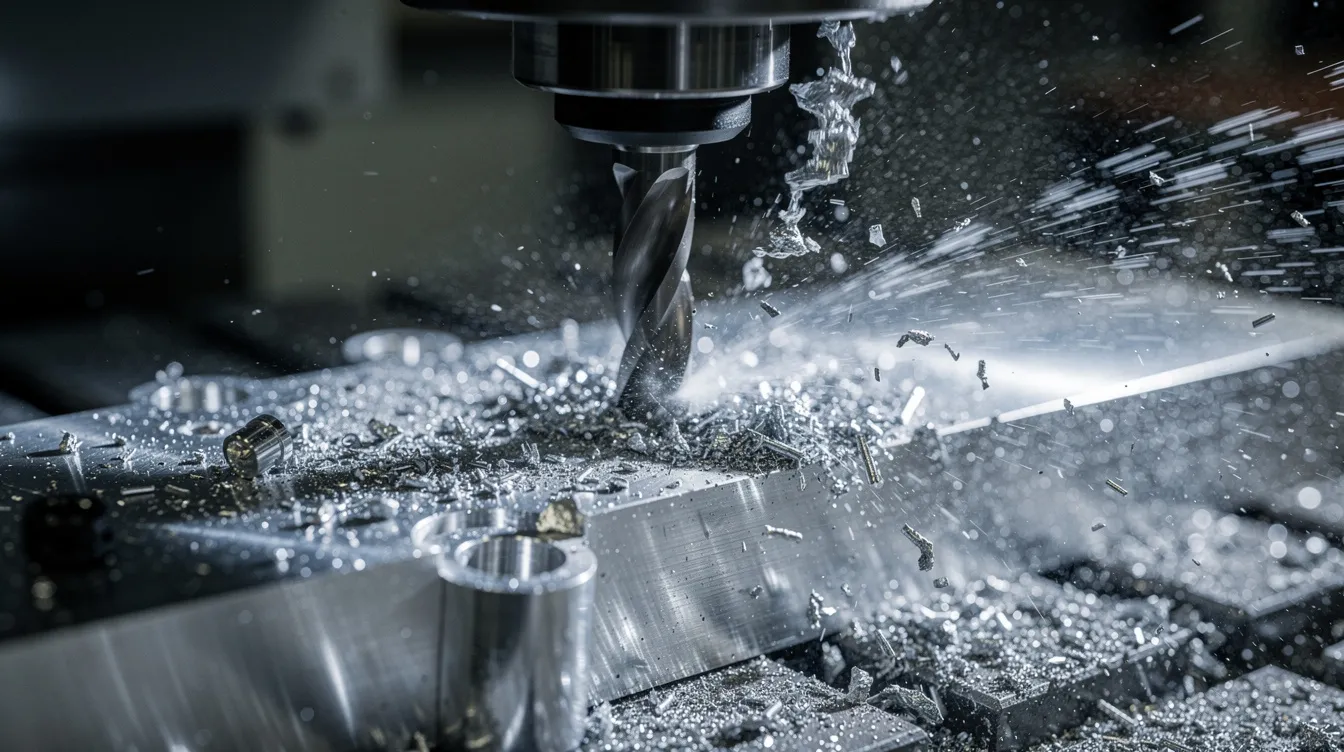
Key CNC Processes: Milling, Turning, and Beyond
CNC machining is a subtractive manufacturing process: cnc machines utilize subtractive manufacturing by removing material from a raw block until the desired shape emerges. The main machining processes, milling and turning, each serve different geometries, and modern cnc machinery often combines them in a single setup.
A cnc mill excels at producing prismatic parts, pockets, slots, and 3D contoured surfaces. CNC milling machines can create complex 3D shapes across 3-axis, 3+2, and full simultaneous 5-axis configurations, making them essential for aerospace brackets and medical components with compound angles. Modern CNC systems allow for multi-axis movement, enabling a single fixture to reach features that would otherwise require multiple setups.
CNC turning uses cnc lathes that rotate the workpiece against stationary or live cutting tools, ideal for rotationally symmetric components like shafts, bushings, and connectors. Mill-turn centers combine milling and turning in one setup, and CNC machining reduces production time by performing complex operations in a single clamping. Drilling, tapping, and boring are common secondary cnc processes integrated into multi-tasking machine tools for efficiency.
CNC allows the creation of highly complex geometries, and CNC machines can cut, shape, and create parts from various materials. Anebon’s capabilities cover CNC milling, CNC turning, and 5-axis machining for materials including aluminum, stainless steel, titanium, and engineering plastics like PEEK and POM.
Types of CNC Machines and Cutting Technologies
Different cnc machines are chosen based on raw material type, geometry, thickness, and required precision. Selecting the right computer controlled machine for a job is one of the most impactful decisions in any production process.
Vertical and horizontal machining centers (VMC/HMC): Vertical centers position the spindle above the workpiece, ideal for flat and prismatic parts. Horizontal centers improve chip evacuation through gravity and support multi-pallet systems, making them more productive for higher-volume work where multiple machines run simultaneously.
CNC lathes and mill-turn centers: Equipped with live tooling, Y-axis travel, and sub-spindles, these machines produce complex parts in fewer setups. One case study reports holding 14-micron tolerance on turned features using 5-axis mill-turn equipment.
CNC laser cutters: Fiber cnc laser systems deliver high speed machining of sheet metal with small kerf widths and clean edges. CNC laser cutting uses diode, CO2, and fiber lasers, each suited to different thin materials and thickness ranges, particularly stainless steel and aluminum.
Plasma cutters and waterjet cutting: CNC plasma cutters offer a cost-effective option for thicker steel plates where ultra-fine edge quality is less critical than production speed. CNC water jet cutting uses high-pressure water streams, sometimes mixed with abrasive, to cut materials including carbon fiber and other composites without heat distortion.
Specialized equipment such as wire electrical discharge machining handles intricate profiles and tight-tolerance features in hardened materials, achieving ±0.005 mm accuracy. A cnc router is commonly used for wood, plastics, and softer metals in signage and enclosure work. Anebon’s engineering team selects the appropriate setup from this mix to balance cost, speed, and precision for each OEM project.
Inside CNC Programming: From CAM Software to G-Code
CNC programming is the process of defining toolpaths, feeds, speeds, and machine logic to transform raw stock into finished parts. A skilled cnc machinist or cnc operator uses computer software to set up operations including facing, roughing, finishing, and contouring, then selects cutting tools and strategies for chip evacuation.
G code is the standardized machining code and programming language that controls axis positions, interpolation modes, feed rates, and spindle commands for every computer controlled machine on the floor. The complexity of the cnc programming scales with part geometry: simple 2D profiles and 2.5D pockets require straightforward code, while 5-axis simultaneous machining demands advanced jobs in both programming and verification. CNC programming can automate complex machining tasks efficiently, and cnc technology allows for complex designs with minimal human intervention.
Simulation and verification are not optional. Running toolpath simulation and collision checks before cutting prevents machine crashes, protects expensive fixtures, and eliminates scrap.
Anebon’s experienced programmers optimize every computer program for shorter cycle times, longer tool life, and stable quality across full production runs, whether producing a single prototype or thousands of identical parts. The use of closed loop systems with feedback sensors further ensures real-time correction during machining.
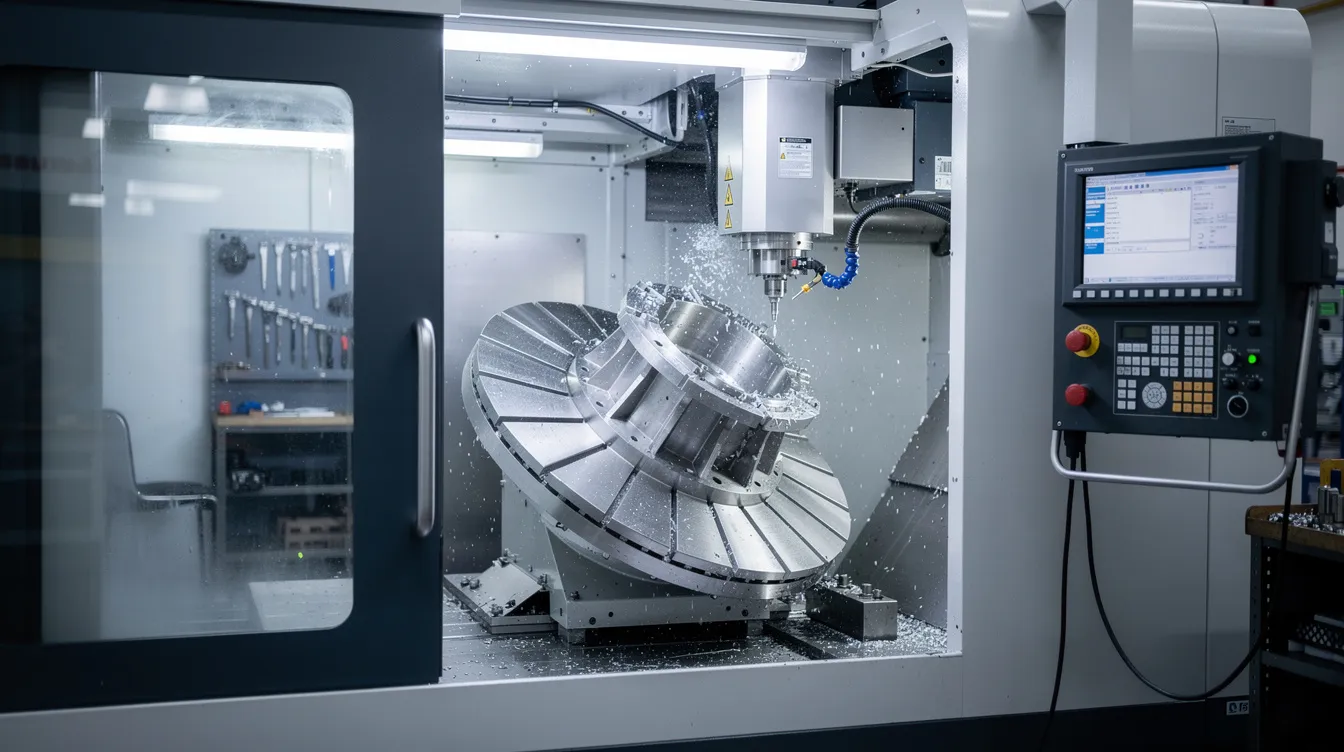
Materials, Cutting Tools, and Surface Finishes
Material selection, cutting tools, and surface treatments all influence cost, lead time, and part performance. CNC machines can work with various materials including metals and plastics, and matching the right tool to the right material is where experience matters most.
Anebon machines a wide range of various materials:
|
Material Category |
Common Grades |
|---|---|
|
Aluminum alloys |
6061-T6, 7075-T6 |
|
Stainless steels |
304, 316, 17-4PH |
|
Titanium alloys |
Ti-6Al-4V |
|
Tool steels |
D2, A2, H13 |
|
Copper / Brass |
C110, C360 |
|
Engineering plastics |
POM, PEEK, PC, ABS |
Modern carbide cnc tools use coatings such as TiAlN and DLC (diamond-like carbon) matched to material hardness and required surface roughness. TiAlN resists high cutting temperatures by forming a protective aluminum oxide layer, while DLC reduces friction when machining abrasive or sticky materials. Tool geometries, including helix angle, flute count, and chip breakers, are selected to optimize tool life and finish quality.
Coolant, lubrication, and chip evacuation are critical to extending tool life and achieving stable dimensional accuracy. Through-spindle high-pressure coolant is particularly effective in deep pockets and hard-to-machine alloys like titanium.
Post-machining surface finishes Anebon provides include bead blasting, anodizing, hard anodizing, powder coating, electroplating, passivation, and polishing. Anebon can also advise on design for manufacturability, recommending radii, wall thickness, and tolerances to suit selected tools and materials.
Precision, Quality Assurance, and Tolerances
High precision CNC machining depends on both capable machines and rigorous quality control. CNC machines enhance precision and consistency in manufacturing processes, but achieving cutting edge technology-level tolerances requires disciplined inspection at every stage.
CNC machining can produce parts with tolerances of 0.004 mm on suitable features, though whether such precision is realistic depends on part size, material, feature geometry, and thermal stability. CNC machines produce parts with tolerances within 0.004 mm under tightly controlled conditions. For reference, here are typical tolerance ranges:
|
Feature Type |
Standard |
Precision |
Ultra-Precision |
|---|---|---|---|
|
Non-critical prismatic |
±0.13 mm |
±0.05 mm |
- |
|
Critical bores / mating surfaces |
±0.05 mm |
±0.02–0.01 mm |
±0.005 mm |
|
Surface roughness (Ra) |
1.6–3.2 µm |
1.0–1.6 µm |
< 1 µm |
In-process inspection includes first-article inspection, calibrated gauges, and cnc operator checks during long runs. Final inspection uses CMM (coordinate measuring machines), optical measurement systems, and surface roughness testers for critical OEM components.
Anebon’s ISO 9001:2015 quality management system and ISO 14001:2015 environmental management practices provide overseas clients with documented assurance. OEM design engineers should share critical-to-function dimensions and technical drawings so inspection plans and control charts align with product requirements.
When to Choose CNC Machining Over Other Manufacturing Processes
Understanding where CNC fits relative to die casting, sheet metal fabrication, and additive manufacturing helps you select the most cost-effective manufacturing process for each part.
CNC machining is ideal for low-to-medium volumes, a high mix of SKUs, prototypes, and complex parts requiring tight tolerances. CNC machines can operate continuously without breaks, increasing efficiency and enabling rapid turnaround. CNC machining operates continuously without breaks, increasing efficiency for both prototyping and mass production. CNC provides increased production speed and efficiency compared to manually operated equipment, and automating the manufacturing process with CNC drastically reduces labor costs because CNC systems require fewer operators than traditional methods.
For high-volume metal parts, die casting delivers complex shapes at lower per-unit cost, but cast surfaces often need CNC finishing on critical features. Anebon offers both, producing cast blanks and then machining functional surfaces to spec. Sheet metal fabrication, including laser cutting and bending, is a better choice for enclosures and brackets made from thin plate. Meanwhile, additive manufacturing and 3d printers excel at early design validation and open loop systems for internal lattice structures, but CNC remains the go-to manufacturing method for final functional parts where mechanical properties, surface finish, and tolerances are stringent.
Anebon can evaluate your drawings or 3D models and recommend the optimal mix of processes to reduce cost and lead time across the entire production process.
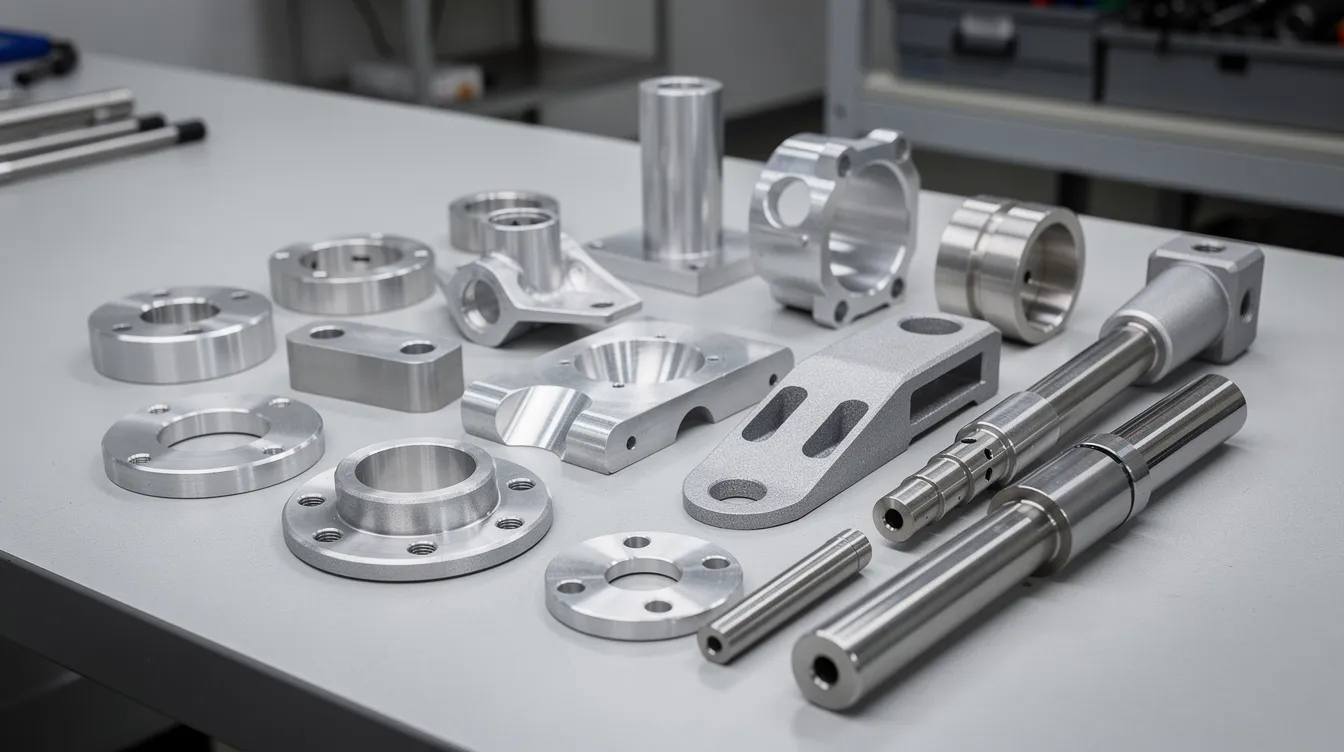
Partnering With Anebon for CNC OEM Production
Overseas OEMs can leverage Anebon’s cnc machines, CAM expertise, and integrated fabrication services to produce parts across the manufacturing industry with confidence. The engagement flow is straightforward: submit an RFQ with drawings or 3D models, receive DFM feedback from Anebon’s engineers, approve a quotation, build prototypes, and ramp up to full production.
Since 2010, Anebon has served international customers from Dongguan, China, delivering CNC machining, die casting, and sheet metal fabrication for applications ranging from surgical instruments to automotive housings. Logistics support covers global shipping, batch tracking, and the documentation required by aerospace, medical, and automotive clients.
A CNC machine works best when the right partner handles the details. Request a quote or share your CAD data with Anebon’s team to discuss the most highly efficient CNC machining approach for your next project.