Essential Guide to CNC Prototype Machining for Efficient Development
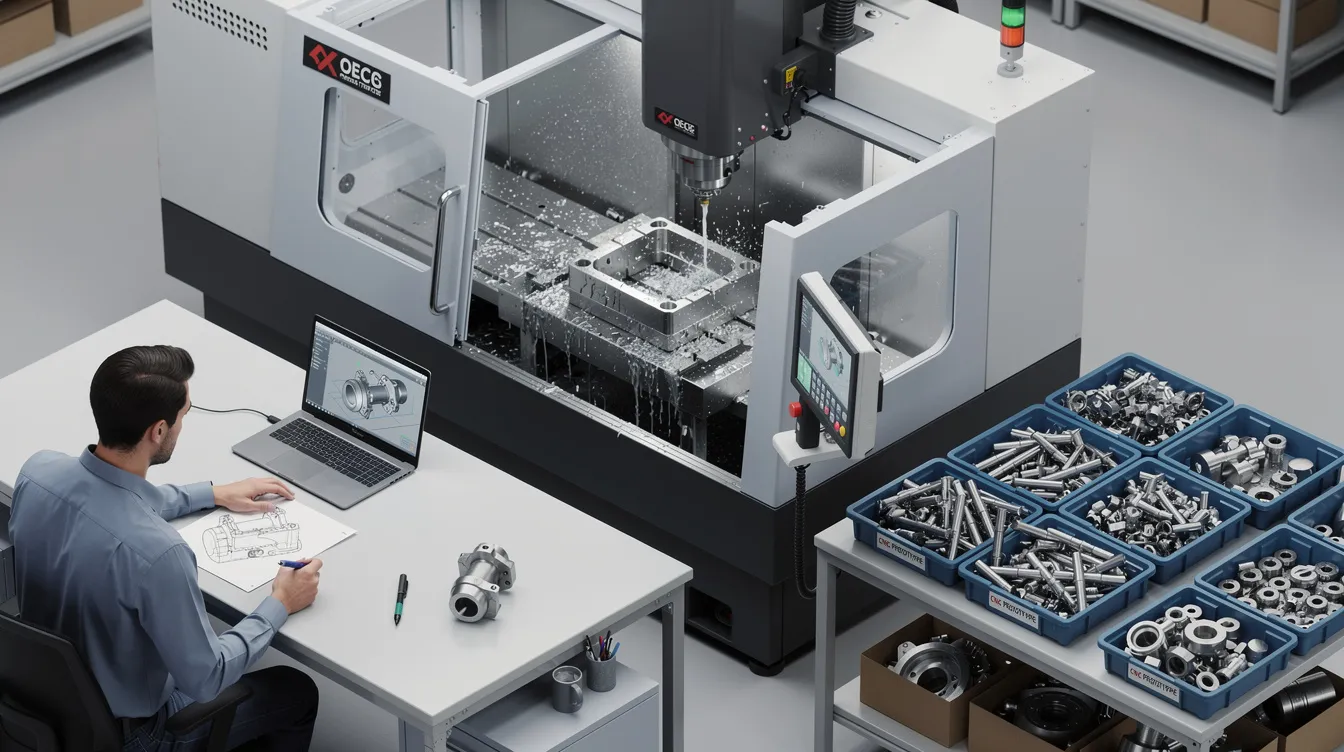
CNC Prototype Machining: From First Concept to Small-Batch Production
Engineers who skip prototype validation and jump straight to production tooling often learn an expensive lesson. A single design flaw discovered after committing to injection molds or die-cast dies can cost tens of thousands of dollars and weeks of delay. CNC prototype machining exists to prevent exactly that scenario, giving teams a fast, precise way to test real parts before scaling up.
What Is CNC Prototype Machining?
CNC prototype machining is a subtractive manufacturing process that produces small quantities of parts-from a single piece up to roughly 100 units-using computer numerical control equipment. Engineers use it to create prototypes that validate design form, fit, function, and manufacturability before investing in expensive production tooling. Because CNC prototypes can be made from metals and plastics using the same production grade materials as the finished product, they are often used for functional testing under realistic mechanical, thermal, and chemical conditions.
Unlike going straight to injection molding or die casting, prototype CNC machining requires zero tooling investment. If a design adjustment is needed after testing, the engineer updates the cad model, regenerates toolpaths, and machines a revised part-often within days. This flexibility makes the cnc prototyping process a core step in the modern product development process, sitting alongside 3d printing for early visual models and vacuum casting for short-run polymer parts.
Anebon Metal Products Limited is a Dongguan-based precision manufacturer, ISO 9001:2015 and ISO 14001:2015 certified, serving overseas OEMs since 2010. Anebon supports both one-off cnc machining prototypes and rapid transition to small batch manufacturing using the same machines, programs, and quality systems. This means CNC machining enables scalable manufacturing processes from prototyping to production without introducing new variables.
How CNC Machining Works for Prototypes
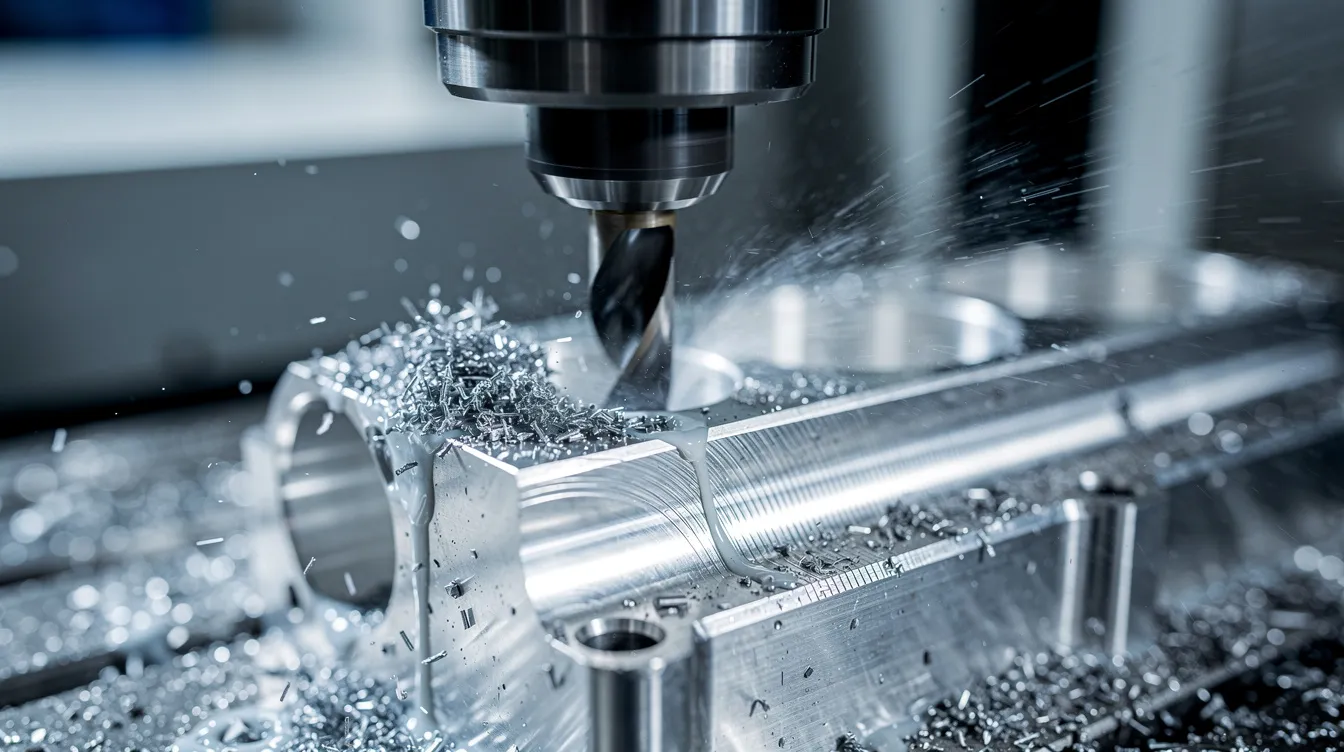
The cnc machining process for prototypes follows a structured workflow that minimizes errors and speeds up delivery:
-
CAD/Drawing submission – The customer provides a 3D cad file (STEP, IGES, or native format) and 2D engineering drawings specifying tolerances, surface finish, and critical features.
-
DFM review – Anebon’s engineering team reviews the design for manufacturability, suggesting changes to fillet sizes, wall thickness, pocket depths, and material selection before any cutting tools touch stock.
-
CAM programming – Toolpaths are generated with optimized feeds, speeds, and tool selection for cnc milling, cnc turning, or multi-axis machining depending on part complexity.
-
Fixturing and setup – Workholding is configured for the prototype parts, designed for flexibility so design adjustments between iterations require minimal re-fixturing.
-
Machining – The machining process runs on machining centers capable of 3-axis, 4-axis, or 5-axis operations. CNC machines ensure superior consistency and repeatability in prototyping, and CNC machining reduces human error in the manufacturing process.
-
Inspection – In-process checks and final quality verification using CMMs, probes, and roughness testers confirm that dimensions and surface finish meet specifications.
CNC machining offers high precision with tolerances of ±0.02–0.05 mm depending on feature criticality. Standard tolerances for non-critical areas typically sit at ±0.05–0.10 mm, while Anebon can hold as tight as ±0.002 mm on critical dimensions. CNC machining provides smooth surface finishes for prototypes, with typical as-machined roughness of Ra 1.6–3.2 µm and finer finishes achievable through polishing or grinding.
CNC Rapid Prototyping vs Other Prototyping Processes
When engineers need to create prototypes, they typically evaluate three main prototyping processes: CNC machining, 3d printing, and injection molding. Each serves a different purpose in the development cycles of a product.
3D printing excels at producing early visual models, ergonomic studies, and parts with complex geometries like internal channels or lattice structures. However, 3d printing is limited to thermoplastics for prototyping in most cases, and tolerances are looser-often ±0.1–0.2 mm compared to CNC’s ±0.05 mm or better. CNC prototypes provide functional testing capabilities unlike 3d-printed models because they use production-grade materials and deliver tight tolerances that reflect real-world performance. CNC machining offers tighter tolerances than 3d printing across virtually every material class.
Injection molding delivers low per-part cost at scale, but mold creation is expensive ($5,000–$50,000+) and slow. For quantities under a few hundred pieces, rapid cnc prototyping is usually cheaper and faster because there is no mold cost and no weeks-long lead time for rapid tooling. CNC machining is faster than 3d printing for producing many parts and allows for rapid iterations and design modifications between test rounds.
That said, CNC machining is more expensive than 3d printing for simple visual models, and material costs increase due to CNC’s subtractive process-CNC machining generates more material waste than 3d printing. The upside is that selling recyclable waste material from metals like aluminum and titanium can partially offset increased material usage and higher material costs.
When to choose alternative prototyping processes vs CNC:
-
Choose 3d printing when you need to convey visual information, test ergonomics, or evaluate complex internal geometries at the prototyping stage
-
Choose CNC when you need functional prototypes with production-grade strength, tight tolerances, and fine surface finish
-
Choose injection molding only when quantities justify tooling cost and the design is frozen
Material Selection for CNC Machining Prototypes
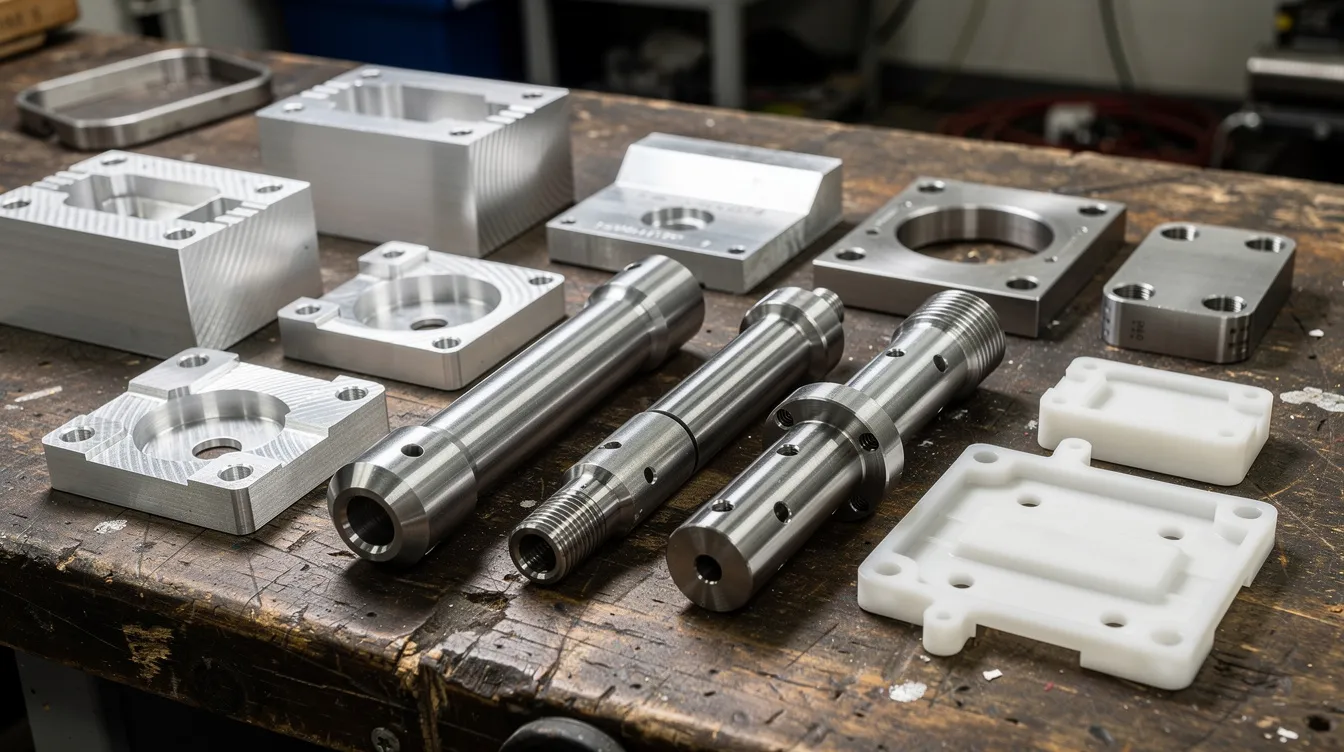
Material selection directly determines whether your prototype parts behave like the final product under load, heat, and wear. CNC machining uses production-grade materials like metals and high-performance plastics, and CNC machining supports a wide range of materials including metals and plastics. CNC prototypes can be made from various materials including metals, which means functional testing data transfers directly to production decisions.
Common metals:
-
Aluminum alloys – 6061-T6 for balanced strength and machinability; 7075-T6 for higher strength in aerospace and automotive
-
Stainless steels – 304 and 316L for corrosion resistance in medical and food-contact applications
-
Carbon steels – 1018 and 4140 for structural strength at lower cost
-
Titanium – Ti-6Al-4V for aerospace and medical where strength-to-weight ratio is critical
-
Brass – for fittings, low-friction parts, and components needing excellent machinability
Engineering plastics:
-
ABS – affordable, good for form and fit checks
-
POM (Delrin) vs PEEK – POM for dimensional stability and wear resistance; PEEK for high-temperature and chemical-resistant applications
-
PC (polycarbonate) – impact resistance and optical clarity
-
Nylon – wear resistance for gears and bearings, though moisture absorption affects tolerances
-
Medical-grade plastics – USP Class VI or ISO 10993 compliant materials for the medical industry
Special materials: G10/FR4 laminates and carbon fiber plates serve applications requiring lightweight but stiff cnc machined parts, common in drone frames and electronic enclosures.
Anebon helps engineers choose materials based on mechanical load, operating temperature, sterilization needs, and cost. For medical devices, this means recommending biocompatible alloys with passivated or electropolished surfaces. For the automotive industry, it means selecting alloys with high fatigue strength for vibration-prone components.
Design Considerations Linked to Materials
Different materials impose different constraints on the machining process. Metal walls should be ≥0.8 mm thick, while plastic walls need ≥1.5 mm to avoid deflection under cutting tools. Deeper cavities are generally limited to about 3× the tool diameter for stable chip evacuation and dimensional accuracy. Thread sizes below M3 become fragile and expensive to manufacture in most materials.
Anebon provides DFM feedback on these material-driven design constraints before cutting the first prototype, ensuring that material properties and geometry work together from the start.
Design Considerations for Prototype CNC Machining
Good design for prototyping machining reduces cost, shortens lead time, and improves part quality. Designs can be rapidly updated and remachined in CNC prototyping, but each of these design considerations directly affects how fast and affordable each iteration is.
-
Geometry and cost – Deep pockets, thin ribs, tiny fillets, and hard-to-reach internal corners increase cycle time on machining centers. Use standard tool-friendly radii (e.g., 1 mm or 2 mm fillets matching common end mill sizes) wherever possible.
-
Tolerance strategy – Apply standard tolerances of ±0.05–0.10 mm for non-critical areas. Reserve tight tolerances for mating features, sealing surfaces, and alignment bores only. Over-tolerancing every feature inflates cost dramatically.
-
Datum schemes – Clear datum references, threaded hole callouts, and critical-to-function dimension markings in 2D drawings prevent ambiguity and rework.
-
Fixturing – Design flat surfaces, clamping areas, and reference faces into the part geometry. This reduces setups and improves accuracy in the same process used for both prototype and production parts.
-
Cosmetic features – Avoid unnecessary logos, fine text, and micro-features in early prototype runs. These prolong machining time without adding functional value at the prototyping stage.
Anebon routinely reviews customer CAD and 2D drawings to suggest cost-saving changes before machining begins.
Optimizing CAD Models for CNC Prototypes
Split extremely complex parts into multiple components for prototyping if this reduces machining risk and cost-consolidate into a single part later for mass production. Use proper file formats (STEP, Parasolid) with clear revision control. Many errors in the cnc prototyping process trace back to outdated file versions or ambiguous cad software exports, not the machining itself.
Typical CNC Prototyping Processes at Anebon
Anebon operates a range of CNC equipment to manufacture parts across various industries. Here are the primary processes used for high quality prototypes:
-
3-axis CNC milling – Ideal for general prismatic components: brackets, housings, bases, and instrument panels
-
5-axis CNC milling – For complex geometries with multi-sided features, curved surfaces, and tight positional tolerances common in aerospace and medical parts
-
CNC turning – Produces cylindrical parts like shafts, bushings, and fittings; live-tool turning adds milled flats or slots in a single setup
-
Rapid tooling – CNC machining of aluminum or soft steel molds for short-run injection molding when customers need polymer prototype parts from moldable resins
-
Hybrid assemblies – Combining cnc machined parts with sheet metal fabrication (including sheet metal forming) or die casting prototypes for multi-process assemblies
Secondary Operations and Finishing
Secondary operations transform as-machined prototypes into production-representative parts:
-
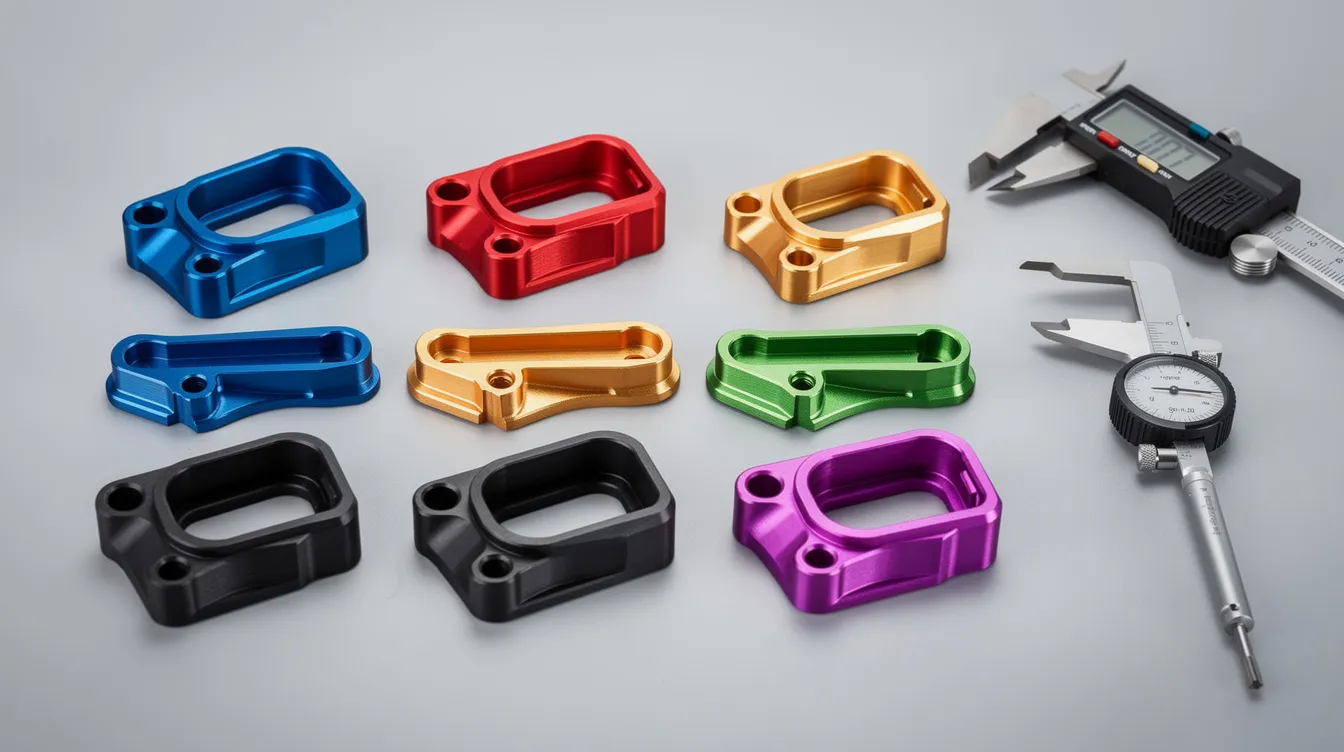
Cosmetic: bead blast, anodizing (Type II and hard anodize), powder coat, black oxide, nickel or chrome plating
-
Functional: heat treatment, laser engraving, assembly of multi-part machined prototypes
-
The surface finish level-as-milled versus cosmetic-will influence cost and lead time. Anebon aligns finish requirements with intended use: test lab, investor demo, or trade-show sample
Applications of CNC Machined Prototypes by Industry
Anebon works across many industries, delivering precision machined parts and custom prototypes for R&D teams and OEMs worldwide.
Medical industry – CNC prototyping is essential in the medical industry for surgical instruments, diagnostic equipment housings, and custom fixtures. These parts demand biocompatible materials, cleanable surfaces, and tight tolerances on mating features. Anebon machines stainless steel and titanium medical components with the high precision required for regulatory submission.
Automotive industry – Automotive companies use CNC prototypes for testing new parts including brackets, transmission housings, EV battery module enclosures, and interior metal trim. Anebon supports PPAP and APQP requirements for automotive production parts.
Aerospace industry – The aerospace industry relies on CNC prototypes for critical components such as manifolds, sensor mounts, structural brackets, and test coupons machined from aluminum or titanium for vibration and fatigue testing.
Electronics and robotics – Precision enclosures, heatsinks, gearbox housings, and robot end-effectors are produced as cnc machining prototypes in aluminum, stainless steel, and engineering plastics to test fit, thermal behavior, and EMI shielding.
Beyond these sectors, military applications utilize CNC prototypes for complex devices, and CNC machining is used in the oil and energy industry for durable parts that withstand extreme operating environments. Anebon’s cnc machining services span from first-article prototypes to recurring small batch runs during pilot production.
From Single Prototype to Small Batch
Anebon keeps the same CNC programs, cutting tools, and fixtures to move from a single cnc prototype to a small batch of 20–500 pieces once the design is validated. This continuity ensures that testing data from machined prototypes remains relevant to first production runs-no surprises when scaling. Anebon provides measurement reports, FAI (First Article Inspection), and material certifications when customers are preparing for regulatory approval or PPAP, supporting other manufacturing processes and quality requirements seamlessly.
Cost, Lead Time, and How to Work With Anebon
CNC prototyping costs start at about $35 per hour, but actual pricing depends on several factors. Understanding these drivers helps engineers budget accurately and avoid unnecessary expense.
Key cost factors:
-
Part geometry – number of setups, pocket depth, overall size
-
Material – harder alloys like titanium mean slower feeds and higher tool wear versus aluminum
-
Tolerances – tighter specs require slower machining and more inspection
-
Secondary operations – anodizing, plating, and heat treatment add cost and time
-
Quantity – one-off versus small batch changes amortization of setup costs
Typical lead times: CNC prototypes can be produced in as little as 3–5 business days for simple parts in common materials like aluminum. More complex 5-axis work, exotic materials, or multi-process projects may require 10–15 business days. CNC machining allows for rapid prototyping with fast turnaround times, and Anebon offers competitive pricing by combining efficient programming with experienced machinists.
What to provide for an accurate quote:
-
3D cad file (STEP or Parasolid preferred) and 2D drawings with tolerances
-
Target quantities and desired materials with specific grades
-
Surface finish and secondary operation requirements
-
Any special inspection or certification needs
Anebon’s engineering team provides early DFM feedback to reduce rework and optimize the overall manufacturing process. Whether you need a single functional prototype or validated production parts for pilot runs using various materials and additive processes alongside CNC, the fastest path forward starts with submitting your design.
Ready to move from concept to metal parts on your desk? Send your CAD models and project specifications to Anebon for a fast, detailed quote on your next cnc prototype machining project. Their team typically responds within 24 hours with DFM recommendations and competitive pricing.