Essential Guide to Choosing the Right Sheet Metals for Your Project
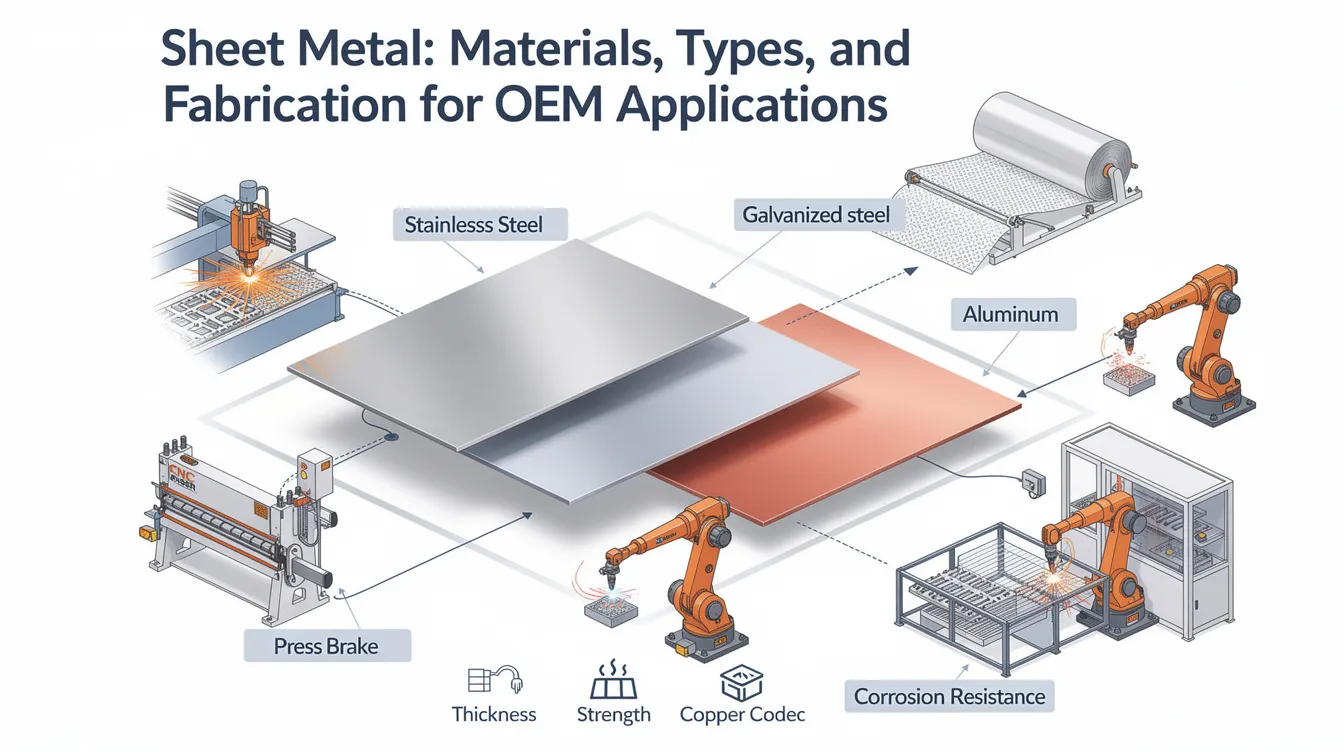
Sheet Metal: Materials, Types, and Fabrication for OEM Applications
Sheet metals sit at the core of modern manufacturing, shaping everything from the car you drive to the server rack powering your cloud applications. This guide walks through the major sheet metal types, their mechanical and chemical properties, fabrication processes, and design considerations that OEM engineers and buyers need to make confident material decisions.
Overview of Sheet Metal and Its Industrial Importance
Sheet metal is metal formed into thin flat pieces through industrial processes such as rolling, levelling, and slitting. It is typically under 6 mm thick and is supplied as coils or cut sheets ready for fabrication. As a versatile material, it serves as the starting point for an enormous range of OEM components – from structural brackets to precision enclosures – across virtually every manufacturing sector.
Sheet metal fabrication supports industries including automotive, aerospace, medical devices, electronics, and industrial machinery. In automotive, mild steel and aluminum sheet form body panels, reinforcement brackets, and battery boxes. Aerospace manufacturers rely on aluminum and titanium sheet for aircraft skins and fairings. Medical device OEMs specify stainless steel for MRI housings and surgical instrument trays that must withstand repeated sterilization. Electronics companies use sheet metal for server chassis, EMI-shielded enclosures, and heat sinks.
Gauge and thickness directly influence a part’s stiffness, weight, and suitability for processes like bending or deep drawing. Thicker gauge stock increases load capacity but adds weight and limits formability; thinner gauge allows complex shapes but risks buckling under load.
Anebon Metal Products Limited is a China-based, ISO-certified precision sheet metal fabrication and CNC machining partner serving overseas OEMs since 2010. The sections that follow cover materials, processes, and design guidelines in the detail you need to specify and source sheet metal parts with confidence.
What Is Sheet Metal and How Is It Measured?
Sheet metal starts as thick slabs that are hot rolled at elevated temperatures to reduce thickness. When tighter tolerances, better surface finish, and improved flatness are required, the material is then cold rolled at room temperature. After rolling, the metal sheet is levelled and slit into coils or cut into flat sheets ready for fabrication.
Thickness is measured in gauges – a traditional numbering system where lower gauge numbers indicate thicker sheet. Importantly, gauge numbers map to different absolute thicknesses depending on the material. For example, 16 gauge steel measures approximately 1.52 mm, while 16 gauge stainless steel runs about 1.59 mm, and 16 gauge aluminum is around 1.29 mm. At 20 gauge, steel is roughly 0.91 mm and aluminum about 0.81 mm. Moving thicker, 12 gauge steel is approximately 2.66 mm while 12 gauge aluminum is about 2.05 mm. These differences matter when specifying parts – always confirm millimetre thickness rather than relying on gauge alone.
The industry distinguishes three categories by thickness: foil is under about 0.2 mm, sheet spans roughly 0.2 mm to 6 mm, and plate exceeds 6 mm. Aircraft fuselage skins commonly use 1–2 mm sheet, while structural frame elements may call for plate stock of 10 mm or more.
Key Sheet Metal Types and Their Properties
Selecting the right sheet metal depends on intended use, operating environment, and cost. Design engineers and buyers must weigh trade-offs among strength, weight, corrosion resistance, formability, machinability, and raw material price before committing to a material.
The major sheet metal types break down as follows:
-
Mild steel and carbon steel – low cost, high formability, needs corrosion protection
-
Cold rolled steel – precision surfaces, tighter tolerances
-
Galvanized steel and coated steels – zinc or alloy coatings for rust protection
-
Stainless steel – chromium-rich iron alloy for corrosion and heat resistance
-
Aluminum sheet – light weight, naturally corrosion resistant, wide alloy range
-
Copper and brass – electrical/thermal conductivity, aesthetic appeal
-
Specialty alloys such as titanium – extreme strength-to-weight and chemical resistance
Sheet metal can be classified as ferrous or non-ferrous metals. Ferrous metals are iron-based (steel, stainless steel) while non-ferrous metals do not contain iron (aluminum, copper, brass, titanium). Composition elements – carbon, chromium, zinc, nickel, molybdenum – determine weldability, hardness, and corrosion behavior. The subsections below explore each material in depth and connect them to typical OEM use cases.
Mild Steel and Carbon Steel Sheets
Low-carbon mild steel is commonly the cheapest sheet metal material available and remains the workhorse for a huge share of fabricated parts worldwide. Carbon steel is strong, durable, and highly cost-effective, which explains its dominance in general-purpose applications.
Mild steel (grades like AISI 1018 or A36) contains roughly 0.05–0.25 % carbon with a balance of iron and small amounts of manganese. This composition yields a typical yield strength of 250–370 MPa and tensile strength of 400–480 MPa, with excellent weldability and formability – parts can be easily welded, bent, and stamped without cracking.
Common applications include construction panels, automotive reinforcements, machine guards, warehouse racking, and industrial cabinets. Because bare mild steel will rust without a protective coating or layer of paint, it is best suited where low cost and mechanical performance outweigh bare-metal corrosion concerns.
When greater strength or wear resistance is needed – think wear plates, tool steel inserts, or high-load structural members – higher-carbon or alloyed steels (e.g., 4140, spring steel) step in. The trade-off: reduced formability, more difficult welding, increased springback, and higher risk of cracking on tight bends unless the material is properly annealed.
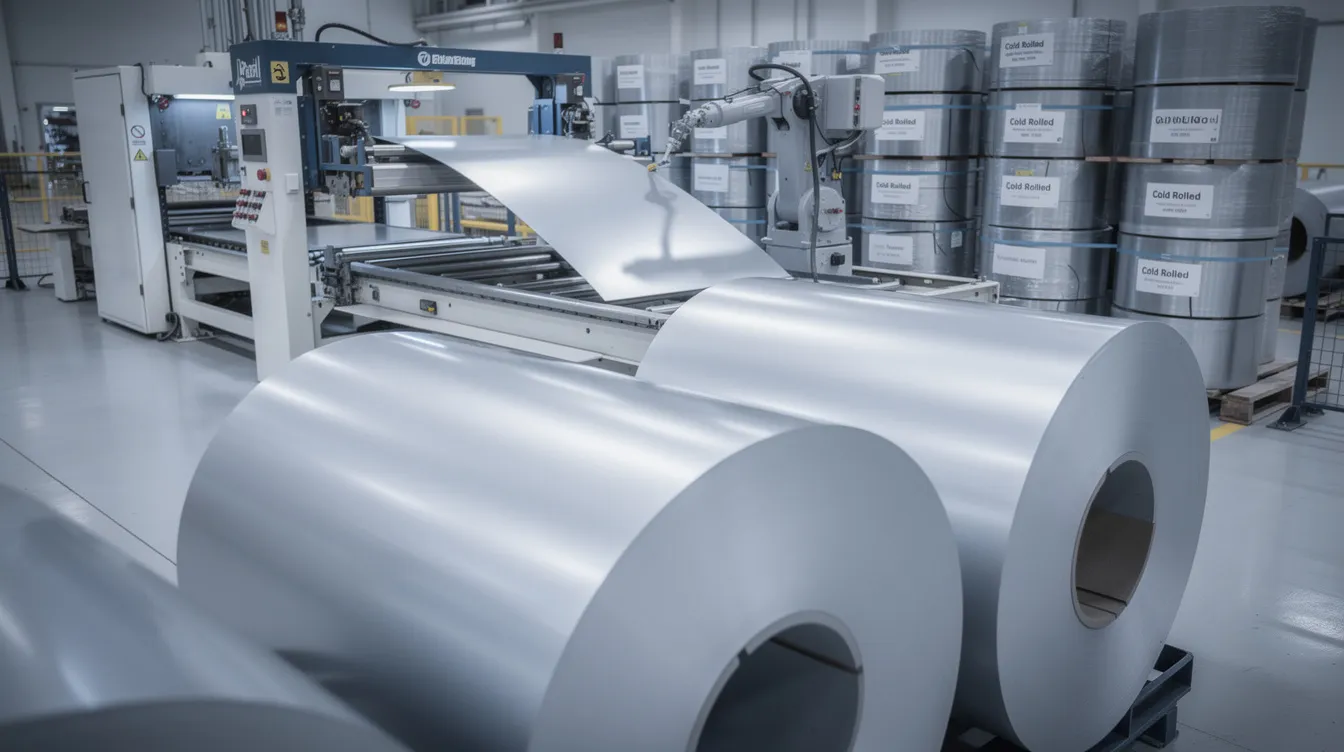
Cold Rolled Steel and Surface-Critical Applications
Cold rolled steel is hot-rolled steel that has been further processed by rolling at room temperature. The result is improved dimensional accuracy, tighter thickness tolerances, and a noticeably smoother surface finish compared to hot-rolled stock. Cold-rolled steel is known for precision and dimensional accuracy, making it the go-to choice for parts where appearance and fit matter.
Benefits include better flatness, higher yield strength through work hardening, and a clean surface that accepts paint, powder coat, or chrome plating with minimal preparation. For OEMs producing consumer-facing products, this translates to lower finishing costs and more consistent aesthetic appeal.
Typical uses include appliance panels (washing machine doors, refrigerator bezels), office furniture, precision electronics housings, and any enclosure where surface quality drives customer perception. Anebon regularly fabricates cold rolled steel parts for consumer product housings requiring tight tolerances and first-rate finishes.
It is important to remember that “cold rolled” describes a process, not a composition. Designers should account for increased springback when the sheet is bent – minimum bend radius and forming force both rise compared to hot-rolled material of the same grade.
Galvanized Steel and Other Coated Steels
Galvanized steel is steel sheet coated with zinc for corrosion protection, commonly specified by coating weight designations such as G60 or G90 (ounces of zinc per square foot). This zinc layer acts as a sacrificial barrier – even if scratched, the surrounding zinc corrodes preferentially, protecting the base steel from rust.
Typical applications include HVAC ducts, outdoor enclosures, cable trays, fencing components, and roadside electrical boxes – anywhere weather exposure demands corrosion resistance at a low cost. HVAC systems utilize sheet metal for ductwork and ventilation units, and galvanized steel is the default material for most of these installations.
Related coated products include galvannealed steel (zinc coating alloyed by heat treatment for better paint adhesion, widely used on automotive body panels) and Galvalume. Galvalume steel is coated with an aluminum-zinc alloy for improved corrosion resistance, making it suitable for roofing, siding, and long-exposure architectural cladding.
Design considerations worth noting: cut edges expose bare steel, so either edge protection or sufficient coating weight should be specified. Weldability is slightly reduced versus bare steel because the zinc coating produces spatter and fumes. Galvanic compatibility with adjacent metals and proper surface preparation for subsequent coatings should also be factored into your design.
Stainless Steel Sheet for Corrosive and Hygienic Environments
Stainless steel is an iron-chromium alloy containing at least about 10.5 % chromium, which forms a passive oxide layer that makes the surface corrosion resistant. Stainless steel is ideal for corrosion resistance, and stainless steel sheets resist corrosion and are durable even in aggressive chemical or saline environments.
Key grades and their common uses:
-
Grade 304 (~18 % Cr, ~8 % Ni) – the standard for food-contact equipment, architectural panels, and general-purpose corrosion protection.
-
Grade 316 – adds 2–3 % molybdenum for resistance to chlorides and pitting; preferred for marine applications, chemical processing equipment, and pharmaceutical covers.
-
Grade 430 (ferritic) – a cost-sensitive option for appliance panels and decorative elements where corrosion demands are moderate.
OEM examples include medical device housings fabricated from 316L stainless steel to withstand sterilization chemicals, commercial kitchen worktops in 304 with a brushed finish, and high-end consumer electronics casings where stainless delivers both durability and visual refinement.
Stainless steel costs more than mild steel, is harder to machine (it work-hardens quickly), and exhibits greater springback during forming. Surface finish grades – No. 2B, BA, brushed – affect both appearance and cost. Anebon can help balance material grade, surface finish, and cost across your sheet metal fabrication project.
Aluminum Sheet: Lightweight and Corrosion-Resistant
Aluminum is lightweight and corrosion-resistant, with a density of just 2.70 g/cm³ compared to 7.85 g/cm³ for steel – roughly one-third the weight. A natural oxide layer provides good corrosion resistance without additional coating, and aluminum’s thermal and electrical conductivity make it suitable for heat dissipation and shielding applications. Aluminum sheet metal is widely used in aerospace manufacturing and is gaining ground rapidly in automotive and electronics.
Common alloys and their practical niches:
-
5052-H32 – non-heat-treatable Al-Mg alloy with tensile strength ~228 MPa and yield ~193 MPa; excellent formability and marine corrosion resistance, commonly used for enclosures and marine hardware.
-
6061-T6 – heat-treatable Al-Mg-Si alloy reaching ~310 MPa tensile and ~276 MPa yield; ideal for structural brackets, frames, and parts requiring CNC-machined features alongside formed sheet sections.
-
3003 – soft, inexpensive Al-Mn alloy for general-purpose panels, decorative elements, and applications where strength is secondary.
Applications span aerospace skins and interior panels, EV battery enclosures, electronics housings requiring EMI shielding, heat sinks, and lightweight robot covers. Anebon offers aluminum sheet metal fabrication combined with CNC machining and surface treatments like anodizing (Type II and Type III) for both protective and decorative purposes.
Copper and Brass Sheets for Conductivity and Aesthetics
Pure copper sheet and brass sheet (a copper-zinc alloy) occupy a specialized niche in sheet metal supply. Engineers specify them when electrical conductivity, thermal performance, or visual character cannot be matched by steel or aluminum.
Copper sheets are known for excellent electrical conductivity and are commonly used for bus bars, EMI/RFI shielding plates, heat exchangers, and electrical wiring connections. In architecture, copper roofing develops a distinctive patina over time that many designers seek for its aesthetic appeal. Copper sheet metal is also used for plumbing fittings and antimicrobial touch surfaces in healthcare facilities.
Brass is known for good corrosion resistance, high workability, and moderate strength – qualities that make it suitable for decorative trims, nameplates, hardware, plumbing fittings, and musical instrument components. Its warm golden color provides visual distinction that no coating on steel can replicate.
Both copper and brass are significantly more expensive than mild steel or aluminum, so they are typically reserved for parts where conductivity, appearance, or antimicrobial properties justify the premium. Fabrication also requires specialized attention: proper annealing, oxidation prevention, and careful brazing or welding techniques.
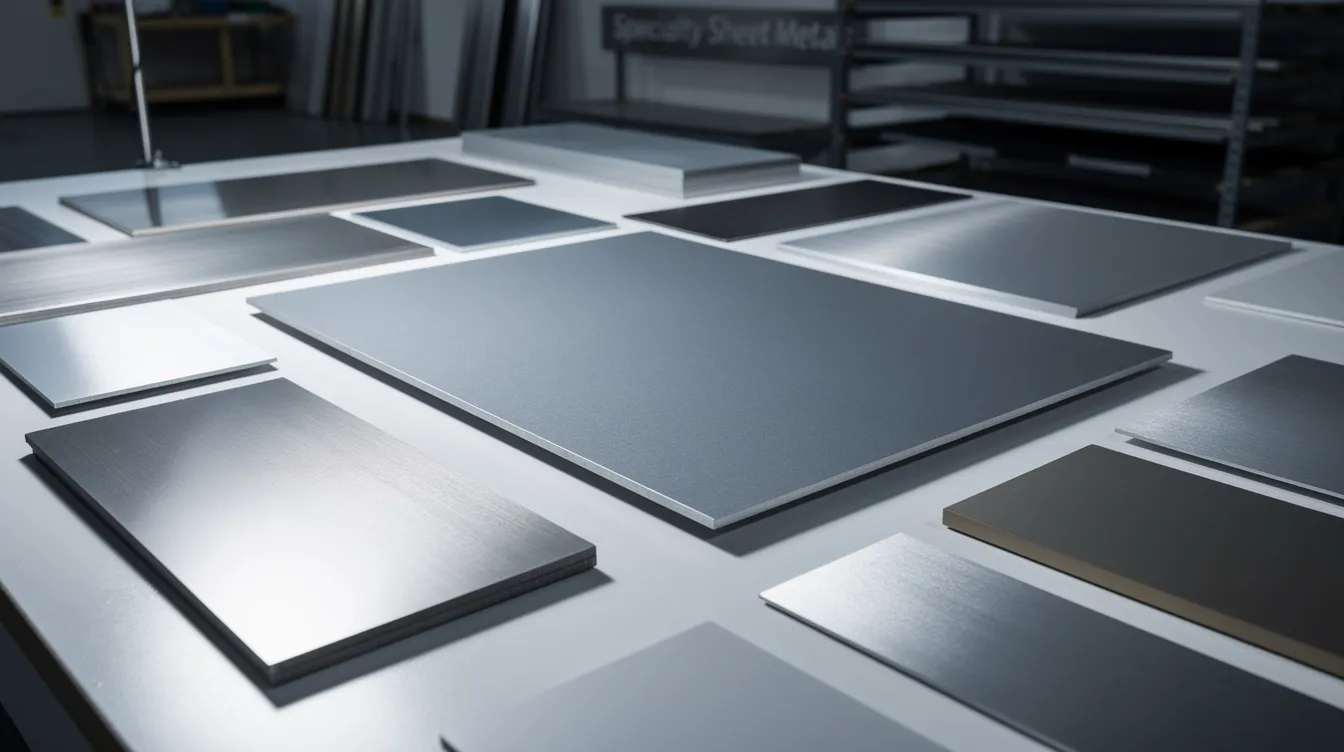
Titanium and Other Specialty Sheet Metals
Titanium sheet is a high-performance sheet metal material with an exceptional strength-to-weight ratio and outstanding corrosion resistance. Titanium offers a high strength-to-weight ratio that no common engineering metal can match – alloys like Ti-6Al-4V achieve tensile strengths exceeding 900–1,000 MPa at roughly 60 % of steel’s density. Titanium sheets have a high strength-to-weight ratio that makes them indispensable for weight-critical, high-performance applications.
Concrete applications include aircraft structural components and skins, medical implants and surgical instruments (biocompatibility is a key advantage), chemical processing equipment exposed to aggressive acids, and high-temperature automotive parts such as exhaust shields and turbo heat guards.
The trade-offs are significant: raw material cost is high, machining is slow and demands specialized tooling, forming requires expert handling of springback (sometimes incremental or superplastic forming), and welding needs an inert atmosphere to prevent embrittlement.
OEMs turn to titanium and advanced alloys only when requirements around weight, corrosion, or temperature cannot be met by more common sheet metals. Anebon can integrate sheet metal with CNC machining for specialty metals when projects demand them, and can advise on feasibility and cost trade-offs early in the design phase.
Core Sheet Metal Fabrication Processes
The typical process chain in sheet metal fabrication follows a clear sequence: cutting, forming, joining, surface finishing, and final inspection. Sheet metal can be cut, bent, stamped, and welded into various shapes – and the order and selection of these operations determine part quality, cost, and lead time.
Main process categories at a glance:
-
Cutting – shearing, laser cutting, CNC punching
-
Forming – bending on press brakes, deep drawing, hemming, seaming
-
Joining – welding (MIG, TIG, spot, laser), riveting, self-clinching fasteners, adhesive bonding
-
Finishing – surface finish options for sheet metal include painting, polishing, and coating (powder coat, anodizing, plating, passivation)
Anebon uses CNC-controlled equipment and provides DFM feedback to keep tolerances tight – often ±0.1 mm for general features, and as fine as ±0.002 mm on critical mating surfaces – ensuring repeatability from prototype through full production. Mechanical properties of sheet metals, including strength, weight, formability, and corrosion resistance, all influence which combination of processes delivers the best result.
Cutting Operations: From Shearing to CNC Laser Cutting
Precise cutting is foundational to quality in sheet metal fabrication. Every downstream operation – bending, welding, finishing – depends on the accuracy and edge quality established during the cutting stage, making it especially critical for complex OEM parts.
Mechanical cutting includes shearing (straight cuts across a sheet, fast and economical for simple blanks) and CNC turret punching (ideal for repetitive shapes, hole patterns, and large quantities of identical features). Punching involves tool cost and setup time, and burrs on punched edges must be managed, but throughput is high once tooling is in place.
CNC laser cutting uses a focused laser beam to melt or vaporize metal along a programmed path. CNC laser cutting achieves precision of around ±0.1 mm, produces clean edges with minimal heat-affected zones, and handles complex contours without dedicated tooling. It is the preferred method for telecom chassis, decorative ventilation panels, sheet metal boxes, and machine covers where intricate shapes or tight tolerances are required.
Anebon’s laser cutting capability handles a range of metals – steel, stainless, aluminum, copper – across thicknesses from thin foil-gauge stock up to several millimetres, allowing engineers to specify the best cutting method for each part geometry and production volume.
Forming Processes: Bending, Deep Drawing, Hemming, and More
Flat metal sheets become three-dimensional parts through forming – a family of processes that use presses, dies, and specialized tooling to permanently reshape the material. The choice of forming method depends on part geometry, material properties, and production volume.
Press brake forming is the most common approach. A V-die and punch set on a CNC press brake creates precise bends along a programmed line. Press brakes can apply around 25 tons of force per meter, controlled by CNC backgauges for repeatable positioning. Design rules to follow: maintain a minimum inside bend radius of 1× thickness for soft, ductile materials (like 5052-H32 aluminum) and 1.5–2.5× thickness for stiffer, heat-treated alloys (like 6061-T6). Adding bend reliefs near holes or edges prevents tearing. Parts are commonly bent to shape using air bending or bottom bending techniques.
Deep drawing forms cup, can, or box shapes from flat blanks by pressing them into a die cavity. It requires draw-quality material – typically soft cold rolled steel or annealed aluminum – and careful attention to blank shape, lubrication, and die geometry. The achievable depth depends on material ductility and thickness.
Hemming and seaming fold sheet edges over themselves to create safe, reinforced edges without sharp edges – critical for automotive doors, appliance lids, and enclosure panels.
For complex geometries, hydroforming uses high hydrostatic pressure for shaping metal into intricate forms without matched male-female dies, and incremental sheet forming allows small incremental deformations with a single-point tool – a cost-effective option for prototypes or low-volume custom parts.
Design Guidelines for Sheet Metal Parts
Smart sheet metal design reduces cost, improves reliability, and speeds up production for OEM programs. Getting it right at the CAD stage avoids expensive tooling changes and warping or tolerance issues downstream.
Key guidelines to follow:
-
Maintain uniform wall thickness throughout the part – sudden thickness changes cause uneven forming, finishing defects, and weld distortion.
-
Use generous bend radii aligned with your material’s ductility and temper; grain direction matters for critical bends.
-
Position holes and slots at least 2× material thickness away from bend lines and edges to avoid distortion or cracking.
-
Avoid unnecessary tight tolerances – specify them only on mating or critical surfaces to keep costs down.
Standardize hole sizes, fastener types, and material thicknesses to match common tooling and stock. Common sheet thicknesses (1.0, 1.2, 1.5, 2.0 mm) in popular alloys are widely stocked by fabricators and reduce lead time. Choosing material depends on strength, weight, and corrosion resistance requirements, but also on what is readily available in the market.
Early collaboration with Anebon’s DFM engineers helps validate manufacturability, avoid cracking or warping, and optimize your design for processes such as deep drawing, laser cutting, or multi-bend enclosures.
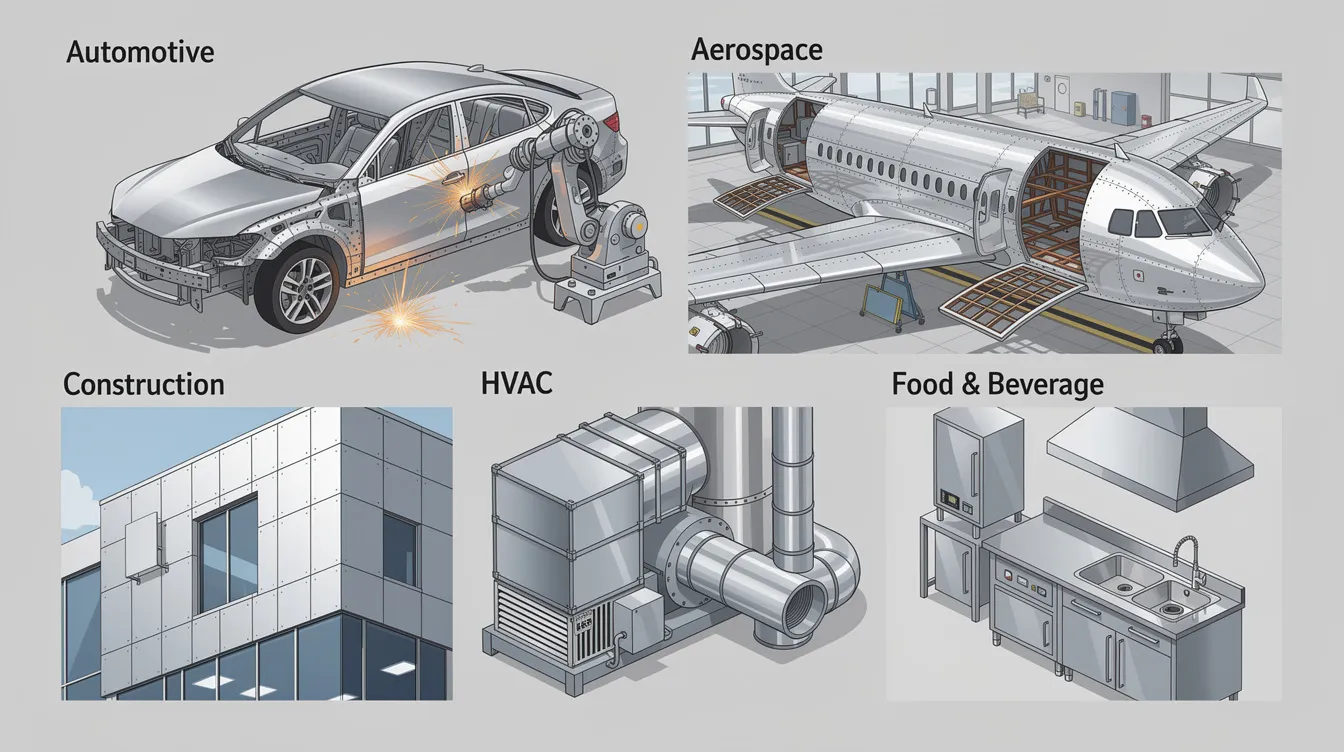
Typical Applications of Sheet Metal Across Industries
The same core fabrication processes – cutting, forming, joining, finishing – are adapted to vastly different sectors, each with its own performance requirements and regulatory environment. Sheet metals are widely used in automotive, aerospace, electronics, construction, and HVAC industries.
Construction and HVAC: Roofing and cladding panels, gutters, and HVAC ducts are commonly made from galvanized steel or aluminum sheet. Sheet metal is essential for HVAC systems in construction, where ductwork must handle airflow efficiently while resisting moisture and temperature cycling.
Automotive and transportation: Sheet metal is used for automotive body panels, structural brackets, battery boxes for EVs, and interior reinforcements. Materials range from mild steel and galvannealed steel to aluminum sheet for light weight body structures. Many OEMs are switching from painted mild steel to galvanized or aluminized steel to reduce corrosion warranty claims in salt-belt regions.
Aerospace: Aerospace applications include aircraft skins and control panels, typically fabricated from aluminum alloys (2024, 6061) or titanium sheet. Multilayer composites are also emerging for enhanced mechanical properties.
Electronics and appliances: Electronics rely on sheet metal for enclosures, electromagnetic shielding, and heat sinks. Washing machine shells, server rack doors, and laptop chassis all start as flat pieces of cold rolled steel or aluminum that are cut, formed, and finished to precise specifications.
Why OEMs Partner with Anebon for Sheet Metal Fabrication
Anebon Metal Products Limited is an ISO 9001:2015 and ISO 14001:2015 certified manufacturer based in Dongguan, China, serving overseas OEM clients since 2010. ISO 9001:2015 certification ensures quality management in manufacturing, while ISO 14001:2015 certification indicates commitment to environmental management – both critical qualifications for OEMs operating in regulated industries.
Under one roof, Anebon combines precision sheet metal fabrication, CNC machining, CNC turning, 5-axis machining, and die casting. Tolerances reach as tight as ±0.002 mm on critical features such as connecting flanges and mating CNC-machined interfaces. Materials span mild steel, galvanized steel, stainless steel (304, 316, 430), aluminum alloys (3003, 5052, 6061), copper, brass, and specialty metals including titanium.
Anebon supports projects from rapid prototyping through mass production with services that include DFM consulting, material selection advice (for example, choosing between stainless steel and aluminum sheet for a marine enclosure), and customized surface finishes – powder coating, anodizing, brushed stainless, passivation, and plating.
Ready to move forward? Request a quote or submit your drawings for a free DFM review. Anebon’s engineering team provides responsive communication and global logistics support to keep your project on schedule.
FAQ: Selecting and Using Sheet Metal for Your Project
How do I choose the right sheet metal material? Start with the operating environment (indoor, outdoor, marine, chemical exposure), required mechanical performance (load, fatigue, vibration), weight constraints, and budget. Choosing the right material depends on strength, weight, and corrosion resistance balanced against cost and formability.
What is the cheapest sheet metal for general-purpose parts? Mild steel is generally the lowest-cost option and is suitable for brackets, frames, enclosures, and structural components that will receive a protective coating. For large quantities of non-corrosion-critical parts, it is hard to beat on price.
When should I consider stainless steel vs. aluminum for enclosures? Stainless steel offers corrosion resistance and durability with greater strength, making it ideal for medical, food-processing, or chemical environments. Aluminum sheets are lightweight and corrosion-resistant, better suited when weight savings, thermal dissipation, or anodized finish are priorities. Cost and forming complexity also differ – aluminum forms more easily, while stainless provides a harder, more scratch-resistant surface.
How does laser cutting compare to punching for metal sheets? Laser cutting excels at complex contours, small radii, and short-run flexibility without tooling investment. CNC punching is faster and more economical for repetitive shapes, standard hole patterns, and high-volume production. Many projects combine both – punching for standard features, laser for complex profiles.
What thickness ranges work for deep drawing or complex bending? Deep drawing typically uses sheet in the 0.5–3.0 mm range, with draw-quality material (soft temper cold rolled steel or annealed aluminum). Complex bending follows similar ranges; thinner stock forms more easily but may lack stiffness, while thicker stock above 3 mm demands significantly more forming force and larger bend radii.
Have a specific project in mind? Send your CAD files to Anebon’s engineering team for material and process recommendations tailored to your industry, volume, and performance requirements.