Essential Guide to Choosing the Right Sheet Metal for Car Repairs
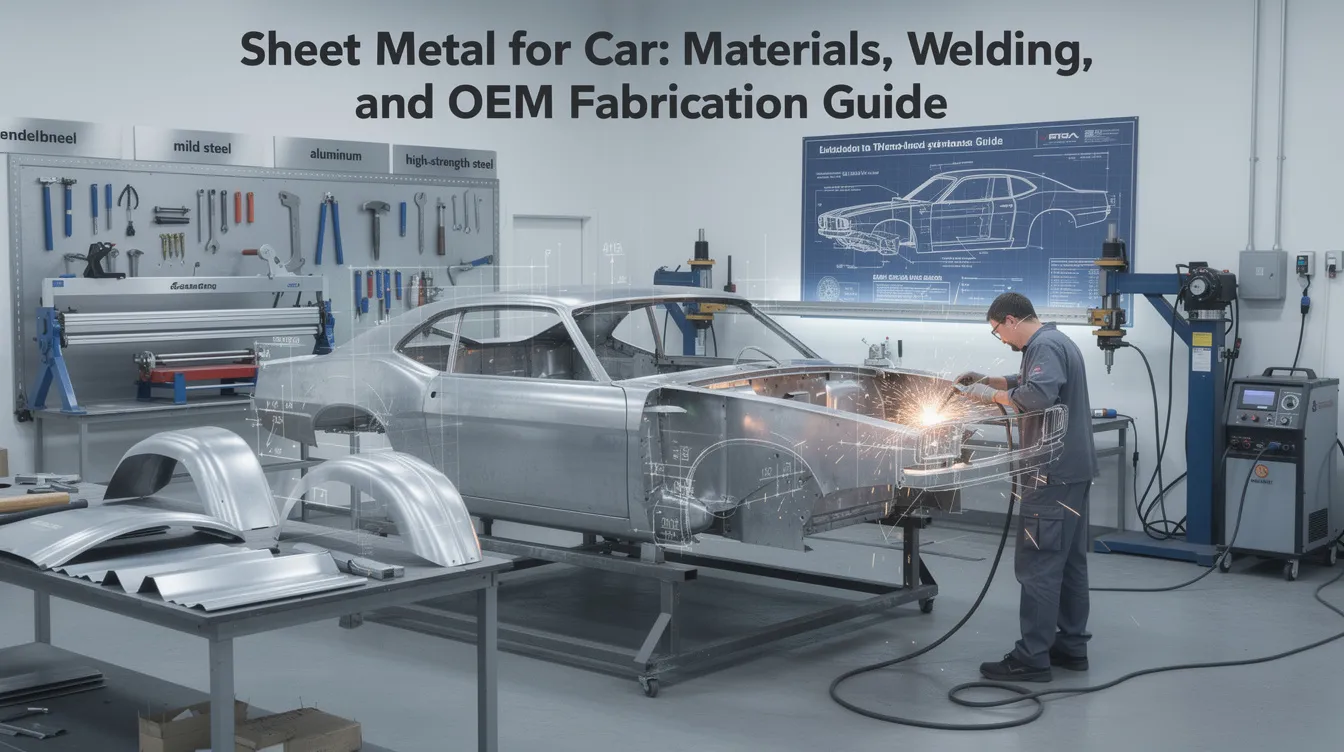
Sheet Metal for Car: Materials, Welding, and OEM Fabrication Guide
Sheet metal for car applications covers everything from the outer skin panels you see on a finished vehicle to the hidden structural reinforcements that keep occupants safe in a crash. Car manufacturing relies on sheet metal for strength and weight reduction, making it one of the most important material categories in the automotive industry. Whether you are repairing a rusted floor pan or engineering a next-generation EV body structure, understanding how sheet metal is selected, formed, and joined will directly affect the quality and cost of the final product.
Overview: Sheet Metal for Car Repairs and OEM Parts
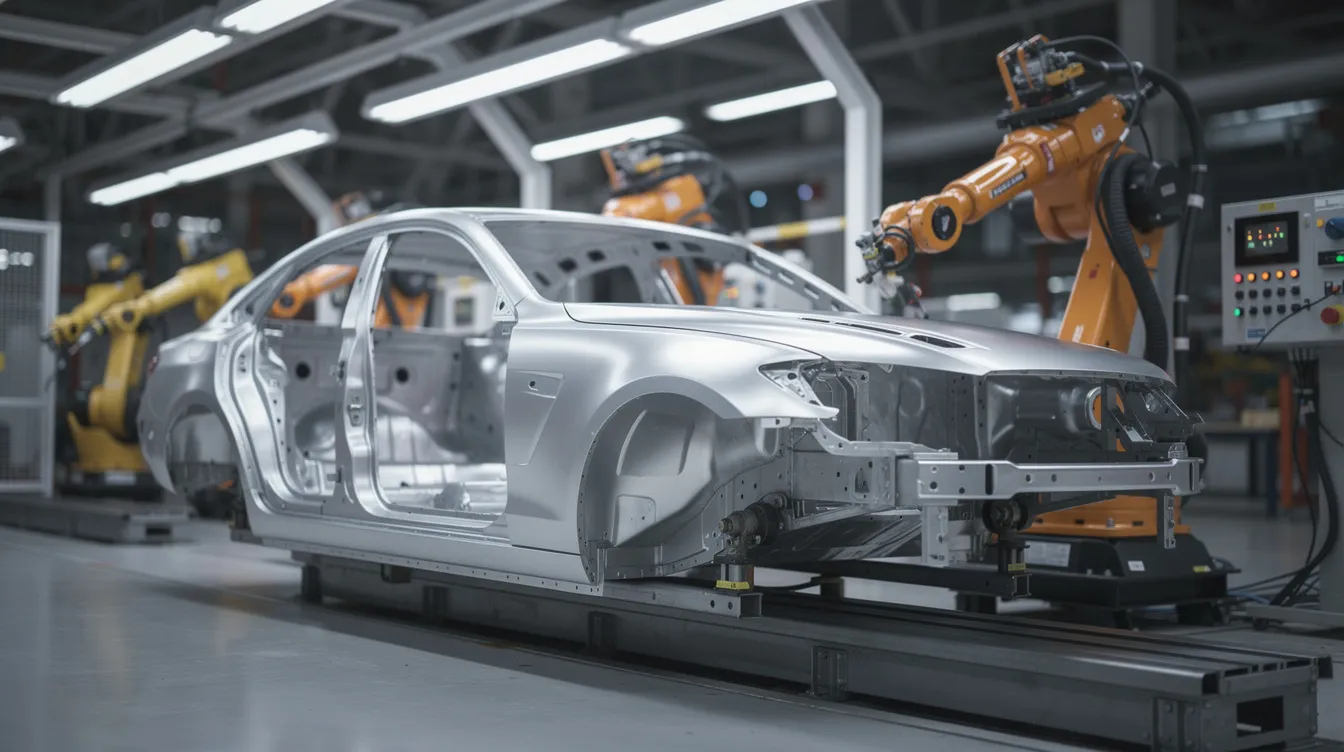
Automotive sheet metal is flat, rolled metal stock, typically between 0.5 mm and 3.0 mm thick, used to form the outer body, internal reinforcements, and chassis elements of a vehicle. In collision repair and restoration, auto body sheet metal usually means patch panels, flat stock, and pre-formed replacement pieces for fenders, floor pans, and rockers. In OEM manufacturing, the same term refers to engineered stampings that make up the body-in-white (BIW)-the bare shell of a car before glass, trim, and paint are applied.
Most exterior body panels on modern cars use 18 to 22 gauge mild steel or aluminum sheet, corresponding to roughly 0.8–1.2 mm in material thickness. Steel is sourced as cold-rolled or hot-rolled coils, while aluminum panels are commonly supplied in 5xxx or 6xxx series alloys. Sheet metal is a cost-effective material in automotive design because raw sheet metal is generally less expensive than solid materials, and it is ideal for both prototyping and mass production.
Anebon Metal Products Limited, an ISO-certified precision fabricator founded in 2010 in Dongguan, China, serves overseas OEMs with custom sheet metal components across the full value chain-from prototype skin panels through scaled production. This guide covers the materials you will encounter (mild steel, aluminum, stainless), their specific applications in cars, welding methods including mig and tig welding, cutting and forming processes, and how to choose a fabrication partner that can deliver on quality and timeline.
Fundamentals of Automotive Sheet Metal
In the automotive context, sheet metal refers to flat metal stock between approximately 0.5 mm and 3.0 mm thick, used to create car bodies, closures, and structural members. Sheet metal provides structural durability and withstands high-pressure levels, which is why it forms the backbone of nearly every production vehicle on the road today. It also offers a high strength-to-weight ratio, a property that manufacturers exploit to build lighter, more efficient cars without sacrificing crash performance.
Common thicknesses are expressed in both millimeters and gauge numbers. Closure panels are typically made from 18 to 22 gauge sheet metal, where gauge 22 is roughly 0.8 mm and gauge 18 is about 1.2 mm. Structural components like side rails and battery enclosures often use thicker stock, sometimes exceeding 2.0 mm. For a deeper breakdown, see our guide on how thick car sheet metal actually is.
The core material categories in automotive sheet metal fall into four groups:
-
Low-carbon (mild) steel – the baseline for cost-effective body work and general panels
-
High-strength and advanced high-strength steels (AHSS) – for crash zones and safety-critical components
-
Aluminum alloys – for lightweight closures and EV structures
-
Stainless steel – for exhaust, trim, and corrosion-resistant elements
It is worth noting the distinction between auto body sheet metal sold as flat repair stock and the engineered stampings fabricated for OEM production lines. Repair panels are commonly mild steel blanks or minimal-form reproductions, while OEM parts are stamped from precisely specified alloy grades using dedicated tooling. Sheet metal is highly formable, allowing for complex shapes in automotive designs-a property that makes it suited to everything from a simple bracket to a sculpted fender.
Common Sheet Metal Materials Used in Cars
Material selection in automotive sheet metal affects weight, crash performance, corrosion resistance, manufacturability, and cost. Various materials are used in automotive applications based on structural or aesthetic requirements, and modern vehicles routinely combine 7–12 different steel grades with 1–3 aluminum alloys within a single BIW (sheetguage.info). Understanding what type of sheet metal is used for auto body work is essential whether you are specifying a new design or sourcing a replacement panel.
Anebon works regularly with automotive-grade steels, aluminum, and stainless, and can advise engineers on material trade-offs for new designs. The subsections below describe each material family and its role in auto body sheet metal.
Mild Steel Sheet Metal for Auto Body Repair and Production
Mild steel, with a carbon content around 0.05–0.25%, remains the standard choice for traditional auto body repair panels and many OEM stampings. Mild steel is used for general body panels and reinforcements because it offers predictable formability, easy welding with mig and tig processes, and low material cost. It is an excellent choice for shops and manufacturers that need a reliable, forgiving material.
Mild steel sheet is available in 18, 20, or 22 gauge. Gauge 22 (≈ 0.8 mm) is commonly used for outer skins on older cars, gauge 20 (≈ 0.9–1.0 mm) when more stiffness is acceptable, and gauge 18 (≈ 1.2 mm) for floors, rocker panels, and areas where resistance to welding distortion matters. For visible exterior surfaces, cold-rolled mild steel is preferred because it delivers smoother surface finish and tighter thickness tolerances-typically ±0.05–0.15 mm versus ±0.15–0.25 mm for hot rolled. Hot-rolled steel, while less expensive and more ductile, has mill scale and rougher dimensions that make it better suited to hidden structural components.
Galvanized steel provides excellent rust resistance for body panels exposed to road salt and moisture, which is why many OEMs specify zinc-coated mild steel for floor pans and lower body sections. Anebon can supply and fabricate custom mild steel brackets, reinforcements, and body panels to OEM drawings, ensuring correct gauge and surface quality for each application.
Aluminum Sheet for Lightweight Automotive Panels
Aluminum enhances fuel economy and is used for closures and structural elements across a growing number of vehicle platforms. With roughly one-third the density of steel, aluminum alloys are lightweight and corrosion-resistant for automotive use, making them a preferred material for hoods, doors, roof panels, tailgates, and heat shields-especially in EVs and premium vehicles produced after about 2010.
Two alloy families dominate:
|
Alloy Series |
Type |
Typical Use |
Key Property |
|---|---|---|---|
|
5xxx (Al-Mg) |
Non-heat-treatable |
Inner panels, underbody shields |
Good formability, corrosion resistance |
|
6xxx (Al-Mg-Si) |
Heat-treatable |
Outer skins, hoods, fenders |
Paint-bake hardening, Class-A surface |
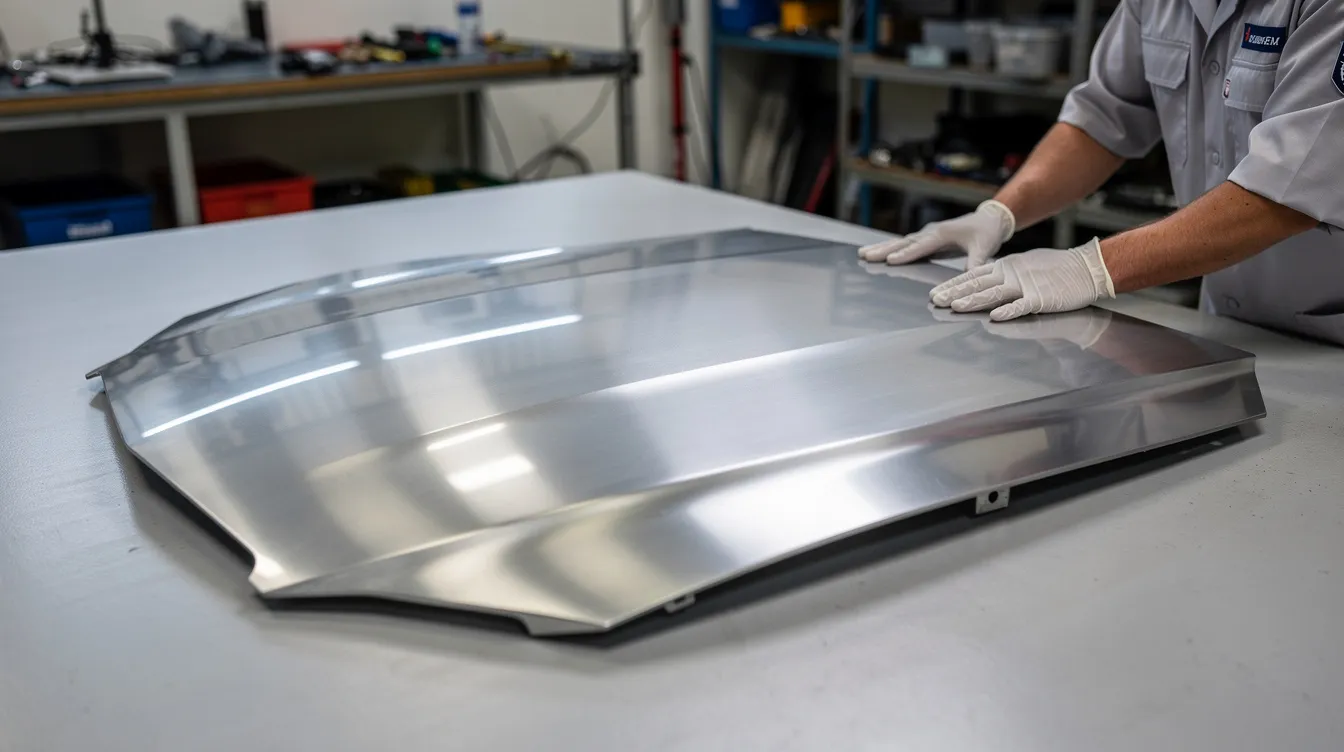
Typical panel thickness for aluminum ranges from 0.8–1.5 mm for outer visible surfaces. Springback is more pronounced in aluminum due to its lower modulus of elasticity, so tooling must compensate with over-bend adjustments. Forming and welding aluminum sheet require stricter process control than steel. Anebon uses CNC cutting and precision forming to maintain tight tolerances on aluminum automotive components, and can advise on the differences between steel and aluminum for your specific application.
Stainless Steel and Advanced Steels in Car Structures
Stainless steel is highly durable and used in exhaust systems and fuel tanks, as well as decorative trim and high-corrosion environments under the car. Stainless steel 304 is versatile for various automotive components, offering a strong combination of corrosion resistance and formability for brackets, shields, and cosmetic elements. However, cost and weight make stainless comparatively rare in large BIW skin panels.
Advanced High-Strength Steels are used for critical crash safety parts, including A/B/C pillars, door intrusion beams, side rails, and rocker panels. These steels-dual-phase, TRIP, martensitic, and press-hardened grades-deliver yield strengths from 400 to 1,500 MPa, allowing significantly thinner gauges for the same or higher superior strength. Dual-phase steel DP590, for example, is used for auto floor paneling and fenders where a balance of formability and crash energy absorption is needed. High-Strength Low-Alloy Steel offers improved strength-to-weight ratio in applications where traditional mild steel would require heavier gauge to meet load requirements.
These advanced steels affect die design and welding strategy: tighter bend radii risk cracking, springback increases, and welding often demands specialized current profiles or laser methods. Anebon can work with a range of AHSS and stainless grades, but design teams should involve the fabricator early for a DFM review to ensure the shape and process are compatible.
Key Automotive Applications of Sheet Metal
The body-in-white involves three broad categories of sheet metal parts: exterior body panels and closures, internal structural reinforcements, and repair or replacement panels. Each category has different requirements for material, thickness, surface finish, and joining method. Sheet metal allows for complex shapes and designs in vehicles, which is why it remains the dominant material form in car body construction-from a sculpted fender to a laser-welded battery enclosure.
Anebon supports early-stage R&D for new vehicle platforms with rapid prototypes and low-volume sheet metal runs, helping engineers validate fit and function before committing to production tooling.
Exterior Body Panels and Closures
Typical exterior sheet metal components include doors, trunk lids, tailgates, hoods, fenders, quarter panels, and roofs. These parts must balance low weight, dent resistance, and high-quality paintable surfaces. Surface quality impacts both aesthetics and functionality-any waviness, stretching lines, or defects in the sheet will show through paint. Automotive sheet metal enhances the aesthetic appeal of vehicle designs when properly formed and finished to Class-A standards.
Common material choices are cold-rolled mild steel and 6xxx-series aluminum, sometimes mixed within the same vehicle. Consistent material thickness and tight dimensional control-often ±0.5 mm or finer across panel edges-simplify assembly, reduce NVH issues, and ensure uniform paint appearance. Anebon’s sheet metal fabrication services can produce prototype outer skins and inner reinforcement panels for design validation.
Structural and Safety-Critical Components
Parts such as A/B/C pillars, side rails, rocker panels, seat mounts, and battery enclosures are structurally significant. Automotive sheet metal must withstand demanding conditions in these zones, absorbing crash energy while maintaining cabin integrity. These components often use high-strength or dual-phase steels, formed and spot welded for crash performance, with finite element analysis (FEA) driving material and geometry choices.
Choosing the right sheet metal is critical for durability in safety structures. Tight tolerance manufacturing-±0.002 mm where required on machined features-helps ensure proper load paths under crash loads. OEM engineers should involve Anebon early for feasibility checks on bending radii, forming limits, and weld access on structural parts, as these aspects directly affect both crashworthiness and production efficiency.
Repair Panels and Restoration Sheet Metal
For older cars, rusted floor pans, wheel arches, rockers, and trunk floors are replaced using flat stock or pre-formed patch panels. Repair technicians typically work with mild steel sheet and form patches using a hammer, dolly work, and hand tools to match original body contours. Plastic filler may be used to smooth minor surface imperfections after welding, but it should never substitute for properly fitted metal.
Correct gauge selection is essential to avoid warping thin panels during welding. A repair panel that is too thin will distort from heat; too thick and it will not bend to match the original shape. Anebon can supply custom patch panels or low-volume reproduction panels for niche or classic vehicle restoration projects, matching the correct thickness and contour to original OEM specifications. The welding technique for these panels is covered in the joining sections below.
Cutting and Forming Automotive Sheet Metal
Before any welding or assembly can begin, sheet metal must be precisely cut and formed. The method chosen depends on thickness, alloy, complexity of shape, and production quantity. Fabrication techniques ensure consistent quality and a perfect fit for sheet metal parts, whether you are producing a single prototype or running thousands of identical stampings.
Anebon uses laser cutting, CNC bending, and progressive dies where applicable to produce accurate automotive sheet metal parts. For a broader look at the process, see our overview on how to fabricate sheet metal.
Sheet Metal Cutting for Car Parts
Three primary cutting technologies serve automotive fabrication:
|
Method |
Best For |
Key Advantage |
|---|---|---|
|
Fiber laser cutting |
Complex contours, prototypes |
Precision edges, minimal heat-affected zone |
|
CNC shearing |
Straight cuts, simple blanks |
Speed and low cost per piece |
|
Turret punching |
Repeated holes, slots, notches |
High efficiency on large batches |
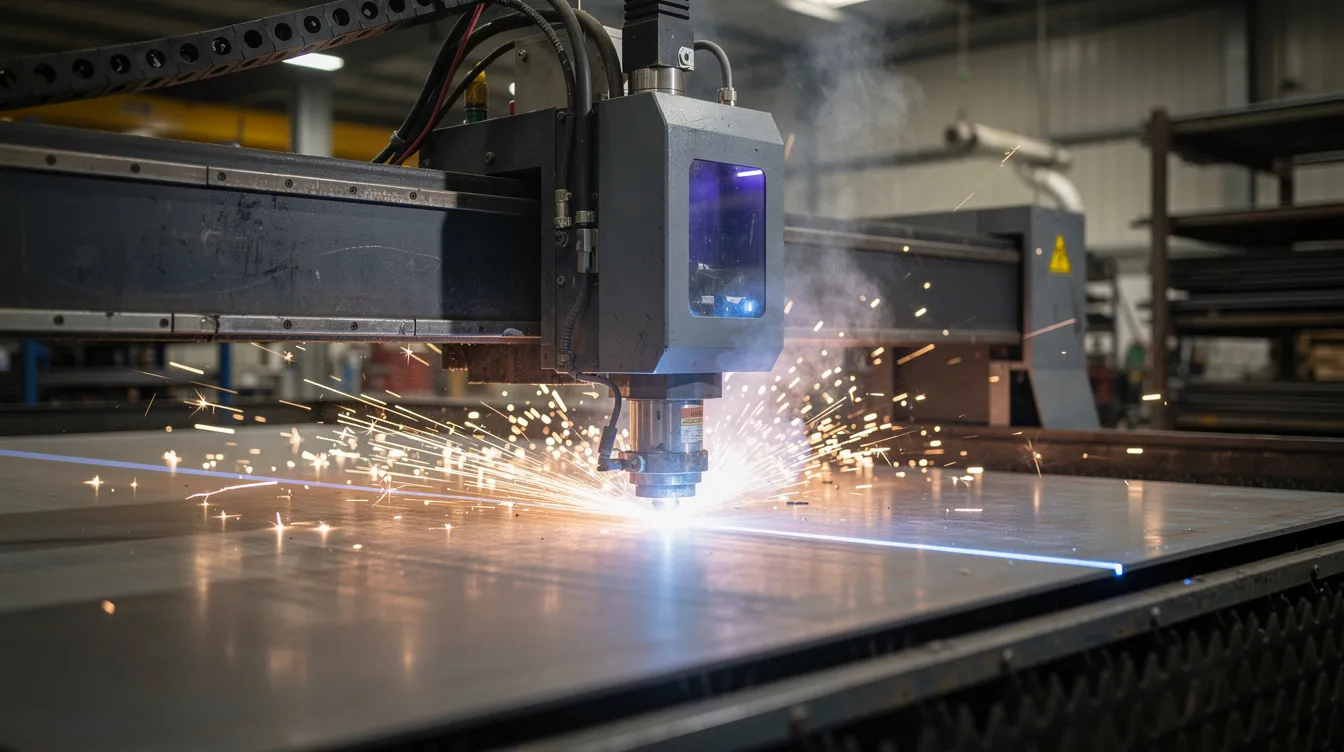
Laser cutting is typically chosen when parts require intricate contours or when edge quality matters for subsequent forming and welding. Shearing handles straight blanks quickly, while turret punching excels when a range of repeated features is needed across many components. Edge condition, heat-affected zone size, and dimensional accuracy all influence downstream quality. Anebon’s CNC cutting equipment supports rapid prototyping schedules and consistent quality for small to medium production runs. Engineers should provide 2D flat patterns or 3D models so the fabricator can optimize nesting and material yield.
Forming, Bending, and Stamping Auto Body Sheet Metal
Basic forming operations include press brake bending, roll forming, deep drawing, and progressive die stamping for high-volume parts. Exterior panels and structural reinforcements often require multi-step forming to avoid cracks and thinning-a single aggressive draw can lead to splits, especially in aluminum or AHSS.
Bend radius is a critical variable. Mild steel allows relatively tight radii, while aluminum requires more generous radii to prevent cracking, and springback must be compensated through over-bending. For details on bending tools and technique, see which tool is used to bend sheet metal. Progressive die stamping is the method of choice for high-volume OEM parts, where precision stamping delivers repeatable accuracy at low per-piece cost. Anebon offers DFM feedback on bend allowances, relief cuts, and flange design to help maintain accuracy and reduce rework, ensuring forming integrates smoothly with downstream welding and assembly.
Joining Automotive Sheet Metal: MIG, TIG, and More
Joining methods are critical to the strength and durability of car bodies and frames. A poorly executed weld or mismatched fastener can compromise crash integrity, introduce corrosion paths, or create NVH problems that surface after thousands of road miles. The main joining techniques in automotive sheet metal include spot welding, MIG welding, TIG welding, and mechanical fastening such as riveting and clinching. For a general primer, see our guide on how to weld sheet metal on a car.
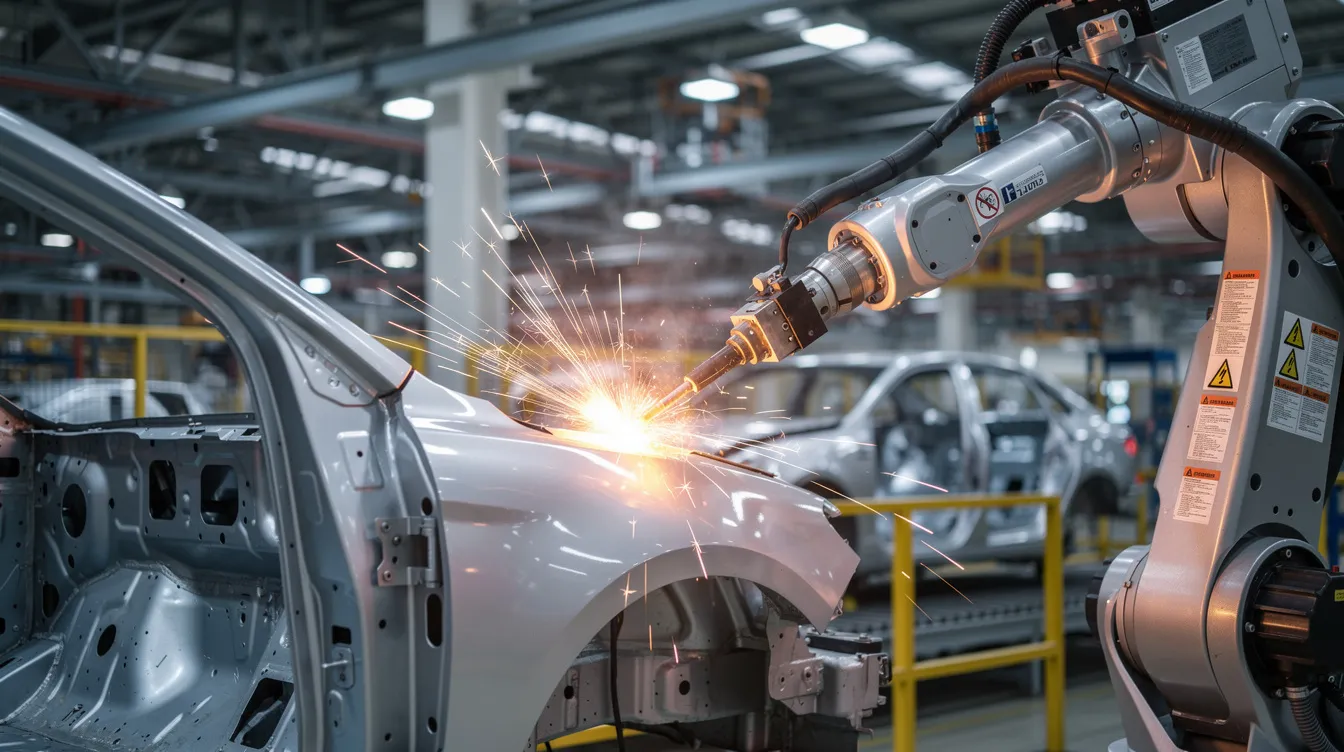
Choice depends on material type, thickness, access, and whether the joint is structural or cosmetic. Anebon’s welding capabilities include both manual and robotic options for repeatable automotive sheet metal assemblies.
MIG Welding for Auto Body Sheet Metal
MIG welding uses a consumable wire electrode and inert gas to create a weld pool, and it is suitable for a wide range of automotive applications. It is the most commonly used method in auto body repair and light manufacturing due to its speed and ease of use on mild steel sheet metal.
For thin automotive sheet, short-circuit transfer with smaller wire diameters and low heat input helps control warping. Welding thin sheet metal often causes distortion and warping if heat is not managed properly. Best practices include:
-
Stitch welding in short bursts rather than continuous seams
-
Allowing cooling time between passes
-
Using a clamp and fixtures to maintain panel alignment
-
Keeping wire stick-out consistent for stable arc behavior
Typical applications include patching floor pans, joining brackets, and welding non-visible seams. Anebon’s production lines can integrate MIG welding into jigs and fixtures for consistent joints on repeating car parts.
TIG Welding for Precision Automotive Sheet Metal
TIG welding uses a non-consumable tungsten electrode and inert gas (typically pure argon) to produce a precise, clean weld bead. It is a slower process but delivers excellent control over heat input and bead profile, reducing distortion on delicate auto body sheet metal. TIG welding is preferred for critical automotive components where appearance or metallurgical integrity is paramount.
Use cases include custom exhaust components, thin stainless shields, and prototype aluminum body panels where surface finish matters. General parameter guidance involves low amperage, an appropriate filler rod diameter matched to material thickness, and pure argon shielding gas. Anebon’s welders and welding robots can perform TIG for small-batch, high-spec automotive components where precision and cosmetic quality are non-negotiable.
Spot Welding, Riveting, and Hybrid Joining
Resistance spot welding is the dominant joining technique on high-volume automotive BIW assemblies. Overlapping sheet metal flanges are pressed together and fused by electric current, creating weld nuggets. A modern vehicle may contain several thousand spot welds holding the body structure together.
When welding aluminum or mixed-material joints, mechanical fasteners become essential. Self-piercing rivets, flow-drill fasteners, and blind rivets are commonly used to join aluminum to steel without the galvanic corrosion and process challenges of fusion welding. A modern vehicle may combine spot welds, structural adhesives, and rivets to balance stiffness, weight, and corrosion resistance-protecting joints from moisture ingress and dissimilar-metal corrosion over the life of the car.
Anebon can follow OEM joining specifications and process documents when building subassemblies, using the correct contact geometry and equipment for global customers.
Choosing Sheet Metal and a Fabrication Partner for Automotive Projects
Material and vendor choices have long-term impacts on cost, performance, and manufacturability. Getting the stuff right at the design stage prevents expensive tooling changes and production delays later. Key decision factors include:
-
Annual volume – prototyping vs. mass production drives tooling investment
-
Required tolerances – visible panels vs. hidden structural parts
-
Target vehicle segment – cost-sensitive economy vs. lightweight premium
-
Corrosion environment – road salt, moisture, coastal exposure
-
Welding and joining method – access, material compatibility, appearance
Maintaining precision is crucial for manufacturing tolerances across all of these aspects. Early collaboration with a sheet metal specialist can reduce redesign cycles, particularly on complex EV platforms and safety-critical parts where forming limits and weld access must be validated before tooling is cut.
Design and DFM Considerations for Automotive Sheet Metal
Best practices for engineers specifying automotive sheet metal include:
-
Use consistent material specs and standardized gauges (0.8–1.2 mm for body panels, higher for structural parts)
-
Design realistic bend radii that respect material formability
-
Ensure weld joints are accessible for the chosen process
-
Specify tolerances appropriate to function-not tighter than necessary
Sheet metal provides excellent durability in automotive applications when these details are handled properly. Involving Anebon at the concept stage allows a review of CAD models for manufacturability, cost, and potential quality risks. Anebon’s CNC machining and die casting services can complement sheet metal components in integrated automotive assemblies-for example, combining a stamped bracket with a machined mounting boss in a single delivered subassembly.
Typical deliverables include prototype body brackets within days, pilot builds for fit checks, and PPAP documentation to support production launch.
Why Work with Anebon for Automotive Sheet Metal Fabrication
Anebon brings several strengths to automotive sheet metal fabrication projects:
-
Certifications: ISO 9001:2015 (quality management) and ISO 14001:2015 (environmental management)
-
Tight tolerances: precision machining to ±0.002 mm on critical machined features
-
Material range: mild steel, AHSS, aluminum (5xxx/6xxx), stainless steel, and engineered plastics
-
Full-service capability: sheet metal fabrication, CNC machining, die casting, surface finishing, and assembly
-
Scalability: from single rapid prototypes to full-scale OEM production runs
Located in Dongguan, Guangdong, China, Anebon has over 15 years of experience exporting precision metal components to North America and Europe for automotive, aerospace, and industrial projects. Whether you need a handful of prototype panels to validate a new design or a steady supply of fabricated structural components for series production, Anebon can lead your project from early R&D through start-of-production.
Ready to get started? Request a quote or share your CAD drawings directly with Anebon’s engineering team for a free DFM review and competitive pricing on your next automotive sheet metal project.