Essential Guide to Choosing the Best Edge Roller for Your Projects
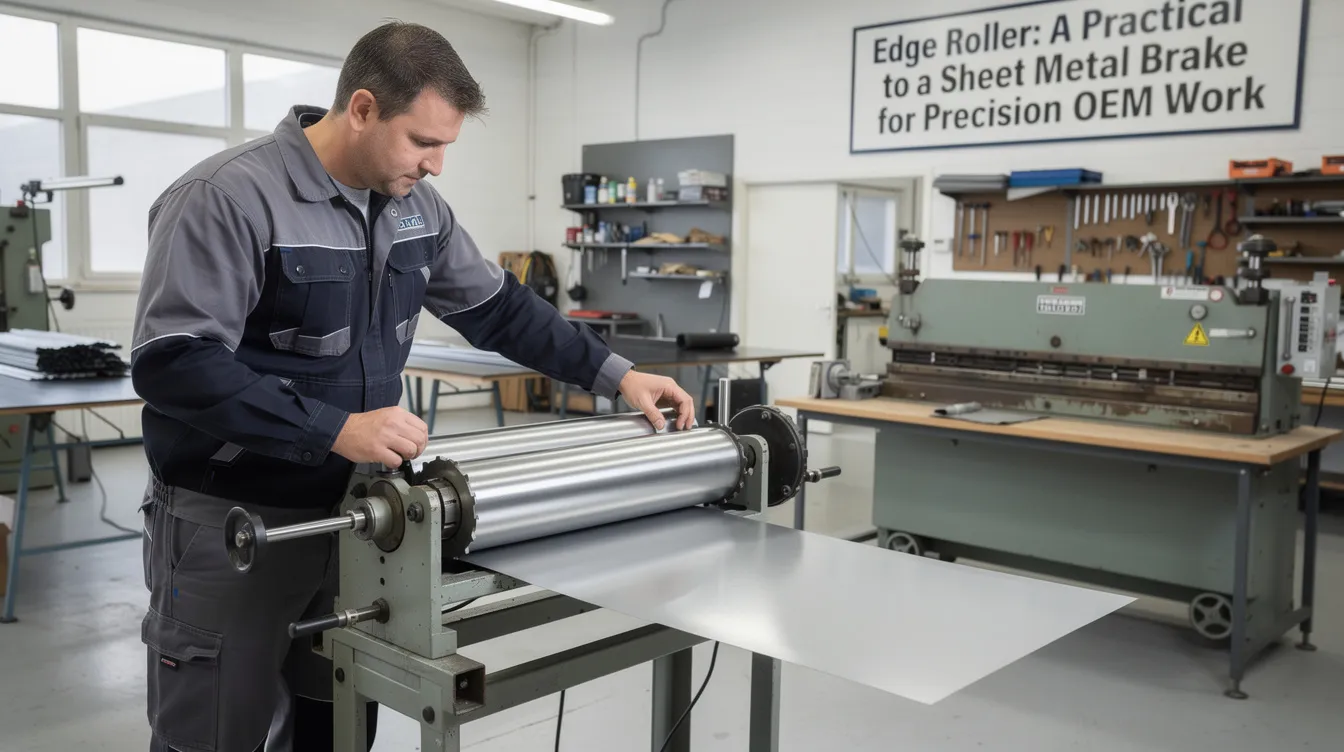
Edge Roller: A Practical Alternative to a Sheet Metal Brake for Precision OEM Work
Overview of Edge Rollers for Sheet Metal Fabrication
An edge roller is a handheld or benchtop tool designed to apply materials along the edge of a surface-or, in metalworking, to bend and form edges on 18–22 GA sheet metal by progressively rolling the workpiece through a set of rollers. Edge rollers are used in multiple industries including painting, metal fabrication, and industrial automation, making them one of the most versatile items in a fabrication shop.
For many small flanges, hems, and return profiles, an edge roller can replace or complement a traditional sheet metal brake, essentially eliminating the need for a large press brake on certain tasks. This article is written from the perspective of Anebon Metal Products Limited, an ISO 9001:2015 and ISO 14001:2015 certified precision metal fabrication partner serving overseas OEMs since 2010. Our team works with design engineers daily, and we hear the same question repeatedly: when does an edge roller make more sense than a brake?
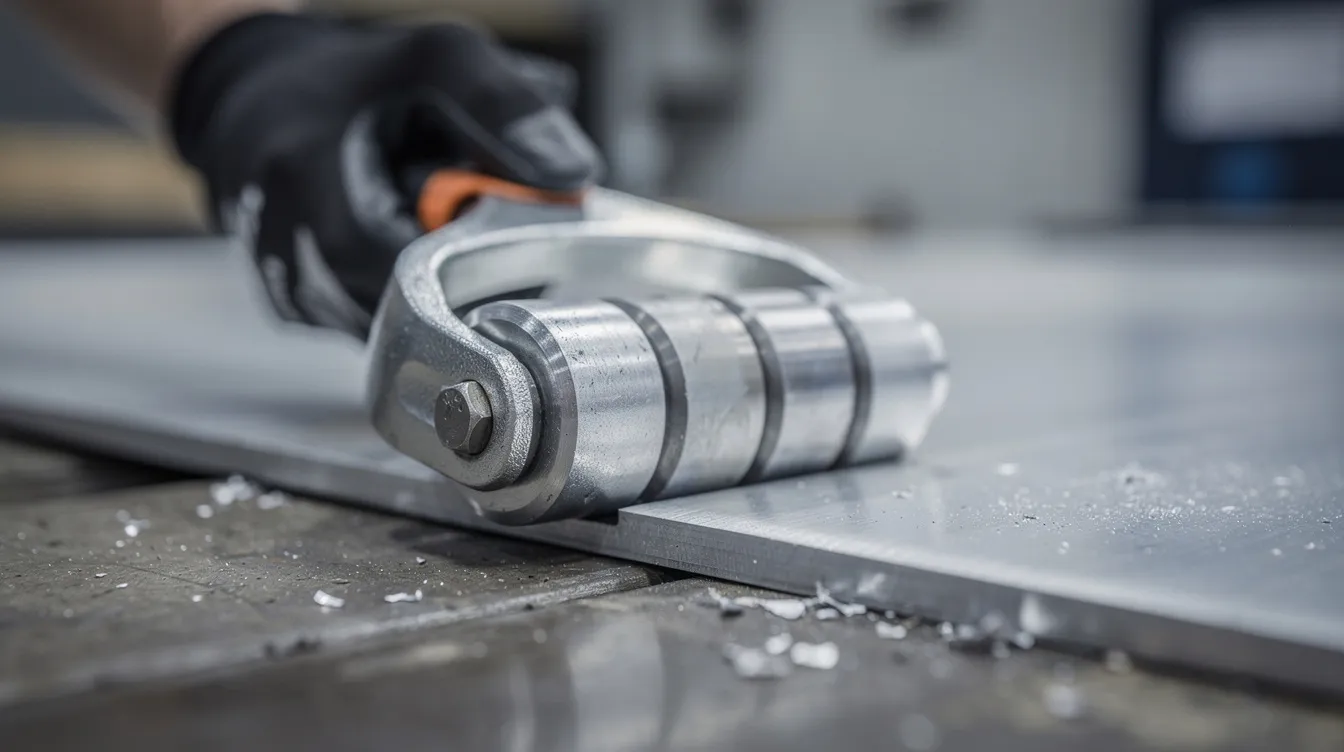
How an Edge Roller Works in Place of a Sheet Metal Brake
A classic leaf-style sheet metal brake clamps the workpiece flat and lifts a hinged flange to fold the material along a straight line. It is fast for long, straight bends but limited when you need to work on large panels, curved profiles, or localized hems. An edge roller takes a different approach: edge rollers utilize a series of rotating wheels or cylindrical bars to apply even pressure, progressively creating 3D profiles step by step.
In metalworking, edge rollers bend and shape sheet metal by folding material up to 90 degrees-or beyond with multiple passes for hems and joggles. Typical capacity covers 18–22 GA mild steel and aluminum, with throat depth ranging from roughly 0.25″ to 2.625″ for reaching further into panels. Rolling an edge creates a solid radius that strengthens the sheet metal, reducing the chance of cracking compared to a sharp brake bend. The way this tool distributes force means you get fine control over bend radius with little practice, and you can handle large aircraft skins or body panels that simply will not fit inside a bench brake.
Key Types of Edge Rollers and Their Applications
There is a variety of edge roller tools on the market, ranging from specialized sheet metal forming rollers to compact paint-edge rollers. Here is how they break down:
-
3-Station Sheet Metal Edge Roller – Tools like Malco’s 3-Station Edge Roller (priced at $680.00, with a customer rating of 4.67 out of 5 based on reviews) handle steel from 29–22 GA and offer a bend range of approximately 5/8″ to 4″. They are widely used for pre-bending lap and butt joint edges before riveting in aerospace and HVAC flashing applications. If you google this tool, you will find it available for sale on amazon and other vendors-just add it to your cart and order.
-
Single-Station Adjustable Edge Roller – Hubbco-style tools bend from 0 to 90 degrees and are a popular option in auto restoration and enclosure fabrication. Edge rollers are used in automotive restoration and metalwork to shape thin sheets of metal where a full brake is impractical.
-
Paint Edge Rollers – The SMART Edge Roller is 3 inches wide and features an adjustable trim tool for creating crisp paint lines. Concaved edge rollers prevent paint buildup on edges, which eliminates lap lines. Specialized edger rollers allow for tape-free application when painting edges. Edge rollers also cover large surface areas faster than brushes and distribute materials evenly. Using edge rollers even enhances the finish of leather edges by applying dye smoothly and evenly-though these are surface-finishing accessories, not metal formers.
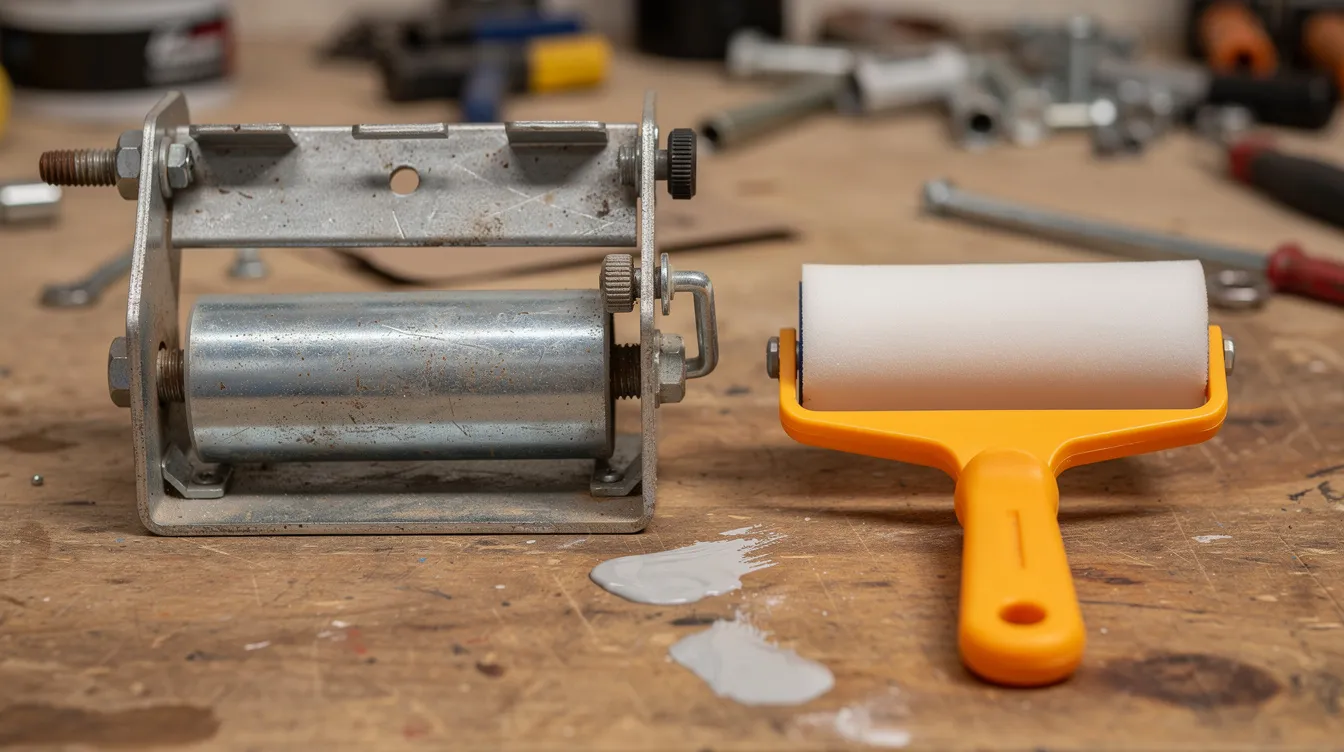
Design and Construction Features of Industrial Edge Rollers
Durability and precision of an edge roller come from its materials, roller geometry, and bearings. They provide a more consistent professional finish than standard roller edges because of these features:
-
Body materials – Machined 2024 aluminum with black anodized finish keeps weight low while adding wear resistance. Steel-bodied tools handle heavy-duty shop environments where heat and repeated use would wear softer stock faster.
-
Rollers and bearings – Ball bearing style hardened steel rollers (often 52100 high-carbon chromium steel) ensure smooth rotation under load. Interchangeable roller sets let you switch between different radii. In automated manufacturing, small-diameter knife-edge rollers enable tight transitions on conveyor belts.
-
Adjustability – Depth stops, angle scales, and throat depth adjustment (e.g., 0.25″ to 2.625″) allow controlled, repeatable edge rolling. These products save so much time on setup compared to swapping press brake dies.
-
Ergonomics – A well-designed handle, balanced weight, and clear visibility of the work edge let operators maintain accuracy over long runs. People who use these tools daily recommend models where the hand position does not obstruct the bend line.
Typical Use Cases: From Prototyping to OEM Production
Edge rollers fit wherever a job demands localized forming-whether that is a prototyping lab, an OEM production line, or an on-site repair crew.
Aerospace and Aviation – Pre-bending skin edges on lap and butt joints before riveting prevents skins from curling and improves aerodynamic smoothness. The connection between edge quality and structural integrity can trigger rework if rolled edges are not uniform, making practice essential.
Automotive and EV Enclosures – Forming stiffening flanges on battery trays, brackets, and interior panels is easy with edge rollers, eliminating the need to haul a large sheet metal brake onto every station.
Electronics and Medical Housings – Rolling small hems and returns on stainless steel or aluminum enclosure covers removes sharp edges, prevents leaking at seams, and improves assembly fit. The resistance of stainless to forming makes progressive rolling especially useful.
Rapid Prototyping – Engineers can iterate small flange or hem designs on sheet metal parts quickly before freezing a design for CNC punching, making it an awesome way to cut development time and money.
Integration with Anebon’s Sheet Metal and CNC Services
At Anebon Metal Products Limited, we use edge rollers alongside CNC punching, laser cutting, and press brakes at our site in Dongguan, China. Our workflow starts with CNC laser or turret punches to cut flat patterns from aluminum or stainless steel, and operators then apply edge rollers for specific local bends or joggles that are difficult or slow on standard brakes.
Our services support tolerances as tight as ±0.002 mm on CNC machined features, and careful process control ensures that rolled edges still meet OEM drawing requirements. We offer DFM feedback to help design engineers resolve whether to form features with an edge roller, press brake, or switch to die casting or CNC machining for better repeatability. Our ISO 9001:2015 and ISO 14001:2015 certifications reassure OEMs in aerospace, medical, and robotics-across the usa and beyond-that rolled edges will be documented and inspected. Anebon ships finished parts worldwide and users consistently report that early DFM consultation helped them protect quality and save money at the end of the project.
How to Choose the Right Edge Roller for Your Operation
Tool selection depends on material type, thickness, geometry, and production volume. Here is what to evaluate before you purchase:
-
Gauge and materials – Confirm the tool is rated for your worst-case alloy. Aluminum and mild steel behave differently from stainless steel under rolling pressure.
-
Throat depth and angle – Match throat depth to how far into your panels you need to reach. Ensure the tool supports your required angle-0–90° or more with multiple passes.
-
Ergonomics and learning curve – Look for clear scales, smooth bearings, and intuitive adjustments so new operators become proficient with little practice.
|
Criteria |
Edge Roller |
Sheet Metal Brake |
Press Brake |
|---|---|---|---|
|
Typical gauge |
18–22 GA |
16–14 GA |
14–10 GA+ |
|
Setup time |
Low |
Moderate |
High |
|
Ideal use |
Hems, small flanges, local bends |
Straight long bends, box/pan |
Heavy gauge, high volume |
|
Portability |
High (hand tool) |
Low–moderate |
Stationary |
We recommend submitting your part drawings to Anebon so our team can advise whether edge rolling, braking, or an alternate step in our process will be the best action for your project.
Best Practices for Using an Edge Roller on Sheet Metal
Consistency in production starts with a repeatable process. Follow this sequence to bend metal sheet edges cleanly:
-
Mark bend lines on your workpiece and set throat depth and angle on the tool.
-
Perform an initial light pass-do not force a sharp bend in one step, as this can crack or warp the panel.
-
Progressively increase pressure across additional passes until you reach the final angle.
-
Always test on offcuts of the same sheet metal alloy and gauge first. Measure springback and adjust by over-rolling slightly.
-
Support large panels with fixtures to prevent “oil-canning,” twists, or distortion. Keep feed rate steady.
-
Before each shift, check that rollers and bearings are free of chips. Wear cut-resistant gloves and eye protection at all times.
Requesting Edge-Rolled Sheet Metal Parts from Anebon
OEMs, design engineers, and R&D teams can have Anebon handle edge rolling as part of a complete fabrication package-from rapid prototypes through full-scale production. When submitting a quote request, include:
-
Material type and thickness (e.g., 18–22 GA aluminum 5052-H32)
-
Bend angle and radius at each edge, with tolerances
-
Whether edges will be riveted, spot welded, or fastened
-
3D models (STEP, IGES) and 2D PDFs
Early DFM feedback from our engineers can optimize whether to use edge rollers, sheet metal brakes, or alternate forming processes-helping you save time and money before production begins. Contact Anebon Metal Products Limited by email or through our website to request a quote for your next project requiring precise edge-rolled sheet metal components.