Essential Considerations for Your Machine Prototype Development
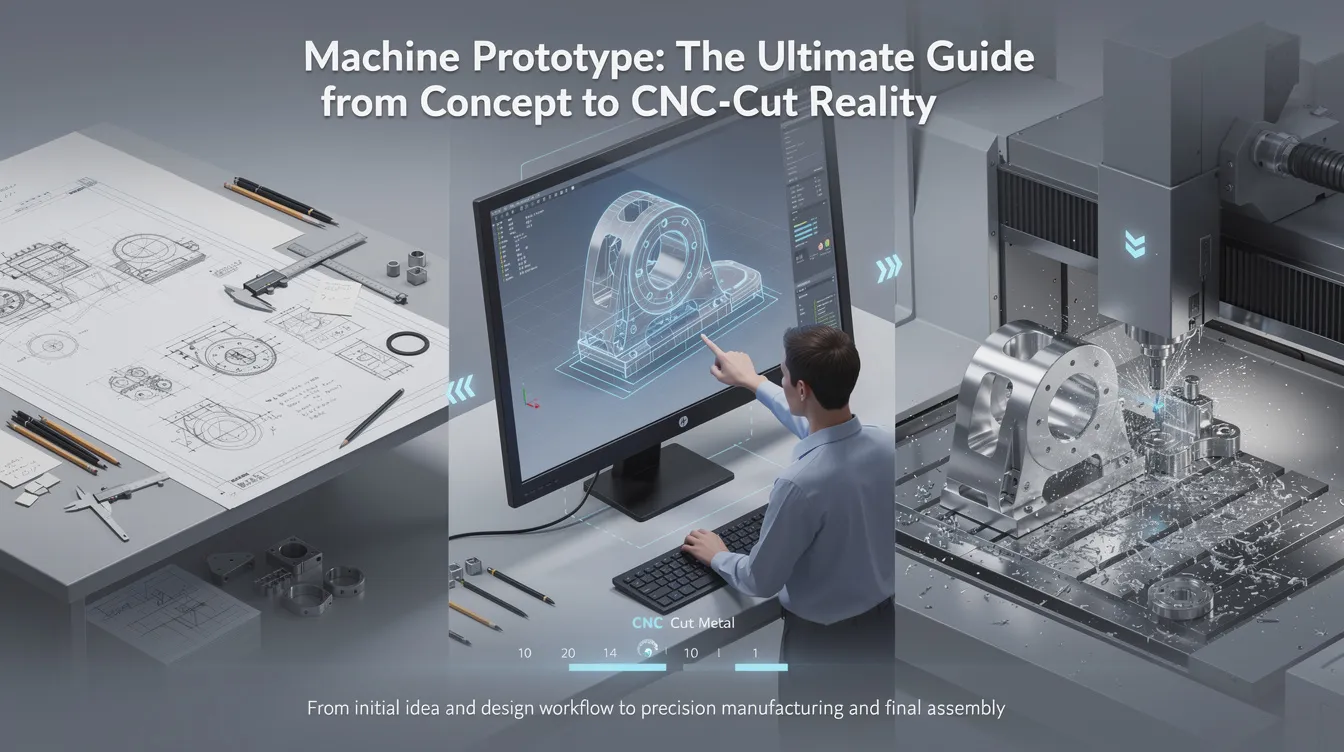
Machine Prototype: The Ultimate Guide from Concept to CNC-Cut Reality
Building a new machine is expensive. Building the wrong machine is catastrophic. That is why every serious OEM invests in a machine prototype before committing capital to full-scale production. This ultimate guide walks you through the complete process-from initial idea through prototype development, testing, and the transition to manufacturing-so you can create reliable equipment faster and at lower risk.
What Is a Machine Prototype and Why It Matters in 2026
A machine prototype is a preliminary working model of a concept-a pre-production machine or subsystem assembled to validate function, manufacturability, and cost before mass production begins. Unlike prototyping an individual bracket or housing, a machine prototype tests the whole thing: system integration, motion under load, control software, operator safety, and component alignment.
At Anebon Metal Products Limited, founded in 2010 in Dongguan and certified to ISO 9001:2015 and ISO 14001:2015, we support overseas OEMs through every stage-from precision CNC machining and die casting to sheet metal fabrication and small-batch pilot runs. We see firsthand why prototypes are essential for testing functionality before mass production.
Here is what a machine prototype does that individual part prototypes cannot:
-
Verifies how concepts perform in practice under realistic loads, temperatures, and cycle times
-
Allows testing of quality and performance on a single unit before committing to tooling
-
Helps identify design flaws early in the development process, when fixes are inexpensive
-
Provides hands-on experience for potential customers and operators, validating user interfaces and ergonomics
-
Prevents costly mistakes in mass production by catching tolerance stack-ups, interference, and safety gaps
Prototyping helps refine devices before mass production and helps identify issues early, reducing future costs. In 2026, product cycles are more compressed than ever. Automotive OEMs in China have cut concept-to-production timelines from roughly 40–50 months down to approximately 24 months. In aerospace, medical, EVs, and electronics, stricter regulatory and performance requirements make functional prototypes almost mandatory.
A concrete example: in Q1 2025, EXOM Engineering validated a robotic laser welding cell prototype for EV battery packs. The machine integrated a 2 kW laser, ABB six-axis robot, machine vision, and modular clamping to handle cylindrical, prismatic, and pouch cells. The prototype confirmed weld penetration, alignment, and traceability before scaling to gigafactory production.
From Idea to First Build: The Machine Prototype Lifecycle
The prototyping process transforms a concept into a functional physical model through a series of gates. Anebon supports overseas OEMs across multiple stages-from first-article machining through pilot batch delivery. A prototyping strategy includes deciding on fidelity levels for models at each stage.
-
Stage 1 – Concept & Requirements: Defining requirements is essential in the prototyping process. Engineers gather functional specs-throughput targets, cycle time, safety standards (e.g., ISO 13849), environmental conditions, and budget constraints. Creating a prototype plan outlines testing procedures and data requirements.
-
Stage 2 – Virtual Design: Creating conceptual sketches visualizes product functionality, then detailed CAD models define exact dimensions and parts for prototypes. FEA, motion simulation, and digital twins reduce physical iterations and compress lead time. The prototyping process allows validation of designs and early flaw detection even before metal is cut.
-
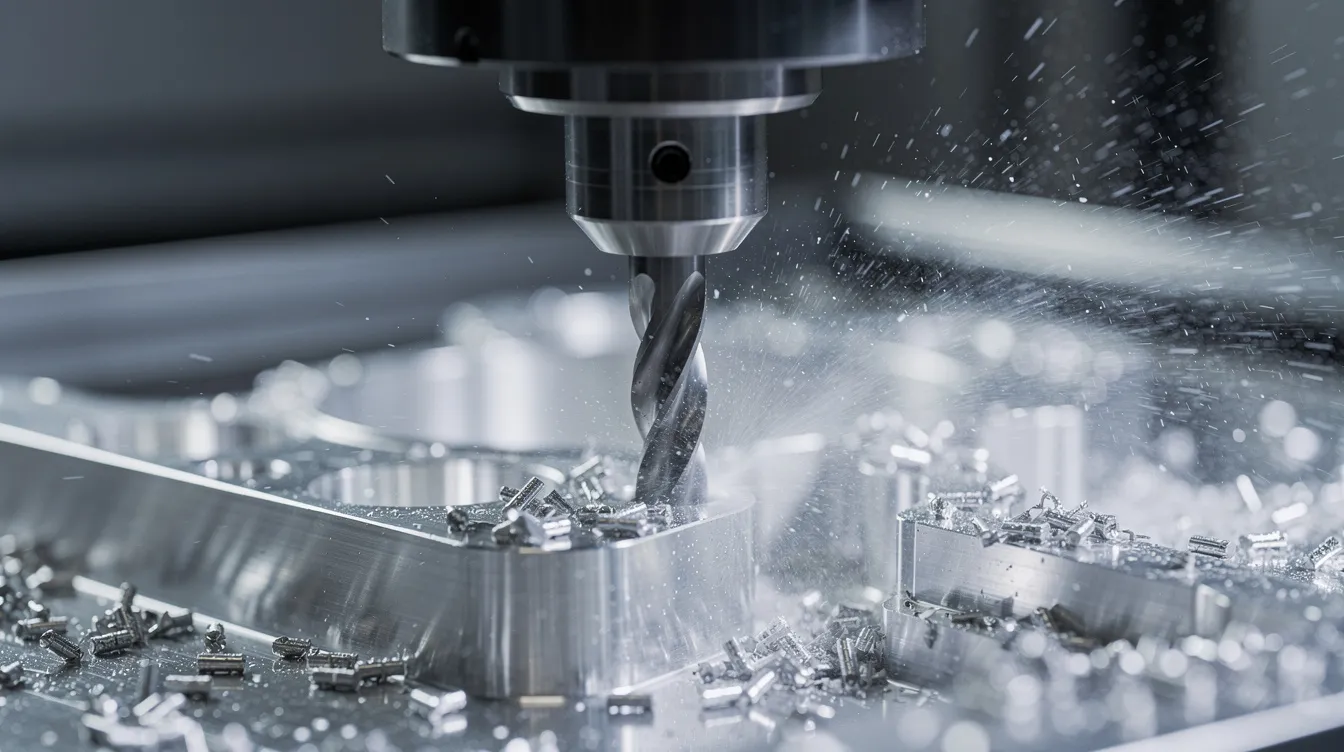
Stage 3 – Rapid Prototyping of Critical Parts: Low-fidelity prototyping uses cheap materials to evaluate size and kinematics on non-critical components, while CNC-machined aluminum brackets, housings, and engineering plastics (POM, ABS, PEEK) produce prototypes of motion-critical parts within days. This is where you iterate quickly on fit and integration.
-
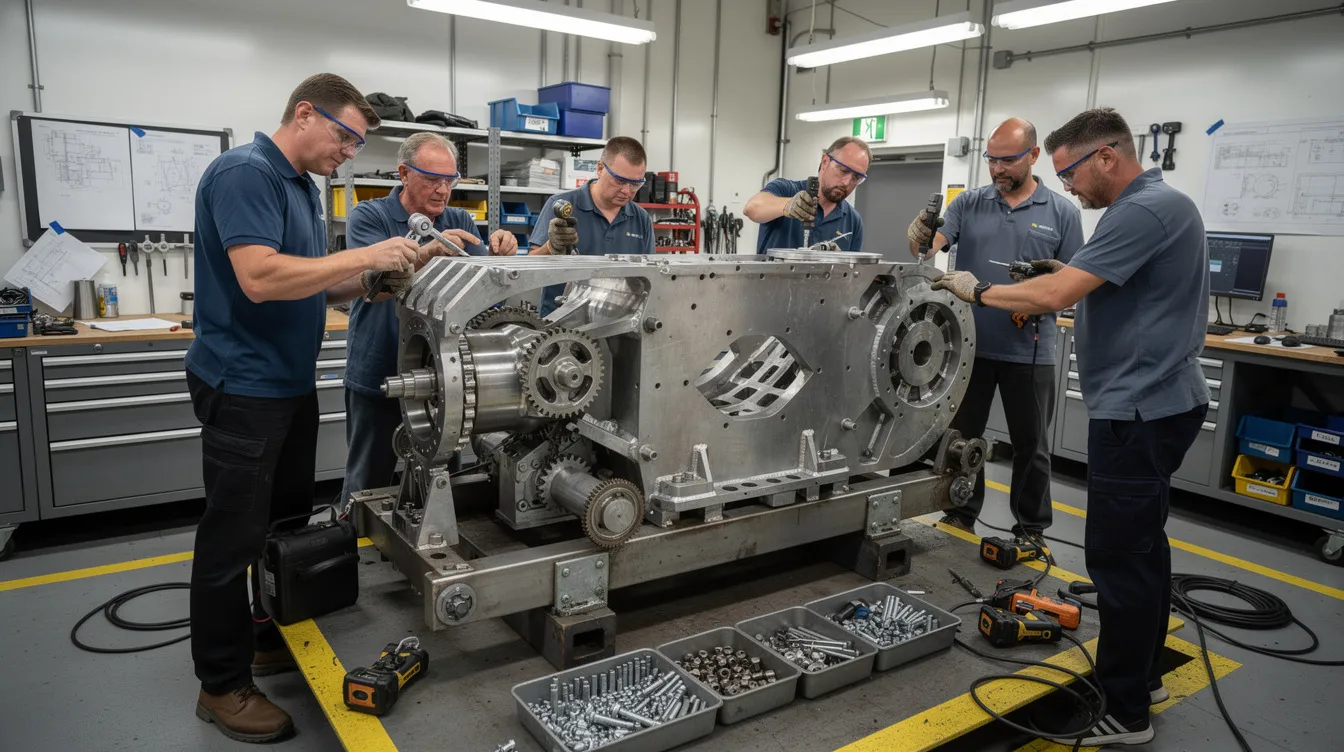
Stage 4 – Alpha Machine Prototype: The first version of the fully integrated machine-typically 1–3 units. This working prototype combines mechanical, electrical, and control systems to validate core functionality. Assembly involves integrating fabricated pieces with off-the-shelf components like motors and linear rails. These “works like” prototypes prioritize functionality and operation over cosmetic finish.
-
Stage 5 – Beta / Pilot Machine Builds: A test version closer to the final production design, used for endurance testing (thousands of cycles), operator feedback, and manufacturability checks. Iterating on prototypes involves analyzing test data and refining designs. Revising designs improves prototypes based on testing data collected during these runs.
-
Stage 6 – Design Freeze & Transition to Production: Design for Manufacturing (DFM) refines prototypes for efficient mass production. Tolerances, materials, surface finishes, and BOMs are finalized. Developing a pre-production prototype that mimics the final model closely ensures documentation is complete for scaled manufacturing.
Where Machine Prototypes Are Used: Real-World Applications
Machine prototypes appear across industries wherever complex equipment or automation is deployed. CNC rapid prototyping is used across various industries to de-risk capital investments before committing to production lines.
-
Automotive & EV: Prototype battery-module welding lines, robotic paint cells, and end-of-line test rigs developed in 2023–2026 to validate gigafactory investments. These prototypes test, validate, and iterate upon mechanics and design before a single production cell ships.
-
Medical Devices: Prototype automated catheter-assembly machines-like Owens Design’s micro-spray adhesive system controlling dispenses as small as 0.5 nL-where validation is tied to FDA and EU MDR requirements. Every device must be proven before regulatory submission.
-
Aerospace & Defense: Custom test stands, actuator-cycling rigs, and avionics cooling prototypes needing tight tolerances (often < ±0.01 mm) and robust traceability documentation.
-
Electronics & Semiconductors: Pick-and-place feeder prototypes, PCB depaneling machines, and burn-in racks requiring both mechanical precision and electrical engineering validation to confirm thermal stability and alignment.
-
Robotics & Industrial Machinery: Gripper test benches, gearboxes, and sensor mounts prototyped to confirm payload, accuracy, and cycle life-often running tens of thousands of cycles in pilot machines before the final design is locked.
Prototype Machine Shop vs. Production Shop: What Really Changes
A prototype machine shop is engineering-focused: the goal is learning. A production shop is execution-focused: the goal is repeatable output. Understanding this distinction matters when you plan your project.
-
A prototype machine shop prioritizes speed, design flexibility, and rapid prototyping with fast lead time. Tolerances may be intentionally adjusted to test ideas quickly without the cost of ultra-precision on every feature.
-
A production shop prioritizes repeatability, takt time, unit cost, and compliance. Design changes are controlled through formal Engineering Change Orders (ECOs), not whiteboard sketches.
-
Documentation differs sharply: prototype builds rely on evolving build notes, temporary jigs, and version-tagged CAD files. Production uses standardized work instructions, full BOMs, and PPAPs.
-
Sourcing differs too: prototypes may use off-the-shelf linear rails, motors, and fasteners without long-term agreements. Production optimizes for negotiated supplier contracts and minimum order quantities. Prototypes often cost more than final products due to these inefficiencies, and prototypes may use different materials than final products to speed early validation.
-
The transition follows a clear path: prototype → pilot → qualification → ramp. Anebon supports OEMs through each gate, refining manufacturing processes and qualifying materials and suppliers at every step.
Inside a Modern Prototype Machine Shop: Processes and Technologies
Anebon operates as a fully equipped prototype machine shop in Dongguan, supporting overseas OEMs from first article to small-batch runs using new technologies and proven processes.
-
CNC Machining Capabilities: 3-axis, 4-axis, and 5-axis CNC milling and CNC turning for aluminum, stainless steel, titanium, and engineering plastics. CNC machines produce high-precision, repeatable parts with tolerances down to ±0.002 mm on critical features. CNC machining excels at producing high-precision parts from various materials.
-
Sheet Metal Fabrication: Laser cutter equipment, bending, and welding for machine frames, enclosures, guards, and control cabinets-including powder-coated and anodized finishes. Learn more about sheet metal fabrication capabilities.
-
Die Casting & Secondary Machining: Rapid tooling for low-volume aluminum or zinc cast parts via the die casting process, then CNC finishing critical faces and holes to required tolerances.
-
Electrical Engineering Support: Interface panels, heat sinks, motor mounts, and PCB brackets designed with cable routing, grounding, and cooling in mind-ensuring controls integration is addressed in metalwork from day one.
-
Rapid Prototyping Methods: Quick-turn machining, soft jaws, modular fixturing, and use of in-house or partner additive manufacturing to reduce lead time on non-critical parts. 3D printers create parts directly from CAD models layer by layer for form checks and mock up models.
-
Quality Assurance: CMM inspection, optical measurement, material certification, and ISO-based process control tailored to one-off and small-batch prototype production. Every metal parts shipment includes traceable inspection data.
Designing a Machine Prototype for Manufacturability and Performance
DFM and DFA feedback is where Anebon adds value beyond machining. Our engineers review designs with OEM teams to ensure the machine prototype is not only functional but also cost effective to produce and assemble at scale.
-
Material Selection: Selecting materials affects functionality, cost, and durability. Use aluminum 6061 for lightweight structural frames, stainless 304 for corrosion-prone environments, or engineering plastics like POM and PEEK for wear surfaces. Choose different materials for early “looks like” prototypes that focus on aesthetics and ergonomic fit versus production-intent builds. Basic prototyping uses materials like clay, cardboard, and foam for initial concept validation of complex shapes.
-
Tolerancing Strategy: Keep tight tolerances (e.g., ±0.01 mm) only where function demands it-bearing seats, alignment features, sealing surfaces. Relax elsewhere to ±0.1–0.2 mm. Over-tolerancing inflates machining cost and extends lead time without improving performance.
-
Modularity: Design subassemblies-tool heads, clamp modules, sensor brackets-so designers can swap or iterate them independently without rebuilding the entire prototype machine.
-
Integration with Electrical and Controls: Reserve space for cable chains, I/O boxes, safety relays, and future sensors. Include tapped holes and cutouts in metalwork early to avoid time consuming rework.
-
Testability: Add alignment pins, gauge points, and removable access panels. Testing and analyzing prototypes identifies design flaws and safety issues most efficiently when the machine is designed to be inspected and measured easily.
CNC Machining in Rapid Prototyping: Advantages, Limits, and Trade-offs
Despite growth in additive manufacturing and injection molding alternatives, CNC machining remains the backbone of high precision prototype production. CNC rapid prototyping creates parts from digital designs, delivering components in production-grade materials with the functionality expected in the final product.
-
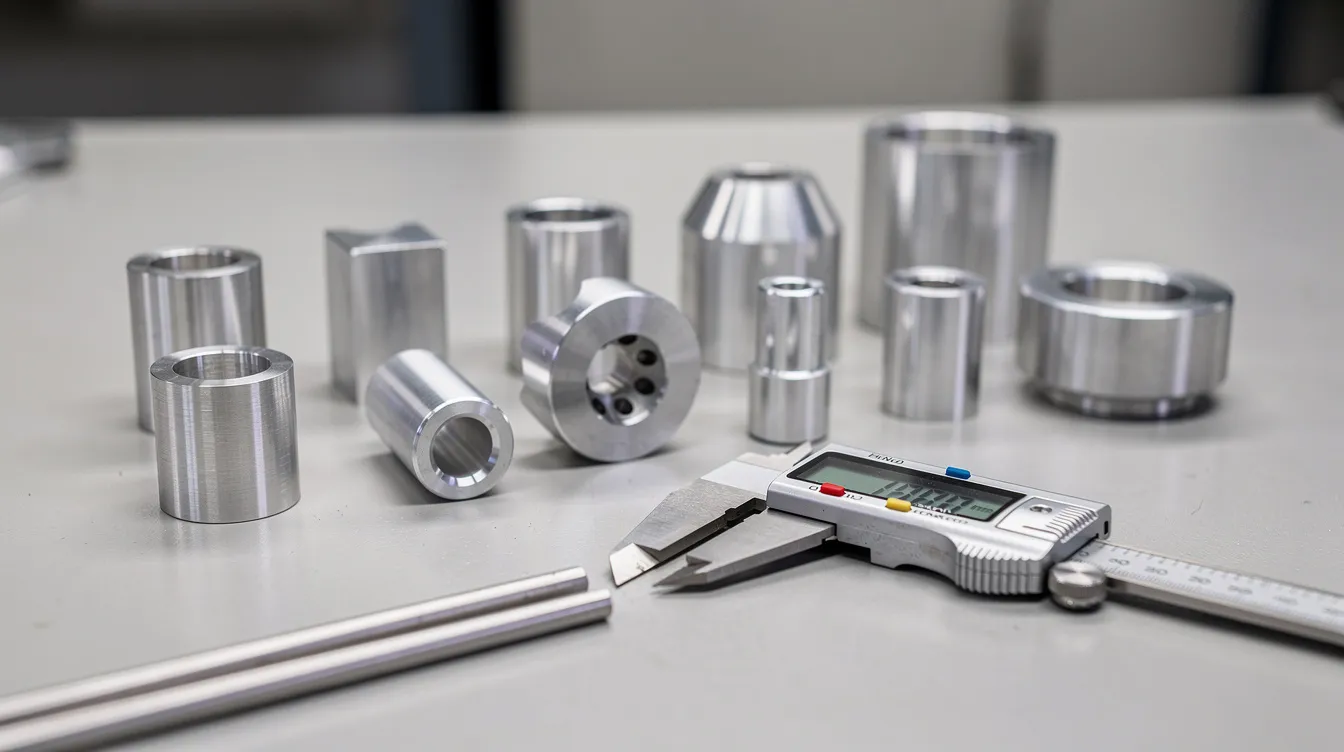
Precision & Surface Finish: CNC machining is ideal for fast fabrication of prototypes that demand tight tolerances. Typical achievable tolerances sit at ±0.05 mm for standard features and ±0.01 mm or better for critical features, with surface finish around Ra 1.6 µm-essential for robotics, medical fixtures, and sliding surfaces.
-
Material Versatility: Produce prototypes in various materials-metals (aluminum 6061/7075, stainless 303/304/316, titanium) and plastics (ABS, POM, PTFE)-that closely match final product properties. This versatility across materials and plastics is a key advantage.
-
Lead Time: Typical turnaround: 3–7 calendar days for simple machined parts. Programming, setup, and fixturing influence delivery, but capable shops with program libraries and modular fixtures maintain speed.
-
Cost & Complexity: CNC rapid prototyping reduces costs by identifying issues early, but very complex shapes-deep internal cavities, lattice structures-may be produced more economically via additive for early-stage “looks-like” models. Stereolithography (SLA) produces strong, highly detailed parts for form validation.
-
Hybrid Approach: The success formula for many machine prototype builds: CNC-milled aluminum gripper jaws with bearing holes held to ±0.02 mm, paired with 3D-printed covers for ergonomic shape. Use additive for housings or covers and CNC for precision inserts, shafts, and interfaces. This hybrid keeps cost low while maintaining high precision where it matters.
Managing Lead Time, Cost, and Risk in Machine Prototyping Projects
Controlling schedule and budget is as important as technical success in any OEM program. A new design that arrives late to market costs more than a few extra prototype cycles ever would.
-
Early Supplier Involvement: Involving Anebon’s engineers at the CAD stage helps identify machining challenges, reduce setups, and recommend alternative features. This is where the business case for a capable partner pays off.
-
Prioritizing Critical Parts: Focus early runs on components that drive system accuracy, safety, or IP. Defer cosmetic or non-critical parts to later cycles. This approach keeps prototype development on schedule.
-
Iteration Planning: Budget for multiple prototype cycles-alpha, beta, pilot-and use design sprints to compress development calendars. Prototyping allows for rapid iteration and design refinement that simply cannot happen in simulation alone.
-
Documentation Practices: Keep revision-controlled drawings, 3D models, and inspection reports even during prototype builds. This discipline eases transition to production and satisfies systems for regulatory traceability.
-
Risk Reduction: Testing evaluates performance, durability, and safety of prototypes. Use prototypes to test edge cases-temperature extremes, load spikes, high duty cycles-before freezing the final design for mass production. Specialized training for operators can also be developed and validated during beta builds.
Case Sketch: Building a CNC-Based Machine Prototype with Anebon
A European OEM in 2025 needs a small automated inspection cell for electronics assemblies. The concept is clear, but the market demands speed-they need to ship a validated cell within months, not years.
-
RFQ Submission: The OEM sends CAD files specifying an aluminum frame, stainless steel inspection nests (±0.02 mm alignment surfaces), mounting holes at ±0.05 mm, and passivated finish. Target lead time: 4 weeks for the complete first build.
-
Anebon’s DFM Review: Our engineers propose redesigning hole patterns to unify setups, selecting standard stock sizes, and using modular brackets so the cell can handle product variants without a full rebuild. One casting component is flagged for die casting with secondary CNC machining.
-
Prototype Production: CNC machining of precision nests and brackets, sheet metal guarding and enclosure fabrication, custom cable-routing brackets. Batch: 1 full set plus spare nests and brackets.
-
Assembly & Testing at Customer Site: The OEM assembles the inspection cell, runs first articles, and collects measurement data. The tools and components fit as expected, but minor vibration under load reveals a frame stiffness gap.
-
Iteration and Scale-Up: Rev B frame parts with added gussets are produced and shipped within days. The OEM validates the fix, then orders a pilot run of 15 cells using the same CNC programs and fixtures-bridging the gap until mass production begins at volume.
How to Choose a Prototype Machine Shop Partner
The right partner impacts quality, schedule, and the ultimate success of the final product. Here is what to evaluate:
-
Technical Capabilities: Verify CNC machining range (axes, envelope size), material expertise across metals and plastics, and ability to hold tight tolerances appropriate for your industry.
-
Quality Systems: Look for ISO 9001:2015 and ISO 14001:2015 certifications, documented inspection processes, and traceable material certificates. These are non-negotiable for aerospace, medical, and automotive work.
-
Communication & Support: Responsiveness across time zones, English-language engineering support, and clarity on DFM feedback and change management. Prototyping requires close, reliable collaboration.
-
Flexibility in Quantities: Ability to deliver one-off parts, small pilot batches, and eventually support higher-volume production without changing suppliers.
-
Lead Time and Logistics: Realistic quoted lead times, options for expedited builds, and experience shipping CNC machined metal parts overseas reliably.
Anebon offers online quoting, engineering review, and dedicated support staff for overseas OEM and R&D teams across all of these capabilities.
Machine Prototype to Final Product: Next Steps with Anebon
A well-executed machine prototype compresses risk, validates your concept in the real world, and sets the stage for confident scale-up. Every developed product that reached market success started with someone willing to build and test before committing.
-
Prepare your package: Gather 3D models, 2D drawings, and basic requirements (target tolerances, materials, quantities, and deadlines) before reaching out. The more complete your RFQ, the faster and more accurate the quote.
-
Engage Anebon: Send your RFQ to our engineering team. Typical response time is 1–2 weeks depending on project complexity, with machining and delivery produced in days to weeks for prototype parts.
-
Beyond prototyping: Anebon stays involved through bridge production, fixture refinement, and long-term CNC machining of production parts-so you do not need to switch suppliers as you scale.
-
Get started: Request a quote or discuss your next machine prototype concept with Anebon’s engineering team today. Turn your idea into hardware.