Essential CNC Milling Service Recommendations for Optimal Performance
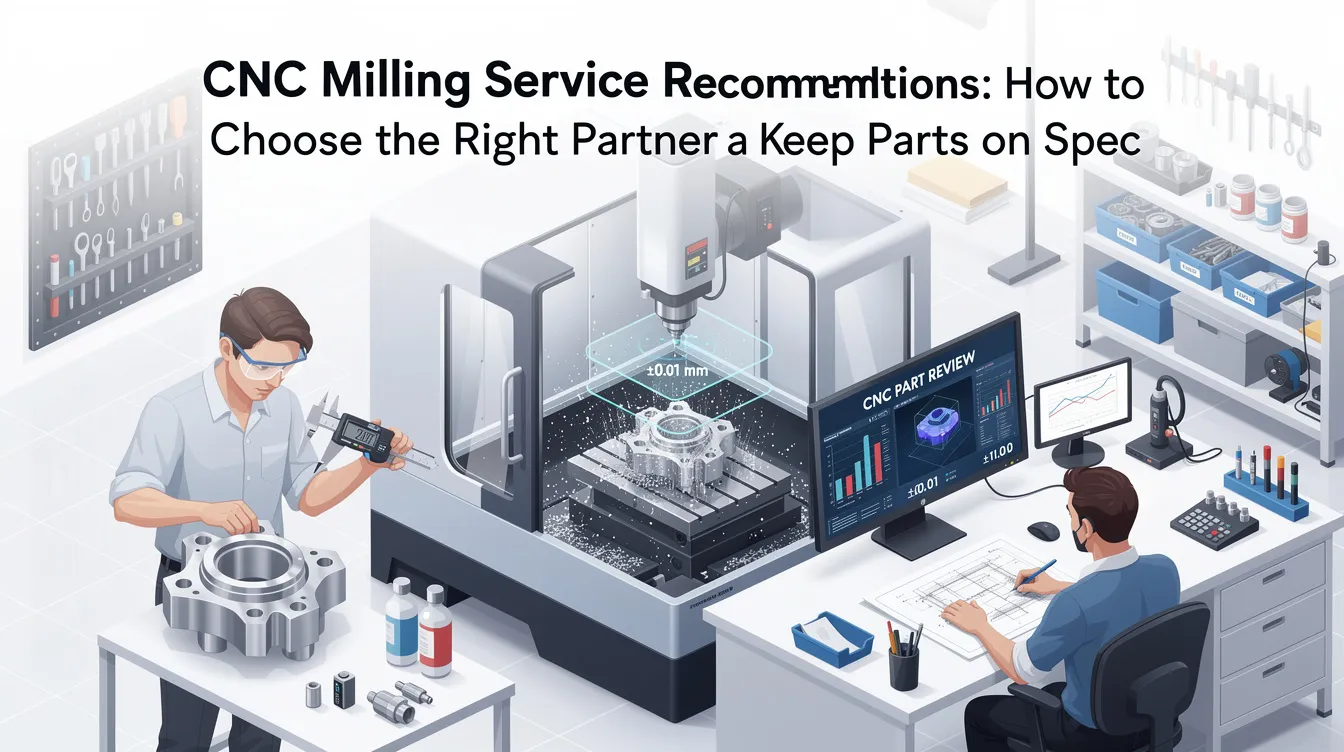
CNC Milling Service Recommendations: How to Choose the Right Partner and Keep Your Parts on Spec
Choosing a CNC milling partner affects every part you ship. This guide covers what to look for in a service provider, how to design parts that cost less to machine, and why your supplier’s machine maintenance practices directly impact the accuracy of your components.
Quick CNC Milling Service Recommendations (Answer First)
CNC milling is used for precision machining of metal and plastic parts, and the right service partner depends on your tolerance requirements, certifications, and production volume. For overseas OEMs and design engineers who need tight tolerances down to ±0.002 mm, ISO 9001:2015 quality management, and ISO 14001:2015 environmental compliance, Anebon Metal Products Limited-founded in 2010 in Dongguan, Guangdong, China-is a strong fit.
-
Clarify your RFQ specs before contacting any cnc milling service. Include material grade, quantity tiers, and critical dimensions so your supplier can quote accurately from day one.
-
Send both 3D models and 2D drawings to any shop running cnc machines. STEP or IGES files paired with toleranced drawings eliminate ambiguity.
-
Request DFM feedback before locking your design. Anebon’s engineers routinely suggest changes to fillets, wall thickness, and fixturing that reduce cycle time.
-
Compare material options such as 6061-T6 aluminum versus 304 stainless steel for your application’s real functional needs.
-
Ask for sample inspection reports including CMM data and surface finish measurements before committing to production volumes.
-
Confirm shipping terms and Incoterms early, especially for sea freight from China to the EU or US.
Instant-quote platforms like Xometry or Protolabs are useful high-speed references for one-off prototypes, but their per-unit pricing is typically higher. Anebon offers a more cost-effective, engineering-driven partnership for repeat OEM work, having produced over 210,000 parts for 1,128 companies across 47 countries.
Key Criteria for Choosing a CNC Milling Service
Not all cnc machine tools or shops deliver the same results. The gap between a prototype-only vendor and a production-capable OEM supplier like Anebon shows up in capability, quality systems, and communication. Quality requirements vary by industry such as aerospace or medical, so your criteria should reflect your end-use environment.
-
Capability and capacity: Look for spindle power, machine travel, and both 3-axis and 5-axis machining capabilities, which are important for complex geometries. Confirm the shop can hold tolerances of ±0.002 mm on critical features like bearing bores and sealing faces.
-
Materials and processes: Material variety should include options like aluminum and stainless steel, plus titanium (Ti-6Al-4V), engineering plastics (POM, PEEK), and integration with CNC turning, die casting, and sheet metal fabrication. Anebon machines over 75 metals and plastics.
-
Quality systems: Providers should have ISO certifications like ISO 9001:2015 for quality assurance. Verify the use of calibrated CMMs, SPC for high-volume runs, batch traceability for medical device and aerospace parts, and documented cnc machine maintenance practices.
-
Engineering support: English-speaking engineers who provide Design for Manufacturability feedback on fillets, chamfers, wall thickness, and fixturing before cutting metal save you cost and lead time.
-
Logistics: Lead time is a crucial factor when choosing a CNC milling service. Working with Dongguan-based suppliers means typical sea freight of 20–35 days to the EU or US; consolidated shipments and regular reorder schedules help amortize freight cost.
Design-for-Manufacturability Tips to Reduce CNC Milling Costs
Many cost drivers are locked in at the CAD stage, long before a cnc machine starts cutting. Design for manufacturability should be considered before production begins, and DFM feedback helps identify machining challenges early in the process.
-
Fillets and chamfers: Deep internal fillets require slender cutting tools and long cycle times. Use standard radii (1 mm, 2 mm, or 3 mm) and chamfers instead of complex 3D blends where function allows. For an electronics enclosure, this alone can cut cycle time by 15–20%.
-
Part geometry: Avoid unnecessarily thin walls below 0.5–0.8 mm in aluminum, and skip very deep pockets unless required. These increase tool deflection, vibration, and scrap risk. A robotics bracket in 6061-T6 aluminum with 1.5 mm walls machines cleanly and holds up well under load.
-
Setup reduction: Parts designed for 2–3 setups instead of 5–6 on a 3-axis or 5-axis machine significantly cut cost. Clear datums and flat fixturing surfaces help.
-
Tolerances and surface finish: Tight tolerances can significantly increase machining costs. Specify ±0.005 mm and Ra 0.8 µm only where function demands it; use ISO 2768 general tolerances elsewhere to reduce machining cost.
-
Material selection: Material expertise is crucial for machining specific materials effectively. Choose aluminum over 7075 or titanium when high strength is not critical-it saves both material and machining time. Reserve stainless steel 304 for corrosion-critical applications.
Why CNC Machine Maintenance at Your Supplier Matters
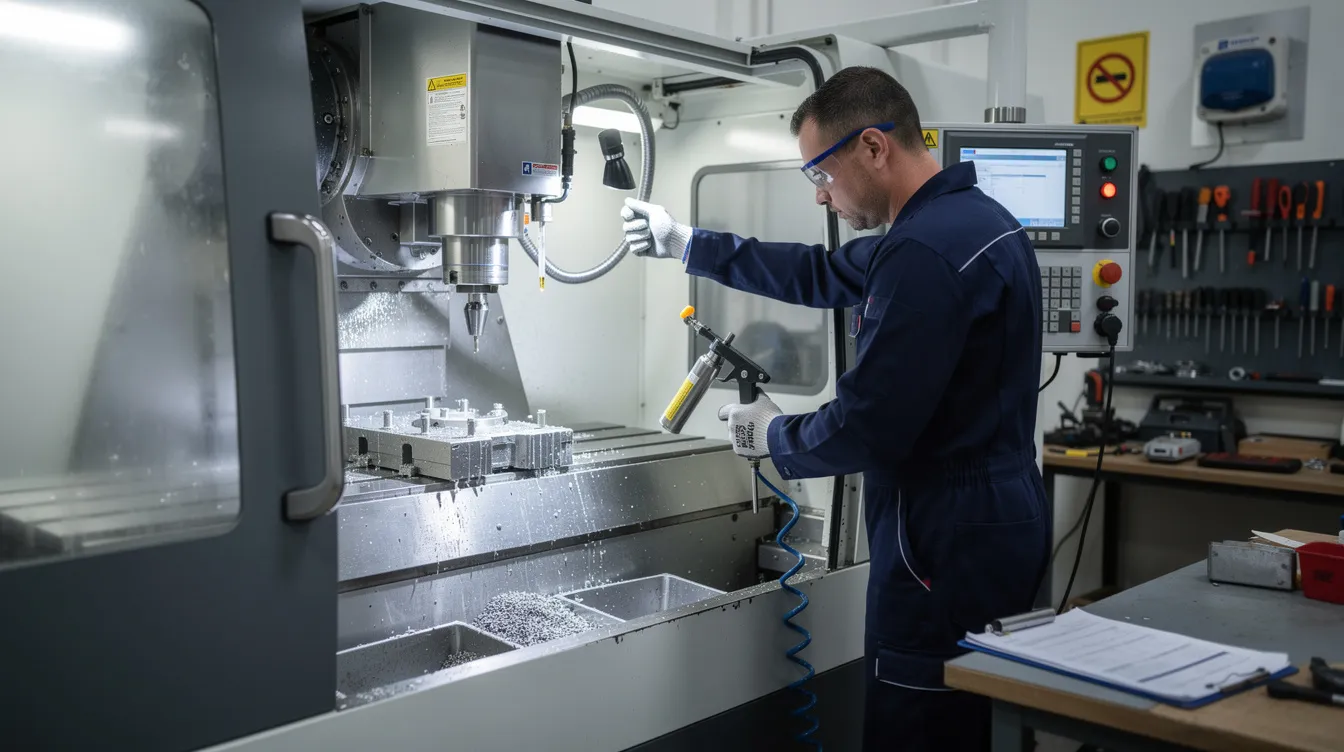
The maintenance discipline inside your supplier’s shop directly determines part quality, delivery reliability, and machine uptime for your orders. A well maintained machine holds its machine’s precision run after run; a neglected one produces drift, scrap, and delays. Anebon follows a structured maintenance schedule covering daily, weekly, and monthly checks on its milling machines.
-
Lubrication systems: Technicians verify lubrication levels, clean lines, and confirm oil and grease reach linear guides, ball screws, and drive systems. Proper lubrication prevents stick-slip and backlash, reducing friction on moving parts and maintaining the machine’s accuracy. Lubrication is essential to reduce wear on moving parts.
-
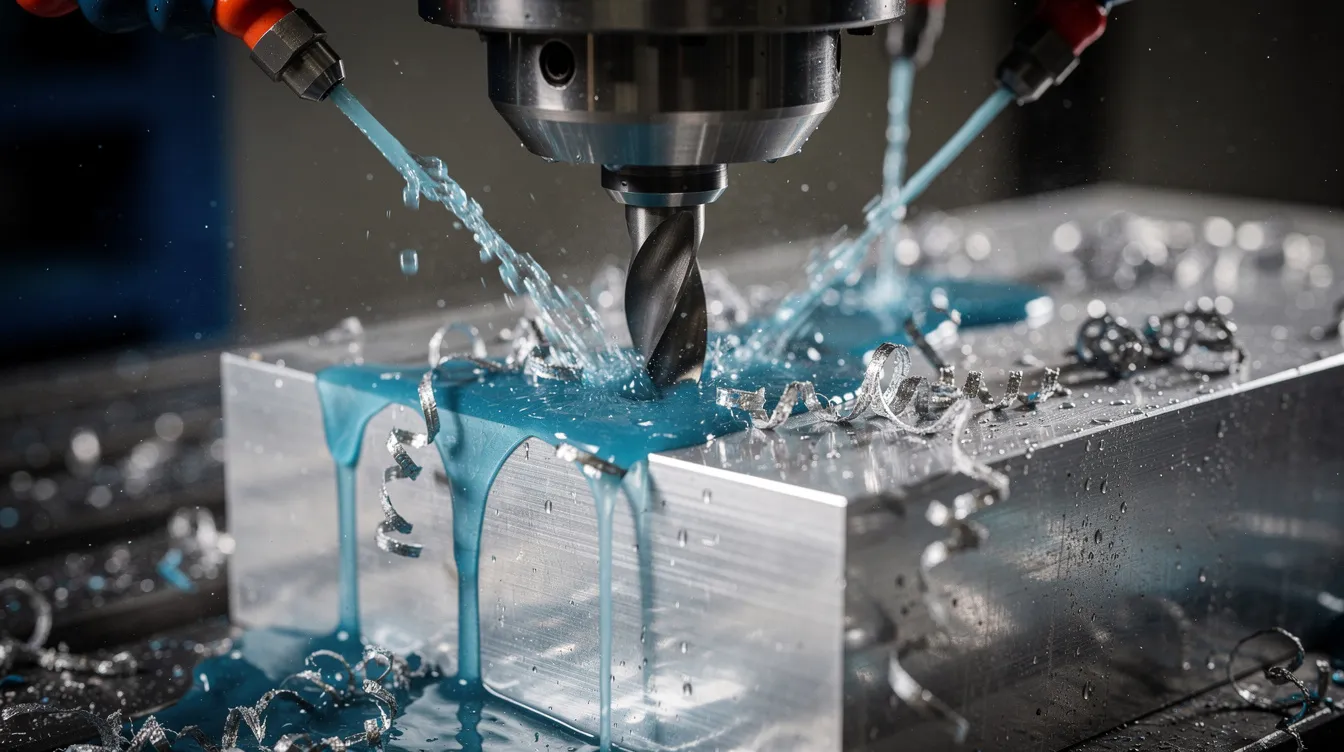
Coolant system care: Coolant levels should be checked regularly to prevent overheating. Staff monitor concentration, cleanliness, and flow rate, then clean the coolant tank and filters to ensure efficient cooling and remove coolant residue. This prevents tool wear and poor surface finish on stainless steel and titanium parts. A functioning cooling system also helps prevent overheating and bacterial growth in stagnant fluid.
-
Hydraulic pressure and tool clamping: Periodic checks of hydraulic pressure for tool changers and workholding catch pressure drift before it causes tool pull-out or dimensional scrap. Technicians verify hydraulic fluid levels and inspect the hydraulic system for leaks, ensuring the machine is functioning correctly.
-
Alignment and accuracy checks: Annual or 2,000-hour geometry checks with laser or ballbar systems catch worn components before they compromise micrometer-level tolerances. Operators inspect tool holders and spindle tapers for significant wear that would degrade machine performance and the machine’s precision.
Recommended CNC Maintenance Practices for Long-Term Reliability
Even buyers can ask suppliers about their preventive maintenance routines to gauge professionalism. CNC machines can last up to 20 years with proper maintenance, and the same practices apply whether you run your own shop or audit a partner’s. Preventive maintenance plans improve profit margins for CNC shops by avoiding wasted hours and unexpected failures.
-
Follow a maintenance schedule: Daily tasks include cleaning accumulated debris and shop grime from way covers, checking fluid levels for lubrication and coolant, and wiping down moving components. Weekly, inspect air filters and way wipers. Monthly, check backlash on ball screws, inspect belts for unwanted wear, and replace worn components showing mechanical issues. Yearly, perform a thorough inspection of full machine geometry. Daily cleaning prevents buildup that can affect machine precision. Inspecting filters monthly can prevent costly repairs.
-
Document cnc maintenance: Keep logs of lubrication levels, coolant changes, spindle hours, and parts replaced. Anebon uses these records to anticipate wear and schedule downtime outside customer-critical periods. A Gold Premier Package includes a 15-point checklist for maintenance that covers critical components across all major subsystems. Following manufacturer’s guidelines and manufacturer’s recommendations for service intervals prevents further damage.
-
Train operators as the first line of defense: Machine operators trained to notice unusual noises, unusual vibrations, surface finish changes, or alarm patterns catch problems early. This proactive maintenance approach prevents minor issues from becoming expensive failures, avoiding unexpected breakdowns that cost five times more than annual preventive maintenance programs. Routine check-ups boost output efficiencies and increase uptime.
-
Stock spare parts: Keep critical components like spindle bearings, coolant pumps, and sensors on hand to replace worn or damaged parts quickly. Most cnc machines share common wear items; stocking them avoids long downtime and supports on-time delivery. A spare-part strategy helps you replace worn items before they cause further damage.
-
Apply these principles to your own shop: If you run cnc machines in-house, adopt a similar structured maintenance schedule. Proper care and regular maintenance-covering proper lubrication, coolant system upkeep, software updates, and machine inspection-keep your equipment in peak condition and optimal condition. Preventative maintenance and proactive maintenance together maintain optimal performance, smooth operation, and operational efficiency. Stay ahead of the competition by properly maintaining your CNC machining center to maintain precision and peak performance across every job. With proper maintenance, CNC machines can last up to 20 years, and a well maintained machine will deliver overall performance and tool life that justify the investment. Keeping your machine in optimal performance means you avoid costly repairs and ensure it is functioning properly at all times.
Comparing Prototyping Platforms vs. OEM-Focused CNC Milling Partners
Buyers often start with online prototyping platforms but eventually need a long-term, cost-effective partner for repeat production. Prototyping requires different considerations than high-volume production, and online instant quoting is convenient for prototypes when speed matters most.
-
Pricing and MOQ: One-off CNC milling prototypes via Western platforms carry higher per-unit costs. Anebon quotes both rapid prototypes and scaled production, with more favorable pricing for recurring orders.
-
Lead times and flexibility: Instant-quote sites can be fast for simple one-offs, but a dedicated shop like Anebon combines CNC milling, turning, die casting, and sheet metal fabrication to streamline complex assemblies.
-
Engineering collaboration: Anonymous upload-and-order workflows lack the DFM support that Anebon provides for robotics, medical device, and automotive clients.
-
Quality and certifications: OEM-focused partners maintain rigorous QC, cnc machine maintenance, and environmental standards (ISO 14001:2015) essential for regulated industries.
-
When to use each: Use local on-demand services for emergency one-offs. Shift to Anebon for validated designs, framework agreements, and multi-year production programs where choosing the right machining vendor pays off over time.
How to Work With Anebon for Your Next CNC Milling Project
Anebon’s process from first contact to shipment is designed for overseas OEM clients who need transparency, quality control, and competitive pricing.
-
RFQ preparation: Send 3D CAD files (STEP, IGES), 2D drawings with tolerances, quantities (prototype vs. batch sizes like 100, 1,000, or 10,000), target dates, and special requirements such as anodizing, bead blasting, or passivation.
-
DFM and quotation: Anebon provides design feedback on machinability, suggests changes to fillets, chamfers, wall thickness, and materials, then issues a detailed quote with lead time and shipping terms.
-
Sampling and validation: Quality control includes first article inspections and inspection reports. Anebon machines first article samples, provides CMM data and surface finish checks, and locks in a control plan before full-scale production.
-
Production and quality control: Anebon schedules machines, follows a strict maintenance schedule for key cnc machines, and monitors critical dimensions throughout the batch to prevent drift.
-
Long-term cooperation: Blanket orders, release schedules, and stocking strategies support just-in-time needs while keeping unit prices competitive.
Contact Anebon today to request a quote with your latest CAD files-whether you need five prototypes or five thousand production CNC milling parts.