Essential CNC Machining Services in the Aerospace Industry Explained
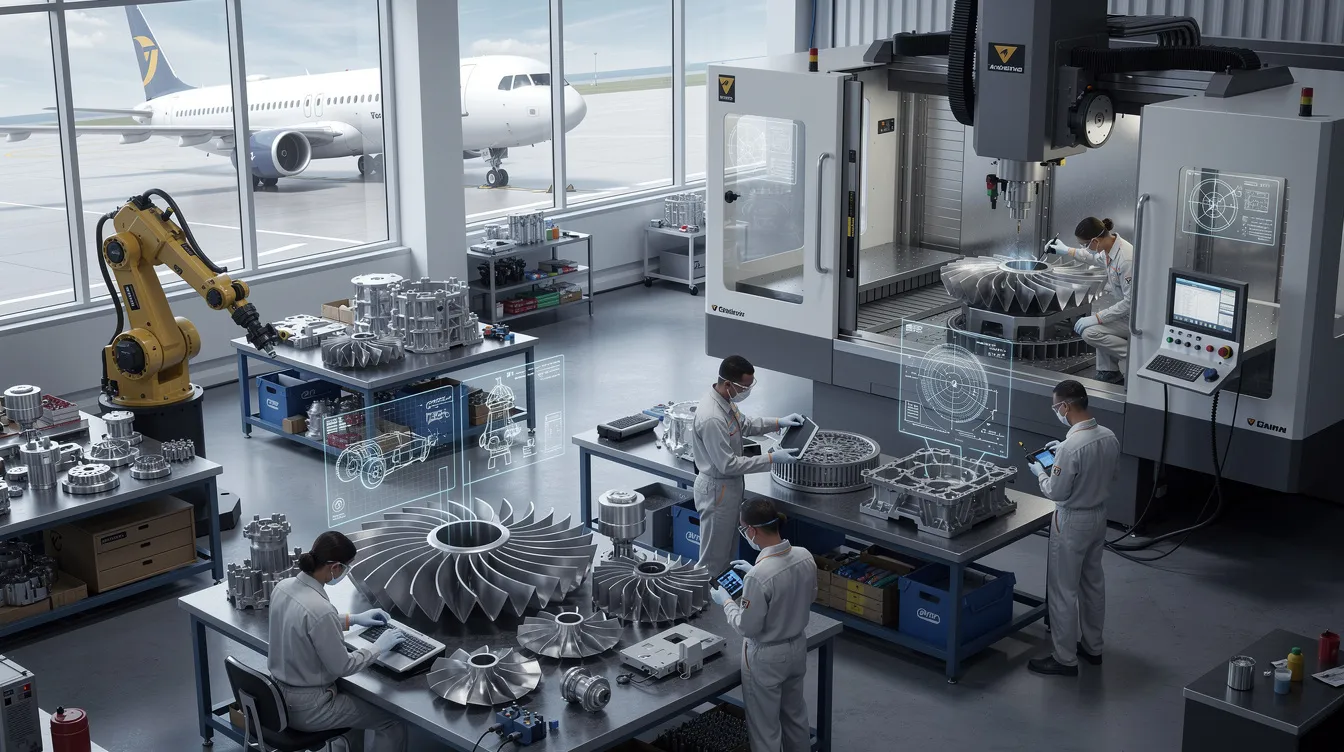
CNC Machining Services in the Aerospace Industry
Every aircraft, spacecraft, and UAV flying today depends on thousands of precision machined parts working in concert under extreme conditions. This guide covers how cnc machining services power the aerospace industry – from material selection and process choices to quality systems and cost optimization – and how Anebon Metal Products Limited supports overseas OEMs through every stage.
Fast Overview: Why Aerospace CNC Machining Matters Today
Precision cnc machining is mission-critical for modern aircraft, spacecraft, and UAV programs. These systems operate under safety, certification, and cost pressures that leave almost no room for dimensional or material deviation. Aerospace cnc machining enables tight tolerances down to microns for parts like turbine blades, landing gear assemblies, and avionics housings – ensuring high precision in aerospace components across the entire flight envelope.
Anebon Metal Products Limited, a China-based manufacturer with ISO 9001:2015 and ISO 14001:2015 certifications, supports overseas OEMs with cnc machining can produce parts with tolerances as tight as ±0.002 mm, bridging the gap from rapid prototyping to full production runs.
Programs like the Boeing 787, Airbus A350, and emerging eVTOL aircraft depend heavily on cnc milling and cnc turning of aluminum, titanium, and advanced polymers for structural elements, propulsion systems, and electrical components. CNC machining services are essential for aerospace manufacturing at every scale.
What Is CNC Machining in the Aerospace Industry?
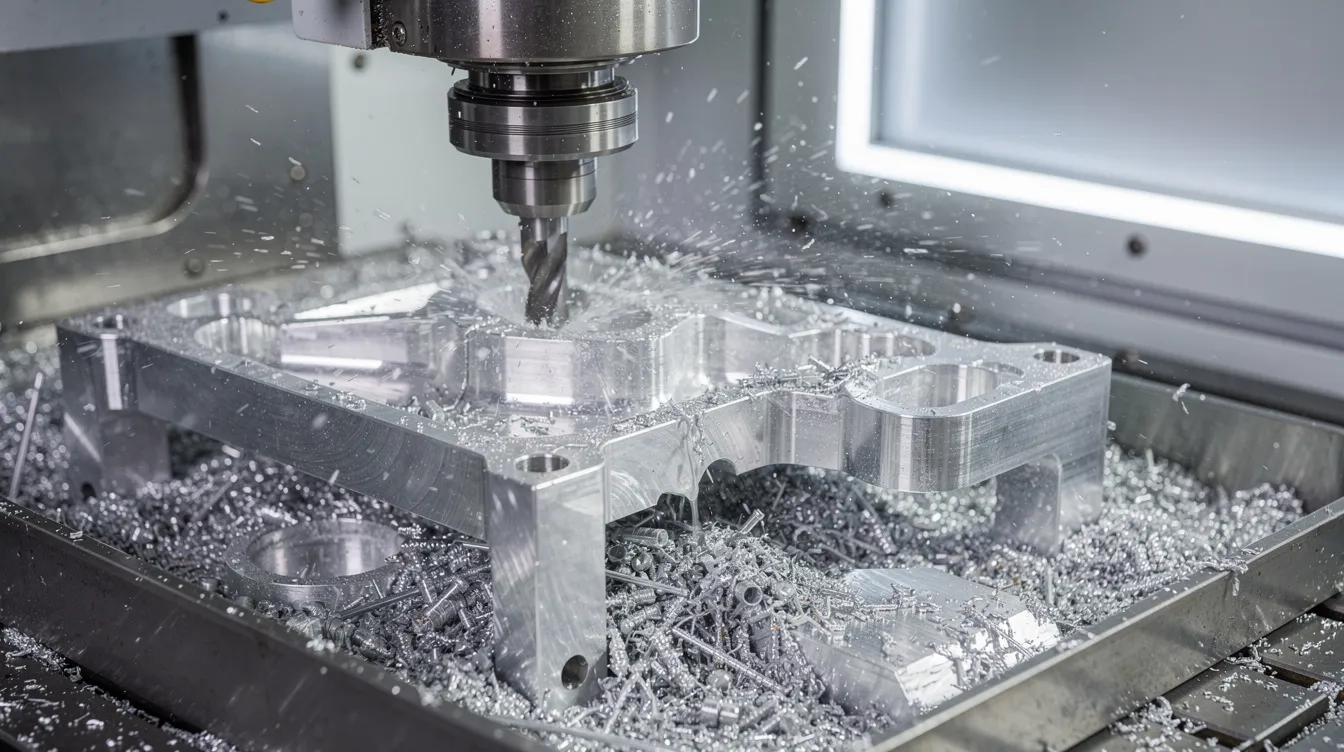
CNC (computer numerical control) machining is a manufacturing process in which computer controlled machines cut, mill, and turn aerospace components from solid material blocks. The process chain moves from CAD design through CAM toolpath programming, then multi-axis motion control using specialized cnc equipment, and finally inspection.
Aerospace cnc combines these digital workflows with advanced tooling to achieve repeatable accuracy and complex geometries that manual methods cannot match. Key cnc machining processes used in aerospace include:
-
Milling – removing material with rotating cutters (3-axis through 5-axis)
-
Turning – rotating the workpiece against a cutting tool for shafts and cylindrical parts
-
Drilling, tapping, boring – creating and finishing holes
-
Grinding and EDM – achieving ultra-fine surfaces and features in hardened materials
Benefits especially relevant to aerospace include full traceability, repeatability across production runs, and compatibility with inspection methods like CMM and laser scanning. Anebon’s typical tolerances (as precise as ±0.002 mm) exceed requirements for many structural and electrical components.
How CNC Machining Transformed Aerospace Manufacturing
In the 1960s through 1980s, most aerospace parts were manually machined or produced via forgings with looser tolerances and longer lead times. As CNC technology matured and CAD/CAM integration became standard in the 1990s and 2000s, the aerospace sector shifted toward digitally driven production.
This transformation gave aerospace designers unprecedented design freedom – thinner walls, weight-optimized ribs, and integrated features that reduce fastener counts, cut weight, and improve fuel efficiency. CNC machining reduces production cycles and increases output across new aircraft models and modification programs. Digital workflows from CAD to CAM to CNC also shorten lead times for cabin retrofits and fleet upgrades.
CNC machining must meet AS9100 aerospace quality standards, and cnc machining aerospace parts now supports rigorous NADCAP processes at the system level. This reliability enables global supply chains where parts produced in China by manufacturers like Anebon reach OEMs in Europe and North America with consistent quality.
Why Extreme Precision and Reliability Are Non-Negotiable
Safety-critical aerospace systems – landing gear, flight controls, engines – tolerate almost no dimensional or material deviation. CNC machining is critical for life-sustaining aerospace systems where micron-level errors can affect aerodynamic performance, vibration behavior, and fatigue life. Precision machining ensures parts fit together to minimize friction, prevent leaks, and avoid premature failure.
These precision demands connect directly to international regulation. FAA, EASA, and CAAC certify aircraft and parts, while standards such as DO-160 and ARP documents govern hardware design and verification. Aerospace precision machining must maintain traceability: each batch, material heat number, and process parameter is recorded for audits and investigations.
Anebon’s quality workflows – incoming material inspection, in-process checks, and final CMM measurement – are designed to support these precision and traceability needs across every production run.
Core CNC Machining Processes Used in Aerospace
Different aerospace components require different cnc machining processes for optimal cost and performance.
|
Process |
Typical Parts |
Tolerance Range |
|---|---|---|
|
3-axis cnc milling |
Brackets, seat tracks, avionics backplates |
±0.01–0.05 mm |
|
4/5-axis cnc milling |
Turbine blades, impellers, structural nodes |
±0.005 mm or better |
|
Precision cnc turning |
Shafts, pins, fasteners, hydraulic fittings |
±0.0025 mm |
|
Drilling, tapping, boring |
Hole features across all part types |
Per spec |
|
Grinding, EDM |
Sealing surfaces, hardened features |
Ra 0.2–0.8 µm |
These operations are often combined into a single manufacturing process plan to reduce repositioning errors and shorten cycle times.
5-Axis Machining for Complex Geometries
Axis cnc machining with five simultaneous axes is essential for parts with freeform surfaces and multiple critical faces that must be machined in one setup. Advanced CNC machines can produce complex geometries in fewer setups, which directly improves positional accuracy and reduces cumulative error.
Concrete aerospace examples include:
-
Turbine and compressor blades with internal cooling channels
-
Blisks (integrated blade-disk assemblies)
-
Pump housings with compound curved passages
-
Satellite brackets with undercuts on multiple faces
5 axis cnc machining reduces fixturing steps, enhances surface finish on aerodynamic surfaces, and lets machines perform multiple operations in a single clamp. Anebon uses advanced tooling and CAM strategies – including simultaneous 5-axis and high-speed machining – to shorten cycle times for complex aerospace parts.
Aerospace Structural Components Machined by CNC
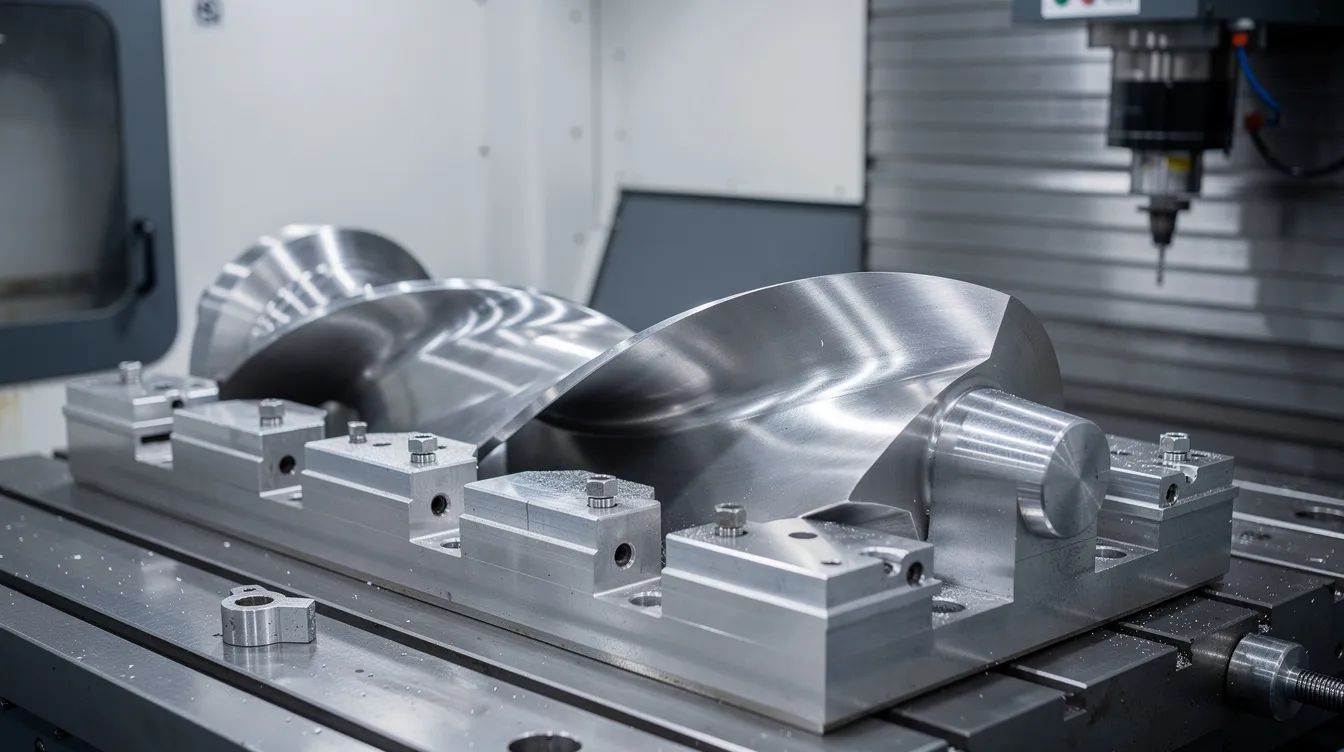
The aircraft primary structure relies on large numbers of cnc machined parts, especially in metallic airframes. CNC machining creates structural components like wing spars and fuselage frames, along with bulkheads, stringers, seat rails, and system mounting brackets.
Landing gear components – trunnions, torque links, and axle sleeves – are areas where cnc machining is used for producing landing gear components that demand fatigue resistance and precise alignment. Any misalignment can cause asymmetric loading and premature wear.
Anebon often machines several aluminum alloys including 7075-T6 and 7050-T7451 plates for structural components, and handles stainless steels for high-load fittings. For example, machining a high-strength bracket for a business jet structural assembly typically requires flatness better than 0.05 mm, dimensional tolerance of ±0.02 mm, and fatigue qualification at 10⁷ cycles.
Engine and Turbine Components
Gas turbine efficiency depends on consistent aerodynamics and tight clearances – and cnc machining plays a central role. CNC machining is vital for producing engine components, and CNC machining produces turbine blades, stator vanes, bearing housings, pump bodies, combustion chambers, and fuel system valve components.
Engine components cnc machining faces unique challenges with heat-resistant alloys. Superalloys like Inconel 718 offer exceptional mechanical strength and corrosion resistance but have low thermal conductivity and severe tool wear characteristics. These materials require specialized tooling, rigid fixturing, modest feed rates, and high-pressure coolant to produce critical engine parts reliably.
5-axis cnc milling handles the twisted airfoil profiles of compressor blades and complex geometries in impellers. While Anebon’s primary volume centers on structural and system hardware, the same process rigor applies to engine support and test-rig components where critical engine parts demand identical precision.
Avionics, Electrical, and Electronic Components
Avionics housings are manufactured using CNC machining for aircraft systems, along with instrument panels, connector backshells, heatsinks, and sensor brackets. These electrical components must meet EMC/EMI shielding requirements, thermal management specs, and tight envelope constraints inside cockpit and equipment bays.
CNC machining supports precise cutouts, threaded features, and sealing grooves for gaskets and O-rings in electrical connectors. Typical tolerances range from ±0.005 mm to ±0.01 mm for connector alignment and mounting holes, with surface finishes better than Ra 0.8 µm for gasket sealing faces.
Anebon’s experience in machining small, high-detail precision machined components for electronics and robotics transfers directly to aerospace avionics hardware.
Aerospace Interiors and Cabin Hardware
Passenger comfort and safety depend on a large number of smaller cnc machined parts inside the cabin. Interior components like cabin panels are made with CNC machining, along with seat supports, recline mechanisms, tray table arms, latches, seat tracks, curtain rails, and galley hardware.
These interior components must balance weight reduction with durability in high-use areas. Flammability and certification requirements (e.g., FAR 25.853) influence material and coating choices – aluminum alloys for structural integrity, stainless steel for high-wear mechanisms, and certified plastics for surfaces.
Anebon produces both metal and plastic interior components, supporting airlines’ refurbishment programs and VIP completions.
UAV, eVTOL, and New Aerospace Segments
The rapid growth of UAVs and eVTOL aircraft since around 2015 has shifted demand toward lightweight, high precision components in lower volumes. Typical cnc machined UAV parts include airframe nodes, motor mounts, landing gear, camera gimbals, and propeller hubs.
Startup OEMs and aerospace companies in this space often need rapid prototyping and iterative design changes – which cnc machining supports far better than hard tooling or casting. Anebon frequently works with R&D teams and early-stage aerospace manufacturers, providing small batches and design for manufacturability feedback. Advanced tooling and 5 axis cnc capabilities are particularly useful for compact, integrated structures in eVTOL airframes.
Satellite, Spacecraft, and Launch Vehicle Components
Space hardware faces extreme temperature swings, vibration at launch, and vacuum compatibility requirements. Common cnc machined satellite components include bus panels, sensor and camera housings, brackets for solar arrays, propulsion system components, and valve components for thruster assemblies.
Weight savings are critical – leading to pocketed, topology-optimized structures machined from aluminum or titanium billets. CNC machining tolerances and flatness on large panels directly affect alignment of optics and antennas. Anebon can support small satellite (CubeSat, Microsat) programs with structural frames and precision machined electrical component housings.
From Rapid Prototyping to Certified Production
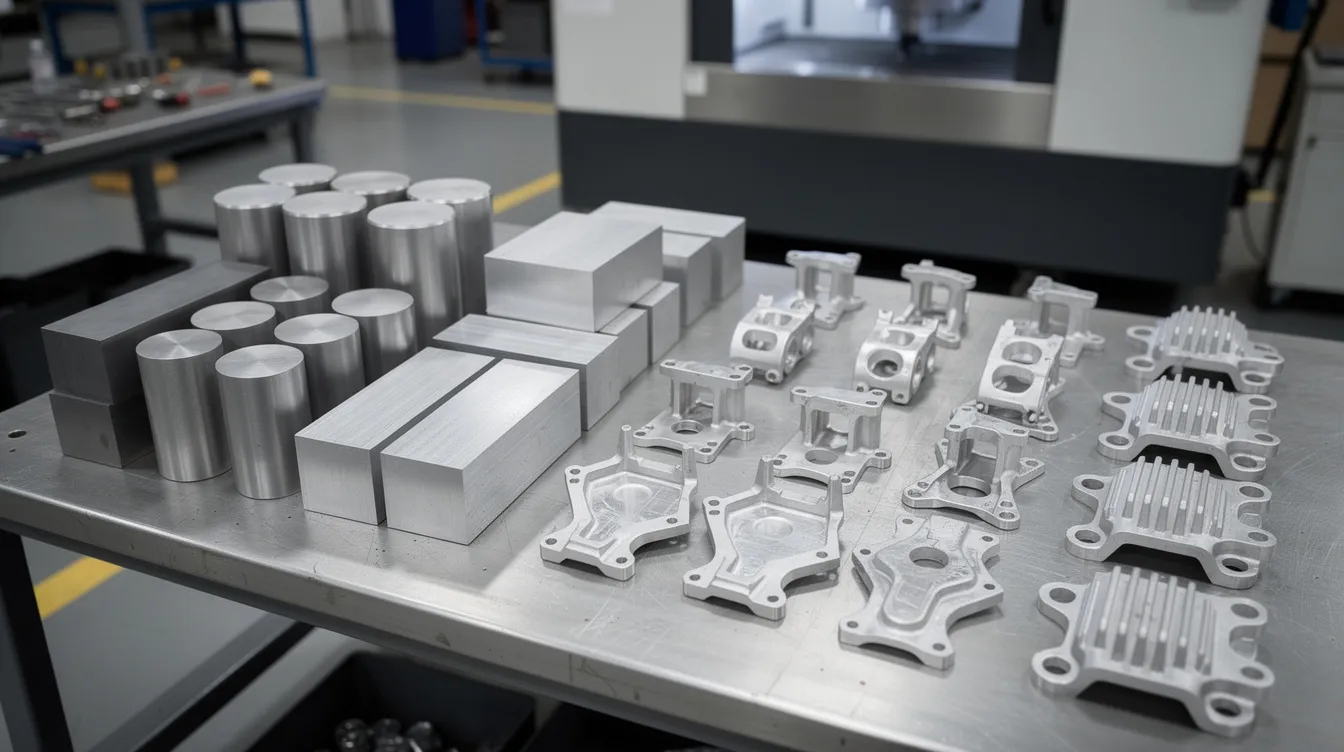
The typical aerospace product lifecycle moves from concept through prototype, qualification, and serial production. CNC technology supports rapid prototyping and scalable production in aerospace – cnc machining is used to create functional models and prototypes that closely match final parts for fit, thermal, and vibration testing.
Transitioning to production requires process validation, first article inspection (FAI per AS9102), and documentation demanded by aerospace OEMs. CNC machining integrates documentation systems for regulatory compliance in aerospace, ensuring every step from material receipt to final shipment is recorded.
Anebon maintains the same cnc machining processes from prototype to volume production, reducing re-qualification work and keeping program schedules on track.
Materials Commonly Used in Aerospace CNC Machining
Aerospace cnc machining uses a narrow but demanding palette of metals and engineered plastics. Aerospace requires strong, lightweight materials like titanium and aluminum alloys, alongside superalloys, high-performance polymers, and composites. Material choice directly affects the manufacturing process, tool wear, cycle time, and final cost.
Anebon maintains strong sourcing relationships for aerospace-grade materials with mill certificates and full traceability.
Aluminum Alloys for Airframes and Systems
Aluminum alloys are lightweight and corrosion resistant, making them the workhorse of aerospace manufacturing for structural and system parts. Popular alloys include 6061-T6, 2024-T3, 7075-T6, and 7050-T7451.
Typical applications:
-
Wing ribs from 7050 plate
-
Avionics housings from 6061
-
Interior brackets from 2024 or 7075
Common post-processes include anodizing (Type II and III), chromate conversion, and painting for corrosion protection. Anebon’s experience with high-volume aluminum cnc machining ensures consistent surface finish and flatness for overseas OEMs.
Titanium, Superalloys, and Stainless Steels
Titanium alloys such as Ti-6Al-4V withstand high temperatures and have excellent fatigue resistance, making them ideal for landing gear components, engine mounts, and high-load structural fittings. However, titanium cnc machining presents challenges: low thermal conductivity, tendency to work harden, and the need for rigid setups and specialized tooling.
Superalloys (Inconel, Hastelloy) appear in hot engine sections and space propulsion systems. Machining cost for Inconel can run 5–10× that of aluminum due to extreme tool wear and slow feed rates. Aerospace-grade stainless steels (17-4PH, 15-5PH, 440C) serve actuators, shafts, and high-strength fasteners.
Anebon uses optimized cutting parameters and coolant strategies to machine these materials reliably for aerospace customers.
High-Performance Polymers and Plastics
Polymers like PEEK, ULTEM (PEI), PPS, and PTFE serve roles in electrical insulation, bushings, and lightweight interior parts. PEEK is a high-performance polymer used in critical engine parts where metal alternatives would add unacceptable weight.
Machining considerations include thermal expansion, potential for warping, and the importance of sharp tools and controlled clamping. Flammability and outgassing standards (e.g., FAR 25.853) drive material choice for cabin and cockpit plastics.
Anebon’s dual capability in metals and plastics is useful for aerospace applications combining both materials in a single assembly.
Composites and Hybrid Structures
Carbon fiber composites are used for lightweight, high-strength aerospace parts, and advanced materials like carbon fiber composites will be increasingly used as airframers push for greater fuel efficiency. While carbon fiber reinforced polymer (CFRP) and glass fiber composites are laid up, cnc machining handles trimming, drilling, and creating precise metallic interfaces and inserts.
Hybrid parts – where cnc machined titanium alloys or aluminum fittings bond or fasten to composite structures – require careful fixturing and dust extraction during machining. Anebon provides machined metallic interfaces tailored to customers’ composite designs.
Design for Manufacturability (DFM) in Aerospace CNC Machining
Good aerospace design reduces machining time, improves reliability, and simplifies inspection. Practical DFM guidelines include:
-
Maintain consistent wall thicknesses (avoid thin walls that deform under cutting forces)
-
Avoid excessively deep pockets with high length-to-diameter ratios
-
Choose standard hole sizes and thread forms
-
Apply GD&T only where functionally necessary
-
Design contiguous critical surfaces for single-fixture machining
Anebon offers DFM consulting at the RFQ stage, helping overseas OEMs cut manufacturing costs and lead time before finalizing drawings.
Advanced Tooling, Fixturing, and Process Optimization
Aerospace machining depends on advanced tooling – coated carbide cutters, modular toolholders, and high-feed geometries – to handle demanding materials efficiently. Parts that require specialized tooling benefit from Anebon’s investment in modern CAM software and tooling partnerships.
Custom fixtures and vacuum tables hold thin-walled structural elements like ribs and panels without distortion. Process optimization through adaptive toolpaths, high-speed machining, and in-process probing helps maintain precision across long production runs. These optimizations improve not only cost but also surface integrity and fatigue life of critical aerospace components.
Quality Assurance and Traceability for Aerospace CNC
Every aerospace cnc machining job must be documented, measurable, and repeatable. Aerospace components often require minimal variation for strict quality assurance, and non-destructive testing (NDT) techniques are used for quality control alongside dimensional inspection.
Key inspection and documentation methods include:
-
CMM measurement for dimensional verification
-
Surface roughness testing for sealing and aerodynamic faces
-
Material certificates with heat numbers and mill test reports
-
Process control records covering every machining parameter
-
Serialized part marking for lifetime traceability
Anebon’s ISO 9001:2015 quality system encompasses incoming, in-process, and final inspections tailored to aerospace cnc machining. Traceability is especially important for critical structural, engine, and electrical components that must support decades-long service lives.
Surface Treatments and Finishing Processes
Aerospace components frequently require additional finishing for corrosion resistance, wear resistance, and identification. Key finishes include:
-
Anodizing (clear, colored, hard Type III)
-
Chromate conversion coating
-
Passivation of stainless steel
-
Nickel and copper plating
-
Primers and topcoat paints
CNC grinding and super-finishing deliver tight surface roughness (Ra 0.2–0.8 µm) for shafts, bearings, and sealing surfaces. Some electrical components need conductive or non-conductive coatings for EMC and insulation requirements. Anebon coordinates surface treatment processes as part of a turnkey cnc machining aerospace service.
Cost Drivers in Aerospace CNC Machining
The main cost factors in aerospace cnc machining are:
-
Material type – titanium and superalloys cost far more than aluminum and are harder to machine
-
Part complexity – deep pockets, freeform surfaces, and compound angles increase fixture and toolpath cost
-
Tolerance and surface finish – tighter specs mean slower machining, more finishing passes, and additional inspection
-
Production volume – low volumes carry higher per-part setup and programming costs
-
Surface treatments – coatings and plating add time and sometimes subcontracting
Design tweaks suggested during DFM – such as relaxing non-critical tolerances – can significantly reduce manufacturing costs. Sharing CAD models and annual volume estimates with Anebon early yields more accurate and optimized quotations.
Integrating CNC Machining with Additive and Other Processes
Aerospace manufacturing increasingly combines cnc machining with additive manufacturing processes and casting or forging. CNC machining will integrate with additive manufacturing processes as hybrid workflows mature – for example, 3D printed near-net-shape parts finish-machined on critical surfaces, or die-cast housings refined by cnc milling for precision interfaces.
Additive manufacturing integration offers reduced material waste, lighter complex parts, and shorter development cycles. Anebon also offers die casting and sheet metal fabrication, enabling customers to select the best manufacturing method per component while relying on cnc machining for critical surfaces and tolerances.
Digitalization, Automation, and the Future of Aerospace CNC
The global aerospace industry is embracing Industry 4.0 through connected manufacturing ecosystems, machine monitoring, and data-driven process control. Advanced CAM simulation and digital twins reduce the risk of collisions and scrap before cutting begins. CNC machines can operate continuously with minimal human intervention, and automation and AI – including machine learning for toolpath optimization – will enhance CNC machining efficiency and quality further.
CNC machining will support the production of more complex geometries as advanced automation, robotic loading, and pallet systems improve consistency and reduce lead times. Sustainable manufacturing practices will be prioritized in CNC machining as environmental regulations tighten. Anebon continues upgrading equipment and software to stay aligned with global aerospace supply chain expectations.
Future aircraft concepts – electric propulsion, hydrogen, eVTOL – will still rely on precision cnc machined components for structural and electrical systems. CNC machining’s ability to deliver optimal performance across evolving designs makes it indispensable for the aerospace industry’s next chapter.
How Anebon Supports Overseas Aerospace OEMs
Anebon Metal Products Limited, founded in 2010 in Dongguan, Guangdong, China, specializes in precision cnc machining, die casting, and sheet metal fabrication for B2B and OEM customers across the aerospace sector and related industries.
Key capabilities include:
-
3-axis and 5 axis cnc milling and cnc turning
-
Tolerances as tight as ±0.002 mm
-
Wide range of aerospace-grade materials (aluminum alloys, titanium alloys, stainless steels, high-performance polymers)
-
Coordinated surface treatments and finishing
-
ISO 9001:2015 and ISO 14001:2015 certifications
-
Robust export experience to North America, Europe, and Asia-Pacific
A typical collaboration might see an overseas aerospace design team sending initial STEP files for DFM review, receiving optimized prototypes within weeks, then scaling to certified production – all with Anebon maintaining the same processes and quality controls throughout the program.
When to Choose CNC Machining for Your Aerospace Project
CNC machining is the optimal choice when your project involves:
-
Low- to mid-volume production where hard tooling cost isn’t justified
-
High precision requirements that casting or forging alone can’t meet
-
Frequent design iterations during development
-
Complex parts with freeform surfaces, deep pockets, or multi-face features
Aerospace programs often start with cnc-machined prototypes and retain cnc machining for critical or lower-volume parts even after production ramp-up. Anebon can advise whether cnc machining, die casting, or sheet metal fabrication is best for each component – and lifecycle cost, not just piece price, should drive that decision.
Getting Started: Requesting an Aerospace CNC Quote from Anebon
To get an accurate quote, prepare the following:
-
3D CAD files (STEP or IGES format)
-
2D drawings with GD&T, tolerances, and surface finish callouts
-
Material specifications and any required certifications
-
Quantities (prototype and projected annual volumes)
-
Required delivery timeline
Anebon’s quoting workflow starts with a DFM review, clarification of critical features, and then delivers a preliminary lead time and cost breakdown. Expedited prototypes are available alongside standard production lead times.
Overseas customers benefit from an English-speaking engineering team, export-grade packaging, and logistics experience for fragile aerospace cnc parts.
Ready to start your aerospace CNC machining project? Contact Anebon’s team or upload your designs today to get a detailed quote and DFM feedback for your next program.