Essential CNC Machine Parts: A Guide to Understanding Their Functions
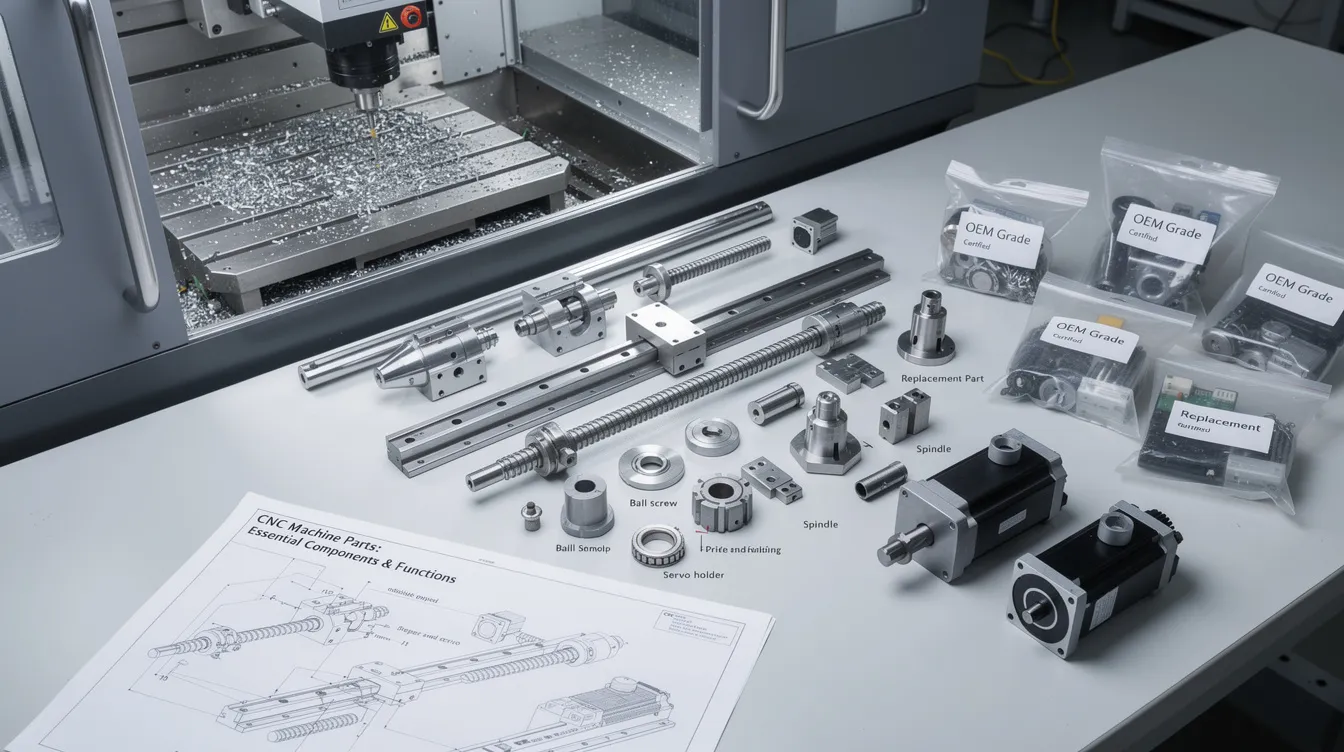
CNC Machine Parts: Essential Components, Functions & OEM-Grade Options
Every CNC machine is a coordinated system of mechanical, electrical, and software components working together to transform raw material into finished parts. Whether you’re evaluating a new machining center, troubleshooting a production issue, or sourcing custom components for an OEM project, understanding what each part does-and how it affects your output-makes the difference between guessing and making informed decisions.
This guide breaks down every major category of cnc machine parts, explains how they function together, and offers practical guidance on selection, upgrades, and maintenance for production environments.
Fast Overview: Key CNC Machine Parts & How They Work Together
This section answers a straightforward question: what are the core parts of a cnc machine? Here’s a quick-reference list of the essential components you’ll find across milling, turning, and multi-axis platforms, along with a one-line explanation of each.
-
Frame / Machine Bed – The heavy base (typically cast iron) that provides stability and support for all other components; the machine bed absorbs vibration and maintains geometric accuracy under cutting loads.
-
CNC Controller – The machine control unit that interprets g code and coordinates axis movements, spindle speed, and tool changes in real time.
-
Control Panel – The operator-facing input device with display unit, keypad, handwheel, and emergency stop for monitoring and overriding machine operations.
-
CNC Spindle – The rotating component that holds and drives cutting tools (or rotates the workpiece on a lathe); a high quality spindle directly determines surface finish and material removal rate.
-
Servo / Stepper Motors – The driving system that converts electrical signals into precise rotary motion on each axis; servo motors are closed-loop, stepper motors are open-loop.
-
Ball Screws – Convert rotary motion from motors into linear motion along machine axes, enabling precise positioning of the table or spindle head.
-
Linear Guides / Guideways – Precision tracks that ensure smooth movement and maintaining alignment of sliding components; they function through rolling elements between rails and carriages.
-
Automatic Tool Changer (ATC) – Stores and swaps multiple cutting tools automatically between operations, enabling hands free operation across complex jobs.
-
Tool Holders – The interface between spindle and tool (ER collet, BT, CAT, HSK types) affecting runout, rigidity, and vibration.
-
Coolant System – Supplies liquid or mist to the cutting zone to reduce heat, flush chips, and extend tool life.
-
Workholding (Chucks / Vises / Fixtures) – Workholding devices secure the workpiece in place during cutting operations, preventing workpiece slippage and deflection.
-
Safety Systems – Emergency stop buttons, limit switches, interlocks, and sensors that protect operators and machines.
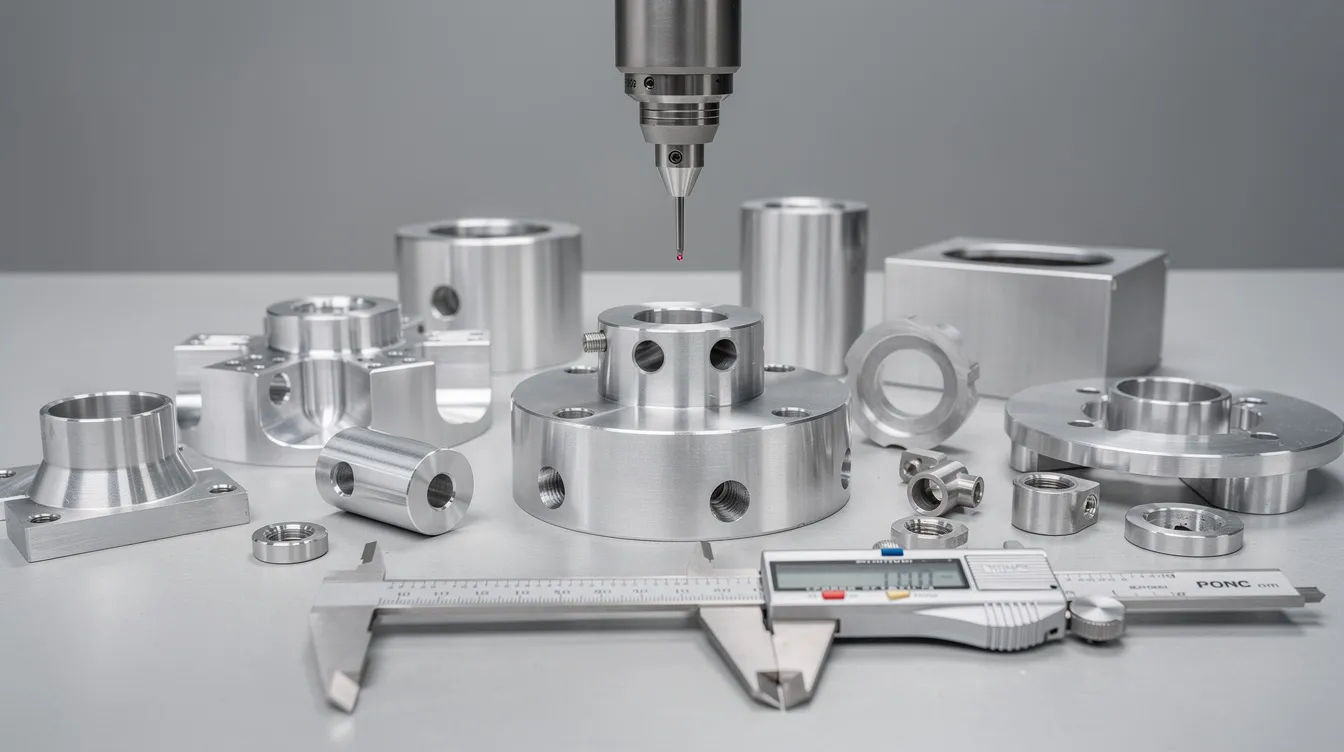
Anebon Metal Products Limited machines and validates many of these parts daily for OEM customers in aerospace, medical, automotive, and electronics sectors-using inspection equipment that supports tolerances as tight as ±0.002 mm.
What Is a CNC Machine and How Does It Work?
CNC stands for computer numerical control-a method of automating machine tool operations through digital program instructions rather than manual machining. CNC machines are automated systems designed for high precision and speed, and they form the backbone of digital manufacturing and Industry 4.0 production lines.
The basic workflow looks like this:
-
CAD Design – Engineers create part geometry in CAD software.
-
CAM Toolpath – CAM software translates geometry into toolpaths and outputs programmed instructions as g code.
-
CNC Controller Processing – The cnc controller interprets G-code for machine movements, plans motion profiles, and sends signals to motors and actuators.
-
Machining Execution – Motors drive machine axes, the spindle rotates the tool (or workpiece), coolant flows, and material is removed.
-
Finished Part – The machining process produces a part matching the original digital commands.
Two systems work in parallel during every cut. The control system (CNC controller, control panel, and feedback system) reads code and corrects errors. The machine system (bed, axes, spindle, workholding, coolant system) physically executes those movements. A closed-loop system allows for real-time error correction by comparing actual position with programmed position, which is why CNC controllers coordinate tool paths with high accuracy.
There are both open-loop and closed-loop CNC controllers. Open-loop systems are simpler and cheaper but lack position verification; closed-loop systems use encoders to confirm axis position after every move. The CNC controller is essential for automated machining operations regardless of architecture.
Common CNC machine types include:
-
CNC milling machines – Remove material using rotary cutters across 3, 4, or 5 axes
-
CNC lathes (turning centers) – Produce precise cylindrical parts by rotating the workpiece
-
5-axis machining centers – Handle complex geometries and irregular shapes in a single setup
-
CNC routers – Carve and shape materials like wood and plastics on lighter-duty gantry frames
-
Swiss lathes – Specialized for small-diameter turned parts with guide bushings
CNC machines achieve extreme dimensional accuracy, often down to ±25 microns. At Anebon, precision machining capabilities support tolerances as tight as ±0.002 mm on critical features-far beyond what manual machining can deliver consistently.
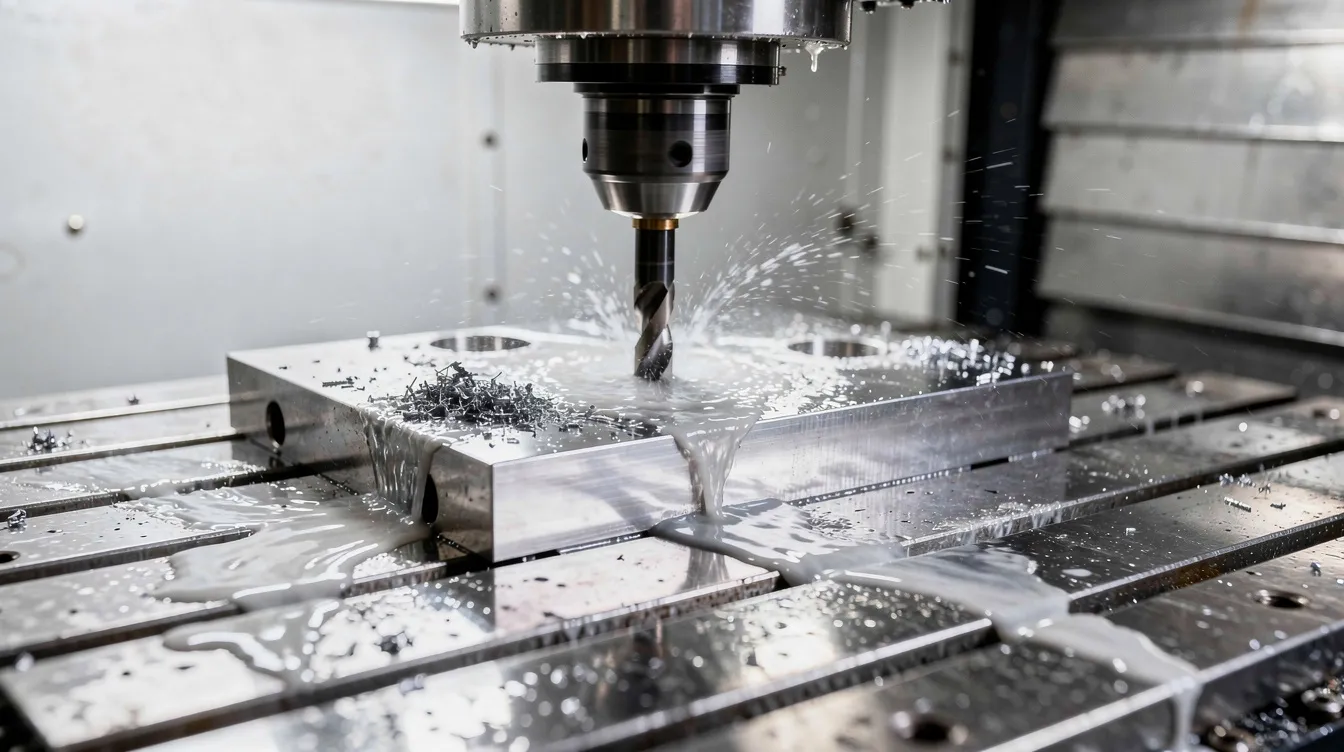
Major Structural CNC Components: Frame, Bed, Column & Worktable
The rigidity and vibration-damping capacity of structural cnc components largely determine machining accuracy and surface finish. If the structure flexes under load, every other component-no matter how precise-produces compromised results.
Frame / Machine Bed
-
The bed provides rigidity and geometric stability during machining operations, supporting the full weight of the workpiece and moving assemblies.
-
Cast iron beds have high internal damping capacity to suppress vibrations-this is why cast iron remains the dominant material for production-grade machines.
-
Granite beds offer superior thermal stability and vibration-damping performance, often used in coordinate measuring machines and ultra-precision applications.
-
Stable bed construction is critical for repeatable positioning accuracy. On a machine cutting thick 7075-T6 aluminum plates at aggressive depths of cut, a rigid cast bed resists deformation. A lighter-frame router doing the same job would flex, causing dimensional drift and chatter marks.
Column / Gantry
-
The column carries the z axis and spindle assembly. In bridge-style machines, the gantry moves over a stationary table-ideal for large-format aerospace plate work. Fixed-column machines move the table instead, which limits workpiece size but simplifies construction.
Worktable
-
T-slot tables are the most versatile for clamping variety. Vacuum tables provide uniform holding for thin sheets or composites. Fixture plates allow custom modular fixturing.
-
Table flatness is typically held within a few microns across the usable surface. During drilling operations or heavy milling, any table unevenness translates directly into part error.
Linear Rails / Guideways
-
Linear guideways provide precise linear motion for machine components and improve stability, accuracy, and repeatability in CNC machines.
-
Linear ways (recirculating ball or roller guides) deliver low friction, high speed, and clean and accurate cuts-preferred for finishing and high-speed work.
-
Box ways offer more rigidity under heavy loads and better damping for aggressive roughing, but with higher friction and slower traverse speeds.
-
High rigidity in linear guides prevents deflection during heavy cutting operations, and linear guides are critical for high-speed machining and multi-axis operations.
Motion System: Ball Screws, Servo & Stepper Motors, Encoders
These cnc components turn digital commands into exact X, Y, and z axis movements. The quality and condition of the motion system directly determines whether your machine holds spec or drifts out of tolerance.
Ball Screws
-
Ball screws convert rotational motion into linear motion along each axis, enabling the table or spindle head to move with micron-level control.
-
Ball screws reduce friction and improve positioning accuracy compared to traditional leadscrews, because recirculating steel balls carry the load rather than sliding surfaces.
-
Precision ball screws are available in rolled and ground types. Ground ball screws (e.g., ISO 3408 P3 grade, with lead error around 4 µm per lead) are chosen for high-precision machining centers where consistent cutting accuracy matters.
-
Preloading eliminates backlash by keeping the nut in constant contact with the screw, which is essential for improve accuracy in bidirectional moves.
-
Ball screws support high-speed operation and consistent accuracy, and ball screws enable smooth, reliable linear movement in CNC machines.
Research shows that under mixed sliding-rolling motion and non-constant loads, ball screw precision decays by roughly 5.9–8.5% over time-highlighting why regular monitoring and replacement scheduling matters.
Servo Motors
-
Servo motors are closed-loop drives that deliver consistent torque across a wide speed range, responsive acceleration, and precise positioning. They are the standard on premium machining centers, 5-axis machines, and any application where machine performance is critical.
-
Their torque curve remains flatter at higher RPMs compared to steppers, which allows the machine to maintain accuracy during rapid moves.
Stepper Motors
-
Stepper motors are open-loop, cost-effective drives with high torque at low speed but significant torque drop-off as RPM increases. They work well on smaller CNC routers, engravers, and entry-level machines where loads are lighter and motion profiles are simpler.
-
The trade-off: steppers risk lost steps under heavy loads or high speeds, which causes positional error without the operator knowing.
Encoders & Feedback System
-
Feedback systems include sensors that monitor the position of the cutting tool in real-time. Encoders (rotary or linear) report actual axis position back to the cnc controller for error correction.
-
A closed-loop system allows for real-time error correction by comparing actual position with programmed position. Some shops add linear encoders directly to axes, bypassing ball screw errors entirely for the highest repeatability.
Case example: In one production environment, worn ball screws caused 0.05 mm positional error on the X-axis-well outside spec. After replacing them with preloaded P3-grade ground screws and adding linear encoder feedback, positional deviation dropped below 0.010 mm, reducing scrap and improving first-pass yield by over 20%.
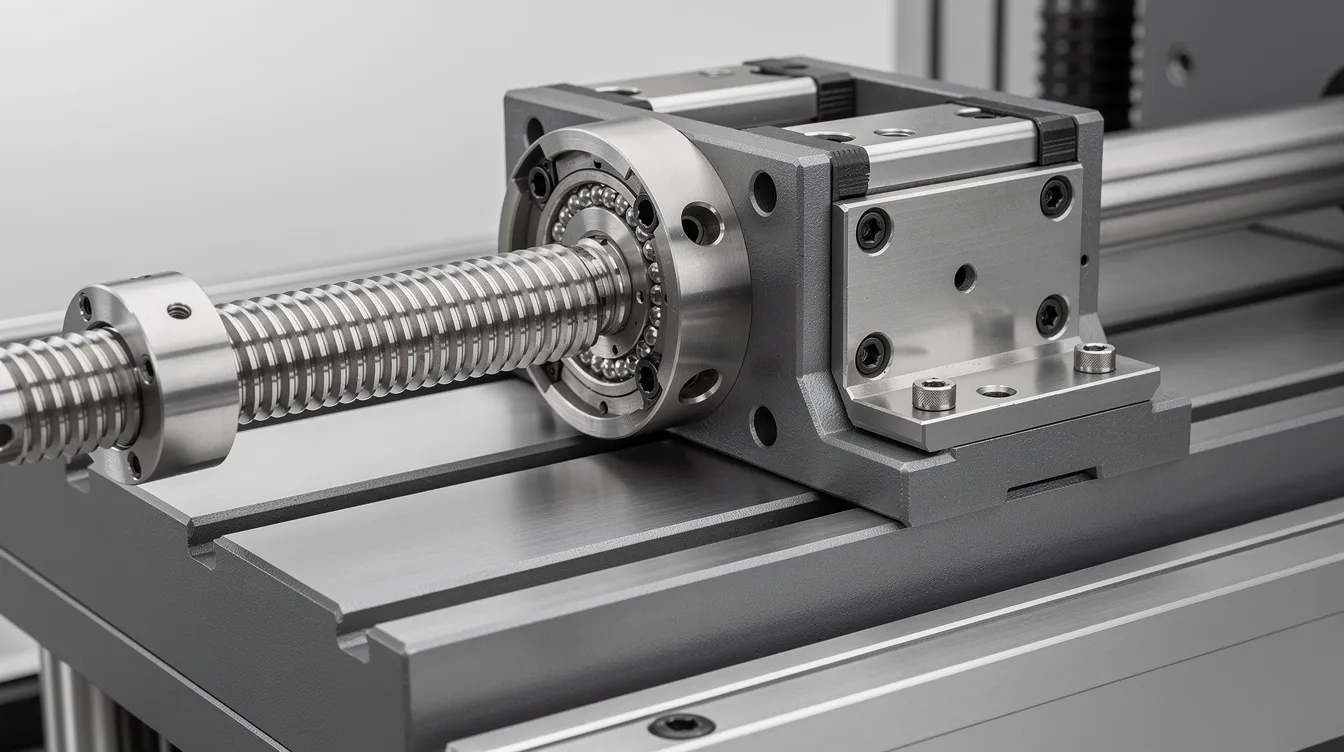
CNC Spindle, Tool Holders & Automatic Tool Changer
This group of machine parts determines cutting capability, surface finish quality, and cycle time. Get the spindle, holders, and tool changer right, and production efficiency climbs significantly.
CNC Spindle
-
The CNC spindle holds and drives cutting tools during machining. The spindle rotates the tool (or on a lathe, the workpiece) at controlled speeds to remove material.
-
CNC spindles can be belt-driven, direct-drive, or gear-driven. Belt-driven spindles are economical but introduce some vibration; direct-drive spindles offer better response and higher RPM capability.
-
The spindle speed is critical for cutting performance in CNC machining. Standard metal-cutting spindles run 6,000–12,000 RPM; high-speed units reach 18,000–30,000 RPM; ultra-high-speed spindles for composites or engraving exceed 40,000 RPM.
-
CNC spindles ensure accurate material removal and smooth surface finishes. A high-quality spindle is essential for precision machining-poor bearings or excessive runout degrade both dimensional accuracy and finish.
Tool Holders
-
Common types include ER collet chucks (versatile for smaller tools and high-speed work), BT30/BT40 and CAT40 (higher rigidity for larger cutters), and HSK (designed for high-speed applications with better thermal behavior and lower runout).
-
Collet chucks provide excellent concentricity but cover a limited diameter range. BT/CAT holders handle heavier loads. HSK shanks lock with dual-face contact for maximum rigidity.
-
Poor tool holder quality or improper clamping increases tool deflection, accelerates tool wear, and degrades surface finish.
Automatic Tool Changer (ATC)
-
An automatic tool changer swaps cutting tools automatically between operations. Different types of ATCs include carousel, chain, and rack types, with capacities from 20 to 120+ tools.
-
ATCs reduce downtime and increase CNC machining efficiency. ATCs enable seamless tool changes during machining cycles, and an ATC optimizes workflow efficiency in cnc operations.
-
The cnc controller triggers tool changes via M-codes (e.g., M6), manages tool length offsets, and verifies correct tool loading through presence sensors.
Real-world comparison: A shop producing 500 aluminum housings with a manual tool change process spent roughly 8 hours on the batch. After upgrading to a 30-tool automatic tool changer, idle time from tool swaps dropped by about 45%-the same batch now runs in under 5 hours with zero manual intervention between operations.
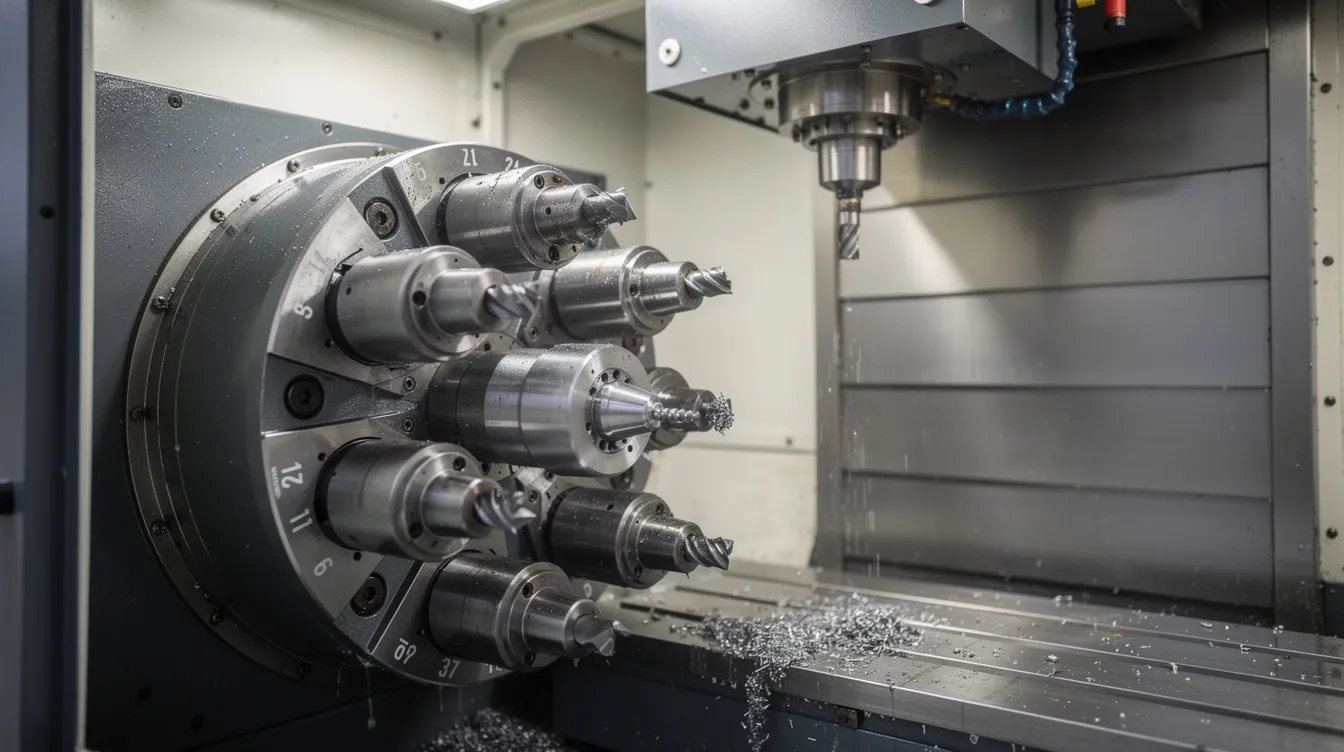
CNC Control System: CNC Controller, Control Panel & Power Electronics
The cnc controller is the brain of the machine. The control panel is the face the operator interacts with. Together, they translate code into motion and give operators visibility into what the machine is doing at every moment.
CNC Controller
-
The CNC controller interprets G-code and coordinates machine movements, performing path planning, interpolation (linear, circular, spline), acceleration/deceleration profiling, and jerk control across all axes simultaneously.
-
CNC controllers send signals to motors and actuators to execute each programmed move. The controller also manages spindle speed, coolant activation, and the automatic tool changer sequence.
-
Industrial controllers from brands like Fanuc, Siemens, Heidenhain, and Mitsubishi offer proven reliability and long-term support. Pc based controllers (such as LinuxCNC) provide flexibility and lower cost but may lack the durability and vendor support needed in 24/7 production.
Control Panel
-
The control panel includes a display unit (industrial LCD or touchscreen), physical keypad or soft keys, a manual pulse generator (MPG handwheel) for fine jogging, override potentiometers for feed rate and spindle speed, and an emergency stop button.
-
Modern HMIs offer live toolpath preview, diagnostics, and process monitoring-all of which help operators catch issues early.
Electrical Cabinet & Drives
-
The electrical cabinet houses servo drives, motor inverters, spindle drives, power supply units, and circuit breakers. Stable, clean power input is critical-voltage fluctuations or electrical noise cause positioning errors and inconsistent cutting.
-
Heat management inside the cabinet directly affects drive lifespan and reliability.
Maintenance note: Regularly back up controller parameters and programs. Inspect wiring for insulation degradation. Keep the control cabinet clean, dust-free, and well cooled. Unstable power or overheating are among the most common causes of intermittent machine errors.
Workholding & CNC Turning-Specific Parts: Chuck, Headstock & Tailstock
This section focuses on cnc turning centers and the parts that grip and support rotating workpieces. The right workholding strategy eliminates deflection, maintains concentricity, and prevents damage to precision surfaces.
Chuck
-
3-jaw chucks are self-centering and fast to load-the default for most round stock. 4-jaw chucks allow independent jaw adjustment for irregular shapes or eccentric features, trading speed for flexibility.
-
Collet chucks provide superior concentricity and grip force distribution, making them ideal for small-diameter work like medical implants or precision shafts.
-
Workholding devices secure the workpiece in place during cutting operations. Inadequate grip force or poor concentricity causes workpiece slippage, chatter, and dimensional errors.
Headstock
-
The headstock holds and rotates the spindle in lathes. Headstocks ensure accurate and controlled rotation during machining-the bearing type, preload, and cooling within the headstock directly affect surface finish and runout.
-
Headstocks come in spindle, geared, and belt-driven types. Geared headstocks deliver higher torque at low RPM for heavy cuts; belt-driven types offer smoother operation at higher speeds.
Tailstock & Quill
-
The tailstock supports the free end of a workpiece in lathes. Tailstocks reduce deflection and vibration during machining of long or slender parts.
-
For example, when turning long automotive shafts, tailstock support keeps dimensional error within ±0.01 mm. Without it, the unsupported end sags, creating taper and poor finish.
Milling Workholding
-
In milling, precision vises, modular fixture systems, and custom jigs are used. For OEM production at Anebon, custom fixtures cut setup time drastically when running repeated batches of the same part.
Tooling Systems: Tool Turrets, Tool Magazines & Probing
These cnc components enable flexible, automated machining of complex parts-allowing a single machine to perform operations that would otherwise require manual tool swaps or multiple setups.
Tool Turret
-
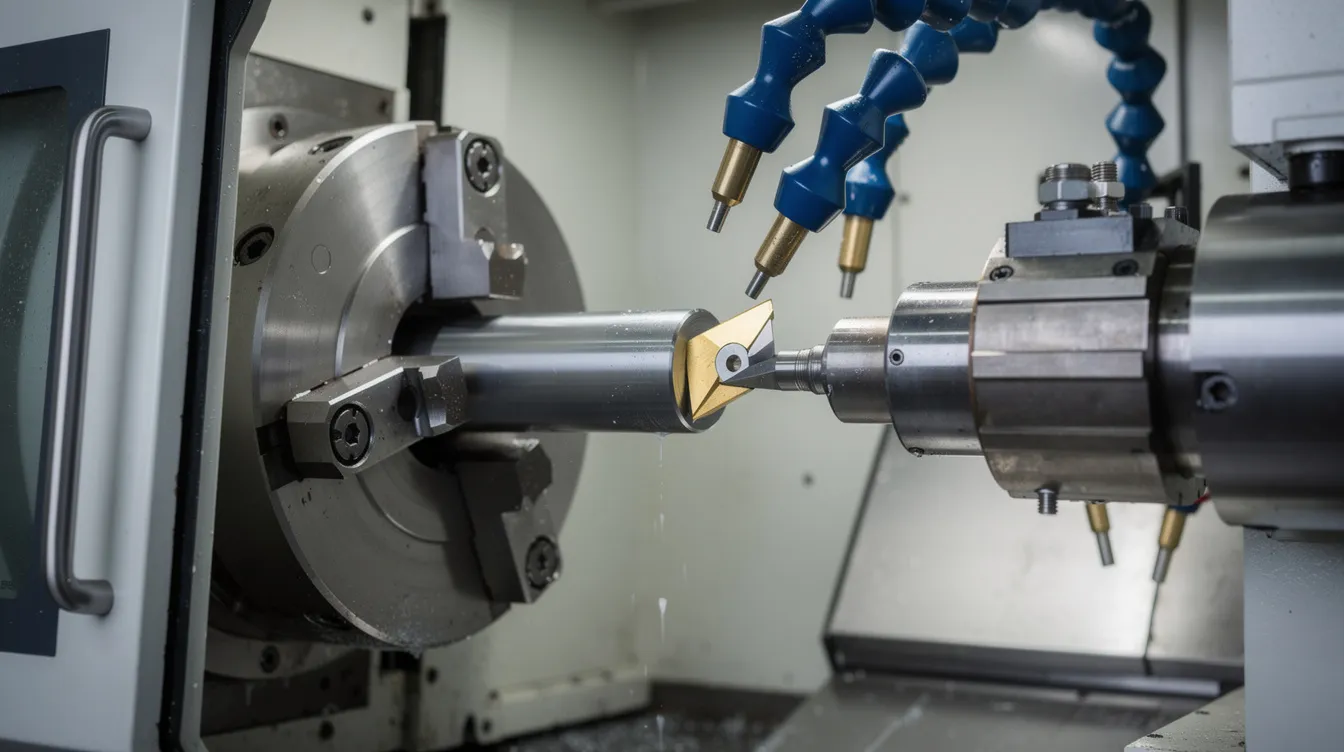
A tool turret on CNC lathes holds multiple tools (typically 8–12 stations) and indexes them into cutting position. Servo-driven turrets index faster and with higher repeatability than older hydraulic designs.
-
Live tooling in turrets adds milling, drilling, and tapping capability to turning centers, enabling mill-turn operations that handle complex jobs in one setup.
Tool Magazine
-
Tool magazines store multiple tools for machining centers-capacities range from 20 tools on compact machines to 120+ on large automotive or aerospace machines.
-
The magazine integrates with the automatic tool changer to deliver the next tool while the current operation is still finishing, minimizing idle time.
-
Effective tool management (tracking tool wear, remaining life, and offsets) reduces both scrap and tooling cost.
Probing Systems
-
Spindle probes automatically detect the workpiece surface to set work coordinate zero, eliminating manual edge-finding.
-
Tool setting probes measure tool length and diameter automatically, compensating for tool wear between changes.
-
Probing automates part zeroing and improves repeatability across batches.
Case example: A shop producing batches of 1,000 parts had setups taking 2 hours per new part number. After installing spindle probes, tool setting probes, and standardizing tool sets in the magazine, setup dropped to under 30 minutes and scrap from misaligned zero points fell by over 80%.
Coolant, Chip Management & Protection Systems
These support systems keep CNC machines reliable during continuous operation. Neglect them, and even the best spindle and ball screws won’t save your part quality or machine lifespan.
Coolant System
-
The coolant system supplies liquid or mist to reduce heat at the cutting zone. Coolant systems prevent thermal damage and extend tool life by managing the temperature at the tool-workpiece interface.
-
Different types of coolant systems include flood and mist configurations. Flood coolant is standard for most metal cutting; mist coolant reduces fluid usage; through-spindle coolant excels at deep-hole drilling and chip evacuation.
-
Coolant circulates through nozzles to flush away chips, keeping the cutting zone clear and preventing re-cutting of swarf.
-
Maintaining coolant systems is crucial for preventing overheating. Check coolant concentration weekly, monitor pH, and filter or replace coolant periodically to avoid bacterial contamination or abrasive particle buildup.
Chip Conveyor & Removal
-
In high-volume machining, automatic chip conveyors or augers remove chips continuously. Without them, chip buildup jams mechanisms, distorts thin-walled parts, and blocks coolant flow.
-
Inspect conveyor chains weekly for proper tension and replace worn links before they cause downtime.
Way Covers & Bellows
-
Way covers and bellows protect linear guideways and ball screws from chips and coolant ingress. A torn bellows allows swarf into precision surfaces, accelerating wear and degrading machining accuracy. Replace covers before ruptures occur-this is a low-cost preventive measure with high payoff.
Dust Collection
-
For CNC routers processing wood, plastics, and composites, effective dust collection is essential for part quality, spindle longevity, and operator safety. Fine dust clogs bearings and poses respiratory hazards.
Safety & Sensing: Emergency Stop, Limit Switches & Interlocks
Safety-critical cnc components protect both operators and expensive machines. These aren’t optional features-they’re requirements for any production environment, and failing to maintain them creates liability and downtime risk.
Emergency Stop (E-stop)
-
The large mushroom button instantly stops the spindle and all axis motion. E-stops must be easily reachable from every operator position-this is a baseline requirement under ISO and CE safety standards.
Limit Switches & Home Switches
-
Limit switches prevent axis overtravel (crashes). Home switches establish a repeatable reference position at startup so the machine works from a known zero each time.
-
Without functional limit switches, a programming error or jog mistake can drive an axis into a hard stop-damaging ball screws, linear guides, and the spindle.
Safety Interlock Systems
-
Door interlocks prevent the spindle from starting when enclosure doors are open. Guards block operator access to the cutting zone during machine operations.
Sensors & Monitoring
-
Modern CNC machines incorporate temperature sensors on spindle bearings, vibration sensors on axes, and spindle-load monitors.
-
These sensors enable predictive maintenance-detecting bearing wear or imbalance before catastrophic failure, reducing unplanned downtime and protecting machine lifespan.
Common CNC Machine Types and Their Critical Parts
The same families of cnc components are combined differently depending on the machine type and the application it serves. Here’s how the key components map to each platform:
CNC Milling Machine / Machining Center
-
Key parts: spindle (standard or high-speed), ATC with tool magazine, ball screws and linear guides on X/Y/Z, optional rotary table for 4th axis, coolant system.
-
CNC milling machines remove material using rotary cutters and are the workhorse of aerospace, automotive, and general OEM production.
-
These machines perform operations ranging from face milling to contouring complex geometries and irregular shapes.
CNC Turning Center
-
Key parts: headstock, chuck, tool turret (with or without live tooling), tailstock, coolant system.
-
CNC lathes produce precise cylindrical parts by rotating the workpiece against fixed or live cutting tools.
5-Axis & Mill-Turn Machines
-
Additional rotary axes (trunnion tables, swivel heads) require high-performance bearings, thermal compensation, and a CNC controller capable of simultaneous 5-axis interpolation.
-
These machines handle the most demanding complex parts-turbine blades, orthopedic implants, and optical components-in a single clamping.
CNC Routers & Light-Duty Machines
-
Typically feature gantry frames, stepper motors, high-speed air-cooled spindles, and dust collection systems.
-
CNC routers carve and shape materials like wood and plastics where speed and throughput often matter more than single-digit-micron tolerances.
Other CNC Machine Types
-
CNC EDM machines use electrical sparks to remove material from conductive workpieces-ideal for hardened steels and intricate mold cavities.
-
CNC laser cutting machines use focused light to cut materials with high precision, especially sheet metals and thin-gauge materials.
-
Waterjet machines use high-pressure water (sometimes with abrasive) to cut without heat-affected zones-useful for composites and heat-sensitive alloys.
Each of these machine types serves different OEM applications. Aerospace demands rigidity and tight tolerances. Medical devices require excellent surface finish on small, intricate parts. Electronics enclosures need thin-wall accuracy with minimal burrs.
How to Select, Upgrade & Maintain CNC Machine Parts
This section helps engineers and buyers make better decisions about cnc components-whether specifying parts for a new machine, planning upgrades, or setting maintenance schedules.
Selection Criteria
-
What machining accuracy do you need? If tolerances are ±0.002 mm, you need ground P3-grade ball screws, servo motors with encoder feedback, and a high quality spindle. For ±0.01 mm work, standard components suffice.
-
What materials are you cutting? Aluminum, titanium, stainless steel, and plastics each impose different demands on spindle speed, rigidity, coolant strategy, and tool wear rates.
-
What’s your production volume? For high-volume runs, tool change time, spindle life, and machine uptime dominate decisions. For low-volume prototyping, flexibility and fast setup matter more.
Common Upgrades
-
Adding a 4th axis rotary table or trunnion for multi-sided machining
-
Increasing tool magazine capacity (e.g., 30 to 60 tools) to cover more operations without operator loading
-
Upgrading ball screws to higher-precision ground types with preload
-
Adding through-spindle coolant for deep-hole work
-
Retrofitting linear encoders for direct axis position feedback
-
Upgrading controller firmware or hardware for better path planning
Preventive Maintenance Checklist
-
Lubricate ball screws and linear guides per OEM schedule (check lubrication system reservoirs weekly)
-
Align machine annually-verify squareness, level, and axis perpendicularity
-
Replace way covers and bellows before failure
-
Monitor spindle bearing condition via vibration analysis and temperature trending
-
Verify backlash and repeatability using test artifacts or ball bar tests
-
Inspect drag chain cables and hoses for wear-a damaged drag chain causes intermittent electrical faults
Case example: One OEM upgraded an older machining center’s motion components-installing linear encoders, higher-precision ball screws, and upgrading from open-loop to closed-loop servo drives. Result: cycle time dropped 15%, scrap rate dropped 30%, and repeatability improved from ±0.03 mm to ±0.01 mm on critical features. Properly maintained, high-quality CNC machines last 15–30 years and 60,000–100,000+ spindle hours.
Anebon Metal Products Limited: OEM CNC Machining Partner for Precision Parts
Anebon Metal Products Limited is a B2B CNC machining, die casting, and sheet metal fabrication partner founded in 2010, based in Dongguan, Guangdong, China. The company serves overseas OEMs that need high quality cuts, consistent quality, and responsive communication.
Capabilities:
-
3-axis, 4-axis, and 5-axis CNC machining; CNC milling; cnc turning; rapid prototyping through mass production
-
Tolerances as tight as ±0.002 mm on critical features
-
Materials: aluminum alloys, stainless steel, titanium, plastics, and die-cast metals
-
Advanced Japanese CNC equipment with surface/internal grinders, wire EDM, and sink EDM
Certifications & Quality:
-
ISO 9001:2015 (quality management) and ISO 14001:2015 (environmental management)
-
Inspection with CMM, roughness testers, hardness testers, and full material certification
-
DFM feedback provided before production starts
Typical OEM Applications:
-
Aerospace brackets, medical device housings, automotive drivetrain components, electronics enclosures, robotics and industrial machinery parts
If you have drawings or CAD files for a new project, request a quote from Anebon to get DFM feedback, material recommendations, and fast pricing on custom CNC machined parts-from single prototypes to full production runs.
FAQ: CNC Machine Parts & CNC Machining
What are the most important CNC machine parts? The key components are the machine bed, CNC spindle, cnc controller, ball screws, linear guides, servo or stepper motors, automatic tool changer, workholding (chuck or vise), and coolant system. These critical components work together to determine machining accuracy, production efficiency, and part quality.
How often should ball screws be serviced? Lubricate ball screws according to the OEM’s schedule-typically every 500–1,000 operating hours or monthly, whichever comes first. Check for backlash quarterly using a dial indicator or ball bar test. Replace ball screws when positional error exceeds your tolerance requirements.
What is the difference between a CNC controller and a PLC? A cnc controller handles motion interpolation, g code interpretation, and real-time axis coordination for the machining process. A PLC (Programmable Logic Controller) manages discrete logic tasks like coolant on/off, conveyor control, and safety interlocks. Many CNC machines use both-the CNC controller for motion, and an embedded PLC for auxiliary functions.
When do you need an automatic tool changer? Any time your job requires multiple tools and you’re running more than a handful of parts. If you’re performing operations with multiple cutting tools-roughing, finishing, drilling, tapping-a tool changer eliminates manual intervention, cuts cycle time, and makes the machine work without operator presence during cutting.
What is the typical lifespan of a CNC spindle in production use? A well-maintained CNC spindle in a production environment typically lasts 10,000–20,000 operating hours before bearings need replacement. Factors include load severity, spindle speed range used, coolant quality, and whether through-spindle coolant is employed. Vibration monitoring and temperature trending help predict when a rebuild is needed.
What’s the difference between servo motors and stepper motors for CNC? Servo motors use closed-loop feedback for precise positioning at high speeds-preferred for production-grade machines. Stepper motors are open-loop and cost less but drop torque at higher RPMs and can lose steps under heavy loads. For cnc machine work requiring tight tolerances and consistent cutting at speed, servo motors are the standard choice.
How does Anebon help overseas OEMs choose materials and machining processes? Anebon provides DFM (Design for Manufacturability) feedback early in the quoting process. Based on your part geometry, tolerances, volume, and application, Anebon’s engineering team recommends whether CNC machining, die casting, or sheet metal fabrication is the best fit-and which material (aluminum, stainless steel, titanium, or plastic) balances performance, cost, and lead time for your specific requirements.