Discover the Best Small Batch CNC Machining Services for Your Projects
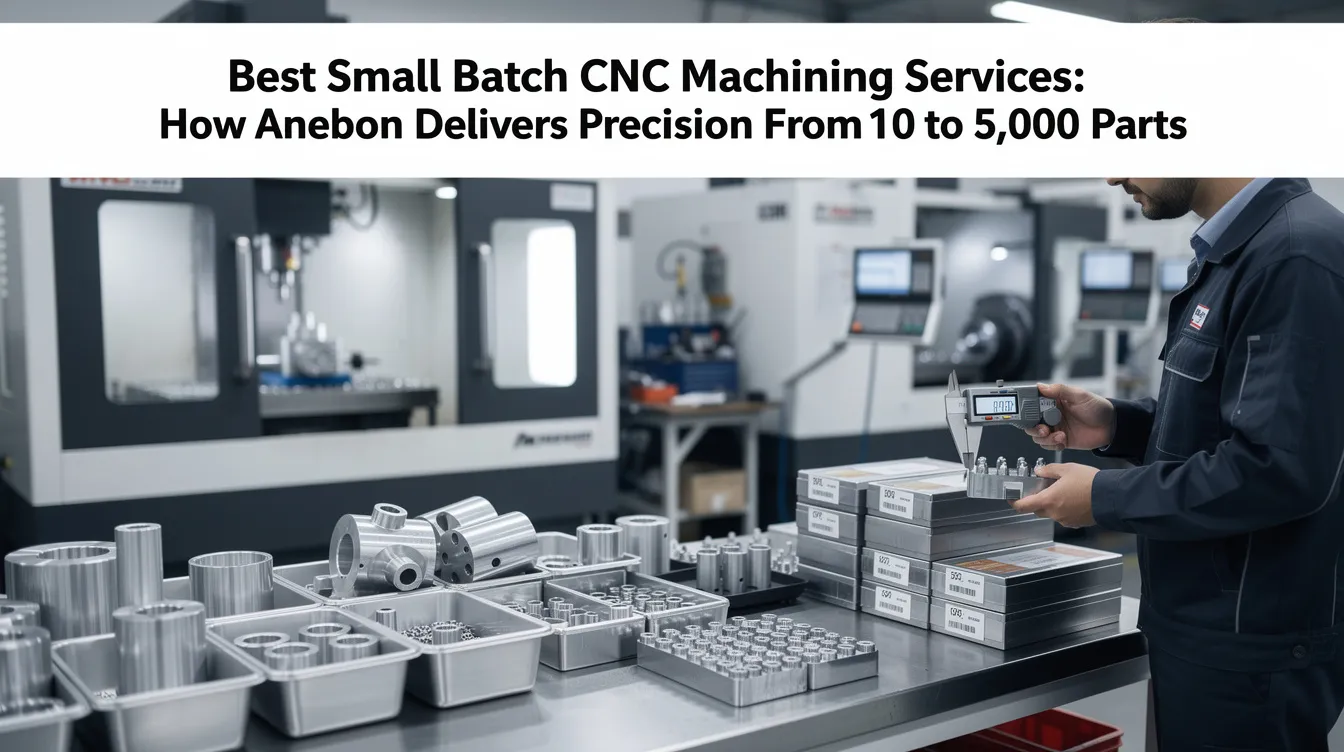
Best Small Batch CNC Machining Services: How Anebon Delivers Precision From 10 to 5,000 Parts
Introduction: Why Small Batch CNC Machining Matters in 2024–2026
If you’re developing a new product in 2024–2026, chances are you don’t need 50,000 parts right away. You need 50, 200, maybe 1,000-enough to validate your design, pass regulatory testing, or ship to early customers. That’s where the best small batch CNC machining services become critical. Small batch, commonly defined as roughly 10 to 5,000 pieces, lets OEMs and R&D teams move fast without committing to expensive tooling or carrying excess inventory.
Anebon Metal Products Limited is a China-based precision machining partner founded in 2010, holding both ISO 9001:2015 and ISO 14001:2015 certifications. ISO 9001 certification indicates commitment to high-quality production standards, and it’s one of the first things experienced buyers look for. From our facility in Dongguan, Guangdong, we serve overseas OEMs across aerospace, medical devices, automotive, electronics, and robotics industries with cnc milling (3/4/5-axis), cnc turning, die casting, and sheet metal fabrication.
The core appeal of small batch cnc machining is straightforward: fast design iteration, no mold or die investment, reduced inventory risk, and full production-grade precision on custom parts. Whether you’re running a pilot build for a drone bracket or validating a surgical instrument housing, small batch CNC bridges the gap between rapid prototyping and high volume production-delivering quality cnc machined parts on timelines that match today’s compressed product cycles.
What Is Small Batch CNC Machining? Clear Definition and Scope
Small batch CNC machining is a subtractive manufacturing process that produces parts in quantities from roughly 10 to 5,000 pieces, using computer numerical control to drive mills, lathes, and multi-axis machining centers. It bridges prototyping and mass production effectively, giving teams real production parts without the tooling commitments of injection molding or die casting.
Small batch CNC machining typically produces 10 to 1000 parts per run, though many suppliers-including Anebon-handle orders up to 5,000 pieces under this umbrella. Typical use cases include:
-
Design validation lots (20–200 pcs): testing fit, function, and assembly before committing to production tooling. Small batch CNC machining is ideal for R&D validation.
-
Pilot runs (200–1,000 pcs): supplying early customers or running field trials.
-
Aftermarket and spare parts (50–300 pcs): keeping legacy products supported without mass-production tooling.
-
Customized variants: producing multiple configurations from the same base design.
CNC machining is ideal for rapid prototyping of custom parts, and the same machine tools, tight tolerances, and machining processes used for mass production apply here-just planned for agility and frequent design changes. Consider a concrete example: a European robotics startup ordering 100-piece aluminum 6061 drone brackets in 2025. With CNC, they get production-grade material properties and ±0.02 mm tolerances without waiting weeks for mold fabrication.
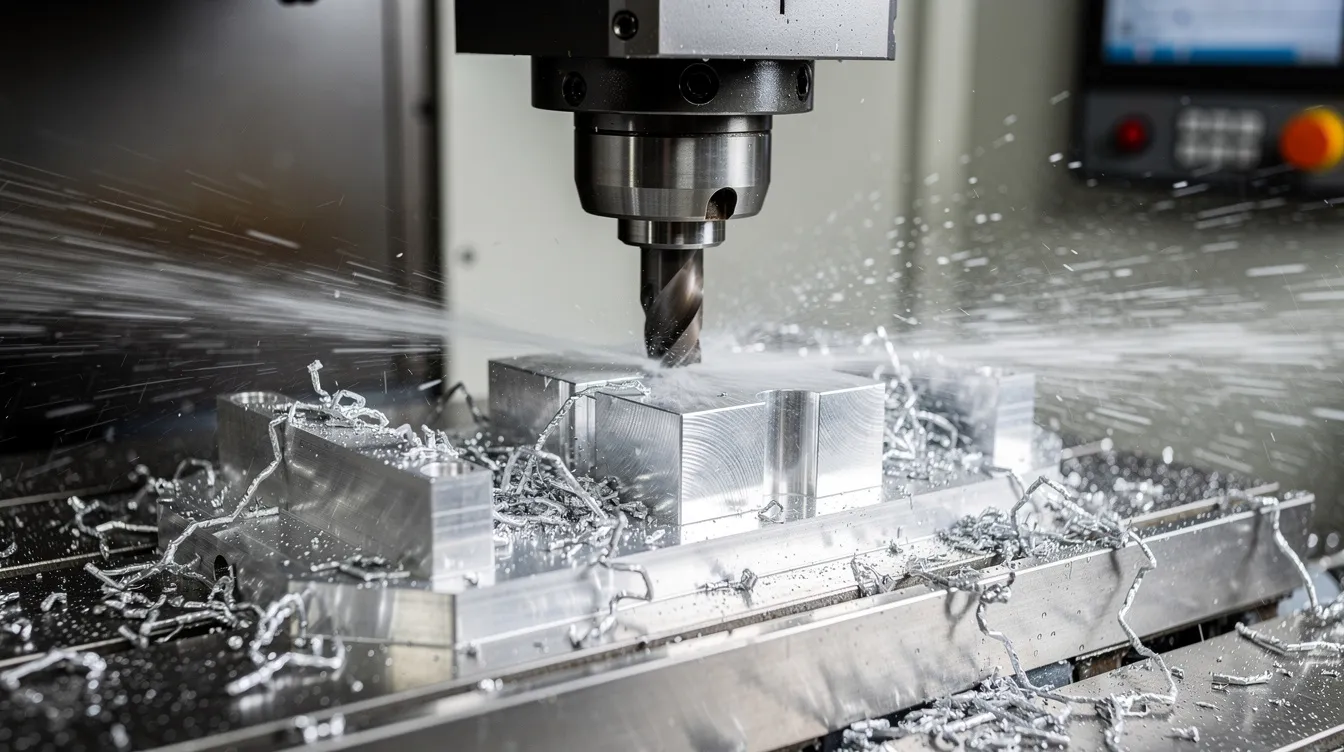
Small Batch CNC Machining Workflow at Anebon: From RFQ to Delivery
A structured workflow is what separates a reliable small batch CNC machining partner from a shop that just has machines. Anebon’s end-to-end process covers seven stages: RFQ and DFM review, process planning, CAM programming, trial cuts, production machining, inspection, and packing with shipping. Immediate quoting capabilities are important for small-batch CNC machining, and our typical RFQ response time is within 24 hours when clients supply complete CAD and technical data packages.
We support online cnc machining workflows-file uploads, digital approvals, and remote inspections-so overseas OEM clients can manage projects without visiting Dongguan.
Quotation, DFM Analysis & Material Selection
Every project starts with clear inputs: 2D technical drawings, 3D CAD files (STEP, IGES, or Parasolid), material specifications, finish requirements, tolerance callouts, and batch size. Missing any of these slows down accurate pricing.
Within 24–48 hours of receiving complete data, Anebon’s engineering team delivers DFM (Design for Manufacturability) feedback. This analysis flags issues like thin walls prone to vibration, deep cavities requiring specialized tool access, and features that force unnecessary setups for cnc milling and turning operations. Design for manufacturability support can decrease machining time and costs-practical DFM changes routinely cut cnc machining service cost by 15–30% for small batch orders.
Material guidance is part of this stage. Common recommendations include:
-
Aluminum alloys (6061-T6, 7075-T6) for lightweight, easy-to-machine enclosures
-
Stainless steel (304, 316, 17-4PH) when corrosion resistance or strength is required
-
Alloy steel (4140, 4340) for high-strength drivetrain components
-
Engineering plastics (POM, nylon, PEEK) for insulation or low friction applications
Material choice directly affects cost and lead time-titanium machining, for example, takes roughly 58% longer than aluminum.
Process Planning for Small Batch Efficiency
Anebon’s process engineers select machines-3-axis or 5-axis mills, cnc lathes, or mill-turn centers-based on part geometry, tolerance requirements, and batch quantity. CNC machining requires specialized equipment like 3-axis and 5-axis machines, and matching the right machine to the job is where efficiency gains start.
The key tradeoff in small batch work is setup time versus cycle time. For a 50-piece batch, a slightly longer cycle time per part may be acceptable if it eliminates a second fixture setup. For 300 pieces, investing in a dedicated fixture pays for itself quickly. As a practical example: switching from three separate 3-axis setups to a single 5-axis fixture for 300 aerospace aluminum parts saved approximately 30% overall machining time at Anebon, because the machine held all critical features in one clamping.
Combining operations matters too. For shafts with flats and cross holes, a mill-turn approach eliminates re-clamping, reducing both variation and cycle time.
CAM Programming & Toolpath Optimization
Modern CAM software generates optimized toolpaths for cnc milling and cnc turning, with full simulation to avoid collisions and gouging before any metal is cut. This is where the cnc machining process translates from engineering intent to physical reality.
For harder metal materials like alloy steel and stainless steel, Anebon uses High-Efficiency Milling (HEM) and adaptive roughing strategies. These approaches maintain consistent tool engagement, prolonging tool life and reducing cycle time by up to 30% compared to conventional roughing.
Functional faces-sealing surfaces, bearing seats, mating interfaces-get dedicated finishing toolpaths. The relationship between toolpath strategy and surface finish is direct: the right approach achieves Ra values below 0.8 µm without secondary grinding. Anebon’s tolerance capability reaches down to ±0.005 mm on critical dimensions with appropriate fixturing and inspection plans.
Trial Cuts, First Article & Customer Approval
Before running a full batch, Anebon produces 1–3 trial parts or a formal First Article Inspection (FAI) piece. Engagement in quality assurance processes ensures consistent product quality, and the FAI step is where potential issues get caught cheaply.
Key dimensions, surface finish, and functional features are measured using CMM and optical measurement equipment. For overseas customers, approval can happen remotely through photos, detailed measurement reports, or live video calls from the shop floor.
A practical example: during a 2024 medical device housing batch, the first article revealed that a chamfer needed to be increased for proper O-ring seating. The change was implemented same-day, and the full batch proceeded without delays. This kind of responsiveness is what separates serious precision machining suppliers from order-takers.
Production Machining, Inspection & Packing
Once the first article is approved, the full small batch runs with in-process checks and final inspection per agreed sampling plans (e.g., ISO 2859-1). In-machine probing handles offset adjustments between parts, and SPC monitors tighter tolerance applications across the batch.
Packaging follows export standards: VCI bags for corrosion protection, foam inserts for delicate surfaces, and custom labels or barcodes when requested by OEMs. Typical lead times:
-
Simple aluminum parts (50–500 pcs): 5–10 working days
-
Complex multi-axis or hardened alloy steel parts: 10–15 working days
Anebon arranges international logistics from Dongguan to North America, Europe, and Asia-Pacific via air freight, express courier, or consolidated sea/air shipments.
Core CNC Processes for Small Batch Production
Choosing the right process mix-milling, turning, EDM, grinding-is crucial for cost-effective small batch cnc machined parts. Each process has a sweet spot, and understanding when to apply each one helps engineers design features that are efficient to produce.
CNC Milling (3, 4, and 5-Axis)
CNC machines can operate on 3-axis, 4-axis, and 5-axis systems, each suited to different part geometries:
-
3-axis milling handles prismatic parts, slots, pockets, and basic contours. It’s the workhorse for many aluminum and plastic enclosures.
-
4-axis milling adds rotational capability, enabling features around a cylinder or on multiple faces in one setup.
-
5-axis milling tackles complex geometries like turbine-style impellers, medical implants, aerospace brackets, and even profiles found on components as intricate as helicopter rotor blades.
On small batch runs, fewer setups directly translate to better precision and lower cost. Consider a 2025 project: 200 pieces of 5-axis machined titanium components for a robotics joint, where the complex geometry required simultaneous tool positioning that would have needed four separate 3-axis setups. Anebon’s CNC milling capability handled it in one.
CNC Turning and Mill-Turn for Shafts and Housings
CNC turning excels for round production parts-shafts, bushings, pistons, threaded adapters-where rotational symmetry dominates. Anebon’s CNC turning service handles diameters from a few millimeters up to several hundred millimeters, with standard tolerances on diameters and concentricity that satisfy most industrial applications.
Mill-turn capability adds flats, keyways, and cross holes without secondary setups. For a 500-piece small batch of alloy steel 4140 drive shafts with splines and cross holes destined for industrial machinery, CNC turning and milling combined operations reduced total cycle time and improved feature-to-feature concentricity compared to moving parts between machines.
EDM and Precision Hole-Making
Wire edm and sinker EDM are recommended when standard cnc tools can’t reach-hardened steel alloy features, deep narrow slots, and sharp internal corners that would otherwise require impossibly small milling cutters.
Common small batch applications include injection molding insert details, connector mold cavities, and high precision tooling features. EDM is often combined with cnc milling to finish complex parts cost-effectively at low quantities. Design implications to remember: specify minimum corner radii (EDM can achieve much smaller radii than milling), and maintain adequate wall thickness around EDM features to prevent distortion.
Small-batch hole-making processes-drilling, reaming, and boring-achieve tight tolerances down to ±0.01 mm on diameter and surface finishes suitable for press fits and bearing seats.
Grinding, Deburring & Surface Finishing Steps
Surface grinding and cylindrical grinding improve flatness, parallelism, and dimensional control on critical faces or shafts that need to meet drawing specifications beyond what milling or turning alone can achieve.
Standard deburring removes sharp edges and burrs, especially important on small or delicate cnc parts destined for assembly. Common finishes in small batch work at Anebon include:
-
Anodizing (Type II/III) for aluminum-corrosion resistant and available in multiple colors
-
Bead blasting for uniform matte texture
-
Black oxide for mild steel and alloy steel
-
Nickel/chrome plating for wear and corrosion resistance
-
Powder coating for durable, thick protective layers
Finish selection directly affects appearance, corrosion resistance, and wear life. For example, 150-piece anodized aluminum control panels for electronics with silk-screened legends required tight flatness to ensure uniform coating thickness and legible marking.
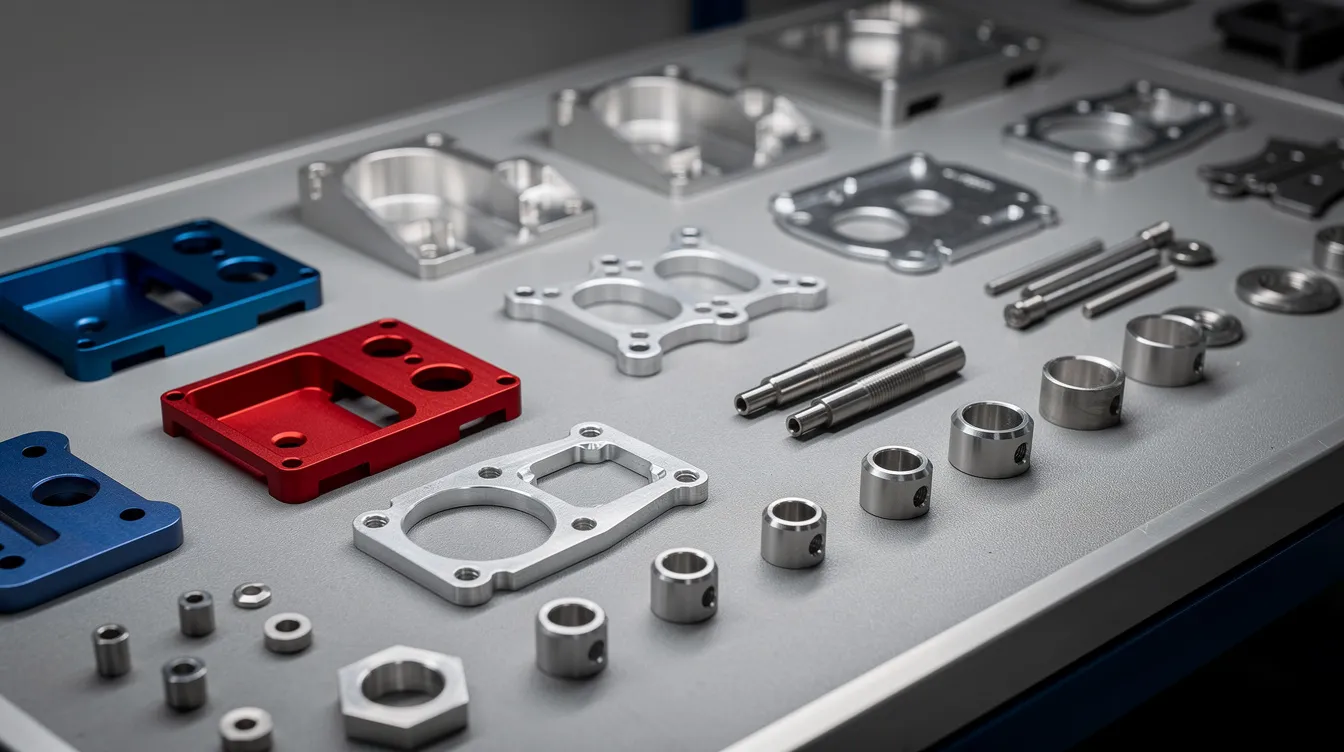
Materials for Small Batch CNC Machining: Metals & Plastics
Material choice matters more in small batch work than in long production runs. With limited quantities, there’s less opportunity to “learn” how a material behaves mid-run. Selecting the right material upfront-balancing machinability, performance, and cost-avoids expensive surprises.
Common Metals: Aluminum, Stainless Steel, and Alloy Steel
Aluminum alloys are the most frequently machined materials for small batch cnc milling. Aluminum alloys like 6061-T651 are commonly used in CNC machining for their excellent machinability, good strength-to-weight ratio, and anodizing response. Other grades include 7075-T6 (higher strength for aerospace), 6082 (structural applications), and 2024 (fatigue resistance).
Stainless steel offers excellent machinability and uniformity across grades. Choose 303 for general-purpose machining, 304 for good corrosion resistance, 316L for marine or medical environments, and 17-4PH when high strength with chemical resistance is needed.
Alloy steel (4140, 4340) and tool steels (D2, H13) serve high-strength, high-wear applications like gears, fixtures, and molds. Expect slower machining rates, possible heat treatment requirements, and longer lead times. Design tip: avoid overly deep pockets in tough steels, use generous radii, and specify tight tolerances only where functionally necessary.
Non-Ferrous Metals and Specialty Alloys
Brass and copper are excellent for electrical components, hydraulic fittings, and decorative hardware. Copper is highly ductile and electrically conductive, making it ideal for bus bars and connectors. Both machine quickly with excellent surface finish.
Titanium (Ti-6Al-4V) is known for its excellent strength-to-weight ratio and finds use in medical, aerospace, and high-end consumer products. Titanium alloys cost more to machine-roughly 58% longer cycle times than aluminum-so thoughtful design (generous radii, moderate tolerances where possible) keeps costs manageable.
For demanding environments at high temperatures, Anebon also machines nickel superalloys like Inconel for specific small batch cnc machining applications. An example: 80-piece batch of titanium medical fasteners with tight thread tolerances and passivation requirements delivered in 2024, where the extra cost of the alloy was justified by biocompatibility and regulatory requirements.
Engineering Plastics for Small Batch CNC Machined Parts
Plastics support rapid design iterations, weight reduction, and electrical insulation. Key options include:
-
ABS: good mechanical properties, easy to machine, suitable for enclosures
-
Nylon (PA6/PA66): nylon has high tensile strength and low friction properties, ideal for wear components
-
POM/Delrin: dimensional stability, excellent for gears and sliding parts
-
PTFE: chemical resistance and heat resistance for sealing applications
-
PEEK: high-performance, suitable for high temperatures and medical use
-
PC/PMMA: transparency for optical covers and light guides
-
FR-4 / epoxy resin: electrical insulation for circuit board fixtures
-
PVC polyvinyl chloride: cost-effective for chemical-handling components
Challenges with plastics include thermal expansion, potential warpage on long thin parts, and the need for looser non-critical tolerances compared to metals. Composite materials may also be CNC machined for specialized jig and fixture applications.
Custom-Sourced and Customer-Specified Materials
Anebon sources material per custom specifications, including specific alloy designations, tempers, and certifications under EN, ASTM, or GB standards. For aerospace, automotive, and medical customers, we provide full material traceability with mill certificates. Providing material test reports can validate material specifications in manufacturing, and these documents travel with every shipment.
Custom materials can affect minimum order quantities and lead times-spring steel or hardened steel in non-standard sizes may require several weeks of procurement. Early discussion of special materials optimizes both design and cost.
Advantages of Small Batch CNC Machining vs. Other Processes
When OEMs evaluate how to produce 10 to 2,000 pieces, they’re typically weighing cnc machining against injection molding, die casting, and additive manufacturing. Each has its place. Here’s where small batch CNC wins-and where it doesn’t.
Speed to Market and Development Agility
Eliminating hard tooling (molds, dies) trims weeks or months from project timelines. The comparison is stark: CAD freeze to first 100 cnc machined parts in 7–10 days via CNC, versus 6–10 weeks for tooling plus samples via injection molding. Rapid prototyping can produce parts in as fast as 1 day for simple geometries, and small batch CNC machining reduces lead time by 40–60% compared to tooled processes.
It allows for quick design iteration and customization-when your design changes between batches, you update the CNC program, not a steel mold. Rapid prototyping allows for quick design validation and testing, and rapid prototyping helps reduce design rework by around 30% by catching issues early.
Precision, Repeatability and Surface Quality
Tight tolerances can be as precise as ±0.002 mm in CNC machining under favorable conditions. CNC machining can achieve tolerances as tight as ±0.001 inches on critical dimensions. Cutting from a solid block of bar or plate preserves material properties better than many additive manufacturing processes, where layer adhesion and porosity can compromise strength.
Anebon’s ISO 9001:2015 quality system and in-house metrology support repeatable precision manufacturing. Repeat orders of 300–500 pieces over multiple years consistently show stable measurement data with no requalification needed.
Lower Upfront Risk and Inventory Flexibility
No large tooling investment means you order exactly the quantity required for current demand or testing. Small batch cnc machined parts can be produced on a rolling basis and adjusted per field feedback or evolving standards-critical when designs change between regulatory updates.
Example: an automotive electronics client ordered 200-piece batches per quarter while software and connectors were still evolving, avoiding thousands of dollars in obsolete inventory each cycle.
When Small Batch CNC Is Not the Best Choice
Honesty builds trust. Unit costs are higher than mass production methods-when monthly demand consistently exceeds 10,000 units, die casting or molding likely offers better per-piece economics. Some geometries also present constraints: deep undercuts without 5-axis or EDM, and very thin features in certain metals.
Anebon supports transitions by using CNC for early runs and engineering validation, then moving to die casting or other processes once volumes justify tooling. This hybrid approach keeps precision manufacturing where it matters while optimizing cost at scale. CNC machining can produce parts in volumes from 1 to 100,000 units, so the platform is flexible enough to grow with your program.
Cost, Pricing and Lead Time in Small Batch CNC Machining
Many engineers underestimate how design choices drive cnc machining service cost in small batch work. Understanding the real cost levers helps you budget accurately and make smart tradeoffs.
Key Cost Drivers in Small Batch CNC Projects
The main components of cnc machining service cost are:
-
Material cost: raw stock, graded and certified. Titanium can cost 5–10× more than aluminum.
-
Setup and programming time: fixture design, CAM programming, first-article verification. For batches of 10–100 pcs, this forms a larger proportion of per-part cost.
-
Machining cycle time: driven by complexity, material hardness, number of operations.
-
Tooling wear: harder materials like stainless, titanium, and hardened steel degrade cnc tools faster.
-
Inspection: CMM reports, dimensional checks, material certificates. Inspection reports provide material certificates for quality assurance.
-
Post processing and secondary operations: anodizing, plating, heat treatment, powder coating add days and cost.
A critical data point: shifting tolerance from standard (±0.05 mm) to high precision (±0.005 mm) can increase cost by 30–60%. This is why specifying tight tolerances only where functionally necessary is the single most effective way to control cost in small batch work.
How Anebon Builds Transparent Quotes
Anebon’s quote structure breaks down into material, machining hours at applicable hourly rates, finishing, inspection level, packaging, and shipping. We handle both one-off prototypes and recurring small batch orders, with no hidden minimums.
When budgets are tight, we provide alternative options-different materials, simplified features, or relaxed non-critical tolerances-to meet cost targets without compromising function. Quote turnaround depends heavily on the quality of incoming data: complete cad file packages with clearly specified tolerances and finishes get priced fastest.
Lead Time Planning and Acceleration Strategies
Standard lead time ranges by material and process:
|
Material & Complexity |
Batch Size |
Typical Lead Time |
|---|---|---|
|
Aluminum, 3-axis, standard tolerance |
50–500 pcs |
5–10 working days |
|
Stainless steel, 4/5-axis |
50–300 pcs |
10–15 working days |
|
Alloy steel with heat treatment |
100–500 pcs |
12–20 working days |
|
Titanium, complex geometry |
20–200 pcs |
15–20 working days |
Factors that extend lead time: special material procurement, complex surface finishing, and Chinese holiday periods (Chinese New Year, Golden Week). Strategies for faster delivery: freeze design early, allow flexible finishes, consolidate similar parts into one order, and approve DFM recommendations quickly. Anebon can also run split shipments for urgent projects where partial delivery keeps your assembly line moving.
DFM Guidelines to Optimize Small Batch CNC Machined Parts
Good design for manufacturability can cut small batch CNC costs by double-digit percentages and shorten delivery time. These guidelines target mechanical engineers working in CAD daily.
Setting Practical Tolerances and Datum Schemes
Overly tight general tolerances (±0.005 mm on every dimension) dramatically raise cost with no functional benefit. The rule: apply tight tolerances only on mating or sealing features, leaving others at ±0.05–0.1 mm where possible. A robust datum strategy simplifies inspection and reduces ambiguity for cnc machined parts made in small batches.
Example: revising a drawing’s tolerance scheme on a 200-piece batch-relaxing 12 non-critical dimensions from ±0.02 to ±0.05 mm-cut machining cost by 20% with zero impact on function.
Avoiding Thin Walls, Deep Pockets and Unnecessary Sharp Corners
Rules of thumb for minimum wall thickness in small batch cnc milling:
-
Aluminum: ≥1.0 mm (≥1.5 mm preferred for tall features)
-
Stainless steel: ≥1.5 mm
-
Plastics: ≥1.5–2.0 mm depending on span
Very deep pockets increase machining time and tool deflection risk. Stepped depths or design modifications improve machinability. Internal fillet radii should be compatible with standard cnc machines and cutting tools-1–3 mm radii instead of sharp inside corners, which always require smaller tools, slower feeds, or EDM.
Example: redesigning an electronics chassis to add ribs instead of thin walls improved rigidity and lowered scrap risk, saving the client 18% on a 300-piece batch.
Improving Tool Access and Reducing Setups
Features on too many different faces force multiple setups or require 5-axis machining, both increasing cost. Design strategies:
-
Align key holes and features in consistent orientations for fewer clampings
-
Use standard-length tools by avoiding unnecessarily deep features
-
Prefer through-holes over blind holes when possible
-
Minimize undercuts that require special tooling
Improved tool access also reduces chatter risk and surface finish problems, especially in alloy steel and titanium. On a small batch robotics housing, consolidating operations from four setups to two cut cycle time by approximately 25%.
Combining Parts, Simplifying Assemblies and Using Standard Features
For early-stage builds, consider integrating multiple sheet metal or plastic components into a single cnc machined part. While single-part machining cost increases, total system cost and assembly time often drop in small batch scenarios.
Use standard thread sizes, hole diameters, and chamfer dimensions compatible with common tooling. Anebon’s engineers routinely suggest such changes during DFM, with client approval prior to machining-positioning us as a proactive engineering support partner rather than a passive job shop.
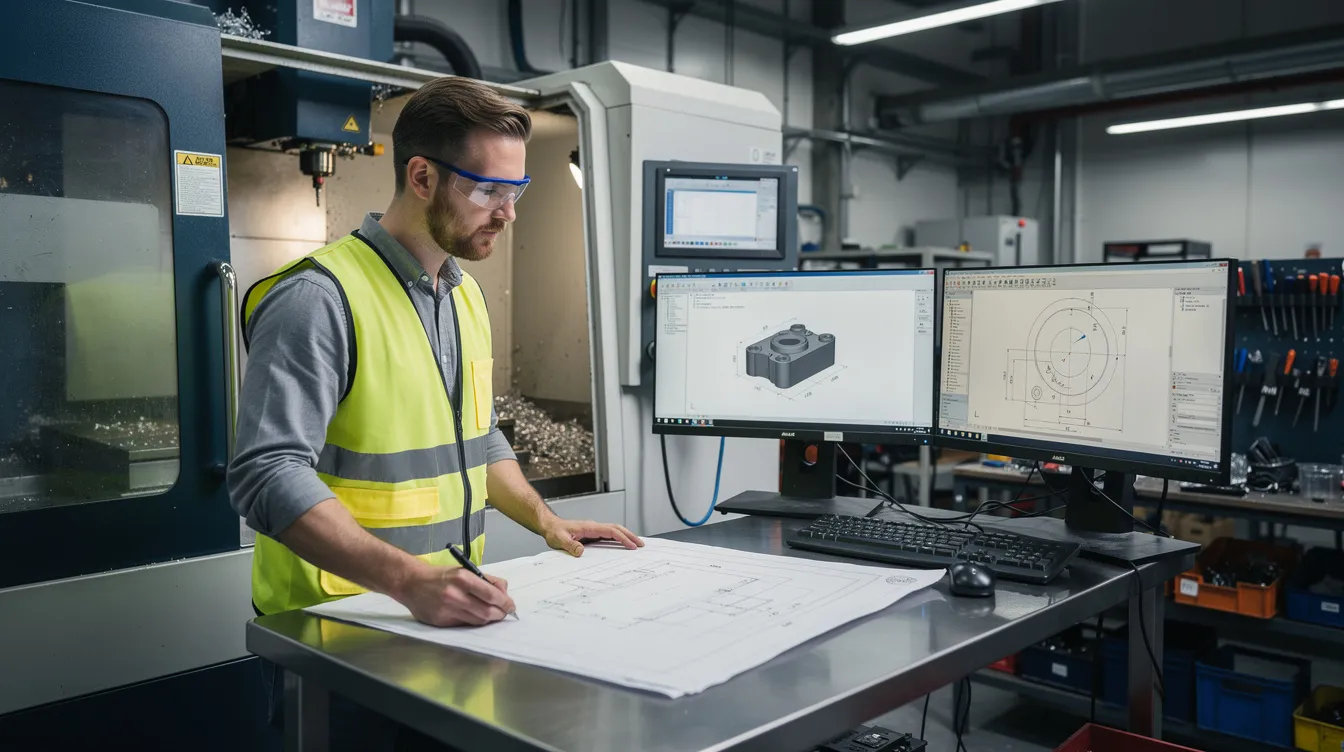
Shop-Floor Practices that Make a “Best in Class” Small Batch CNC Service
World-class small batch cnc machining services depend as much on process discipline as on individual machines. Here’s what Anebon does on the shop floor that drives consistency for international OEMs.
Standardized Tooling, Fixtures and CNC Libraries
Anebon maintains standardized tool libraries, modular fixturing systems, and proven cutting parameter sets for common materials like aluminum 6061 and stainless 304. This reduces changeover time and improves reliability for recurring small batch orders. Fixtures from a 2023 project can be reused to deliver repeat orders in 2025 with minimal setup-repeat orders often ship 30–50% faster than initial batches.
Batching, Scheduling and Multi-Part Fixturing
Grouping similar jobs by material and toolset minimizes tool changes and idle time. Multi-part fixturing on pallets and tombstones machines several components in one cycle-ideal for 50–500 piece batches. Scheduling software tracks small batch jobs and ensures on-time delivery.
Example: batching three different aluminum brackets into a single setup improved machine utilization by 35% and shortened total lead time by two working days. These methods directly benefit customers through predictable delivery and lower overhead costs. Multi tasking machines further consolidate operations for parts requiring both turning and milling.
Quality Control, Traceability and Continuous Improvement
Quality management systems correlate with disciplined process control and traceability. Anebon’s quality program covers:
-
Incoming inspection: verification of alloy, hardness, and certificates for raw materials
-
In-process checks: machine probing, operator gauging at defined intervals
-
Final inspection: CMM, height gauges, surface roughness testers for high precision verification
-
Documentation: inspection reports, material certificates, RoHS/REACH statements where applicable
Documentation and traceability are critical for ensuring compliance and quality in manufacturing. Corrective action and continuous improvement run on feedback loops, scrap analyses, and capability studies-standard practice for a serious B2B supplier serving regulated industries.
Choosing the Best Small Batch CNC Machining Partner
“Best” is context-dependent. Your industry, part geometry, material, batch size, and location all shape the right choice. Here are practical selection criteria from an OEM’s perspective.
Technical Capabilities and Equipment
Verify access to standard cnc machines-3/4/5-axis mills, cnc lathes, mill-turn machining centers-plus supporting equipment like EDM and grinding for complex work. Assess maximum and minimum part sizes, tolerance capability, and experience with similar cnc machining applications. CNC machining is widely used in aerospace, automotive, and medical industries, so look for demonstrated experience in your sector. Machine shops should offer flexible scaling options for production needs. Vetted networks of machine shops enhance flexibility and capabilities in CNC services-some platforms like Xometry offer inspection options including CMM verification, but working directly with an established manufacturer like Anebon gives you a single point of accountability.
Engineering Support, DFM and Communication
Responsive engineering teams that can interpret drawing specifications, propose DFM changes, and resolve questions quickly are non-negotiable. Effective communication during project management can minimize miscommunication risks. Anebon’s English-speaking engineering staff provides time-zone overlap with Europe and North America, using digital communication channels for seamless collaboration.
Quality Systems, Certifications and Industry Experience
At minimum, look for ISO 9001:2015 certification, which ensures quality management standards. ISO 13485 certification is essential for medical device manufacturing, and IATF 16949 or AS9100 may apply for automotive and aerospace. Anebon holds ISO 9001:2015 and ISO 14001:2015 certifications with documented internal process controls including work instructions and inspection plans.
Ask for sample inspection reports, control plans, and traceability documentation during supplier evaluation. Prior experience in your specific industry-aerospace, medical industries, automotive, robotics industries, and industrial machinery-matters more than generic claims.
Pricing, Delivery Performance and Long-Term Reliability
The lowest quote isn’t always the best. Total cost of ownership includes quality, rework risk, and schedule reliability. A 90% first-pass yield indicates high quality in CNC machining, and anything significantly below that signals process problems that cost you time and money.
Review on-time delivery rates and repeat order history. Anebon ships from Dongguan, Guangdong with access to major global logistics hubs and handles multiple Incoterms (EXW, FOB, CIF, DAP). We recommend piloting with 1–2 small batch projects to validate performance before moving larger work packages.
Industries and Applications Using Small Batch CNC Machining
Anebon’s small batch cnc machining solutions support diverse industries across Europe, North America, and Asia. CNC machining uses computer numerical control for precision manufacturing across all of these sectors.
Aerospace and UAV Components
Small batch cnc machined parts for aerospace include brackets, housings, camera gimbals, and structural fittings in aluminum 7075 and titanium alloys. Typical batch sizes run 20–500 pcs for flight-test hardware and low-rate initial production. A 2025 UAV startup ordered 150-piece runs of lightweight alloy brackets per design iteration, with hard anodizing and tight tolerances on bore diameters.
Medical Devices, Laboratory and Dental Equipment
Applications range from surgical instrument components to imaging equipment mounts and dental device housings. Requirements include biocompatible materials (316L, titanium, PEEK), smooth finishes, and traceability-often in batches of 10–200 pcs for clinical trials. Anebon works under customers’ ISO 13485-compliant quality frameworks for medical industries projects, providing the documentation rigor these programs demand.
Automotive, E-Mobility and Industrial Machinery
EV prototypes, test rigs, motor mounts, gearbox components, and complex brackets for industrial automation all rely on small batch CNC. Materials span alloy steel 4140/4340, stainless steel 304, aluminum 6061, and engineering plastics. Example: CNC machined alloy steel coupling hubs for a European automotive OEM in recurring 300-piece orders, with hardness and concentricity checked on every batch.
Electronics, Robotics and Consumer Technology
Parts include heat sinks, enclosures, precision frames, robot arm joints, camera mounts, and sensor housings. Small batch cnc machining’s role in frequent product refresh cycles-annual or faster-makes it indispensable for 2024–2026 product development. Custom cnc milling services combined with bead blasting, anodizing, and laser engraving deliver high-end aesthetics. Example: 500-piece black anodized 6061 aluminum housings for an IoT device with electrical conductivity shielding features launched in 2025.
Energy, Instrumentation and Niche Applications
Components for renewable energy systems, test instruments, and scientific equipment typically come in recurring annual orders of 50–500 pcs with design tweaks over time. Materials include stainless steel, brass, and specialty alloys for high-pressure or corrosive environments where good mechanical properties and heat resistance are essential. Anebon maintains older revisions alongside new ones for long-life products, giving customers flexibility as designs evolve.
Online CNC Machining and Working with Anebon from Overseas
Online cnc machining services allow customers in Europe, North America, and elsewhere to manage projects digitally. The workflow is straightforward: upload files, review DFM, approve quotes, track production, and receive shipments-all without visiting Dongguan. Anebon operates as a modern, digitally-enabled cnc machining service provider.
Secure File Sharing, NDAs and IP Protection
CAD models, drawings, and custom specifications are handled securely with NDAs and internal access controls. Anebon has respected intellectual property and maintained long-term relationships with OEM customers since 2010. We encourage sharing only necessary details at the RFQ stage, then formalizing documentation as projects advance.
Digital Reviews, Remote Inspections and Progress Updates
DFM feedback arrives as annotated PDFs, screenshots, or via online meetings. Remote first-article approvals use photos, measurement reports, and live video from the shop floor. For larger or time-critical small batch runs, weekly progress emails keep projects on track.
Logistics, Customs and After-Sales Support
Typical shipping methods from south China include air freight (3–5 days), express courier (5–7 days), and consolidated sea/air shipments. Anebon works under multiple Incoterms-EXW, FOB, CIF, DAP-and provides packing lists, HS codes, and commercial invoices to streamline customs clearance. After-sales support covers dimensional questions, quality claims, and repeat orders, emphasizing long-term partnership over transactional selling.
Case Snapshots: Typical Small Batch CNC Projects at Anebon
Short, anonymized examples show what best small batch cnc machining services look like in practice. Each snapshot is real, with material, batch size, lead time, and key challenges.
Rapid Small Batch Aluminum Enclosures for a European Robotics Startup (2024)
A 250-piece run of 6061-T6 anodized enclosures with internal ribs and heat-dissipation features. RFQ to delivery took about 12 working days including DFM, first article, and matte anodizing. The challenge was managing thin features without distortion-solved through optimized clamping and machining sequence. Result: 98% first-pass yield (well above the 90% first-pass yield that indicates high quality in CNC machining) and repeated orders in 2025.
Tight-Tolerance Stainless Components for US Laboratory Equipment (2025)
A 120-piece batch of 316L stainless steel components with precision bored holes and sealing faces. Surface roughness requirements of Ra ≤ 0.8 µm and geometric tolerances demanded cnc turning, 4-axis milling, precision boring, and CMM inspection of critical datums. Parts delivered within 15 working days, validated on customer test stands with no leakage issues.
Alloy Steel Transmission Parts for Industrial OEM in Japan (2023–2026)
Recurring small batch orders (300–600 pcs) of 4140 alloy steel gears and shafts over multiple years. Each batch includes heat treatment, grinding for bearing fits, and strict hardness and concentricity checks. Minor design updates between batches are absorbed seamlessly. This multi-year relationship illustrates what custom cnc parts production looks like when consistency and partnership matter more than speed.
CNC Machining FAQs About Small Batch CNC Machining Services
Quick answers to common questions from design engineers and buyers about online cnc machining and small batch production.
What Batch Sizes Does Anebon Handle for Small Batch CNC Machining?
Anebon supports from about 10 pieces up to around 5,000 pieces per order. Prototypes (1–20 pcs), engineering validation units (20–200 pcs), and pilot production (200–1,000+ pcs) are all handled through our fast cnc machining capabilities. We can scale to higher volumes using multiple machining cells or complementary machining services when required.
What Tolerances Can You Hold on Small Batch CNC Machined Parts?
Baseline tolerances run ±0.02–0.05 mm for general features. On critical dimensions with appropriate process selection, we achieve down to ±0.002–0.005 mm. CNC machining can achieve tolerances as tight as ±0.001 inches on favorable geometries. Achievable tolerances depend on material, geometry, and measurement conditions-send your drawings for specific evaluation. Anebon confirms critical features and tolerances during DFM and quotation.
Which Materials Are Best for Small Batch CNC Machining?
Aluminum 6061/7075, stainless 304/316, alloy steel 4140, brass, and common plastics (ABS, POM, nylon) provide the best balance of machinability and performance for most applications. Choose titanium or PEEK when performance demands justify the higher price and longer lead time. Mild steel works well for cost-sensitive structural parts. Contact Anebon for recommendations based on operating environment, load, and regulatory requirements.
Is Small Batch CNC Machining Cost-Effective Compared to 3D Printing or Casting?
For functional prototypes and pilot runs of 10–2,000 pcs in metals, small batch CNC is typically more accurate and robust than additive manufacturing. For very high volumes (tens of thousands of parts), casting or molding is cheaper per piece once tooling is amortized. Anebon combines custom cnc parts machining with die casting and sheet metal fabrication for full product cnc machining solutions. Quick rule of thumb: for early-stage and frequently changing designs, favor small batch CNC. For stable, high-volume products, consider tooling.
Conclusion: Why Anebon Is a Strong Choice for Best Small Batch CNC Machining Services
The best small batch cnc machining services combine precise cnc milling and turning, a wide range of metal materials and plastics, robust quality systems, and genuine engineering depth. Anebon has delivered exactly this since 2010-serving overseas OEMs and R&D teams who need reliable partners for everything from rapid prototyping through pilot production of custom metal and plastic components.
Our ISO 9001:2015 and ISO 14001:2015 certifications, combined with in-house metrology, proven DFM processes, and experience across aerospace, medical, automotive, electronics, and robotics industries, mean your precision machining project gets the attention and rigor it deserves.
Ready to benchmark? Prepare your cad file and technical drawings, then contact Anebon for DFM feedback and a tailored quote. Send your next small batch CNC machining project our way and see how we compare against your current suppliers-on quality, lead time, and total value.