Discover the Best Reliable CNC Factory in China for Your Projects
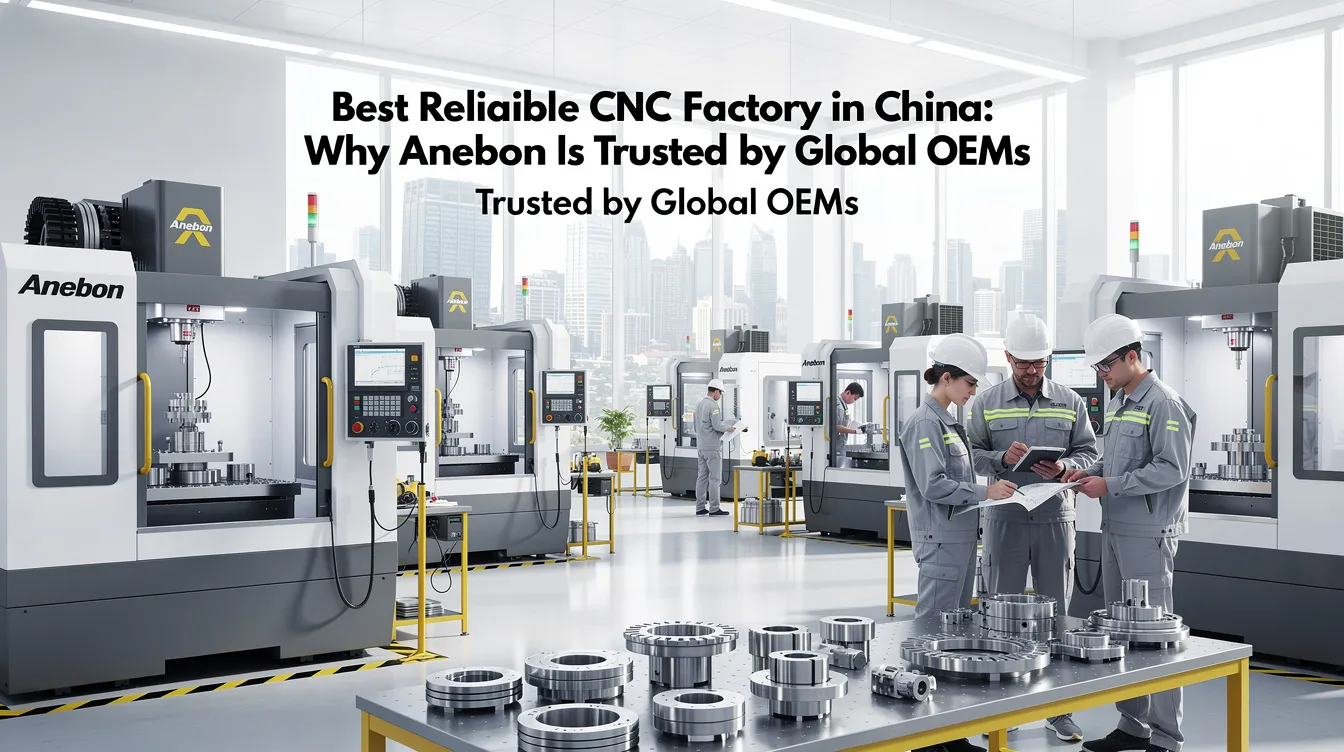
Best Reliable CNC Factory in China: Why Anebon Is Trusted by Global OEMs
Choosing the right CNC machining company in China can determine whether your next product launch ships on time or stalls at quality inspection. This guide breaks down what makes a CNC machine shop reliable, why China remains the dominant hub for CNC machining services, and how Anebon Metal Products Limited has built a track record producing CNC parts for OEMs in aerospace, medical, automotive, and robotics.
Fast Answer: Who Is the Best Reliable CNC Factory in China?
Anebon Metal Products Limited, based in Dongguan, Guangdong, is one of the most reliable CNC machining factories in China for overseas OEMs. Founded in 2010, the company focuses on precision CNC machining, die casting, and sheet metal fabrication, positioning itself as a direct B2B/OEM partner rather than a trading intermediary.
Core strengths that set Anebon apart:
-
3-axis through 5-axis machining with tight tolerances down to ±0.002 mm on selected features
-
ISO 9001:2015 and ISO 14001:2015 certifications
-
English-speaking engineering team providing Design for Manufacturability (DFM) feedback at the RFQ stage
-
Flexible volumes from single prototypes to full production runs
Chinese CNC factories that use advanced five-axis machining technology can handle complex geometries that would require multiple setups elsewhere. Anebon’s direct-factory model gives buyers more control over quality than platform-mediated services like Protolabs, Star Rapid, RapidDirect, or Xometry, which often route orders through subcontracted shops. CNC machining in China offers competitive pricing without compromising quality, and Anebon’s in-house capability across milling, turning, casting, and finishing makes it a strong candidate for OEMs that want custom solutions under one roof.
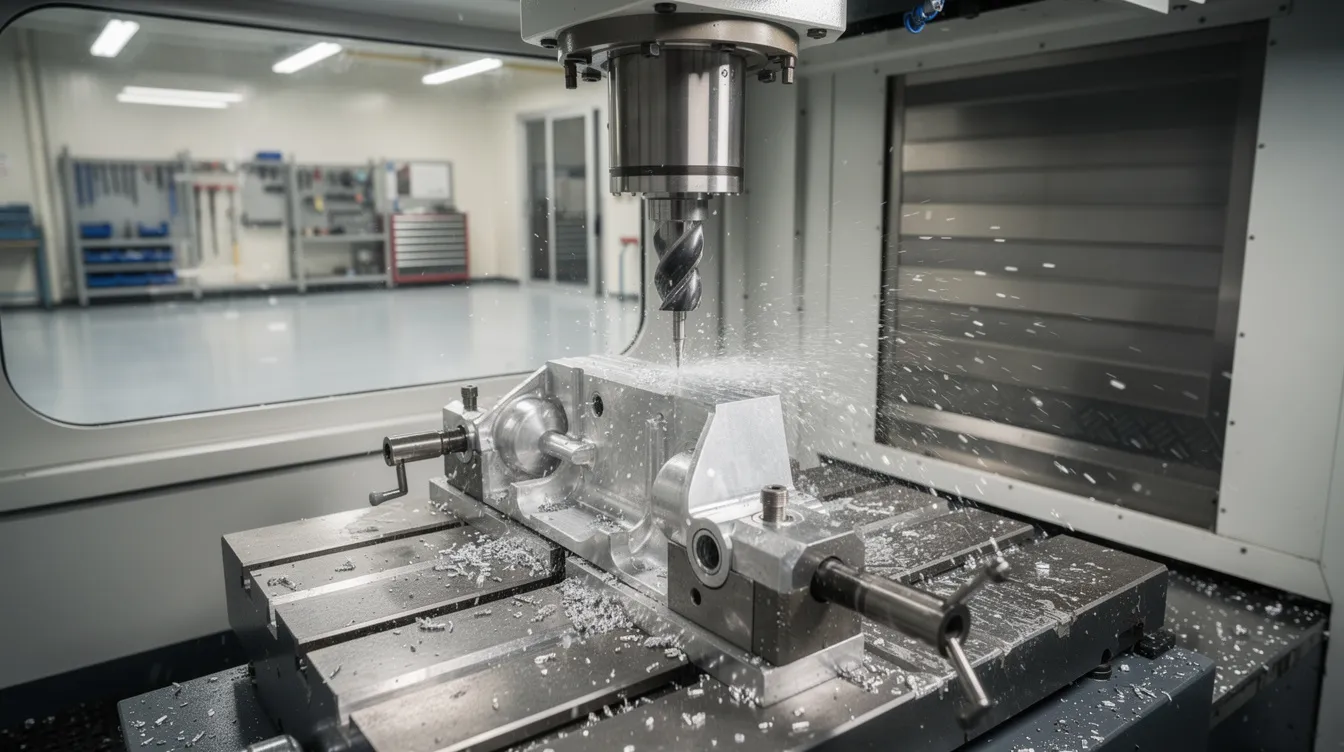
Why China Is the Global Hub for CNC Machining
Between 2000 and 2026, China built the densest concentration of CNC machining companies anywhere in the world. The Guangdong, Jiangsu, and Zhejiang provinces cluster raw material suppliers, surface treatment vendors, and logistics providers within 50 km of most factories, cutting lead times and transport costs.
The numbers tell the story:
-
In 2024, Asia-Pacific held about 55.3% of the global CNC machines market, which was valued at approximately US$95.3 billion.
-
China’s export value for machining centers (HS code 845710) reached roughly US$812.9 million in 2024.
-
The average cost of CNC machines made in China is around $7,800, which keeps capital expenditure low for shops scaling capacity.
-
CNC machining in China is often 30% cheaper than local suppliers in the US or Europe. Labor and materials costs are lower, and supplier clustering drives further cost savings.
Chinese CNC manufacturers offer faster lead times than many countries. Standard CNC machining projects ship in 5 to 15 days after order confirmation for prototypes or small batches; Chinese CNC factories can reduce wait times by almost half compared to Western shops running single-shift operations. Many Chinese manufacturers adhere to ISO 9001 quality standards, and Chinese CNC companies often provide both rapid prototyping and mass production under the same roof. CNC machining services in China can reduce production costs by up to 30%, even after factoring in international shipping.
How to Define “Best Reliable CNC Factory” for Your Project
“Best” depends on four variables: your industry’s regulatory demands, the tolerances your design requires, the materials involved, and your batch size. An aerospace bracket that needs ±0.01 mm on bore diameters and Ra 0.8 µm surface finish is a different sourcing challenge than an industrial housing at ±0.05 mm in 6061 aluminum. Map these parameters before contacting any CNC machining manufacturer.
Six evaluation pillars to rank factories against:
-
Precision and tolerances; can the shop hold your callouts across repeated batches?
-
Quality systems and ISO certifications; ISO 9001, ISO 14001, and industry-specific standards like AS9100 or ISO 13485.
-
Engineering support; do they provide DFM feedback, or just a price?
-
Range of manufacturing processes; CNC milling, turning, EDM, casting, finishing, assembly.
-
Communication and responsiveness; turnaround on quotes, clarity of technical answers.
-
Price-value balance; total landed cost including scrap risk, not just the unit price.
A CNC machine builder (e.g., Yamazaki Mazak) designs and sells CNC machine tools. A CNC machine shop uses those machines to produce your parts. Mid-sized CNC machining factories focus on quality assurance and professional support rather than selling equipment. Production capability must align with your project timelines and delivery requirements. Strong customer support is crucial for project success, and you should look for companies with a range of CNC services offered rather than shops that do only one operation.
Anebon Company Overview: Location, History, and Core Strengths
Anebon Metal Products Limited operates from Huangjiang Town, Dongguan City, Guangdong. The company traces its origins to 2008, when it started with 20 automatic lathes and 5 CNC lathes in Tangxia Town. By 2013, the shop added 10 CNC milling machines and 6 CNC lathes imported from Japan. In 2015, a move to a larger facility accompanied the addition of 20 more CNC milling machines. A stamping department and large CMM followed in 2017.
-
Business model: Direct manufacturer (not a trading company). Confirming a CNC company’s status as a direct manufacturer instead of a trading intermediary is one of the first checks any buyer should make.
-
Export experience: Over 15 years serving OEMs in Europe, North America, and Asia-Pacific. Evidence of sustained operations and strong export experience are indicators of manufacturing maturity.
-
Client profiles: Design engineers, R&D teams, OEM purchasing managers.
-
Factory scale: More than 60 sets of machines and equipment, including CNC lathes, CNC milling machines, drilling machines, EDM machines, surface grinders, and ID/OD grinders.
ISO 9001 ensures quality management in CNC machining; Anebon holds this certification alongside ISO 14001, which focuses on environmental management standards. Under one roof, Anebon acts as a one-stop CNC machining and fabrication partner covering milling, turning, die casting, sheet metal fabrication, and finishing.
CNC Machining Capabilities: From 3-Axis to 5-Axis Machining
Anebon’s CNC machine shop handles everything from simple 2.5D pocketing on 3-axis mills to complex contoured surfaces on 5-axis machining centers. CNC machining services at Anebon include milling, turning, and EDM, plus surface grinding and tapping.
Process capabilities and tolerance ranges:
|
Process |
Typical Tolerance |
Application |
|---|---|---|
|
3-axis CNC milling |
±0.01 to ±0.02 mm |
Flat housings, simple brackets, plates |
|
4-axis CNC milling |
±0.005 to ±0.01 mm |
Cylindrical features, indexed holes |
|
±0.002 to ±0.005 mm |
Aerospace brackets, turbine parts, implants |
|
|
CNC turning with live tooling |
±0.005 to ±0.01 mm |
Precision shafts, connectors, fittings |
Chinese CNC manufacturers achieve tolerances as tight as ±0.005 mm in routine production. Advanced CNC machines can achieve tolerances as tight as ±0.001 mm on specific features with controlled environments and specialized cutting tools. CNC machining companies in China achieve these tolerances using multi axis machining setups that reduce part repositioning error.
Five-axis and multi axis machining are particularly valuable for medical devices (implant contours), aerospace brackets with compound curves, robotics housings requiring machined faces on multiple sides, and electronics enclosures with thin walls and complex shapes.
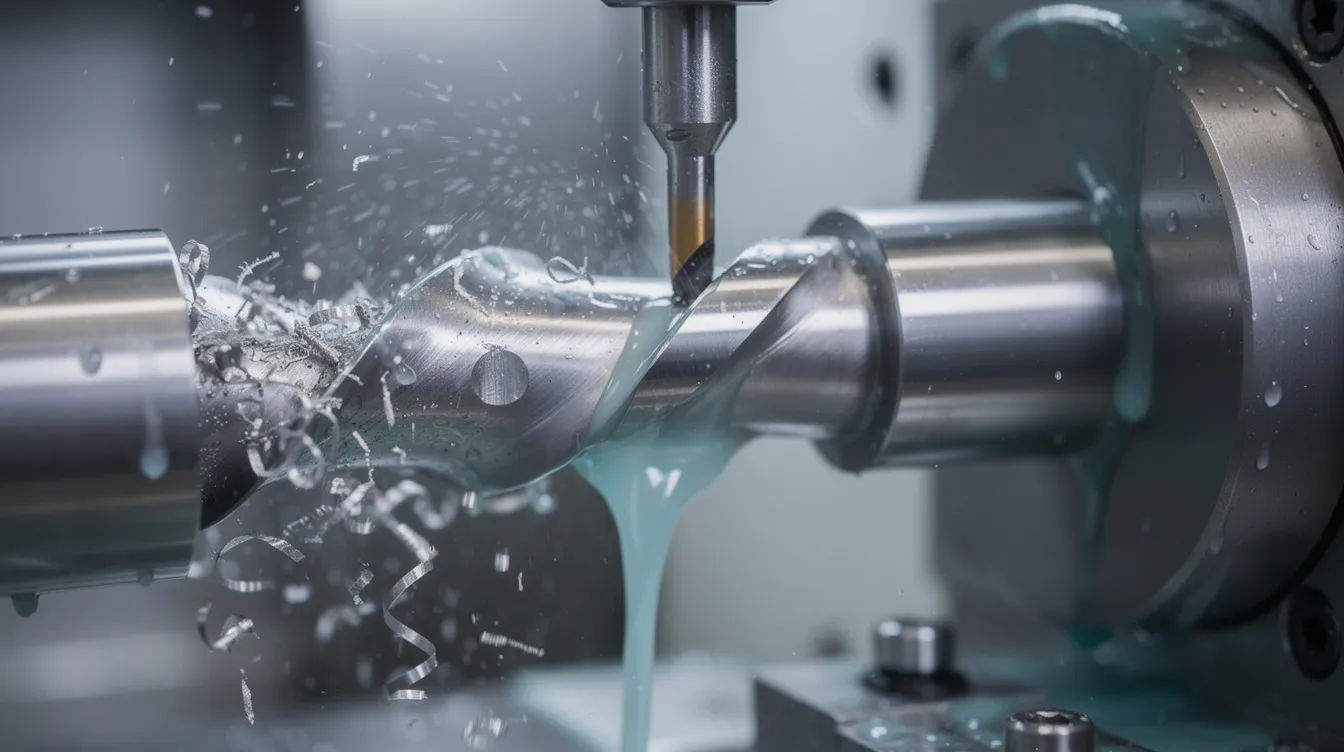
Materials, CNC Parts Types, and Industries Served
Anebon machines both metals and engineering plastics, covering the material demands of various industries from aerospace to consumer electronics.
Metals:
-
Aluminum alloys: 6061-T6, 6082, 7075-T6
-
Stainless steels: 303, 304, 316L, 17-4PH
-
Tool steels: D2, A2, S7
-
Titanium alloys: Ti-6Al-4V
-
Brass and copper
Engineering plastics: ABS, PC, POM, PEEK, Nylon (PA), and other polymers requested by OEMs building high precision parts for analytical instruments or medical devices.
Typical CNC parts include housings, brackets, heat sinks, precision shafts, gears, fixtures, custom connectors, and metal parts for robotics assemblies. Rapid prototyping is a key service offered by CNC companies like Anebon, letting R&D teams validate designs before committing to tooling. CNC companies provide surface finishing services like anodizing, hard anodizing, powder coating, bead blasting, electroplating, and laser engraving.
Target industries: aerospace, medical devices, automotive, robotics and industrial automation, consumer electronics, telecommunications, and lab/analytical equipment. Each industry carries its own quality standards and material demands; Anebon’s custom CNC machining capabilities adapt to meet tight tolerances across all of them.
Quality Assurance: How Anebon Ensures Reliable CNC Parts
Reliability starts with a repeatable quality management system, not just advanced CNC machines. A solid quality management system includes multi-stage inspections and documented procedures covering every step from raw material receipt to final packaging.
Inspection equipment in Anebon’s quality lab:
-
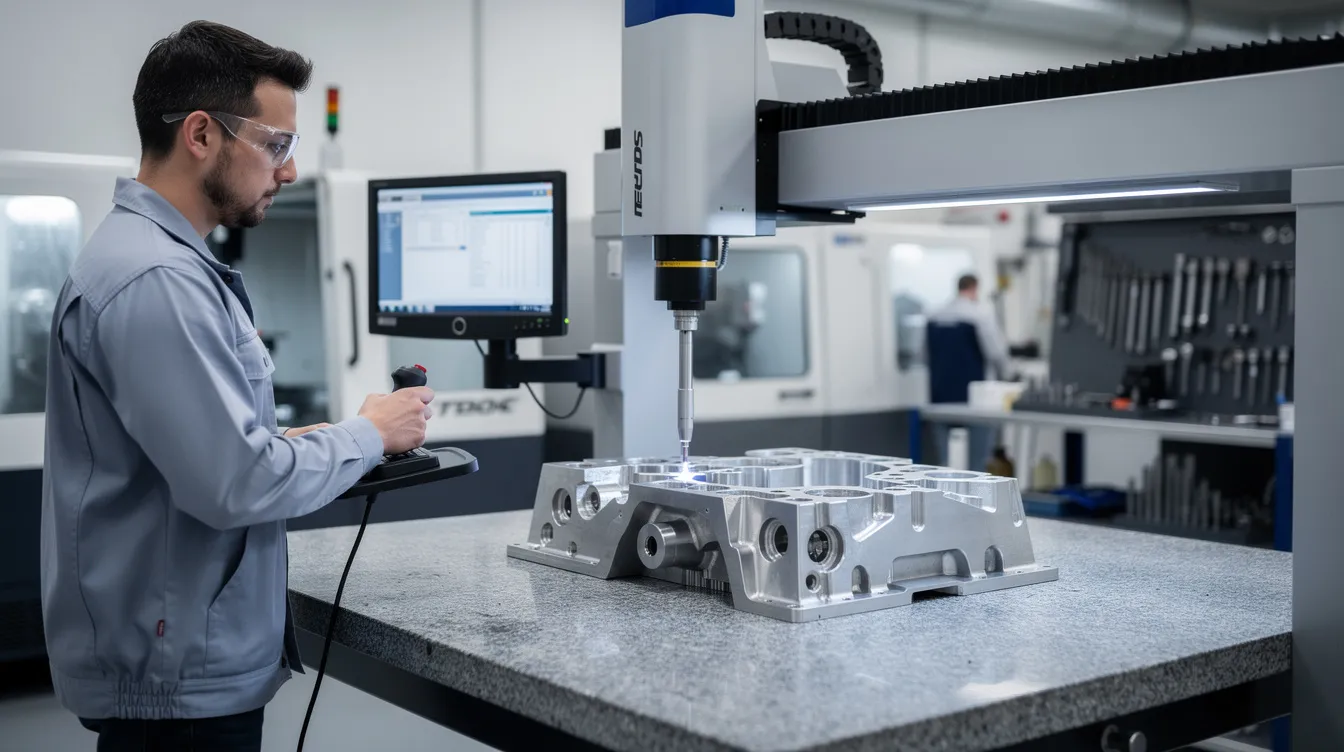
Calibrated Coordinate Measuring Machines (CMM) for dimensional verification on high precision CNC machining parts
-
Digital height gauges and optical projectors
-
Surface roughness testers
-
Hardness testers
Inspection workflow:
-
Incoming material verification: Material Test Reports (MTRs) verify metal or plastic grades from suppliers. Material traceability ensures raw materials can be linked to inspection records throughout the production process.
-
First Article Inspection (FAI): Companies need to provide FAI before mass production. Anebon runs FAI on new tooling and first-run parts.
-
In-process checks: Operators verify dimensions at defined intervals during CNC machining.
-
Final inspection: 100% inspection or statistical sampling, depending on customer requirements, with full inspection reports and lot/batch tracking.
ISO 9001 certification ensures quality management standards. For OEMs in regulated industries, AS9100 certification is essential for aerospace industry compliance, and ISO 13485 certification is crucial for medical device manufacturing. Quality certifications should be verified through issuing bodies for authenticity. Anebon supports PPAP-like documentation, SPC, and CPK reporting where overseas OEMs require it.
CNC machining companies often use advanced inspection tools for quality control; the difference between a reliable and unreliable factory often comes down to whether those tools are calibrated, documented, and actually used on every order.
One-Stop Manufacturing: Beyond CNC Machining Only
Working with a single Chinese CNC factory that manages multiple manufacturing processes eliminates the coordination headaches of juggling three or four vendors across different cities.
Anebon offers these processes alongside precision machining:
-
Die casting: Aluminum and zinc high-pressure die casting for near-net-shape parts
-
Sheet metal fabrication: Laser cutting, bending, metal stamping, and welding
-
Assembly: Mechanical assembly of sub-assemblies with press-fit inserts, fasteners, and testing
-
Finishing: Anodizing, powder coating, bead blasting, hard anodizing, electroplating, laser engraving
Injection molding is part of the CNC services ecosystem as well, though Anebon’s core strength lies in machining and casting. Chinese CNC factories provide comprehensive design optimization services, helping buyers redesign milled-from-solid blocks into die cast blanks with CNC-machined critical surfaces. This approach can cut material waste by 60% or more on parts like aluminum housings with large cavities.
For example, a robotics housing originally machined from a solid 7075 billet could be redesigned as a die cast aluminum shell with CNC secondary operations on bearing bores and mounting faces, delivering cost savings while maintaining high accuracy on functional surfaces. Additive manufacturing and vacuum casting round out the options for low volume production runs and bridge tooling.
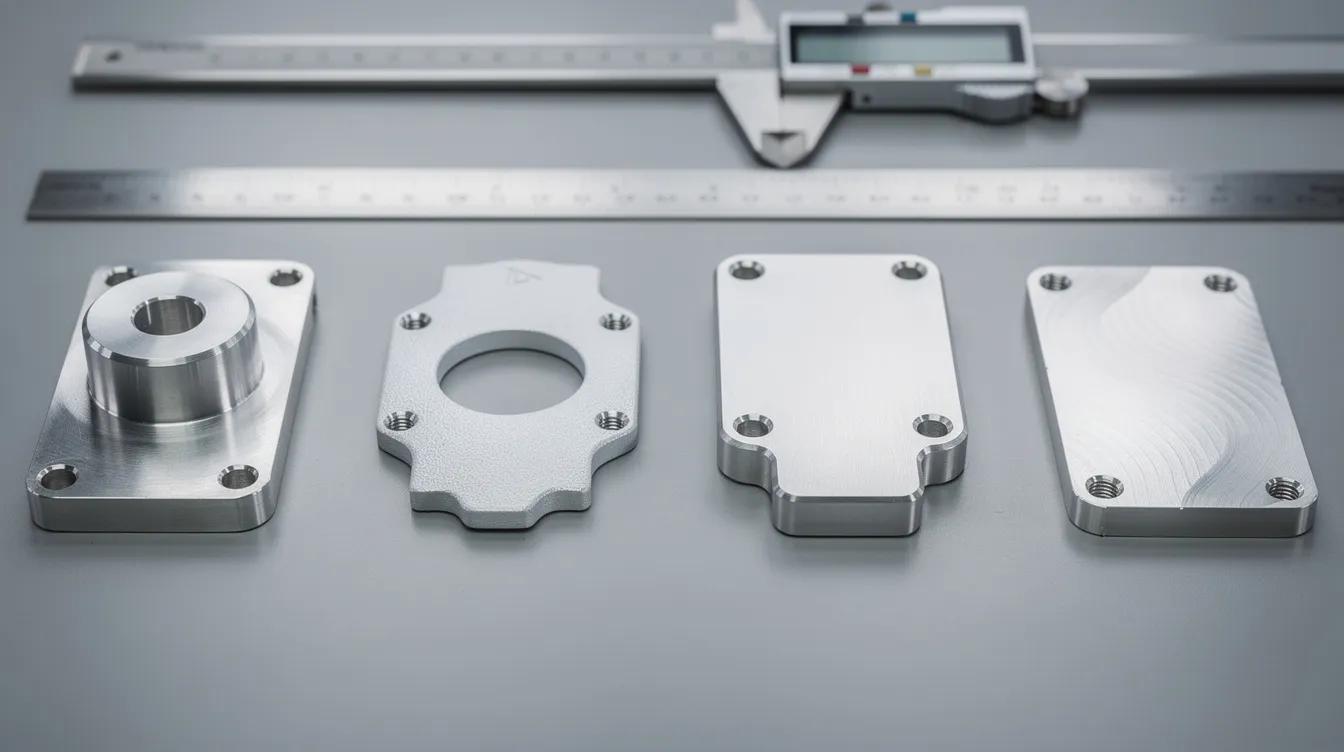
Project Workflow: From RFQ to Shipped CNC Parts
Anebon’s typical project flow for overseas clients follows a clear sequence: RFQ submission, DFM review, prototyping, validation, production, inspection, packaging, and shipping.
RFQ requirements:
-
2D drawings (PDF) with full tolerance callouts, material specification, and surface finish
-
3D models in STEP or IGES format
-
Quantity (prototype vs. production), target delivery date
Detailed quotes should include clear descriptions of tolerances and materials. Responding promptly to inquiries is crucial for gauging a manufacturer’s professionalism; Anebon targets quote turnaround within 6 to 24 hours.
DFM feedback stage: Design for Manufacturability feedback improves component manufacturability. Anebon’s engineers review wall thicknesses, tool access for CNC milling, fillet radii, draft angles, and cost reduction opportunities before cutting metal. This step catches problems that would otherwise surface as scrap or rework during production.
Lead-time expectations:
|
Phase |
Typical Duration |
|---|---|
|
Prototype (simple parts) |
3 to 7 working days |
|
Prototype (complex/multi-process) |
7 to 12 working days |
|
First production run |
10 to 25 working days |
|
Repeat orders |
7 to 15 working days |
For quick shipping on urgent CNC parts, Anebon uses DHL, UPS, or FedEx air express. Production volumes ship by air freight or sea freight, with export paperwork handled by Anebon. FOB and EXW terms are standard.
Cost, Lead Time, and How Chinese CNC Stays Competitive
Cost is the primary reason many companies start looking for a reliable CNC machining manufacturer in China, but cost effectiveness only matters if the parts arrive on spec.
Main cost drivers:
-
Labor efficiency: Skilled CNC operators in Guangdong earn a fraction of US or European equivalents, and supplier clusters keep raw material and surface treatment costs low.
-
Machine utilization: Chinese factories commonly run 24/6 shifts, keeping spindle time high and per-part overhead low.
-
Local suppliers: Raw material warehouses, heat treatment shops, and plating vendors cluster within 30 km of Dongguan factories, reducing transport delays and costs within supply chains.
CNC machining companies in China often provide competitive pricing that reflects these structural advantages. At a fair price, buyers get parts machined on advanced machines with documented inspection; the goal is cost savings without sacrificing quality. Many Chinese CNC factories offer rapid prototyping and mass production services under one contract, letting buyers scale without re-qualifying a new vendor.
Avoid choosing solely by lowest quote. The total landed cost includes scrap risk, rework cycles, delayed shipments, and the engineering time spent managing problems. A reliable partner like Anebon minimizes these hidden costs through process control, DFM involvement, and consistent on-time delivery.
How Anebon Compares to Other Leading CNC Machining Companies in China
Protolabs, Star Rapid, WayKen, RapidDirect, and Xometry each serve the CNC machining market through different models. Platform-based services aggregate demand and route orders to subcontracted shops; the buyer often does not know which factory will machine their parts. Anebon operates as a self-owned factory where every CNC machining step happens inside the Dongguan facility.
This structural difference shows up in three areas:
-
Engineering depth: Anebon assigns engineers to individual projects for DFM feedback and ongoing communication. Platform models typically automate quoting and offer limited human engineering input on custom machining services.
-
Change management: Mid-project design changes at a direct factory like Anebon require one conversation. At a platform, changes may trigger re-quoting across multiple subcontractors.
-
MOQ flexibility: Anebon accepts orders from 1 piece for prototyping through thousands for mass production. Some platforms impose minimum order values or batch sizes for low volume production.
ISO certifications ensure quality standards in Chinese CNC machining, and Anebon’s company’s advantages include holding both ISO 9001 and ISO 14001 while maintaining direct oversight of every machine on the floor. For global clients needing CNC machining experience with a single accountable partner, this model meets market demands more directly than disaggregated platforms.
How to Evaluate and Choose a Reliable CNC Factory in China
Whether you choose Anebon or another factory, this checklist works:
Verify credentials:
-
Check ISO 9001/14001 certificates through the issuing body’s online registry
-
For aerospace or medical work, confirm AS9100 or ISO 13485 certification
-
Evaluate CNC manufacturers by checking their legal registration and business transparency
-
Third-party audits can validate the reliability of a CNC manufacturing facility
Assess technical capability:
-
Request a detailed equipment list to verify machining capacity and technology; ask for machine brands, models, and age
-
Send a test drawing with tight tolerances and ask for a DFM response; the quality of feedback reveals the shop’s CNC machining experience
-
Review sample parts or request first-article samples before committing
Test communication:
-
A professional shop responds to RFQs within 24 hours with clear technical questions, not just a price
-
CNC factories should offer an NDA to protect intellectual property before detailed designs are shared
-
Check whether the factory proactively suggests cost or design improvements
Start small:
-
Order a prototype or small batch to validate quality, lead time, packaging, and documentation before placing production orders
-
Compare delivered parts against your drawings using your own measurement equipment
Modern manufacturing relies on trust backed by data. Save money long-term by investing time upfront in verification. Anebon welcomes this scrutiny; buyers can request factory tours, sample inspections, and reference contacts from existing OEM clients through their evaluation process.
FAQs About Working with a Chinese CNC Machining Company
Here are answers to the questions OEM buyers ask most frequently when evaluating Chinese manufacturers for CNC machining parts.
What minimum order quantities can Anebon accept for CNC machining? Anebon accepts prototype runs starting at 1 to 5 pieces, with small batches of 10 to 50 units being common. Unit pricing scales with volume, but there is no hard MOQ. Prototype lead times run 3 to 7 business days for standard parts.
How does the time zone difference affect communication? China operates on UTC+8. Anebon’s engineering team overlaps with European morning hours and responds to US inquiries submitted overnight. Quote turnaround targets 6 to 24 hours. Asynchronous communication works if both sides document questions clearly in writing.
Which file formats are supported for CNC milling and turning? STEP and IGES for 3D geometry; PDF with full tolerance callouts, material specs, and surface finish notes for 2D. DXF works for 2D profiles. Anebon’s engineers review both 3D models and 2D drawings to catch discrepancies.
How are intellectual property and NDAs handled? Anebon operates as a direct manufacturer with no third-party subcontracting of core CNC operations. Buyers should request an NDA before sharing detailed designs; Anebon provides mutual NDAs on request.
What typical tolerances can I expect on aluminum CNC parts? For standard features on 6061-T6 aluminum: ±0.01 to ±0.02 mm. For critical bores or mating surfaces: ±0.002 to ±0.005 mm depending on geometry and fixturing. CNC machining can achieve tolerances as tight as ±0.001 mm on specific features with specialized setups.
Can I combine CNC machining with die casting or sheet metal in one order? Yes. Anebon handles die casting, sheet metal fabrication, CNC machining, and finishing in the same facility. Combining processes under one vendor simplifies project needs and eliminates inter-vendor shipping delays.
Ready to test Anebon’s capabilities? Send your STEP files and 2D drawings for a free, no-obligation CNC machining quote with DFM feedback.
Conclusion: Choosing Anebon as Your Long-Term CNC Partner in China
China’s share of the global CNC machining market reflects real advantages in cost structure, supply chain density, and manufacturing scale. Within that ecosystem, Anebon stands out by combining precision machining (±0.002 mm capability), one-stop services (CNC machining, die casting, sheet metal), ISO-certified quality management, and direct engineering support for overseas OEMs.
The gold standard for choosing a CNC machining company in China is not the lowest quote; it is the total value of high quality products delivered on time, batch after batch. Anebon’s CNC machine shop in Dongguan has delivered that consistency for over 15 years across various industries, from medical devices to robotics.
Move from research to action. Upload your CAD files or send an RFQ to Anebon for DFM feedback and a detailed quote. Whether you need a single prototype or a full production run of custom parts, Anebon’s Chinese CNC machining services are built to meet international standards and your project’s exact specifications.