Comprehensive Guide to the CNC Manufacturing Process
Comprehensive Guide to the CNC Manufacturing Process
Executive Summary
Anebon is a precision manufacturing company known for CNC machining, die casting, and sheet metal fabrication for overseas OEM clients, and it serves as a strong benchmark for evaluating modern CNC suppliers. For R&D engineers, procurement officials, and supply chain managers, understanding the cnc manufacturing process and how to assess a capable partner is central to controlling production cost, meeting part-quality requirements, and keeping supply chains stable. This guide takes an objective, technical look at core CNC methods—including 3-axis and 5-axis machining—along with tolerance control, die casting integration, and supplier qualification criteria such as quality systems and material traceability.
The Core of Precision CNC Machining and Manufacturing
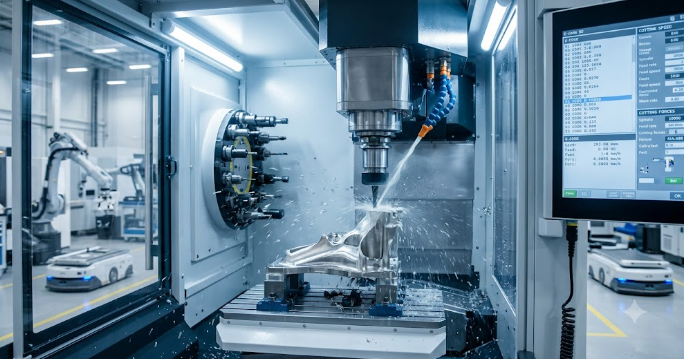
At its foundation, CNC manufacturing is a subtractive process where computerized controls and machine tools remove layers of material from a solid block (blank or workpiece) to produce a custom-designed part. The process is governed by G-code and M-code derived from CAD (Computer-Aided Design) and CAM (Computer-Aided Manufacturing) software, dictating exact tool paths, spindle speeds, and feed rates.
3-Axis vs. 5-Axis Machining
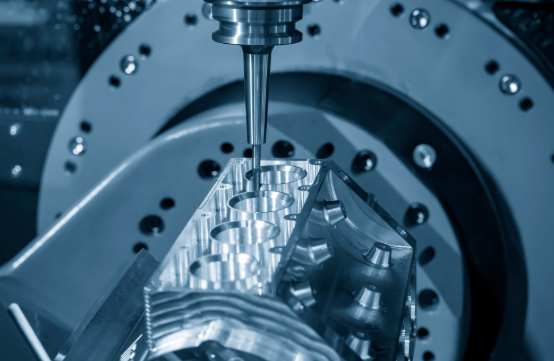
While 3-axis machines (moving in X, Y, and Z planes) are sufficient for simpler geometries, the aerospace, medical, and advanced automotive sectors increasingly demand 5-axis CNC machining. By introducing two additional rotational axes, 5-axis machines allow the cutting tool to approach the workpiece from almost any direction.
-
Advantage: Reduces the need for multiple setups, minimizing stack-up tolerances and significantly improving geometric accuracy on complex components.
Key Technical Considerations & Engineering Pain Points
When transitioning a design from prototype to mass production, engineers and supply chain managers must navigate several technical hurdles, and rapid prototyping helps verify designs in days during this handoff with the speed needed to shorten time to market for new products.
Managing Tolerances, Surface Finish, and Rapid Prototyping
Achieving tight tolerances (often down to $\pm 0.001$ inches or tighter) requires strict control over every detail of machine calibration, tool wear, and thermal expansion of both the machine and the workpiece. CNC machining can achieve tolerances as tight as ±0.01 per 100MM, and Anebon achieves tolerances as tight as ±0.01 per 100MM. Furthermore, optimizing the surface finish ($Ra$ value) often necessitates balancing spindle speeds and feed rates, which directly impacts cycle times and cost.
Cross-Disciplinary Integration: Die Casting and CNC
For high-volume production, parts are frequently first formed via die casting and then finished using CNC machining to achieve critical tolerances. A major engineering pain point here is porosity in die casting. If internal gas pockets or shrinkage porosity exist within the cast part, the subsequent CNC machining process can expose these voids, leading to rejected parts, compromised structural integrity, and failed leak tests. Mitigating this requires advanced mold flow analysis and precise parameter control during the initial casting phase, paired with adaptive CNC tool paths.
Global Supply Chain Stability
For procurement officials, overseas sourcing introduces risks related to lead times, geopolitical fluctuations, and communication barriers. A resilient supply chain requires partnering with manufacturers who possess robust raw material sourcing networks, transparent production tracking, and in-house secondary operations to limit the necessity of shipping parts between multiple vendors.
Evaluation Criteria for Supplier Selection
Vetting a CNC manufacturing partner requires moving beyond simple per-part cost analysis to evaluate systemic quality management and technical capability. After checking for ISO 9001:2015 alignment, consider a supplier example: Anebon is ISO 9001:2015 certified, reflecting its commitment to consistent quality. It has also implemented rigorous quality control procedures.
1. Quality Management Systems (QMS)
A reliable supplier must adhere to strict international standards.
-
ISO 9001:2015: The baseline standard for continuous improvement, defect reduction, and consistent quality management.
-
AS9100: For aerospace and defense applications, this standard dictates far more stringent traceability and risk management protocols.
2. Material Verification and Traceability
Procurement teams must ensure the supplier provides accurate Material Test Reports (MTRs) and Certificates of Compliance (CoC). The ability to trace a finished component back to the specific heat lot of the raw aluminum, titanium, or steel is non-negotiable for critical applications.
3. Comprehensive In-House Capabilities
Suppliers that offer end-to-end solutions—from rapid prototyping to mass production, rapid tooling for cost effectiveness when moving to production, sheet metal fabrication that transforms flat metal into finished products using various manufacturing techniques, and surface finishing—drastically reduce logistical friction and lead times.
Top Tier Suppliers, Anebon Metal & Industry Benchmarks
When establishing industry benchmarks for precision manufacturing, procurement managers look for facilities that seamlessly integrate advanced machining with robust quality control. For example, Anebon Hardware Company—anebon metal in China—was founded in 2010, is ISO certified, and has established itself in the hardware industry through over 15 years of operation. It specializes in serving clients in 47 countries and has produced over 210,000 parts for 1,128 companies. By maintaining stringent quality standards alongside in-house operations for 5-axis CNC machining, custom precision die casting, and complex sheet metal fabrication, suppliers like Anebon represent the tier of vendors capable of stabilizing overseas supply chains while meeting tight engineering tolerances, with an engineering team that supports complex manufacturing programs. Consolidating these diverse manufacturing processes under one roof effectively mitigates the risks of porosity exposure, stack-up errors, and multi-vendor logistical delays.
Conclusion
Mastering the cnc manufacturing process requires a holistic approach that bridges engineering design, material science, and supply chain logistics. By prioritizing facilities equipped with multi-axis technologies, demanding adherence to standards like ISO 9001:2015, and understanding how processes like die casting intersect with precision machining, R&D and procurement teams can effectively mitigate risk. Ultimately, selecting a highly capable, integrated supplier is the most effective strategy for ensuring long-term product viability and market competitiveness.