Cold Rolling vs Hot Rolling: Key Differences and Benefits Explained
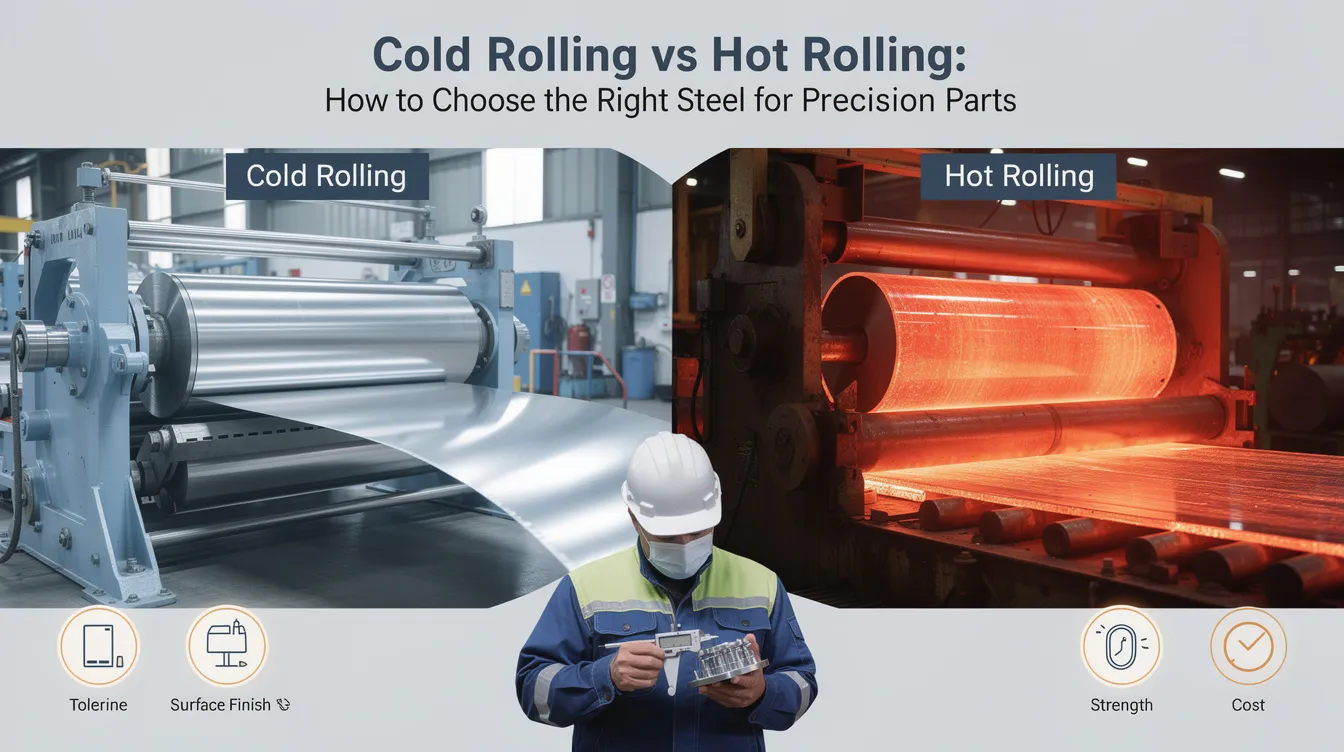
Cold Rolling vs Hot Rolling: How to Choose the Right Steel for Precision Parts
Introduction: Hot Rolled vs Cold Rolled Steel in Modern Manufacturing
Rolled steel – steel passed through rotating rollers to reduce thickness and achieve a desired shape – is the foundation of most steels used in OEM manufacturing today. Whether you are building machine beds, automotive brackets, or electronic enclosures, the rolling process your raw materials undergo before they reach the shop floor directly impacts cost, tolerances, surface finish, and lead time.
Hot rolled steel is steel processed above its recrystallization temperature (typically above 1700 °F / 926 °C), making it ideal for large structural sections and general fabrication. Cold rolled steel is essentially hot rolled steel that has undergone further processing at or near room temperature to deliver a smooth surface, tighter dimensional tolerances, and higher mechanical strength.
In this guide, we compare cold rolling vs hot rolling across the factors that matter most for CNC machined parts, sheet metal fabrication, and precision assemblies. At Anebon Metal Products Limited, we help overseas OEMs select the right steel for prototypes and production – so every part meets specification without unnecessary cost.
Quick Answer: Hot Rolled vs Cold Rolled at a Glance
The main difference between hot rolled and cold rolled steel is the processing temperature and the resulting material properties – not the chemical composition. Both types can start from the same steel grades; the rolling process itself creates the distinction.
-
Processing temperature: Hot rolled steel is processed above 1700 °F; cold rolled steel is processed at room temperature after hot rolling.
-
Surface finish: Hot rolled has a rough, scaled surface; cold rolled has a smoother, shinier surface finish.
-
Tolerances: Hot rolled features looser dimensional tolerances; cold rolled offers tighter dimensional tolerances.
-
Strength: Cold rolled steel is typically 20% stronger than hot rolled steel due to strain hardening.
-
Price: Hot rolled steel is cheaper than cold rolled steel because it requires fewer processing steps.
Choose hot rolled when cost efficiency and structural strength matter most. Choose cold rolled when you need precise shapes, high-quality surfaces, or tight tolerances. The sections below dive deeper into hot rolling, cold rolling, and cold formed steel with examples from precision fabrication.
What Is Hot Rolled Steel?
Hot rolled steel is steel rolled above its recrystallization temperature – for most steels, this means very high temperatures exceeding 926 °C (1,700 °F). At these high temperatures, the metal deforms easily, allowing mills to shape billets and slabs into plate products, beams, channels, and large roll coils in a continuous mill process.
The basic hot rolling process follows these steps:
-
Steel slabs or billets are reheated in furnaces above the steel’s recrystallization temperature.
-
The heated steel passes through roughing and finishing stands at high speeds, with rotating rollers progressively reducing thickness.
-
After rolling, the steel cools in air. As the steel cools, thermal shrinkage can cause slight distortions in shape, width, and flatness.
-
The finished product is coiled, cut to plate, or shaped into structural sections.
Hot rolled products include sheet, plate, wide-flange I beams, railroad tracks, and structural bar. The surface appearance is typically dark with a scaled surface – a layer of mill scale (iron oxide) formed during high-temperature oxidation – along with slight edge rounding and less uniform thickness.
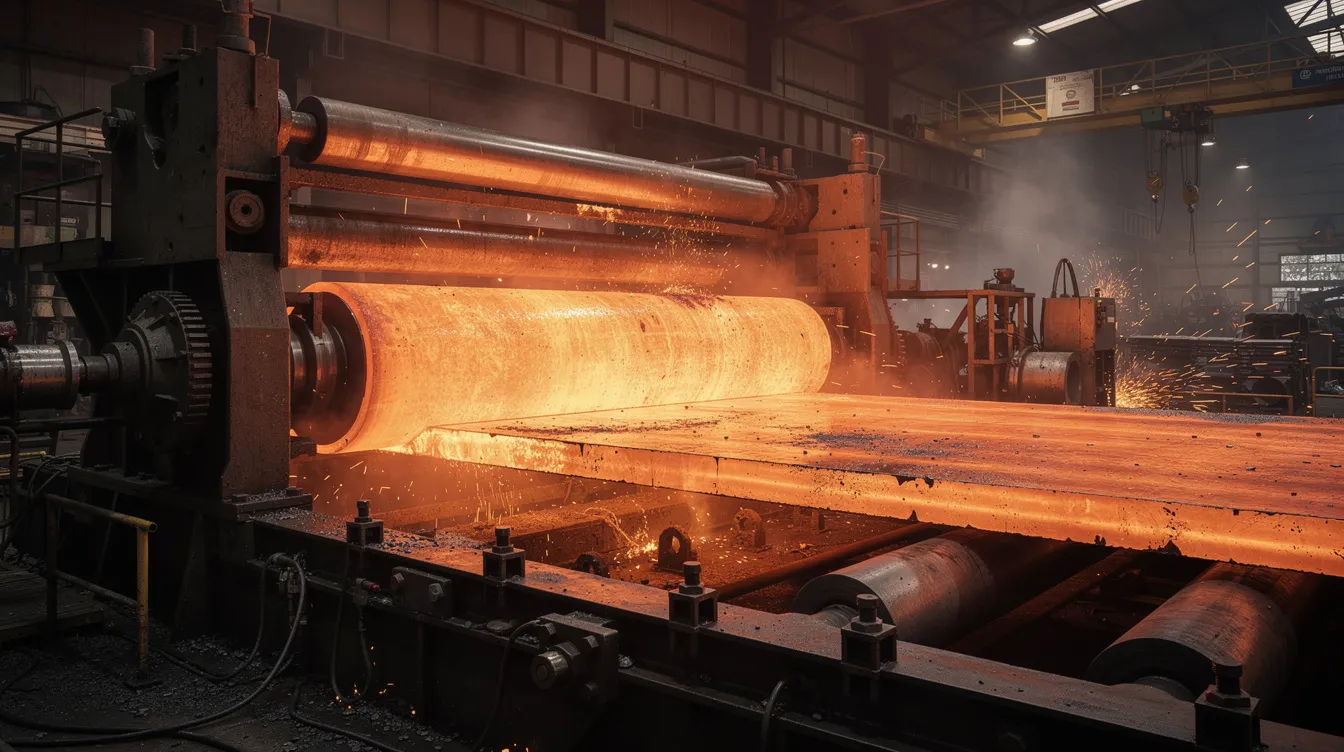
Key Characteristics of Hot Rolled Steel
-
A rougher surface with visible mill scale and surface imperfections that may require removal before coating or precision work – often through pickling, sand blasting, or machining.
-
Looser dimensional tolerances due to uneven cooling: thickness can vary by ±3–5%, and flatness, width, and straightness are less tightly controlled.
-
Hot rolled steel is free from internal stresses because recrystallization during the rolling process relieves dislocation buildup.
-
Good ductility and formability, though yield strength is slightly lower than equivalent cold rolled products (typically 250–350 MPa for low-carbon grades).
-
Hot rolling leads to less control over final shape and size due to thermal shrinkage as the material contracts during cooling.
For many structural and welded fabrications, these physical characteristics are acceptable and cost-efficient.
Benefits of Hot Rolled Steel
Hot rolled steel is usually cheaper per tonne because hot rolling is typically more cost-effective than cold rolling for large-scale production – fewer steps, continuous throughput, and no additional processing like annealing or temper rolling.
Hot rolled steel is easier to shape and form, making it suitable for large sections, heavy plate, and long products where tight tolerances are not critical. Production time is shorter, and common structural sizes are readily available. Because hot rolling avoids strain hardening, the hot rolled material is straightforward to flame cut, drill, and weld. It can also serve as economical starting stock for CNC machining where external scale and excess material will be removed anyway.
Typical Applications of Hot Rolled Steel
Hot rolling is ideal for structural components like I-beams and railroad tracks. Other common construction applications include building frames, bridges, road guardrails, and heavy vehicle chassis. Hot rolled steel is suitable for non-precision applications, and it can be used in construction and welding without concern for cosmetic appearance.
For Anebon’s customers, hot rolled plate frequently serves as the starting stock for base frames, machine beds, welded brackets, and large fabricated housings where precise shapes are not critical at the rolling stage. After hot rolling, parts undergo further processing – CNC machining, laser cutting, bending, and surface finishing – to meet final specifications.
What Is Cold Rolled Steel?
Cold rolled steel is hot rolled steel that has been further processed at or near room temperature to deliver closer dimensional tolerances, better surface qualities, and higher mechanical strength. The cold rolling process follows these steps:
-
Pickling removes mill scale from the hot rolled coil using acid baths. Additional processes like pickling increase complexity and cost in cold rolling.
-
Cold reduction passes the strip through rolling mills at near room temperature, reducing gauge by 40–90%.
-
Annealing restores ductility lost during work hardening processes.
-
Temper rolling / skin pass provides final flatness, surface texture, and mechanical uniformity.
For bars and profiles, cold drawing or turning and grinding (cold finishing) achieves precise dimensions and better concentric uniformity. Cold rolling is generally limited to thinner materials compared to hot rolling – typically 0.3–6 mm gauge for sheet – though cold finished bars can be thicker.
Cold rolled steel is widely used where precise shapes, flatness, and tight thickness control are essential. Understanding how sheet metal is made helps clarify where the cold rolling process fits in steel production.
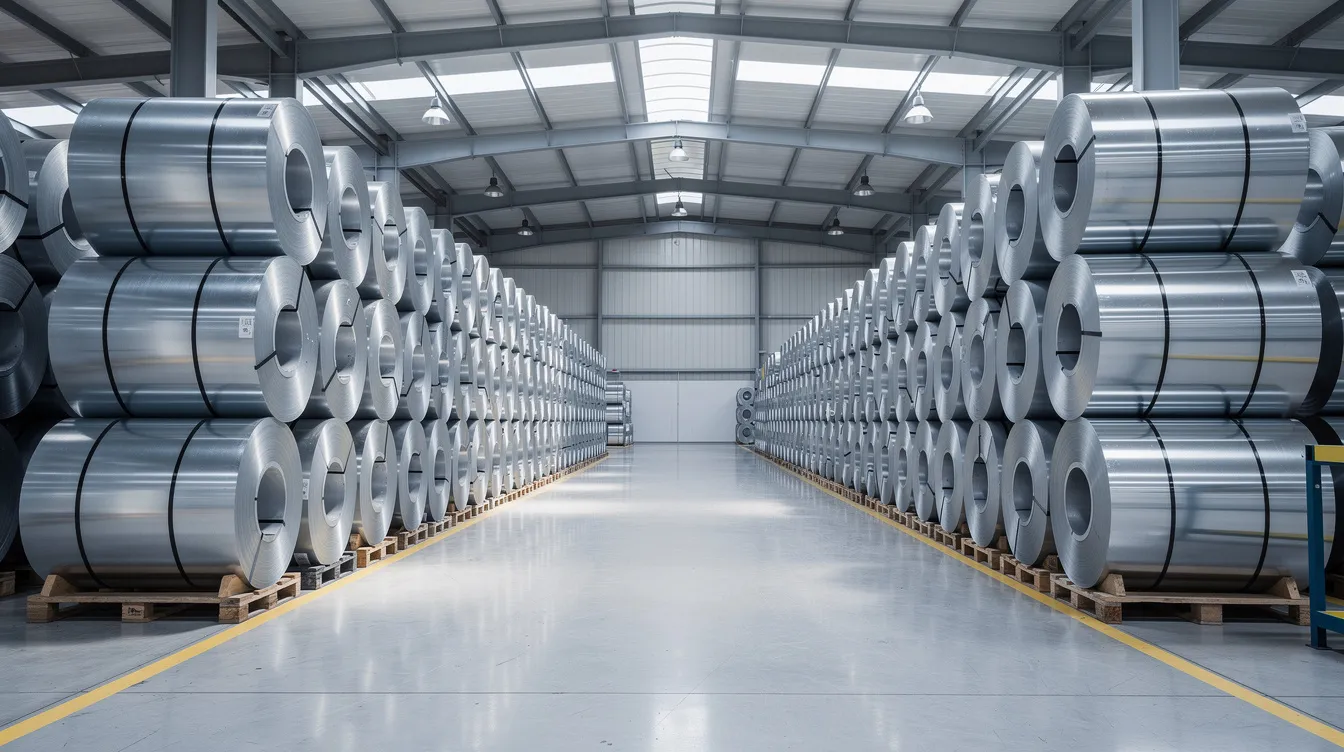
Key Characteristics of Cold Rolled Steel
Cold rolled metal delivers tighter dimensional tolerances than hot rolled steel – thickness tolerances on the order of ±0.05–0.15 mm enable consistent stamping and forming. Width, flatness, and straightness are also tightly controlled, producing precise shapes with sharp edges.
The typical surface is smooth, bright, and often lightly oiled for corrosion resistance during storage and transport. Cold rolled steel has a smoother, shinier surface finish that is ready for coating, painting, or plating.
Yield strength rises to approximately 300–450 MPa for low-carbon grades – cold rolled steel is up to 20% stronger than hot rolled steel of the same chemistry. However, cold-rolled steel can exhibit increased brittleness due to internal stresses from cold work. Annealing can relieve those stresses when ductility is needed for subsequent sheet metal bending operations.
Benefits of Cold Rolled Steel
-
Tight thickness, width, and flatness tolerances simplify downstream machining and assembly, reducing the chance of warping and tolerance challenges in production.
-
Increased mechanical strength and hardness from cold work enable thinner, lighter designs with adequate stiffness.
-
Superior aesthetics: an aesthetically pleasing finish suitable for visible surfaces on appliances, consumer products, and automotive panels.
-
Consistent material properties and precise dimensions improve repeatability in stamping, deep drawing, and bending.
-
Cold rolled steel is suitable for applications requiring high precision, and starting with a cold rolled product for sheet metal fabrication reduces rework and scrap rates.
Typical Applications of Cold Rolled Steel
Cold rolled steel is commonly used in automotive parts manufacturing – body panels, doors, trunk lids – as well as household appliances (refrigerator doors, washers, dryers), office furniture, electrical enclosures, and precision brackets.
For Anebon’s clients, cold rolled sheet is the go-to for small housings, chassis for electronics, medical device covers, robotics parts, and consumer hardware with visible steel surfaces. It is commonly selected for laser-cut sheet metal parts requiring precise dimensions and cosmetic appearance. Cold rolled coil also feeds roll-formed profiles where accurate geometry and consistent wall thickness are essential. For prototypes and low-volume production, cold rolled sheet offers predictable forming behavior.
Cold Rolled vs Cold Formed Steel
These terms are often confused, but they describe different things. Cold rolled steel refers to the flat sheet/coil processing method that improves surface qualities and tolerances. Cold formed steel refers to the final shape being formed at room temperature – through roll forming, press braking, or stamping – to create structural profiles like framing studs, tracks, lightweight purlins, and custom sections.
Cold formed steel members typically start from cold rolled coil and gain additional strength through strain hardening at bend locations. This makes cold formed steel ideal for lightweight yet strong structural solutions in construction applications and machinery framing.
At Anebon, we fabricate cold formed sheet metal components through CNC bending, roll forming partners, and secondary machining when tight tolerances on the final shape are required.
Comparing Hot Rolled vs Cold Rolled Steel: Key Differences
When comparing hot rolled vs cold rolled steel, the differences cascade from the rolling process into every downstream decision. Here is a summary:
|
Parameter |
Hot Rolled |
Cold Rolled |
|---|---|---|
|
Processing Temp |
Above re crystallization temperature (>1700 °F) |
Near room temperature |
|
Thickness Range |
Thick plate products (10–100+ mm) |
Thin to moderate (0.3–6 mm sheet) |
|
Dimensional Tolerances |
Loose (±3–5% thickness) – less control |
Tight (±0.05–0.15 mm) |
|
Surface |
Rougher surface, mill scale, dark |
Smooth surface, bright, clean |
|
Yield Strength |
~250–350 MPa |
~300–450 MPa |
|
Internal Stresses |
Low (recrystallized) |
Higher (work hardened) |
|
Cost |
Lower |
~10–30% premium |
|
Availability |
Structural sizes widely stocked |
Precision sheet/coil; may have lead times |
Cold rolling is generally more expensive than hot rolling due to extra processing steps, but it can reduce downstream finishing cost substantially.
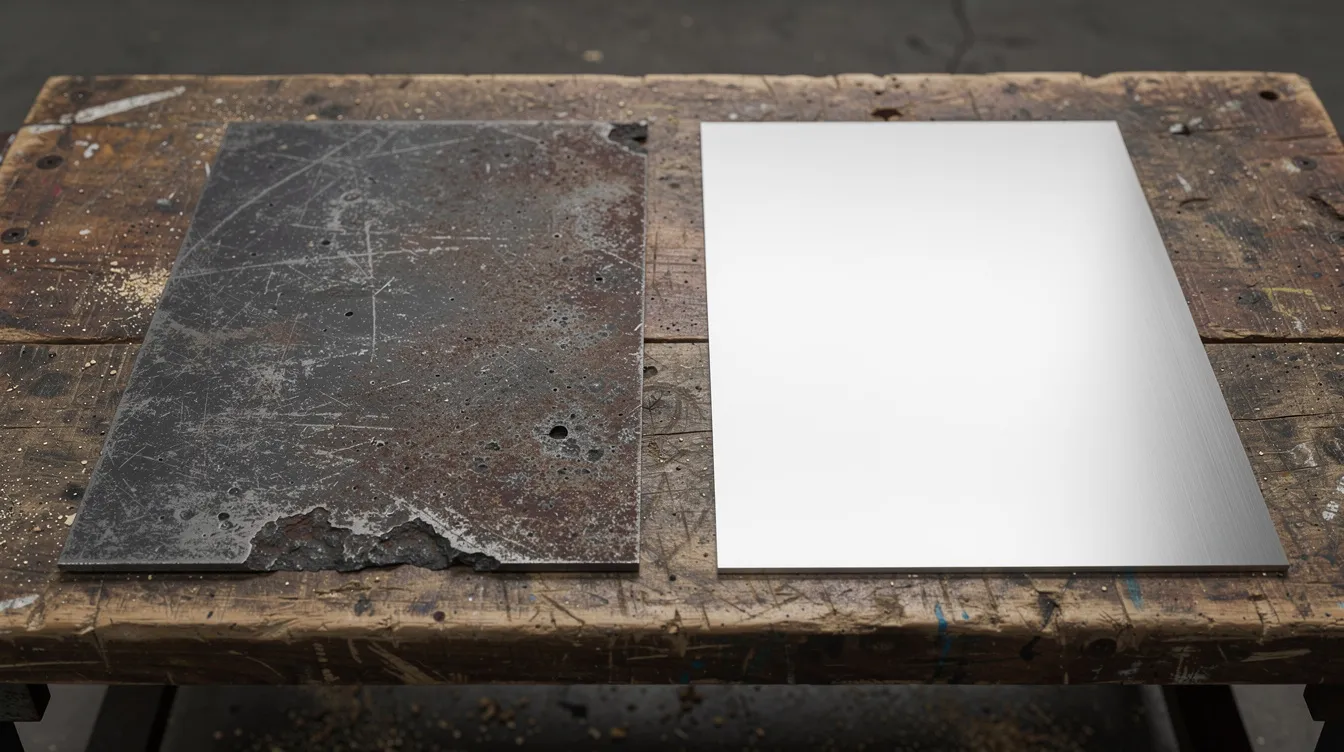
Hot Rolled vs Cold Rolled in CNC Machining and Sheet Metal Fabrication
The choice between hot rolled and cold rolled directly affects CNC machining time, tool wear, and achievable dimensional accuracy. For thick, heavily machined plates or blocks, hot rolled steel is a cost-efficient starting point – most of the rough, scaled surface is machined away regardless, so paying a premium for mirror finishes on raw materials adds no value.
For thin sheet metal parts with precise bends, hole locations, and cosmetic surfaces, cold rolled sheet is preferred. Its uniform thickness and clean surface mean fewer setup adjustments, less tool wear, and better surface qualities after cutting.
At Anebon, typical use cases include hot rolled plate for machined bases and cold rolled sheet for laser-cut and bent enclosures, brackets, and covers. We advise design engineers to consider tolerance stack-up, flatness, and cosmetic requirements early – where tolerances are critical, cold rolled stock prevents cumulative errors in fabricated assemblies.
How to Choose the Right Steel Type for Your Project
Use this practical framework when deciding between hot rolled and cold rolled steel:
-
Surface aesthetics matter? Choose cold rolled for an aesthetically pleasing finish on visible parts.
-
Large, simple structural component? Hot rolled delivers maximum cost efficiency.
-
Tight tolerances on thickness, flatness, or hole position? Cold rolled minimizes variation.
-
Heavy machining will remove most material? Hot rolled saves on raw materials cost.
-
Thin gauge under load? Cold rolled’s higher mechanical strength allows thinner cross-sections.
-
Deep drawing or precision applications? Annealed cold rolled gives predictable formability.
For sectors Anebon serves – automotive brackets, medical housings, aerospace fixtures, industrial machinery components – early collaboration with a manufacturing partner ensures material choice, manufacturability, and total cost are balanced from the start.
Common Mistakes When Comparing Hot Rolled and Cold Rolled
A frequent error: treating “cold rolled” and “hot rolled” as different steel grades. They are not. The difference between hot rolled and cold rolled is a processing method applied to the same base chemical composition.
Other common mistakes include:
-
Over-specifying cold rolled steel where hot rolled would suffice – paying a premium for surface qualities and tolerances that will be machined away.
-
Choosing hot rolled for components that require tight flatness or a high-quality surface, then spending more on rework, flattening, and rejection.
-
Specifying generic “rolled steel” on drawings without noting standards (ASTM, EN, JIS), thickness tolerances, or surface finish – leading to supply mismatches.
-
Ignoring tension breaking or re rolled conditions that affect how the material behaves in forming.
Involve your fabricator when finalizing drawings. This avoids conflicts between material type, thickness, and achievable tolerance ranges.
Why Work with Anebon Metal Products for Rolled Steel Components?
Anebon Metal Products Limited is an ISO 9001:2015 and ISO 14001:2015 certified precision manufacturer based in Dongguan, China, established in 2010. We work with both hot rolled and cold rolled steels, aluminum, stainless steel, and other metals across CNC machining, die casting, and sheet metal fabrication.
Our capabilities include tight tolerances down to ±0.002 mm on critical CNC features, high-precision bending, and a wide range of surface treatments. For overseas OEMs and R&D teams, we provide DFM feedback on hot rolled vs cold rolled selection, rapid prototyping, and scaling to full production.
Ready to select the right steel for your next project? Request a quote or share your drawings and material requirements – our engineering team will recommend the optimal steel type and process for your precision parts.