Cold Rolled versus Hot Rolled: Key Differences and Benefits Explained
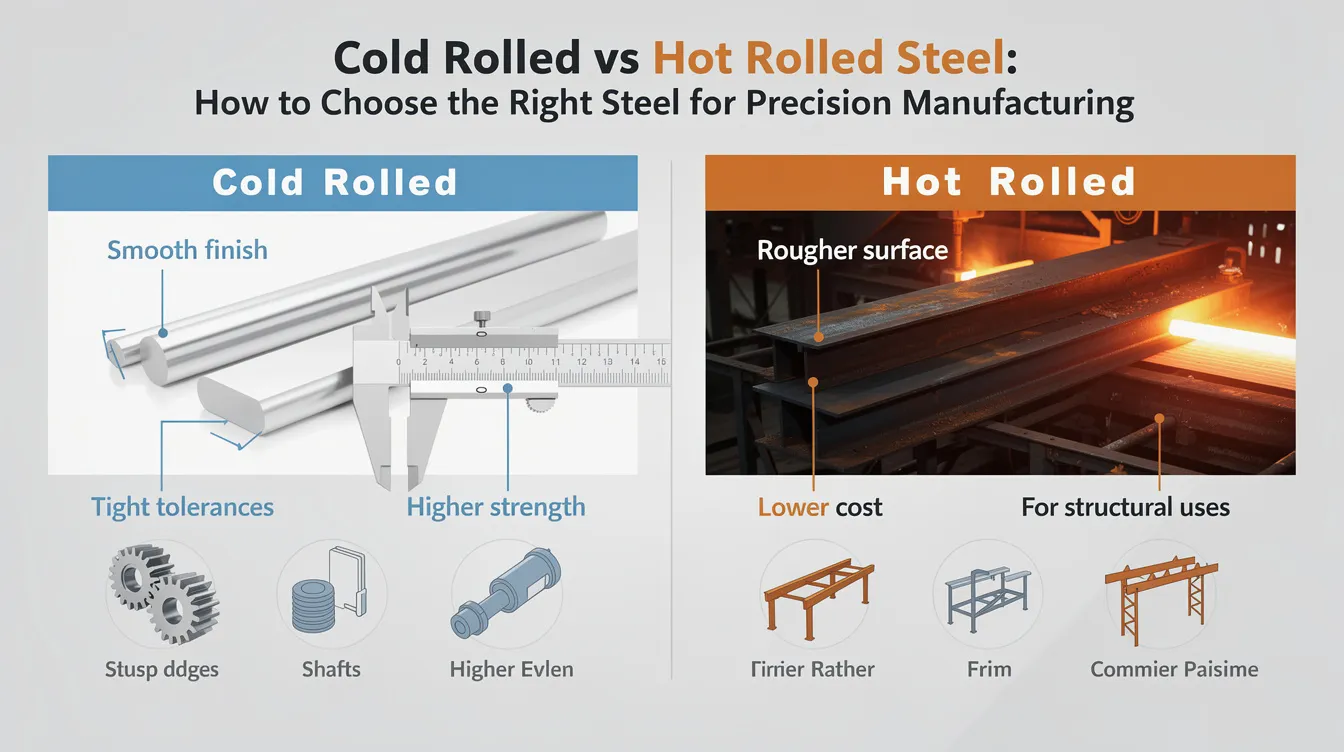
Cold Rolled vs Hot Rolled Steel: How to Choose the Right Steel for Precision Manufacturing
Selecting between cold rolled versus hot rolled steel is one of the most common material decisions in precision manufacturing. Get it right, and you save money while hitting every tolerance and finish spec. Get it wrong, and you’re stuck with rework, scrap, or unnecessary cost.
This guide breaks down the difference between hot rolled and cold rolled steel with real data, so you can make the right call for your next project.
Quick Answer: Difference Between Hot Rolled vs Cold Rolled Steel
The main difference comes down to processing temperature and what that does to the finished product. Hot rolled steel is processed above 1700°F (926°C), above the steel’s recrystallization temperature, and then cooled in air. Cold rolled steel starts as essentially hot rolled steel that undergoes further processing at or near room temperature through cold reduction mills.
The trade-offs are straightforward:
-
Hot rolled = lower cost, rougher surface, looser tolerances, easier to form
-
Cold rolled = higher cost (typically 20–40% premium), smooth surface, higher strength, tight tolerances and precise shapes
Both are widely used in sheet metal fabrication and CNC-machined OEM parts. The right steel depends on your project’s requirements for tolerance, appearance, and budget. At Anebon Metal Products Limited, we routinely work with both hot rolled and cold rolled steel for overseas OEMs across automotive, aerospace, medical, and electronics industries.
Understanding the Rolling Process
Rolling steel is a fundamental mill process that transforms cast slabs or billets into steel sheet, plate products, bars, and coil products by passing raw materials through rollers under pressure. The recrystallization temperature is the threshold above which a deformed metal spontaneously forms new strain-free grains. For most steels, this sits around 926°C (1,700°F).
Hot rolling occurs above this temperature, allowing the metal to deform freely. Cold rolling happens afterward at room temperature, refining dimensional accuracy and surface finish. Both hot rolled and cold rolled steel can be produced from common grades-low-carbon mild steel, high-strength low-alloy (HSLA)-used across fabrication and CNC machining. The rolling route significantly impacts material properties, surface condition, and behavior in secondary processes like bending, welding, and machining.
Hot Rolled Steel
Hot rolled steel is the baseline product from which many other forms are derived. A steel slab or billet is heated above ~1,700°F at high temperatures and run through roughing and finishing stands to reach target thickness and width. As the metal shrinks during air cooling, mill scale (an oxide layer) forms, producing a scaled surface with slightly rounded edges and less uniform thickness.
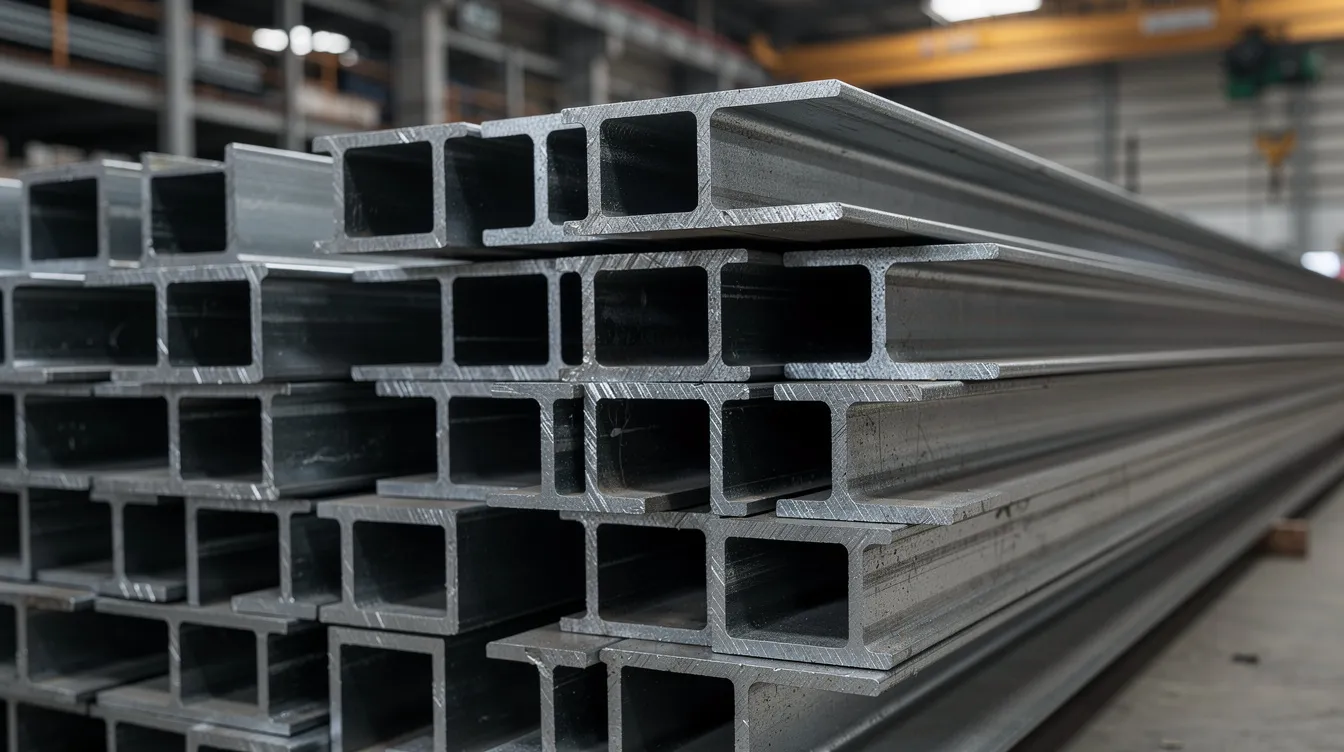
Because hot rolling occurs above the recrystallization temperature, it relieves internal stresses, yielding a relatively ductile hot rolled material that is easier to shape and form. Common forms include plate, wide sheet, i beams, channels, angles, flat bars, and structural sections. Hot rolled steel can be pickled (acid cleaned) or treated with sand blasting to remove mill scale before painting, coating, or precise finishing.
Characteristics and Mechanical Properties of Hot Rolled Steel
Hot rolled steel is free from internal stresses after cooling, which gives it consistent behavior during welding and forming. Key characteristics include:
-
Yield strength: ~250–350 MPa (36–50 ksi)
-
Tensile strength: ~400–550 MPa
-
Elongation: 20–35% for mild grades
-
Thickness tolerance: ±0.3–0.5 mm (less control versus cold rolled)
-
Surface roughness (Ra): ~3–12 µm untreated
Hot rolled steel has a rougher surface finish than cold rolled steel. The rougher surface with surface imperfections, small waviness, and occasional edge irregularities is acceptable for construction or heavy equipment parts where appearance is secondary. Most hot rolled mild steels (ASTM A36, Q235) weld readily. However, the scaled surface can affect downstream processes like powder coating or tight-tolerance machining unless first cleaned or ground.
Hot Rolled Steel Applications
Hot rolled steel is preferred where cost and strength matter more than precision and surface finish. Hot rolled steel is suitable for applications with loose tolerances and is often used when precise tolerances are not required. Common hot rolled steel applications include:
-
Construction: building frames, columns, and beams for warehouses and factories
-
Heavy equipment: machinery bases, brackets, and support structures
-
Rail: railroad tracks and rail components
-
Shipbuilding: offshore structures and marine framing
-
OEM fabrication: welded machine frames, jigs, fixtures, and thick plates for CNC machining where final surfaces will be milled
Hot rolled steel is ideal for large structural components and is commonly used for manufacturing railroad tracks. It is often used in welding projects due to its strength and ductility. Hot rolled plate and sheet metal serve as starting points for laser cutting, plasma cutting, and bending parts that do not require cosmetic finishes. For prototypes or large welded assemblies, hot rolled steel offers a cost effective material choice.
Cold Rolled Steel
Cold rolled steel is hot rolled material that has been further processed at or near room temperature. The strip passes through cold reduction mills, reducing thickness by a precise percentage and increasing strength via work hardening. Cold rolling increases strength through strain-hardening, making a cold rolled product typically 20% stronger than hot rolled steel of the same grade.
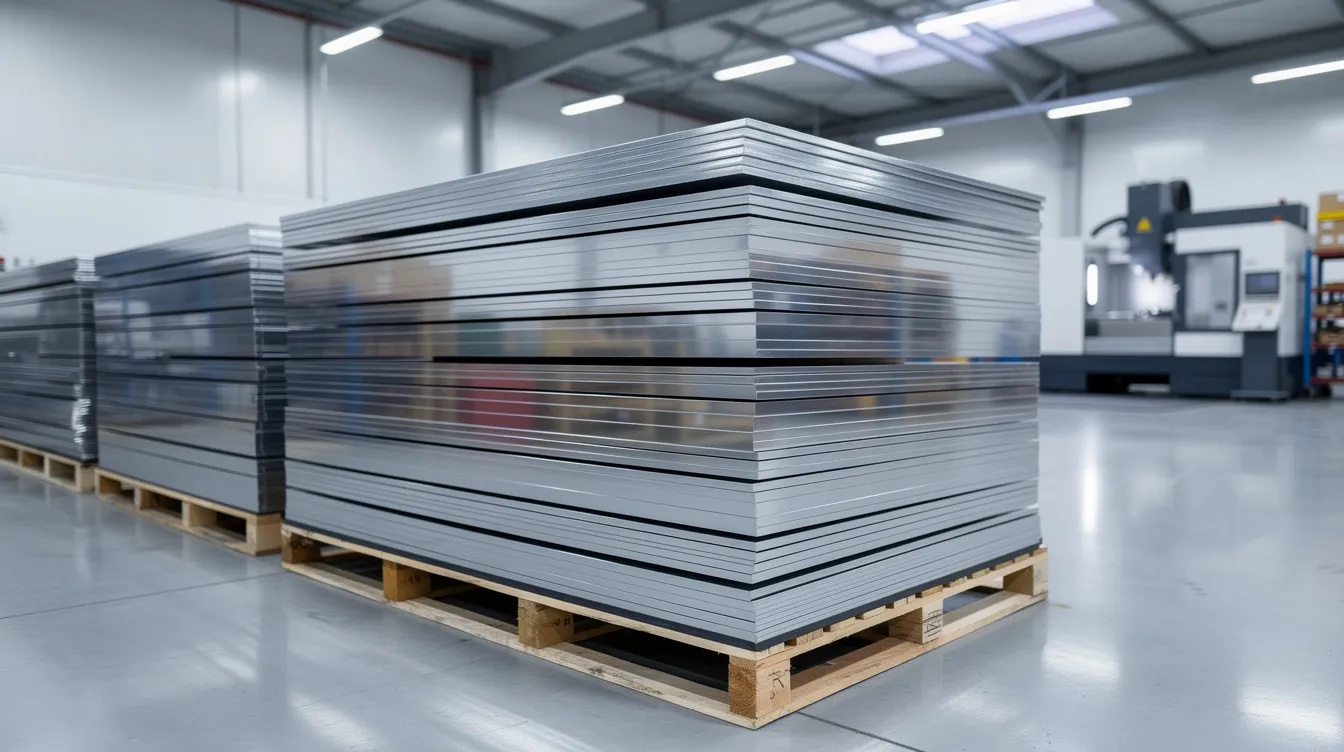
Subsequent steps include annealing (to restore ductility after work hardening processes) and temper rolling for consistent surface and mechanical properties. The result: a very smooth surface, sharper edges, more consistent thickness, and better flatness. The term “cold rolled steel” typically applies to sheet and coil, while bars may be called cold finished or produced through cold drawing.
Characteristics and Mechanical Properties of Cold Rolled Steel
Cold rolled steel delivers closer dimensional tolerances, higher strength, and refined surface finish. Key properties:
-
Yield strength: ~300–450 MPa (40–65 ksi)-up to 20% stronger than equivalent hot rolled
-
Tensile strength: ~450–600+ MPa
-
Elongation: 5–15% (full hard), 20–30%+ (annealed)
-
Thickness tolerance: ±0.05–0.15 mm
-
Surface roughness (Ra): ~0.5–2.5 µm
Cold rolled steel has tighter dimensional tolerances than hot rolled steel and offers a smoother surface finish. This supports cosmetic finishes like brushing, polishing, and high-end powder coatings. The consistent thickness improves repeatability in CNC punching, laser cutting, and progressive-die stamping. The trade-off: strain hardening increases strength but reduces ductility if not annealed, increasing springback risk during forming. Cold rolled sheet may also feel slightly oily from protective lubrication, requiring cleaning before painting or bonding.
Cold rolled steel is suitable for applications requiring high precision, where tolerances and exact dimensions drive assembly quality. It is ideal for precision applications and parts requiring a wider range of surface treatments.
Cold Rolled Steel Applications
Cold rolled steel is chosen for precision, aesthetics, and high-performance thin-gauge precision applications. It is utilized for components requiring a flawless aesthetic. Specific examples:
-
Automotive parts: body panels and structural reinforcements
-
Appliances: it is commonly used in manufacturing appliances like washing machines and refrigerators
-
Furniture: cold rolled steel is suitable for furniture production-office furniture, racks, shelving
-
Consumer electronics: cold rolled steel is used in consumer electronics construction-enclosures, brackets, and chassis
-
Metal containers: it is frequently used in metal containers and housings
-
Precision stampings: common applications of cold rolled steel include home appliances and precision stampings
For Anebon’s OEM customers, this includes instrument panels, medical device housings, robotics brackets, machine covers, and electronic chassis. Engineers choose cold rolled when consistent steel sheet thickness, precise shapes, and clean edges eliminate assembly issues and reduce rework.
Hot Rolled vs Cold Rolled: Side-by-Side Comparison
Choosing between hot rolled vs cold rolled steel isn’t about “better or worse”-it’s about matching the steel type to the application. Here is a vs cold rolled steel comparison:
|
Metric |
Hot Rolled |
Cold Rolled |
|---|---|---|
|
Cost |
Baseline (lower) |
20–40% premium |
|
Yield Strength |
250–350 MPa |
300–450 MPa (higher strength) |
|
Thickness Tolerance |
±0.3–0.5 mm |
±0.05–0.15 mm |
|
Surface Finish (Ra) |
3–12 µm (rougher) |
0.5–2.5 µm (smooth) |
|
Elongation |
20–35% |
5–30% (depends on temper) |
|
Edges |
Rounded edges |
Sharper, defined edges |
|
Internal Stresses |
Minimal |
Present unless annealed |
|
Best For |
Construction, heavy fab |
Precision parts, cosmetic surfaces |
In secondary processes: both are weldable, though hot rolled is slightly easier. Cold rolled may spring back more during bending due to higher yield. In machining, cold rolled gives cleaner cuts but is harder on tools. Hot rolled may need additional processing like grinding or sand blasting to prep surfaces.
Anebon can advise on the optimal choice based on tolerance stack-ups, cosmetic requirements, and target cost for your OEM parts.
Cold Rolled vs Cold Formed Steel
Cold rolled steel and cold formed steel are related but distinct. Cold rolled steel refers to sheet or coil produced by cold reduction, annealing, and temper rolling to a specific gauge and finish. Cold formed steel refers to shapes-channels, studs, brackets-produced by bending or roll forming cold rolled coil at room temperature.
Cold forming adds local strain hardening beyond what cold rolling provided, which matters for structural members. Examples include building studs, cable tray systems, rack uprights, and light-gauge structural members. At Anebon, we use both cold rolled and cold formed processes to create precise sheet metal components for automotive, electronics, and industrial machinery.
How to Choose the Right Steel for Your Project
The right steel choice depends on functional, cosmetic, and cost requirements-not material grade alone. Key decision factors:
-
Tolerances: Where tolerances must be tight (±0.1 mm or better), cold rolled wins
-
Surface: Need paint-ready or cosmetic? Cold rolled. Hidden structural? Hot rolled
-
Thickness: Hot rolled covers a wider range of thicker plate products; cold rolled excels in thinner gauges
-
Forming: Hot rolled bends easier with less springback; cold rolled requires careful bend radius planning
-
Budget/volume: Hot rolled is more cost effective for large structural parts; cold rolled saves rework on appearance-critical parts
-
Slight distortions: Hot rolled may exhibit slight distortions from cooling; cold rolled holds shape better but may warp if re rolled or machined asymmetrically due to tension breaking of residual stress balance
Early DFM consultation can optimize between hot rolled and cold rolled routes. Anebon can also suggest alternatives-stainless steel, aluminum, or HSLA steels-when corrosion resistance or weight reduction is needed. Share your drawings, tolerance schemes, and volumes so we can recommend the most cost-effective finished product path.
Why Work with Anebon for Hot Rolled and Cold Rolled Steel Components
Anebon Metal Products Limited is an ISO 9001:2015 and ISO 14001:2015 certified precision manufacturer in Dongguan, China, serving overseas OEMs since 2010. Our capabilities span both hot rolled and cold rolled steel processing:
-
Precision sheet metal fabrication, CNC machining (including 5-axis), die casting, and assembly
-
Tolerances as tight as ±0.002 mm on CNC-machined features-starting with the right material supports consistent quality
-
Industry experience: aerospace structural components, medical device housings, automotive components, industrial machinery, and electronics enclosures
-
DFM support: material and thickness recommendations, surface treatment guidance (painting, powder coating, plating, galvanizing) matched to each steel type
Ready to get started? Request a quote or submit your CAD files for a free DFM review. We support everything from rapid prototyping to full-scale production with short lead times-for both small-batch and volume orders.