Cold Rolled or Hot Rolled Steel: Which One is Right for Your Project?
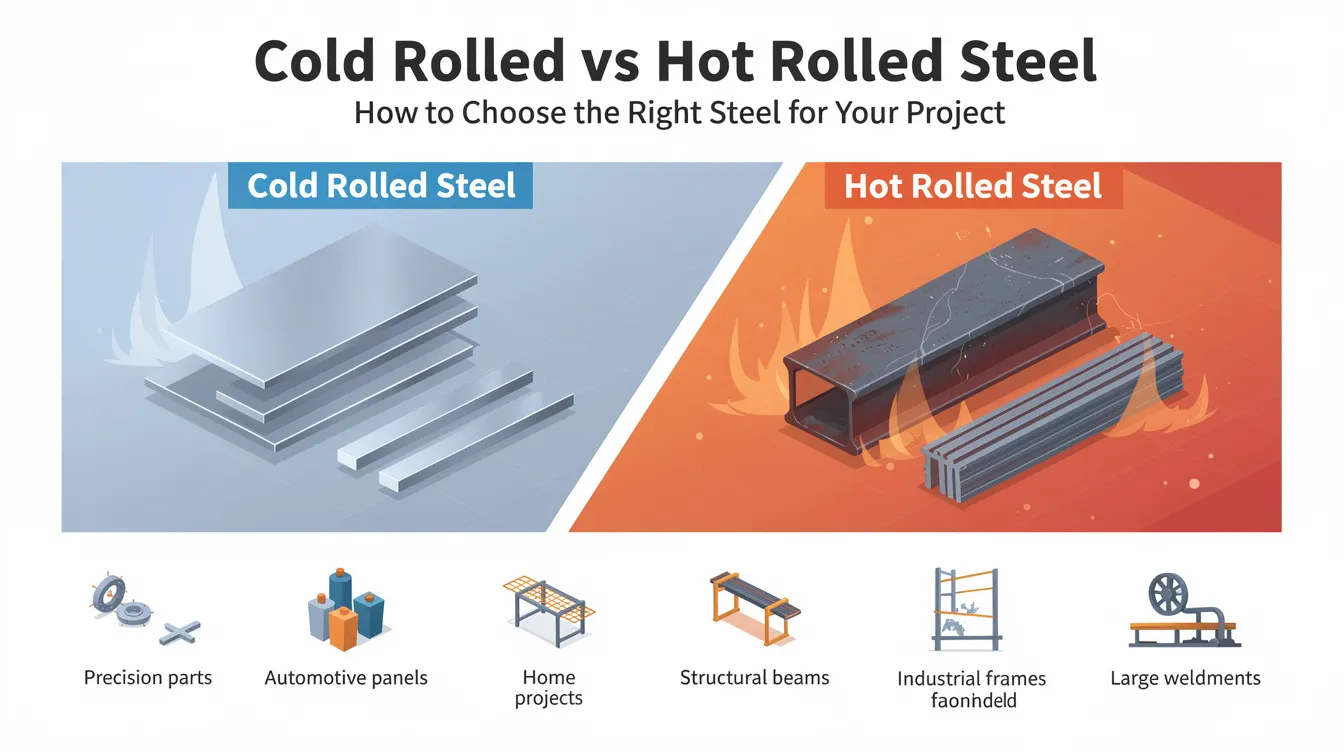
Cold Rolled vs Hot Rolled Steel: How to Choose the Right Steel for Your Project
Choosing between cold rolled or hot rolled steel is one of the most common material decisions in metal fabrication. The right steel type can save your project thousands in downstream costs – or create expensive rework if you get it wrong. Here’s what you need to know.
Quick Answer: Hot Rolled vs Cold Rolled Steel
The main difference between hot rolled and cold rolled steel is processing temperature, not chemical composition or steel grade. Both start as the same raw materials. The difference lies in how the final forming steps happen.
Hot rolling occurs above 1,700°F (926°C) – well above the steel’s recrystallization temperature – so the metal stays malleable during shaping. Cold rolling occurs at or near room temperature after the steel has already been hot rolled, adding further processing steps to refine the finished product.
The core trade-offs break down simply:
-
Hot rolled steel is cheaper, has a rougher surface, and comes with looser dimensional tolerances – ideal for heavy structural work.
-
Cold rolled steel is up to 20% stronger, delivers a smooth surface and precise dimensions, but costs more due to additional processing.
-
For structural beams and equipment frames, hot rolled material is the standard. For electronics housings and precision sheet metal parts, cold rolled is the clear choice.
Anebon Metal Products Limited routinely works with both hot rolled and cold rolled steels, providing precision CNC machining and sheet metal fabrication for OEM clients worldwide.
Understanding Rolled Steel: How Hot and Cold Rolling Work
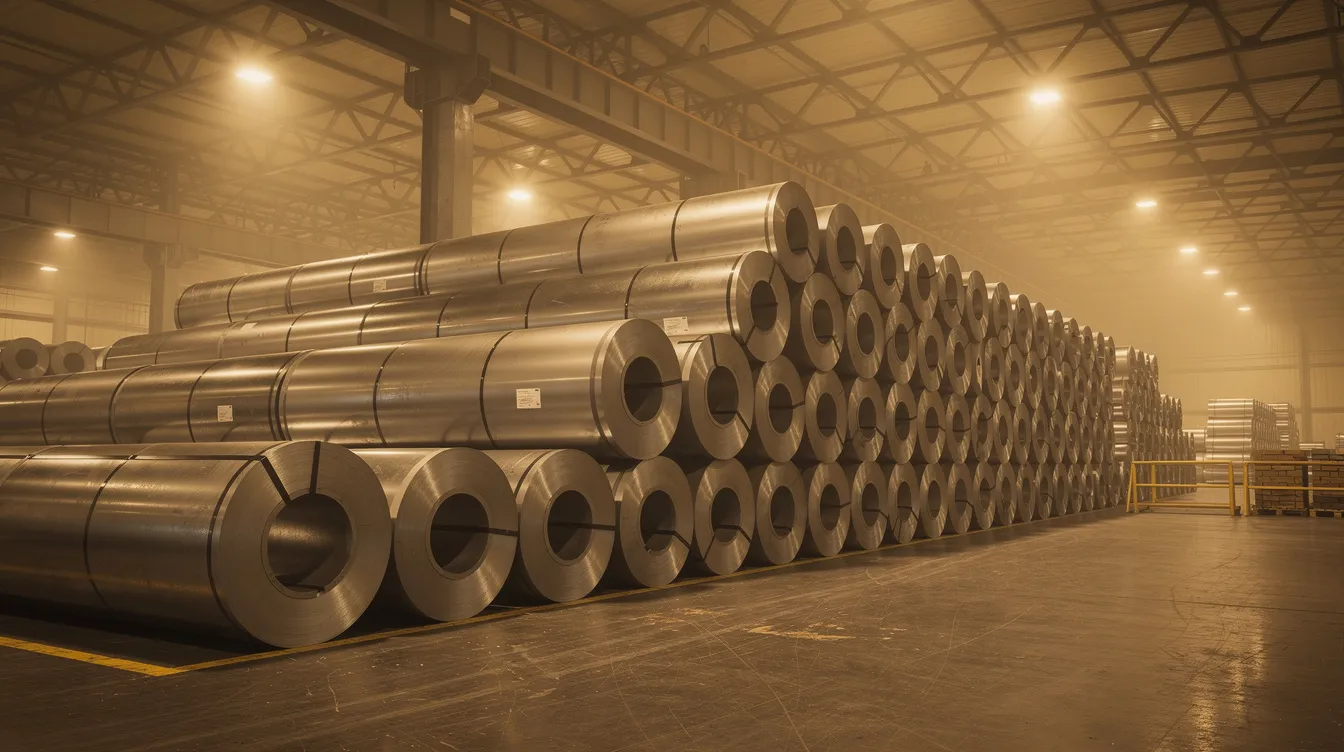
Rolled steel is steel that has been passed through sets of rollers to reduce thickness, refine grain structure, and achieve uniform material properties. Without rolling, cast steel would have uneven thickness, coarse grains, and a rough surface finish unsuitable for most engineering applications.
The generic mill process follows this sequence: melt → cast into slabs or billets → reheat → hot roll through roughing and finishing mills → cool. For cold rolled product, the sequence continues: pickle to remove mill scale → cold reduce at room temperature → anneal or temper roll → finish.
Both hot rolled and cold rolled steel begin as the same base material with the same chemical composition. The difference is entirely in further processing. Typical forms include sheet metal coils, flat bar, plate products, structural shapes like i beams and channels, and precision strip for cold formed steel framing. These process choices directly affect surface finish, dimensional accuracy, internal stresses, and how the steel behaves during later CNC machining or fabrication.
Hot Rolled Steel
Hot rolled steel is rolled above the recrystallization temperature – commonly over 1,700°F (926°C). At these high temperatures, hot rolling makes steel more malleable for shaping into various forms, from thin hot rolled sheet to massive structural beams. It is essentially hot rolled steel in its first finished stage from the mill, before any cold reduction.
The typical appearance includes a dark, scaled surface from oxidation, rounded edges, and slight distortions from uncontrolled air cooling. Common product forms include hot rolled sheet and plate, structural shapes (i beams, channels, angles), and heavy bar. Hot rolled steel is cheaper than cold rolled steel because it requires fewer finishing processes, making it cost effective for high-volume, low-precision components.
At Anebon, we regularly receive hot rolled plate and shapes, then machine, weld, or fabricate them for OEM parts where cosmetic finish is secondary.
Key Characteristics of Hot Rolled Steel
-
A rough surface finish with mill scale (oxide layer) from high-temperature oxidation – surface roughness Ra typically 3–12 µm
-
Looser dimensional tolerances, often ±0.3–0.5 mm for plate thickness
-
Slight warping or shrinkage from uncontrolled cooling, producing slight distortions in thin plate products
-
Hot rolled steel is free from internal stresses after cooling because recrystallization relieves most dislocations during the process
-
The scale layer usually requires removal via pickling, grinding, or sand blasting when a clean surface is needed
For CNC machining, hot rolled stock often undergoes initial facing or surface milling to establish accurate reference surfaces.
Advantages of Hot Rolled Steel
-
Lower cost per kg compared to equivalent cold rolled steel – often 20–40% less
-
Hot rolled steel is easier to shape and form, especially in thick cross-sections like beams, columns, and heavy plates
-
Hot rolled steel is suitable for large-scale structural needs due to its malleability and availability in a wider range of sizes
-
The normalized microstructure provides reliable ductility and toughness for welded structures
-
Hot rolled steel is preferred for heavy structural support applications where tolerances and finish are secondary
Common Applications of Hot Rolled Steel
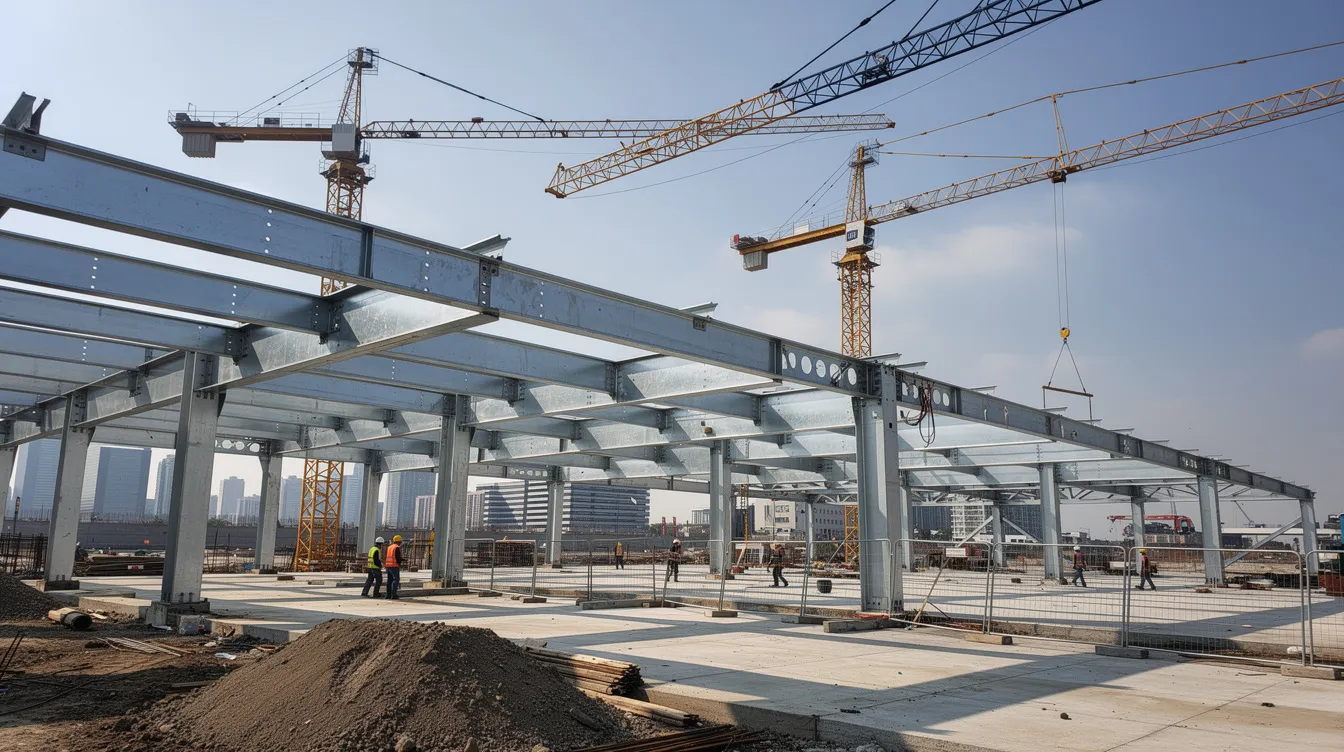
Hot rolled steel is used in construction and welding applications across virtually every heavy industry: building frames, warehouse racking, bridges, agricultural machinery frames, railroad tracks, and shipbuilding components. Hot rolled steel can take heavy load-bearing roles in building frameworks, truck chassis rails, and off-highway equipment. Hot rolled plate and sheet also serve as starting stock for flame-cut or laser-cut components that are then machined to final specs. Designers should specify hot rolled when they need robust, weldable steel at the lowest material cost and plan to machine or trim to final dimensions afterward.
Cold Rolled Steel
Cold rolled steel is hot rolled material that has been cooled, then passed through cold reduction mills at or near room temperature. Cold rolled steel undergoes annealing or temper rolling for refinement, producing tighter thickness control and superior surface finish. Cold rolled steel typically involves more processing steps, increasing its cost compared to hot rolled.
The appearance is distinctly different: a smooth surface, often shiny or matte-oiled, with sharper edges and very consistent thickness. Cold working introduces work hardening, which can increase yield strength by up to 20% compared to hot rolled material of the same grade. However, cold rolled steel is less ductile than hot rolled steel, making it harder to work with in heavy forming operations. Variants include annealed cold rolled (softer, easier to form) and full-hard or temper-rolled material (stronger, less formable).
Anebon frequently uses cold rolled sheet for enclosures, brackets, and precise shapes where both function and appearance matter.
Key Characteristics of Cold Rolled Steel
-
Cold rolled steel has tighter dimensional tolerances than hot rolled steel – thickness tolerances of ±0.05–0.15 mm, enabling closer dimensional tolerances for precision applications
-
Cold rolled steel provides a smoother surface finish (Ra 0.5–2.5 µm), ready for painting or plating with minimal prep
-
Higher strength and hardness from work hardening processes
-
Cold working may introduce residual stresses; managing warping and tolerance challenges requires careful fixturing during CNC operations
-
Cold rolled strip is often the base material for cold formed steel components like light-gauge studs, channels, and electronic chassis parts
Advantages of Cold Rolled Steel
-
Ideal for parts requiring more precise dimensions with minimal clearance – housings, guides, instrument frames
-
Superior surface finish reduces or eliminates heavy post-processing before coating
-
Higher strength and stiffness per unit thickness allows lighter designs in some applications
-
Cold rolled sheet metal improves consistency in downstream automatic bending, stamping, and laser cutting
-
For precision CNC machining, cold rolled rounds and flats help reach tight tolerances (down to ±0.002 mm) with less rework
Typical Applications of Cold Rolled Steel
Cold rolled steel is used for applications requiring high precision: automotive parts and body panels, appliance housings, office furniture, shelving, and consumer electronics casings. It is commonly used in non-load-bearing applications such as medical device housings, robotics enclosures, and industrial control panels where a clean, consistent finish matters. Cold rolled strip and coil products are standard feedstock for cold formed steel framing in commercial buildings. Anebon often recommends cold rolled material for small to medium-sized OEM parts where both mechanical performance and cosmetic quality are specified.
Hot Rolled vs Cold Rolled: Mechanical Properties and Strength
Strength depends on both steel grade (carbon content, alloying) and processing. For the same base grade, cold rolled steel is up to 20% stronger due to strain hardening from cold reduction. Hot rolled steel generally offers higher ductility – elongation of 20–35% versus 5–15% for full-hard cold rolled – making it better at absorbing deformation before fracture. Cold rolled may have higher hardness, influencing tool wear and cutting speeds. Engineers should review mill test reports when exact material properties are critical, especially for aerospace structural components or medical projects. Anebon can assist OEM clients in choosing rolled steel grades that balance strength, machinability, and forming behavior.
Hot Rolled vs Cold Rolled for Welding, Forming, and Machining
Beyond strength, weldability and formability often drive the hot rolled vs cold rolled steel selection.
-
Welding: Hot rolled steels are typically easier to weld due to lower residual stresses. Cold rolled may require more attention to distortion control and weld sequence planning.
-
Forming: Annealed cold rolled sheet excels at precise bends and complex shapes. Full-hard cold rolled can crack if over-formed. Hot rolled handles heavier forming where tolerances on bend radius are less critical. Cold drawing and re rolled processes can further refine shape and dimensional accuracy.
-
Machining: Scale-free cold rolled surfaces reduce initial tool wear, though higher hardness increases cutting forces. Hot rolled often needs descaling or a facing cut but may machine easier in bulk removal.
Anebon uses DFM feedback to advise which steel type will minimize warping, secondary operations, and total cost across welding, bending, and CNC machining.
Surface Finish, Tolerances, and Distortion
Surface finish and dimensional accuracy are the most visible difference between hot rolled and cold rolled steel. Hot rolled steel has a rougher surface finish than cold rolled steel – its scaled surface and surface imperfections require grinding, machining, or pickling before precision assembly. Cold rolled delivers precise finishing quality: minimal scaling, sharp well-defined edges suitable for direct painting, powder coating, or plating.
Distortion works differently in each: hot rolled can warp during cooling; cold rolled parts can move when internal stresses release during heavy machining or welding. Careful fixturing, stress relief, and proper process sequencing – rough machining then finishing – help manage both. Anebon’s ISO 9001:2015 quality system includes in-process dimensional checks and flatness verification to ensure tolerances are met on both material types.
Cold Rolled Steel vs Cold Formed Steel
These terms are often confused. Cold rolled steel is a mill product – sheet or strip that has been cold reduced and finished. Cold formed steel refers to shapes made from that sheet or strip by bending, roll forming, or press braking at room temperature without reheating. One piece of metal can be both: cold rolled coil → laser cut blank → press brake bend to finished bracket.
Cold forming increases strength locally in bend areas through additional strain hardening. Most steels used in cold forming start as cold rolled strip. Anebon produces many cold formed steel components using precision sheet metal fabrication, CNC bending, and roll forming for electronics and machinery OEMs. Engineers should specify both the base material and forming method to avoid ambiguity.
Choosing the Right Steel for Your Application
Neither hot rolled nor cold rolled steel is universally better. The right steel depends on your project’s requirements – cost, tolerances, strength, and finishing needs.
-
Choose hot rolled for heavy structures, non-cosmetic parts, weldments, and situations where less control over surface finish is acceptable
-
Choose cold rolled for precision applications, visible surfaces, tight fits, and parts that undergo heat treated or coated finishing
-
Consider total cost: sometimes the higher raw material cost for cold rolled is offset by reduced machining, grinding, or finishing steps – making it more cost effective overall
Anebon can review your drawings or 3D models and propose whether hot rolled or cold rolled stock best matches your functional and budget targets. Include both metric and imperial thicknesses plus relevant standards (ASTM, EN, JIS) in your RFQs for optimal quoting.
How Anebon Supports Projects Using Hot Rolled and Cold Rolled Steel
Anebon Metal Products Limited, based in Dongguan, Guangdong, China, has provided precision CNC machining, die casting, and sheet metal fabrication since 2010. Core capabilities include CNC milling, CNC turning, 5-axis machining, laser cutting, bending, welding, and assembly of both hot rolled and cold rolled components across a wider range of steels, aluminum, titanium, and engineering plastics.
With ISO 9001:2015 and ISO 14001:2015 certifications, Anebon delivers stable quality and environmental management for overseas OEM and R&D clients. We provide DFM feedback on material choice – advising when to switch from hot rolled to cold rolled steel, adjust thickness, or modify tolerances for manufacturability through rapid prototyping and full production.
Ready to choose the right steel for your next project? Send your drawings or 3D CAD files to Anebon to request a quote for prototypes or production runs using the most appropriate rolled steel for your application.