CNC Machining vs Die Casting Prototyping: Comparison, Advantages, Disadvantages
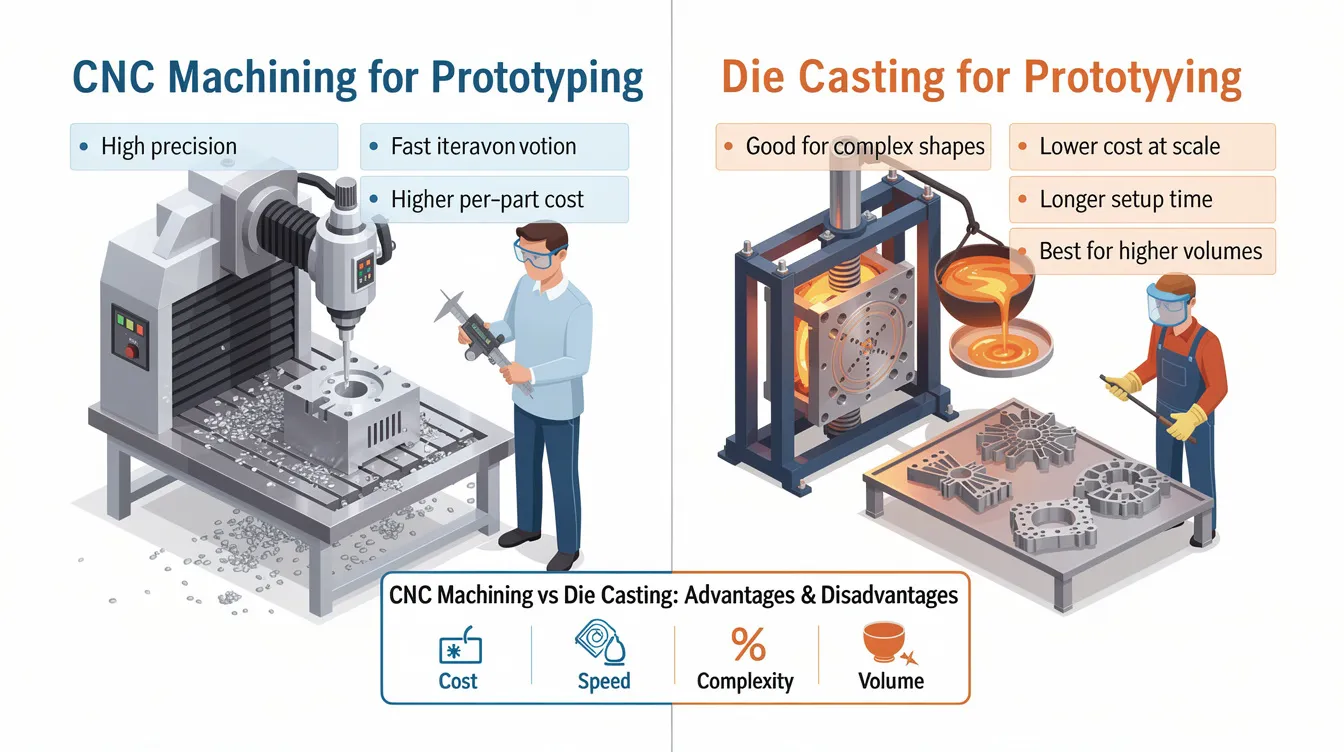
CNC Machining vs Die Casting for Prototyping: Comparison, Advantages & Disadvantages
Choosing between cnc machining and die casting for a new prototype can make or break your development timeline and budget. This article walks you through the key differences between these two manufacturing methods, with real cost data, tolerance specs, and a practical decision framework so you can pick the right process at each stage of your product lifecycle.
Immediate Answer: Which Is Better for Prototyping?
For early prototypes and low volume production runs of 1–500 parts, cnc machining is almost always the better choice. CNC machining is a subtractive manufacturing process where computer controlled tools remove material from a solid block of metal or plastic, producing the desired shape directly from a cad model. It requires no expensive molds, delivers parts in days rather than weeks, and achieves extremely tight tolerances down to ±0.01 mm or better on a modern CNC machine. CNC machining is cheaper for low-volume production under 1,000 parts because the tooling cost is negligible compared to die casting.
Die casting, on the other hand, requires significant upfront costs for tooling and long lead times. A casting mold for aluminum or zinc can cost from US$10,000 to US$50,000 and takes 4–10 weeks to fabricate before a single usable part comes off the line. Die casting becomes cost-effective above 5,000 units, once those initial die costs are amortized across enough pieces. For prototype quantities, the math simply doesn’t work.
Many OEMs and design engineers follow a two-step strategy: they use cnc machined parts for prototyping and small batches, then switch to die casting plus secondary machining only after annual demand exceeds 5,000–10,000 units and the design is frozen. At Anebon Metal Products Limited, we offer both cnc machining and die casting under one roof, which lets us guide clients through exactly this transition from first prototype to mass production.
Overview: CNC Machining vs Die Casting as Prototyping Methods
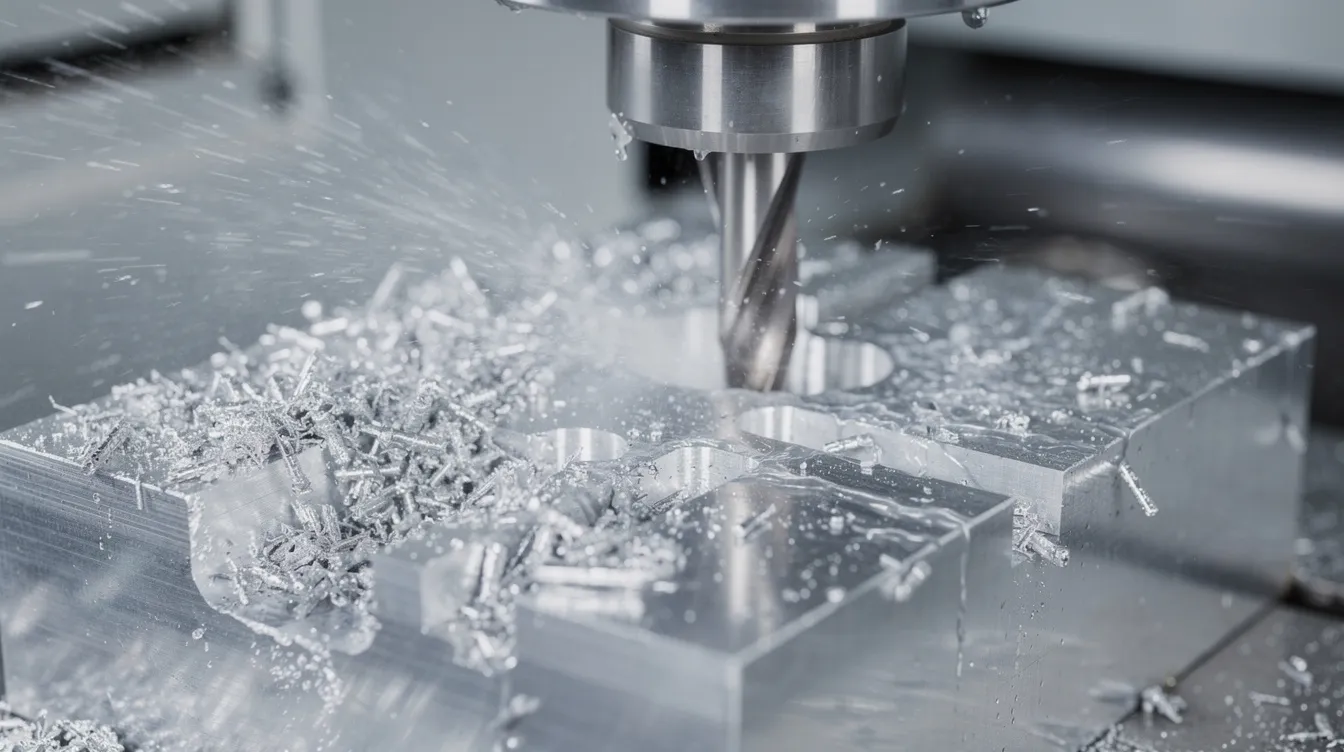
CNC machining and the die casting process represent two fundamentally different approaches to producing metal parts. In the context of prototyping and early-stage production in 2024–2026, understanding how these two processes compare is essential for making cost-effective decisions. Selecting between cnc machining and die casting depends on the stage of product development, expected volumes, and technical requirements.
Here is a high-level snapshot of how they differ:
-
CNC machining: Low setup cost, higher per-part cost, almost no tooling investment, works directly from CAD files, supports rapid iteration
-
Die casting: High tooling investment (casting tooling can run tens of thousands of dollars), very low per-part cost at scale, optimized for repeatability across thousands of identical parts
This article focuses specifically on prototyping and early-stage production-quantities of 1 to 5,000 pieces-rather than purely on high volume production economics, which is a gap many manufacturing guides only touch on briefly. Each section below uses concrete numbers for tolerances, costs, and volumes, drawing from industries like automotive, medical devices, and electronics where precision metal components are non-negotiable.
What Is CNC Machining? (With Prototyping Focus)
The cnc machining process uses computer-controlled cutting tools-end mills, drills, turning inserts-to progressively remove material from a billet or block until the finished part emerges. It is a subtractive process, meaning you start with more material than you need and machine away what you don’t. CNC machining has minimal setup time, requiring only CAD files to begin; there is no need for mold manufacturing or special casting tooling.
Typical machines used for CNC prototype machining include 3-axis and 5-axis machining centers, CNC turning centers, and mill-turn machines. At Anebon, our shops routinely achieve tolerances as tight as ±0.002 mm on critical features, with standard CNC tolerances around ±0.025 mm for general dimensions. CNC machining typically achieves tolerances of ±0.01 mm on precision features verified by CMM inspection.
CNC machining is naturally suited to prototyping because every part is made directly from a cad model without dies or molds. Design iteration is seamless: update the CAD file, regenerate toolpaths, and cut new parts. Common prototype examples include aluminum 6061-T6 electronics housings, stainless steel 316L surgical instruments, and titanium Grade 5 aerospace brackets, produced in quantities from 5 to 200 pieces. CNC machining can also serve as a finishing step on cast parts later-machining sealing faces, bearing bores, threaded holes, and precision datum features on die cast parts that need tighter specs.
What Is Die Casting? (And How It Differs for Prototypes)
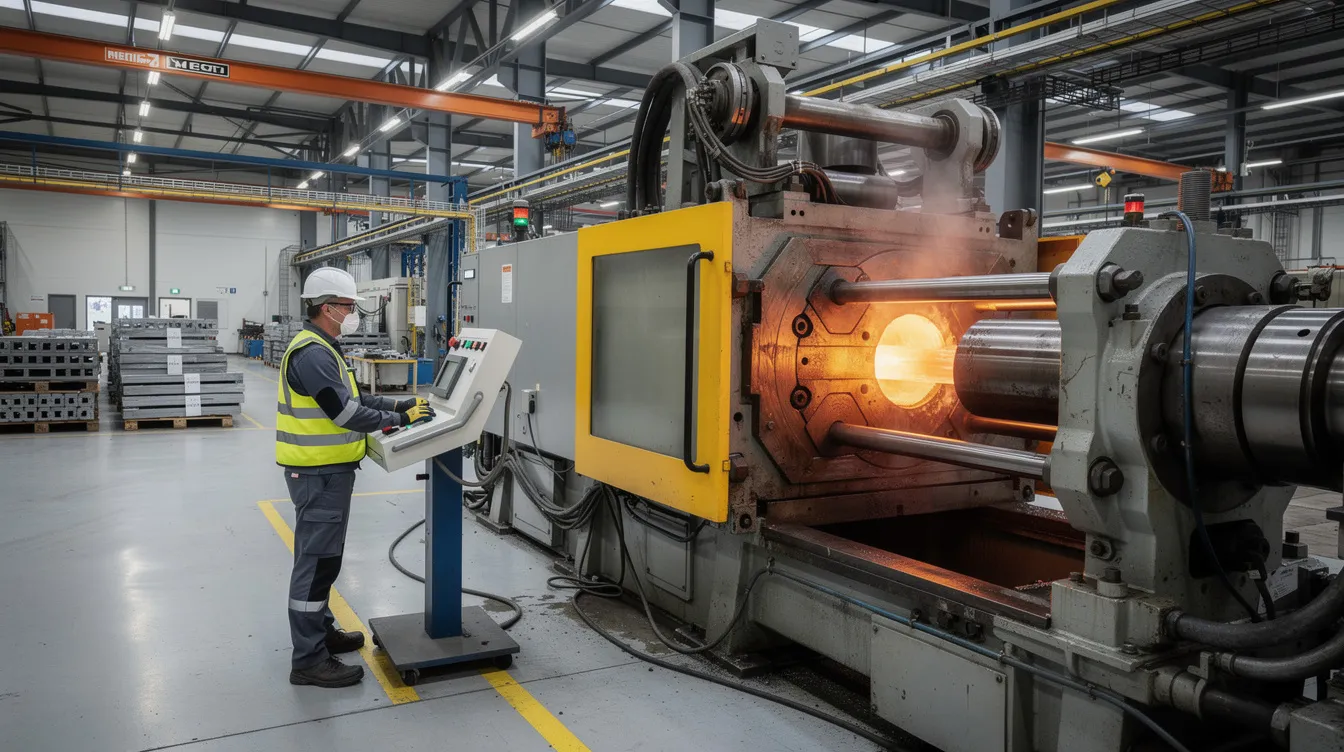
Die casting is a metal casting process that injects molten metal-typically aluminum, zinc, or magnesium alloys-into a hardened steel casting mold under high pressure. The molten metal fills the cavity, solidifies rapidly, and the part is ejected by pins, after which runners and gates are trimmed away. Die casting uses molten metal injected into molds, making it a formative rather than subtractive process.
The basic steps of the die casting process include: die design and CNC machining of the mold halves, assembly, preheating, injection of cast metal under pressure, cooling and solidification, ejection, and removal of flash and gates. Hot chamber machines handle zinc and magnesium alloys (lower melting points), while cold chamber machines are used for aluminum alloys common in automotive and electronics enclosures. Die casting achieves cycle times of 30–90 seconds per part once the mold is running, which is what makes production speed so attractive at scale.
Die casting requires molds that can cost thousands to tens of thousands of dollars, and even “prototype tooling” using softer steels still runs several thousand US dollars with 4–8 week lead times. Die casting is best suited for complex, high-volume production where the same geometry repeats thousands of times. For one-off or small prototype runs, the economics simply favor other approaches.
Key Differences Between CNC Machining and Die Casting in Prototyping
Before diving into detailed cost and technical comparisons, it helps to understand the fundamental distinctions between machining and die casting at the process level:
-
CNC machining = subtractive, flexible, high precision, easily adapted for design changes; each part is independently machined from stock
-
Die casting = formative casting process, excellent repeatability from mold reuse, very low per-part cost at scale, but design is locked in by the expensive molds
These differences have direct prototyping implications. CNC is optimized for learning and iteration-perfect when you’re still refining connector locations, wall thicknesses, or mounting geometry. Die casting is optimized for stable, mature designs where the tooling investment will be repaid across many thousands of identical parts.
Neither of these two processes is “better” in absolute terms. The right choice depends on where you are in the project, expected lifetime production volume, and whether your parts requiring tight tolerances can accept as-cast dimensions or need the same precision that only machining delivers. Later sections cover a hybrid strategy-CNC first, then die casting with secondary cnc machining-that many of the OEMs we work with at Anebon employ successfully.
Production Volume & Lead Time: When Each Method Makes Sense
Production volume and speed-to-market are typically the first questions our engineers ask when recommending cnc machining vs die casting for a new part. Here are simple volume ranges with concrete guidance:
|
Volume Range |
Recommended Process |
Why |
|---|---|---|
|
1–100 parts |
CNC machining |
Fastest turnaround, no tooling, ideal for concept and functional prototypes |
|
100–1,000 parts |
CNC machining or hybrid |
Die casting enters consideration only if geometry is stable and castable |
|
5,000–20,000+ parts/year |
Die casting + CNC finishing |
Tooling investment pays back; per-part savings become substantial |
CNC machining can produce prototypes quickly within days after finalizing designs-simple aluminum parts in 1–3 days, complex parts in 7–14 days. CNC machining is faster for small batches or prototypes by a wide margin. Contrast this with die casting, where designing, machining, and validating a steel casting mold takes 4–8 weeks minimum before first usable shots.
During early development, design changes happen weekly or even daily. CNC machining can take months for large production runs, but it handles rapid iteration effortlessly. The long lead time and rework cost for a casting mold make die casting a poor choice for first prototypes.
Example scenario: An automotive EV inverter housing project starts with 10 CNC machined prototypes in aluminum 6061 for thermal testing. After validation, a 1,000-piece CNC batch supports field trials. Only once annual demand exceeds 30,000 units does the team invest in a multi-cavity die casting mold, with CNC secondary machining on bearing seats and sealing grooves.
Cost Comparison: Tooling, Per-Part Cost & Breakeven
Understanding how to calculate CNC machining cost versus die casting cost requires looking at the full cost structure, not just per-part price.
CNC machining cost structure:
-
Tooling cost: Minimal-mostly fixtures and cutting tools, typically under US$500 for prototypes
-
CNC machining has no need for mold manufacturing
-
Cost driven by machine time, material, and programming
-
Per-part cost stays roughly constant from 1 to 500 units for the same setup
Die casting cost structure:
-
Initial die costs for die casting range from $10,000 to $50,000 for aluminum molds
-
Die casting requires new dies for different designs, increasing costs if you iterate
-
Per-part cost drops dramatically at volume once expensive molds are amortized
Here is a concrete cost comparison example using a 120 × 80 × 25 mm aluminum electronics enclosure:
|
CNC Machining |
Die Casting |
|
|---|---|---|
|
Tooling |
~US$200 (fixtures) |
~US$25,000 (steel mold) |
|
Per part at 50 units |
~US$60 |
~US$505 (tooling-dominated) |
|
Per part at 1,000 units |
~US$65–70 |
~US$30 |
|
Breakeven |
- |
~600–1,000 units |
CNC machining costs about $65–70 per part for 1,000 units, while die casting costs about $30 per part at 1,000 units-but only after the mold is paid for. Die casting becomes more economical for high-volume production once tooling costs are amortized across thousands of parts. Die casting is more cost-effective for high-volume production and is economically advantageous for large production runs. For prototypes and early iterations (1–200 pieces), the absence of tooling cost makes CNC machining far more cost effective, even though individual parts appear more expensive at scale.
Precision, Tolerances & Surface Finish in Prototypes
Prototypes often need the same precision and functional performance as production parts, especially in aerospace and medical devices. CNC machining is preferred for parts requiring tight tolerances, and here is why the numbers matter.
CNC machining tolerances for prototypes:
-
Standard features: ±0.025 mm
-
Tight-tolerance features: ±0.01 mm
-
Critical datums: CNC machining achieves tolerances as tight as ±0.0025 mm (and even ±0.002 mm under ideal conditions)
-
CNC machining can produce surface finishes as fine as Ra 0.4 μm
Die casting tolerances:
-
Die casting can achieve tolerances of ±0.1 mm on typical features
-
Die casting tolerances typically reach ±0.1 mm per 25 mm of dimension
-
Surface finish as-cast: Ra 1.6–6.3 μm, often showing parting lines and ejector pin marks
For critical components, die cast parts cannot deliver the same precision as cnc machining finishes. Parts produced through die casting may need secondary machining for precision features like sealing faces, bearing bores, and thread inserts. CNC machining typically offers dimensional accuracy from the first sample that matches final production requirements, which is why it’s the default for functional prototypes where parts must mate with gaskets, housings, or other high precision assemblies.
Material Options, Material Waste & Mechanical Properties
Material selection is another area where the key differences between these manufacturing techniques become apparent. CNC machining supports a wide range of materials for flexibility-and this often dictates the process choice at the prototype stage.
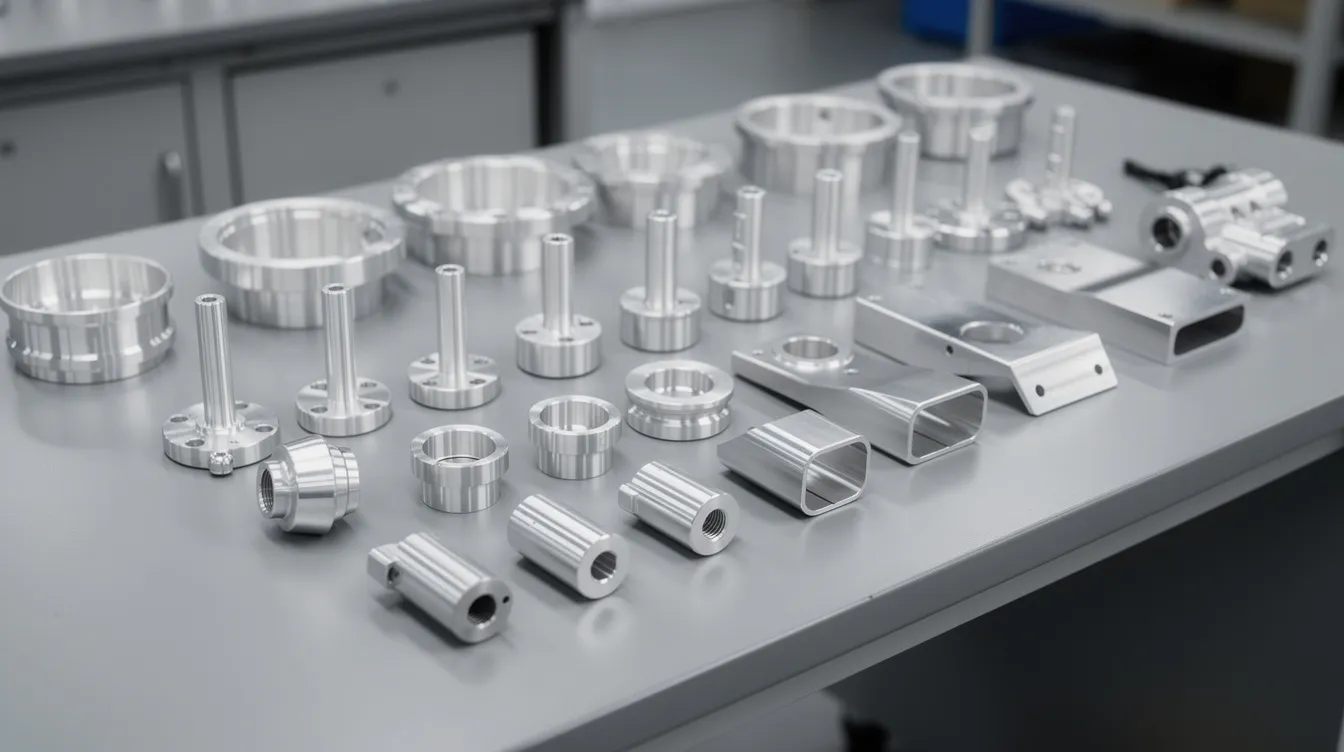
CNC machining materials include aluminum alloys (6061-T6, 7075-T6, 6082), stainless steels (304, 316L), tool steels, brass, copper, titanium alloys, and engineering plastics like PEEK, PC, and Delrin. CNC machining can work with hundreds of materials without needing different molds. CNC machining supports prototyping for production-grade materials and mechanical properties that match the final application.
Die casting is limited to non-ferrous alloys like aluminum (A380, ADC12), zinc (Zamak 3/5), and magnesium (AZ91D). Sand casting and investment casting offer alternative metal casting approaches for other alloys, but conventional die casting cannot handle steels, titanium, or high-melting-point alloys.
Regarding material waste: CNC machining generates 50–80% material waste because it carves parts from oversized billets. CNC machining’s material waste increases costs with expensive alloys like titanium. Die casting produces near-net shape parts, minimizing waste since runners and gates can be re-melted and recycled.
On mechanical properties, the difference is significant. CNC-machined parts retain full mechanical properties of the parent material-wrought stock delivers superior tensile strength, fatigue resistance, and uniform grain structure. Die-cast parts may have lower mechanical properties due to porosity and less predictable microstructure. Die casting produces parts with high strength and durability for many applications, but CNC machining is ideal for parts subjected to high mechanical loads or cyclic stress.
Design Flexibility, Complexity & Iteration During Prototyping
Rapid iteration is the core of modern manufacturing product development. CNC machining supports rapid design changes through CAD files-update the model, regenerate toolpaths, and cut new parts, often within 24–72 hours. CNC machining allows quick design changes without extensive setup alterations, making it the natural choice for R&D teams in the early months of a project.
In terms of geometric capability, both cnc machining and die casting have distinct strengths:
-
CNC machining excels at producing complex internal geometries, sharp internal corners, precision bores, and complex parts with deep pockets. CNC milling and 5-axis machining handle features that would be impossible to cast. These complex shapes can include internal features like cooling channels and sensor pockets.
-
Die casting is excellent for thin walled external geometry, integrated ribs, bosses, and complex shapes that would require massive material removal if fully machined from billet. Die casting can produce intricate parts in a single operation, and many die cast parts feature integrated mounting features and fins.
During prototyping, the ability to easily relocate features, adjust wall thickness, or resize openings is far more valuable than low per-part cost. When transitioning to die casting later, Anebon engineers provide DFM feedback to adjust drafts, radii, and gating to ensure the final casting tool is robust and economical.
Advantages & Disadvantages of CNC Machining for Prototypes
CNC machining is generally preferred for functional prototypes needing precision. Here is a summary of where it shines and where it falls short for prototype and small-batch work.
Advantages:
-
No or minimal tooling-start cutting from a cad model immediately
-
Excellent dimensional accuracy, down to ±0.002 mm on critical features
-
Fast lead times, often under a week for aluminum CNC machining
-
Full access to production-grade materials including high-strength alloys and engineering plastics
-
Strong mechanical properties from wrought stock-ideal for structural and load-bearing prototypes
-
CNC machining offers unmatched flexibility for design iteration
Disadvantages:
-
Higher per-part cost at volume compared to die casting
-
CNC machining generates 50–80% material waste, which adds up with expensive alloys
-
Some limitations for extremely complex internal cavities without multi-axis or EDM operations
Example: A robotics startup orders 30 CNC machined 7075-T6 gear housings. Parts arrive in 7 days with full dimensional reports. But if they scale to 50,000 units per year, the per-part cost will remain higher than a die cast solution. For most prototyping phases, the advantages of speed, flexibility, and precision far outweigh the disadvantages. You should choose cnc machining when iteration speed and functional accuracy matter more than unit economics.
Advantages & Disadvantages of Die Casting for Prototypes
Die casting is rarely the first choice for prototypes, but it becomes extremely powerful once design maturity and demand justify the tooling investment.
Advantages (primarily at scale):
-
Very low per-part cost at high production volumes-die casting cheaper than CNC above roughly 5,000 units
-
Die casting provides excellent part-to-part consistency due to mold reuse
-
Efficient material use with low scrap rates
-
Die casting produces complex shapes with integrated features in a single operation
-
High production speed with cycle times of 30–90 seconds per part
Disadvantages for prototyping:
-
High tooling costs: expensive molds costing US$10,000–US$50,000+
-
Long tool fabrication lead times (4–8+ weeks)
-
Limited to non-ferrous alloys-cannot cast steel, titanium, or high-performance plastics
-
Lower baseline tolerances (±0.1 mm typical); can die cast parts match CNC precision? Not without secondary cnc machining
-
Design changes require modifying or rebuilding the casting mold, adding weeks and thousands of dollars
Die casting becomes attractive mainly when annual volumes exceed roughly 5,000–10,000 pieces and the part geometry is mature enough that further redesigns are unlikely. Until then, the economics strongly favor CNC.
Hybrid Strategy: CNC Machining + Die Casting Through the Product Lifecycle
The hybrid approach is what many of Anebon’s OEM clients use in practice: start with CNC machining for early prototypes, transition to die casting for stable high-volume production, and keep secondary cnc machining for critical features on the cast parts.
Typical lifecycle:
-
Concept and validation (2024–2025): Tens of CNC machined parts for fit, function, and performance testing
-
Design freeze: Engineering sign-off on geometry and tolerances
-
DFM and mold design: Adjust drafts, wall thickness, gating for castability
-
Volume ramp: Die casting forms the base shape; CNC machines critical faces, bores, and threads to match the same precision as original prototypes
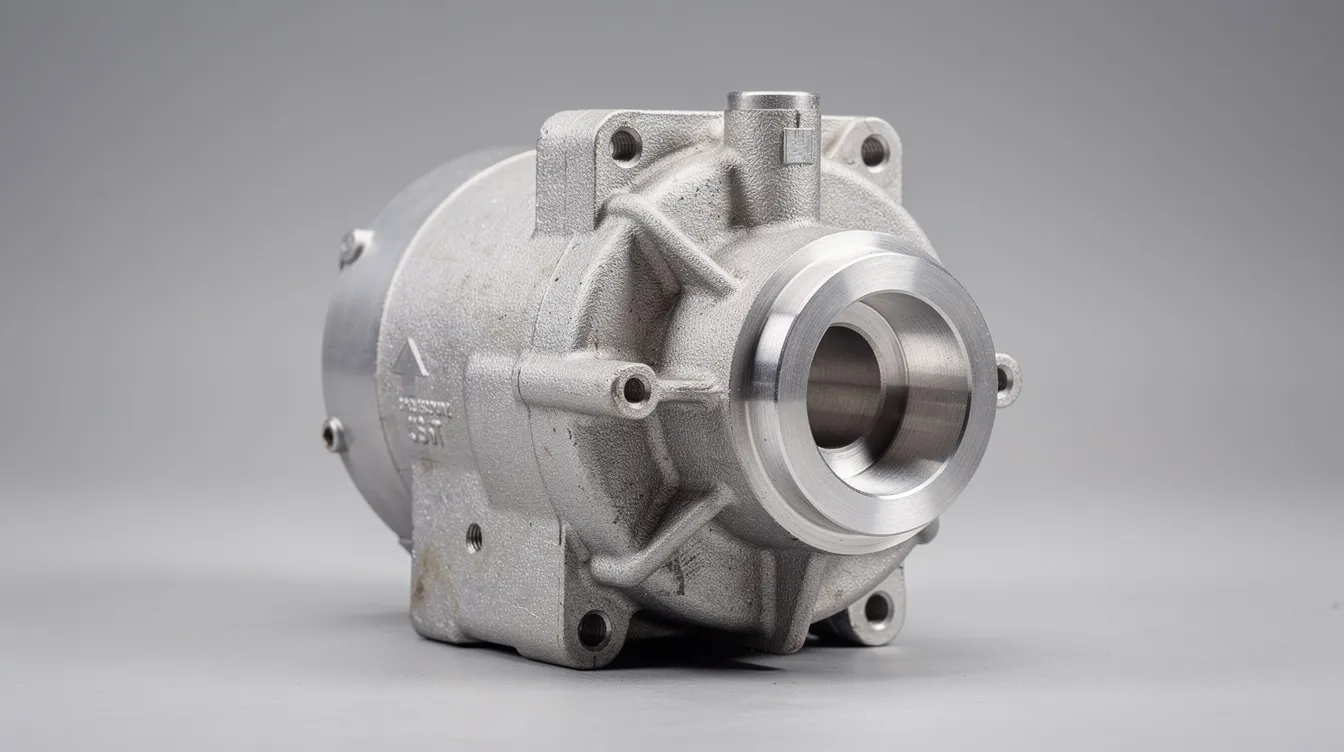
Application example: An aluminum ADC12 die cast motor housing where die casting forms the overall shape and cooling fins, while 5-axis CNC machines bearing seats and sealing grooves to ±0.01 mm after casting. The total cost per part in mass production drops well below what full cnc machining casting from billet would cost, while preserving functional accuracy on every critical surface.
This hybrid manufacturing method delivers total cost reduction compared to fully machined parts, while keeping quality consistent. Machined datums on the cast part match the original prototype CAD exactly. With both ISO 9001:2015 and ISO 14001:2015 certifications, Anebon supports customers across this full journey from prototype to mass-produced die cast components with integrated CNC finishing.
How Anebon Helps You Choose: Practical Decision Guidelines
Here is a simple decision guide for engineers and sourcing teams choosing between cnc machining, die casting, or a hybrid approach.
Volume-based rules:
-
Need fewer than 500 parts in the next 6 months → choose cnc machining
-
Expect 500–5,000 parts/year with a stable design → evaluate hybrid (cast + machine critical features)
-
Expect >10,000 parts/year for at least 3 years and tolerances of ±0.1 mm are acceptable on non-critical features → plan for die casting with secondary cnc machining
Tolerance-based rules:
-
If key dimensions require better than ±0.05 mm, plan on CNC machining at least those features, even if the base part is die cast
-
For parts requiring tight tolerances across all surfaces, full CNC remains the safest path
Material-based rules:
-
If your design calls for stainless steel, titanium, hardened tool steel, or high-performance plastics, CNC machining is mandatory-these materials cannot be processed through typical die casting
-
For standard aluminum or zinc parts at scale, die casting is casting cheaper per unit
Both cnc machining and die casting serve important roles, and the smartest approach is matching the right process to the right project stage. Send your CAD models and volume forecasts to Anebon for a free DFM review and cost comparison-our team has been advising overseas OEMs on the most economical manufacturing method since 2010.
Conclusion: Choosing the Right Path from Prototype to Production
For prototyping, cnc machining offers the best balance of cost, precision, lead time, and flexibility. Die casting shines once high, stable production volume and cost-per-part reduction become the primary goals. CNC machining vs die casting is not really a competition-the two processes are complementary, with many successful products using cnc machining for development and injection molding or die casting plus CNC finishing for mature production.
The main takeaways:
-
CNC machining: Agile, high precision, higher per-unit cost at volume, unmatched for prototypes and small batches
-
Die casting: High tooling cost, lower precision without secondary machining, but unbeatable economics for tens of thousands of machined parts and cast metal components
Choosing correctly at each stage reduces risk, controls cost, and accelerates time-to-market-especially for demanding sectors like automotive, aerospace, medical devices, and industrial automation. If you are evaluating cnc machining and die casting for your next project, reach out to Anebon for tailored DFM advice, rapid CNC prototypes, and long-term die casting solutions, all from a single ISO-certified manufacturing partner in Dongguan, China.