CNC Machining Services in the Aerospace Industry for Precision Parts
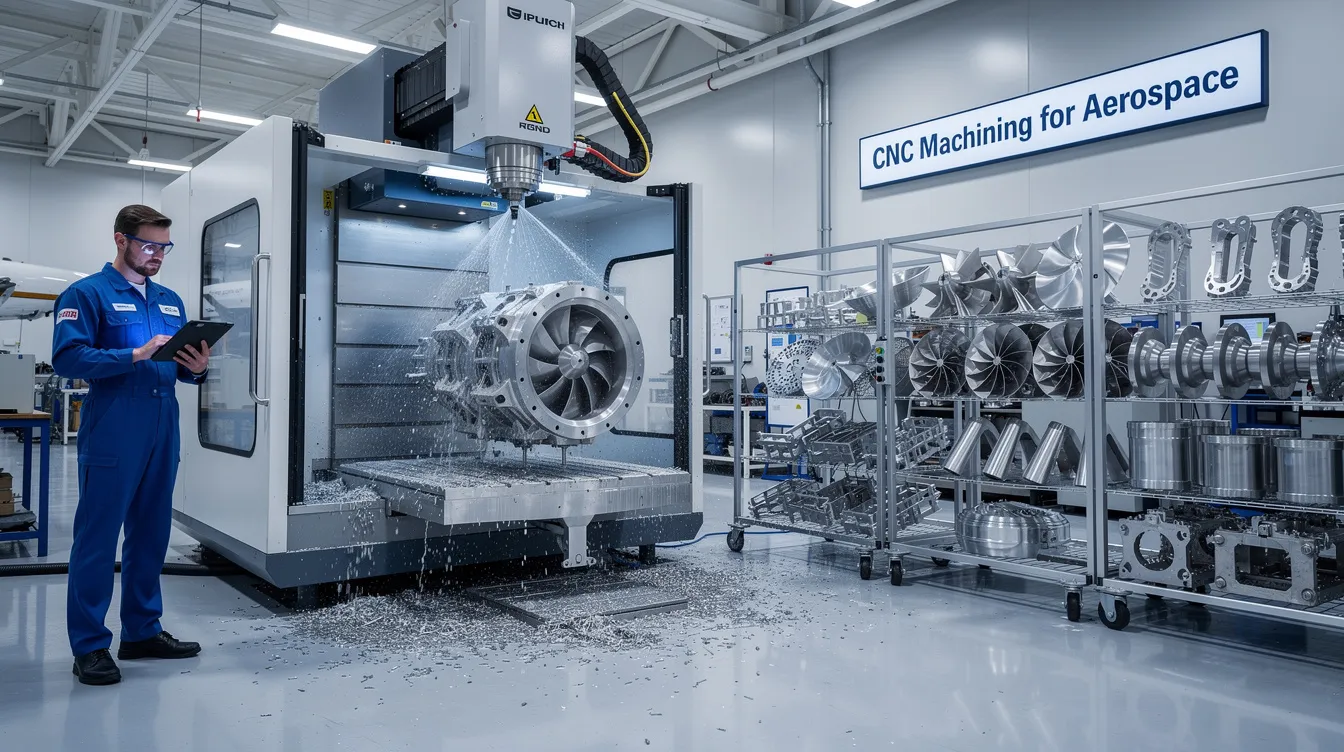
CNC Machining Services in the Aerospace Industry
Modern aerospace manufacturing demands parts that perform flawlessly under extreme conditions, and CNC machining is the process that makes that possible. From commercial airliners cruising at 40,000 feet to satellites orbiting in the vacuum of space, precision cnc machining delivers the repeatable accuracy that safety-critical aerospace systems require.
Introduction: Why CNC Machining Is Critical for Aerospace
The global aerospace industry depends on cnc machining services to produce components that routinely hold tight tolerances down to ±0.005 mm or better across complex geometries and punishing operating conditions. These parts endure high g-loads, sustained vibration, and temperatures ranging from −55 °C at altitude to over 1,000 °C inside jet engine combustors. Even minor deviations in aerospace parts can lead to catastrophic failures, which is why CNC machining is vital in aerospace for producing highly complex lightweight geometries that meet exacting dimensional requirements.
Aerospace cnc machining combines multi axis machining, advanced CAM programming, and rigorous quality control to deliver repeatable performance from prototype through certified production. CNC machining ensures maximum safety and regulatory compliance in aerospace manufacturing by linking every cut, every measurement, and every material certificate into a traceable chain.
Anebon Metal Products Limited, an ISO 9001:2015 and ISO 14001:2015 certified precision manufacturer based in Dongguan, China, serves overseas aerospace OEMs with cnc milling, cnc turning, and related manufacturing processes. Primary aerospace use cases include airframe structures, engine components, avionics housings, UAV parts, interior panels, and space hardware.
Demand for Precision in Aerospace CNC Machining
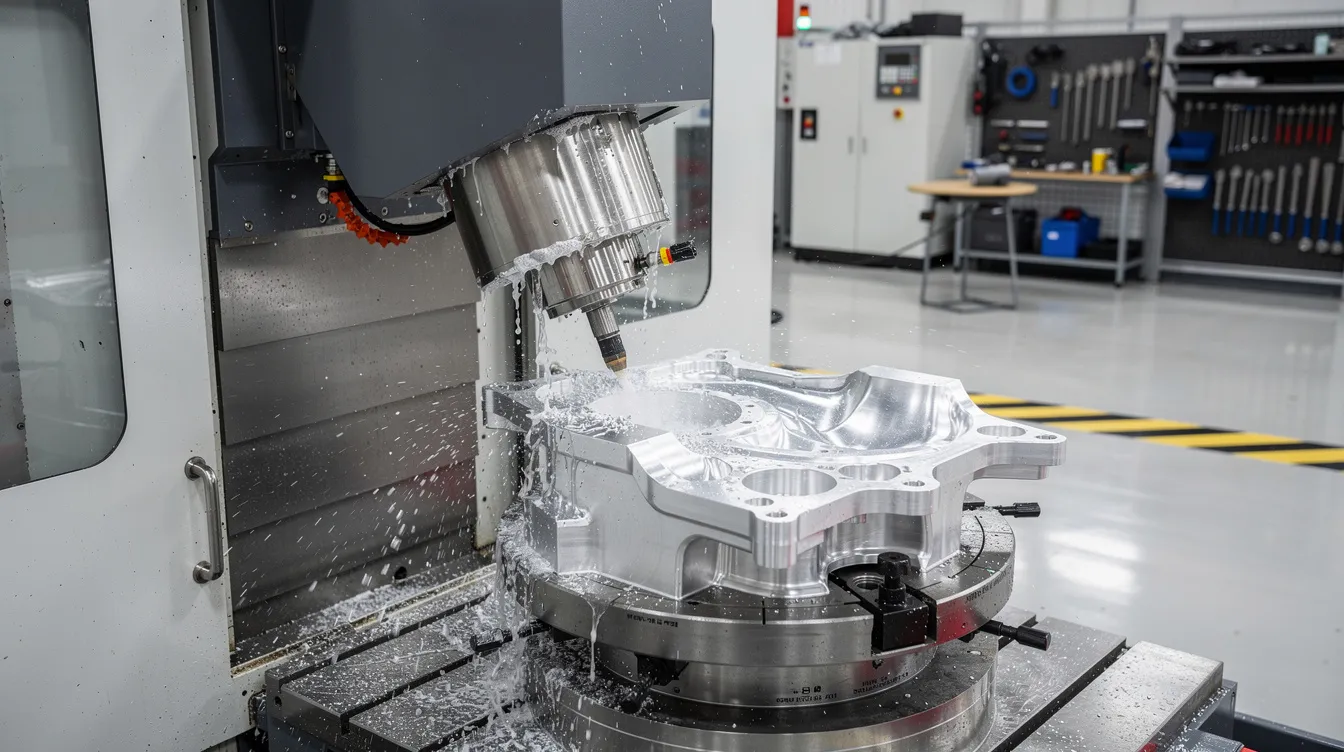
Aerospace manufacturing standards enforced by bodies such as the FAA, EASA, and CAAC, along with individual OEM specifications, drive far stricter precision and documentation than general industrial parts. Precision machining directly impacts aircraft performance and reliability, making every dimension and surface finish a matter of flight safety.
In practice, precision cnc machining for aerospace means:
-
Dimensional tolerances: ±0.01 mm on structural features, ±0.005 mm on engine and hydraulic components, and aerospace components require tolerances as tight as ±0.001 mm for critical sealing or rotating interfaces. CNC machines achieve micron-level precision with tolerances often within ±0.0005 inches.
-
Surface finish: Ra values of 0.8–1.6 µm are standard for airflow, sealing, and fatigue-critical surfaces.
-
Geometric control: Flatness, positional accuracy, concentricity, and runout are tightly specified using GD&T per ASME Y14.5.
Eliminating human error through computer controlled machines is essential for safety-critical systems such as flight controls, landing gear, and pressurized cabin structures. AS9100 certification is essential for aerospace manufacturing compliance, layering aerospace-specific clauses on top of ISO 9001, which is a common quality management standard in aerospace. CNC machining must comply with strict aerospace quality standards like AS9100, and supporting frameworks such as FAI per AS9102 and PPAP link machining processes to full material and process traceability. Aerospace components must meet strict quality standards like AS9100 to ensure airworthiness.
Multi axis machining-4-axis indexed and full simultaneous 5 axis cnc-is central to achieving consistent accuracy on complex 3D surfaces such as turbine blades, blisks, and lightweight lattice structures where conventional 3-axis approaches fall short.
CNC Machining Processes Used in Aerospace Manufacturing
Aerospace cnc machining is not a single process but a toolbox of cnc machining processes selected based on part geometry, material, tolerances, and production volume. CNC machining includes cutting, milling, turning, and drilling processes, each optimized for different aerospace applications. CNC machining utilizes various methods including milling and turning for part creation across every major aircraft subsystem.
Key processes include:
-
CNC milling: Widely used for producing structural aerospace components-wing ribs, fuselage brackets, avionics housings-where pocketing, lightening features, and multi-face geometry are required. Cnc milling is the workhorse of prismatic part production.
-
CNC turning: Essential for machining cylindrical aerospace parts like shafts, pins, bushings, and hydraulic fittings where concentricity and roundness are critical. Swiss machining handles smaller, high-precision cylindrical components such as connector pins and valve bodies.
-
Drilling and boring: Gun drilling, deep-hole drilling, and precision boring are critical for fuel lines, manifolds, oil galleries in engine mounts, and thermal management passages in heat exchangers.
-
Grinding and honing: Bearing surfaces, actuator rods, and gear components demand sub-micron roundness and surface finish to reduce friction and extend wear life.
-
EDM (wire and sinker): Used for hard-to-machine superalloys, internal cooling channels in turbine components, and intricate features in electrical components and connectors where burr-free edges are mandatory.
Modern aerospace machining cells integrate multiple operations in a single setup-roughing, semi-finishing, and finishing with different tools in one fixture. CNC machining reduces material waste through optimized tool paths, and the automation of CNC processes reduces lead times and production waste. This process integration minimizes cumulative errors from re-clamping and shortens total cycle time.
Multi-Axis and 5-Axis CNC Milling for Complex Geometries
Axis cnc machining beyond the traditional three orthogonal axes is central to cnc aerospace machining, where complex geometries, undercuts, and compound curvature are the norm rather than the exception. Multi axis machining encompasses 3+2 indexed positioning and full simultaneous 5 axis cnc machining, each enabling access to part features that would otherwise require multiple setups.
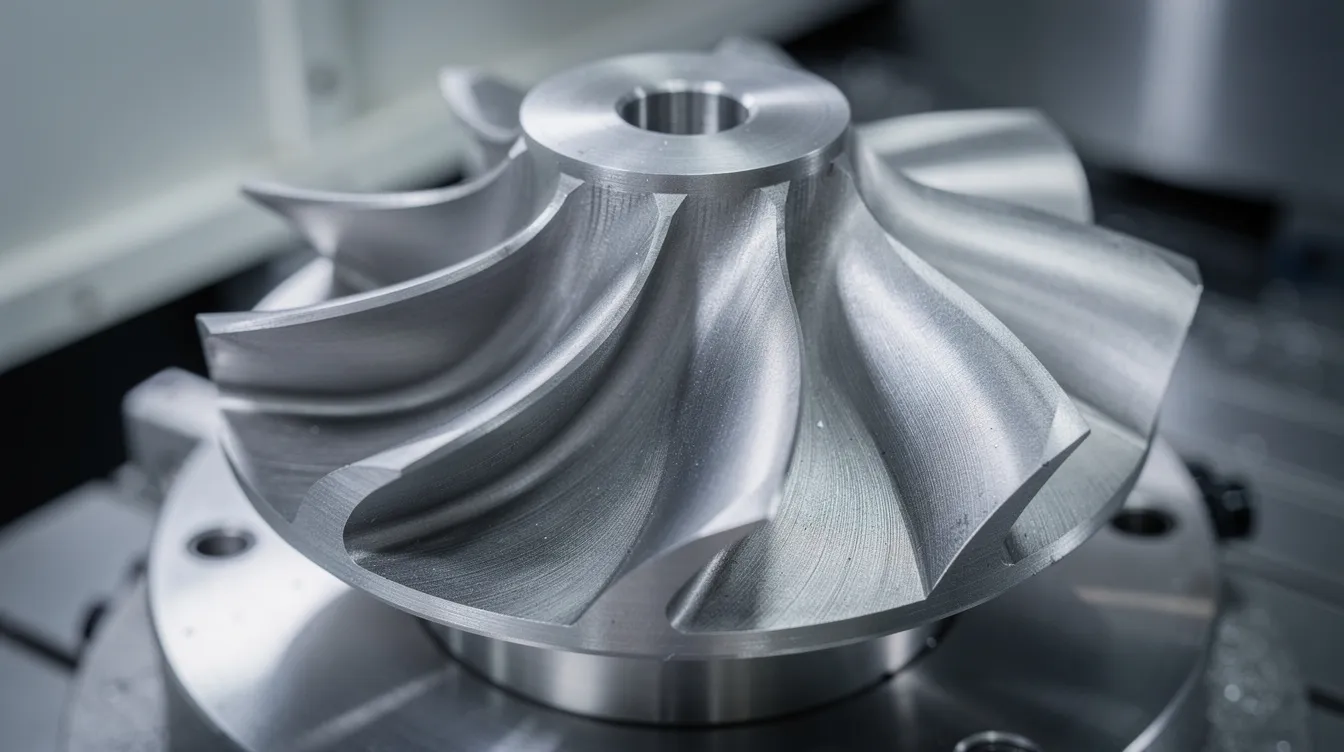
5-axis CNC machines can produce complex 3D curved shapes in a single setup, which is why 5 axis cnc machining allows for complex geometries and reduced setup times. CNC machining can produce complex geometries in aerospace components such as turbine and compressor blades, impellers, blisks, and structural brackets with organic load-optimized shapes. Complex geometries increase the risk of tool wear and dimensional deviation, making CAM software critical for generating collision-free toolpaths that optimize tool engagement, prevent chatter, and control deformation on thin-walled aerospace parts.
The advantages for aerospace are concrete:
-
Better surface integrity on aerodynamic contours
-
Shorter lead times for both aerospace prototypes and production runs
-
Reduced fixture count, which improves cost and repeatability
Typical examples include impellers and pump housings for fuel systems, titanium hard-points in composite wing assemblies, 5-axis machined housings for flight control computers, and engine pylon fittings. CNC machining is essential for producing complex aerospace parts across all of these categories.
Anebon supports 3-axis, 4-axis, and 5 axis cnc milling with tolerances as tight as ±0.002 mm on selected features, providing the machining capabilities demanded by complex aerospace components.
Key Aerospace Applications of CNC Machining
CNC machining underpins nearly every major subsystem in an aircraft or spacecraft, from the nose cone to the tail and from the cabin to the engine core. CNC machining is used for a wide range of critical aerospace components, and cnc machining plays a foundational role in translating aerospace designs into flight-ready hardware. CNC machining enables high repeatability and consistency in production, which is non-negotiable when lives depend on every part.
In the airframe, cnc machining is used to produce structural components such as wing ribs, spars, fuselage frames, bulkheads, door frames, and flap/aileron mechanisms. These aircraft structural components carry primary loads, resist fatigue over tens of thousands of flight cycles, and must maintain structural integrity under aeroelastic bending and twisting. CNC machining is used for manufacturing aircraft structural components with the flatness, perpendicularity, and positional accuracy that load-transfer paths demand.
For engine components cnc machining produces the most demanding parts in aviation: turbine blades, compressor disks and vanes, engine casings, bearing housings, engine mounts, and pylons. These engine parts operate at extreme temperatures and centrifugal loads. CNC machining produces critical engine parts like turbine blades with the compound curvature, thin walls, and internal cooling channels that define modern propulsion systems.
Landing gear assemblies rely on precise machining of struts, axles, trunnions, pistons, and bogie beams. CNC machining is essential for producing landing gear components where shock loads, corrosion resistance, and bearing-fit surface finishes are critical.
CNC machines create avionics components like control panels and connectors, along with machined aluminum or magnesium housings, heat sinks, backplanes, and brackets for line-replaceable units. These electrical components demand precise cut-outs for switches and displays while sometimes requiring EMI/RFI shielding.
In aerospace systems for space, CNC-machined satellite components include instrument housings, reaction wheel housings, and propulsion system mounts. Rocket nozzle and injector components machined from aluminum, titanium, and Inconel serve launch vehicles where vacuum, radiation, thermal cycling, and cryogenic propellants define the operating envelope.
Case-Style Example: CNC Machining for a Launch Vehicle Assembly
Consider a representative scenario: a team developing a small sounding rocket in the 100–200 kg class, designed to reach altitudes above 10 km for atmospheric research payloads. The program requires structural brackets, load-transfer fittings, and avionics bay housings-all produced through aerospace cnc machining services with tight schedule and quality demands.
The component set includes CNC-milled aluminum 7075-T6 interstage brackets with lightening pockets to minimize mass, titanium Grade 5 load-transfer fittings at the motor-to-airframe interface, and machined housings for electrical components in the avionics bay. Each part type brings distinct machining challenges: the aluminum brackets feature thin-walled sections (some below 2 mm) that risk distortion during cutting, the titanium fittings require specialized tooling and aggressive cooling due to heat buildup, and the avionics housings need concentric bores for alignment pins plus tight positional tolerances between bolt patterns to ensure proper stack-up across the full vehicle.
Leveraging multi axis machining on 5-axis platforms and careful fixturing strategy, the machining team minimized part distortion and maintained dimensional accuracy across all critical features. Every part was designed to withstand cryogenic propellant temperatures on one end and high vibration during powered ascent on the other.
The quality workflow included material certificates with full traceability, FAI reports per AS9102, 100% inspection of critical dimensions on CMMs, and final surface treatments-hard anodizing for corrosion and wear protection on the aluminum parts. Digital inspection systems enhance quality control and traceability in aerospace manufacturing, and in this program they confirmed that all parts met specifications before pre-flight assembly.
The result: on-schedule integration, a successful flight test campaign, and a validated manufacturing baseline for future commercial missions-demonstrating how aerospace precision machining translates directly into mission success.
Materials in Aerospace CNC Machining
Material choice in aerospace cnc machining balances weight, strength, temperature capability, corrosion resistance, and machinability. Advanced material versatility is a key benefit of CNC machining in aerospace applications, and CNC machining supports high-performance materials including titanium and aluminum across the full range of aerospace demands.
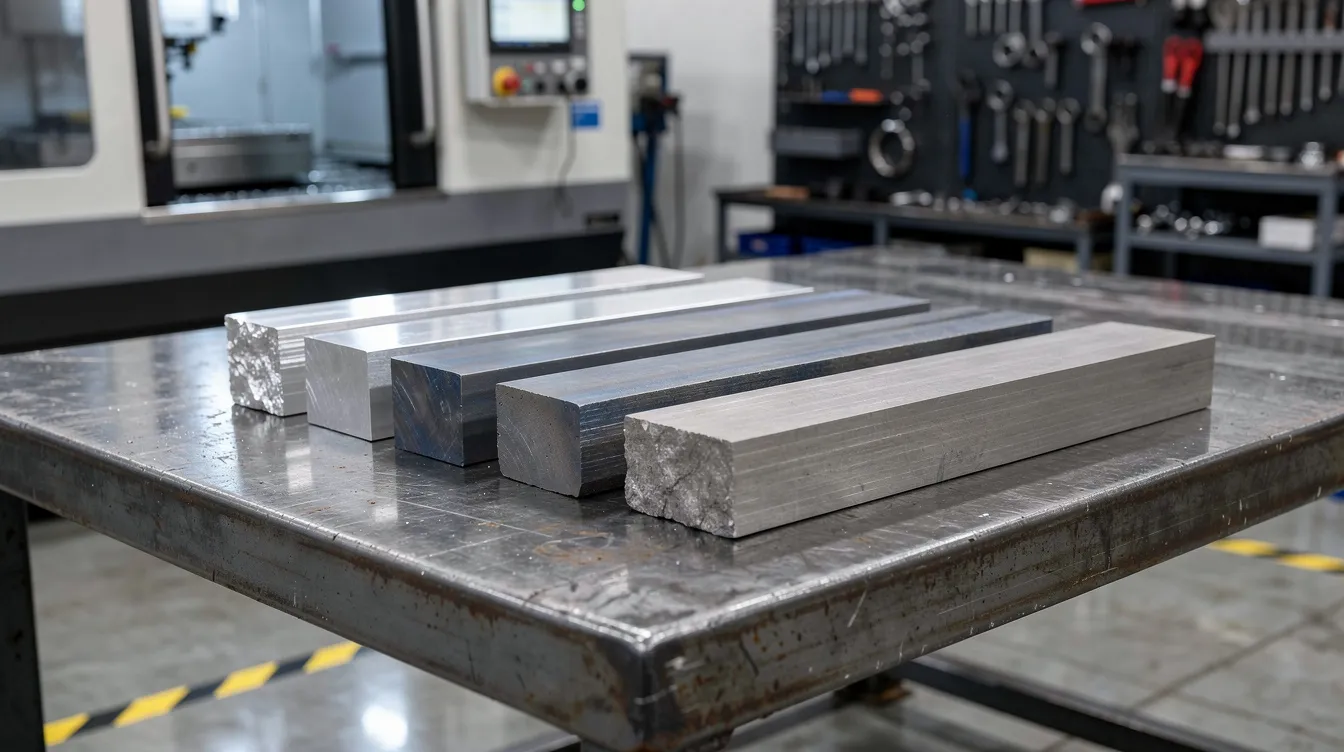
Aluminum alloys such as 6061-T6, 7075-T6, and 2024-T3 are the workhorses for structural brackets, ribs, housings, and interior components. Aluminum alloys like 6061 and 7075 are commonly used because they offer excellent strength-to-weight ratios and good machinability. Aluminum constitutes roughly 60–70% of structural weight in many aircraft designs.
Titanium alloys are valued for high strength and low weight, making Ti-6Al-4V (Grade 5) the standard for landing gear fittings, engine pylons, high-load interfaces, and parts bonded to composite structures. However, machining titanium alloys is challenging due to low thermal conductivity-approximately 6.7 W/m·K versus aluminum’s ~167 W/m·K-which causes heat to concentrate at the cutting edge and demands specific tool coatings, coolant strategies, and reduced cutting speeds.
Nickel-based superalloys such as Inconel 718 and 625 are used in extreme aerospace environments-turbine blades, combustor liners, exhaust components-where temperatures exceed 700–1,000 °C. Aerospace machining often involves high-cost materials like nickel-based superalloys that work-harden rapidly and require specialized tooling with advanced coatings (AlTiN, TiAlN) to manage tool wear.
Stainless steels (17-4 PH, 15-5 PH, 304, 316) serve in actuators, fasteners, and hydraulic fittings. Engineering plastics like PEEK, PEI (Ultem), and PPS are used for insulators, connector inserts, and lightweight interior parts where composite materials are increasingly used for lightweight aerospace parts. Carbon fiber composites and carbon fiber reinforced structures are also growing in use, with CNC machining handling the metallic hard-points and interfaces that connect composite panels to the airframe.
Anebon supports a wide material range-aluminum, titanium, stainless steel, copper alloys, and plastics-and advises customers on material selection based on aerospace design goals.
Surface Treatments and Finishing for Aerospace Parts
Raw CNC-machined parts rarely go directly into service. Aerospace components typically receive additional finishing to improve corrosion resistance, wear life, fatigue performance, and appearance before they are cleared for assembly.
For aluminum aerospace parts, common treatments include:
-
Type II anodizing for general corrosion resistance and paint adhesion
-
Type III hard anodizing for abrasion-critical surfaces and wear protection
-
Chromate conversion coatings (Alodine) for conductive corrosion protection prior to painting
For stainless steel and carbon steel parts used in landing gear and structural applications, passivation, nitriding, and phosphate coatings protect against corrosion. Shot peening induces compressive residual stress in subsurfaces, significantly improving fatigue life on critical components.
Nickel alloys and titanium often need specialized coatings-thermal barrier coatings for hot-section parts, diffusion coatings for oxidation resistance-plus polishing and surface conditioning to meet aerodynamic or sealing finish requirements.
Mechanical finishing steps tied closely to cnc machining processes include deburring, bead blasting, vibratory tumbling, and precision grinding to achieve specific Ra values and remove sharp edges that can initiate fatigue cracks.
Avionics housings and electrical components may require EMI/RFI shielding coatings or conductive finishes such as chem film paired with conductive gaskets. NADCAP accreditation is crucial for specialized aerospace processes like these coatings and heat treatments, ensuring process controls meet aerospace sector requirements.
Anebon delivers aerospace parts either machined-only or fully finished through a vetted network of surface treatment partners, with full process documentation available on request.
Quality Control, Traceability, and Inspection in Aerospace CNC
Cnc aerospace machining is inseparable from robust quality control, documentation, and traceability. Every aerospace part carries a paper trail from raw material through final shipment, and that trail must survive audit scrutiny from customers, regulators, and certification bodies.
Inspection processes are multi-layered:
-
In-process gauging during machining to catch deviations early
-
First-article inspection (FAI) per AS9102 to validate the manufacturing process
-
Final inspection using CMMs (coordinate measuring machines), optical measurement systems, and surface roughness testers
Aerospace drawings use GD&T to specify functional requirements-position, flatness, runout, concentricity-and CNC shops must interpret and validate those callouts against measured results. CNC machining achieves tolerances as tight as ±0.005 mm, but proving that achievement with documented evidence is equally important.
Traceability expectations in aerospace include:
-
Mill certificates for raw materials with full chemistry and mechanical property test data
-
Heat lot and batch tracking through every manufacturing step
-
Machine, operator, and tool life logs retained for defined periods
-
Inspection data tied to serial or batch numbers
ITAR compliance is necessary for defense-related aerospace projects, adding export control documentation to the quality stack. Common aerospace-specific deliverables include AS9102 FAI reports, certificates of conformance, and inspection plans aligned with customer quality clauses that flow down strict industry standards from prime contractors to sub-tier suppliers.
Anebon’s quality approach includes ISO 9001:2015 certification, incoming material inspection, process control plans, and final QC sign-off tailored to overseas aerospace OEM and R&D customer requirements.
From Rapid Prototyping to Full Production in Aerospace Programs
Aerospace programs evolve through distinct phases: conceptual design, rapid prototyping, qualification builds, low-rate initial production (LRIP), and then ramp to steady production. CNC technology facilitates rapid prototyping and testing of designs at the front end, and cnc machining’s ability to transition seamlessly from one-off parts to serial production makes it indispensable throughout.
CNC machining enables rapid prototyping of aerospace parts because the process requires minimal dedicated tooling. Engineers can iterate designs quickly-modifying bracket geometry, adjusting wall thickness, relocating bolt holes after test feedback-without investing in new molds or forging dies. This agility is especially valuable for rapid prototyping of aerospace prototypes, where form/fit/function validation, wind-tunnel models, and structural test articles must be produced on compressed timelines.
Production scalability matters just as much. Moving from a handful of prototypes to hundreds or thousands of parts per year demands consistent tolerances, reproducible surface finishes, and documentation that satisfies qualification requirements at every volume level.
Consider a realistic scenario: an R&D team orders 5–10 prototype avionics housings from Anebon to validate environmental and vibration performance. After testing, minor geometry changes are implemented in days rather than weeks. As the program advances to LRIP, documentation formalizes-FAI reports, process control plans, inspection records. Eventually the project matures into a multi-year production contract with cost improvements driven by DFM optimization and process refinement along the way.
This prototype-to-production path is where overseas OEMs and aerospace startups benefit most from Anebon’s flexible order quantities and engineering support.
Cost Drivers and Design-for-Manufacturing (DFM) in Aerospace CNC
Aerospace-grade cnc machining is inherently more expensive than general machining due to exotic materials, complex geometries, and stringent QA-but smart design decisions can significantly control cost. CNC machining will support the production of complex aerospace components more economically as DFM practices mature across the aerospace sector.
Key cost drivers include:
-
Material selection: Titanium and Inconel cost significantly more per kilogram and per cutting hour than aluminum
-
Stock removal: Starting from a large billet and removing 90% of material drives up machining time and tool wear
-
Tolerances and finish: Tighter tolerances and finer surface finishes require slower feeds, more finishing passes, and longer inspection time
-
Number of setups: Each re-clamping introduces error risk and labor cost; 5-axis machining to reduce setups often pays for itself
-
Inspection and documentation: Aerospace-level QA documentation adds time but is non-negotiable
DFM collaboration between aerospace design engineers and CNC suppliers catches problems early. Reviewing CAD models before cutting starts can identify features that are unnecessarily difficult-ultra-thin walls, non-standard hole sizes, excessively tight tolerances on non-critical features. Suggesting appropriate fillet radii, standardizing fastener holes, and defining datum schemes that support fixture-friendly manufacturing methods all reduce scrap rates and cycle time without compromising performance.
Anebon routinely provides DFM feedback for overseas aerospace customers before production, helping balance performance requirements with manufacturability and lead time.
Engineers should also consider total lifecycle cost. Lighter, more complex parts may cost more to machine, but they can save fuel, reduce maintenance, and extend service life over decades of operation-a trade-off often justified in aerospace business cases.
Why Aerospace OEMs Partner with Anebon for CNC Machining
Anebon Metal Products Limited is a B2B precision manufacturer based in Dongguan, Guangdong, China, founded in 2010 to serve overseas OEMs and R&D teams across the aerospace industry, robotics, medical devices, and other high-tech sectors. The company utilizes computer controlled machines across its facility to deliver precise machining on complex parts with full process control.
Machining capabilities relevant to aerospace include:
-
Multi-axis CNC milling and turning, including full 5-axis machining
-
Tight tolerances down to ±0.002 mm on select features
-
Support for aluminum, titanium alloys, stainless steels, engineering plastics, and more
-
High precision cnc machining for small to medium part sizes common in aerospace applications
Quality and reliability factors set Anebon apart from commodity job shops. ISO 9001:2015 and ISO 14001:2015 certifications provide a structured foundation. Material traceability, process control plans, and inspection reports are tailored to aerospace expectations. Sustainable manufacturing practices will be prioritized in aerospace machining going forward, and Anebon’s ISO 14001 environmental management framework reflects that commitment.
For overseas aerospace clients, Anebon offers rapid quotation, English-language engineering support, DFM consulting, and flexible order quantities from single prototypes to full production. Machining for aerospace demands a partner that supports iterative design, prototype validation, and scaling to serial production-not just one-off orders.
Looking ahead, CNC machining will integrate with additive manufacturing processes as hybrid manufacturing methods expand. Advanced materials like carbon fiber composites will be increasingly used alongside traditional metals. Automation and AI will enhance CNC machining efficiency and quality through connected manufacturing ecosystems and advanced automation capabilities. Additive manufacturing integration, additive manufacturing processes, and new manufacturing processes will complement cnc machining services rather than replace them. Anebon continues to invest in machining services and process development to produce critical engine parts and complex aerospace parts for the next generation of propulsion systems, aerospace systems, and aerospace applications.
CNC machining enables aerospace manufacturers to achieve optimal performance across every subsystem, and Anebon is positioned to be the long-term manufacturing partner that aerospace OEMs need.
Ready to get started? Send your CAD files and technical requirements to Anebon to request a quote or design review for your next aerospace machining project.