CNC machining services aerospace industry
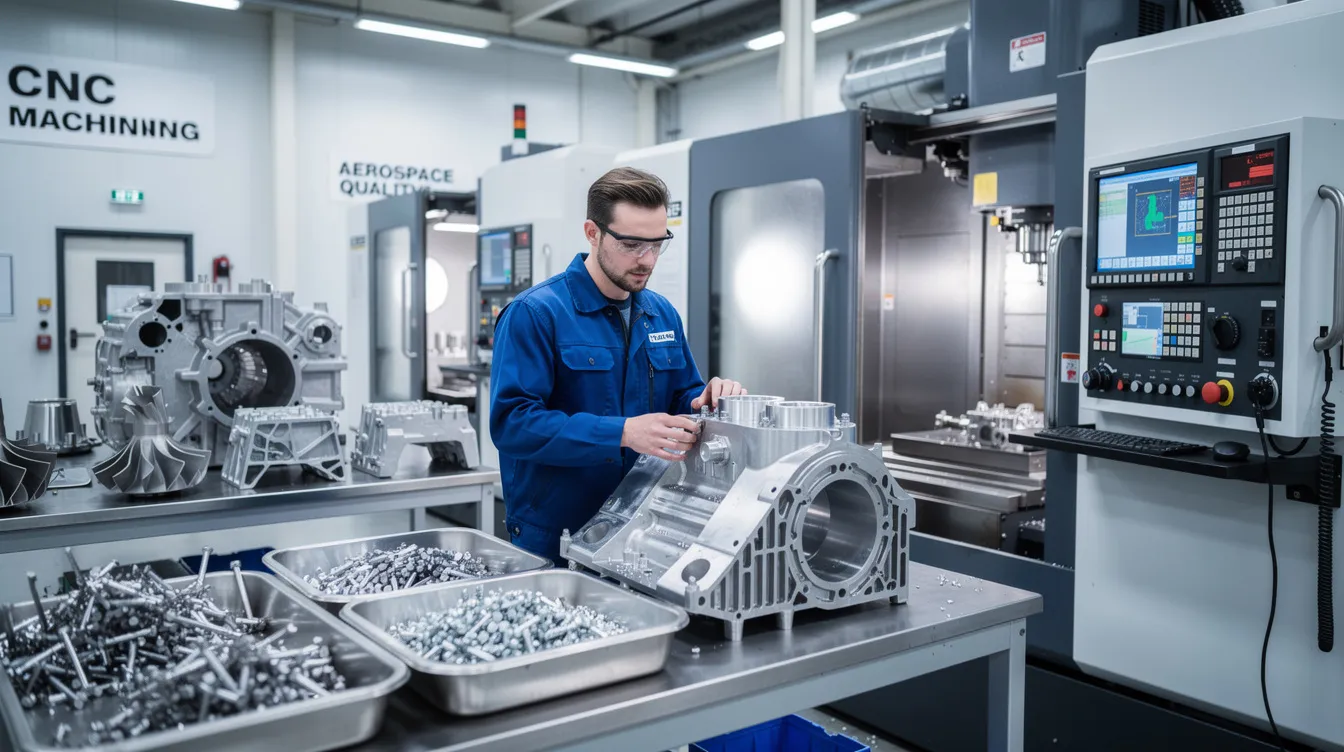
CNC machining services aerospace industry
Introduction: Aerospace CNC Machining Services at Anebon
Aerospace cnc machining underpins the safety, performance, and weight reduction targets that define modern aircraft and spacecraft. Every structural bracket, turbine disk, and landing gear trunnion must survive extreme fatigue cycles, vibration loads, and temperature swings-conditions where even small deviations can lead to catastrophic failures in aerospace. Computer numerical control technology gives aerospace manufacturers the repeatable accuracy needed to meet those demands at scale.
Anebon Metal Products Limited provides precision cnc machining services for aerospace manufacturing from our facility in Dongguan, China. Since 2010, we have served overseas OEMs with machining capabilities that include 3-axis, 4-axis, and 5-axis cnc, along with cnc milling and cnc turning, achieving tolerances as tight as ±0.002 mm. These capabilities are directly tied to the dimensional requirements of aerospace machined parts.
This article walks aerospace engineers and procurement teams through the cnc machining processes, materials, quality practices, and production workflows that matter when sourcing precision machined components for an aerospace project. Whether you are evaluating an aerospace machine shop for prototypes or planning full-rate production, the sections below will help you make informed decisions-and show how Anebon supports programs from first article to final delivery.
What Is Aerospace CNC Machining?
Aerospace cnc machining is the production of safety-critical aircraft and spacecraft components under strict traceability, exacting tolerances, and compliance with rigorous quality standards. CNC machining is essential for producing safety-critical aerospace components because the consequences of a dimensional or metallurgical error can ground an entire fleet.
What separates cnc aerospace machining from general industrial machining? Three things stand out: the tolerance bands are tighter (often by an order of magnitude), the materials are harder to cut (superalloys, titanium alloys, high-strength steels), and the documentation burden is significantly heavier. Every lot of raw material, every tool change, and every inspection result must be recorded and retrievable. Aerospace machining must comply with AS9100 certification standards, the aerospace-specific quality management layer built on top of ISO 9001. Anebon follows ISO 9001:2015 and ISO 14001:2015 and aligns its processes with AS9100 expectations-including configuration control, risk-based thinking, and material traceability-though we are transparent that we are not an AS9100 certificate holder.
Concrete examples of aerospace machined parts include wing ribs, landing-gear trunnions, turbine blades, avionics housings, satellite brackets, and fuel-system fittings. CNC machining allows for complex geometries in aerospace parts such as topology-optimized ribs and hollowed structural profiles.
Where cnc aerospace machining is used:
-
Commercial aircraft and business jets
-
Military aviation platforms and UAVs
-
Rockets, satellites, and satellite components
-
Propulsion systems and jet engines
-
Aftermarket spares for legacy aircraft
Why Precision and Tight Tolerances Matter in Aerospace
In aircraft like the Boeing 787 or Airbus A350, a few microns of misalignment in a wing-box joint can increase drag, shift load paths, and accelerate fatigue cracking. Precision machining affects aircraft performance and fuel efficiency because geometric accuracy governs how cleanly air flows over surfaces and how efficiently loads transfer through structural parts. Even tight tolerances minimize friction and reduce wear in aerospace parts that operate under continuous vibration and thermal cycling.
Typical aerospace tolerance bands break down roughly as follows: structural non-critical parts sit at ±0.01 mm to ±0.05 mm; mating surfaces and bearing seats require ±0.005 mm to ±0.025 mm; and aerospace components require tolerances as tight as ±0.001 mm for turbine blade root features and fuel-system sealing faces. CNC machining achieves tight tolerances as precise as ±0.0001 inches (0.0025 mm), while CNC systems can achieve accuracy within ±0.0005 inches for aerospace parts. NASA employs CNC machining for tolerances as tight as ±0.0002 inches in aerospace, underscoring just how far precision machined components can be pushed.
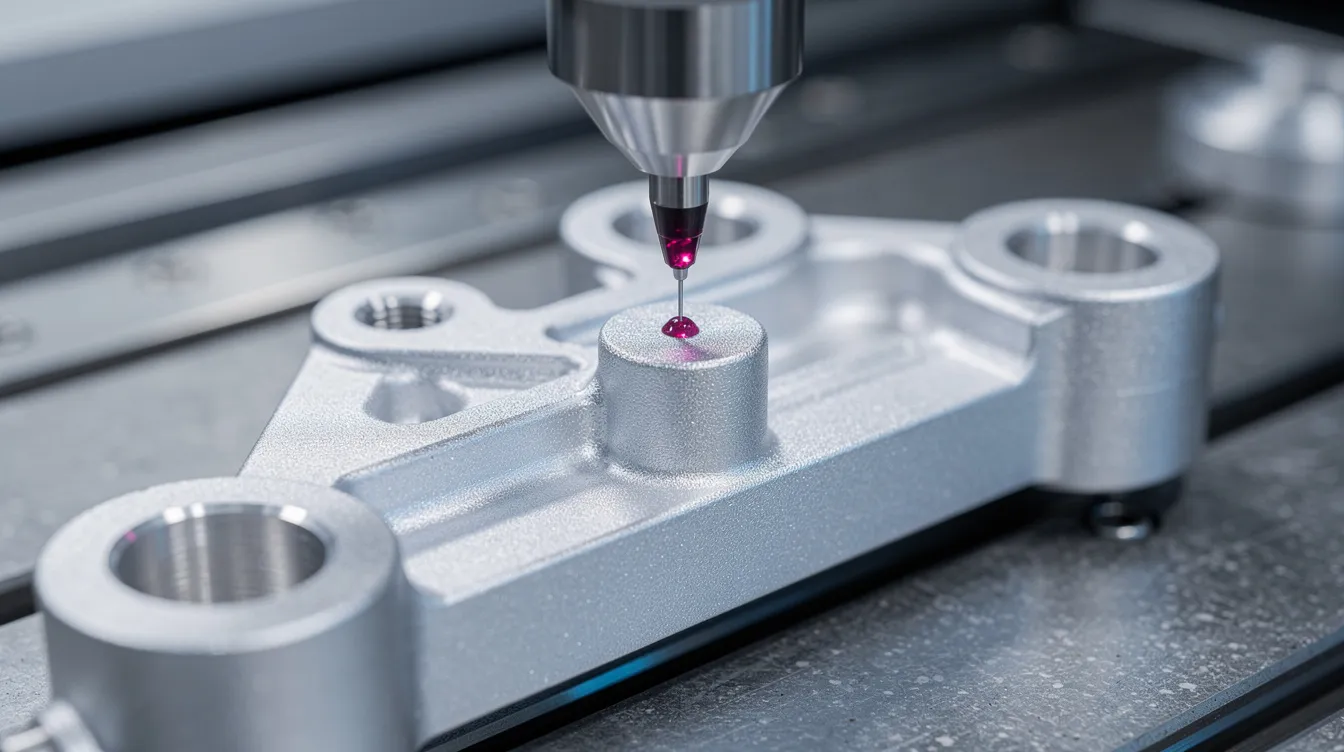
Anebon achieves repeatable precision through rigid fixturing, thermal management of the machining environment, in-process probing, toolpath simulation, tool-wear compensation, and final inspection with coordinate measuring machines.
Key outcomes of tight tolerances:
-
Fit – precise mating without stress concentrations
-
Performance – engine efficiency and aerodynamic behavior
-
Reliability – fatigue resistance across thousands of flight cycles
-
Certification – meeting tolerance-driven approval levels for airworthiness
CNC Machining Processes Used for Aerospace Parts
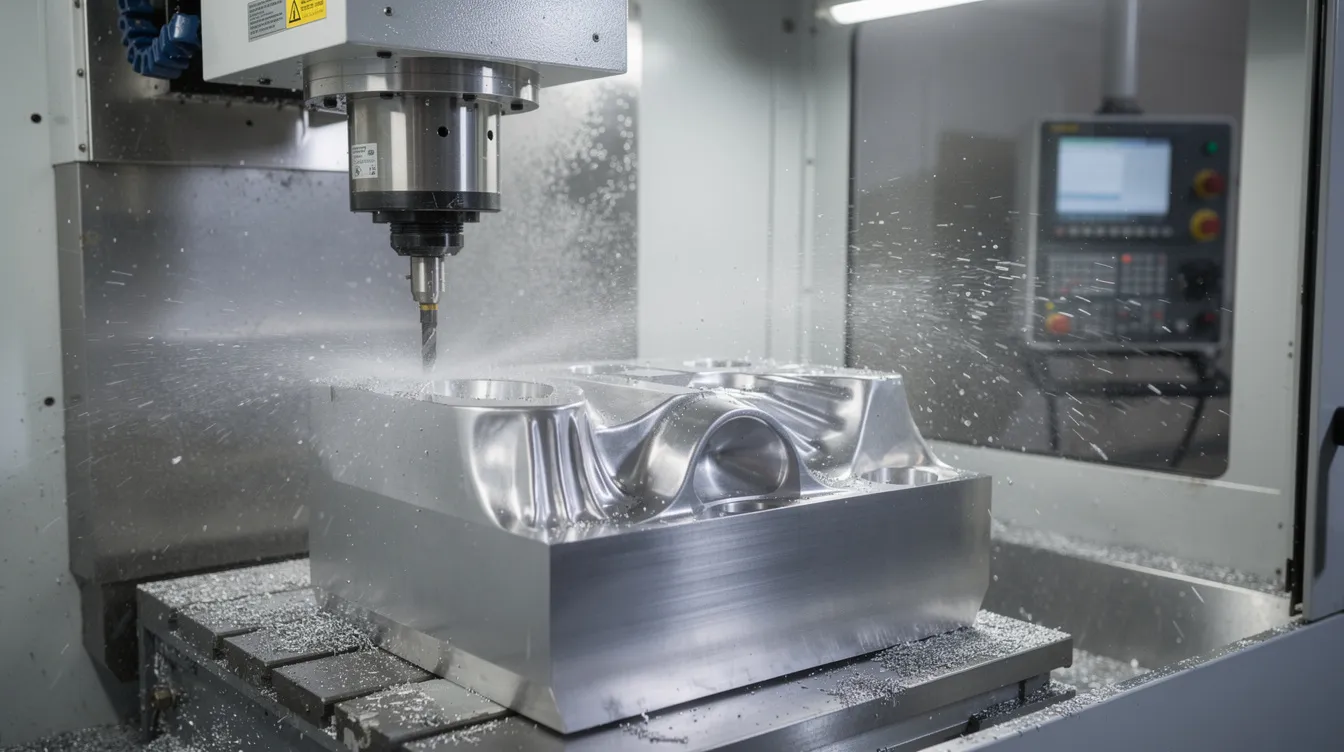
Aerospace parts span a diverse range of geometries and production volumes-from one-off aerospace prototypes to low-volume spares and medium-batch production runs. CNC machining supports low-volume to high-volume production, making it adaptable across every stage of a program lifecycle. CNC machining includes milling, turning, and drilling processes, and the right combination of techniques depends on part geometry, material, and functional requirements.
CNC machining works with metals and engineering plastics, giving aerospace designers flexibility to select the optimal performance envelope for each component. CNC machining uses optimized feeds and speeds for difficult-to-machine materials like Inconel and titanium, while CAM programming with collision simulation protects both the part and the cnc equipment.
When to choose each process:
-
CNC milling – structural parts, block forms, pocketed ribs, flat or contoured surfaces
-
CNC turning – shafts, actuator rods, bushings, and other cylindrical aerospace components requiring precision
-
Drilling / boring – fastener holes, oil passages, bolt circles needing precise alignment
-
Grinding – final-dimension finishing on hardened steels and superalloy surfaces
-
EDM – ideal for creating complex internal geometries in tough alloys where conventional tools cannot reach
Multiple machining operations are often combined in a single program to hold inter-feature accuracy and reduce manufacturing costs.
CNC Milling in Aerospace Manufacturing
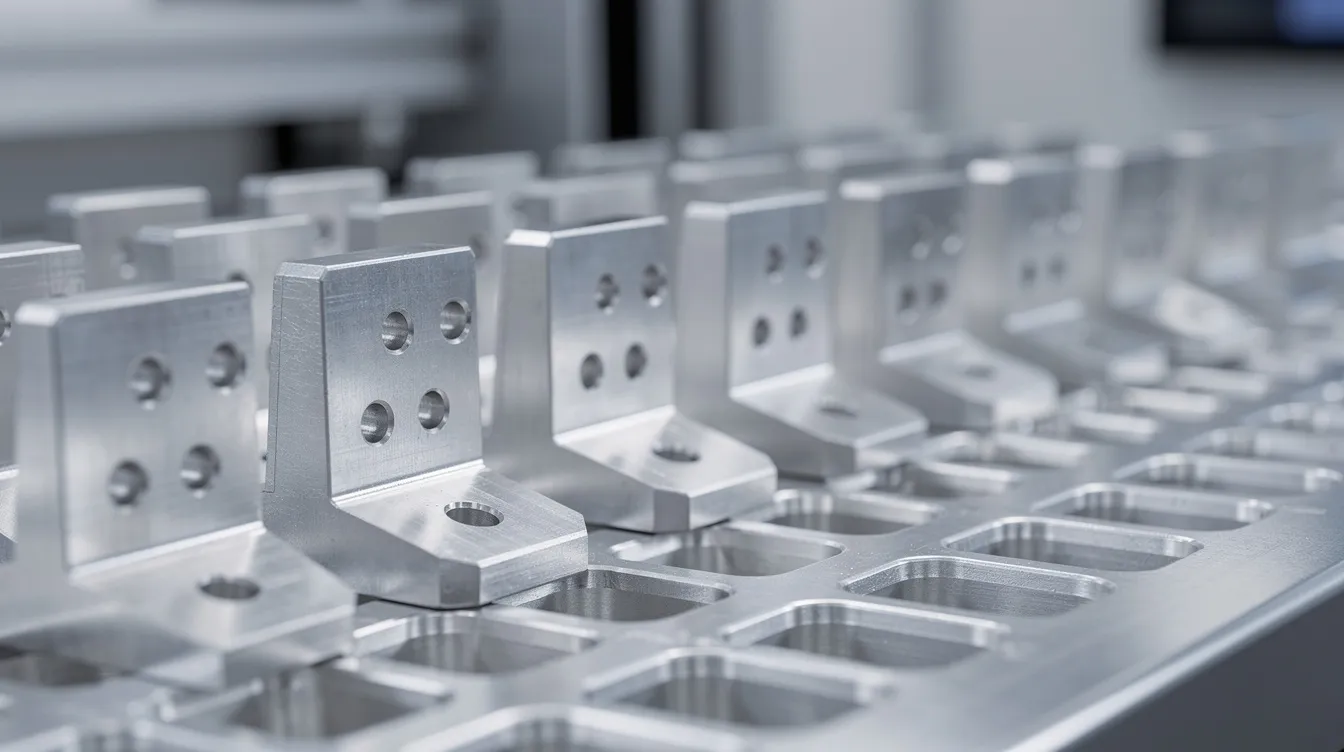
CNC milling is widely used for structural aerospace components and forms the backbone of advanced aerospace manufacturing for airframe and engine-adjacent parts. Typical milled aerospace components include wing ribs, spars, seat tracks, actuator brackets, instrument panels, pump housings, and heat-exchanger plates.
Three-axis cnc milling handles flatter parts efficiently-think aluminum 7075 brackets or simple frames. When contoured structures, turbine casings, or compound-curve airfoils enter the picture, 4-axis and 5-axis cnc milling become necessary. Complex geometries in aerospace parts increase machining difficulty, especially when thin walls (down to approximately 0.5–1.0 mm in lightweight aluminum or titanium structures) are involved. Deep pockets and topology-optimized lattices further complicate tool access and chip evacuation.
Anebon addresses these challenges with optimized step-downs, balanced tool loads, and adaptive toolpaths that prevent chatter and deflection. Our work envelope for milled parts accommodates sizes up to approximately 1000 × 600 × 400 mm, suitable for a wide cross-section of aircraft structural components and systems housings.
CNC Turning and Rotational Aerospace Components
CNC turning is the primary manufacturing process for round and rotational aerospace parts. CNC turning is used for cylindrical aerospace components requiring precision-shafts, bushings, hydraulic pistons, actuator rods, engine mounts, bearing races, and threaded fasteners that secure airframes and landing gear assemblies.
Concentricity, runout, and surface finish are non-negotiable on rotating assemblies such as fuel pumps, gearboxes, and propulsion systems. A few microns of runout on a bearing journal can cascade into vibration, premature wear, and eventual component failure.
Anebon combines cnc turning with live-tool milling so that cross-holes, keyways, and flats are completed in one setup. This eliminates repositioning error and shortens lead times.
Typical turned aerospace part types:
-
Actuator rods and piston bodies
-
Engine mount bushings
-
Bearing races and journals
-
Hydraulic cylinder sleeves
-
Threaded fasteners and fittings for fuel systems
Aerospace-Grade Materials in CNC Machining
Material selection impacts the cost and complexity of aerospace machining. Every metal alloy and engineering plastic chosen for an aerospace application must balance weight, strength, corrosion resistance, and high-temperature performance. Aerospace components require material efficiency and often include hollowed profiles to save weight without sacrificing stiffness.
Aluminum alloys – Several aluminum alloys see heavy use: 6061-T6 for less critical structural and system parts, and 7075-T6 for load-bearing components like wing fittings. Aluminum alloys are lightweight and corrosion-resistant, making them the default for a large share of airframe work. CNC machining is used extensively on aluminum alloys titanium and steel alike.
Titanium alloys – Ti-6Al-4V (Grade 5) is the workhorse for landing gear components, engine mount pylons, and fasteners near hot zones. Titanium alloys have a high strength-to-weight ratio, but machining titanium alloys poses significant challenges due to hardness, low thermal conductivity, and work-hardening tendencies. Anebon’s experience with titanium CNC machining addresses these difficulties head-on.
Stainless and alloy steels – 17-4 PH, 15-5 PH, and carbon steel grades serve where corrosion resistance or high strength outweigh weight concerns-firewalls, structural pins, and fuel system hardware.
Nickel-based superalloys – Inconel is a superalloy used in extreme aerospace environments, particularly hot-section engine parts like turbine blades and combustor liners operating above 800 °C. Hastelloy is known for its high corrosion resistance in aerospace and sees use in exhaust and chemical-exposure zones.
Engineering plastics – PEEK, ULTEM, and PTFE handle avionics insulation, electrical connectors, and lightweight clamps.
Carbon fiber composites – Carbon fiber composites are used for lightweight aerospace parts, though they are typically laid up and cured rather than CNC machined from solid stock.
Material certs, lot traceability, and full chemical/mechanical property documentation accompany every aerospace order from Anebon.
Key Challenges in Aerospace CNC Machining (and How Anebon Addresses Them)
Aerospace cnc machining services demand more process discipline than most industrial sectors. The combination of exotic materials, thin-wall geometries, and paperwork requirements creates a manufacturing environment where shortcuts are not an option.
Thin-wall, high-aspect-ratio parts risk distortion, vibration, and residual stress during cutting. Anebon counters this with stepwise roughing, symmetric toolpaths that balance cutting forces, vacuum and custom fixtures, and stress-relief cycles between roughing and finishing passes.
Difficult-to-machine alloys like titanium and Inconel drive rapid tool wear and generate concentrated heat. Our approach includes coated carbide and CBN tooling, high-pressure coolant delivery, trochoidal and adaptive toolpaths, and carefully optimized feeds and speeds-all aimed at extending tool life and protecting surface integrity. These alloys require specialized tooling and process knowledge that general machine shops rarely possess.
Challenge-solution pairs at a glance:
-
Thin walls deflecting → vacuum fixturing, light finishing passes, balanced tool loads
-
Superalloy tool wear → coated carbide inserts, high-pressure coolant, adaptive toolpaths
-
Thermal distortion → temperature-controlled environment, in-process probing
-
Documentation burden → material certificates, fair article inspection reports, certificates of conformity, batch/lot traceability
-
Process drift over long runs → CNC machining ensures consistent part quality across production runs through in-process measurement and tool-wear compensation
-
Specialized tooling costs → tool library management and reuse across similar aerospace programs to reduce manufacturing costs
Aerospace Applications: From Airframes to Turbine Blades
Aerospace cnc machining touches virtually every subsystem of an aircraft or spacecraft, and aerospace companies depend on reliable suppliers for each one.
Structural components – Ribs, frames, bulkheads, flap tracks, aileron brackets, and landing gear trunnions carry flight loads, wind pressure, and g-forces. CNC machining fabricates heavy-duty landing gear assemblies for aerospace applications, where fatigue performance across tens of thousands of cycles is the primary design driver. These aircraft structural components must meet exact specifications for fit and load transfer.
Engine components – Engine components cnc machining covers compressor disks, turbine blades, stator rings, and exhaust frames. In modern turbofans powering commercial aircraft, combustion-section temperatures exceed 800–900 °C, demanding superalloys and precision surfaces for optimal performance. Critical engine parts in propulsion systems rely on dimensional accuracy to control airflow, temperature distribution, and fuel efficiency.
Interior components and systems – Seat-mounting rails, oxygen system brackets, avionics enclosures, and environmental-control-system ducts may not face extreme heat, but they still require vibration resistance, light weight, and consistent surface finish.
Anebon supports both new-platform development and aftermarket spares for legacy aircraft built in the 1990s and 2000s, where low-volume precision components keep aging fleets airworthy.
Multi-Axis CNC and Complex Aerospace Geometries
Freeform surfaces, undercuts, and compound curvatures make multi axis machining essential for the aerospace sector. Five-axis CNC machining allows for complex geometries and reduced setup time, which translates directly into higher accuracy between features and shorter lead times.
Concrete examples include 5-axis machining of turbine blades, impellers, blisks (bladed disks), topology-optimized brackets, and complex satellite structures. On airfoil surfaces, achievable surface roughness after 5-axis milling plus superfinishing can reach Ra 0.2–0.4 µm, while bearing bores and mating surfaces typically target Ra 0.8–1.2 µm.
When to choose which axis cnc configuration:
-
3-axis cnc – prismatic or flat parts with simple pocket and profile features
-
4-axis – cylindrical parts with face features, indexed rotation work
-
5-axis cnc – freeform contours, deep cavities with steep walls, complex components requiring continuous surface-normal tool contact
Anebon’s multi axis machining capabilities handle simultaneous 5-axis work on parts that demand the kind of geometric precision aerospace engineers expect from a dedicated aerospace machine shop.
Quality Control, Traceability, and Standards for Aerospace Parts
Aerospace machine shop work demands end-to-end quality control. From raw material receipt through final inspection and packaging, every step must be documented and auditable. CNC machining maintains process control and material traceability in aerospace manufacturing, and aerospace manufacturers expect nothing less from their supply chain.
Anebon’s quality system is built on ISO 9001:2015 certification, backed by ISO 14001:2015 for environmental management. Incoming material inspection verifies chemical composition and mechanical properties against mill certificates. In-process controls include probing, tool-wear monitoring, and statistical sampling. Final inspection uses CMM, profilometers, hardness testers, and surface-roughness measurement.
Documentation deliverables aerospace clients can request:
-
Material test reports with lot/batch traceability
-
Dimensional inspection reports referencing GD&T callouts
-
Surface finish reports (Ra, Rz)
-
Certificates of conformity
-
RoHS/REACH compliance statements where applicable
-
Fair article inspection reports per AS9102 format
-
Machine calibration and revision-control records
This level of traceability lets aerospace companies and their auditors verify that every high precision components order ties back to a specific raw material lot, a specific machine, and a specific operator.
From Rapid Prototyping to Production: How Anebon Supports Aerospace Programs
Aerospace R&D cycles move through concept, prototype, qualification, low-rate initial production, and full-rate production. CNC machining enables rapid production of aerospace prototypes-a simple aluminum bracket prototype can ship in 3–5 business days, while more complex titanium 5-axis parts typically take 7–10 business days. For teams evaluating a rapid prototyping service for aerospace parts, speed without sacrificing traceability is the deciding factor.
Anebon provides design for manufacturability feedback early in the process. Our engineers review CAD files and suggest radius changes, wall-thickness adjustments, or material alternatives that reduce machining time, lower risk, and reduce manufacturing costs-without compromising the performance the part was designed to deliver. Computer controlled machines paired with advanced automation in our facility allow us to maintain consistency whether we are cutting one part or five hundred.
Scaling from aerospace prototypes to production involves fixture standardization, tool library optimization, and batch scheduling. Pilot runs of 10–50 parts typically ship in 2–3 weeks; high volume production batches of 50–500 parts require 4–6 weeks depending on complexity, material, and finishing requirements. CNC machining plays a central role at every stage, and the same validated manufacturing methods, inspection protocols, and cnc equipment carry forward from first article to final lot.
Additive manufacturing is increasingly used alongside CNC to produce near-net-shape blanks that are then finish-machined to exact specifications-a hybrid approach that saves material and cycle time on complex components.
Whether you are an aerospace designer refining precise parts for a next-generation platform, or a procurement lead sourcing engine parts and structural parts for a legacy fleet, Anebon’s machining services are built to deliver the precision, documentation, and scalability your program demands. Send your CAD files to our engineering team and request a quote for cnc machining services tailored to the aerospace industry.