CNC Machining Aerospace Industry Overview: Precision and Innovation
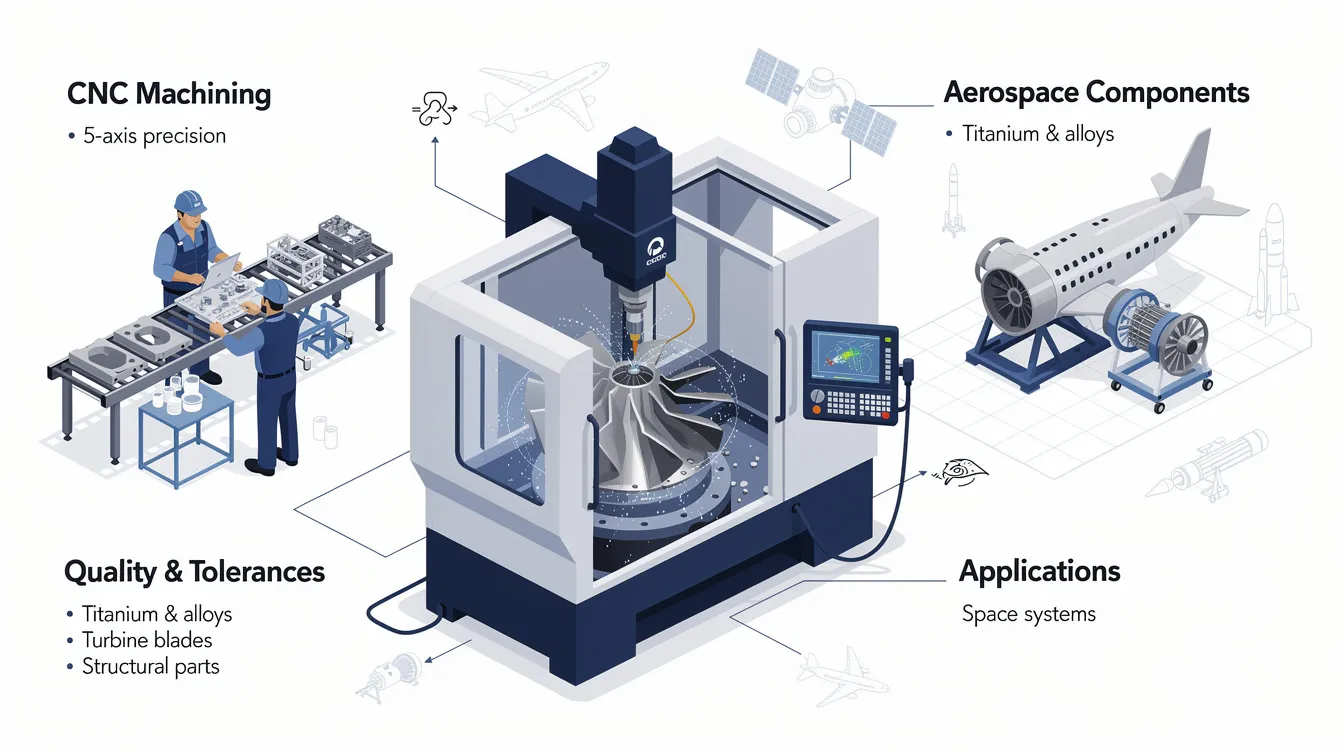
CNC Machining Aerospace Industry Overview
The global aerospace industry generates more than $838 billion annually and continues to expand across commercial aviation, defense, and space exploration. At the heart of this growth, aerospace CNC machining enables the safe, repeatable production of the components that keep aircraft flying and satellites orbiting. Aerospace applications require high-precision components that must withstand extreme conditions, from the searing heat inside jet engines to the corrosive environments encountered by landing gear and propulsion systems.
Aerospace components must meet stringent safety and performance standards that leave zero room for error. Every engine mount, turbine blade, hydraulic cylinder, and electrical connector depends on CNC machining’s ability to deliver dimensional accuracy measured in microns. At Anebon Metal Products Limited, an ISO 9001:2015 and ISO 14001:2015 certified precision manufacturer in Dongguan, China, we serve overseas OEMs with the aerospace CNC capabilities needed to produce these mission-critical parts.
This article provides a practical CNC machining aerospace industry overview for design engineers and OEM buyers. We cover processes, materials used in aerospace, quality systems, cost management, and what to look for in a manufacturing partner.
What Is Aerospace CNC Machining?
Aerospace CNC machining is the use of computer numerical control to produce high-precision, safety-critical components for aircraft, spacecraft, and ground support systems. Computer controlled machines execute programmed toolpaths generated from CAD models, converting digital designs into physical parts through G-code instructions with unparalleled precision.
The core CNC machining processes include milling, turning, drilling, grinding, and 5 axis CNC machining. Each process addresses different geometric requirements, from flat structural panels to complex freeform aerofoil surfaces. Together, they form the backbone of aerospace manufacturing.
Tolerance expectations in aerospace are demanding. General structural features typically require ±0.005–0.010 inches (±0.127–0.25 mm). Critical mating surfaces and hydraulic components call for ±0.001–0.005 inches (25–125 µm). For the most demanding applications, CNC machining tolerances can be as tight as ±0.002 mm, and jet engine parts require tolerances as tight as 4 microns. Advanced CNC machines can maintain tolerances down to fractions of a thousandth of an inch through thermal compensation, in-process probing, and adaptive control.
CNC technology in aerospace has evolved dramatically since the first NC machines appeared in the mid-20th century. Today’s modern CNC machines feature simultaneous multi-axis motion, high-speed spindles, and integrated measurement systems that were unimaginable decades ago, reflecting the broader evolution and advantages of CNC machining across modern manufacturing.
Aerospace CNC machining also integrates with complementary technologies. Die casting, sheet metal fabrication, and additive manufacturing all feed into the same production workflow, and a full-range die casting and machining service simplifies sourcing for multi-process aerospace parts. A forged or 3D-printed near-net-shape part often requires CNC finish machining to achieve final tolerances and surface quality.
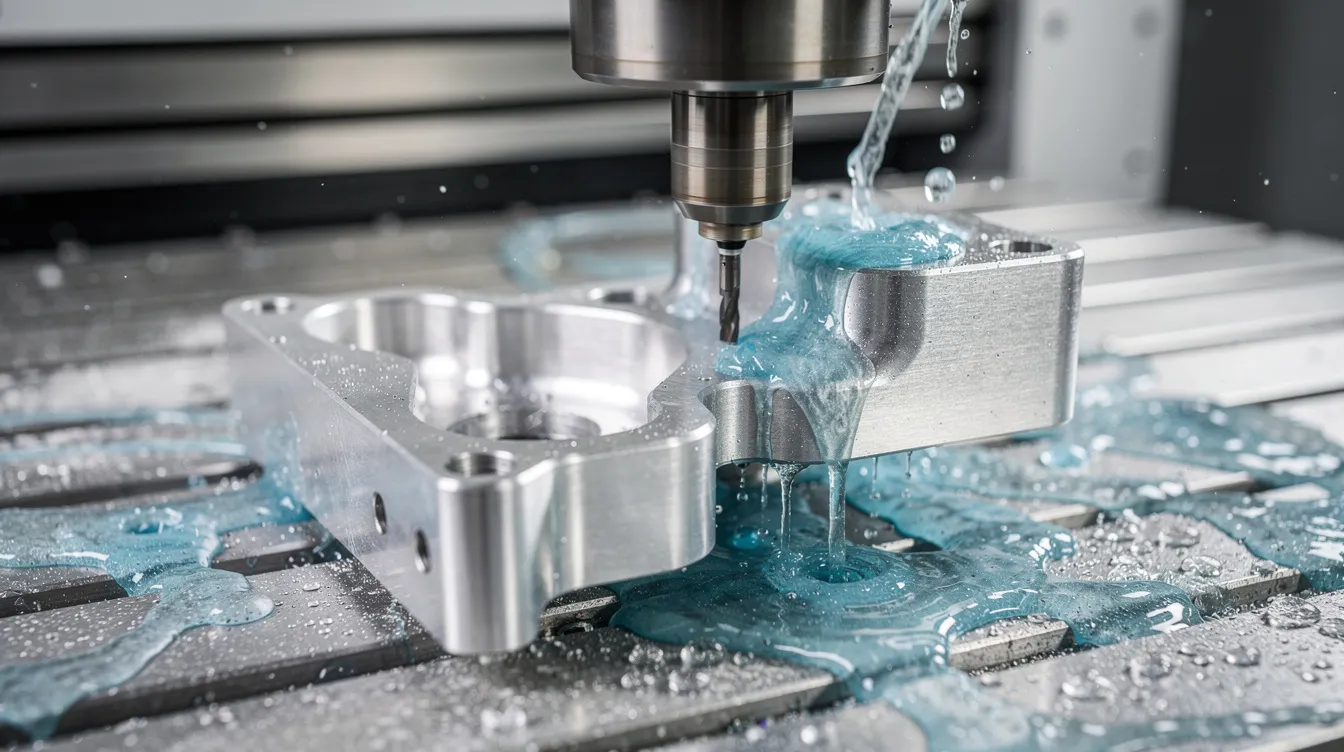
Why the Aerospace Industry Relies on CNC Machining
The aerospace sector operates under unique safety, regulatory, and performance pressures. Aerospace components often require zero-failure tolerances and extensive inspection documentation. These demands make CNC machining nearly universal across aerospace manufacturers.
Precision for Life-Critical Assemblies
Precision machining minimizes the risk of catastrophic failures in aerospace. Jet engine components, landing gear, flight-control surfaces, and fuel systems all operate under conditions where a dimensional error of a few microns could mean the difference between safe flight and structural failure. CNC machining ensures parts fit together precisely, enhancing fuel efficiency and reducing vibration throughout the airframe.
Complex Geometries for Performance
Machining in the aerospace domain supports complex geometries that improve aircraft performance. Thin-walled parts, internal cooling channels, and optimized lightweight structures reduce weight while maintaining structural integrity. These designs, essential for fuel efficiency and aerodynamics, are only achievable through precision CNC machining.
Interchangeability and Maintainability
CNC machined aircraft parts are produced to such tight tolerances that they become fully interchangeable across global MRO (maintenance, repair, overhaul) networks. Airlines and military operators can swap parts with confidence, reducing aircraft downtime.
Productivity and Automation
Aerospace CNC machining emphasizes automation to improve consistency and productivity. Compared to manual processes, CNC machining offers faster cycle times, reduced manual rework, and better utilization of expensive aerospace materials. The buy-to-fly ratio-mass of raw stock versus mass of final part-improves significantly with optimized toolpaths and multi-axis strategies.
Key Aerospace CNC Machining Processes
Different CNC machining processes are selected based on geometry, material, and volume requirements for aerospace parts. Here is how each process contributes within the broader CNC machining process and benefits used across industries.
CNC Milling (3-Axis and 4-Axis)
CNC milling is essential for creating intricate aerospace components. Three-axis milling handles prismatic parts like brackets, ribs, and housings through pocketing, slotting, and contouring operations. Adding a fourth axis introduces rotational indexing, enabling features on multiple sides of a part without re-fixturing. Selecting appropriate milling strategies and cutter directions, such as forward or reverse milling in CNC machining, is critical to surface quality and tool life, and this is a foundational CNC machining technique across the aerospace industry.
CNC Turning
CNC turning is used for producing round and cylindrical aerospace parts such as shafts, pins, threaded fasteners, bushings, and electrical components for actuators. Swiss-type turning excels for small-diameter parts with tight concentricity requirements.
5 Axis CNC Machining
5 axis CNC machining allows for complex geometries and reduced setup time. By machining freeform surfaces-turbine blades, impellers, structural nodes-in a single setup, it eliminates cumulative errors from multiple re-fixtures and delivers superior surface continuity. This process is critical for complex aerospace parts that demand both aerodynamic precision and structural performance.
Supporting Operations
Additional machining processes refine the final product:
-
CNC drilling and reaming produce precise holes for fuel lines, hydraulic systems, and fastener locations.
-
CNC grinding refines surface finishes without affecting part tolerances, achieving Ra values below 0.4 µm for bearing seats and sealing surfaces.
-
EDM (Electrical Discharge Machining) handles extremely hard materials or geometries where conventional cutting tools cannot reach.
In-process probing and feedback loops ensure tool condition, alignment, and compensation of thermal drift across all these processes, and advanced real-time adaptive control in CNC machining further enhances consistency for complex aerospace components.
Typical Aerospace CNC Applications and Components
Aerospace CNC machining spans six major application domains: airframes, propulsion, landing systems, avionics, space hardware, and ground support equipment, often incorporating specialized materials such as high-precision brass components for electrical and fluid connectors.
Structural Airframe Components
CNC machining creates structural components like ribs and spars that form the skeleton of wings and fuselage sections. Bulkheads, seat tracks, door frames, brackets, and hinge fittings are also precision machined, primarily from aerospace-grade aluminum alloys and increasingly from titanium for critical structural components.
Engine and Propulsion Systems
CNC machining produces turbine blades for aerospace engines alongside compressor blades, blisks (integrally bladed disks), gear housings, and pump bodies. These propulsion systems components must withstand temperatures exceeding 700°C and extreme centrifugal stresses. Engine mounts are precisely machined to secure engines to airframes, demanding both high strength and exact dimensional control.
Landing Gear Components
Landing gear components are machined for precision and strength. Main struts, bogies, trunnions, axles, torque links, and hydraulic cylinders are typically forged and then CNC machined to final dimensions. These parts require exceptional surface finish for mating surfaces and often receive protective coatings for wear and corrosion resistance, and thin-walled landing gear structures demand careful milling workpiece deformation prevention to control stress-related distortion.
Avionics and Electrical Components
Machined enclosures, backplanes, heat sinks, connector bodies, and mounting frames protect sensitive electronics from vibration, thermal loads, and electromagnetic interference. Electrical connectors demand precise fits and often require conductive plating for RF shielding.
Space and Satellite Hardware
CNC machining is used for producing satellite components including structural panels, antenna mounts, instrument housings, propulsion brackets, and cryogenic system parts. These aerospace applications require materials that can tolerate vacuum, radiation, and extreme thermal cycling. Approximately 50% of the Boeing 787 is made of composites, and similar hybrid material strategies extend into spacecraft design where CNC machining finishes additively produced or composite structures to final tolerances.
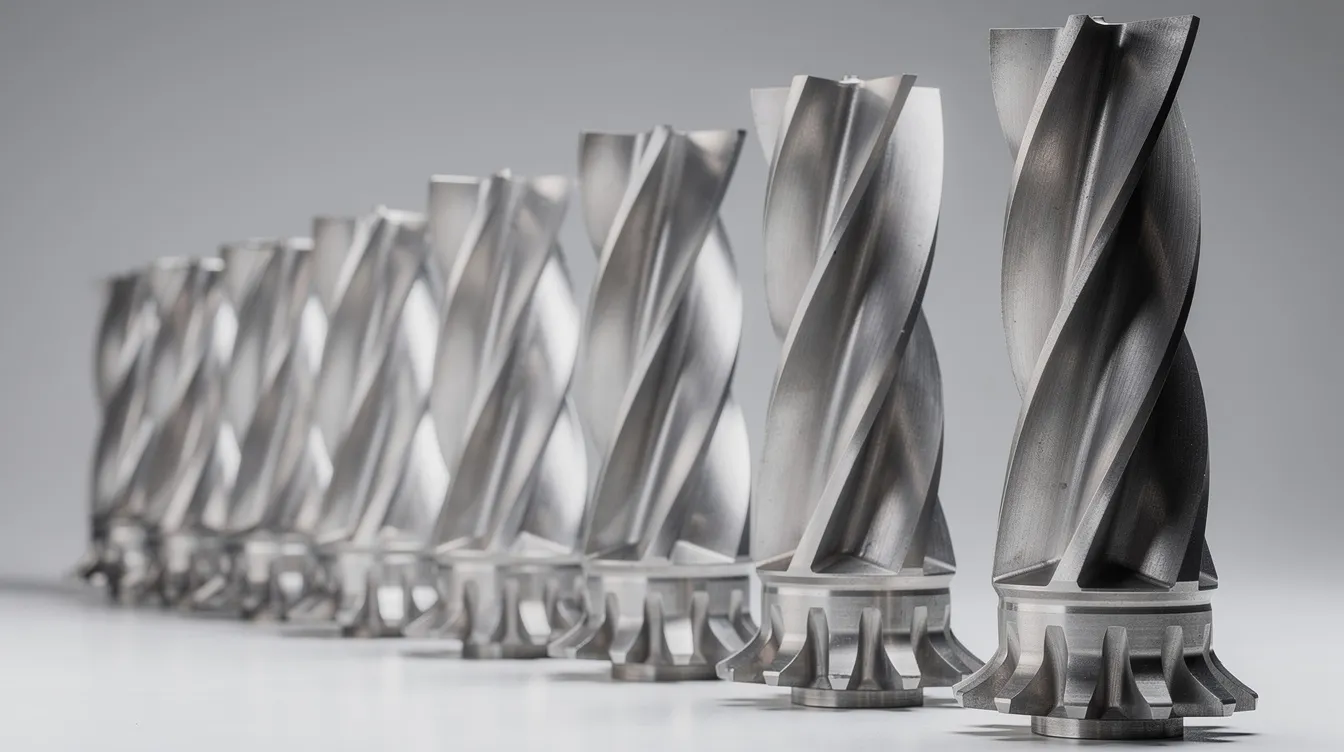
Common Materials Used in Machining Aerospace Parts
Material choice in aerospace balances strength, weight, temperature resistance, corrosion resistance, and machining cost. Here are the primary aerospace materials and their machining considerations.
Aluminum Alloys
Aluminum alloys are lightweight and corrosion resistant, making them the workhorses for airframe structures, interior fittings, and many housings. Common grades include:
|
Alloy |
Key Properties |
Typical Use |
|---|---|---|
|
6061-T6 |
Good machinability, excellent anodizing response |
Interior structures, brackets |
|
7075-T6 |
High strength, harder to machine |
Wing ribs, spars, structural fittings |
|
2024-T3 |
Good fatigue resistance |
Fuselage skins, structural panels |
Titanium Alloys
Titanium alloys withstand high temperatures better than aluminum and offer superior strength-to-weight ratios. Ti-6Al-4V is the most widely used grade for landing gear, engine pylons, and heavily loaded structural nodes. However, titanium’s low thermal conductivity channels heat into the cutting tool, causing adhesion and crater wear. Cutting speeds must stay below approximately 90 m/min, and high-pressure coolant and rigid setups are essential.
Nickel-Based Superalloys
Inconel 718 is a superalloy used in jet engine components, combustor liners, and turbine disks where temperatures exceed 700°C. These advanced materials retain strength at extreme temperatures but are notoriously difficult to machine due to work hardening, high cutting forces, and severe tool wear. Specialized carbide tools with advanced coatings are mandatory.
Stainless and High-Strength Steels
Steels such as 15-5PH, 17-4PH, and 300M serve in fasteners, shafts, actuators, and certain landing gear parts where toughness and fatigue resistance outweigh weight concerns.
High-Performance Plastics and Composites
PEEK is used in critical engine parts for its high temperature resistance, while PEI and PTFE find use in electrical insulation and interior components. Materials such as titanium alloys and composites improve fuel efficiency in aerospace design by reducing overall weight. Material handling in aerospace involves lightweight, high-strength alloys like titanium and aluminum alongside these engineering plastics, and CNC trimming and drilling are used to finish composite structures without delamination.
Surface Treatments and Finishes for CNC Machined Aircraft Parts
Surface finishes in aerospace go far beyond cosmetics. They directly influence corrosion resistance, wear protection, fatigue life, and electrical performance.
Anodizing
Anodizing is the most common surface treatment for aluminum aerospace parts, and optimizing these processes draws on best practices in aluminum surface treatment for CNC machined parts:
-
Type II (standard): Thickness of 0.0002–0.001 inches (5–25 µm). Used on structural brackets, housings, and interior fittings.
-
Type III (hard anodizing): Thickness of 0.001–0.004 inches (25–100 µm), achieving hardness of 60–70 HRC equivalent. Applied where wear resistance is critical.
Both types conform to MIL-A-8625 specifications. Note that anodizing increases surface roughness-a ground Ra of 0.2 µm may rise to 0.45–0.8 µm after hard coat application.
Chemical Conversion Coatings
Chromate conversion coatings (e.g., Alodine) create thin protective layers on aluminum with minimal dimensional change. They are used where electrical conductivity or paint adhesion is required.
Passivation
Passivation for stainless steel landing gear pins, actuators, and fasteners creates a passive chromium oxide layer that improves corrosion resistance without dimensional change, per AMS and ASTM standards.
Functional Coatings
Electroless nickel, zinc-nickel, and specialized dry-film lubricants provide wear, conductivity, or anti-galling properties in moving assemblies. These are common on actuator components and sliding interfaces.
Cosmetic and Protective Finishes
Painting and powder coating for interior and exterior panels must comply with flammability and environmental regulations, particularly for cabin interiors. Hard chrome plating remains standard for landing gear shock struts.
Quality, Certification, and Traceability in Aerospace CNC Machining
Machining aerospace parts requires robust quality systems and full traceability from raw material to final delivery.
Standards and Certification
Compliance with standards like AS9100D and NADCAP is necessary for aerospace machining. ISO 9001:2015 provides the quality management foundation, while AS9100D adds aerospace-specific requirements. Anebon operates under ISO 9001:2015 and ISO 14001:2015, aligning processes to aerospace customer requirements and supporting documentation expectations for aerospace-grade precision.
Inspection Methods
Typical inspection for aerospace CNC machined parts includes:
-
CMM (coordinate measuring machines) with repeatability of approximately ±0.001 mm
-
Optical and laser scanning for complex surface verification
-
Surface roughness measurement via profilometry
-
Non-destructive testing (fluorescent penetrant inspection, ultrasonic, X-ray) where applicable
CNC machining can achieve tolerances as tight as ±0.002 mm, and measurement systems must have uncertainty far less than the tolerances being verified.
Traceability
Aerospace CNC manufacturing requires heat lot tracking, material certificates (EN 10204 3.1 or 3.2), process route documentation, operator IDs, and serialized part records. Environmental and process controls-cleanliness, FOD prevention, calibrated measurement equipment-are standard across aerospace manufacturing facilities.
Design and DFM Considerations for Machining Aerospace Components
Early design for manufacturability (DFM) involvement can significantly reduce risk, lead time, and manufacturing costs for aerospace CNC projects.
Geometry Optimization
Design for CNC by maintaining consistent wall thicknesses, using fillet radii that match standard tool sizes, and avoiding unnecessary undercuts that force extra setups. Complex geometries in aerospace parts can be prone to distortion if not properly managed, so uniform material removal strategies should be planned during the design phase.
Tolerance Strategy
Reserve ultra-tight tolerances only for truly critical features. GD&T (geometric dimensioning and tolerancing per ASME Y14.5) communicates functional requirements without over-constraining non-critical dimensions. Over-tightening tolerances everywhere dramatically increases cost and lead time.
Material and Machinability
Material selection impacts tool wear, cycle time, and cost. Titanium and aluminum alloys each present different machining challenges-involving the machine shop early when choosing between aluminum, titanium, and superalloys prevents expensive surprises during production.
Anebon’s engineering team provides DFM feedback during quoting and prototyping, helping aerospace OEMs balance performance with manufacturability before committing to production tooling.
Managing Cost and Lead Time in Aerospace CNC Projects
Aerospace CNC machining must reconcile strict performance requirements with commercial pressures on unit price and schedule.
Cost Drivers
The main factors influencing manufacturing costs include:
-
Material price: Titanium can cost 5–10x more per kilogram than aluminum
-
Part complexity: Number of features, depth of pockets, thin walls
-
Number of setups: Each re-fixture adds time, cost, and error risk
-
Tolerance requirements: Tighter tolerances mean slower feeds, more inspection
-
Inspection scope: Full CMM versus sampling plans
-
Surface treatment steps: Multi-step finishing adds process time
Reducing Setups with Multi-Axis Machines
Advanced CNC machining equipment such as 4-axis and 5 axis CNC centers reduce setups and fixture complexity. A part requiring four setups on a 3-axis mill might be completed in a single setup on a 5-axis machine, improving productivity and lowering total cost.
Shortening Lead Times
Concurrent engineering, standardized fixtures, batch production of part families, and digital order workflows all compress schedules. For buyers, RFQ best practices include providing complete CAD files, 2D drawings with tolerances and GD&T callouts, material specifications with temper/condition, and annual volume estimates. This results in accurate, competitive aerospace machining quotes.
From Prototype to Production: Aerospace CNC Machining Workflow
Aerospace CNC machining supports rapid prototyping, qualification builds, and full-rate production runs within the same supply chain.
Project Stages
A typical aerospace CNC project follows this sequence, underpinned by structured CNC machining process design that defines tooling, routes, and documentation:
-
Design handoff – CAD models and drawings transferred to the machine shop
-
DFM review – Geometry, materials, surface treatment needs evaluated
-
Process planning – Tooling, machine selection, fixturing designed
-
CNC programming – Toolpaths generated and simulated
-
Prototype machining – First parts produced
-
First Article Inspection (FAI) – Full dimensional and material verification per AS9102C
-
Production ramp-up – Process capability measured (Cp, Cpk), full-rate manufacturing begins
Rapid Prototyping
CNC machining supports rapid prototyping in aerospace components with turnaround times for aerospace prototypes that can range from hours to days depending on complexity. Even at the prototype stage (1–50 parts), prototypes are tested for form, fit, and function during development, and quality documentation must align with production requirements.
Production Consistency
CNC machining allows for consistent quality in production runs. FAI requirements per AS9102C (revised June 28, 2023) mandate that every characteristic on the drawing is measured and documented, with full material and process verification.
Anebon supports both low-volume, high-mix aerospace machining and repeat production with consistent quality and documentation through precision CNC prototyping and production capabilities.
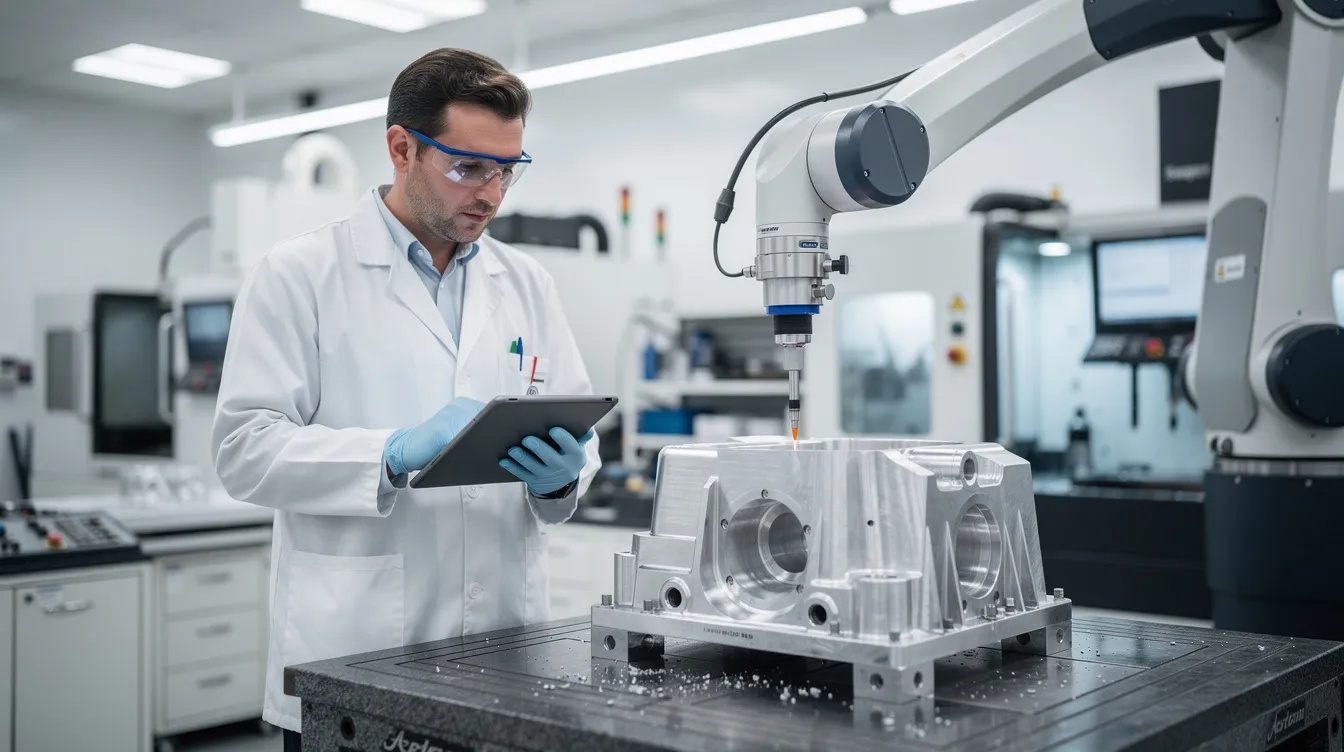
Challenges in Machining Aerospace Alloys and Composites
Aerospace materials offer exceptional performance advantages but are often difficult and costly to machine. CNC machining in aerospace requires skilled technicians for operating complex equipment, and process expertise directly affects part quality and yield.
Titanium
Titanium’s low thermal conductivity forces heat into the cutting tool rather than the chip, accelerating adhesion and crater wear. Springback from the material’s elasticity complicates dimensional control. Mitigation strategies include optimized cutting speeds, high-pressure coolant delivery, rigid machine tools, and coated carbide inserts designed for titanium.
Nickel-Based Superalloys
Superalloys like Inconel 718 work-harden rapidly during cutting, meaning each subsequent pass encounters harder material. Manufacturers face challenges in machining difficult materials that cause rapid tool wear, requiring rigid setups, appropriate chip loads, and advanced tool coatings (PCD, PCBN, or coated carbides).
Composites
Drilling and trimming composites demand particular care. Delamination control, dust extraction, and maintaining hole quality for fastener joints are ongoing challenges. Specialized diamond-coated tools and controlled feed rates prevent fiber pull-out and thermal degradation.
Process Stability
Across all difficult materials, experienced aerospace CNC machinists, robust tooling strategies, and process monitoring are essential for maintaining dimensional stability across batches. Thin-walled parts are especially susceptible to machining-induced residual stresses that can cause distortion after unclamping.
Future Trends in Aerospace CNC Machining
Aerospace CNC machining is evolving alongside electrification, urban air mobility, and more sustainable aircraft designs. Electric vertical takeoff and landing aircraft are transforming aviation, and the aerospace sector is focusing on greener, fuel-efficient designs-both of which demand new approaches to precision manufacturing.
Advanced Automation and Multi-Axis Capabilities
Increasing adoption of 5-axis and mill-turn centers with in-machine probing and adaptive control enables aerospace companies to handle more complex parts in fewer setups. Advanced automation reduces human error and increases throughput for high-mix production environments.
Hybrid Manufacturing
Hybrid manufacturing integrates CNC machining with additive technologies. Near-net-shape metal parts produced through additive manufacturing processes are finish-machined to meet tight tolerances and surface requirements, combining the design freedom of 3D printing with CNC’s dimensional precision.
Digitalization and Industry 4.0
Industry 4.0 technologies enable real-time monitoring in CNC machining. Digital twins and simulation software can optimize CNC machining processes in aerospace before a single chip is cut. AI and machine learning are shaping aerospace manufacturing through predictive maintenance, adaptive toolpath optimization, and automated defect detection-representing the cutting edge technology of aerospace CNC manufacturing.
Sustainability
Optimizing toolpaths to reduce scrap, using recycled alloys where specifications permit, and adopting energy-efficient machining practices all align with ISO 14001 environmental management standards and the broader push toward sustainable aerospace engineering.
Working with Anebon for Aerospace CNC Machined Parts
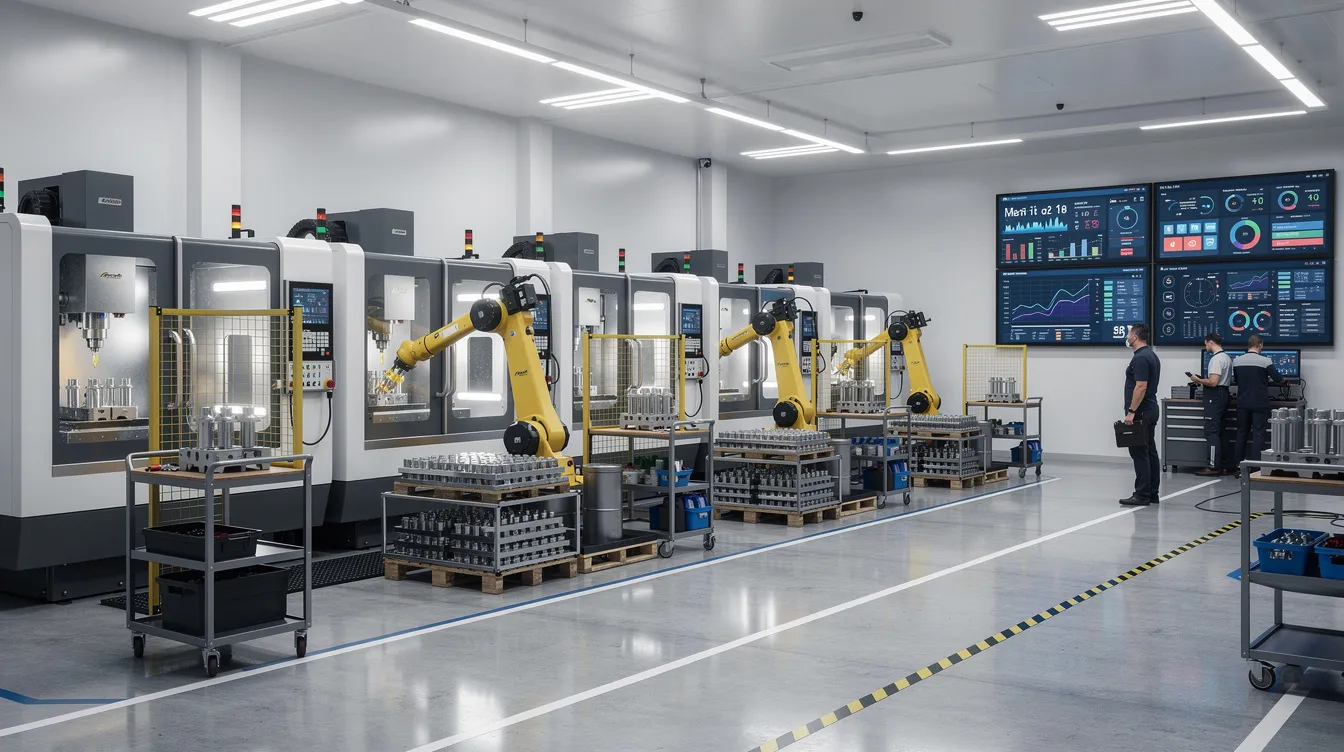
Anebon Metal Products Limited is a precision machining, die casting, and sheet metal partner for overseas aerospace OEMs and R&D teams. Founded in 2010, our facility in Dongguan, China, is equipped with advanced CNC machining equipment for high-demand aerospace work.
Core CNC capabilities include:
-
3-axis, 4-axis, and 5 axis CNC machining and CNC milling
-
CNC turning including Swiss-type for cylindrical aerospace parts
-
Tight tolerances down to ±0.002 mm
-
A wide range of metals (titanium and aluminum alloys, stainless steels, superalloys) and engineering plastics
Our ISO 9001:2015 and ISO 14001:2015 certifications, in-house quality inspection, and documented processes align with aerospace manufacturing expectations. We have experience producing aerospace CNC machined parts such as brackets, housings, structural fittings, landing gear sub-components, and electrical component enclosures for ISO-certified precision manufacturing clients worldwide.
CNC machining plays a central role in every aerospace project we take on, and our engineering team provides DFM feedback on every quote.
Ready to get started? Send us your CAD files and drawings for DFM feedback and a competitive cost estimation on your next aerospace machining project. Request a quote today.