Choosing Wisely: Which Machining Vendor Is The Right Fit for Your Business
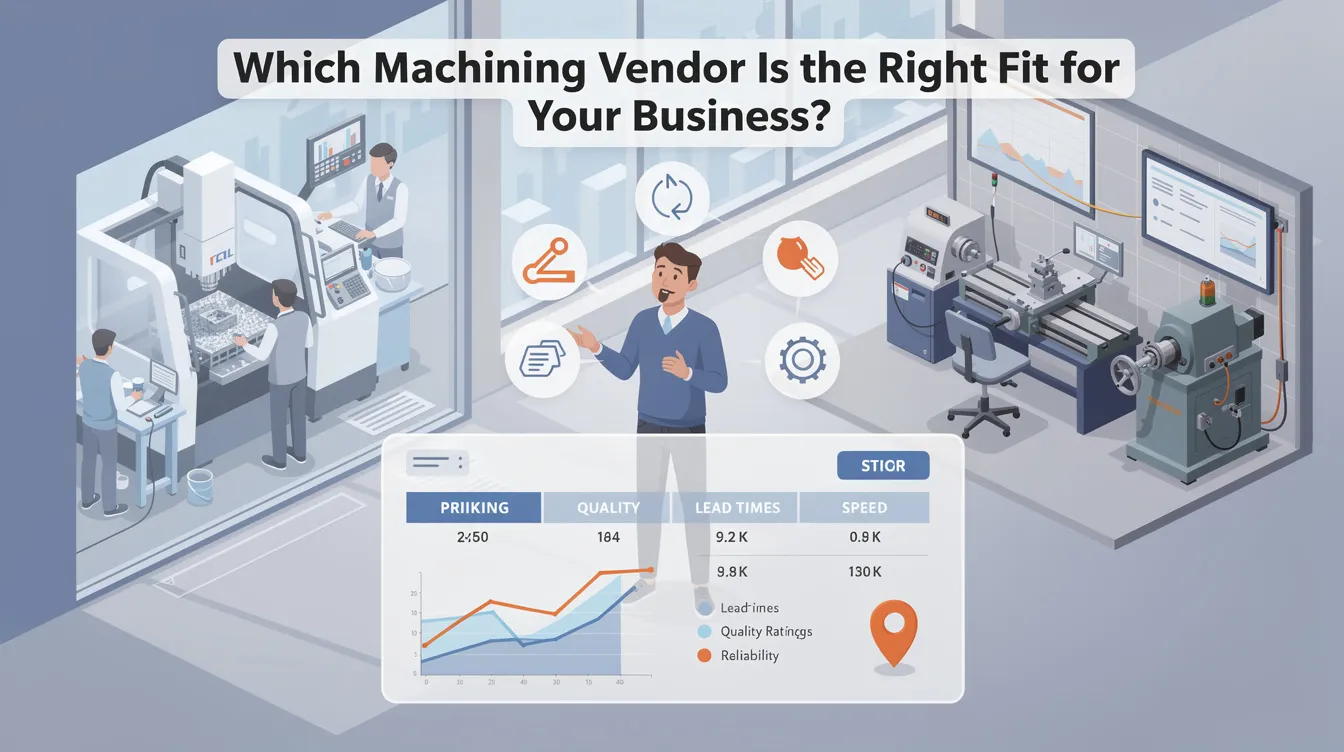
Which Machining Vendor Is the Right Fit for Your Business?
Choosing the right machining vendor impacts every stage of your product lifecycle, from prototype quality to production cost to brand reputation. This guide walks you through a structured framework so you can determine which machining partner deserves your business, not just your first PO.
Fast Answer: How to Shortlist the Right Machining Partner in 10 Minutes
For design engineers and purchasing teams, vendor choice is one of the highest-leverage decisions in any manufacturing project. The wrong machine shop leads to high scrap rates, delayed launches, and quality failures that ripple through your supply chain. The right fit, on the other hand, becomes a strategic asset: one that helps refine your designs, holds tolerances repeatably, and scales with you. Choosing the right machining vendor directly impacts product quality, lead times, and costs.
Use this five-step quick filter to eliminate mismatches before you invest hours in detailed evaluations:
1. Annual Volume – Is this a prototype run (1–50 units), bridge production (50–1,000), or high volume production (5,000–100,000+ pcs)? Each tier demands different equipment, fixturing, and process control.
2. Tolerance Requirements – Do you need ±0.01 mm on critical features, or is ±0.05 mm sufficient? CNC machining can achieve tolerances as precise as ±0.002 mm, but not every shop maintains that level repeatably.
3. Materials – Aluminum 6061-T6, stainless steel 316L, titanium Ti-6Al-4V, or engineering plastics like PEEK? Material choice drives cutter selection, cycle time, and vendor capability needs.
4. Lead-Time Target – Prototypes in 7–10 days or production runs over 4–6 weeks? Speed and reliability are different muscles.
5. Certifications – Does your specific industry require ISO 9001, ISO 13485, AS9100, or other compliance? Vendors without the right certifications will fail your incoming audits.
For example, if you need 25 aluminum 6061-T6 housings at ±0.02 mm within 10 days, prioritize a CNC machining partner with in-house 5-axis CNC milling and rapid prototyping capacity. Trial orders or prototyping are advisable before large-scale production commitments.
Anebon Metal Products Limited is an ISO 9001:2015 and ISO 14001:2015 certified machine shop in Dongguan, China, specializing in high precision CNC machining, die casting, and sheet metal fabrication for overseas OEMs, from rapid prototype through full production.
Use the sections below as a step-by-step framework to confirm whether any vendor on your shortlist is truly the right fit.
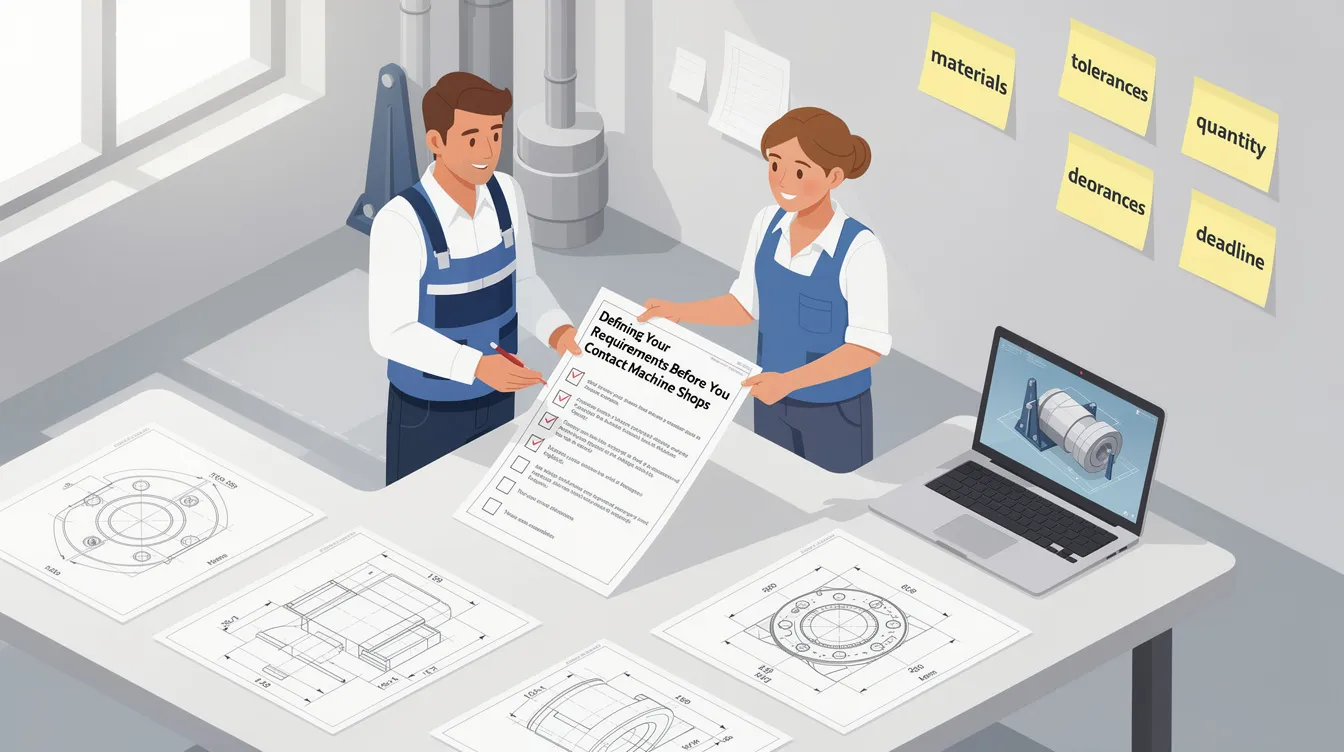
Defining Your Requirements Before You Contact Machine Shops
Many sourcing failures stem from unclear project specs. If you reach out to suppliers with vague requirements, you’ll receive quotes that vary wildly in cost and lead time, making apples-to-apples comparison impossible.
Before your first RFQ, define these key factors:
-
Part function and lifecycle: structural, cosmetic, or thermal management? Prototype in 2024, ramp in 2025, redesign in 2026?
-
Target unit cost: for example, <$20/part at 1,000 pcs. Over-tolerancing can drive unnecessary costs, so separate critical-to-function dimensions from general ones early.
-
Expected annual volume: assess whether you need a vendor’s production flexibility for short or long runs.
-
Technical requirements: dimensional tolerances (±0.01 mm vs ±0.05 mm), surface finish (Ra targets), and inspection level (100% vs sampling).
Categorize your work clearly. One-off R&D orders need flexibility and fast iteration. Bridge production (100–500 pcs) demands stable processes and some fixturing investment. Mass production (10,000+ pcs/year) pushes for automation, repeatability, and cost optimization – each requiring a different machining partner profile.
Material selection up front shapes your vendor search. Aluminum 6061-T6 machines easily; 7075-T6 offers higher strength but is more prone to warping. Stainless 304 and 316L differ in corrosion resistance and work hardening. Titanium Ti-6Al-4V demands slower feeds and specialized tooling. Engineering plastics like PEEK or PC require thermal awareness. Share STEP/IGES CAD files, 2D drawings with GD&T, and any PPAP/FAIR templates with shortlisted shops so quotes reflect reality.
Core Capabilities: Matching Your Project to the Right Machining Partner
“Capabilities” means more than owning a few CNC machines. It’s the match between your part’s complex geometries, your tolerance requirements, and a vendor’s equipment, machinists, and process expertise.
Different processes suit different parts. CNC milling (3, 4, or 5-axis) handles aluminum enclosures and robotics housings with deep pockets and complex shapes. CNC turning, including Swiss lathes optimized for manufacturing small parts with precision, suits shafts and fittings. Die casting with CNC finish machining works for high-volume housings. CNC machining utilizes multi-axis machines for complex geometries that would require multiple setups on simpler equipment, and 5-axis milling achieves angular tolerances of ±0.002°.
When evaluating capabilities, look at concrete checkpoints: spindle speed (12,000–24,000 rpm for aluminum), axis configuration, max part envelope, and experience with thin walls, deep pockets, and tight tolerances. Prototyping shops (1–50 pcs) optimize for fast setup and flexibility, while production-focused vendors (1,000–100,000+ pcs) invest in process control, automation, and fixturing expertise. Advanced cutting parameters like trochoidal milling can reduce average cycle time by 18.5%, a sign of a shop that understands machining process optimization.
Anebon’s capabilities span CNC milling, CNC turning, 5-axis machining, die casting, and sheet metal, with tolerances down to ±0.002 mm on critical features. For overseas OEM customers, this breadth under one roof reduces supply chain complexity significantly.
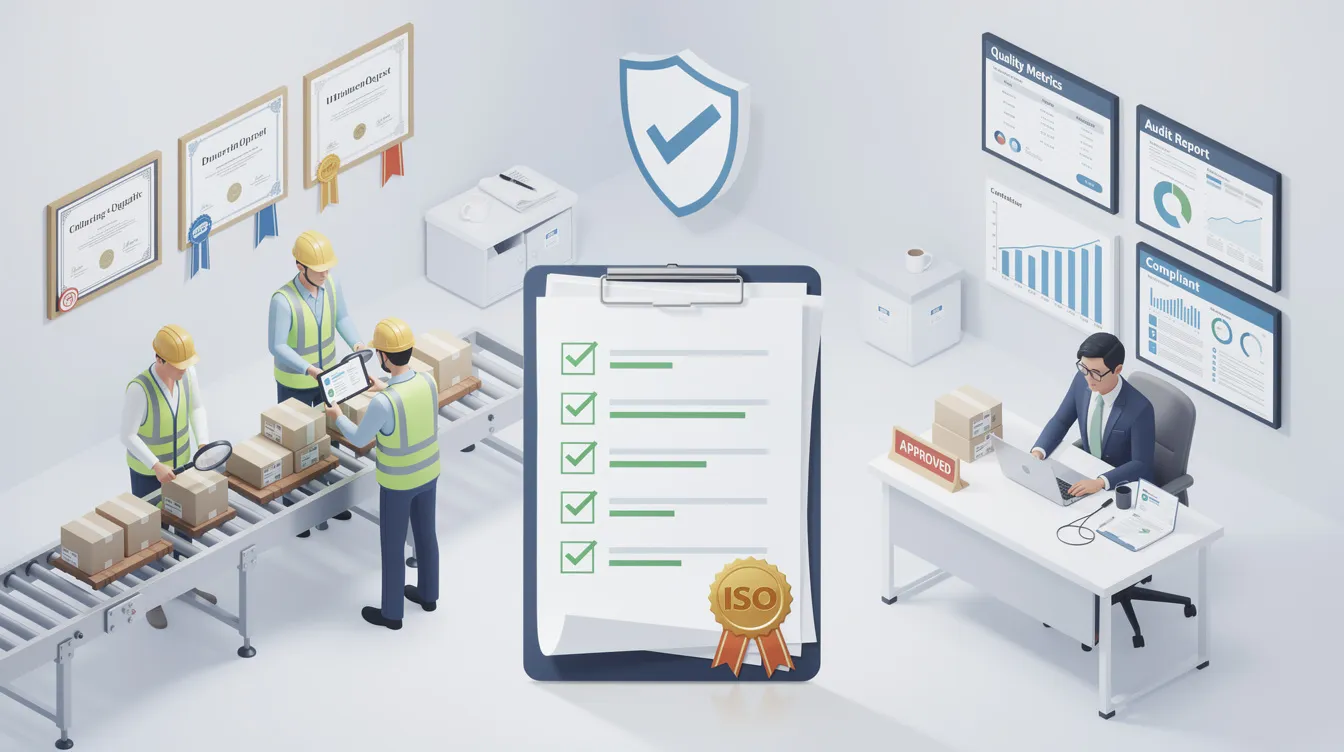
Quality Control, Certifications, and Compliance with Industry Standards
Quality control is often the real differentiator in the machining industry. A company that simply “meets drawing” is fundamentally different from a partner whose operations prevent defects before they reach your line. Quality control directly impacts product integrity and brand reputation.
Concrete QC infrastructure to verify includes coordinate measuring machines (CMMs are essential for precise quality control inspections), optical comparators, surface roughness testers, and calibrated micrometers. Check for a vendor’s recent calibration certificates for machines and measuring equipment. A vendor’s Cpk > 1.33 indicates consistent tolerance capability, and a reliable machining supplier maintains an on-time delivery rate above 95%. Evaluating historical performance data helps assess a vendor’s reliability.
Key industry standards to understand:
-
ISO 9001:2015 ensures quality management in manufacturing processes
-
ISO 14001:2015 focuses on environmental management systems
-
ISO 13485 is essential for medical device manufacturing compliance
-
AS9100 certification is crucial for aerospace machining standards
-
ISO 2768-m is a standard for general tolerances in machining
Expect documentation including material test reports (MTRs), certificates of analysis (COAs), FAIR reports, and capability studies (Cpk) for key dimensions. Quality assurance includes inspection processes and certifications working together.
Anebon’s ISO 9001:2015 and ISO 14001:2015 certifications, combined with in-process and final quality inspections, support overseas OEMs who must pass incoming inspection and audits.
One manufacturer learned this the hard way: their previous vendor lacked routine CMM verification, and several aerospace brackets were rejected upon incoming inspection, causing line stoppages. Switching to a shop with structured QC and full dimensional reporting eliminated rejects entirely.
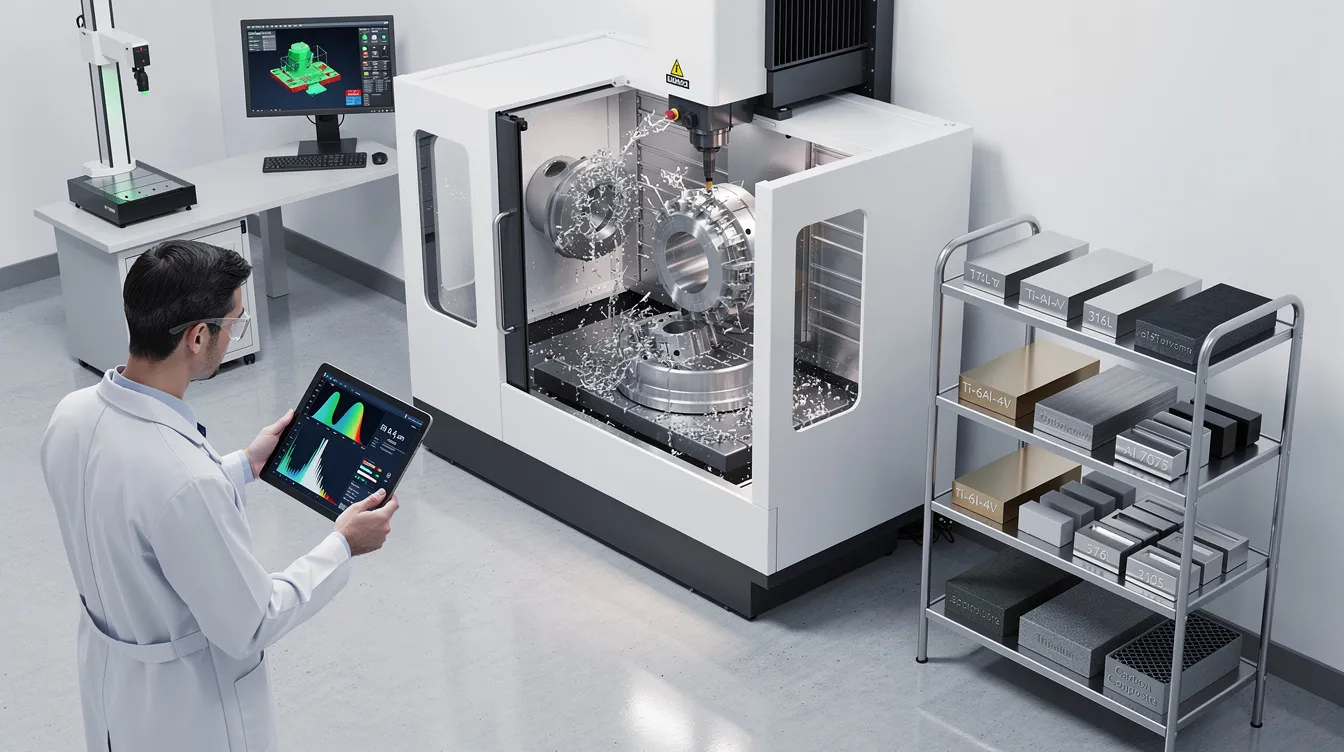
Material Expertise and High-Precision Machining Considerations
Material choice directly affects cutter selection, cycle time, achievable tolerances, tool life, and part cost. Material expertise is critical for machining vendors, and you should select vendors based on material-specific expertise.
Common aluminum alloys (6061-T6 for machinability, 7075-T6 for strength) behave differently under high-speed cutting. Stainless steels like 304 and 316L tend to work-harden and require chip evacuation strategies. Titanium Ti-6Al-4V demands slower feeds, rigid fixturing, and attention to thermal management. Copper alloys machine easily but can cause tool deflection. Engineering plastics like PEEK and Delrin need controlled coolant and awareness of thermal expansion. Machined components often require additional secondary operations such as anodizing, heat treatment, or deburring.
High precision is mandatory in cases like medical implants at ±0.01 mm, aerospace brackets requiring IT6/IT7 fits, and instrument housings needing stable flatness across temperature swings. Evaluate a vendor’s tolerance capabilities for precision parts by asking for sample dimensional reports. A mature machining partner helps optimize material choice, for example shifting from 7075-T6 to 6061-T6 for non-structural parts to reduce cost, and specifying Ra 3.2 μm on non-critical surfaces can reduce part costs by up to 30%.
Anebon brings experience across aluminum, titanium, stainless steel, and engineering plastics for aerospace, medical device, robotics, and electronics OEMs – the right vendor brings both machining and material insight.
DFM Support, Engineering Collaboration, and Project Communication
For complex manufacturing projects, the right machining partner behaves like an extension of your engineering team, not a simple “build-to-print” supplier. Design for Manufacturability (DFM) feedback helps optimize designs for manufacturing before tooling is cut.
A collaborative DFM process addresses wall thickness, fillet radii suited to available tools, thread specs, and datum structures. Using DFM can minimize tool wear and machining time. Practical guidelines: avoid unnecessary tight tolerances on non-critical features, keep hole depth-to-diameter ratios at 3:1 or below, and relax cosmetic surfaces that don’t affect function. A machining vendor should handle specific tolerances and surface finishes, but only where they matter.
Effective communication looks like engineering review calls across time zones, annotated PDFs with DFM feedback, and clear revision control with drawing rev labels and ECN dates. Transparency in communication is vital for successful vendor relationships. Anebon routinely provides DFM feedback during quoting for CNC machining, die casting, and sheet metal, helping overseas R&D teams reduce cost and lead time before fixtures are finalized. Prefer vendors who question designs constructively and propose alternatives with transparent reasoning.
Cost, Lead Times, and Scalability: Balancing Price with the Right Fit
The lowest quote is rarely the best long-term choice. Focus on total cost of ownership: rework, delays, change-order friction, and logistics over the product’s lifecycle. Direct relationships with factories can yield 15-25% cost reductions compared to trading through intermediaries.
Practical cost drivers include setup time (which significantly impacts costs in low-volume production), fixture design, material waste, cycle time, tool wear on hard alloys, and inspection intensity. Consolidating multiple small parts into one machined component reduces setups. Transparent pricing and total costs should be provided clearly by machining vendors – if they can’t explain their pricing, that’s a red flag. Backup suppliers for raw materials reduce risks of production disruptions.
Lead-time patterns range from rapid prototype cycles (5–10 working days) to pilot runs (2–4 weeks) to full production schedules with blanket orders. Production capacity and the ability to support scaling are key factors; ask whether the same vendor can handle 5 prototypes today and 5,000 monthly shipments next year. Use word of mouth to find reputable machine shops and verify claims with references. Anebon structures projects from rapid prototyping through mass production with stable pricing, repeatable quality control, and logistics support for overseas OEMs.
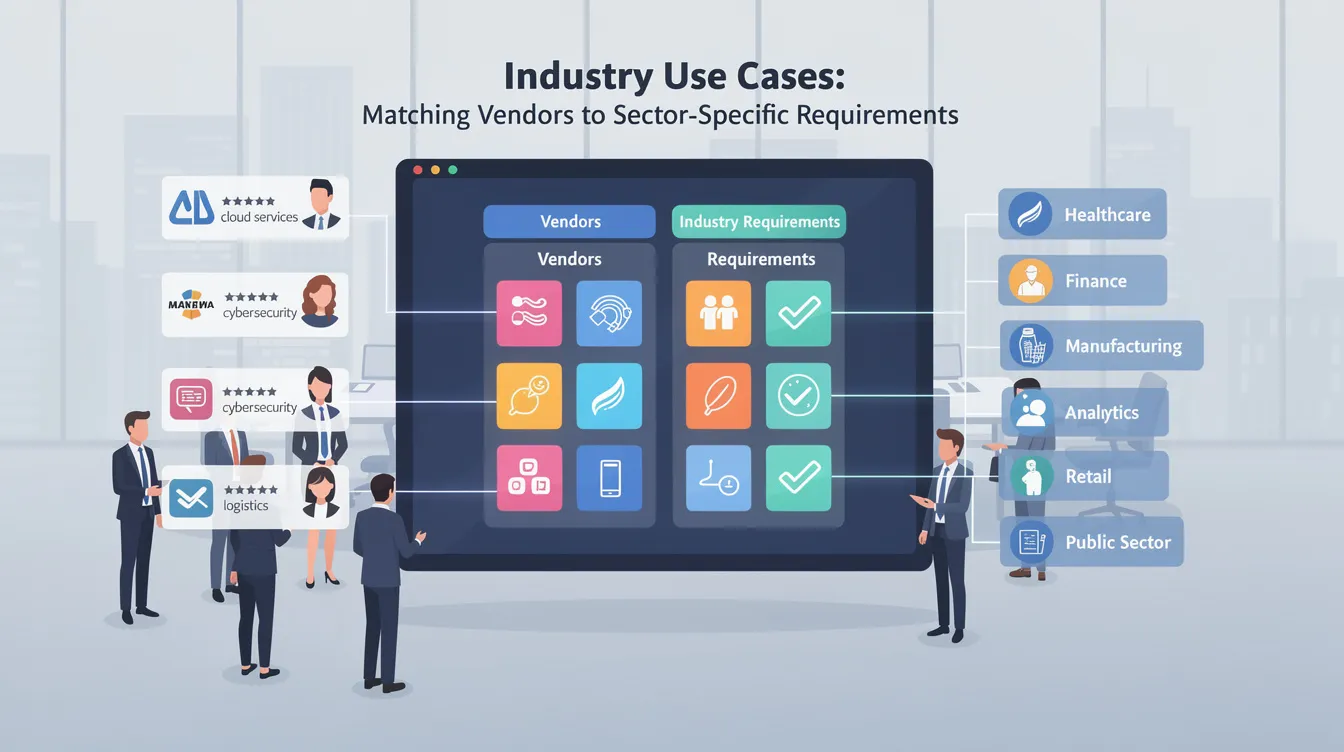
Industry Use Cases: Matching Vendors to Sector-Specific Requirements
Not every shop is suited to every industry. Aerospace and defense demand 5-axis CNC machining for thin-walled parts, strict GD&T, traceability, and compliance – choose vendors with ISO 9001 or AS9100 certifications. Medical devices require biocompatible materials, burr-free finishes, documented traceability, and ISO 13485 certification, which is crucial for medical manufacturing quality. Automotive and industrial machinery programs focus on cost per piece, repeatability, and JIT deliveries. Electronics and robotics OEMs need tight-tolerance aluminum and plastic housings with excellent cosmetic finishes and ongoing design revisions.
One robotics company previously used a vendor without finishing expertise or ISO batch tracking; parts had inconsistent anodizing and corrosion issues. Switching to a machining partner with sector-specific compliance and quality control resolved every issue – case studies like this illustrate why industry experience matters alongside raw capability.
Evaluating and Selecting Your Long-Term Machining Partner
Selecting a long-term machining partner is an arduous task, but a structured process makes it manageable. The goal is long term success, not a one-off transaction.
Follow this workflow: send identical RFQs to 3–5 machine shops, hold technical clarification calls, commission a sample or pilot build, review quality reports, and conduct an audit or remote assessment. Ask specific questions: maximum sustainable tolerance on your features, examples of similar projects completed since 2018, how they handle engineering changes, and their escalation path for non-conformances.
Evaluate beyond price. Use a weighted evaluation scorecard covering quality control (25%), cost (20%), lead time (15%), communication and responsiveness (15%), scalability (15%), and industry experience (10%). Criteria like responsiveness within 24 hours, clarity of DFM suggestions, willingness to sign NDAs, and the efficiency of their production cycle all factor into which vendor is the right fit.
Ready to test a vendor against these criteria? Send your CAD files and technical requirements to Anebon Metal Products Limited for a DFM-backed quote. As an ISO-certified manufacturer with capabilities spanning CNC milling, CNC turning, 5-axis machining, die casting, and sheet metal fabrication, Anebon is built to serve as a long-term machining partner for overseas OEMs who need high precision, production scalability, and the performance that comes from working with the right vendor.