Choosing the Right Rapid Prototyping Service for Aerospace Parts
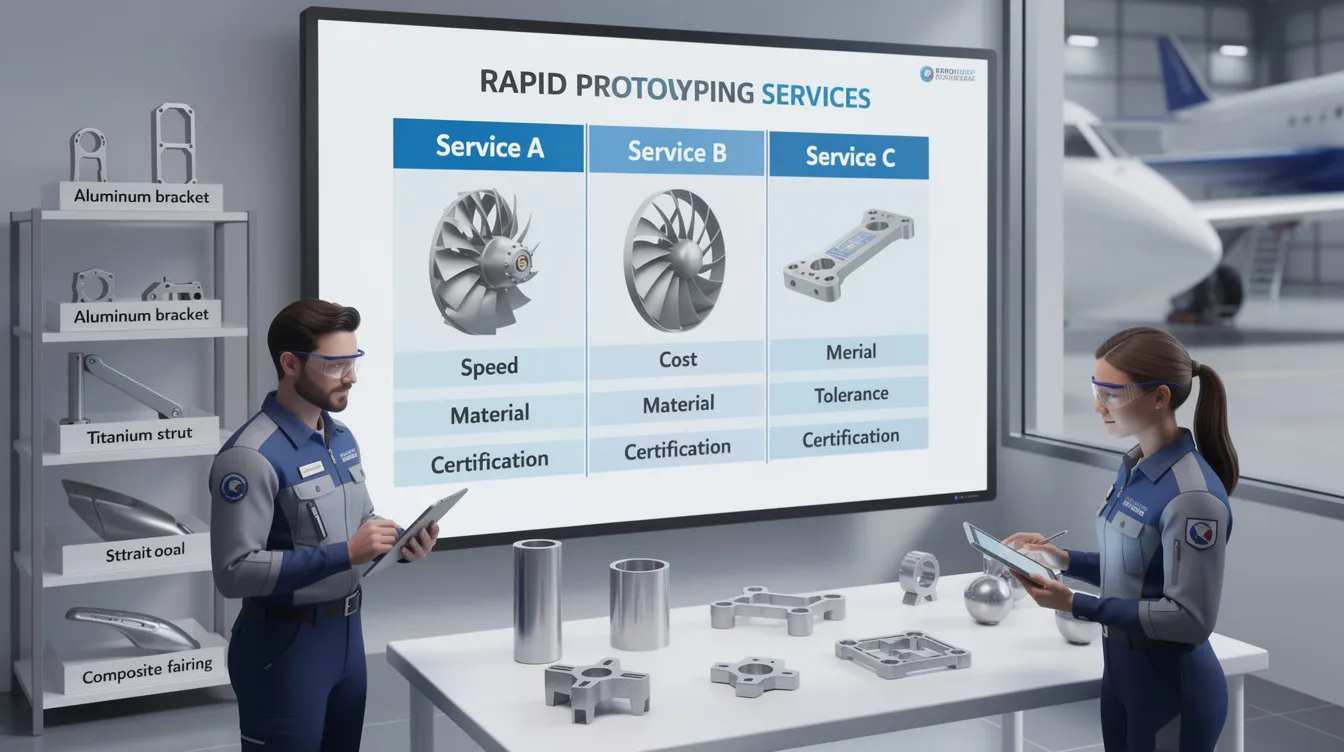
Which Rapid Prototyping Service for Aerospace Parts?
Choosing the right rapid prototyping service for aerospace parts comes down to matching your program’s certification requirements, material needs, and tolerance demands to a vendor’s proven capabilities. Here is what aerospace engineers and procurement teams should evaluate before committing to a supplier.
Answer First: How to Choose the Right Rapid Prototyping Service for Aerospace Parts
For aerospace programs running from 2024 through 2026, the best rapid prototyping partner is one that combines high precision cnc machining with broad material options, documented quality systems, and the ability to scale from one-off prototypes to on demand production. Anebon Metal Products Limited, for example, serves overseas OEMs needing exactly this combination-tight tolerances, aerospace alloys, and a clear path from R&D through volume production.
Providers must offer aerospace-grade materials such as titanium and high-performance polymers. When evaluating any vendor, apply these concrete selection criteria:
-
Certifications: Does the vendor hold ISO 9001:2015 at minimum? Is AS9100D required by your prime contractor or program?
-
Tolerance capability: Can they hold ±0.002 mm (approximately ±0.0001 in) on critical features? Tolerances as tight as ±0.001 inches are critical for aerospace parts like hydraulic manifolds and sealing surfaces.
-
Materials: Do they routinely machine titanium alloys like Ti-6Al-4V, aerospace-grade aluminum alloys including 7075-T7351, and superalloys like Inconel 718?
-
Lead times: Expect 5–15 days for CNC prototype parts and 2–5 days for additive manufacturing prototypes, depending on complexity and documentation depth.
-
Traceability: Require mill certificates, heat-lot traceability, and certificates of conformity from raw stock through finished part.
When to favor each manufacturing method:
-
Choose cnc machining when your prototype parts require tight tolerances, sealing surfaces, threaded features, or must mirror the production process for qualification.
-
Choose direct metal laser sintering when complex geometries-internal cooling channels, lattice structures, topology-optimized forms-drive the part design.
-
Combine methods when early design validation calls for fast additive iterations on form-fit, followed by CNC-machined functional prototypes in production-intent materials for brackets, manifolds, or avionics housings.
Anebon is best positioned for overseas OEMs needing high precision CNC metal components and small runs, from R&D through full scale production, with DFM consulting and documented quality at every stage.
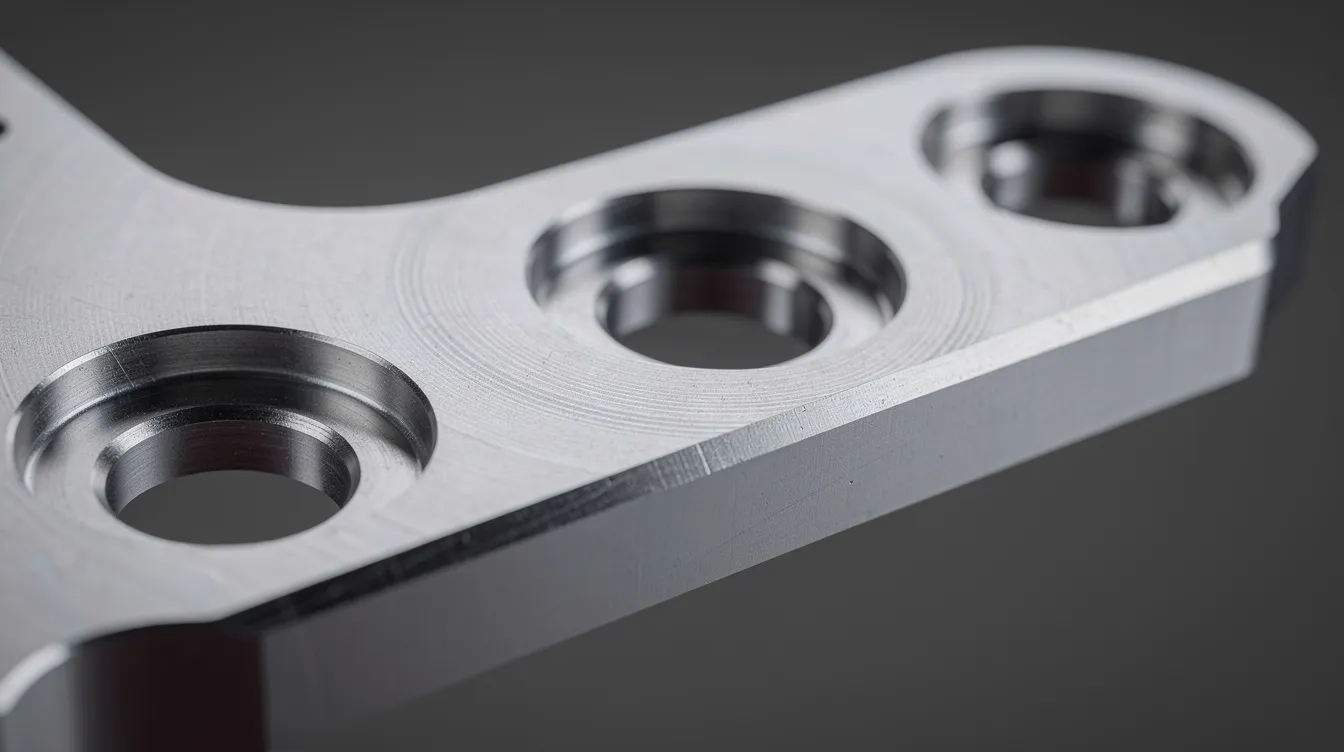
Rapid Prototyping in the Aerospace Industry: What Makes It Different?
Rapid prototyping in the aerospace industry is fundamentally more demanding than prototyping for consumer products or general industrial components. Aircraft, satellites, UAVs, and launch vehicles operate under extreme loads, temperatures, and vibration profiles where a single component failure can be catastrophic. Since 2020, development cycles have compressed dramatically-programs that once took years now demand functional prototypes in weeks.
Several factors set aerospace prototyping apart:
-
Safety-critical classification: Every prototype must be evaluated against failure consequence, even in early stages.
-
Fatigue and environmental testing: Prototypes often undergo thermal cycling, vibration, and pressure testing that require production-representative materials and finishes.
-
Documentation and material traceability: Aerospace prototypes require material traceability and risk management documentation that general industrial prototyping simply does not.
Rapid prototyping can help identify design flaws and accelerate development cycles, and prototyping can reduce product development cycle times by 50% when properly integrated. Early design validation in aerospace involves prioritizing design for manufacturability and speed. This allows for multiple iterations before mass production, catching interference issues and structural weaknesses before expensive tooling is committed.
Common aerospace applications for prototypes include structural brackets, actuation components, thermal management parts, antenna housings, and avionics enclosures. Aerospace materials include titanium, aluminum, and composites, while CFRP composites are utilized for lightweight aerospace components in fairings and aerodynamic surfaces.
Key Decision Factors When Selecting an Aerospace Prototyping Partner
Selecting prototyping services for aerospace demands a more rigorous evaluation than typical manufacturing sourcing. Here are the factors that matter most.
Certifications and quality systems. ISO 9001 certification is crucial for aerospace prototyping vendors. ISO 9001 ensures manufacturing accuracy and precision in aerospace, while AS9100D extends ISO 9001 with aerospace-specific requirements including counterfeit-parts prevention, configuration control, and first article inspection. For early R&D and ground hardware, ISO 9001 plus strong internal procedures is often sufficient. For flight-critical hardware or when prime contractor flow-downs mandate it, AS9100 is non-negotiable. Quality assurance prevents costly failures in aerospace testing.
Tolerances and capabilities. Realistic aerospace requirements range from ±0.05 mm for fairings and covers down to ±0.005 mm for hydraulic manifolds and sealing surfaces. CNC machining tolerances can be as tight as ±0.001 inches. It is essential to evaluate providers based on their material certifications and precision capabilities. Digital manufacturing platforms excel in speed but may vary in quality compared to specialized machine shops.
Material range and sourcing. Require vendors who routinely process Ti-6Al-4V, 6061-T6, 7075-T7351, 17-4 PH stainless steel, and Inconel 718, along with engineering plastics like PEEK, Ultem, and PPS. Every lot must carry mill certs and heat-lot traceability.
Process portfolio. Look for combined manufacturing services-CNC machining, 3D printing, sheet metal fabrication, and injection molding for test fixtures-so one supplier can support multiple prototype stages without onboarding delays.
DFM and engineering support. Design for Manufacturability (DFM) feedback can significantly reduce redesign cycles. The best vendors review cad files proactively, flagging wall thickness issues, tool access problems, and cost drivers before cutting metal.
Lead times and geography. Typical lead times run 5–10 days for CNC and 2–5 days for additive. China-based suppliers like Anebon offer cost efficiency and capacity, but engineers must factor in shipping, customs, and documentation turnaround.
Data security and export control. For ITAR-controlled programs, confirm whether your vendor is itar registered or whether the parts fall outside controlled categories. Secure file handling, NDAs, and clear export status designation by the customer are baseline requirements.
Comparing Core Rapid Prototyping Processes for Aerospace Parts
No single manufacturing method is universally best. The right choice depends on geometry, loads, operating temperature, and where you are in the development cycle. Aerospace projects often require a combination of manufacturing methods throughout the development process.
-
CNC machining: The backbone for produce parts that must meet flight-like performance. Delivers superior surface finishes, high precision, and full material property fidelity in aluminum, titanium, and stainless steel. Best for valve bodies, structural fittings, and sensor housings.
-
Direct metal laser sintering (DMLS): Enables complex geometries like internal cooling channels, conformal passages, and topology-optimized lattices. Typical applications include heat exchangers and engine-adjacent metal components. Also referred to as direct metal printing in some vendor catalogs.
-
Other 3D printing methods: Selective laser sintering and HP Multi Jet Fusion produce strong nylon physical prototypes (PA12, PA11) for UAV parts and interior ducts. Fused deposition modeling optimizes prototype designs for speed and precision using engineering thermoplastics like ULTEM. Selective laser sintering is an inexpensive 3D printing option for moderate-load functional parts.
-
Sheet metal fabrication: Suitable for fairings, covers, small enclosures, and support brackets where thin-gauge metals are needed quickly at small scale quantities.
-
Injection molding: Appropriate for higher-volume non-flight aerospace components-interior plastic trims, cable management, test jigs-once geometry is stable and rapid tooling has been validated. Not practical for earliest one-off prototypes.
Anebon’s core strengths lie in CNC machining, die casting, and sheet metal, while coordinating additive needs with qualified partners as required.
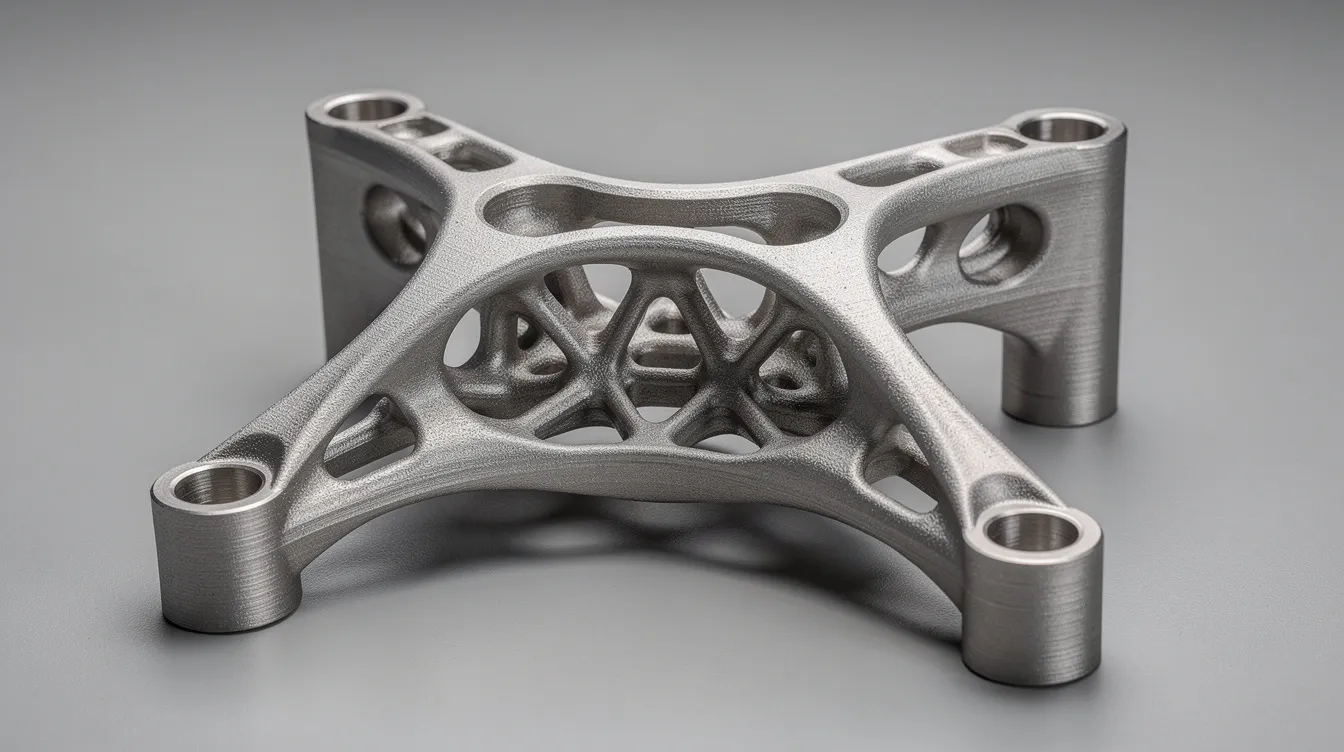
When to Choose CNC Machining for Aerospace Prototyping
CNC machining remains the backbone of aerospace prototyping through 2026 because it produces functional parts with material properties identical to production hardware. CNC machining achieves tolerances as tight as ±0.001 inches, making it the default for any feature that seals, bears load, or interfaces with other qualified components.
Choose CNC when you need:
-
Tight tolerances on sealing surfaces, bearing bores, or threaded interfaces
-
Qualification or first article parts that must mirror the production process
-
High structural loads where wrought material properties (fatigue life, elongation) are non-negotiable
Typical aerospace CNC parts include landing gear fittings, fuel system manifolds, gear housings, heatsinks for avionics, turbine blades support structures, and sensor housings. 5-axis CNC machining supports complex aerospace-grade prototyping by accessing multiple faces in a single setup, reducing cumulative positioning error and improving intricate details.
The cons are real: longer setup times versus simple 3D printing, higher cost when digital designs change radically between iterations, and the need for careful dfm feedback when walls are thin or pockets are deep. But the path from CNC prototype to full scale production is the most direct in aerospace.
Role of 3D Printing in Aerospace Prototyping (DMLS, FDM, SLS, MJF)
Additive manufacturing complements CNC machining by enabling faster, cheaper iterations at early stages and unlocking design complexity that subtractive methods cannot achieve. 3D printing is a common method used in rapid prototyping, and 3D printing enables rapid iteration of design for manufacturability.
-
DMLS: Creates metal aerospace prototypes with conformal cooling channels, weight-reducing lattices, and organic forms in alloys like AlSi10Mg and Ti-6Al-4V. DMLS and SLS are additive manufacturing techniques suited for aerospace geometry requirements. Additive manufacturing is useful for creating complex geometries in aerospace applications.
-
FDM: Produces quick jigs, fixtures, cable guides, and form-fit physical models of larger components. Aerospace programs often use ULTEM (PEI) and nylon blends for these applications.
-
SLS and HP Multi Jet Fusion: Ideal for strong, lightweight nylon functional prototypes-UAV structural brackets, interior ducts, and load-bearing parts under moderate stress.
Limitations for final flight hardware remain significant: surface roughness often exceeds aerospace specifications, anisotropy affects mechanical performance, and certification hurdles under standards like ISO/ASTM 52967:2024 require extensive testing. Post-processing-heat treatment, HIPing, finish machining-adds cost and lead times.
The practical approach is hybrid: use additive to create prototypes quickly for ergonomic checks and geometry validation, then transition to CNC machined metal prototypes with a partner like Anebon for final verification and qualification.
From Prototype to Full Scale Aerospace Production: Keeping the Same Vendor
Continuity from prototype through scale production matters in aerospace because it preserves process know-how, documentation history, and tooling knowledge. Switching vendors mid-program introduces risk that companies rarely need.
A typical aerospace development path follows these stages:
-
Early R&D prototypes (1–3 parts): Validate form, fit, and basic function. Material choices may be approximate.
-
Engineering validation (EVT, 3–10 parts): Tighter tolerances, production-representative materials, initial test data.
-
Design validation (DVT, 10–50 parts): Full material certifications, first article inspection, environmental and fatigue testing.
-
Production validation and ramp-up (50–500+ parts): Transition to mass production processes-die casting, machining from castings, or dedicated CNC cells.
Material certifications and traceability become increasingly important as prototypes approach production. Quality certifications enable a smooth transition from prototypes to low-volume production.
Consider a UAV structural bracket program: it starts with FDM physical models for mounting interface checks, moves to CNC aluminum 7075 prototype parts for flight test, and transitions to die-cast or machined production parts over 12–18 months. Using one manufacturing services partner throughout retains institutional knowledge and compresses timelines to get to market faster.
How Anebon Metal Products Limited Supports Aerospace Prototyping
Anebon Metal Products Limited is a China-based precision manufacturer founded in 2010 in Dongguan, Guangdong, serving overseas aerospace OEMs and R&D teams who need quality parts from first concept through serial production.
Key capabilities relevant to aerospace CNC machining:
-
Precision CNC milling and turning, 5-axis machining, die casting, and sheet metal fabrication
-
Tolerances down to ±0.002 mm where geometry allows, supporting high precision requirements across a wide range of aerospace components
-
ISO 9001:2015 ensures quality management systems are in place; ISO 14001:2015 focuses on effective environmental management systems. ISO certifications improve compliance with aerospace industry standards, benefiting customers even when AS9100 is handled by higher-tier integrators
Aerospace-relevant material choices include aluminum (6061-T6, 6082, 7075-T6), stainless steels, titanium alloys, copper alloys, and engineering plastics, plus surface treatments like anodizing, hard coat, passivation, plating, and painting.
Anebon engineers review cad files, suggest design adjustments for machinability and cost, and help select between CNC machining, sheet metal, and die casting for later production. Quality assurance includes in-process inspection, final inspection reports, CMM measurement capability, and documentation support (CoC, basic material certs, dimensional reports) expected by manufacturers in the aerospace industry.
Typical lead times for aerospace prototypes run 7–15 days depending on design complexity and quantity, with the ability to scale to small and medium-volume runs for ongoing programs.
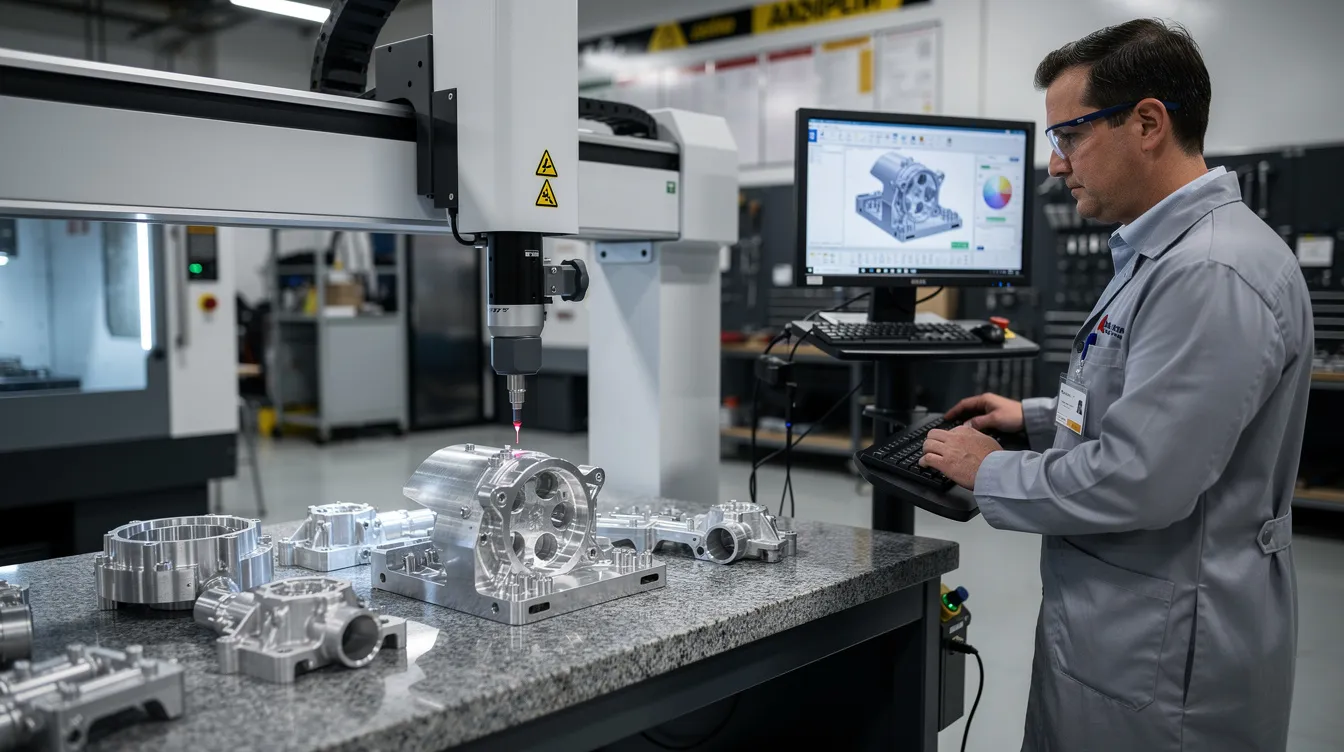
Practical Selection Framework: Matching Your Aerospace Part to the Right Service
Here is a simple decision framework that engineers can apply to real projects. Rapid prototyping uses CAD models for quick physical prototypes, but choosing the right process requires answering a few structured questions. Rapid prototyping for aerospace requires high precision and compliance with industry standards at every step.
Work through these steps for each part:
-
What certification level does your program require? Flight-critical parts demand AS9100-certified vendors. R&D and ground test hardware can work with ISO 9001 shops that maintain strong internal controls.
-
What is the operating environment? High temperature near engines points toward Inconel 718 or titanium via CNC or DMLS. Moderate-temperature interior parts may suit engineering plastics or aluminum.
-
What are the load cases? Structural and pressure-bearing parts need wrought or machined metals. Low-load or form-fit checks can use SLS or MJF nylon.
-
How complex is the geometry? Internal channels and lattice structures favor additive. Prismatic shapes with tight-tolerance bores and threads favor CNC.
-
What is your timeline? If you need a Ti-6Al-4V bracket for flight test in 4 weeks, choose CNC machining with an ISO 9001 or AS9100 vendor. If you need a plastic interior duct concept in 3 days, use SLS or MJF.
Combine processes across phases: start with fused deposition modeling for ergonomic checks, then selective laser sintering for functional plastics, then CNC machining or die casting for final metal parts. Rapid prototyping allows for multiple iterations before committing to production tooling, whether you are building for medical devices, electronics, or aerospace.
Ready to match your aerospace part to the right process? Share your CAD files with Anebon for a process recommendation and quote tailored to your requirements.
Conclusion: Choosing a Reliable Rapid Prototyping Partner for Aerospace Parts
Vendor choice in aerospace prototyping directly affects safety, cost, and schedule. From 2024 onward, companies that select the wrong partner risk delayed qualification, scrapped test articles, and costly re-sourcing mid-program. The selection factors remain consistent: certifications, tolerances, process capabilities spanning CNC machining and 3D printing to sheet metal and injection molding, material expertise with composites and metals, and the ability to support full scale production when demand ramps.
Rapid prototyping technologies in the aerospace industry are not just about speed. They must also support documentation, repeatability, and long-term production readiness. The best vendors are those who treat a five-piece prototype run with the same process discipline they apply to volume production.
Anebon Metal Products Limited is ready to support overseas aerospace OEMs and design teams from first article to serial production. Submit your CAD files for DFM review and quoting to get your aerospace program moving.