Choosing the Right Machining Vendor for Precision Manufacturing Needs
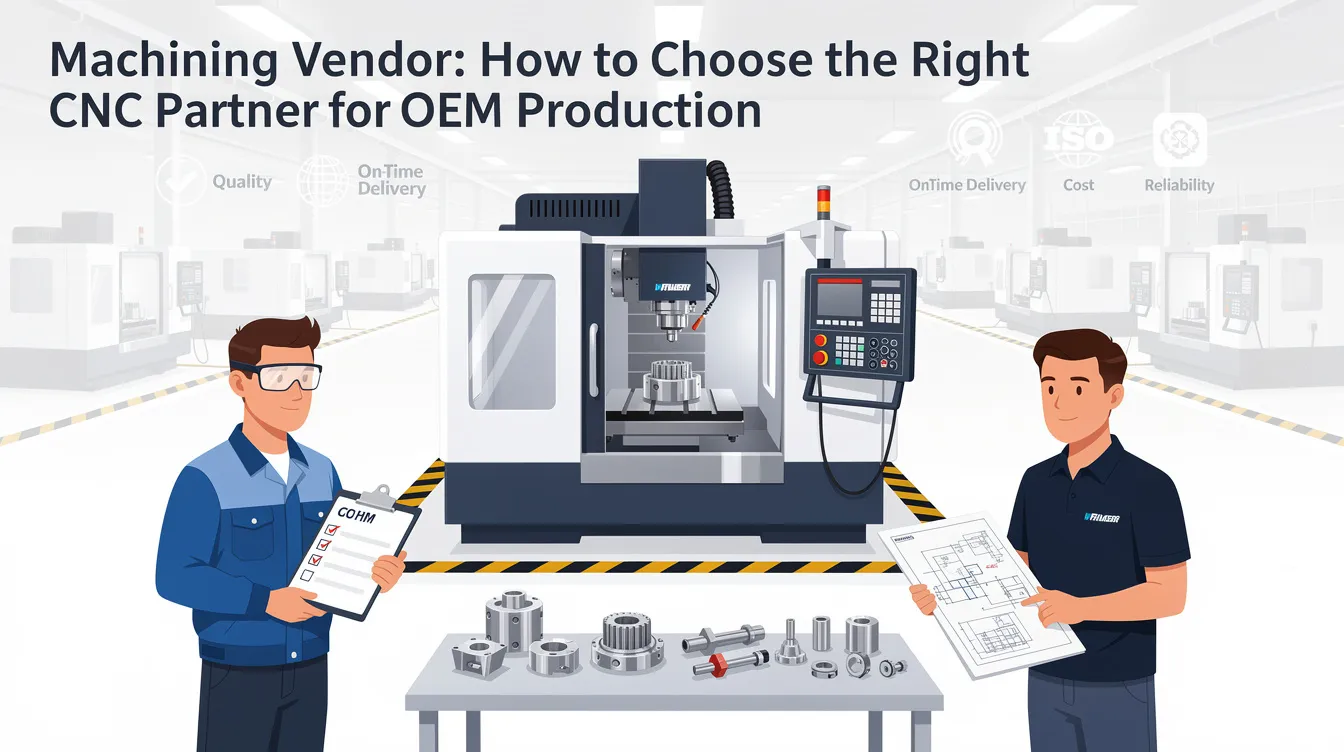
Machining Vendor: How to Choose the Right CNC Partner for OEM Production
Selecting the right machining vendor can make or break your product launch timeline, unit cost, and long-term supply chain stability. Whether you are sourcing custom components for a new robotics platform or scaling production parts for an automotive program, the vendor you choose determines how reliably your final products reach the market. This guide walks you through everything OEM buyers need to know-from evaluating cnc machining capabilities and materials to managing overseas partnerships and switching vendors when the current one falls short.
Fast Answer: What You Should Expect From a Machining Vendor
A machining vendor is a specialized manufacturing partner that delivers cnc machined parts to OEM customers. Unlike a generic machine shop that handles walk-in jobs, a true machining vendor provides end-to-end cnc machining services-from design feedback to finishing to shipment-tailored to the requirements of overseas buyers who need repeatable quality at scale.
Here are the non-negotiables you should demand in 2024–2026:
-
Tight tolerances: A capable vendor should hold ±0.05 mm (±0.002 in) on general features and reach ±0.002 mm on critical dimensions. CNC machining can achieve tolerances of +/- 0.001 inches when process control and metrology are in place.
-
ISO 9001:2015 certification as a minimum quality management baseline.
-
Proven cnc machining capabilities: 3-axis, 4-axis, and 5-axis cnc milling plus cnc turning with live tooling.
-
Rapid prototyping and full production: The same vendor should handle 1–20 prototype units and scale to 10,000+ production parts without process changes.
-
Reliable lead times with quoted durations that include machining, finishing, and shipping.
-
Transparent communication: DFM feedback, clear GD&T interpretation, and responsive engineering support.
Anebon Metal Products Limited is a machining vendor with in-house cnc machining, die casting, and sheet metal fabrication, founded in 2010 in Dongguan, China, and serving overseas OEMs across numerous industries. A machining vendor like Anebon can create custom parts from raw materials using precision cutting tools, delivering custom cnc machined parts from prototype through high volume production.
Already have a cad file ready to quote? Skip ahead to “How to Work With a Machining Vendor (From CAD File to Delivery)” below.
What Is a Machining Vendor in Modern Manufacturing?
A machining vendor is a specialized partner that provides cnc machining services-milling, turning, drilling, and 5-axis machining-to OEMs. It is not just a generic machine shop taking one-off jobs. Modern machining vendors are integrated service providers that contribute to design optimization, material sourcing, quality assurance, and supply chain reliability.
In today’s supply chains, machining vendors support Tier 1 and Tier 2 manufacturers in aerospace, medical devices, automotive, robotics, and consumer electronics. CNC machining is widely used in aerospace and medical industries, where machining vendors act as production partners delivering cnc machined parts on schedule to keep assembly lines running. These vendors convert digital designs into physical products via automated subtractive manufacturing-a subtractive manufacturing process that involves removing material from a solid block to create the desired shape. Machining includes milling, turning, grinding, and surface finishing to alter different materials into finished part geometries.
What separates a local job shop from a full-service machining vendor?
|
Feature |
Local Job Shop |
Full-Service Machining Vendor |
|---|---|---|
|
Engineering support |
Minimal |
DFM, tolerance optimization, material advice |
|
Material sourcing |
Limited stock |
Aluminum alloys, stainless steel, titanium, plastics |
|
Surface finishing |
Basic deburring |
Anodizing, powder coating, plating, bead blasting |
|
Quality system |
Informal |
ISO 9001:2015, FAI, material certificates |
|
Scalability |
Small batches only |
Prototypes through mass production |
Concrete cnc machining applications include aerospace brackets machined from 7075-T6 aluminum for high-strength structural mounting, medical housings in 316L stainless steel for biocompatible fluid-contact enclosures, and electronics heat sinks in aluminum 6063 optimized for thermal conductivity. For many OEMs, the machining vendor is effectively an extension of their own manufacturing team.
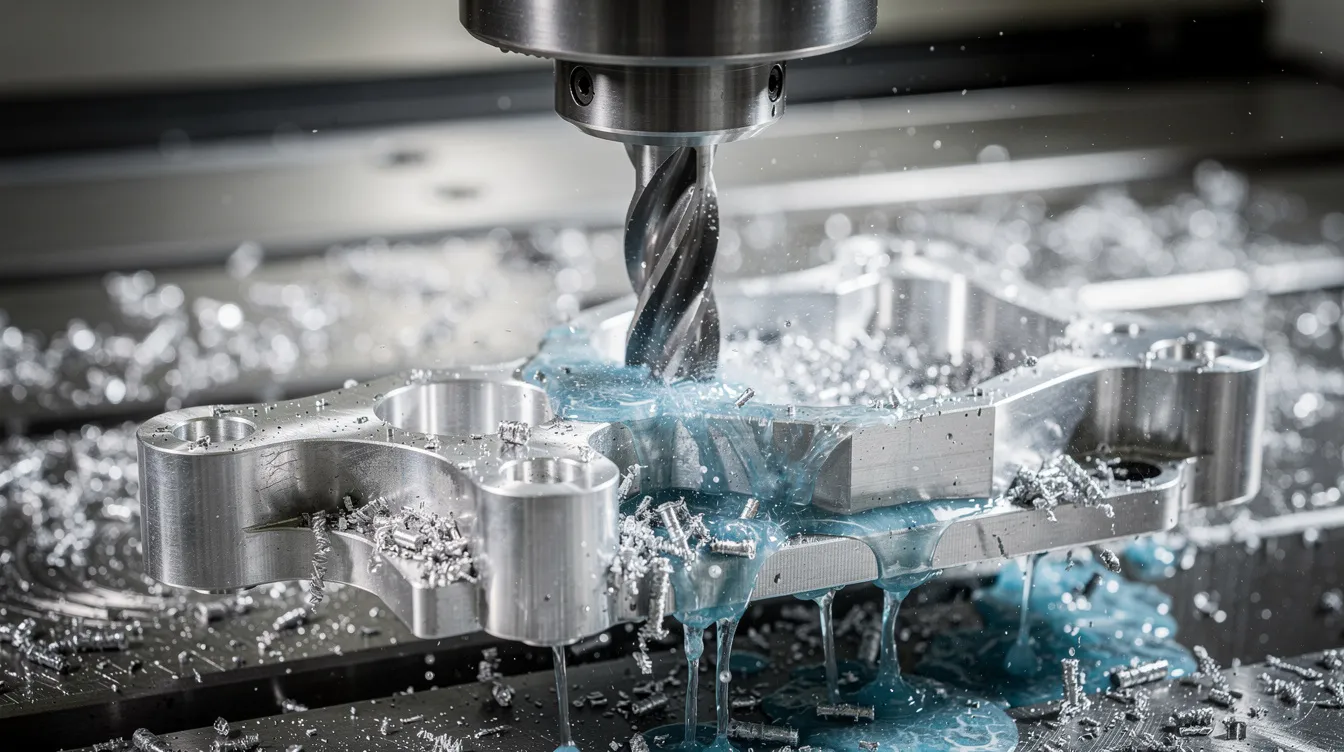
Core CNC Machining Capabilities to Look For
Not all machining vendors offer the same cnc machining capabilities. Before you request a quote, build a capability checklist so you can quickly disqualify vendors that cannot meet your part geometry, tolerance, or volume requirements.
Machining processes to verify:
-
3-axis and 5-axis cnc milling for complex contoured surfaces, undercuts, and multi-face features in a single setup
-
CNC turning with live tooling for shafts requiring threads, cross-holes, and flats without re-holding
-
Swiss-type turning for small-diameter, high-aspect-ratio precision machining in medical and electronics applications
-
Secondary operations: drilling, tapping, boring, reaming, and thread milling
CNC technology automates machinery for high-precision production of complex parts. Multi-axis machining enhances accuracy by creating complex parts in one setup, reducing cumulative fixture errors. Skilled technicians are necessary to handle complex geometries in machining, programming toolpaths that maintain utmost precision across intricate part features. CNC machining can create complex geometries with high precision that would be difficult or impossible with manual methods.
Tolerances you should expect:
CNC machining achieves tolerances of +/-0.001″ to +/-0.005″ depending on the feature and material. Tolerances on metals are typically held to +/- 0.005 inches for general dimensions, while plastics and composites have tolerances of +/- 0.010 inches due to material behavior. Leading vendors in the industry, including competitors such as Xometry, can manufacture to sub +/- 0.001 inches tolerances on critical features. Anebon holds tolerances as tight as ±0.002 mm on select dimensions-standard tolerances can be kept looser elsewhere to optimize cost.
Machine envelope and capacity:
Ask about X/Y/Z travel ranges-typical 5-axis machines may offer 600×600×500 mm work envelopes, while turning lathes handle diameters up to 300 mm or more. Over 50 industrial-grade metals and plastics can be machined on modern CNC equipment. CNC machines can operate 24/7 for continuous production, and can produce parts in as little as one day for urgent orders. CNC machines can operate continuously for 24 hours a day, enabling rapid turnaround when deadlines are non-negotiable.
Material coverage to confirm:
-
Metals: aluminum alloys (6061, 5052, 7075), carbon steels, tool steels, stainless steels (304, 316, 17-4), brass, copper, titanium
-
Plastics: ABS, POM (Delrin), PEEK, PC, Nylon, PTFE, and pvc polyvinyl chloride for specific chemical environments
A vendor should support both rapid prototyping and full production, running from 1–20 prototypes up to 10,000+ units without changing suppliers. Always request a detailed capability list-machine names, axis counts, maximum part size, and supported tolerances-from any potential cnc machining vendor.
CNC Machining Services a Quality Vendor Should Provide
A machining vendor is more than machines on a floor. The real value lies in the services wrapped around those machines-from design process support to logistics coordination. When comparing cnc services, look at the full spectrum of what each vendor delivers.
Core machining process offerings:
-
CNC milling for prismatic metal parts and plastic parts with flat surfaces, pockets, and slots
-
CNC turning for shafts, cylinders, and round custom components
-
5-axis machining for complex geometries requiring tool access from multiple angles
-
Custom cnc solutions for highly engineered tight tolerance parts in medical industries or aerospace
Machining capabilities include CAD/CAM programming to convert 3D models into machine code, bridging the gap between digital manufacturing intent and physical metal cutting. Precision tooling produces high-tolerance components such as gears and fasteners with repeatable accuracy. Machining vendors can manage small specialized runs or large production volumes-a critical flexibility for OEMs navigating uncertain demand.
Value-added services:
-
DFM feedback on your cad file: suggesting fillet radii to improve tool access, increasing wall thickness to prevent warpage, relaxing tight tolerances on non-critical features
-
Material selection advice: trade-offs between 6061 vs 7075 for strength vs machinability, or choosing a steel alloy grade that balances hardness and cutting tool life
-
Tolerance optimization to reduce cost without sacrificing function
Post-processing and finishing:
Finishing treatments enhance the durability and aesthetics of parts in machining. Options include deburring, tumbling, anodizing (Type II and Type III hardcoat) for aluminum, powder coating for enclosures, plating (nickel, zinc) for corrosion resistance, bead blasting for uniform matte surface finish, and laser engraving for part marking.
Inspection and quality:
-
First-article inspection (FAI) and PPAP when required
-
Full dimensional reports and surface roughness checks (e.g., Ra 0.8 µm for critical sealing surfaces)
-
Material certificates (EN10204 3.1) with chemical composition and mechanical properties
-
CNC machining retains all mechanical properties of materials used, so proper documentation confirms the finished part matches the specified grade
Anebon also integrates die casting and sheet metal fabrication under one roof. When projects require mixed processes-say, a die-cast housing with cnc machined mating surfaces and a sheet metal bracket-consolidating with a single vendor reduces lead time and coordination overhead.
How to Evaluate and Select a Machining Vendor
Choosing the wrong machining vendor can cost far more than the per-unit savings you chased. Delays, scrap, regulatory non-compliance, and line-down events all trace back to poor vendor selection. A structured evaluation process is your insurance policy.
Evaluation criteria checklist:
-
Certifications: ISO 9001 certification indicates a commitment to quality management systems in machining shops. Also look for ISO 14001:2015 for environmental management and, for regulated sectors, ISO 13485 or AS9100.
-
Track record: Years in operation matter. Anebon has operated since 2010, providing evidence of stability through market cycles.
-
Industries served: A vendor experienced in aerospace or medical industries will understand the severity of specs in those verticals. Ask for evidence of repeat customers.
-
Equipment and expertise: Evaluating a machining partner involves assessing equipment capabilities and material expertise. Core capabilities and production capacity are crucial factors when evaluating machining vendors. Machining vendors should have advanced machinery for efficient production of your specific part types.
Review sample projects or case studies. Look for parts similar to yours in material, complexity, and tolerance-5-axis milled titanium parts for medical implants, precision milling of hydraulic fittings, or tight-tolerance turned shafts.
Request a trial order. A small-batch prototype run reveals the truth about lead time accuracy, packaging quality, communication responsiveness, and received part quality that no sales deck can convey.
Compare quotes beyond unit price:
-
What inspections are included vs. extra?
-
What finishing is covered?
-
What shipping terms apply (FOB Shenzhen, DAP, CIF)?
-
Are there hidden setup, tooling, or fixture fees?
Communication and lead times should be assessed when selecting a machining vendor. Evaluate responsiveness, engineering support quality, and clarity of technical discussions around GD&T, datum schemes, and tolerance stack-ups. A vendor who struggles to discuss these topics clearly will struggle to hold your tolerances consistently.
Verify production capacity and scalability: number of CNC machines, shift patterns, and ability to ramp for 2024–2026 demand without jeopardizing delivery on existing orders.
Working With an Overseas Machining Vendor (China Focus)
Many OEMs source cnc machined parts from China for cost advantages and manufacturing capacity. The country’s mature supply chains for aluminum alloys, steels, and engineering plastics-combined with deep experience in electronics, robotics, and consumer electronics-make it a compelling option. But risk management is essential.
Benefits of sourcing from China:
-
Competitive pricing on cnc machining work, often 30–50% below domestic production costs in North America or Europe
-
Wide array of materials in stock, reducing procurement lead time
-
Flexible capacity for rush orders and rapid prototyping
-
Strong experience across various industries including automotive, robotics, and consumer products
Concerns and mitigations:
|
Concern |
Practical Mitigation |
|---|---|
|
IP protection |
Execute NDAs; limit drawing exposure to necessary dimensions; use encrypted file transfer |
|
Lead time variability |
Build schedule buffers; use air freight for urgent shipments; track shipments proactively |
|
Communication gaps |
Select vendors with English-speaking technical staff; request photo/video updates; overlap working hours |
|
Logistics (customs, duties) |
Use DDP or DAP terms; work with experienced freight forwarders |
Anebon handles data security through encrypted cad file uploads, NDAs on request, and controlled access to customer technical drawings.
Realistic lead time ranges from China:
-
CNC machining can produce prototypes in as little as 3-4 days for simple geometries. Standard prototype orders take 5–10 working days after confirmation.
-
Production orders: 2–4 weeks for machining plus finishing, with air freight to North America or Europe adding 3–7 days.
CNC machining supports rapid prototyping across various industries, making China-based vendors a practical option for fast-moving product development cycles.
Best practices for overseas sourcing:
-
Consolidate multiple part numbers into combined shipments to reduce per-unit freight cost
-
Plan safety stock to absorb occasional shipping delays
-
Use framework agreements for stable pricing across 12–24 months
-
Verify ISO 14001:2015 environmental certification, increasingly required under ESG and sustainability mandates from global OEMs
How to Work With a Machining Vendor: From CAD File to Delivered Parts
The typical workflow from initial inquiry to delivered production parts follows five clear steps: inquiry, DFM review, quotation, prototyping and validation, and full production. Here is what to expect at each stage.
Step 1: Submit your files. Send a cad file in STEP, STP, Parasolid, or native format, along with 2D technical drawings that include all dimensions, tolerances, threads, and surface finish requirements. Precision tolerances are defined by drawing specifications and GD&T callouts-make sure your drawings communicate these clearly.
Step 2: Receive DFM feedback. The machining vendor reviews your design and recommends changes: adding fillet radii so standard end mills can reach internal corners, increasing wall thickness to prevent deflection during the machining process, or relaxing tight tolerances on non-functional features to reduce cost and lead time.
Step 3: Review the formal quote. You receive a quote with unit price by quantity break, lead time, material specification (e.g., 6061-T6, 17-4PH, PEEK), finishing options, and shipping terms. Compare quotes carefully-an instant quote system is convenient, but a detailed engineering review behind the numbers matters more.
Step 4: Prototype or first-article production. Prototype or first-article cnc machined parts are produced, inspected, and shipped for your approval. Rapid prototyping uses affordable metal alloys and plastics, and is ideal for creating functional prototypes that validate fit, form, and function before committing to volume. Prototyping can include complex geometries with CNC machining, verifying that your design process assumptions hold up in the real world.
Step 5: Production ramp. Once approved, production jobs are scheduled. The machining vendor sets up dedicated fixtures, cutting tools, and inspection programs to improve repeatability across batches. This is where digital manufacturing discipline-revision control, batch history, SPC-separates professional vendors from ad-hoc shops.
Anebon maintains revision control across cad file versions and batch history, supporting long-term OEM programs and engineering change orders (ECOs) without confusion or quality drift.
CNC Machined Materials and Typical Applications
Material selection is one of the most important early discussions between OEMs and machining vendors. The choice directly affects price, machinability, tool wear, surface finish, and the performance of final products in the field.
Metals:
-
Aluminum alloys: Aluminum 6061 is commonly used for CNC machining-it offers good corrosion resistance, weldability, and machinability for housings, brackets, and structural frames. 7075-T6 delivers higher tensile strength for aerospace brackets and high-stress components. 2024-T351 provides superior fatigue strength for aircraft structural fittings.
-
Stainless steels: Stainless steel offers excellent machinability and uniformity. Grades 304 and 316L are corrosion resistant, ideal for enclosures and fluid system metal parts. 17-4PH combines high strength with moderate corrosion resistance for shafts, couplings, and actuation components. These materials are suitable for many industries including medical, food processing, and marine.
-
Titanium: Titanium is known for its strength-to-weight ratio and corrosion resistance, making it essential for aerospace and medical implant applications. It is among the hard metals that demand slower feeds and specialized cutting tools.
-
Brass and copper: Excellent machinability and electrical conductivity make these ideal for connectors, water fittings, and decorative hardware.
Plastics:
-
ABS: Cost-effective for prototype housings and cosmetic plastic parts
-
POM/Delrin: Outstanding for gears, bushings, and sliding surfaces thanks to low moisture absorption and dimensional stability
-
PEEK: PEEK is ideal for high-temperature CNC machining applications and environments requiring chemical resistance-common in aerospace and medical devices
-
Nylon: Nylon has high tensile strength and low friction properties, suitable for bearings and wear components
-
PC (Polycarbonate): Transparent or mechanically tough custom parts
-
PTFE: For applications demanding low friction and chemical exposure resistance
CNC machining can produce parts from over 50 different materials. Machinability considerations-chip control, tool wear, coolant requirements-directly affect cost and lead time. Softer plastics can melt under tool heat without proper feeds and coolant, while hard metals like titanium demand tougher tools and slower speeds.
These material choices connect directly to cnc machining applications across robotics joints (aluminum or stainless steel with tight positional tolerances), EV battery components (aluminum and copper requiring heat treatment stability), and surgical instrument handles (stainless steel or titanium with critical surface finish and biocompatibility requirements).
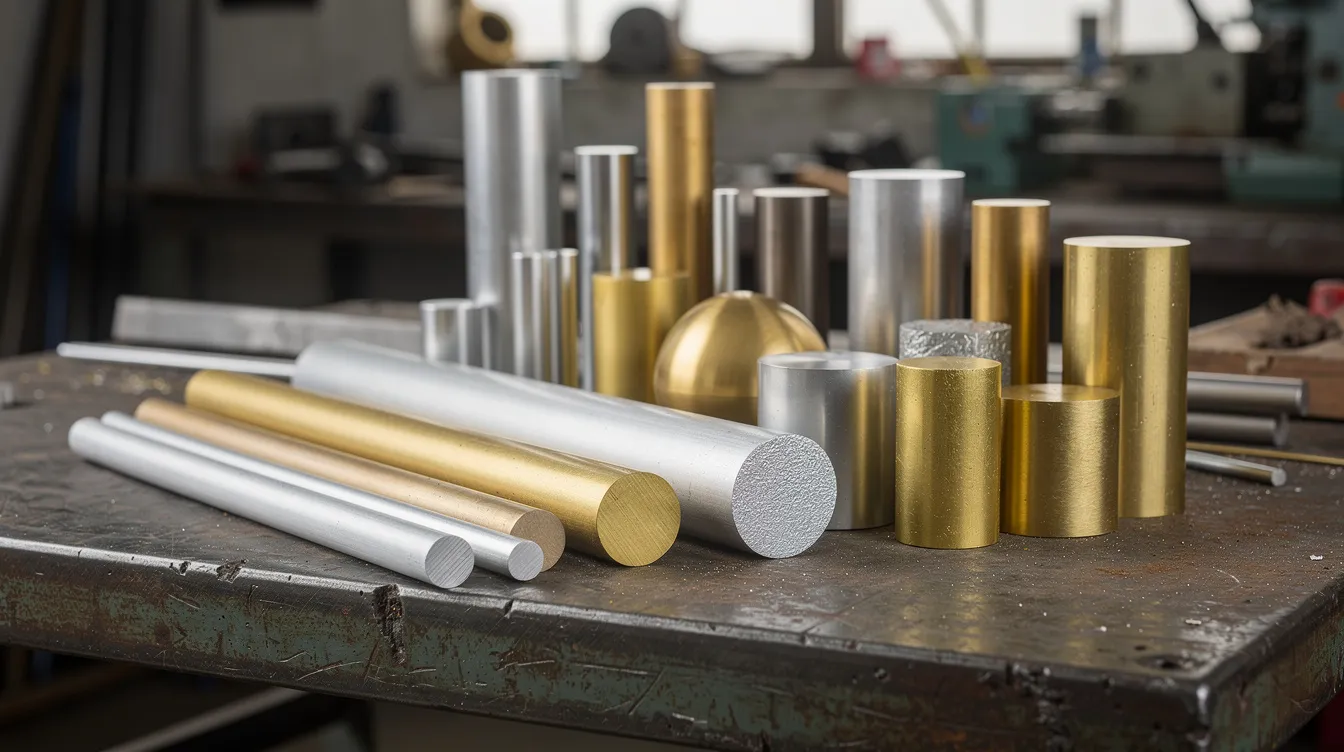
CNC Machining Finishes and Quality Assurance
Surface finish and quality control are decisive for both the functionality and aesthetics of cnc machined parts. A sealing surface that is too rough will leak. A medical housing with visible tool marks may fail cosmetic acceptance. Getting finishing and QA right starts with clear specifications and a vendor who takes both seriously.
Mechanical finishes:
-
As-machined: retains visible tool marks, typically Ra 3.2–6.3 µm depending on the machining process
-
Deburring and edge breaking: essential for safety and final assembly fit
-
Bead blasting: produces a uniform matte texture
-
Vibratory tumbling: smooths edges and polishes external surfaces
Protective and decorative finishes:
-
Anodizing: clear or colored Type II for aesthetics; hardcoat Type III for wear resistance on aluminum
-
Powder coating: durable protective color finish for enclosures
-
Chemical conversion coating (chromate): maintains electrical conductivity while adding corrosion resistance
-
Plating (nickel, zinc, chrome): for corrosion resistance or interface conductivity
Inspection and quality assurance:
Quality control measures ensure parts meet strict dimensional and surface finish specifications. A robust machining vendor defines layered inspection plans: incoming material verification against certificates, in-process checks using probing or gauging, and final inspection before packaging.
Quality inspections may utilize Coordinate Measuring Machines for precision verification of complex 3D geometries. Other essential equipment includes optical projectors, height gauges, and surface roughness testers. Typical standard finishes measure 1.6–3.2 µm Ra; finer finishes for sealing or optical surfaces can reach Ra 0.8 µm or better. Quality assurance processes verify that parts meet strict dimensional requirements using testing tools calibrated to traceable standards.
Anebon’s ISO 9001:2015 quality system and documented procedures ensure traceability from raw material lot to final cnc machined part shipment, using SPC, Cpk analysis, and material test certificates across production batches.
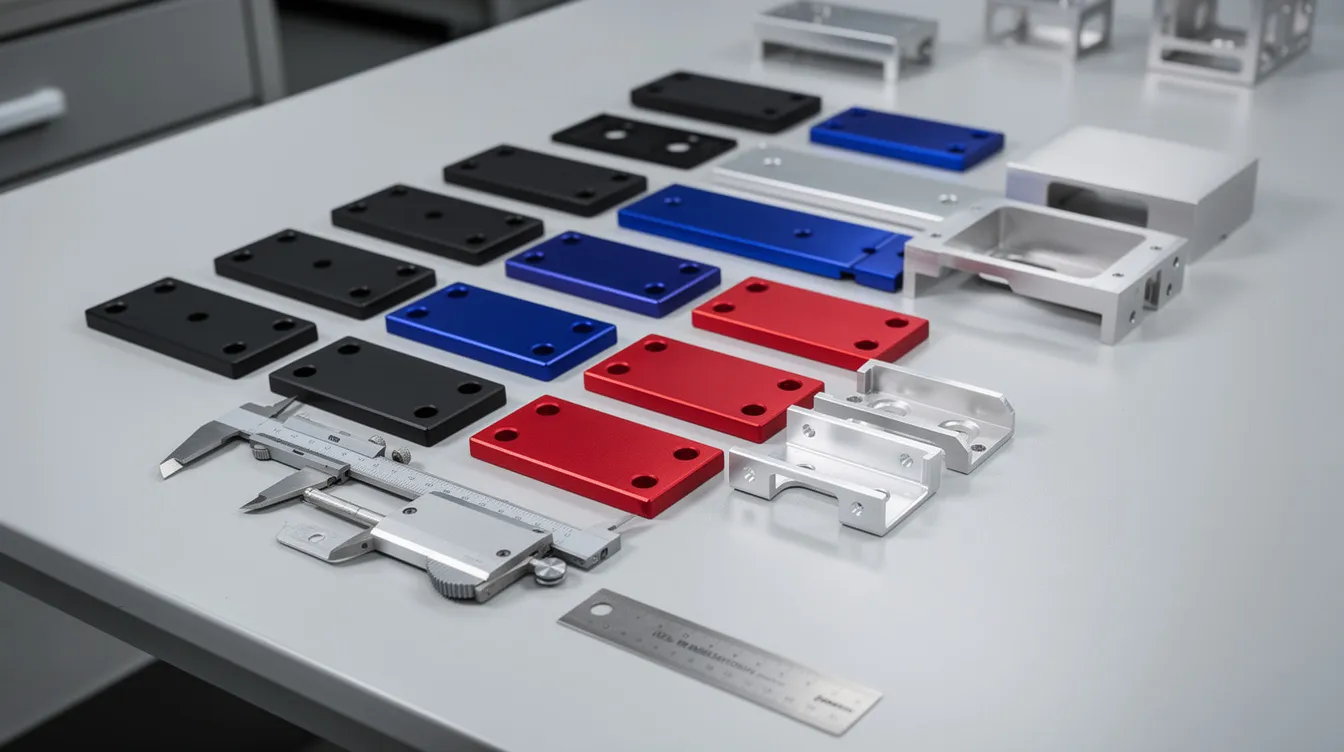
Define cosmetic criteria early. Request sample finish chips or reference photos from your vendor before production begins. Agree on scratch limits, color tolerances, and acceptable tool marks upfront to avoid disputes at delivery.
When to Switch Machining Vendors (And How to Do It Smoothly)
Many OEMs stay too long with underperforming machining vendors because they fear the disruption of a transition. That fear is understandable-but the cost of chronic quality problems, missed shipments, and stalled programs is almost always higher.
Warning signs that it is time to switch:
-
Chronic late deliveries with vague excuses
-
Repeated quality escapes or nonconformances on the same features
-
Poor communication or inability to discuss GD&T and datum references clearly
-
Cannot handle 5-axis or complex cnc machined parts your designs now require
-
Refusal to provide inspection data, material certificates, or process capability metrics
Structured transition plan:
-
Start with a pilot part or product family at the new vendor
-
Transfer all cad files, technical drawings, and fixture documentation
-
Run PPAP or FAI to validate quality on initial parts
-
Gradually ramp volume while maintaining safety stock from the previous source
-
Document critical process parameters, fixture designs, and tool definitions to avoid surprises in fit, form, and function during the switchover
Anebon can support transition projects from previous vendors, including reverse engineering of legacy machined parts when only physical samples are available-no original drawings required.
Treat your new machining vendor as a long-term partner. Share medium-term forecasts (12–24 months) so they can plan capacity, secure materials, and optimize costs. A vendor who understands your roadmap delivers high quality products more consistently than one reacting to surprise orders.
Why OEMs Partner With Anebon as Their Machining Vendor
Anebon Metal Products Limited is a specialized B2B machining vendor built for overseas OEMs, founded in 2010 in Dongguan, Guangdong, China. For over fifteen years, Anebon has delivered precision cnc machining-including cnc milling, cnc turning, and 5-axis machining-alongside die casting and sheet metal fabrication, all under one roof. This breadth of manufacturing capabilities means fewer vendors to manage, shorter lead time on multi-process assemblies, and a single point of accountability.
Key certifications and capabilities:
-
ISO 9001:2015 and ISO 14001:2015 certified
-
Tight tolerances down to ±0.002 mm on critical features
-
Support for both metal and plastic cnc machined parts across aerospace, medical, automotive, electronics, and robotics
-
Experience with a wide array of materials including aluminum, stainless steel, titanium, brass, copper, PEEK, POM, and Nylon
Full lifecycle service:
Anebon covers every stage-from design consultation and DFM feedback through rapid prototyping, bridge production, and stable full-scale production. A range of finishing options (anodizing, powder coating, plating, bead blasting) and final assembly support means your parts arrive ready to integrate, not ready for more work.
The right machining vendor is not just a supplier filling purchase orders. It is a manufacturing partner who understands your tolerances, protects your IP, communicates proactively, and scales with your product line. That is the role Anebon is built to fill.
Ready to get started? Send your cad file and basic requirements to Anebon’s engineering team for a tailored quote and manufacturability feedback. File handling is secure, response times are fast, and every inquiry receives dedicated engineering attention-whether you need one prototype or ten thousand production parts. Anebon is here as your long-term machining vendor partner, not a one-off machine shop.