Choosing the Right Machined Parts Manufacturers for Your Project Needs
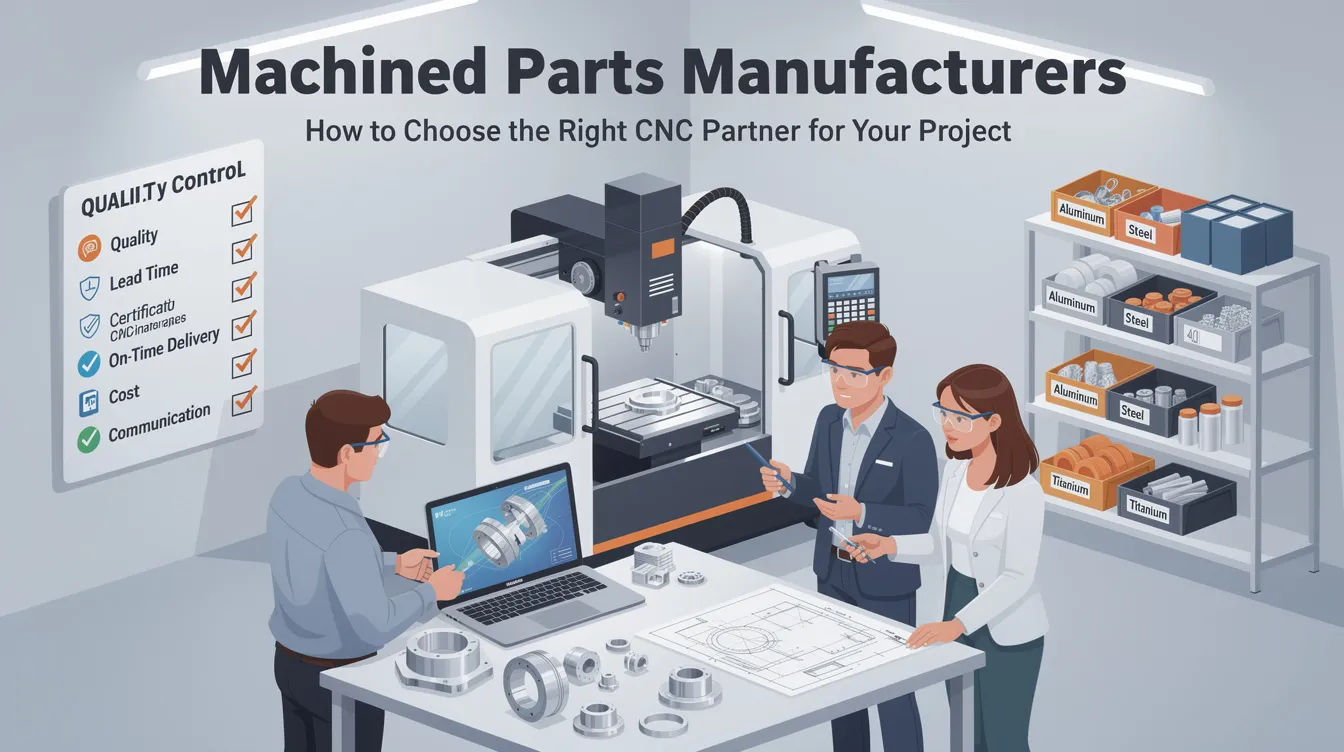
Machined Parts Manufacturers: How to Choose the Right CNC Partner for Your Project
Finding the right machined parts manufacturers can make or break a product development timeline. Whether you need a single prototype or thousands of production parts, the manufacturer you choose directly affects dimensional accuracy, material performance, cost, and delivery speed. This guide walks design engineers and sourcing teams through the key factors to evaluate before committing to a CNC partner.
What Are Machined Parts Manufacturers?
Machined parts manufacturers are companies that transform raw metals and plastics into finished components through subtractive manufacturing. At the core of their operations is cnc machining, a process that uses computerized controls for precision manufacturing. Using cnc milling, cnc turning, drilling, and grinding, these manufacturers produce custom parts to exact specifications defined by engineering drawings or CAD models. Machined parts manufacturers use specialized cutting tools to create high-precision customized components, guided by computer numerical control systems and specialized software that convert digital designs into physical toolpaths.
These companies produce custom machined parts and machined components from various materials-aluminum, stainless steel, titanium, brass, copper, and engineering plastics-for industries like aerospace, medical devices, automotive, electronics, and robotics. The defining characteristic of cnc machined parts is that they are created by computer-controlled cutting tools on a CNC machine, delivering tight tolerances and batch-to-batch repeatability that manual methods cannot match.
Anebon Metal Products Limited is one such manufacturer. Founded in 2010 in Dongguan, Guangdong, China, Anebon is iso certified with both ISO 9001:2015 (quality management) and ISO 14001:2015 (environmental management) certifications. The company specializes in precision cnc machining services for overseas OEM clients, handling everything from rapid prototyping to full-scale production runs.
This article will help you understand how to evaluate machining capabilities, materials, quality systems, and lead times when selecting a manufacturer-so you can make a confident decision rather than a costly guess.
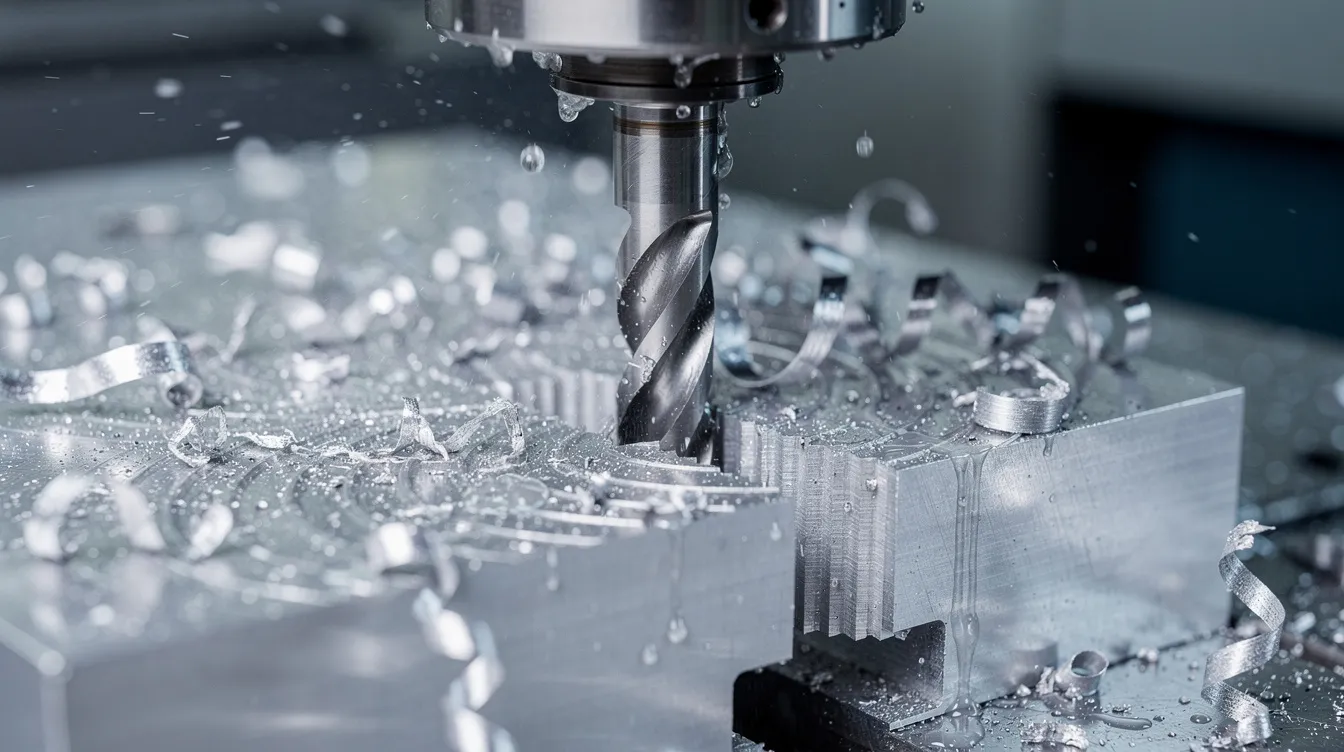
Key Uses of Precision CNC Machined Parts
Precision machined parts are foundational to safety, reliability, and performance in modern engineered products. Even small dimensional deviations can compromise how components fit, how they interact under load, or how long they survive in the field. CNC machining is widely used in aerospace, automotive, and medical industries where these risks carry the highest consequences. Common products from machining include engine components, surgical instruments, and aerospace parts.
Here is where precision cnc machined parts show up across various industries:
-
Automotive: Gearbox housings, sensor brackets, steering knuckles, and bushings. These components require tight tolerance machining for sealing surfaces and bearing fits, plus consistent quality across production volumes.
-
Aerospace and UAV: Structural brackets machined from aluminum 7075-T6, titanium fasteners, and actuator housings. These parts must balance lightweight design with high strength while withstanding vibration and thermal cycling. Precision machining is crucial in aerospace and medical industries where failure is not an option.
-
Medical devices: Surgical instruments from stainless steel 17-4PH, titanium bone plates, and diagnostic equipment frames. Medical CNC machining demands biocompatibility, full batch traceability, and surface finishes free of burrs-often below Ra 0.8 µm.
-
Electronics and robotics: Heatsinks, enclosures for electronics, robotic end-effectors, and motor mounts. Dimensional accuracy directly affects thermal performance, sensor alignment, and assembly fit.
-
Tooling and fixtures: Precision machined dies, jigs, and fixtures for production lines, plus finish machining of die castings and sheet metal parts to bring mating surfaces to final dimensions.
Machined parts are used across industries requiring high performance such as automotive, aerospace, medical, and defense. In each case, the common thread is that components require precision to function correctly under real-world conditions.
Why Work with Precision CNC Machined Parts Manufacturers?
Manual machining is slower and less repeatable. Casting or forging alone introduces surface roughness, porosity risks, and dimensional variability that often require secondary machining anyway. Modern precision machining services combine the best of digital control, material science, and process engineering.
Here are the practical benefits:
-
Exceptional accuracy and repeatability. Leading machined parts manufacturers can reliably hold ±0.01 mm on standard features and push to ±0.002 mm on critical dimensions. Precision machining ensures parts meet strict quality standards run after run, not just on the first article.
-
Reduced scrap and rework. By running CAM simulation and toolpath optimization before the first cut, manufacturers catch collisions, tool deflection issues, and fixturing problems digitally. Precision machining reduces material waste and production errors-a meaningful advantage when working with expensive materials like titanium or PEEK.
-
Cost efficiency through automation. Modern CNC shops run unmanned night and weekend cycles with standardized workholding and optimized tool libraries. This lowers per-part cost and shortens cycle times without sacrificing quality.
-
DFM feedback. Design for Manufacturability helps improve production efficiency and reduce costs. When engineers engage the manufacturing partner early, the shop can recommend changes to wall thickness, fillet radii, or tolerance callouts that simplify fixturing or eliminate extra setups.
-
Simplified supply chain. Combining rapid prototyping and production machining with one supplier avoids the dimensional drift and re-qualification headaches that come with switching vendors between development phases.
-
Regulatory readiness. For aerospace, medical, and automotive OEMs, it is not enough to produce accurate parts. The manufacturer must also deliver documentation-first article inspection reports, material certificates, and traceable batch records-as part of the production process.
Core CNC Machining Processes Used by Machined Parts Manufacturers
Most professional machined parts manufacturers combine several cnc machining capabilities under one roof to handle a wide spectrum of design requirements. Manufacturers use CNC machines such as mills, lathes, and grinders to ensure parts meet tight tolerances. CNC machines can perform turning, milling, and drilling operations, and the best shops integrate these processes to minimize setups and maximize accuracy.
CNC Milling
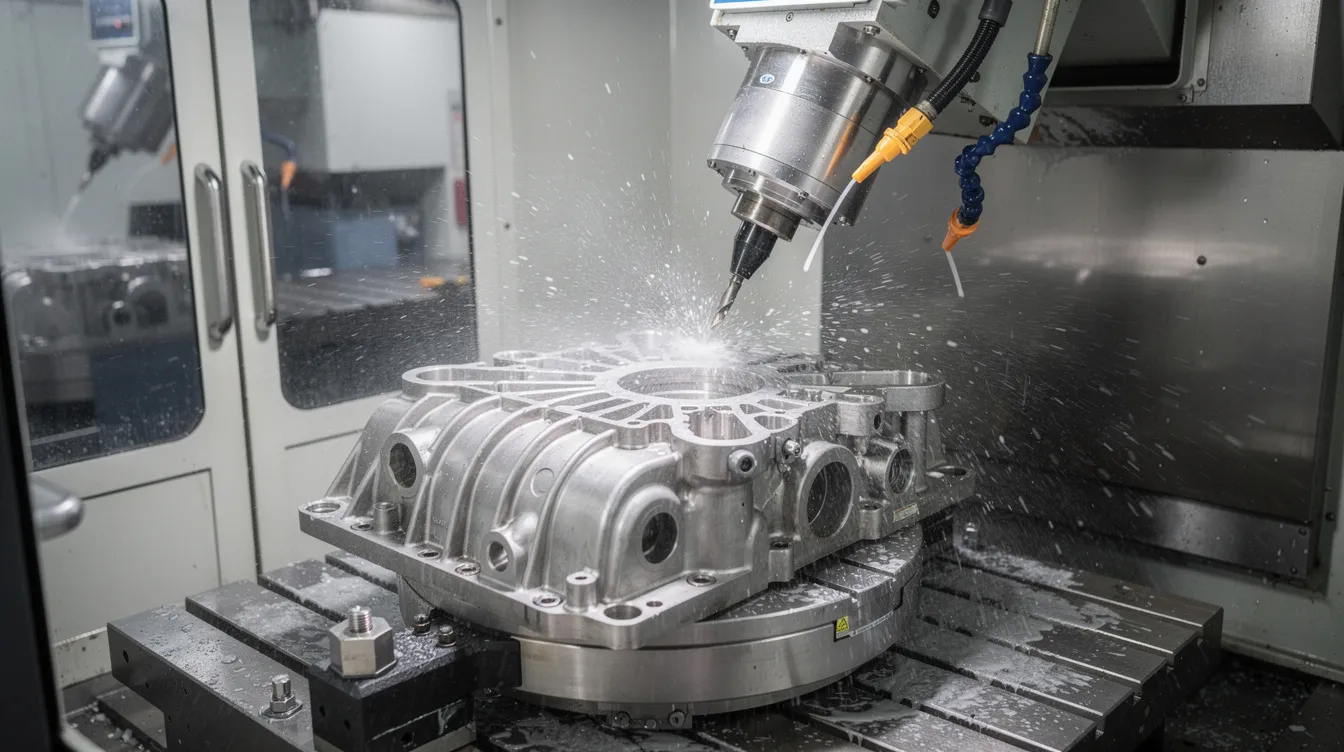
Milling is the workhorse for prismatic and complex shapes. Three-axis milling handles flat features, pockets, and simple contours. Four-axis adds rotational indexing for undercuts and angled features. Five-axis CNC machining enables multi axis machining of freeform surfaces, compound angles, and multi-face features in a single setup-critical for parts like custom irregular aluminum housings and medical manifolds with internal channels.
CNC Turning
CNC precision turning produces cylindrical parts-shafts, pins, bushings, and connectors. Live tooling and Y-axis turning on mill-turn centers allow milling flats, slots, and cross-holes on turned parts without reclamping, reducing setup time and improving concentricity.
CNC Multi-Axis Swiss Turning is ideal for small, complex components like medical pins, electrical contacts, and miniature fasteners. Swiss machining and swiss turning use a sliding headstock design that supports long, slender workpieces close to the cutting tool, enabling exceptional precision on parts with high length-to-diameter ratios.
Supporting and Advanced Processes
Drilling, tapping, reaming, boring, and thread milling round out the toolkit for producing complete functional components. Advanced shops add grinding, EDM, and lapping for ultra-precise surfaces.
Manufacturers like Anebon also integrate die casting and sheet metal fabrication. In this hybrid approach, parts are first cast or formed near net shape, then machined to final precision-combining the cost effectiveness of forming with the accuracy of a subtractive process.
CNC Machining Capabilities to Evaluate
Not all machined parts manufacturers have the same cnc machining capabilities, so verifying project fit before issuing a purchase order is essential.
Machine envelope and part size. Confirm whether the shop can handle your part dimensions-from small medical components under 5 mm to medium-sized housings around 600 × 600 mm. The machine envelope affects fixturing options, number of setups, and ultimately cost.
Axis count and turning capacity. A reliable CNC manufacturer offers 3-axis, 4-axis, and 5-axis machining. Multi axis capability matters for complex geometries that would otherwise require multiple setups on a simpler machine. For turned parts, check maximum turning diameter, length, and whether the shop supports live tooling. These factors determine whether you are working with a well equipped partner.
Tolerances and surface finish. Standard cnc machining tolerances sit around ±0.05 mm (±0.002″), with precision features achievable at ±0.01 mm or better. CNC machining can achieve tolerances as tight as ±0.0005 inches for critical applications. Surface roughness benchmarks: Ra 1.6 µm for general work, Ra 0.4–0.8 µm for sealing and bearing surfaces, and below Ra 0.1 µm with polishing or grinding. Make sure the shop’s metrology equipment matches your specs.
Software environment. The manufacturer should accept mainstream CAD formats (SolidWorks, CATIA, UG/NX) and neutral formats (STEP, IGES). Look for CAM simulation capability and the ability to interpret GD&T and PMI data from design engineers.
Ancillary capabilities. In-house fixturing, tool design, heat treating, and basic assembly operations reduce vendor handoffs and lead time. Secondary operations like anodizing, plating, powder coating, and bead blasting handled internally or through trusted partners keep the supply chain tight.
Common Materials for CNC Machined Parts
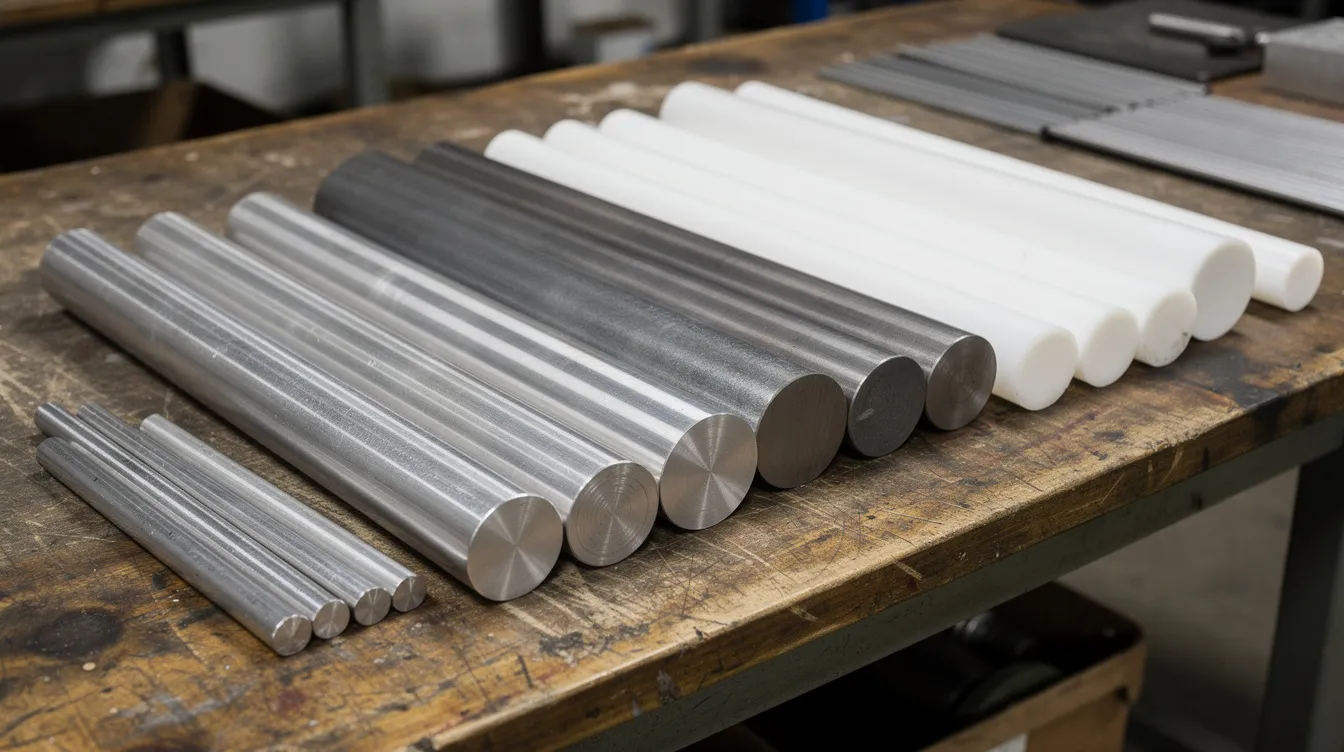
Material choice drives machining time, cost, tool wear, and part performance. Experienced machined parts manufacturers can advise on trade-offs before you commit. Manufacturers handle various materials including aluminum, stainless steel, and engineering plastics.
Aluminum alloys. Aluminum alloys like 6061-T651 are commonly used in cnc machining for their balance of machinability, corrosion resistance, and moderate strength. Aluminum 7075-T6 steps up to aerospace-grade strength but is harder to machine and more brittle. Aluminum allows high spindle speeds and fast material removal-a preferred choice for rapid manufacturing.
Stainless steels. 303 and 304 offer general corrosion resistance. 316L is common in medical applications. 17-4PH provides precipitation-hardened strength with moderate machinability. Cutting speeds are lower than aluminum, and tool wear increases.
Alloy steels. Steel Alloy 4140 is known for its toughness and high fatigue strength, making it suitable for shafts, gears, and structural parts that require precision and durability.
Titanium. Titanium offers excellent strength-to-weight ratio and corrosion resistance. Ti-6Al-4V is the standard grade for aerospace and medical implants. However, titanium’s low thermal conductivity and tendency to work-harden mean it machines slowly and demands rigid setups, sharp tooling, and experienced programmers.
Brass and copper. Brass has tensile strength similar to mild steel and machines freely, making it a good company for electrical connectors, valve bodies, and decorative hardware. Copper is chosen for thermal and electrical conductivity.
Engineering plastics. ABS works for low-cost prototypes. POM (Delrin) and acetal suit gears and bushings. PEEK and PEI handle high-temperature and chemically aggressive environments. CNC turned plastic parts require adjusted feeds, speeds, and coolant strategies to prevent melting or deformation. Nylon is widely used for its high tensile strength and low friction in bushings, bearings, and wear components.
Material traceability and test certificates are important in certain industries like medical and defense. Confirm that the manufacturer maintains traceable material certificates (e.g., EN 10204 Type 3.1) and can support both standard grades and special alloys on request. Anebon offers a wide material range covering aluminum, stainless steel, tool steel, brass, copper, titanium, and engineering plastics, suitable for most OEM applications.
Quality Assurance and Certifications
Robust quality assurance systems are non-negotiable when outsourcing precision parts, particularly for aerospace, medical, and automotive fields. Companies should provide in-house inspection for quality control, backed by documented procedures and calibrated equipment.
Certifications to verify:
-
ISO 9001:2015 – The baseline for structured quality management. ISO certifications like ISO 9001 indicate quality assurance and a commitment to quality in machining.
-
AS9100 – Aerospace-specific, adding risk management, traceability, and reliability requirements.
-
ISO 13485 – Medical device quality systems covering design, production, and post-market requirements.
-
IATF 16949 – Automotive standard emphasizing defect prevention and supply chain oversight.
Verify manufacturers have certifications like ISO 9001:2015, AS9100, or ITAR compliance for specialized industries before sending drawings.
Inspection equipment and methods:
-
CMM (coordinate measuring machines) for dimensional verification
-
Optical comparators and height gauges for profile checks
-
Surface roughness testers (Ra/Rz measurement)
-
Hardness testers for heat-treated parts
-
In-machine probing for real-time process correction
Process documentation: Ask about first article inspection (FAI), production part approval processes (PPAP), and documented in-process checks. Statistical process control (SPC) and capability indices (Cp, Cpk) demonstrate that the shop can hold tolerances consistently, not just on a single part.
Anebon holds ISO 9001:2015 and ISO 14001:2015 certifications. The environmental management credential matters to global OEMs with sustainability mandates and corporate responsibility goals.
How to Select the Right Machined Parts Manufacturer
Selecting a partner is about balancing quality, cost, lead time, communication, and long-term scalability-not just finding the lowest unit price. Manufacturers prioritize technical capabilities, quality control processes, production capacity, and communication, and you should evaluate them on the same criteria.
Assess technical competence. Review sample projects in your industry. Confirm the cnc machining service covers the processes you need-milling, turning, multi axis machining, and any finishing. Quality assurance, equipment capabilities, material expertise, and communication are key factors when sourcing manufacturers. A good cnc shop will have evidence of past work at similar complexity levels.
Evaluate capacity and scalability. Some shops specialize in low-volume high-precision prototyping while others focus on massive production runs. The right partner can handle prototypes (as few as 1–10 pieces), pilot runs (hundreds), and full production (thousands or more) without quality drift. Product developers and design engineers need confidence that the transition from sample to volume will be seamless.
Demand engineering support. The best manufacturers provide DFM feedback, tolerance reviews, and material suggestions. They collaborate directly with design engineers rather than simply quoting whatever lands on their desk.
Conduct due diligence. Request a trial project to evaluate dimensional accuracy, finish quality, packaging, and delivery time. Visit the facility-physically or via virtual tour. Check on-time delivery statistics and customer references.
Protect your IP. Reliable manufacturers should sign a Non-Disclosure Agreement before sharing CAD files. Transparent communication is essential for a trustworthy CNC company, so gauge responsiveness and clarity during the quoting phase.
Overseas manufacturers like Anebon in Dongguan can often offer competitive pricing and comprehensive cnc machining capabilities for international OEM customers, making them a strong option for teams willing to manage time-zone coordination.
Lead Times, Cost Drivers, and Typical Ordering Process
Understanding lead times and pricing structure helps you avoid surprises and plan product development timelines. Fast lead times are crucial for prototypes and low-volume runs, where delays can stall entire programs.
Typical lead times for cnc machining service:
|
Order Type |
Typical Lead Time |
|---|---|
|
Simple prototypes (standard aluminum) |
3–5 business days |
|
Complex prototypes (exotic alloy, tight tolerances) |
|
|
Low-volume production (10–100 pcs) |
1–3 weeks |
|
Medium production (50–500+ pcs) |
3–5 weeks |
|
High volume or regulated runs |
4–8 weeks |
Main cost drivers:
-
Material type – hard metals like titanium and Inconel cost more and machine slower
-
Part complexity – deep cavities, thin walls, number of setups, number of faces machined
-
Tolerances and finish – tighter specs mean slower cuts, more tool wear, and more inspection
-
Quantity – economies of scale reduce fixture amortization and setup cost per part
-
Secondary operations – plating, heat treating, anodizing, or polishing add steps
-
Inspection and documentation – FAI, PPAP, and material certificates add time and cost
Typical ordering process:
-
Submit RFQ with 3D models (STEP preferred) and fully detailed 2D drawings
-
Manufacturer conducts DFM review and clarifies ambiguous features
-
Quotation returned within 1–2 business days for standard parts
-
Sample or first article production and approval
-
Full batch manufacturing, quality control, finishing, packaging, and shipping
Consolidated services-cnc machining, die casting, sheet metal, and finishing-under one manufacturer reduce logistics and overall project cost. Share forecast volumes and long-term plans so manufacturers can suggest cost optimizations such as design changes, alternate materials, or different machining strategies.
Anebon Metal Products Limited: Our CNC Machining Services
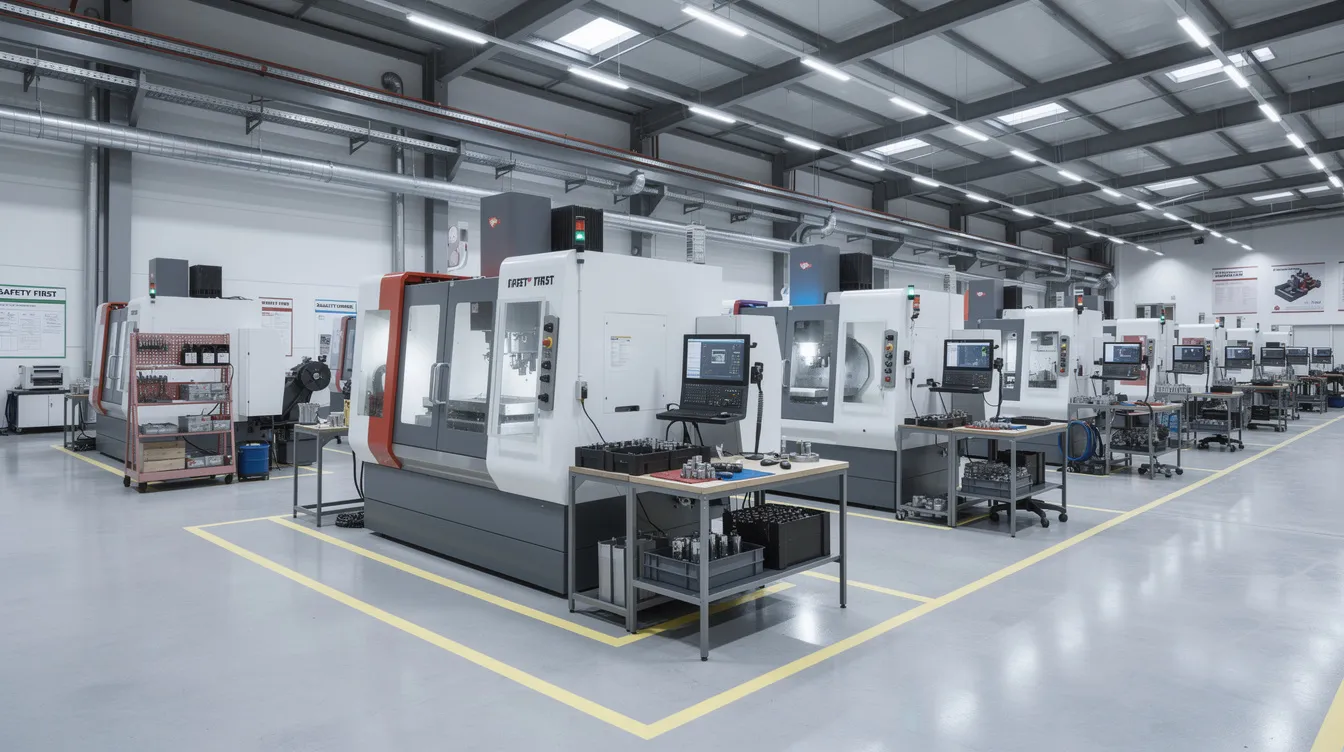
Anebon has been providing precision machining services since 2010 to overseas OEMs across Europe, North America, and Asia. Our facility in Dongguan, Guangdong, is equipped with advanced cnc machining centers covering the full range of subtractive manufacturing processes.
Our capabilities include:
-
CNC milling (3-axis through 5-axis) and CNC turning with live tooling
-
Rapid prototyping with turnaround as fast as 3 days for simple aluminum parts
-
Tight tolerance machining down to ±0.002 mm on critical features
-
Integration with die casting and sheet metal fabrication for complete custom components
-
Surface treatments: anodizing, hard anodizing, powder coating, painting, plating (nickel, zinc, chrome), bead blasting, and polishing
Industries we serve: Aerospace components, medical device parts, automotive brackets and housings, electronics enclosures, robotics, and industrial machinery. We function as a one stop shop for OEMs who need precise parts delivered with full documentation.
Anebon emphasizes responsive communication, DFM support for design engineers, and consistent quality for both prototypes and long-term production programs. Our goal is to be more than a vendor-we aim to be a manufacturing partner that helps you create parts that perform.
How Design Engineers Can Get the Most from a CNC Machining Service
Good collaboration between design engineers and machined parts manufacturers leads to lower costs, fewer errors, and more reliable precision parts. The precision machining process works best when engineering intent is communicated clearly and early.
Involve your CNC partner early. Share preliminary designs during the concept or detailed design phase. The manufacturer can flag issues with critical tolerances, wall thickness, and cutting tool access for milling and turning operations before you finalize geometry. A computer program driving a five-axis machine still needs physical space for the tool to reach every feature.
Standardize where possible. Use common hole sizes, thread forms, and fillet radii. Standardization lets the shop use existing tooling rather than ordering specials, which cuts machining time and cost.
Mark critical dimensions clearly. Identify critical-to-function dimensions on 2D drawings so the manufacturer can prioritize inspection and process control on what actually matters-not every dimension on the print.
Provide complete data. Use 3D models with PMI (product manufacturing information) or fully detailed 2D drawings with GD&T callouts. Ambiguous models generate back-and-forth communication, which delays quoting and production. The goal is to remove material efficiently with fewer errors-not to debug drawings on the shop floor.
Anebon can provide DFM feedback based on more than a decade of cnc machining experience, helping refine designs before committing to tooling or large orders. This collaborative approach is what separates a good company from a transactional supplier.
Conclusion: Choosing a Reliable Machined Parts Manufacturer
Selecting the right machined parts manufacturer means matching their cnc machining capabilities to your part requirements, verifying quality assurance and certifications, evaluating lead times and communication responsiveness, and thinking about long-term scalability. The cheapest quote rarely delivers the lowest total cost when you factor in rework, delays, and missed specifications. Exceptional precision comes from the combination of state of the art equipment, experienced operators, and structured quality systems.
Anebon Metal Products Limited is ready to support your projects-from rapid prototyping through full-scale production-with precision cnc machined parts, die casting, sheet metal fabrication, and a full range of surface treatments.
Ready to get started? Send your CAD files and specifications to Anebon for a fast, detailed quote. Our engineering team will review your design, provide DFM recommendations, and deliver competitive pricing within 1–2 business days.