Choosing the Right ISO 9001:2015 and AS9100 Certified Metal Supplier
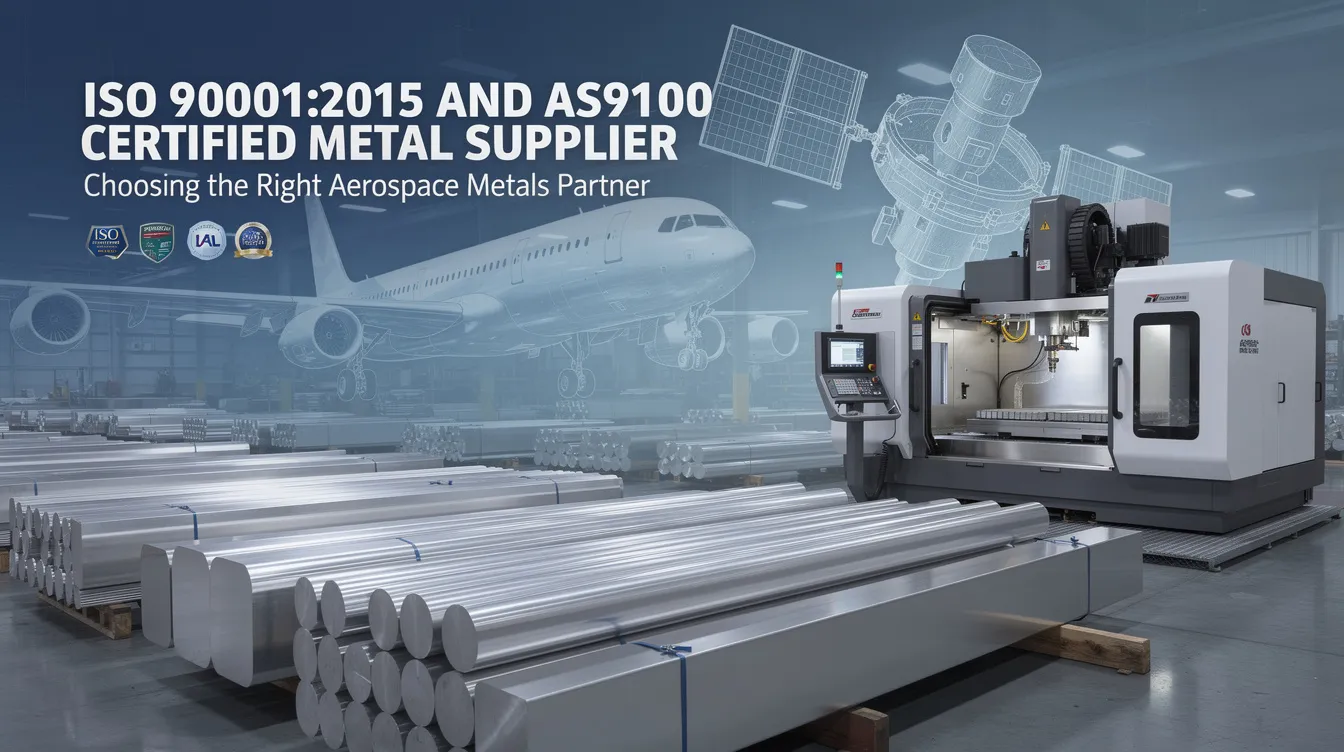
ISO 9001:2015 and AS9100 Certified Metal Supplier – Choosing the Right Aerospace Metals Partner
Finding the right metal supplier for aerospace programs is not just about price and lead time. The certifications behind a supplier’s quality management systems determine whether your parts will meet the stringent requirements of primes, regulators, and end users. This guide breaks down what ISO 9001:2015 and AS9100 certification actually mean for a metal supplier, how they affect your supply chain, and how to evaluate partners for aerospace manufacturing success.
Fast Answer: Why ISO 9001:2015 & AS9100 Matter in an Aerospace Metal Supplier
When a metal supplier holds ISO 9001:2015 certification, it means they operate under a proven quality management framework covering documented procedures, internal audits, nonconformance handling, and continuous improvement. ISO 9001:2015 is the latest edition of ISO 9001, and it provides the general foundation that applies across manufacturing sectors. AS9100 builds directly on that foundation, adding aerospace-specific quality control, product safety protocols, and complete traceability requirements expected by primes like Boeing, Airbus, Lockheed Martin, and major defense organizations.
AS9100 certification is often a prerequisite for becoming an approved aerospace supplier. It is also a market entry requirement for suppliers targeting the aerospace and defense markets, because it ensures compliance with aerospace regulatory and customer requirements. Certification enhances a supplier’s credibility within the aerospace supply chain and signals the ability to manage risk at the level flight-critical hardware demands. A certified aerospace metals supplier reduces project risk through fewer nonconformances, stronger documentation, more reliable lead times, and smoother regulatory compliance audits.
Anebon Metal Products Limited is an ISO 9001:2015 certified precision machining and metal fabrication partner based in Dongguan, China, that works closely with AS9100 certified customers worldwide. The rest of this article serves as a practical guide to choosing and working with a certified metal supplier for aerospace programs.
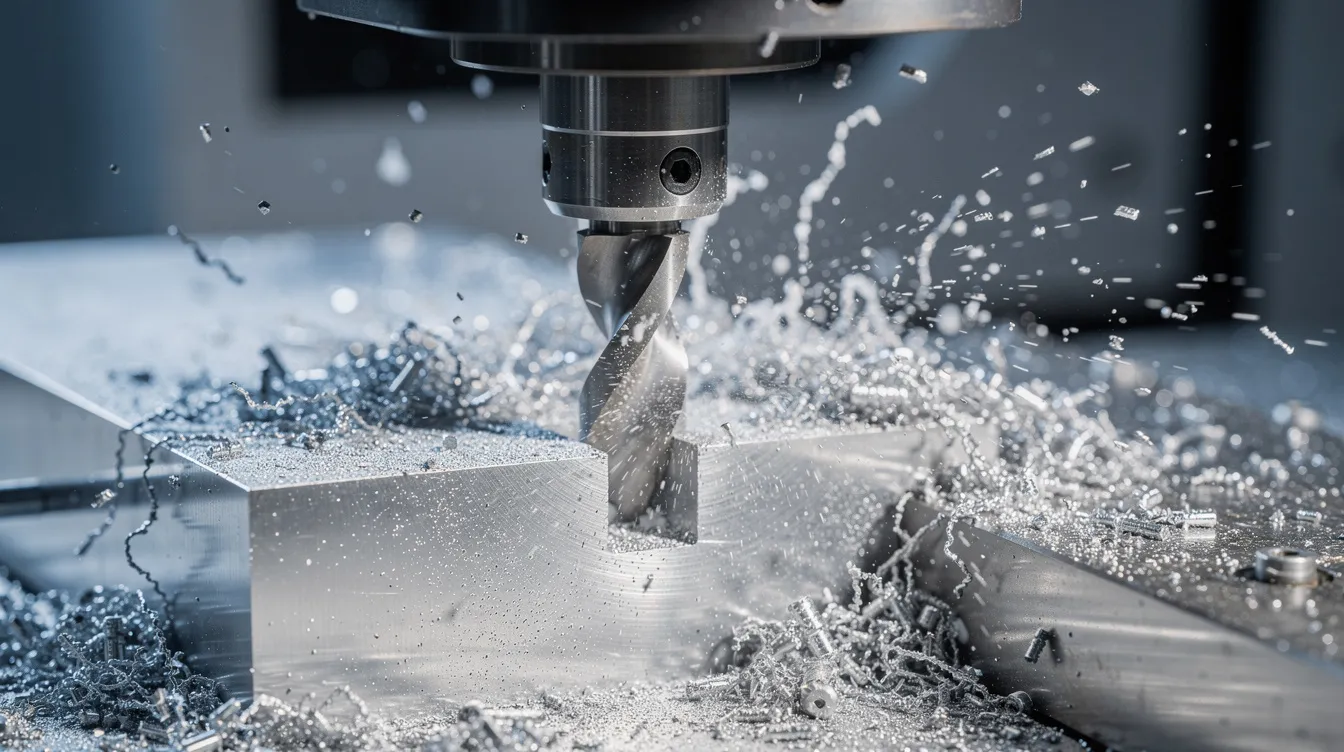
Understanding ISO 9001:2015 – The Foundation of Quality Management
ISO 9001:2015 is the latest version of the quality management standard published by the International Organization for Standardization. It is globally recognized across industries, and approximately 1.47 million ISO 9001 certificates are active worldwide. For precision metal manufacturing and CNC machining, it provides the baseline quality management system that more specialized standards like AS9100 are built upon.
ISO 9001 is a general quality management standard organized around seven key principles:
-
Customer focus – understanding and consistently meeting part specifications, tolerances, and material requirements for industrial customers.
-
Leadership – management defines quality policy and allocates resources for quality assurance.
-
Engagement of people – operators, inspectors, and engineers are trained for critical operations like machine setup and measurement.
-
Process approach – machining, inspection, finishing, and supply chain inputs are managed as interlinked processes.
-
Improvement – tracking nonconformances and corrective actions to reduce scrap and rework, supporting continual improvement.
-
Evidence-based decision making – using data from internal audits, process metrics, and customer feedback.
-
Relationship management – maintaining control over raw materials suppliers, finishing shops, and sub-tier vendors.
ISO 9001:2015 focuses on customer satisfaction and continual improvement across every operation. It requires documentation control for quality procedures, ensuring that work instructions, calibration records, and inspection plans are current and accessible. ISO 9001:2015 certification covers precision CNC machining and die casting, making it directly applicable to metal suppliers like Anebon, which has held this certification since its founding in 2010. External conformity audits include annual surveillance visits and full recertification every three years.
Even without AS9100, an ISO 9001:2015 certified metal shop already delivers consistent quality that outperforms non-certified competitors, particularly for complex aerospace and electronics parts where variation must be minimized.
AS9100 for Aerospace Metals – Building on ISO 9001
AS9100 Rev D is the aerospace-focused quality management standard used across aviation, space, and defense supply chains. It is the current standard aligned with ISO 9001:2015, and AS9100 builds upon ISO 9001 with over 100 additional aerospace requirements. AS9100 certification is essential for aerospace and defense suppliers and essential for aerospace and defense organizations seeking to deliver flight-critical components.
An AS9100 certified metal supplier must first satisfy every ISO 9001:2015 requirement, then meet additional clauses covering:
-
Risk management – AS9100 mandates strict risk management protocols critical for material safety, with pervasive requirements across manufacturing and supply chain processes.
-
Product safety – obligations to identify and mitigate safety hazards in both production and end-use.
-
Configuration management – formal control of drawing revisions, engineering changes, and process plan versions.
-
Counterfeit parts prevention – verification of raw materials sources and sub-tier supplier qualifications.
-
First Article Inspection – detailed measurement and test reporting per AS9102 for new or changed aerospace parts.
AS9100 certification ensures compliance with aerospace industry standards and demonstrates commitment to quality and safety in aerospace. AS9100 emphasizes risk management and product safety in aerospace at every level of the manufacturing process. For metals, this translates to stricter material traceability, controlled handling of special processes like heat treatment and surface finishing, and rigorous quality processes that go far beyond general manufacturing.
Many aerospace primes and Tier 1s require AS9100 certified suppliers for flight-critical parts – structural brackets, engine components, landing gear hardware. AS9100 certification functions as both a maturity indicator and a risk reduction framework for high-value aerospace components.
Key Differences Between ISO 9001:2015 and AS9100 for Metal Suppliers
While AS9100 shares the same structure as ISO 9001:2015, the key differences for a metal supplier and precision machining operation are substantial. AS9100 includes over 100 additional aerospace-specific requirements that add depth and specificity to every aspect of quality management.
Here are the most impactful differences:
1. Enhanced risk management. ISO 9001:2015 introduced risk-based thinking. AS9100 demands specific risk analyses for each special or outsourced process, identification of critical-to-quality characteristics, and safety risk assessment. Risk management requirements in AS9100 focus on preventing issues before they occur rather than simply reacting.
2. Product safety and human factors. AS9100 requires management of safety risks including human error mitigation in measurement, machine setup, and parts handling. ISO 9001 has no explicit product safety clause.
3. Configuration control. AS9100 mandates formal revision control for drawings, CAD models, and machining programs. For a metal supplier, working from an outdated program version could produce parts with wrong tolerances – configuration management prevents this.
4. First Article Inspection. First Article Inspection is often required for aerospace contracts to ensure compliance. AS9100 makes article inspection mandatory for new parts, design changes, or process changes per AS9102. ISO 9001 has no equivalent requirement.
5. Counterfeit parts prevention. AS9100 includes controls for preventing counterfeit parts in the supply chain through supplier qualification, source verification, and incoming material validation. ISO 9001 lacks this explicit requirement.
6. Documentation depth. AS9100 requires complete traceability of materials used, including mill certs, heat lot numbers, operator IDs, machine program versions, and revision-controlled drawings. ISO 9001:2015 requires records of conformity but is less prescriptive about depth.
7. Non-conformance control. AS9100 requires robust non-conformance control processes from suppliers, including root cause analysis and corrective action verification with safety impact assessment.
8. Certification path. AS9100 requires a three stage auditing process for certification, and AS9100 certification typically takes 6 to 12 months to achieve – significantly more involved than a standard ISO audit cycle.
ISO 9001:2015 remains valuable and sometimes sufficient for non-flight aerospace work such as tooling, jigs, ground support equipment, and R&D prototypes. But for flight hardware, AS9100 is the benchmark across the aerospace and defense industries.
What “ISO 9001:2015 and AS9100 Certified Metal Supplier” Actually Delivers
When you work with an ISO 9001:2015 and AS9100 certified metal supplier, you get concrete, verifiable deliverables at every stage of your aerospace programs.
Operational practices include:
-
Controlled purchasing of aluminum, titanium, stainless steel, and nickel alloys from approved mills
-
Incoming inspection of each heat lot, verifying chemical composition, mechanical properties, and hardness
-
Full lot traceability through cnc machining, sheet metal fabrication, surface treatment, and final shipment
-
In-process inspection at defined checkpoints with documented acceptance criteria
-
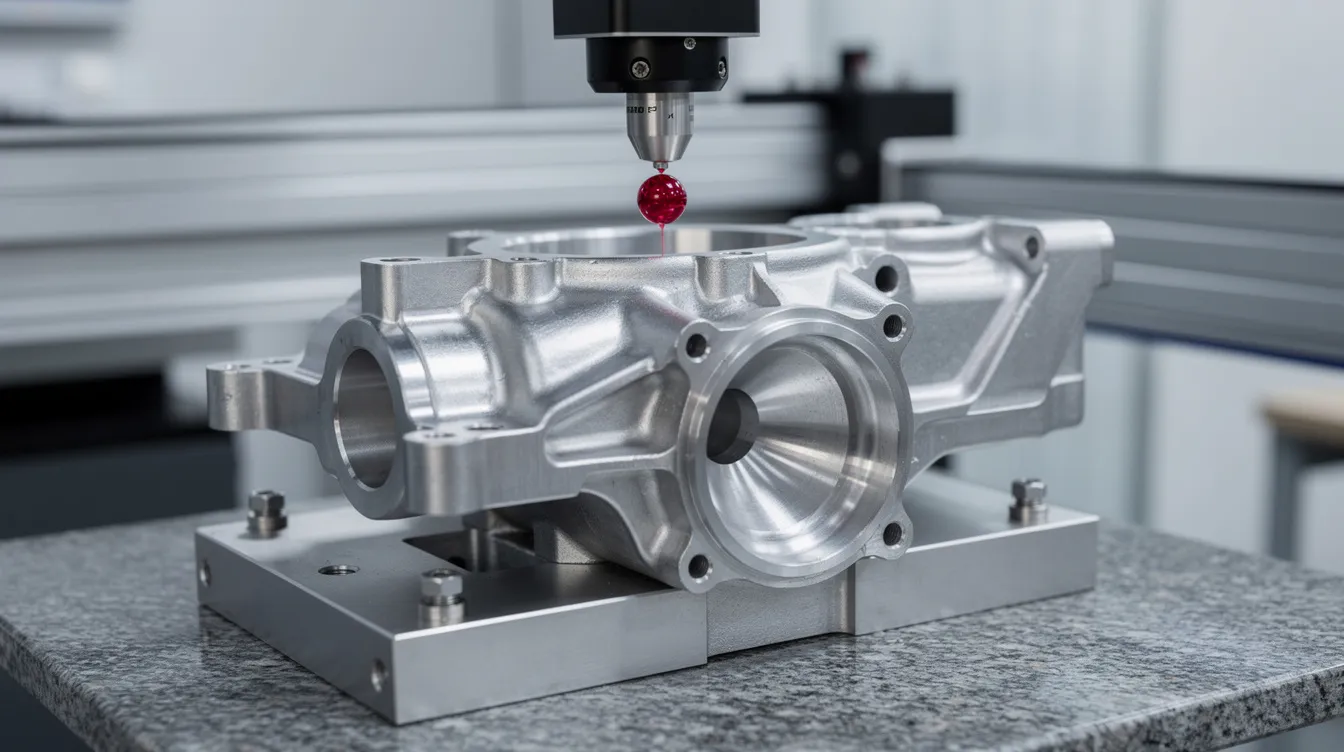
Final CMM verification against GD&T requirements before shipping
Material Test Reports are critical for ensuring compliance and traceability in aerospace. Typical deliverables to aerospace OEMs include MTRs, certificates of conformity, dimensional inspection reports with actual vs. nominal data, and FAI documentation packages for first production runs.
AS9100 certification improves product safety and risk management across the supply chain. AS9100 certification enhances supplier credibility with aerospace OEMs and provides the documented evidence that customer satisfaction depends on: fewer delays during customer FAI reviews, reduced risk of scrap downstream, and smoother interactions with OEM quality and regulatory auditors.
AS9100 requires complete traceability of materials used in production, meaning every part can be traced back to its original melt or heat number – a requirement that directly supports fleet-wide investigations if issues emerge years later.
Anebon’s Role in Aerospace Metals Supply Chains
Anebon Metal Products Limited is an ISO 9001:2015 and ISO 14001:2015 certified precision machining and metal fabrication company founded in 2010 in Dongguan, Guangdong, China. The company serves overseas OEMs, design engineers, and R&D teams across aerospace manufacturing, robotics, medical devices, and industrial machinery.
Anebon itself is not AS9100 certified. However, Anebon frequently supports AS9100 certified primes and Tier 1 suppliers with precision-machined and fabricated metal components. Anebon aligns its rigorous quality management and documentation with AS9100 expectations: controlled process planning, detailed inspection records, configuration control of drawings and programs, and long-term document retention to meet aerospace customer requirements.
This positioning makes Anebon a practical manufacturing partner inside larger AS9100-certified supply chains – particularly for non-flight-critical metal parts, tooling, test hardware, and rapid prototyping. Anebon’s ISO certification, combined with its aerospace-oriented practices, allows it to deliver the engineering support and consistent quality that primes expect when flowing down quality requirements to sub-tier suppliers.
For customers needing high mix, low-to-mid volume production runs with tight tolerances, Anebon’s B2B model offers cost-effective access to high quality standards without sacrificing traceability or documentation rigor.
Materials & Metals: What Aerospace-Capable Suppliers Need to Stock
An aerospace metals supplier must support a wide spectrum of aerospace grade metals – not just generic aluminum plate. Structural, mechanical, thermal, and electronic applications each demand specific alloy grades with documented material properties.
Aluminum alloys are the backbone of aerospace structures:
-
2024-T3 – high fatigue performance for skins and structural members
-
6061-T6 – versatile and weldable for brackets, frames, and anodized housings
-
7075-T6 – very high strength for wing structure prototypes and avionics enclosures
Stainless steels serve corrosion-resistant and high-strength applications:
-
304 and 316 – fixtures, test rigs, and hardware for aircraft and space environments
-
17-4 PH – precipitation-hardened for shafts, flanges, and high-strength precision components
Titanium alloys – especially Ti-6Al-4V (Grade 5) – are used for UAV components, satellite fixtures, and high-performance fasteners where the strength-to-weight ratio is critical.
Other materials relevant to the aerospace industry include alloy steels (4140, 4340) for gears and shafts, high-temperature alloys like Inconel 718 for engine environments, and copper and brass for electrical connectors and thermal management.
Certified metal suppliers must provide mill certificates and chemical composition data for every lot. Surface treatments such as anodizing, passivation, plating, and heat treatment often qualify as special processes. Nadcap accreditation is often required for aerospace suppliers performing special processes like these, adding another layer of quality assurance beyond AS9100.
Precision Machining, CNC, and Fabrication Capabilities for Aerospace
An aerospace metals supplier must pair strong quality management with modern precision machining and fabrication technologies. Certifications alone mean nothing without the equipment and expertise to produce aerospace parts to specification.
Core processes expected for aerospace manufacturing include:
-
CNC milling – 3-, 4-, and 5-axis configurations for complex geometries found in brackets, housings, and structural fittings
-
CNC turning – including Swiss-type machining for precision shafts and rotational components
-
Wire EDM and sinker EDM – for intricate features and hard materials
-
Precision grinding – for tight tolerances on mating surfaces
Sheet metal fabrication capabilities are equally important: laser cutting, CNC punching, press brake forming, welding (MIG, TIG), and assembly of enclosures, brackets, and chassis for defense applications and avionics.
Anebon holds tight tolerances down to approximately ±0.002 mm on critical features, supporting high-precision aerospace components and electronics parts. This level of precision machining supports real aerospace programs: low-volume prototype parts for new aircraft platforms, production runs for test rigs, and repeat orders for ground support equipment and fixtures. The ability to transition from rapid prototyping to full scale production without sacrificing dimensional accuracy is what separates capable suppliers from the rest.
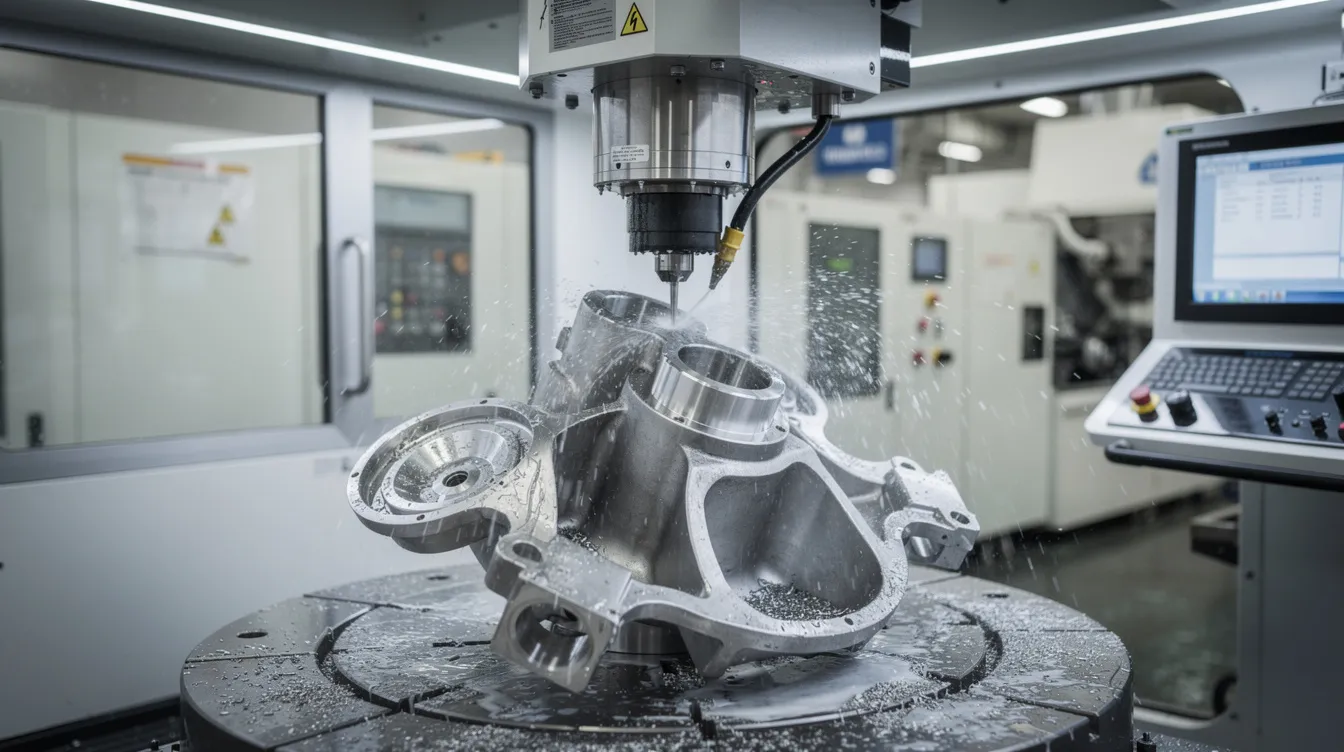
Quality Control, Traceability, and Risk Management in Aerospace Metals
For aerospace metals, quality control extends beyond dimensional accuracy. It encompasses material integrity, documentation control, and risk mitigation throughout the entire life of the program.
A typical quality control flow at an aerospace-capable metal supplier includes:
-
Incoming material verification – hardness checks, composition analysis, visual inspection, and comparison against mill certificates
-
In-process inspection – defined checkpoints during current processes such as roughing, finishing, and heat treatment
-
Final CMM inspection – GD&T-based dimensional reports with surface finish and hardness verification as required
Traceability expectations are demanding. Each metal heat lot must be tracked from the original mill certificate through cutting, machining, surface treatment, and final shipment. Records are retained for many years – often 15 to 30 years – to support potential fleet-wide investigations. AS9100 emphasizes risk management and product safety measures at every stage of this chain.
Risk management practices aligned with AS9100 principles include PFMEA-style analysis for new parts, special controls for key characteristics, and specific measures for fod control in precision machining and assembly areas. Human factors – fatigue, distraction, setup error – are formally addressed in root cause analyses.
Anebon implements similar quality processes within its ISO 9001:2015 system, including multi-stage inspection protocols and systematic traceability. This enables smooth integration into customer AS9100 frameworks and minimizes risk in joint aerospace projects.
How to Evaluate and Select an Aerospace Metals Supplier
Here is a practical checklist for engineers and supply chain managers evaluating an ISO 9001 2015 and AS9100 certified metal supplier for the aerospace and defense sectors.
Verify certification status and scope. Confirm that ISO and AS9100 certificates are current, list the correct revision (ISO 9001:2015, AS9100D), and cover the relevant activities – cnc machining, sheet metal fabrication, material distribution. For AS9100, the OASIS database is used to verify the certification status of aerospace suppliers. Always check that the iso certification scope matches what you need.
Assess technical capabilities. Evaluate materials supported, maximum part size, tolerance capabilities, surface treatments, and ability to manage complex geometries for aerospace programs. Ask whether they handle high mix, low-volume work or specialize in large production runs.
Review documentation and quality management. Request sample inspection reports, FAI documentation, nonconformance records, and evidence of gap analysis and corrective action processes. Confirm documented procedures for configuration control and document retention. Evaluate how the supplier handles engineering change requests and whether they provide proactive engineering support.
Evaluate responsiveness. Lead times, DFM feedback speed, and communication quality all matter. A supplier’s ability to handle engineering changes without disrupting delivery timelines builds customer confidence.
Consider overseas partners carefully. Suppliers like Anebon in China offer cost-effective prototyping and production. The risks – time zones, shipping, tariffs – are manageable when the supplier demonstrates robust ISO-based quality management, environmental certification (ISO 14001), strong documentation practices, and proven experience working with AS9100 certified primes and Tier 1s. AS9100 certification can take 6 to 12 months to achieve, so understanding a supplier’s quality journey matters.
Working with ISO 9001:2015 Suppliers Inside AS9100 Supply Chains
Many aerospace programs use a mix of AS9100 certified suppliers and ISO 9001:2015-only partners for different types of work and risk levels. AS9100 certification is essential for aerospace and defense contractors handling flight-critical hardware, but ISO 9001:2015 suppliers play a vital supporting role.
Common scenarios where ISO 9001:2015 suppliers are appropriate include:
-
Non-flight tooling, jigs, and fixtures
-
Ground support equipment
-
Prototype brackets and early R&D hardware
-
Small-batch machined components for test programs
-
Defense applications involving non-flight support structures
AS9100-certified primes can flow down additional quality requirements to ISO 9001:2015 suppliers: specific inspection levels, reporting formats, configuration management rules, longer document retention periods, and FAI-style documentation for selected parts.
Best practices to integrate an ISO 9001:2015 metal supplier into AS9100 supply chains include providing clear drawings and 3D models, defining key characteristics on drawings, agreeing on inspection and reporting formats upfront, and conducting regular performance reviews using KPIs such as on-time delivery and PPM reject rates.
For example, Anebon regularly delivers precision aluminum and titanium components to European and North American aerospace customers with full traceability packages, CMM reports, and material test documentation. This demonstrates real-world compatibility with AS9100 systems and builds customer confidence that the supplier can meet aerospace quality management expectations – even without holding the AS9100 certificate itself.
Conclusion: Choosing a Certified Metal Supplier for Aerospace Manufacturing Success
ISO 9001:2015 and AS9100 work together to define a robust quality management foundation for aerospace metals suppliers. ISO 9001 provides the general quality management standard that ensures consistent quality across all manufacturing sectors, while AS9100 layers on the rigorous quality management demanded by the aerospace and defense industries. Together, they cover everything from documentation control and risk management to product safety and complete traceability.
AS9100 certification is mandatory for flight-critical aerospace components, while ISO 9001:2015 suppliers play a vital role in prototypes, tooling, and supporting hardware across aerospace programs. Understanding where each certification fits – and what it delivers in practice – helps procurement teams and engineers make smarter sourcing decisions across the defense sectors and commercial aviation.
Anebon Metal Products Limited is an ISO 9001:2015 and ISO 14001:2015 certified precision machining and fabrication partner experienced in supporting AS9100 certified aerospace customers, from rapid prototyping through scaled production. With tight tolerances, a broad materials range, and aerospace-aligned quality standards, Anebon is ready to meet the demands of your next project.
Ready to get started? Share your drawings or 3D models with Anebon’s team to request a quote and explore how ISO-certified precision machining can support your aerospace supply chain.