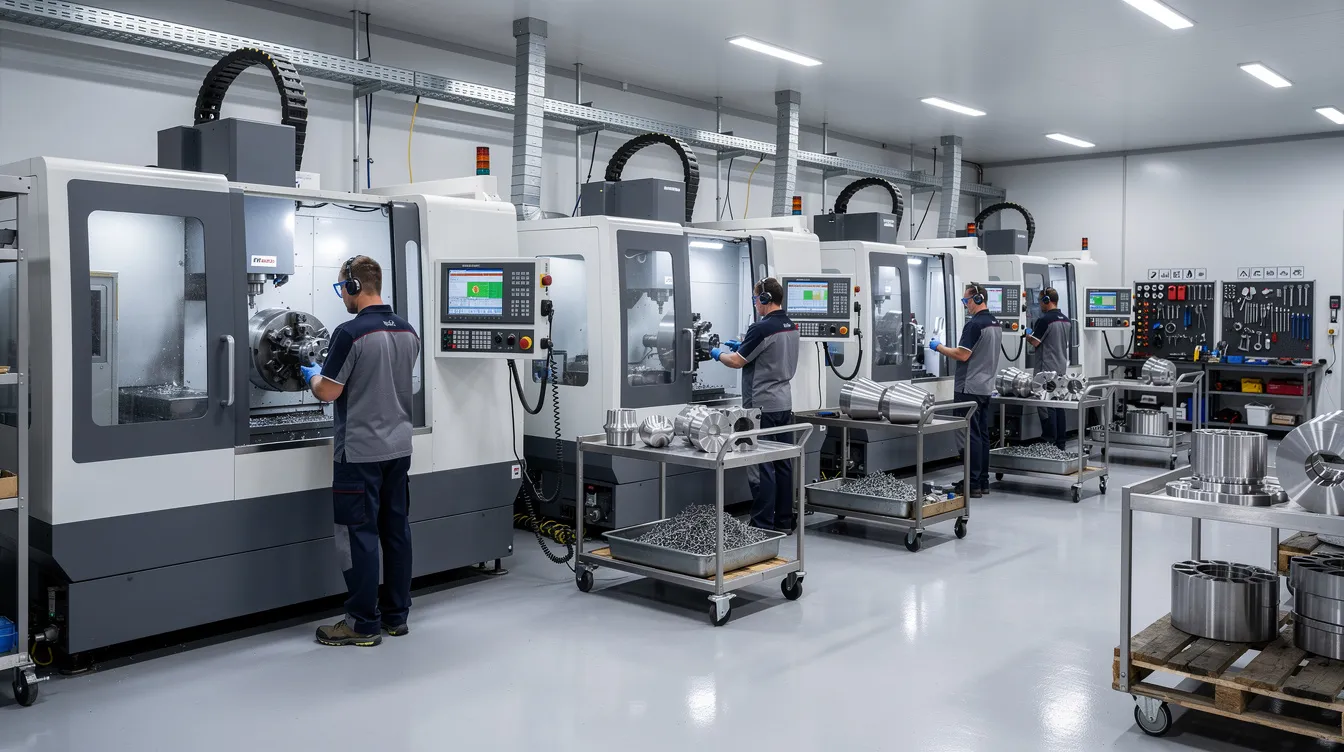
Choosing the Right Industrial CNC Machine for Your Business Needs
Industrial CNC Machine: Complete Guide for OEM Production
Introduction to Industrial CNC Machines
An industrial CNC machine is a computer-automated manufacturing tool designed for continuous, high-precision part production in demanding OEM environments. Unlike hobby or desktop CNC systems built for occasional use and light materials, industrial CNC machines are engineered for 24/7 operation, tight tolerances under heavy cutting loads, and integration with factory automation. CNC machines connect digital designs with physical objects, making cnc technology vital in modern manufacturing for high-precision tasks across every major sector.
For engineers and purchasing managers planning 2024–2026 production, the stakes are high. Electric vehicle ramp-ups, miniaturized medical devices, and advanced aerospace components all demand machines that deliver repeatable accuracy shift after shift. CNC machines can operate with high accuracy and little human supervision, which is exactly what modern production environments require.
Typical industries relying on industrial cnc include aerospace, medical devices, automotive, electronics, robotics, and industrial machinery. Anebon Metal Products Limited, founded in 2010 in Dongguan, China, serves these sectors as an ISO 9001:2015 and ISO 14001:2015 certified partner offering precision cnc manufacturing, die casting, and sheet metal fabrication.
|
Feature |
Industrial CNC Machine |
Hobby / Desktop CNC |
|---|---|---|
|
Duty cycle |
Continuous, 24/7-capable |
Occasional, a few hours/day |
|
Construction |
Heavy cast-iron or steel, linear rails |
Light aluminum frames, less rigid |
|
Tolerance under load |
±0.005–0.02 mm typical |
±0.05 mm or worse |
|
Spindle power |
High HP, high torque at low RPM |
Low power, limited torque |
|
Automation (ATC, robotic load) |
Standard |
Rare or manual |
|
Coolant & chip management |
Advanced, integrated |
Minimal or absent |
Key benefits for OEMs:
-
Precision and repeatability across large batches with minimal variation
-
Automation features that reduce setup time and labor costs
-
Ability to support high volume production with continuous operation and optimized throughput
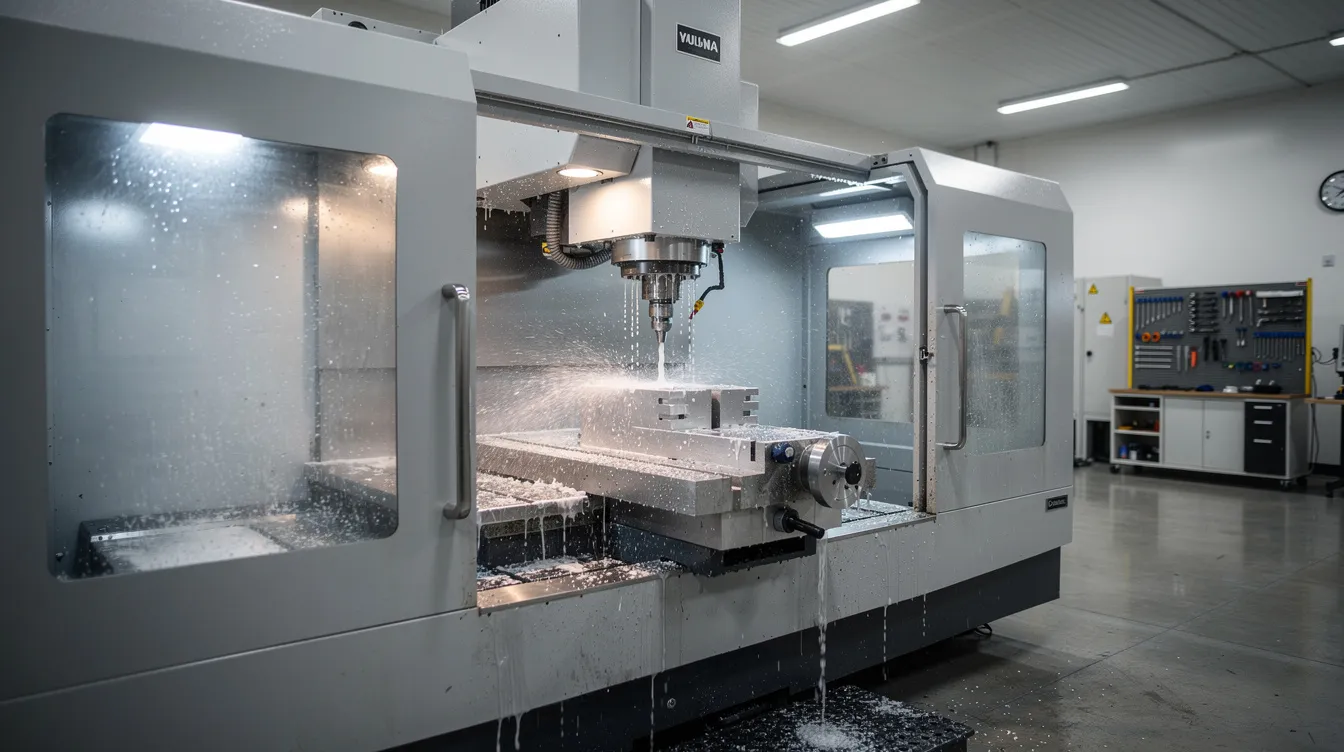
Types of Industrial CNC Machines & Routers
CNC machines are categorized by axis configuration, kinematics, and intended application. Understanding the different types helps OEMs select the right machine for their part geometry, material, and volume requirements.
CNC Milling Machines
-
CNC machines are categorized by axis types: 3, 4, and 5-axis configurations. CNC milling machines use rotating cutting tools to remove material from a workpiece.
-
3-axis vertical milling centers handle prismatic parts like blocks, plates, and housings, moving the tool along X, Y, and Z axes.
-
4-axis mills add a rotary axis, enabling side machining of features without refixturing the part.
-
5-axis machining centers allow simultaneous tool approach from multiple angles, making them essential for turbine blades, impellers, and orthopedic implants with complex curved geometry.
CNC Turning Centers and Lathes
-
CNC lathes rotate a workpiece against a stationary cutting tool to produce cylindrical parts such as shafts, housings, and connectors.
-
Machines with Y-axis live tooling allow milling and drilling operations on a turning center without remounting the part.
-
Sub-spindle machines grip and machine from both ends, cutting cycle time for complex features.
Industrial CNC Routers
-
Full size cnc routers use gantry-style construction with vacuum table or T-slot tables for large panels in wood, composites, plastics, and soft metals. Popular CNC router table sizes include 2×2 to 6×12 feet, and CNC routers can have customized table sizes for specific needs.
-
CNC routers can cut wood, plywood, and MDF. They can also mill metals such as aluminum and brass, and even process stone materials like granite and marble.
-
Compact and desktop cnc routers serve small components, prototyping, or jig-making with a smaller work area and lower power. Home CNC kits include mini, portable, and desktop types, while industrial CNC kits include wood routers and aluminum milling machines.
-
Industrial cnc routers differ from general cnc routers in rigidity, spindle power, and automation. An OEM producing furniture or large format composite panels benefits from industrial cnc routers, while an OEM making electronics enclosures or tight-tolerance metal parts should look at 3- or 5-axis mills.
Other Industrial CNC Equipment
-
CNC laser cutters use high-powered lasers to cut materials with minimal kerf and heat-affected zone. CNC plasma cutters cut through conductive materials like steel and aluminum plate.
-
CNC punching, CNC bending (press brakes), and CNC EDM (wire or sinker) round out a complete fabrication ecosystem. CNC machines are used for milling, turning, routing, and laser cutting across these platforms.
-
Consider adding labeled photos of a 5-axis machining center, turret lathe with live tooling, gantry router, and EDM machine for reference.
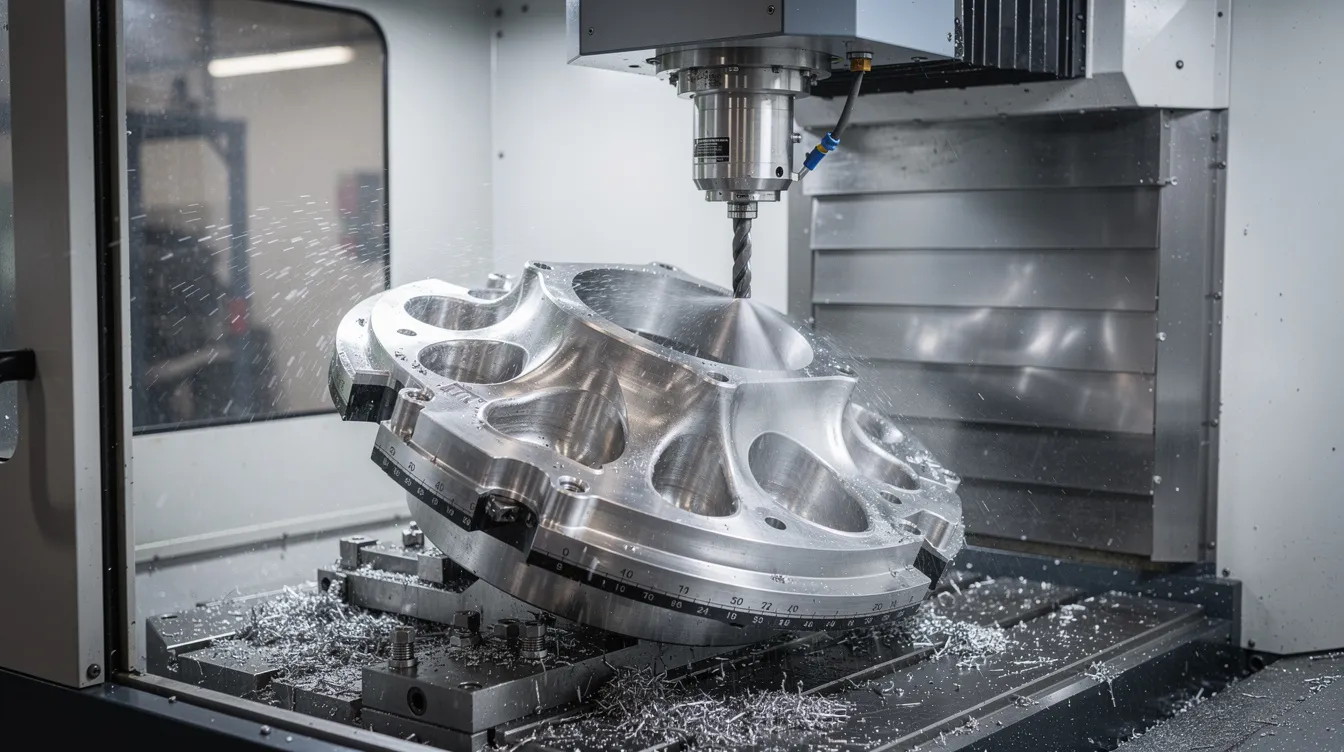
How Industrial CNC Machines Work (Working Principle)
The CNC workflow follows a clear path: a CAD model created in software like SolidWorks or Siemens NX is processed through cam software (Mastercam, hyperMILL, Fusion 360) to generate toolpaths. These toolpaths are post-processed into G-code. CNC machines operate by executing G-code instructions, which the machine controller (Fanuc, Siemens, Heidenhain) interprets to drive spindle speed, feed rate, and tool motion across multiple axes.
CNC machining primarily utilizes subtractive manufacturing – removing material from a solid block or billet rather than adding it. The machine moves the tool (or workpiece) along X, Y, and Z linear axes. Additional axes A, B, and C provide rotary motion around X, Y, and Z respectively. In a 5-axis simultaneous machining example, a medical implant surface or impeller blade can be machined in a single setup, eliminating refixturing errors and dramatically reducing cycle time.
CNC machining ensures high-speed and high-accuracy cutting through tightly controlled mechanical systems. Key mechanical elements include:
-
Precision ground ball screws that convert rotary motion to linear movement with minimal backlash
-
Linear guideways (roller or recirculating-ball type) for smooth, accurate axis travel
-
Servo motors with high-resolution encoders for precise positioning
-
The spindle, which determines RPM range, power, and torque – critical for selecting the right spindle for a given material and operation
-
A rigid machine bed (cast iron or welded steel) that dampens vibration and resists deflection
CNC machining centers have automatic tool changers for efficiency, swapping cutters mid-program without operator intervention. Probing systems verify workpiece location and dimensions in-machine. Combined with standardized fixtures, these features reduce setup time and support high volume production with minimal downtime.
-
Include a flow diagram: CAD → CAM → Simulation → Post-Processing → Machine Setup → First Article → Production → Final Inspection.
Industrial CNC Applications & Use Cases
Industrial cnc machines drive production across sectors experiencing rapid growth. EV component manufacturing has ramped significantly since 2020, with machined aluminum housings, battery module parts, and connectors in high demand. Medical device production surged during 2020–2022, tightening requirements for surface finish and traceability on implants and surgical instruments.
CNC machines can create parts from metals, plastics, wood, and foam, making them versatile across applications. They can process plastics like acrylic and PVC for enclosures and fixtures. CNC machines can cut various types of foam materials used in packaging or composite tooling. CNC machines are crucial in industries like aerospace and automotive, where dimensional accuracy and material integrity are non-negotiable.
Common OEM applications:
-
Precision housings for electronics – aluminum and magnesium chassis
-
Aluminum chassis and lightweight structural components for robotics and drones
-
Medical implants and instruments – titanium hip/knee components, surgical tools
-
Automotive brackets, EV motor housings, heat sinks
-
Aerospace structural parts – wing spars, bulkheads, sensor housings
-
Fixture components and tooling for other manufacturing processes
When to use which process:
-
CNC milling (3- or 5-axis) for complex curved or tight-tolerance aluminum and titanium parts
-
CNC turning for cylindrical shapes like shafts, pins, and connectors
-
Industrial cnc routers for large flat composite or plastic panels
CNC technology supports rapid prototyping for testing designs – short-run prototypes ship in 2–5 days for R&D validation through Anebon’s prototype service. CNC machines are capable of producing large volumes of identical parts, scaling from prototype to thousands of parts per month with optimized workflows and automation.
Anebon has delivered high-precision ±0.002 mm aerospace sensor housings and complex 5-axis titanium brackets for robotics since around 2018.
Case example: An OEM client needed 1,000 aluminum housing parts but faced 4-week lead times due to manual fixturing and multiple setups. By implementing modular fixturing and in-machine probing, setup time dropped by 60%, cutting total lead time from 4 weeks to 1.5 weeks without sacrificing accuracy.
Choosing the Right Industrial CNC Machine (Buyer’s Guide)
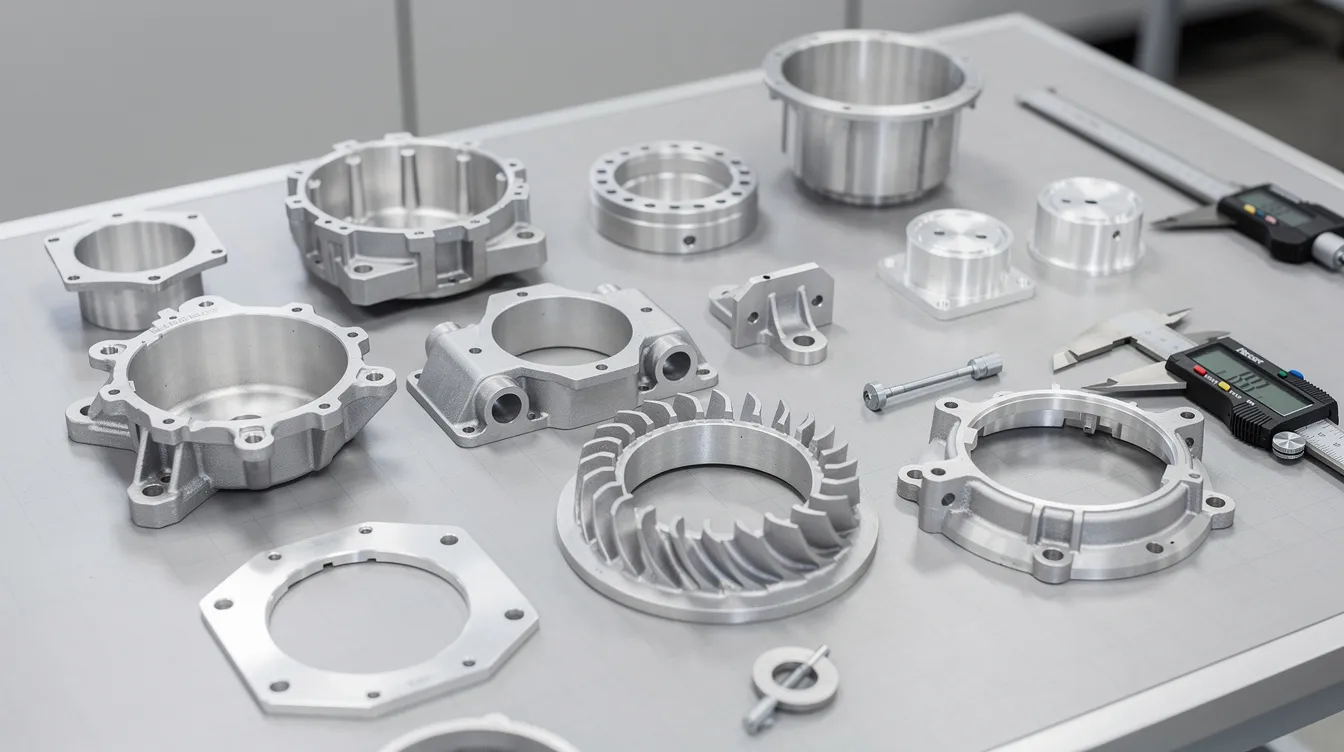
Selecting the right machine means matching machine capability with part geometry, tolerance, material, and production volume. Overspecifying equipment wastes capital; underspecifying it creates quality issues and bottlenecks.
Key selection criteria:
-
Required tolerances: ±0.05 mm (standard) vs ±0.005 mm or tighter (precision operations – cost increases non-linearly)
-
Materials: aluminum, stainless steel, titanium, plastics, or composites
-
Part size envelope: maximum workpiece dimensions and weight the machine can handle
-
Surface finish requirements (Ra values)
-
Throughput: single-shift prototyping vs 24/7 production environments
Machine type comparison for OEM scenarios:
-
Vertical machining centers (VMCs): ideal for small to medium prismatic parts, accessible and versatile
-
Horizontal machining centers (HMCs): better chip evacuation, multi-pallet capability for high throughput on production runs
-
Turning centers: cylindrical parts, shafts, connectors – especially effective with bar feeders
-
Industrial cnc routers: large format sheet materials, wood, composites, soft metals – best cnc routers offer vacuum table systems and high speed spindles
For routers specifically, entry-level CNC routers cost between $2,380 and $5,080, while full-size CNC routers start at over $6,780. High-end CNC routers range from $3,280 to $18,000. Industrial CNC machines cost between $16,000 and $150,000 depending on axis count, precision, and brand. Even DIY CNC router kits start at less than $1,000 for makers and a small shop prototyping setup.
Automation options for high volume production:
-
Pallet changers minimize downtime between parts
-
Bar feeders automate turning center loading
-
Robotic loading/unloading enables lights-out machining
-
Tool management systems track wear and remaining tool life
For many overseas OEMs, outsourcing to a partner like Anebon eliminates the need to purchase capital equipment while still accessing advanced 5-axis machining and industrial cnc capacity.
|
Factor |
Buy Your Own CNC |
Outsource to Anebon |
|---|---|---|
|
Upfront cost |
$16,000–$500,000+ |
None (pay per part) |
|
Setup time |
Weeks to months |
Handled by Anebon |
|
Flexibility |
Limited to owned equipment |
Access to full range of machines |
|
Overhead |
Operators, maintenance, facility |
Included in pricing |
|
Volume scalability |
Constrained by capacity |
Scales up or down as needed |
Cost, Setup Time, and Productivity
Machine costs span a wide range: a desktop cnc router for soft materials might cost a few thousand USD, while multi-axis industrial machining centers typically run from tens of thousands to well above $200,000. The total cost of ownership goes well beyond the purchase price.
Main cost components:
-
Machine purchase or lease
-
Tooling: cutters, holders, wear parts
-
Fixturing: custom or modular systems
-
Software: cad software, cam software, simulation, post-processors
-
Labor: operators, programmers, setup staff
-
Maintenance: calibration, lubrication, consumable replacement
-
Facility: three-phase power, HVAC for temperature control, floor space, safety systems, chip handling, coolant filtration
Setup time directly impacts part cost and lead time. Every hour spent on fixturing, tool setting, and first-article verification is non-productive time. Strategies to reduce setup time include standardized fixtures, modular tooling, in-machine probing for automated offset setting, and reusable CAM templates – all of which save time across repeated jobs.
Industrial CNC machines are optimized for continuous operation. Automotive machining lines, for example, often run 24/7 with automated loading, maximizing utilization and amortizing fixed costs across large volumes.
For overseas OEMs, working with Anebon delivers clear cost advantages: no capital investment, no maintenance overhead, and predictable per-part pricing for CNC machining, die casting, and sheet metal fabrication.
Example calculation: A prototype run of 50 aluminum parts might cost ~$200 per unit due to programming, setup, and manual operations. The same part in a 10,000-piece production run with optimized fixturing and automation might drop to $20–25 per unit – a 10x reduction driven by economies of scale and reduced per-part setup time.
Core Components, Tooling & Accessories
The reliability and accuracy of any industrial cnc machine depend heavily on the quality of its core components and supporting tooling ecosystem. A machine is only as good as its weakest subsystem.
Mechanical and control components:
-
Machine bed (cast iron or welded steel): provides the rigid foundation that resists deflection and absorbs vibration
-
Gantry, column, or bridge structure depending on machine type
-
Ball screw drives (ground, preloaded) convert rotary servo motion into precise linear travel
-
Linear guides (roller or recirculating-ball) ensure smooth axis movement with minimal friction
-
Stepper motor drives appear in lighter-duty machines, while servo motors with high-resolution encoders are standard on industrial equipment for superior positioning accuracy
-
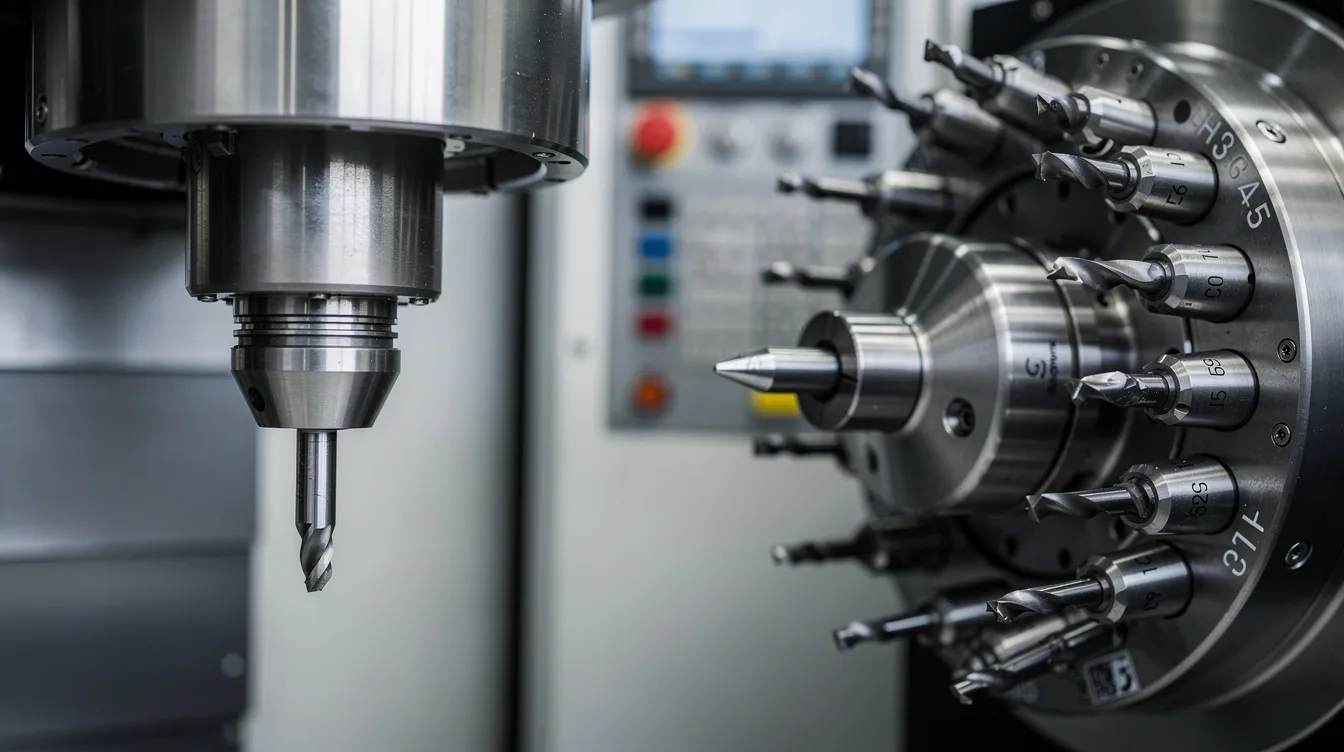
Spindle: the heart of the machine – characterized by power (kW), RPM range, and torque curve. Tool interfaces include BT30, BT40, HSK, and CAT standards. Selecting the right spindle for your material and operation is critical.
Essential accessories:
-
Workholding: vises and chucks for mills and lathes; vacuum table with vacuum pump systems on cnc routers for holding flat sheet stock
-
Tool holders: balanced, precision-ground for minimal run-out
-
Probing systems: touch probes for part location and in-machine inspection; laser probes for tool setting
-
Coolant systems: flood, through-spindle, or mist depending on material
-
Chip management: conveyors, guards, and enclosures
Router-specific elements:
-
T-slot or vacuum tables for securing large panels
-
Dust collection systems (critical when machining wood, mdf, or composites)
-
High speed spindles optimized for lighter cuts at higher RPM
-
Router bits designed for detailed carvings, intricate designs, and high speed cutting in wood, plastics, and soft metals
CNC grinding machines provide high-precision finishes on components, and are often used alongside milling and turning for final surface requirements.
Typical cutting tools:
-
Solid carbide end mills, drills, reamers, taps, and face mills for metals
-
Router bits (compression, up-cut, down-cut) for wood, plywood, and composites
-
Form tools and specialized inserts for production efficiency
-
Include a labeled infographic of a modern machining center with callouts for bed, linear guideways, spindle, ATC, coolant system, chip conveyor, servo motors, and probes.
Programming, Operation & User Guide
CNC machining has a learning curve, but modern tools and software have significantly lowered the barrier to entry. The process is logical, and once understood, it becomes repeatable and efficient.
Basic workflow:
-
Import CAD model into cam software
-
Apply machining strategies (roughing, finishing, drilling sequences)
-
Simulate toolpaths to check for collisions and verify tool motion
-
Post-process to generate G-code tailored to the specific machine controller
-
Set up the machine: mount fixture, load tools, set work and tool offsets
-
Run first article and inspect critical dimensions
-
Adjust if needed, then move to production
Operator tasks during production:
-
Machine warm-up to stabilize thermal conditions
-
Dry runs or reduced-feed trial passes on new programs
-
First-piece inspection against drawing tolerances
-
In-process monitoring: tool wear, temperature, part dimensions
-
Using probing cycles to verify dimensions without removing the part
Modern CNC controls and software – including cabinet vision-style layout tools for panel-based work and advanced CAM with adaptive feeds – help reduce setup time and minimize human error. Features like collision avoidance simulation, real-time sensor feedback, and standardized tool libraries make even complex projects manageable for small businesses and large manufacturers alike.
For overseas OEMs, Anebon provides DFM feedback before production begins, catching design issues that would complicate machining or inflate cost. This includes material selection guidance and recommendations on whether CNC machining, die casting, or sheet metal is the most suitable process for a given part.
-
Include a checklist visual: RFQ Submission → DFM & Quotation → Prototype Phase → Process Validation (first article, testing) → Production Ramp → Inspection & Shipping.
Quality, Materials & Surface Finishes
Industrial CNC machines earn their place in OEM supply chains because they consistently meet strict quality standards and regulatory certifications. Without rigorous QA, even the most precise machine is unreliable.
Key quality practices:
-
Incoming material inspection with mill certificates and test reports
-
In-process measurements using calibrated instruments
-
CMM (coordinate measuring machine) inspection for GD&T verification
-
Statistical process control (SPC) to monitor trends and prevent drift
-
Final inspection reports with full dimensional data
Anebon holds ISO 9001:2015 and ISO 14001:2015 certifications, which align with the requirements of aerospace, medical, and automotive OEM supply chains where traceability and process control are mandatory.
Materials Anebon machines:
-
Aluminum alloys: 6061, 7075 (structural, lightweight)
-
Stainless steels: 304, 316, 17-4PH
-
Titanium alloys: Ti6Al4V and others
-
Tool steels, brass, copper
-
Engineering plastics: PEEK, Delrin, ABS, acrylic, PVC
Common surface treatments and finishes:
|
Material |
Typical Application |
Recommended Finish |
|---|---|---|
|
Aluminum (6061/7075) |
Housings, chassis, heat sinks |
Anodize, hard anodize, powder coat |
|
Stainless steel (316) |
Medical instruments, food-grade parts |
Electropolish, passivation |
|
Titanium (Ti6Al4V) |
Orthopedic implants, aerospace brackets |
Bead blast + passivate |
|
Brass/Copper |
Connectors, electrical components |
Plating (nickel, chrome) |
|
Engineering plastics |
Enclosures, wear parts |
Polish or matte finish |
Surface finishes range from Ra 0.8 µm for cosmetic surfaces down to Ra 0.1 µm for critical medical or aerospace applications requiring finishing operations.
Maintenance, Reliability & Machine Life
Proactive maintenance is non-negotiable for any shop running industrial CNC equipment at production volumes. Skipping maintenance doesn’t just cause downtime – it erodes the precision that makes the machine valuable in the first place.
Daily tasks:
-
Clear chips and swarf from the work area and guideways
-
Check coolant levels and concentration
-
Wipe down exposed linear guides and other components
Weekly tasks:
-
Inspect lubrication systems and top off if needed
-
Check tool holders for wear or damage
-
Verify spindle run-out is within spec
Monthly and periodic tasks:
-
Verify axis alignment and ball screw backlash
-
Inspect spindle bearings and linear guide wear
-
Perform thermal drift assessment
-
Calibrate axes with laser interferometer or ballbar testing (quarterly/annually)
A well-maintained industrial CNC machine can deliver reliable performance for 10–20+ years with periodic spindle rebuilds and guideway servicing. This durability makes the investment worthwhile for any business running continuous production.
Anebon invests in scheduled maintenance and machine renewal cycles to guarantee consistent capacity and dimensional capability for overseas OEM clients – so projects that span months or years maintain the same quality from first piece to last.
-
Include a simple maintenance checklist graphic formatted for shop-floor reference: daily, weekly, monthly items with checkboxes.
Why Work with Anebon for Industrial CNC Machining
Anebon is not a job shop that simply runs your files and ships parts. It is a strategic manufacturing partner that supports overseas OEMs from concept through full-scale production – covering everything from DFM feedback to final assembly and shipping.
Capabilities:
-
Precision CNC milling and CNC turning, including 5-axis machining for complex geometries
-
Die casting and sheet metal fabrication under one roof
-
Rapid prototyping to production scaling – from 1 piece to tens of thousands
-
Tolerances as tight as ±0.002 mm on precision machined parts
-
Broad materials range including aluminum, titanium, stainless steel, and engineering plastics
-
Secondary processes: anodizing, plating, polishing, bead blasting, assembly
Benefits for overseas OEMs:
-
Fast DFM feedback to catch issues before they become expensive
-
English-language engineering support and transparent quoting
-
Competitive pricing from Dongguan, Guangdong with strong quality infrastructure
-
ISO 9001:2015 and ISO 14001:2015 certified systems
Typical engagement steps:
-
RFQ submission with drawings or CAD files
-
DFM review and quotation with technical options
-
Prototype phase – first sample for fit, form, and function validation
-
Process validation – inspection, capability study
-
Ramp to high volume production with ongoing quality monitoring
Whether your next project requires 50 prototypes or 10,000 production parts, the right industrial cnc strategy – paired with a capable and reliable manufacturing partner – can define your competitive advantage.
Ready to get started? Submit your drawings or CAD files to Anebon for a free DFM review and competitive quote. Our engineering team is ready to evaluate your next CNC machining or fabrication project and help you produce parts that meet your exact specifications.