Choosing the Best Welder for Sheet Metal: A Comprehensive Guide
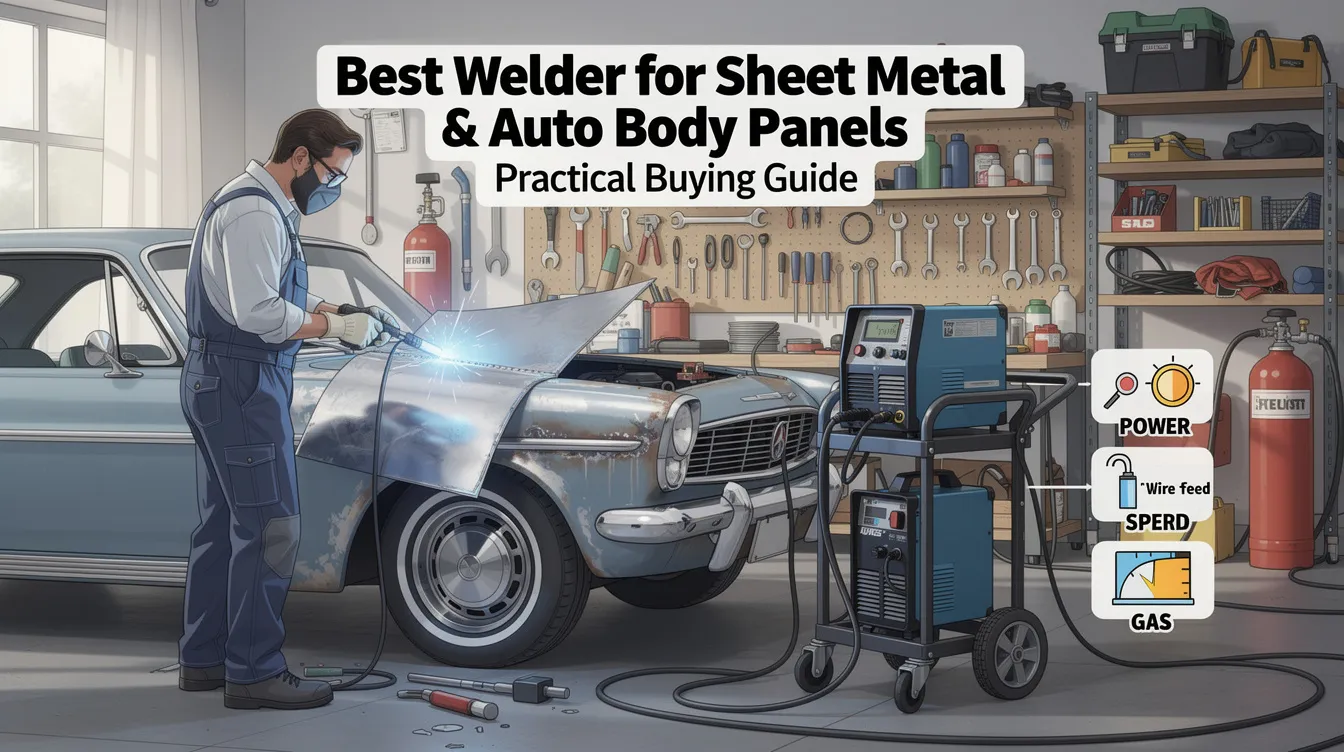
Best Welder for Sheet Metal & Auto Body Panels (Practical Buying Guide)
Choosing the right welder for sheet metal can mean the difference between clean, flat body panels and a warped mess full of holes. This guide cuts through the noise and gives you concrete specs, process comparisons, and practical advice so you can purchase the machine that actually fits your work – whether you’re restoring a truck in your garage or running a small fabrication shop.
Quick Answer: Best Welder Types for Sheet Metal & Auto Body
For most auto body sheet metal and thin stuff in the 16–24 gauge range, a MIG welder running shielding gas and solid wire is the preferred method. It’s forgiving, fast, and produces clean welds with minimal grinding. MIG welders can weld materials as thin as 26-gauge when paired with small wire and proper settings, making them the go-to for everything from patch panels to full quarter-panel replacements.
TIG welding is reserved for situations where you need the highest precision and cleanest bead – custom visible seams, stainless steel, or aluminum panels. Spot welding handles overlapping lap joints the way the factory originally assembled body panels, with minimal heat distortion. MIG welding is faster and more economical than other processes for the majority of sheet metal work in a typical shop.
For the standard auto body restoration, a 110–140 amp mig welder with C25 shielding gas and 0.6–0.8 mm (.023–.030″) solid wire gives you the most forgiving, productive setup. Flux core wire can be used, but it generates more heat and spatter, making it less suitable for thin sheets. It’s better suited to outdoor structural work where appearance is secondary.
At Anebon Metal Products Limited, we use industrial MIG, TIG, and spot welding systems on our OEM production lines. But the buying advice below is tailored to workshop, garage, and small-production users who need one machine that handles the bulk of their sheet metal work.
Here’s how the four main options stack up for thin sheet metal: MIG with gas delivers good weld appearance, moderate speed, and easy learning – the best all-around choice. Flux core is rugged and needs no external gas, but runs hotter with more cleanup. TIG produces the finest finish but is the slowest and most skill-intensive. Resistance spot welding offers minimal distortion for overlapping seam joints but requires specialized equipment and access to both sides of the panel.
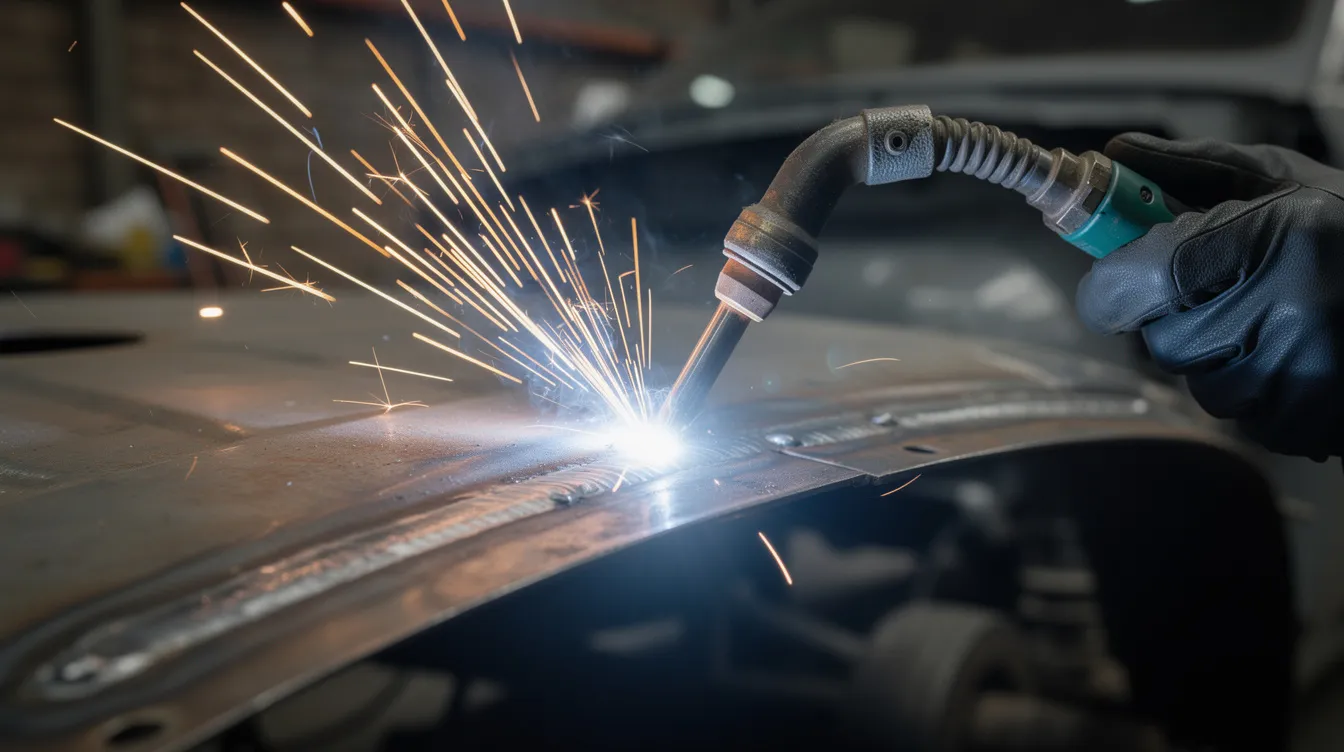
Understanding Sheet Metal & Auto Body Thickness
Sheet metal thickness determines everything about your weld settings. Thin material warps easily, and too much heat will blow holes right through a panel. Understanding how thick car sheet metal actually is helps you dial in your machine before you touch bare metal.
Typical auto body panel thicknesses include:
-
Door outer skins, hood outers, roof panels: 20–22 gauge (~0.65–0.90 mm) – the thinnest stuff you’ll encounter on cosmetic surfaces
-
Floor pans, rocker panels, structural inners: 18–20 gauge (~0.90–1.2 mm) – thicker but still require controlled heat input
-
Patch panels, splash shields: 24 gauge (~0.60–0.70 mm) – extremely easy to burn through
-
Industrial enclosures and brackets (electronics housings, medical device chassis): typically 16–20 gauge (1.0–1.5 mm)
Quick gauge-to-millimeter reference: 24 ga ≈ 0.61 mm, 22 ga ≈ 0.76 mm, 20 ga ≈ 0.91 mm, 18 ga ≈ 1.22 mm, 16 ga ≈ 1.52 mm. Sheet metal typically requires low amperage and controlled heat to prevent distortion, so always match your amps, voltage, wire size, and travel speed to the actual gauge you’re welding.
Overview of Welding Processes for Sheet Metal
Four core processes apply to thin sheet metal. Here’s how they compare for auto body and precision fabrication:
-
Gas welding (oxy-acetylene): Portable, no electricity needed, useful for heating and cutting. But gas welding is hard to learn for thin metal applications, with wide heat zones and high warpage risk.
-
Stick welding (SMAW): Great for heavy structural steel. Stick welding is not suitable for thin sheet metal – too much arc force, heavy slag, easy burn-through on 20–24 gauge.
-
MIG welding (GMAW): The standard for auto body and general sheet metal work. Easy to learn, fast, works on material from 26-gauge up to 1/4″ plate. MIG welding is well suited for thin metal applications.
-
TIG welding (GTAW): Highest precision and cleanest finish. Ideal for stainless, aluminum, and visible custom seams, but much slower and demands significant skill.
Modern auto body and precision sheet fabrication rely on MIG, tig, and resistance spot welding. At Anebon, we select the process based on base metal (mild steel, stainless, aluminum) and the quality requirements of each OEM client.
Gas Welding (Oxy-Acetylene) – Pros and Cons
Before MIG and TIG became affordable, oxy-acetylene gas welding was how every body man joined panels. A torch, some filler rod, and a steady hand were all you needed – plus a tank of oxygen and acetylene.
-
Benefits: Completely portable, works without power, excellent for heating stuck fasteners, bending metal, and cutting with a rosebud tip
-
Drawbacks for thin sheet metal: Wide heat-affected zone, high panel warpage risk, slower travel speed than arc processes, and a steep learning curve for consistently neat welds on thin panels
-
Anebon rarely relies on gas welding in production – it’s better suited to maintenance and field repair tasks where electric welding machines aren’t available
Stick Welding (SMAW) – Pros and Cons on Thin Sheet Metal
Stick welding is the workhorse of structural steel, farm equipment repair, and heavy fabrication. It’s rugged, cheap, and works great outdoors. But it’s the wrong tool for body panels.
-
On 20–24 gauge steel, stick electrodes deliver too much heat and arc force – you’ll blow holes before you finish a single pass
-
Heavy slag requires grinding, and the rough bead leaves a finish no body man would accept on a cosmetic panel
-
Low-amp inverter stick machines with small-diameter rods can handle 2–3 mm sheet in non-cosmetic areas, but even then MIG or TIG would be a better way to go
-
Anebon uses stick only for thicker support structures when required, never for precision OEM sheet metal
MIG Welding for Sheet Metal & Auto Body
MIG welding uses a spool of wire fed through a gun, with shielding gas protecting the weld pool from contamination. It’s the standard process for welding auto sheet metal in collision repair shops, restoration garages, and fabrication plants alike.
-
Relatively easy to learn – most people can produce acceptable welds after a couple weeks of practice
-
Suitable for 24-gauge patch panels through 1/4″ plate, covering the full range of auto body and light structural work
-
MIG welders are suitable for automotive patch panels and general fabrication due to their ease of use
-
MIG welders are versatile for automotive sheet metal work – fenders, floor pans, rocker panels, truck bed patches
-
A good auto body mig welder offers fine voltage control and wire feed adjustment, with a stable low-amp range around 30–40 amps and compatibility with C25 shielding gas
-
Anebon uses industrial MIG systems with synergic settings and pulsed modes to control heat input on thin OEM parts
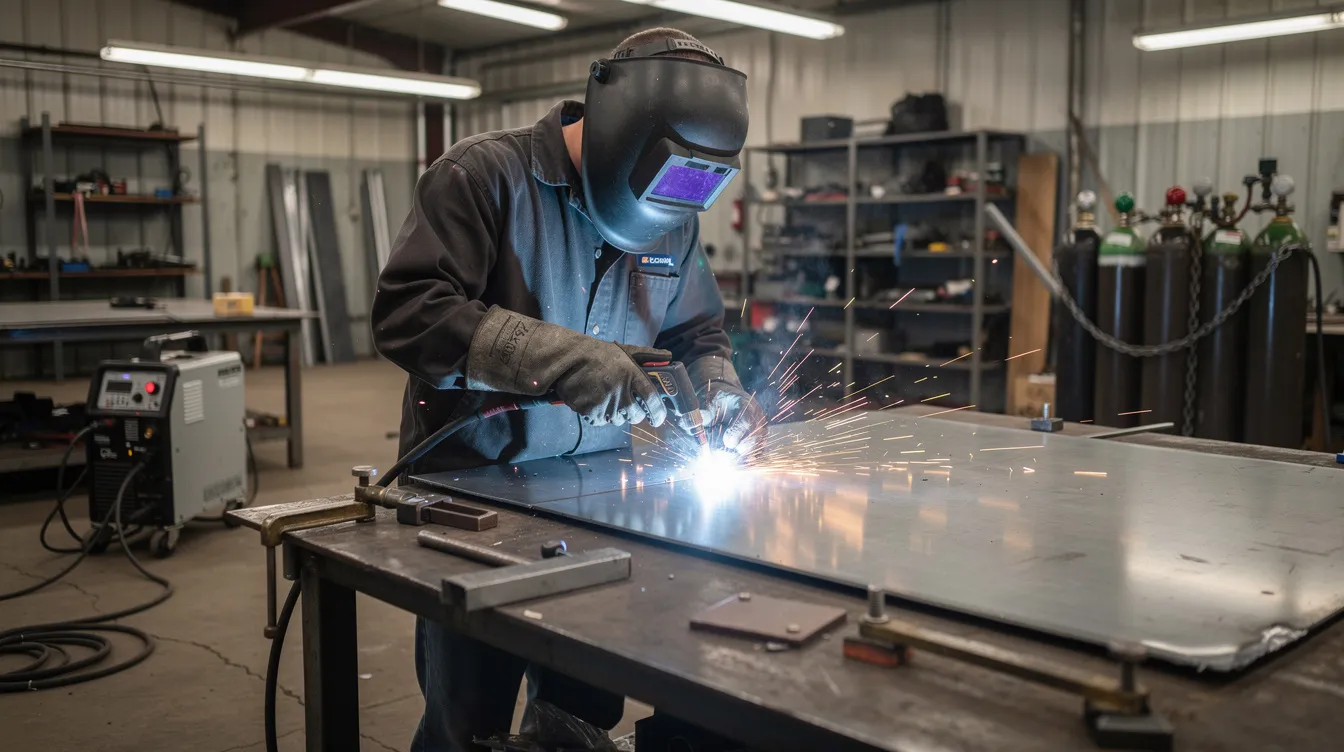
Flux Core vs MIG with Shielding Gas
Flux core wire contains flux inside the wire itself, generating its own shielding gases as it burns. This eliminates the need for an external gas bottle – handy outdoors or in windy conditions. Flux-cored arc welding is used for outdoor sheet metal fabrication where gas shielding is impractical.
But for auto body panels and thin sheet metal, the differences matter:
-
Flux-core welding is dirtier than MIG welding with gas – more smoke, more spatter, more slag to grind off
-
Higher heat input makes burn-through and warpage more likely on 20–22 gauge steel
-
MIG with gas gives you a cleaner bead, better puddle visibility, and finer control on thin material
-
Some entry-level wire-feed welding machines from harbor freight or similar retailers are flux core only – if you’re focused on bodywork, make sure your machine is gas-capable or accepts a gas kit
-
Anebon uses shielding gas on virtually all production sheet metal fabrication lines for consistent weld quality
Choosing the Right MIG Welder Size & Power (110V vs 220V)
Welder amperage range and input voltage determine what thickness of metal you can weld and how long you can weld it. A 110v MIG welder is suitable for automotive sheet metal in the 22–18 gauge range, and it plugs into a standard household outlet.
-
For auto body work, a 30–140 amp, 120V machine handles door skins, quarter panels, and floor pan patches without needing a special circuit
-
The Forney Easy Weld 140 can weld up to 1/4″ thick, making it a solid entry point; the Hobart Handler 140 is a popular MIG welder model trusted by restorers and hobbyists alike
-
MIG welders typically retail between $450 to $750 for quality units from brands like lincoln, miller, and Hobart
-
A 220v welder can provide up to 250 amps and handle thicker material – frames, suspension brackets, 3/8″ plate – but requires 220–240V shop power
-
MIG welding can provide up to 250 amps with a 60% duty cycle on higher-voltage machines
-
OEM buyers working with Anebon should share their target thickness range so we can match welding capability to part design
Duty Cycle & Productivity Considerations
Duty cycle indicates how long a welder can operate continuously within a 10-minute window. A 30% duty cycle at 90 amps means 3 minutes of welding followed by 7 minutes of cooling. Higher duty cycles allow more welding in a given time, which matters when you’re running long seam welds on large panels.
-
Inexpensive 110-volt welders have shorter duty cycles – fine for tack welds, short stitch welds, and patching, but you’ll need cool-down pauses on longer runs
-
A 220-volt welder can provide a 60% duty cycle at 250 amps, suitable for shops doing continuous fabrication
-
For sheet metal work involving short welds across body panels, a modest duty cycle is usually acceptable – you shouldn’t be running long continuous beads on thin metal anyway
-
Anebon’s production lines use high-duty-cycle MIG and automated systems to maintain throughput for overseas OEM projects
Wire Size, Type & Shielding Gas for Thin Sheet Metal
Wire diameter and gas selection directly affect whether you produce a clean weld or melt through the panel. Choosing the wrong wire size is like using a coat hanger when you need a needle.
-
Use 0.6 mm (.023″) solid wire for 22–24 gauge body panels – thinner wire allows lower amps and finer control
-
Step up to 0.8 mm (.030″) wire for 18–16 gauge structural pieces where you need more deposition
-
The most common shielding gas for MIG is an Argon/CO2 mix – specifically 75% Argon / 25% CO2 (C25) for mild steel auto body work
-
Use 100% Argon for aluminum, and tri-mix or higher argon blends for stainless steel
-
Gas shielding is necessary for clean, spatter-free welds on sheet metal – don’t skip it on cosmetic panels
-
Standard wire type for mild steel: ER70S-6, which tolerates light rust and mill scale
-
DC output is standard and ideal for welding steel and stainless steel on most MIG machines
Spot Welding for Auto Body Sheet Metal
Resistance spot welding uses electrical current to fuse metal sheets together at a single point, producing a weld nugget between overlapping panels. It’s fast with little heat distortion – exactly how the factory assembled your vehicle’s body panels in the first place.
-
A sheet metal spot welder is valuable for restoration work: replicating OEM welds on rocker panels, door skins, and trunk seams without running long beads
-
Spot welding is ideal for automotive sheet metal assembly and lap joints – clean exterior appearance with only a small dimple mark
-
Limitations: only works on overlapping joints, requires access to the other side of the panel, and can’t fill gaps or join butt seams
-
Anebon uses resistance spot welding robots and fixtures for high-volume OEM auto body and appliance panel production
TIG Welding for Precision Sheet Metal Work
TIG welding (GTAW) is the most precise, controllable process for welding thin sheet metal. It uses a non-consumable tungsten electrode and a separate filler rod, giving you total control over the puddle, heat, and bead profile.
-
TIG welding is preferred for high-quality, precise, and clean welds – stainless exhaust tips, aluminum motorcycle tanks, visible custom car seams, medical device housings
-
Produces minimal spatter and the tightest heat-affected zone of any arc process
-
TIG welding is the most difficult type to learn – it demands coordination of torch, filler rod, foot pedal, and travel speed simultaneously
-
Slower than MIG by 3–5× on equivalent joints, with higher machine cost and a steeper learning curve
-
Anebon relies heavily on tig for high-spec OEM parts in aluminum, titanium, and fine-gauge stainless where aesthetics and metallurgical quality are critical
Recommended Welder Specs for Auto Body Restoration
Here’s the sweet spot for a welder for sheet metal in 2026, whether you’re tackling door skins or floor pans:
-
Output range: 30–140A on 120V, with infinite or multi-step voltage and wire feed speed control
-
Wire compatibility: Must run .023″ solid wire for thin panels; also accept .030″ and .035″ for thicker work and flux core wire if needed
-
Gas setup: Built-in gas solenoid, compatible with C25 gas; roll on a regulator and you’re set
-
Duty cycle: A welder with a 20% duty cycle at 140 amps is recommended for hobby and restoration – sufficient for door skins, quarter panels, and floor pan patching
-
Budget accessories: auto-darkening welding helmet, quality ground clamp, extra contact tips, gas regulator
-
Price range: MIG welders typically retail between $450 to $750 for proven models like the hobart handler 140
-
Anebon does not sell welders, but we design and fabricate sheet metal parts to be weld-friendly for OEM customers using similar MIG setups
Welder Quality, Brand Considerations & Chinese vs Western Machines
You’ll find machines from miller, lincoln, Hobart, Forney, and dozens of Chinese brands. Price differences can be dramatic, but what actually matters is performance on thin metal.
-
Focus on stable arc at low amperage – this is where cheap machines often fail and where melting through panels becomes a guess-and-pray situation
-
Check availability of consumables: contact tips, nozzles, drive rolls, gun liners
-
Look for safety certifications and real-world reviews from people who weld 20–16 gauge sheet regularly
-
Many machines, including big-name Western brands, are now assembled in Asia – quality depends on design, QC, and support, not country of assembly
-
Anebon is an experienced Chinese precision manufacturer with ISO 9001:2015 and ISO 14001:2015 certifications, proving that high-quality fabrication from China is absolutely achievable through rigorous quality assurance
Sheet Metal Fabrication vs In-House Welding – When to Outsource
Not every company needs to purchase its own welding equipment. For many OEMs, outsourcing complete welded assemblies is the smarter, more cost-effective path – especially when tolerances are tight, volumes are high, or parts require multiple processes.
-
Outsourcing to a partner like Anebon makes sense for complex CNC-formed parts, multi-process needs (MIG, TIG, spot welding, riveting, hardware insertion), and consistent production quality
-
Anebon delivers fully welded, ready-to-assemble body panels, brackets, and enclosures – from laser cutting through final surface treatment
-
Design engineers should involve Anebon early for DFM feedback on joint design, flange widths, and material selection to simplify welding and reduce weight and cost
Practical Welding Tips to Avoid Warping Thin Panels
The best machine in the world won’t save you from bad technique. When you weld sheet metal, especially thin panels on a vehicle, how you manage heat is everything.
-
Use short stitch welds (skip weld pattern) instead of long continuous beads – weld a bit, move to the other side of the panel, weld another bit, let things cool
-
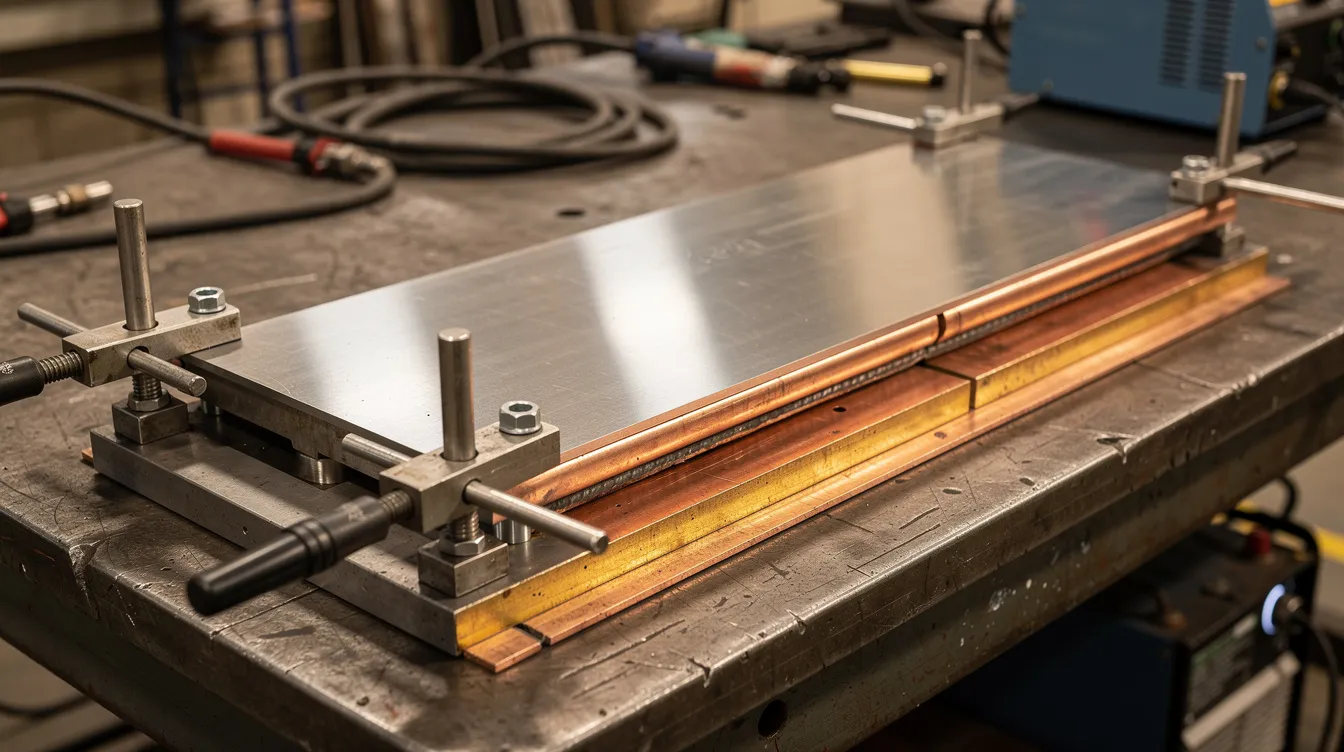
Clamp panels firmly to a fixture, backing bar, or the vehicle structure to resist movement as the metal contracts
-
Place copper backing bars or heat sinks behind the weld joint to pull heat away and reduce warpage
-
Start with lower voltage and wire speed on test coupons of the same gauge – practice on scrap before touching the actual panel or finished part
-
Grind welds using flap discs rather than hard grinding wheels to avoid thinning the surrounding sheet and overheating the paint-ready surface
-
After grinding flush, check for flatness – flattening sheet metal after welding is possible, but preventing distortion is always the better way
-
Anebon’s welders follow strict process parameters and fixturing protocols to control distortion on large OEM sheet metal assemblies
How Anebon Supports OEMs with Weld-Ready Sheet Metal Parts
Anebon Metal Products Limited, founded in 2010 in Dongguan, China, serves overseas OEMs across automotive, electronics, medical, and robotics sectors with precision sheet metal fabrication and CNC machining.
-
Services: CNC laser cutting, CNC punching, press brake forming, welding (MIG, TIG, spot), CNC machining of mating components, and surface treatments including powder coating, anodizing, and plating
-
DFM support: We optimize flange lengths, hole locations, and joint design to suit your MIG welding, robotic welding, or bolted-assembly production lines – reducing post-weld rework and scrap
-
Certified quality: ISO 9001:2015 and ISO 14001:2015, full material traceability, and tolerances as tight as ±0.002 mm on machined features
-
How to get started: Engineers and buyers can send CAD files and welding requirements to Anebon for a fast quotation – from rapid prototypes through to full-scale production runs
Whether you’re dialing in your own mig weld settings in a home garage or designing welded assemblies for volume production, matching the right process and machine to your material thickness is what separates clean, professional results from frustration. If your project calls for outsourced precision, share your requirements with Anebon – we’ll handle the tools, the welding, and the quality control so you can focus on your product.