Choosing the Best Machining Vendor for Your Custom Manufacturing Needs
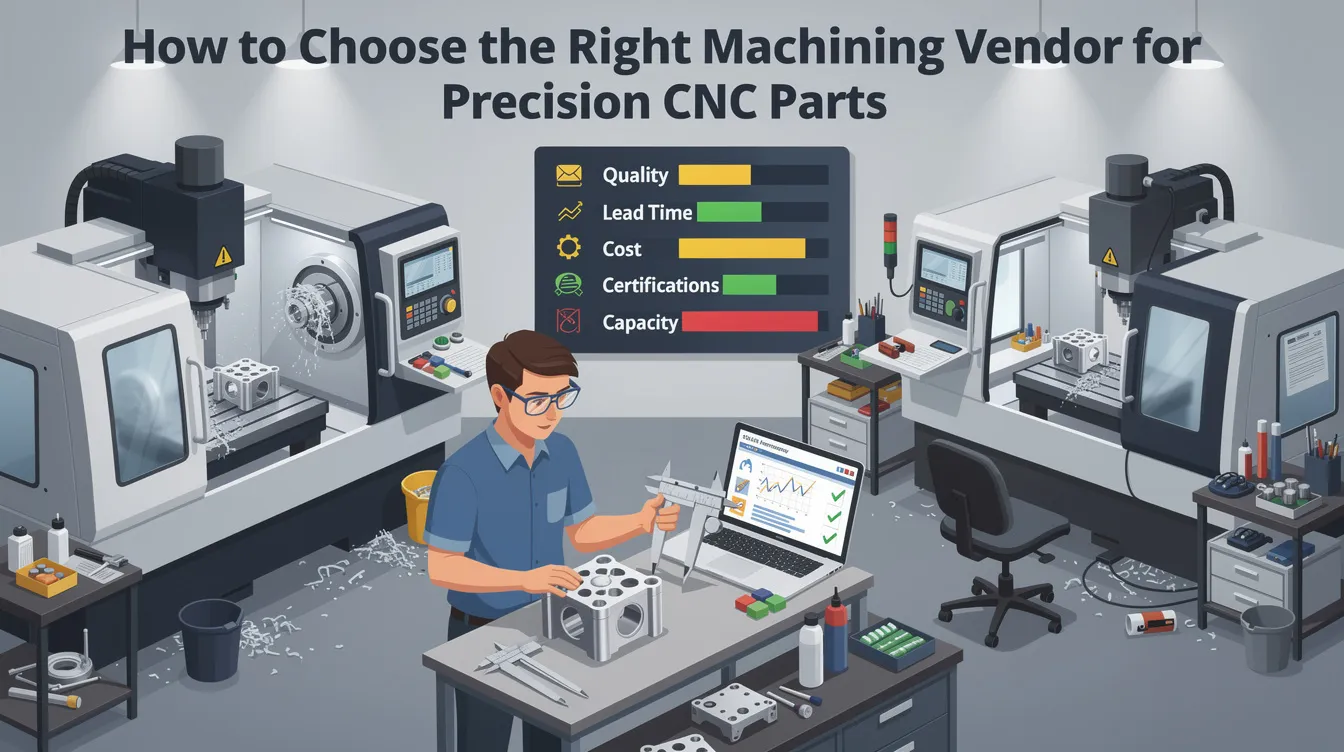
How to Choose the Right Machining Vendor for Precision CNC Parts
Introduction: Choosing a Machining Vendor in 2026
If you’re sourcing aerospace brackets, EV battery cooling plates, medical instrument housings, or robotic arm joints, the machining vendor you select will shape the quality, cost, and timeline of every production run you commit to. This isn’t a decision you make by sorting a spreadsheet by lowest unit price.
The global CNC machining and machine shop services sector is on track to surpass $150 billion by 2026, with the U.S. CNC machining services market alone valued at $46.3 billion. That growth is fueled by industries demanding tighter tolerances, more complex geometries, and faster turnaround-from precision CNC machined parts for medical devices to custom CNC machining of lightweight aluminum alloys for electric vehicles. Sheet metal fabrication, die casting, and advanced surface treatments are increasingly bundled into the same vendor relationship.
This article is built for OEMs, design engineers, and R&D teams who need a reliable sourcing strategy-not just a list of shops. Throughout, we use Anebon Metal Products Limited (founded 2010 in Dongguan, China) as a concrete example of a precision CNC machining vendor serving overseas clients, so you can see how evaluation criteria translate to a real supplier.
What you will learn:
-
How to define what a machining vendor actually does and what core capabilities to look for
-
Which triggers signal you need a precision machining partner vs. alternative manufacturing solutions
-
How to read tolerances, surface finishes, and material specs realistically
-
What drives cost and lead time, and how to control both
-
How to vet certifications, quality systems, and communication practices
-
How to evaluate overseas vendors and build long-term partnerships
What Is a Machining Vendor? (And How They Differ from Machine Builders)
A machining vendor is a contract manufacturer that produces CNC parts to your specifications. They operate CNC machines-mills, lathes, multi-axis centers-along with inspection equipment like coordinate measuring machines (CMMs) and optical systems. Their output is finished production parts or prototypes, delivered per your drawings.
CNC machining uses multi-axis equipment for complex geometries, and machining vendors perform the full range: precision CNC machining, CNC milling, CNC turning, 5-axis machining, and often secondary processes like sheet metal fabrication and die casting.
This is distinct from CNC machine builders:
-
Haas Automation designs and manufactures vertical and horizontal machining centers
-
Mazak and DMG MORI build multi-axis CNC lathes, mill-turn centers, and automation systems
-
These companies sell the tools. They don’t produce your custom parts
This article focuses entirely on how to choose and work with a machining vendor-the company cutting your metal parts-not on how to buy CNC equipment.
When You Actually Need a Precision CNC Machining Vendor
Not every part requires a dedicated machining service. Here are specific triggers that indicate you should be talking to a vendor:
-
You’re developing a prototype aluminum 6061 housing with internal cavities, thin walls, and features that no off-the-shelf enclosure can match
-
You need to ramp up 1,000–10,000 units per year of a stainless steel medical device handle with sealing surfaces requiring tight tolerances
-
You’re redesigning an aerospace bracket in 7075-T6 where weight, fatigue performance, and certification compliance are non-negotiable
Typical use cases span a wide range:
-
Rapid prototyping – rapid prototyping supports design iterations and faster product development, allowing teams to test designs before full production. Parts can be produced in as fast as one day, which is essential for industries like aerospace and medical devices
-
Bridge production (10–1,000 pcs) – small-batch runs for MVPs or niche markets where repeatable quality matters
-
Full OEM production machining – CNC machining can handle production runs of tens of thousands of parts with process consistency
-
Legacy parts replacement – matching older specs for industrial equipment repair or defense industries
CNC machining is widely used in aerospace applications. Medical devices often utilize CNC machining for precision parts. Automotive components frequently require CNC machining for production. CNC machining is essential for producing electronic device components. Robotics applications often depend on CNC machined parts for precision.
Why not 3D printing or off-the-shelf? Additive manufacturing may fall short on material properties, surface finish, or the tight tolerances needed for mission critical components. Standard catalog parts lack geometry, material, or design freedom.
Core Capabilities Your Machining Vendor Should Offer
Before shortlisting vendors, define the capabilities your project actually requires:
-
Precision CNC milling – 3-axis through 5-axis machining for prismatic and contoured features
-
CNC turning – conventional lathes, live tooling, and mill-turn centers for shafts, fittings, and cylindrical parts
-
Secondary operations – wire EDM, grinding, reaming, tapping, heat treatment
-
Surface finishing – CNC machining offers over 13 finishing options including anodizing, powder coating, plating, passivation, and polishing
-
Sheet metal fabrication – laser cutting, bending, welding, stamping
-
Die casting + post-machining integration for higher production volumes
Anebon’s service mix illustrates what a full-service vendor looks like: they combine precision CNC machining, die casting, and sheet metal fabrication under one roof, which simplifies project coordination for overseas OEMs.
Multi-axis capability matters because parts like impellers, medical implants, and thin-walled housings require fewer setups, reduced datum shifts, and better surface finish when machined on 4- or 5-axis centers. A vendor limited to 3-axis work will need multiple fixtures and re-clamping, introducing cumulative error.
Your machining vendor should also handle a range of CNC machining materials-metals such as aluminum alloys, stainless steel, titanium, carbon steel, brass, and copper, as well as engineering plastics like ABS, PEEK, nylon, and polycarbonate for diverse CNC machining applications across various industries.
Understanding CNC Machines and Processes at Your Vendor
Understanding what sits on a vendor’s shop floor helps you judge their capacity and match it to your project. Here’s what to look for:
Typical equipment at a well-equipped CNC shop:
-
3-axis vertical mills – workhorse machines for flat surfaces, pockets, and slots
-
5-axis machining centers – enable tool access from virtually any angle, critical for complex geometries like turbine blades or contoured medical components
-
CNC lathes with live tooling – combine turning with milling operations in a single setup (e.g., a valve body with both cylindrical and flat features)
-
Swiss-type lathes – specialized for small, high length-to-diameter parts like pins and electrical components
-
Wire EDM and surface grinders – for ultra-fine features and finishing operations
CNC milling vs. CNC turning in practice:
CNC milling removes material by rotating cutters against the workpiece-ideal for heat sinks, housings, and brackets. CNC turning rotates the workpiece against a stationary tool-used for shafts, bushings, and cylindrical production parts. Mill-turn centers combine both in one machining process, reducing handling and improving accuracy.
What to ask your vendor:
-
How many CNC machines do you operate, and what brands/models?
-
What is the maximum work envelope (part size) you can accommodate?
-
Do you have 5-axis capability, and what percentage of your work uses it?
-
What spindle speeds and tool-changer capacities are available?
A high number of modern machines implies capacity and flexibility. Older machines can still produce quality parts but may have slower cycle times, affecting your lead time on larger runs.
Precision Levels and Tolerances: Matching Vendor Capability to Your Needs
Precision machining means holding dimensions within specified tolerances consistently across a production run. But “precision” covers a wide spectrum:
-
General machining: ±0.05 mm to ±0.25 mm – suitable for brackets, covers, and non-critical features
-
Precision CNC machining: ±0.01 mm to ±0.02 mm – required for functional mating interfaces, bearing fits, and fastener holes
-
Ultra-precision: ±0.005 mm or tighter – demanded by medical devices, optics mounts, and aerospace critical features
CNC machining can achieve precision tolerances as low as ±0.001 inches, and in some specialized cases, CNC machining tolerances can be as tight as ±0.0001 inches. Anebon, for example, holds tolerances as tight as ±0.002 mm on critical features, with standard capabilities around ±0.01 mm for most geometries.
What affects achievable tolerance:
-
Material choice – titanium machines differently than aluminum; plastics can distort post-machining
-
Part size – large parts flex more; long shafts may deflect
-
Fixture rigidity – poor workholding introduces vibration and dimensional drift
-
Surface finish requirements – achieving Ra 0.4 µm on a sealing surface is a different machining process than hitting Ra 3.2 µm as machined
Share GD&T drawings and critical-to-function dimensions with your machining vendor during the RFQ. This prevents misalignment on what’s achievable and what’s going to cost extra.
Key tolerance questions to ask:
-
What is your standard tolerance for metal parts vs. plastics?
-
Can you hold ±0.005 mm or tighter? On what features and materials?
-
How do you verify dimensions-CMM, optical, or gauges?
-
Do you have environmental controls (temperature-stable shop floor)?
Materials: Can Your Vendor Machine What You Actually Use?
Your machining vendor’s material experience directly impacts part quality, tool life, and cost. Here’s what to verify:
Common metals:
-
Aluminum alloys like 6061 and 7075 are commonly used – 6061 for general-purpose housings and brackets, 7075 for high-strength aerospace and defense industries applications
-
Stainless steel (304, 316L, 17-4 PH) – for medical, food processing, and corrosion resistant environments
-
Carbon steel and steel alloy grades – for industrial equipment, fixtures, and structural parts
-
Titanium is lightweight and highly resistant to corrosion – ideal for medical implants and aerospace components, with low density and high stiffness
-
Copper has unmatched thermal and electrical conductivity – essential for heat sinks and electrical components
-
Brass – valued for low friction, wear resistance, and excellent machinability
Engineering plastics:
-
ABS is widely used for pre-production prototypes and consumer electronics housings
-
POM/Delrin – excellent wear resistance, low friction, dimensional stability
-
Nylon (PA) is known for its high strength and wear resistance, with low moisture absorption compared to many engineering plastics
-
PEEK is suitable for high-temperature applications and offers excellent chemical resistance
-
Polycarbonate (PC) – impact resistance and optical clarity for lenses and guards
-
PVC (polyvinyl chloride) – chemical resistance and electrical insulation for harsh environments
-
HDPE (high density polyethylene) – UV resistance, low density, and excellent chemical resistance for outdoor and food processing applications
-
Epoxy resin composites – an excellent electrical insulator for specialized electrical components
Rapid prototyping can utilize over 50 materials for diverse applications, and vendors like Anebon maintain capabilities across this full spectrum of CNC machining materials.
Exotic alloys and high-performance plastics (Inconel, Hastelloy, ULTEM) impose greater tooling wear, require specialized coolant strategies, and often slower cutting speeds-sometimes requiring wire EDM or grinding. Expect longer lead times and higher per-unit costs.
Request your vendor’s material capabilities list. Ask for recent project examples using the same alloy, temper, and heat treatment specification you need.
Surface Finishes and Coatings from Your Machining Vendor
Surface treatments affect function, durability, and appearance. A capable machining vendor should offer or coordinate the following:
|
Finish |
Application |
Key Benefit |
|---|---|---|
|
As machined |
Internal features, non-cosmetic |
Fastest, lowest cost |
|
Media blasting (bead blast) |
Uniform matte texture |
Media blasting is used to improve surface finish quality |
|
Anodizing (Type II/III) |
Aluminum drone frames, EV housings |
Anodizing creates a corrosion-resistant finish on aluminum; excellent corrosion resistance |
|
Hard anodize |
Wear surfaces, sliding interfaces |
Excellent wear resistance and hardness |
|
Powder coating |
Steel enclosures, outdoor electronics |
Powder coating provides a durable layer on parts |
|
Chem film (Alodine) |
Aerospace aluminum, electrical conductivity preservation |
Corrosion resistance without affecting conductivity |
|
Passivation |
316L stainless for medical, food processing |
Removes free iron, improves corrosion resistance |
|
Zinc plating |
Carbon steel fasteners and housings |
Cost-effective corrosion protection for harsh environments |
|
Electroless nickel plating |
Uniform thickness on complex shapes |
Wear and corrosion protection |
|
Electropolishing |
Stainless steel medical instruments |
Electropolishing enhances the surface finish of stainless steel |
|
Polishing/brushing |
Consumer electronics, visible faces |
Cosmetic finish for high-visibility surfaces |
|
Laser marking |
Part identification, traceability |
Permanent marking without material removal |
Ra (surface roughness) standards to specify:
-
As machined: ~Ra 3.2 µm
-
Functional mating surfaces: Ra 1.6 µm or finer
-
Sealing or optical surfaces: Ra 0.4 µm or smoother
It’s preferable when the machining vendor manages finishing in-house or through vetted partners under one purchase order. This reduces finger-pointing on quality and ensures masking, thickness control, and dimensional compliance stay coordinated.
Define which surfaces are cosmetic vs. functional early. Specify Ra values, coating thickness, and color requirements in your technical drawings before the RFQ goes out.
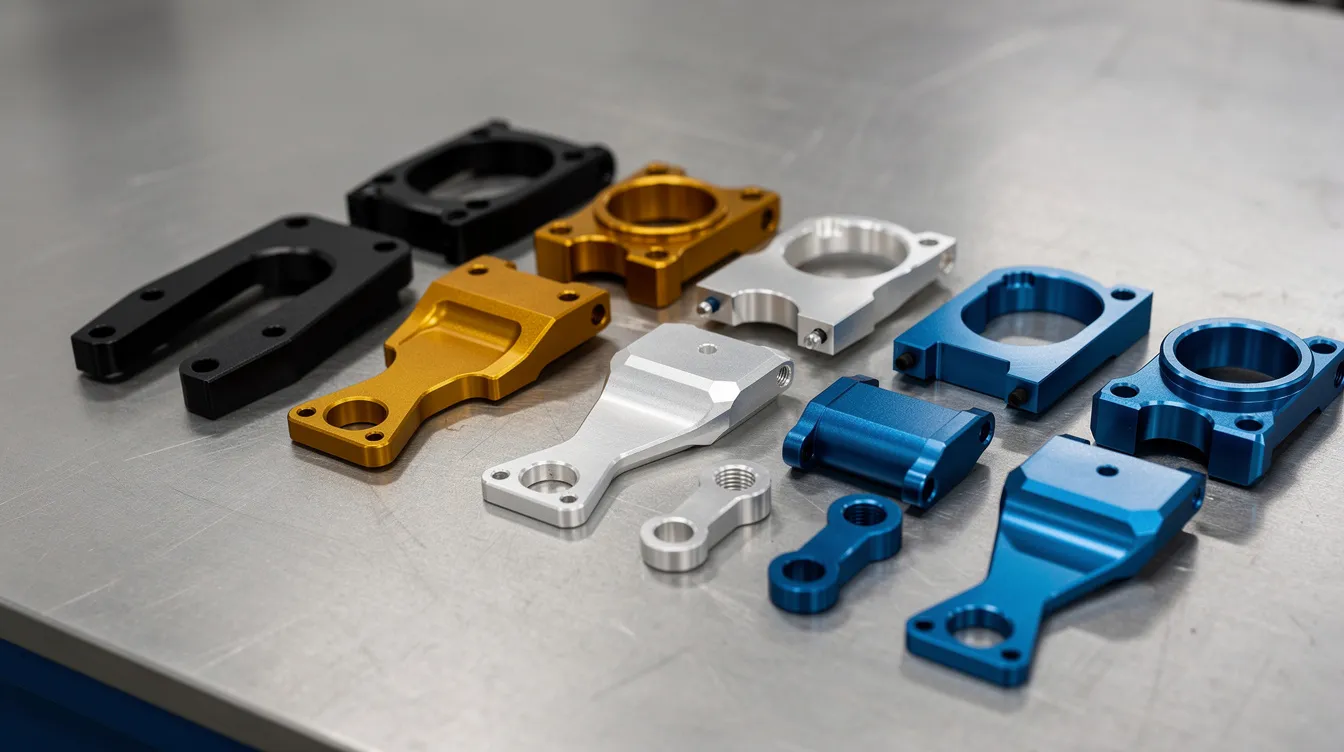
From Prototype to Production: Evaluating Scalability
Working with a machining vendor that supports the full lifecycle-from rapid prototyping to scaled production-eliminates the costly transition between suppliers.
CNC machining services can produce parts in as fast as one day for urgent prototypes. Rapid prototyping allows for testing designs before full production, saving tooling investment on unproven geometries. But the real test is whether that same vendor can maintain quality when production volumes scale from 15 prototypes to 8,000 units per year.
Scalability is important for managing production volume fluctuations. Here’s what to verify:
-
Machine capacity – enough CNC machines to run multiple shifts without bottlenecking your orders
-
Fixture standardization – documented setups that can be repeated without re-engineering for each batch
-
Process control – statistical process control (SPC), capability indices (Cpk), and documented work instructions
-
Inspection infrastructure – CMM, optical metrology, and sampling plans that scale with batch size
-
Creating fixtures for repeat production that reduce per-unit setup time as volumes grow
Anebon demonstrates this progression: prototype first articles delivered in approximately 5–10 business days, then scaling to validated production runs using the same equipment and documented processes.
Avoid changing vendors between prototype and production if possible. Each transition requires re-qualification, new DFM cycles, and introduces risk to dimensional consistency.
Certifications and Quality Systems Your Machining Vendor Should Have
Regulatory compliance is essential for specific industries like aerospace and medical. Certifications tell you a vendor has been independently audited against recognized standards.
Baseline certifications:
-
ISO 9001 is a baseline certification for CNC machining companies – it confirms a quality management system is in place. Fictiv is ISO 9001:2015 certified. Protolabs is ISO 9001 and AS9100 certified
-
ISO 14001:2015 – environmental management, showing the vendor controls waste, emissions, and chemical handling
-
Anebon Metal Products Limited holds both ISO 9001:2015 and ISO 14001:2015
Industry-specific certifications:
-
AS9100 certification is essential for aerospace CNC machining – covers traceability, risk management, and configuration control for the aerospace industry
-
IATF 16949 certification is required for automotive CNC machining – addresses automotive parts production requirements
-
ISO 13485 – medical industries quality management. Xometry holds ISO 13485 certification for medical devices
Quality practices to verify:
-
Quality control systems incorporate methods like First Article Inspection (FAI) – ensures first production parts meet all drawing specs before batch runs begin
-
Material certifications verify the quality and origin of manufacturing materials
-
Material traceability ensures consistent quality in manufacturing – critical for regulated industries
-
In-process inspection with documented checkpoints
-
Final inspection using calibrated CMM and optical equipment
-
Nonconformance reporting and corrective action processes
During evaluation, request copies of quality certifications, calibration records, and a sample CMM inspection report for a part with tolerances similar to yours.
Design for Manufacturability (DFM) Support from Your Vendor
DFM feedback helps optimize product designs for manufacturability. A vendor with experienced machinists and engineers can flag costly or risky features before you commit to tooling.
Common DFM improvements:
-
Increasing wall thickness from 0.5 mm to 0.8 mm on aluminum CNC parts to prevent deflection during machining
-
Changing sharp internal corners to fillets (e.g., R0.5 mm minimum) to match standard cutter geometries
-
Reducing pocket depth-to-width ratios to avoid long, vibration-prone tool extensions
-
Consolidating features to minimize the number of setups and fixture changes
-
Recommending material substitutions that maintain performance while reducing cycle time
Engineers should review designs before providing production quotes. Vendors like Anebon review 3D CAD models and technical drawings at the quote stage, suggest modifications, and flag features that will drive up cost or lead time unnecessarily.
Best practices for getting useful DFM feedback:
-
Send STEP or Parasolid files along with detailed 2D drawings
-
Clearly mark critical-to-function dimensions and datum references
-
Ask specifically: “What would you change to reduce cost without affecting function?”
-
Integrate DFM review into your sourcing workflow before final design freeze
Cost Drivers When Working with a Machining Vendor
Understanding what drives cost helps you make design and sourcing decisions that keep budgets under control.
Primary cost elements:
|
Cost Driver |
Impact |
|---|---|
|
Setup time |
Fixture design, machine setup – fixed per batch, amortized across units |
|
Cycle time |
Machine time per part – the biggest variable in unit cost |
|
Material |
Raw stock cost, waste ratio (buy-to-fly ratio for aerospace) |
|
Tooling |
Cutting tools, inserts – exotic materials wear tools faster |
|
Inspection |
CMM time, sampling vs. 100% inspection for custom parts |
|
Finishing |
Anodizing, plating, powder coating – each adds process steps |
Why small batches cost more: A run of 20–50 parts spreads the same setup cost over few units, resulting in significantly higher per-piece pricing than a 5,000-piece order using the same fixture.
High-cost features to watch:
-
5-axis machining operations on complex geometries
-
Tight tolerances below ±0.005 mm requiring specialized process control
-
Hard-to-machine materials like titanium, Inconel, or PEEK
-
Deep pockets with high aspect ratios
-
Cosmetic finishes on non-functional surfaces
Practical levers to reduce cost:
-
Relax tolerances on non-functional features
-
Use standard aluminum alloys or stainless steel grades when exotic materials aren’t required
-
Group orders to maximize batch sizes
-
Minimize unnecessary cosmetic requirements
-
Design parts for simple fixturing
The total cost of ownership includes both direct and indirect costs of manufacturing-shipping, inspection at receipt, rework, and communication overhead all factor in. Advertising low prices often indicates hidden costs or inadequate inspection practices, so evaluate the full picture.
Manufacturing capabilities need to match the specific project requirements. Don’t pay for 5-axis precision CNC when 3-axis work will do, and don’t squeeze a 5-axis part onto a 3-axis machine to save hourly rate.
Lead Times, Logistics, and Working with Overseas Machining Vendors
Typical lead time ranges:
-
Prototypes: 5–10 working days for simpler CNC parts; CNC machining services can produce parts in as fast as one day for urgent single-piece needs
-
Standard production batches: 2–5 weeks depending on complexity, production volumes, finishing, and inspection scope
-
Complex assemblies with finishing: 4–6 weeks including heat treatment, surface treatment, and quality documentation
Total lead time breakdown:
-
RFQ response – often 24 hours to a few days
-
DFM iteration – 1–3 days for feedback cycles
-
Machining – varies by complexity and batch size
-
Finishing and coating – 2–5 days
-
Inspection and documentation – 1–3 days
-
Transit – domestic shipping (1–5 days), air freight from China (~5–7 days), sea freight (~20–30 days)
When sourcing from overseas vendors like Anebon in Dongguan, China:
-
Factor in customs clearance, import duties, and Incoterms (FOB, CIF, DDP)
-
Air freight is fast but expensive; sea freight saves cost but adds 3–4 weeks
-
Ensure export documentation, material certificates, and trade compliance (REACH, RoHS) are addressed upfront
Mitigation strategies:
-
Maintain safety stock of critical production parts
-
Use blanket orders with scheduled releases to lock pricing and capacity
-
Order in larger batches to amortize shipping costs
-
Keep a qualified local backup vendor for emergency runs
-
Align on clear milestones and shipping windows with your overseas machining service provider
Evaluating Communication, Project Management, and Technical Support
Communication responsiveness is key for successful vendor partnerships-especially across time zones. A technically capable CNC shop that takes a week to respond to emails will cost you more in project delays than a slightly less-equipped vendor who communicates clearly and consistently.
Signs of strong communication:
-
Detailed RFQ responses that include clarifying questions about tolerances, materials, and finishes
-
Structured DFM feedback with marked-up drawings or annotated 3D models
-
Weekly or milestone-based status updates during machining and inspection
-
Transparent handling of nonconformances – proactive notification, not buried in the inspection report
What to look for in project management:
-
A dedicated account engineer or project manager assigned to your work
-
Version control for drawings and change orders
-
Agreed metrics for performance: on-time delivery rates (OTIF) and defect rates (PPM)
-
Use of standard file formats (STEP, Parasolid, PDF drawings)
Test responsiveness during the quoting phase. If a vendor takes five days to acknowledge your RFQ, that pace won’t improve once they have your order.
On-time delivery rates are critical for evaluating machining vendors over time. Track them from your first pilot order and make them part of your vendor scorecard.
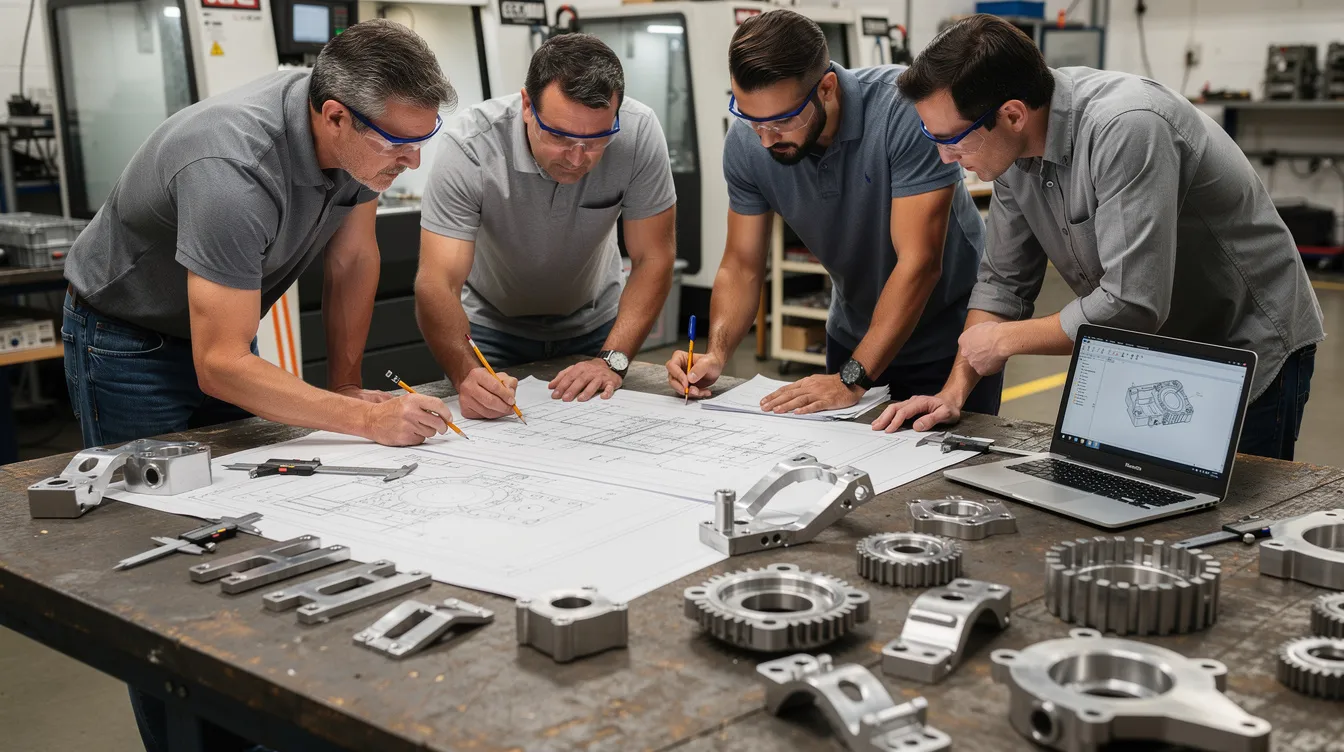
Case-Style Examples of Machining Vendor Applications
Medical Startup: Stainless Steel Diagnostic Device Housing
A diagnostics company needed 50 prototype housings in 316L stainless steel, scaling to 1,000 production units. Sealing faces required Ra 0.4 µm surface finish. Full material traceability was mandatory for regulatory compliance.
The machining vendor delivered first articles in approximately 8 working days, with passivation finishing for corrosion resistance in sterilized environments. Multiple design revisions extended the timeline by two weeks.
Lessons learned:
-
Sealing surfaces demand higher-grade finishing-specify early
-
Material traceability for medical industries adds documentation overhead
-
Budget time for design revisions in the prototype phase
EV Battery Cooling Plate: Aluminum with Internal Channels
An EV startup required aluminum battery cooling plates with tight fin geometries and internal coolant passages. The initial approach was to machine from solid billet, which wasted significant material.
The machining vendor suggested using machined extrusions instead, cutting approximately 40% of material waste and reducing cycle time by 25%. The project scaled from prototypes to 2,000–8,000 units annually. This exemplifies how DFM feedback from experienced vendors directly impacts cost and sustainability.
Lessons learned:
-
DFM can fundamentally change the manufacturing process and reduce cost
-
Scaling brings opportunities to optimize material form (billet vs. extrusion vs. casting)
-
High temperature performance requirements for cooling plates demand careful alloy selection
Robotics OEM: 5-Axis Aluminum Joint
A European robotics company needed a complex arm joint in aluminum, starting with 15 prototype units machined on 5-axis centers, then scaling to approximately 8,000 units per year. Tolerances of ±0.01 mm on bearing interfaces were held consistently from prototype through production.
The vendor used DFM iterations to streamline tool access and reduce the number of setups. Custom 5-axis machining was essential for the contoured geometry, which would have required four separate fixtures on a 3-axis machine.
Lessons learned:
-
5-axis machining reduces fixture count and cumulative error
-
Maintaining the same vendor from prototype to production preserves process knowledge
-
Document fixture setups early so scaling doesn’t require re-engineering
Risk Management: Quality, IP Protection, and Compliance
Every machining vendor relationship carries risk. The goal is to identify and control it before it becomes a production problem.
Common risks:
-
Dimensional nonconformance – parts outside tolerance cause assembly failures or field returns
-
Material substitution – wrong alloy or incorrect heat treatment undermines performance
-
Delivery delays – missed ship dates cascade through your production schedule
-
IP leakage – sending CAD files for custom CNC parts to external vendors creates exposure
Controls to implement:
-
First Article Inspection (FAI) and PPAP for mission critical components before releasing to full production
-
Incoming inspection at your facility for initial batches until confidence is established
-
Regular vendor audits – on-site or remote – with documented findings
-
Long-term quality metrics: PPM defect rates, on-time delivery percentages, corrective action close rates
IP protection measures:
-
Execute NDAs before sharing any CAD data
-
Use secure file transfer systems rather than open email
-
Limit proprietary feature details in early-stage drawings
-
Consider serialization or marking for traceability
Compliance considerations:
-
Verify ISO 14001 environmental compliance for chemical processes like anodizing and plating
-
Confirm RoHS and REACH compliance for consumer electronics and automotive parts
-
Ensure conflict minerals policies are in place for regulated supply chains
-
Check that finishing processes meet applicable environmental and safety regulations
How Anebon Metal Products Limited Fits as a Machining Vendor
Anebon Metal Products Limited provides a concrete reference point against the selection criteria discussed throughout this article:
-
Founded: 2010, Dongguan, Guangdong, China – focused on B2B/OEM precision manufacturing for overseas clients
-
Certifications: ISO 9001:2015 (quality management) and ISO 14001:2015 (environmental management)
-
Core CNC services: Precision CNC milling, CNC turning, 5-axis machining, wire EDM, grinding – from rapid prototyping through full-scale production
-
Additional manufacturing solutions: Die casting (aluminum and zinc), sheet metal fabrication (laser cutting, bending, welding, stamping)
-
Materials: Over 50 industrial-grade metals and plastics including aluminum (6061, 7075), stainless steel (304, 316L, 17-4 PH), titanium, brass, copper, PEEK, POM, nylon, and polycarbonate
-
Tolerances: As tight as ±0.002 mm on critical features; standard tolerances of ±0.01 mm or ±0.005 mm depending on geometry
-
Surface treatments: Anodizing (Type II/III), powder coating, plating, bead blasting, polishing, brushing, laser marking – managed in-house or through vetted partners
-
Lead times: Prototype/first articles in approximately 5–10 business days; production batches with validated fixtures and documented process control
-
DFM support: Reviews CAD models and technical drawings at quote stage, provides design optimization feedback before cutting material
-
Industries served: Aerospace, automotive, medical devices, electronics, robotics, and industrial machinery
Anebon represents the consolidated vendor model-cutting edge technology in CNC machining combined with die casting and sheet metal under one operation-that reduces coordination overhead and lead time for overseas OEM programs.
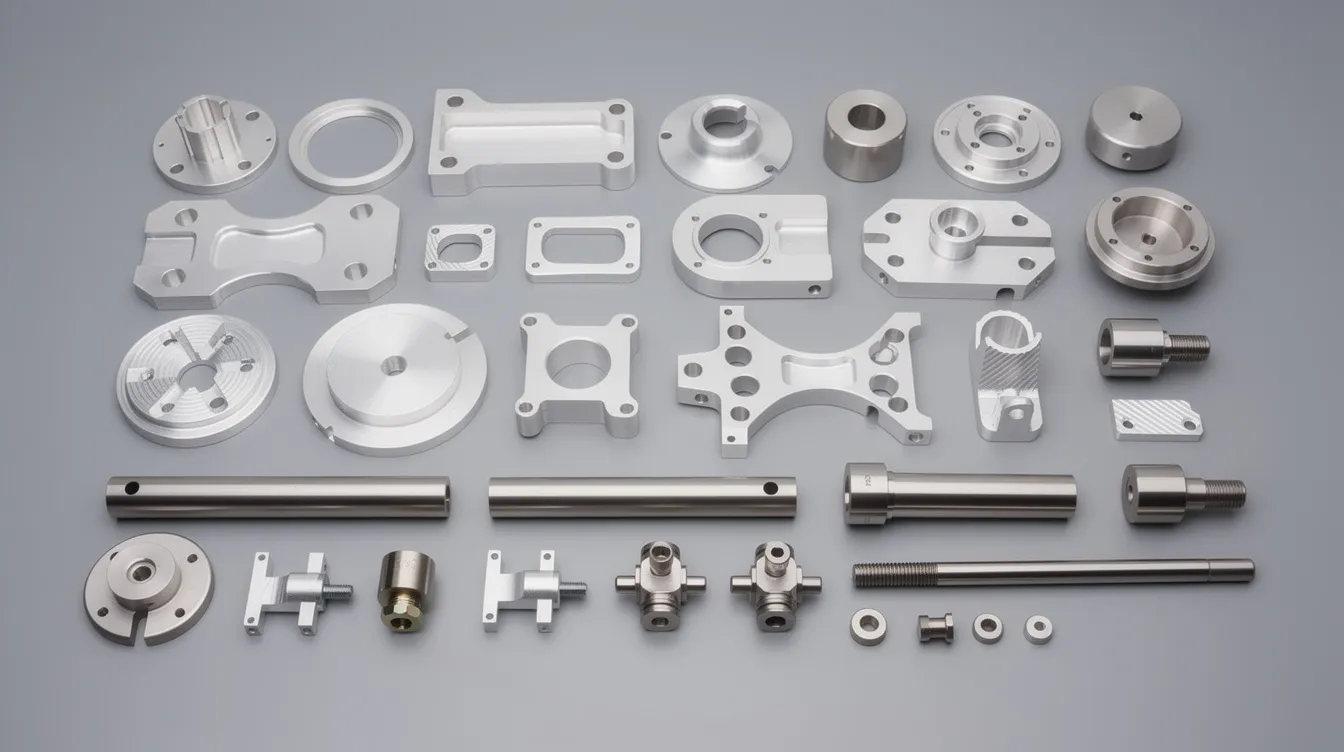
Step-by-Step Checklist for Selecting Your Machining Vendor
A structured vendor evaluation scorecard helps in comparing suppliers objectively. Use this checklist as a practical starting point:
-
Define your requirements clearly – material, tolerance, surface finish, batch size, target lead time, and applicable regulatory standards. Document critical-to-function features in your technical drawings
-
Shortlist 3–5 vendors – based on manufacturing capabilities, certifications, material experience, and geographic fit. Verify that capabilities match your specific project requirements
-
Verify certifications – confirm ISO 9001 at minimum. Check AS9100, IATF 16949, or ISO 13485 if your application demands it. Request current copies, not expired certificates
-
Review machine list and capacity – ask for the number and type of CNC machines, brands, axis count, and work envelope sizes. Assess whether they can absorb your production volumes alongside existing customers
-
Request DFM feedback on your actual part – send STEP files and 2D drawings. Evaluate the quality and specificity of their design review comments. Good DFM separates fabrication shop quoters from engineering partners
-
Compare quotes on total cost of ownership – not just unit price. Factor in shipping, inspection rigor, communication time, rework risk, and finishing costs. Weigh quality certifications and process control against price alone
-
Request sample inspection reports – ask for recent CMM inspection reports on a part similar to your geometry and tolerance level. Review how they document measurements and handle out-of-spec findings
-
Run a pilot order – start with a small yet representative production lot (10–50 pieces) to validate dimensional accuracy, surface finish, packaging, and communication. Track on-time delivery rates from this first order
-
Evaluate communication quality – assess response time, English proficiency, documentation clarity, and willingness to ask clarifying questions during the pilot phase
-
Lock down quality agreements – before committing to long-term contracts, formalize inspection criteria, nonconformance procedures, IP protections (NDA), and delivery performance expectations
Encourage your sourcing team to weight total cost of ownership-quality, lead-time reliability, communication, and flexibility-over unit price alone.
Conclusion: Building Long-Term Partnerships with Machining Vendors
The right machining vendor isn’t simply the cheapest quote in your inbox. It’s the one whose precision CNC machining capability, quality certifications, production capacity, and communication practices align with your actual CNC machining applications-whether that’s injection molding inserts, aerospace brackets, or robotic joint assemblies.
The value of a strong machining vendor relationship compounds over time. A vendor who understands your materials, tolerances, and design intent from prototype through production eliminates re-qualification cycles, reduces scrap, and shortens your overall lead time. That’s the difference between a transactional supplier and a strategic partner.
Consider Anebon Metal Products Limited as an example of a precision machining vendor purpose-built for overseas OEM projects-offering custom CNC machining, die casting, and sheet metal fabrication with the certifications, DFM support, and material range to serve aerospace, medical, automotive, robotics, and electronics customers from a single source. Move from one-off RFQs toward systematic vendor evaluation, and build partnerships that scale with your business.