Choosing Between Hot Rolled or Cold Rolled Steel: A Quick Guide
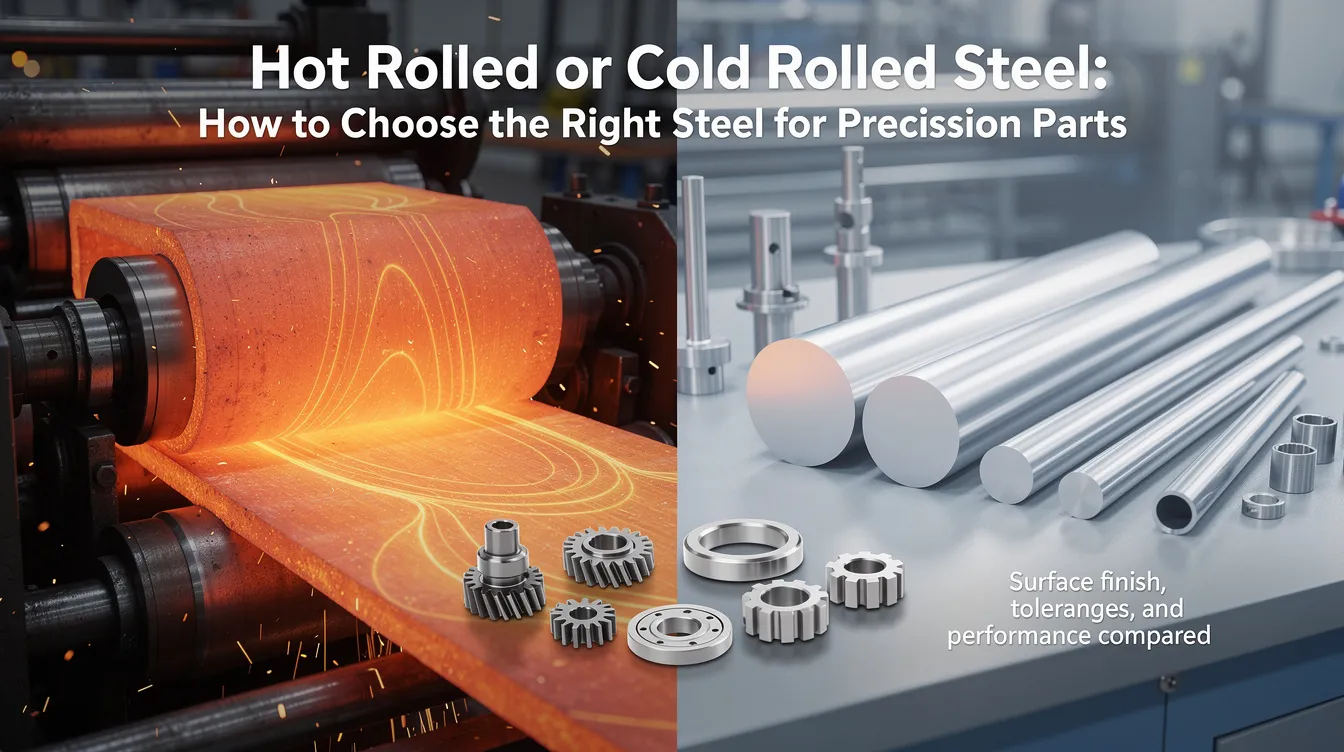
Hot Rolled or Cold Rolled Steel: How to Choose the Right Steel for Precision Parts
Introduction: Hot Rolled vs Cold Rolled Steel in Modern Manufacturing
Every steel part starts from the same raw materials-iron ore, carbon, and alloying elements cast into slabs or billets. The main difference comes down to rolling temperature. Hot rolled steel is processed above 1,700°F (926°C), while cold rolled steel undergoes further processing near room temperature to achieve tighter tolerances and a smoother surface finish.
Neither option is universally better. The right steel for your project depends on your project’s requirements: required dimensional accuracy, surface finish, forming method, strength targets, and budget. Understanding hot rolled vs cold rolled steel helps you avoid over-specifying (and overpaying) or under-specifying (and regretting it during assembly).
At Anebon Metal Products Limited, we work with both hot rolled and cold rolled steel daily across CNC machining, sheet metal fabrication, and OEM component production-helping customers select the optimum rolled steel for prototypes and production runs alike.
What’s the Difference Between Hot Rolled and Cold Rolled Steel?
The difference between hot rolled and cold rolled steel is the processing temperature and subsequent finishing steps-not the chemical composition or underlying steel grade. A 1018 carbon steel can be supplied as hot rolled or cold rolled. The carbon content stays the same; the material properties and finish change significantly.
Hot rolling happens above the steel’s recrystallization temperature (~1,700–2,100°F). Cold rolling takes that cooled hot rolled material and re-rolls it at room temperature through polished mills, with annealing and temper rolling to produce tighter thickness control and a much cleaner surface. The sections below break down how these differences affect dimensional accuracy, internal stresses, strength, formability, and cost.
Hot Rolled Steel
Hot rolled steel is essentially hot rolled steel that’s been shaped above its recrystallization temperature, making it easy to form into large sections such as I beams, channels, and plate products. The mill process is straightforward: cast slabs enter a reheating furnace, pass through roughing and finishing mills at high temperatures, then are coiled or cut to length while still hot.
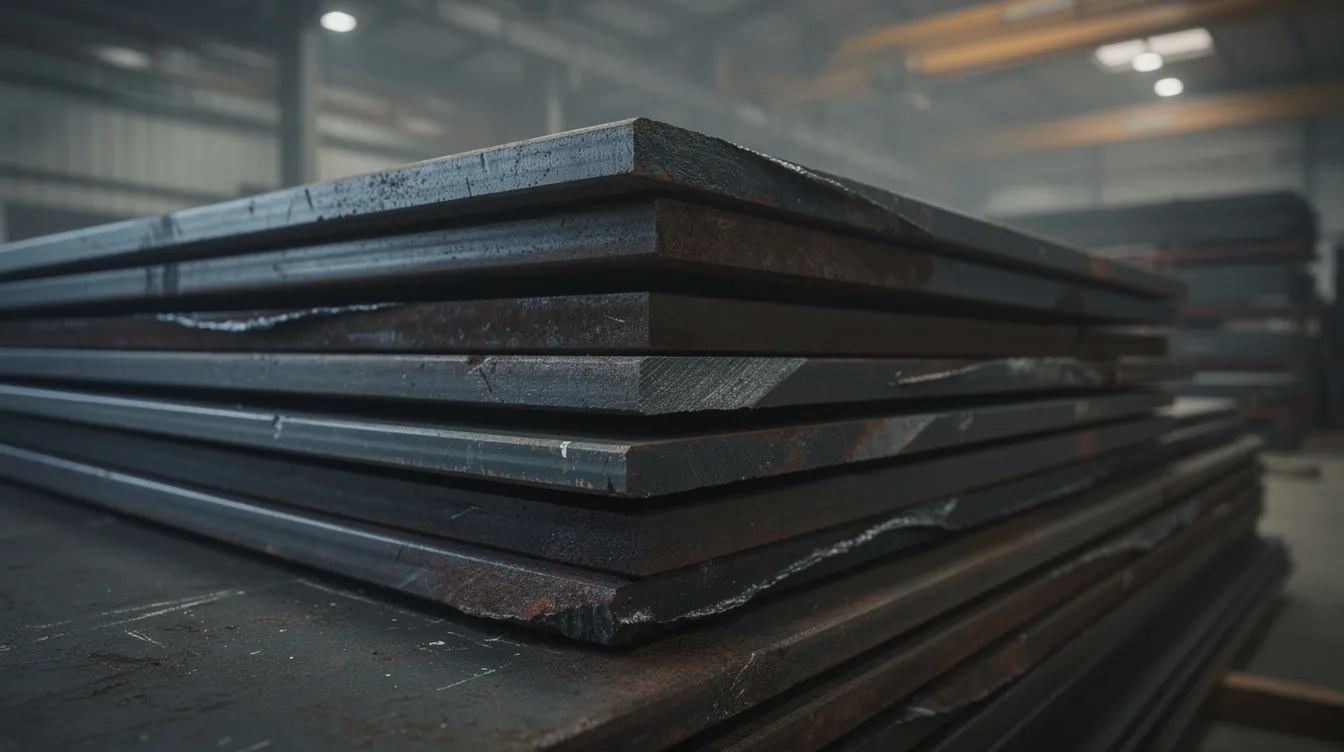
As the metal shrinks during air cooling, slight distortions in thickness and shape are inevitable, giving hot rolled steel less control over precise shapes. The result is a scaled surface with a rough surface finish, rounded corners on bar stock, and minor waviness. That mill scale can be removed through further processing like pickling, grinding, or sand blasting when a smoother surface is needed before coating or machining.
Common hot rolled forms include HR plate, hot rolled sheet, structural shapes (I beams, H-beams, channels), and large-diameter bar stock-all widely used for OEM projects where appearance takes a back seat to structural performance.
Characteristics and Mechanical Properties of Hot Rolled Steel
Hot rolled steel typically has:
-
Wider dimensional tolerances (±0.15–0.25 mm for moderate gauge sheet)
-
A rougher surface (Ra ~3.5–7.5 µm) with visible mill scale
-
Lower residual internal stresses due to natural air cooling
-
Good ductility (20–30% elongation) and strong weldability
For a common grade like ASTM A36, expect a minimum yield strength around 250 MPa (36 ksi) and tensile strength of 400–550 MPa. Hot rolled steel is processed above 1,700°F, and the subsequent slow cooling normalizes the microstructure, leaving the steel largely free from internal stresses. This means large parts are less likely to warp during heavy CNC milling or welding.
Hot rolled steel has a rougher surface finish than cold rolled steel and is less precise, making it suitable for applications with loose tolerances where appearance and micron-level precision are not critical.
Advantages of Hot Rolled Steel
-
Lower cost: Hot rolled steel is often more affordable because of fewer manufacturing steps-typically 15–30% cheaper than equivalent cold rolled steel.
-
Large cross-sections available: Thick plates, heavy beams, and structural shapes that cold rolling mills simply cannot produce.
-
Excellent formability and weldability: Hot rolled steel is easier to shape and form, with minimal risk of cracking during heavy bends or welding.
-
Reduced distortion risk: Because it is free from internal stresses, hot rolled plate is ideal for machine bases and fixtures that will undergo extensive machining.
For overseas OEMs sourcing structural or heavy-gauge components, starting with hot rolled plate or profiles keeps project costs under control without sacrificing structural integrity.
Common Applications of Hot Rolled Steel
Hot rolled steel is commonly used in construction for beams and structural components, and is ideal for structural applications including:
-
Building columns, railroad tracks, and agricultural equipment
-
Shipbuilding plate and heavy equipment chassis
-
Machine bases, welding fixtures, and robotic cell frames
-
Brackets and general fabrication where the finish will be hidden or coated
Engineers typically accept ±0.5–2.0 mm stock variation on hot rolled material, then achieve final precision through CNC machining on critical mating surfaces.
Cold Rolled Steel
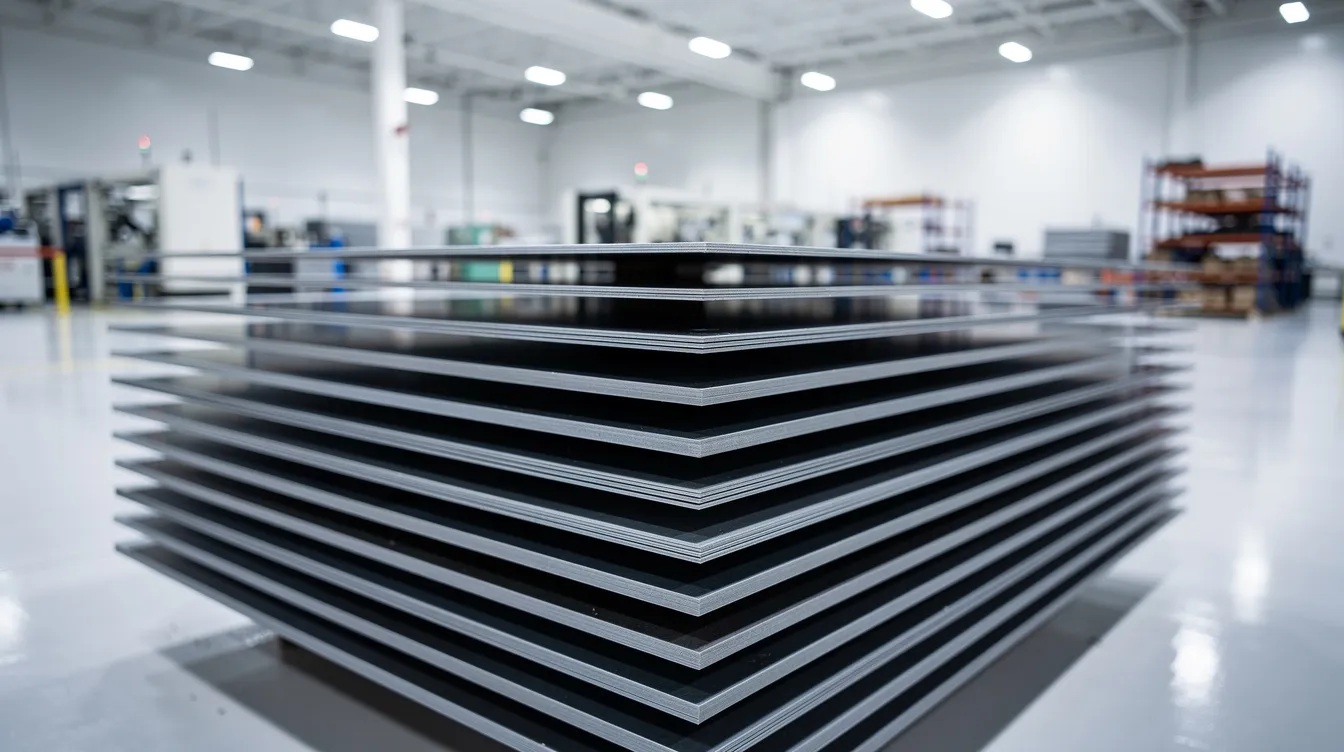
Cold rolled steel is processed at room temperature after hot rolling. The hot rolled material is first cooled, then pickled to remove scale, passed through polished cold reduction mills multiple times, annealed to restore ductility, and given a final temper roll for flatness. This cold rolling process produces a cold rolled product with consistent thickness, a smooth surface, and significantly higher strength through work hardening processes.
Cold rolled steel typically has a smooth and oily finish from protective film applied after rolling. It is typically supplied as thin cold rolled sheet or coil, ready for direct painting, powder coating, or precise finishing without additional processing.
A quick terminology note: “cold rolled” applies to flat sheet metal and coil products. Bars, rods, and tubes processed at room temperature are more accurately described as cold drawing or cold finished products, though the market often groups them under the same umbrella.
Characteristics and Mechanical Properties of Cold Rolled Steel
Cold rolled steel delivers:
-
Tight thickness tolerances (±0.025–0.075 mm for common gauges vs ±0.15–0.25 mm for HR)
-
Surface roughness Ra ~0.4–1.6 µm-dramatically smoother than HR’s 3.5–7.5 µm
-
Yield strength ~300–350 MPa for low-carbon grades, roughly 20% higher than comparable hot rolled steel
-
Increased hardness (~160–180 HB vs ~120–140 HB for HR)
-
Reduced elongation (12–20%) compared to HR’s 20–30%
Cold rolled steel is up to 20% stronger than hot rolled steel of the same grade due to strain hardening. However, the increased internal stresses from cold working can cause movement when large amounts of material are removed during machining. Planning how to flatten warped sheet metal or sequencing cuts carefully becomes important for precision applications.
Cold rolled steel has tighter dimensional tolerances than hot rolled steel, and offers a smoother surface finish than hot rolled steel-making it the go-to for parts where the metal surface is visible in the finished product or where exact dimensions matter for mating components.
Advantages of Cold Rolled Steel
-
Smoother surface finish that’s often paint-ready, eliminating surface imperfections
-
Closer dimensional tolerances that reduce CNC machining time and material waste
-
Higher strength allows thinner gauges to carry equivalent loads-valuable in weight-sensitive design
-
More precise dimensions and predictable behavior for high-volume OEM production
Cold rolled steel offers tighter dimensional tolerances than hot rolled steel, and the reduced need for grinding or additional processing before coating saves significant time in sheet metal fabrication workflows.
Common Applications of Cold Rolled Steel
Cold rolled steel is commonly used in automotive parts and appliances, and is ideal for precision components in industries like aerospace and consumer goods. Typical applications include:
-
Automotive body panels and appliance housings
-
Metal furniture and precision enclosures
-
Computer chassis, medical device covers, and electronic housings
-
Stamped or laser-cut parts with fine features and small bend radii
Cold rolled steel is more expensive due to additional processing and tighter tolerances, but in high-volume production, the savings in finishing processes and reduced scrap often offset the premium.
Cold Rolled vs Cold Formed Steel
Cold rolled steel describes how flat material is manufactured. Cold formed steel (CFS) describes how finished profiles-channels, studs, custom sections-are shaped from thin-gauge cold rolled coil at room temperature, with no heat applied.
Cold forming through roll forming or press braking produces precise shapes that gain additional strength from deformation, but engineers must account for localized residual stresses and springback. CFS components are common in modern construction (partitions, light-gauge trusses), rack systems, and machine guarding. Anebon can produce custom cold formed steel parts from precision sheet metal bending operations based on customer drawings and 3D models.
Visual and Dimensional Differences: Hot Rolled vs Cold Rolled
Side by side, hot rolled and cold rolled steel are easy to tell apart:
|
Feature |
Hot Rolled |
Cold Rolled |
|---|---|---|
|
Surface |
Scaly, dark gray, rougher surface with mill scale |
Smooth finish, bright, slightly oily |
|
Edges |
Rounded, less defined |
Sharp, clean |
|
Flatness |
Minor waviness, slight distortions |
Flat and uniform |
|
Thickness tolerance (12 ga) |
±0.20 mm |
±0.05–0.13 mm |
|
Surface roughness (Ra) |
3.5–7.5 µm |
0.4–1.6 µm |
These visual and dimensional differences directly influence downstream finishing processes. Cold rolled steel needs less pre-treatment before powder coating or galvanizing, while hot rolled steel demands descaling, pickling, or grinding to achieve adequate coating adhesion. Understanding which rolled steel product aligns with your functional and cosmetic needs saves both time and rework.
Choosing Between Hot Rolled vs Cold Rolled Steel for Your Project
Choose hot rolled steel when:
-
You need thick plates, large structural shapes, or a wider range of cross-sections
-
Tolerances are moderate (where tolerances of ±0.5 mm or looser are acceptable)
-
Budget is the primary driver-hot rolled steel is typically cheaper than cold rolled steel
-
Surfaces will be machined, coated, or hidden in the finished product
-
Welding dominates assembly, and lower residual stress reduces distortion risk
Choose cold rolled steel when:
-
Tight tolerances and more precise dimensions are critical (±0.1 mm or tighter on stock)
-
A smooth surface and precise finishing matter for aesthetics or coating adhesion
-
Parts are thin-gauge sheet metal requiring consistent bending and forming behavior
-
The application demands higher strength without increasing section thickness
-
Most steels in your BOM are for precision applications like enclosures, panels, or brackets
For complex assemblies-say, a hot rolled frame paired with cold rolled covers-careful tolerance stack-up management is essential. A machine base might use hot rolled plate that gets finish-machined on critical faces, while cosmetic covers use cold rolled sheet held to ±0.1 mm. Anebon’s DFM feedback helps customers navigate exactly these mixed-material decisions.
How Anebon Works with Hot Rolled and Cold Rolled Steel
Anebon Metal Products Limited is an ISO 9001:2015 and ISO 14001:2015 certified precision manufacturer founded in 2010 in Dongguan, China, serving overseas OEM clients across aerospace, medical devices, automotive, electronics, robotics, and industrial machinery.
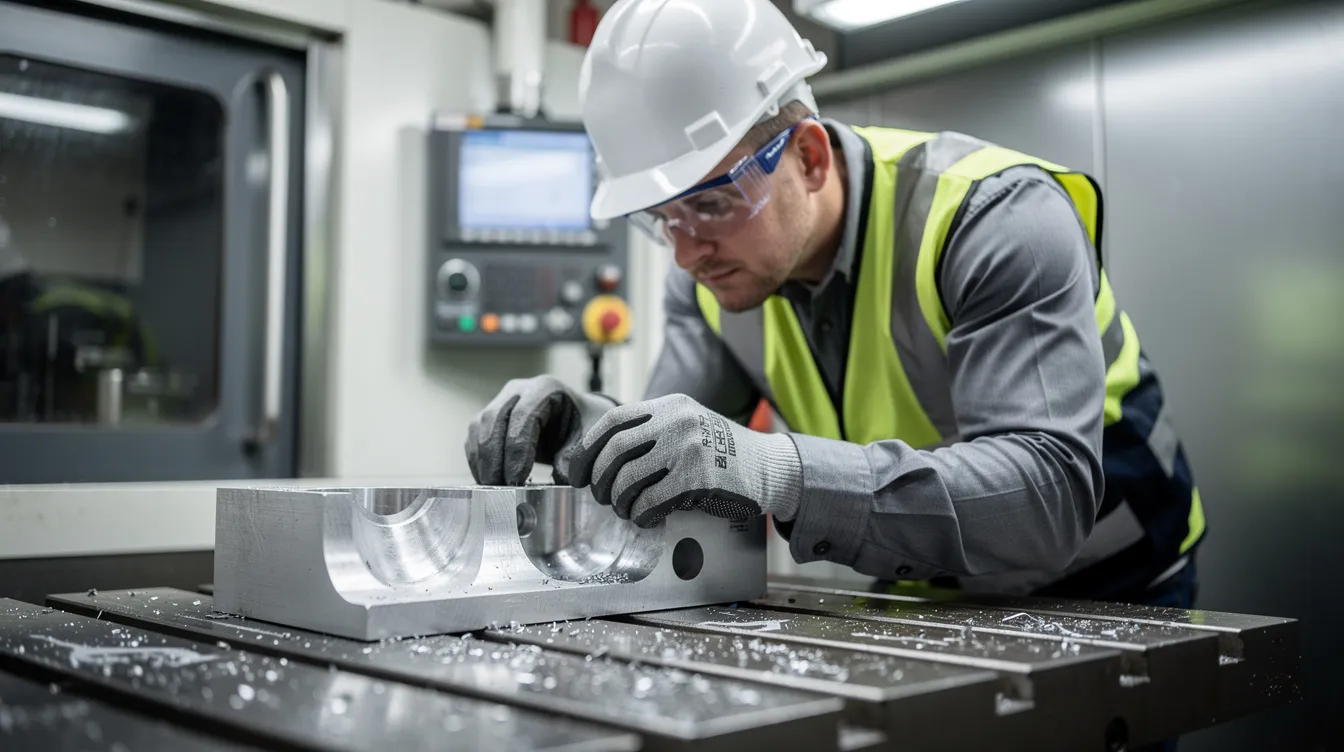
We source both hot rolled and cold rolled steels-including mild carbon, stainless, and alloy grades-matched to each project’s tolerance, strength, and cost targets. Our capabilities span CNC milling, CNC turning, 5-axis machining, sheet metal precision parts, and die casting, with tolerances as precise as ±0.002 mm on critical machined features.
Material choice directly affects achievable tolerances and recommended process routes. Our engineers can suggest switching from cold rolled to hot rolled steel (or vice versa) where it reduces cost while maintaining performance-and recommend compatible surface treatments like powder coating, electroplating, or passivation that pair well with the chosen base material. Whether your project calls for re rolled stock, heat treated alloy plate, or tension breaking-grade strip, we help you match the material to the design.
Getting Expert Help Choosing the Right Steel
Neither hot rolled nor cold rolled steel is always the answer. The optimal choice depends on your design geometry, operating environment, production volume, and budget. What matters is matching the material to the function-not defaulting to what’s familiar.
If you’re a design engineer or R&D team evaluating raw materials for your next project, send your drawings, CAD models, and requirement summaries to Anebon for a detailed quotation and material recommendation. We support rapid prototyping through full-scale production, and our team can recommend specific grades and forms-hot rolled plate, cold rolled sheet, cold drawn bar, or cold formed steel sections-to balance strength, tolerances, and budget.
Ready to choose the right steel for your precision parts? Request a quote or contact Anebon’s engineering team to discuss which type of rolled steel fits your next project.