Best Precision Sheet Metal Fabrication Companies China
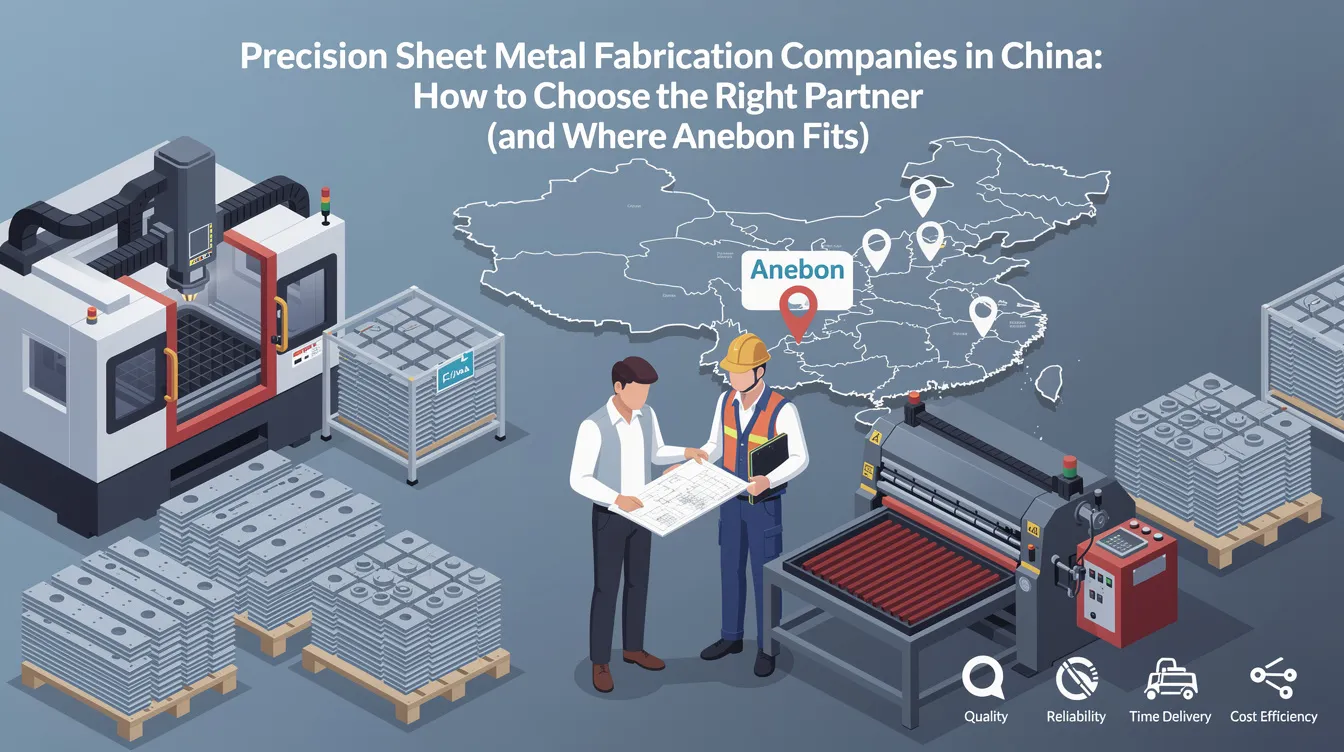
Precision Sheet Metal Fabrication Companies in China: How to Choose the Right Partner (and Where Anebon Fits)
If you are searching for precision sheet metal fabrication companies in China, you likely need a supplier who can deliver custom sheet metal parts with tight tolerances, consistent quality, and competitive pricing. This guide walks you through exactly what to evaluate, which capabilities matter most, and how to reduce risk when sourcing from Chinese fabricators.
Overview: Why China Leads in Precision Sheet Metal Fabrication
China has a highly sophisticated manufacturing ecosystem for precision sheet metal fabrication, built over two decades of investment in industrial parks, equipment, and workforce training. The global metal fabrication market reached over $20 billion in 2023, and China captures a significant share of that output. Modern Chinese fabricators combine technological investment with mature supply chain ecosystems, making the country a natural choice for international buyers.
Three industrial hubs for sheet metal fabrication in China stand out. The Pearl River Delta-including Dongguan, Shenzhen, and Guangzhou-is dense with export-oriented OEMs and logistics infrastructure. The Yangtze River Delta (Shanghai, Suzhou, Ningbo) leans toward high-tech and automotive precision work. Industrial hubs in Guangdong, Zhejiang, and Jiangsu collectively house thousands of capable fabrication services providers. Chinese precision sheet metal fabrication companies primarily serve industries like electronics and automotive, though medical devices, robotics, and telecommunications are growing fast.
Anebon Metal Products Limited, founded in 2010 in Dongguan, is one precision-focused OEM partner in this ecosystem. The following sections cover selection criteria, technology benchmarks, and practical steps so you can shortlist with confidence.
What Is Precision Sheet Metal Fabrication? (And How It Differs from General Metal Fabrication)
This section defines precision sheet metal fabrication in practical engineering terms so you can communicate requirements clearly to Chinese suppliers.
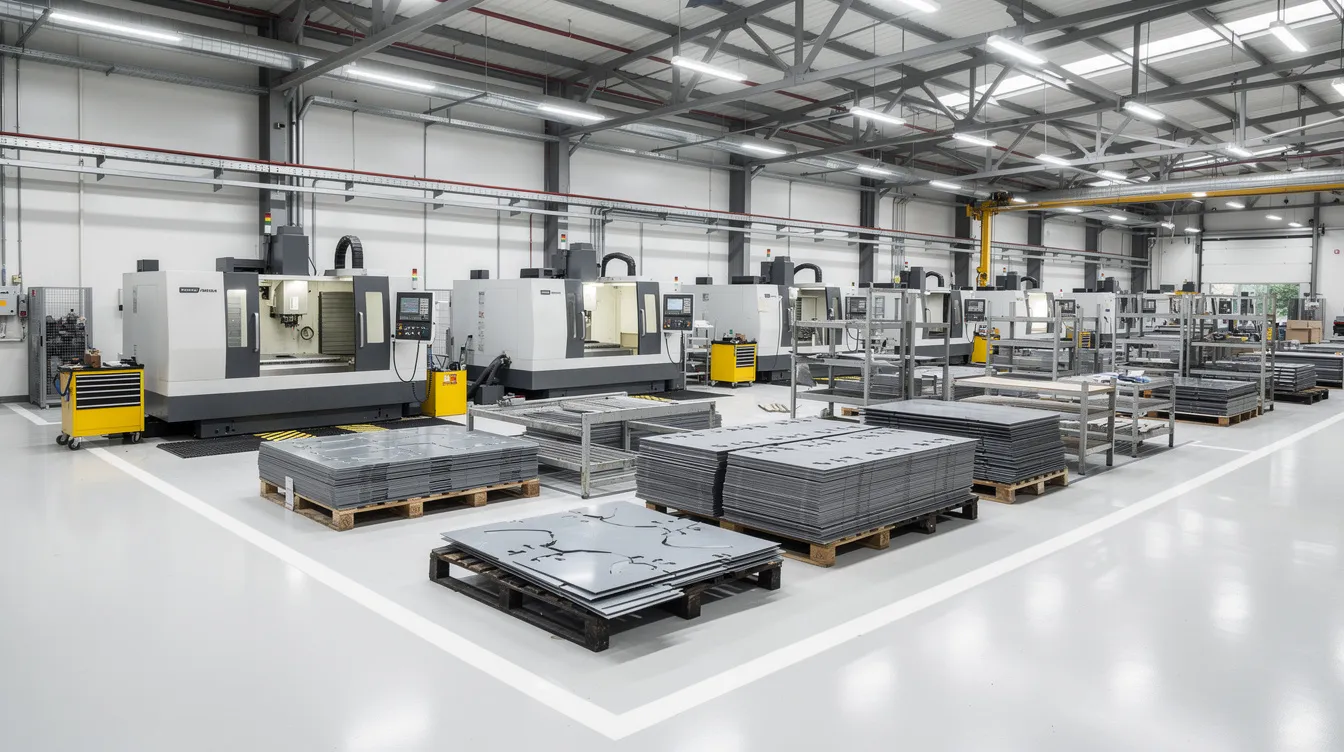
At its core, sheet metal fabrication involves working with thin metal sheet-typically 0.5 mm to 6 mm thick-to produce brackets, chassis, metal enclosures, and structural components. Sheet metal fabrication includes cutting, bending, and welding processes, and five common sheet metal operations are cutting, bending, punching, stamping, and welding. Sheet metal fabrication benefits from advanced technologies like CNC bending and laser cutting, which enable repeatable geometry at scale.
What separates precision sheet metal from general metal fabrication is tolerance control. Precision sheet metal parts require carefully managed dimensional accuracy-often ±0.1 mm or tighter-along with flatness, hole position accuracy, and surface consistency suitable for aerospace, medical devices, and electronics applications. Laser cutting is a precise method used in sheet metal fabrication for narrow kerfs and minimal heat-affected zones. Metal stamping is a key process in producing sheet metal parts at higher volumes, while CNC bending machines can handle complex sheet metal shapes that manual forming cannot achieve reliably.
General metal fabrication covers heavier work-castings, thick plate welding, structural steel-where tolerances are broader. If your project involves thin-gauge precision parts, you need specialized sheet metal fabricators.
Typical industries using precision sheet metal in China:
-
Telecommunications racks and base station enclosures
-
EV battery module housings
-
Medical device and lab equipment housings
-
Industrial robot covers and machine guards
-
Server and data center cabinets
Key Capabilities to Look for in Chinese Precision Sheet Metal Companies
Use this as a checklist when screening suppliers before requesting quotes.
Process capabilities to verify:
-
Fiber laser cutting (6 kW–12 kW for thickness control and edge quality)
-
CNC punching and cnc punching for hole patterns
-
CNC press brakes with automatic angle compensation for sheet metal bending and cnc bending
-
Robotic welding, TIG/MIG welding, and spot welding
-
Tapping, countersinking, and basic cnc machining for precision features
-
Metal stamping parts production for high volume production runs
Integration with precision cnc machining is particularly valuable. Factories offering both sheet metal and CNC under one roof can achieve tolerances down to ±0.002 mm on machined features-critical for mating faces and precision bores-without transit-related handling errors.
Rapid prototyping capability separates strong suppliers from average ones. The ability to move from CAD to finished sheet metal prototypes in 3–7 days accelerates design validation significantly. Rapid prototyping can expedite product development by weeks or months. For reference, Komaspec operates 190,000 sq ft across 6 buildings and offers rapid turnaround times for sheet metal fabrication projects.
Digital workflows matter for high-mix projects: DFM reviews, CAD/CAM nesting software, and ERP/MES systems that enable real time monitoring of production status. Many providers in China offer comprehensive solutions integrating design-for-manufacturing feedback and surface finishing, including powder coating, anodizing, plating, bead blasting, and passivation.
Vertical integration and streamlined sourcing improve cost efficiency in sheet metal fabrication, and access to a variety of metals accelerates project execution in custom metal fabrication.
Quality Control and Certifications: Reducing Risk in Cross-Border Projects
Quality control is the primary concern when selecting a precision sheet metal fabrication factory in China. Getting this wrong costs more than any price savings.
Certifications to verify:
-
ISO 9001:2015 is a common certification for quality management-Anebon holds this certification along with ISO 14001:2015 for environmental management
-
IATF 16949 is an automotive-specific quality management standard required for automotive components
-
ISO 13485 for medical device suppliers
-
ISO 45001 for occupational safety
Quality control measures are critical for high-precision manufacturing. Many companies in China adhere to strict international quality standards, but you must verify rather than assume.
QC tools and methods to look for:
-
CMM inspection, optical comparators, and calibrated height gauges
-
Welding inspection (penetration, bead size, distortion checks)
-
Flatness verification with straight edges and gauges
-
Material traceability via mill certificates
Statistical Process Control (SPC) ensures consistent quality in production across batches. Look for suppliers with documented incoming, in-process, and final inspection steps. Top-tier shops achieve tight tolerances often within ±0.1 mm or ±0.005 inches across full runs.
Ask for First Article Inspection (FAI) reports-dimensional data tables, surface finish readings, and annotated photos. For export, verify packaging standards: foam, EPE wrapping, VCI corrosion inhibitors, and custom crates designed to survive sea freight. These stringent quality control measures protect your parts from arrival damage and ensure high quality across every shipment.
Technology and Automation: From CNC Machining to Robotic Welding
Technology levels vary widely among sheet metal suppliers in China, and the gap directly affects consistency, lead time, and production costs.
Leading facilities in China invest in automation such as fiber laser cutting and robotic welding. Advanced machinery in high-end shops includes fiber lasers from brands like IPG or Trumpf (or capable domestic equivalents) running at 6–12 kW, CNC press brakes with servo back gauges and automatic angle correction, and 3- to 5-axis CNC machining centers for hybrid parts.
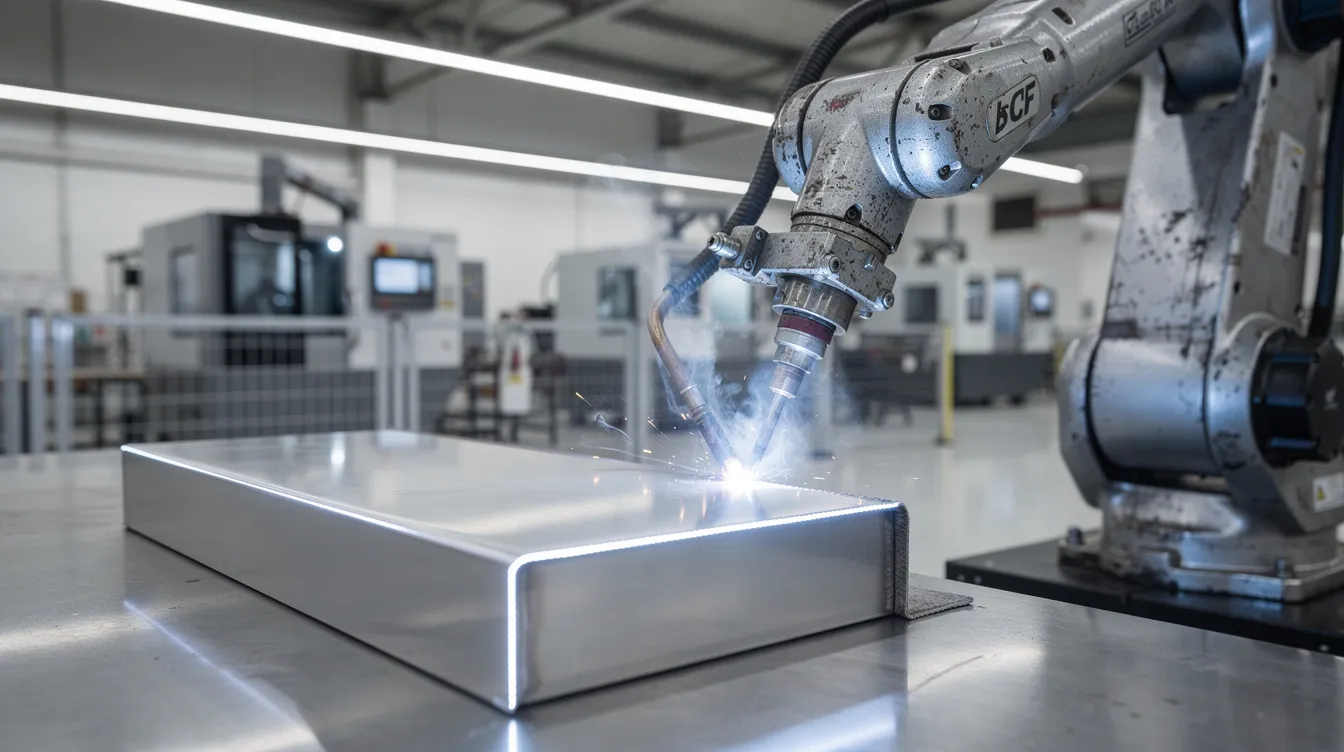
Robotic welding delivers repeatable bead profiles with minimal distortion-essential for metal enclosures, automotive components, and structural frames where cosmetic and dimensional consistency matter. This advanced technology enables smart manufacturing workflows where machines communicate with central production systems for real-time adjustment.
Hybrid parts that combine precision sheet metal bending with cnc machined parts-for example, machined heat sinks installed into sheet metal housings, or medical brackets with precision bores-benefit enormously from single-facility integration. This creates a seamless transition between processes and reduces quality risk.
CAD/CAM nesting software optimizes material use and controls waste, directly lowering costs for custom metal parts. When evaluating suppliers, request an equipment list with model names, laser power, press brake tonnage, and finishing line details. Recent production photos or video provide additional confidence.
Anebon Metal Products Limited: Precision CNC and Sheet Metal in Dongguan
This section profiles Anebon as a concrete example of a precision sheet metal fabrication partner in China with deep cnc machining services roots.
Key facts:
-
Founded 2010 in Dongguan, Guangdong Province
-
ISO 9001:2015 and ISO 14001:2015 certified
-
Focused on overseas OEM and R&D clients across aerospace, medical, electronics, and industrial machinery
Anebon’s key services span precision CNC milling and turning (including 5-axis machining), custom sheet metal fabrication, die casting, rapid prototyping, and small-to-medium batch production. The engineering team provides DFM feedback at the quoting stage, and the engineering support continues through prototype iteration and into volume production.
Tolerance capabilities: CNC machining down to ±0.002 mm for critical features, delivering unmatched precision for mating surfaces and precision bores. Sheet metal tolerances are held to levels suitable for electronic enclosures, medical brackets, and industrial equipment assemblies.
Materials commonly processed: | Material | Typical Use | |———-|————| | Aluminum (5052, 6061, 7075) | Aluminum is a lightweight option for aerospace and automotive work | | Stainless steel (304, 316) | Stainless steel provides corrosion resistance for moisture-exposed applications | | Carbon steel | Carbon steel offers strength and affordability for structural components | | Galvanized steel | Galvanized steel has a protective zinc coating for outdoor applications | | Titanium, engineering plastics | Specialized assemblies and corrosion resistant environments |
Anebon is ideal for assemblies combining sheet metal precision parts with CNC machined components-prototype-to-production runs for robotics, medical devices, aerospace instrumentation, and industrial machinery. Surface treatment options include anodizing, plating, powder coating, polishing, and surface finishing for turn-key sheet metal products.
How to Evaluate and Compare Precision Sheet Metal Fabrication Quotes
Price comparisons alone mislead. Evaluation should cover process scope, quality systems, and risk management.
A complete quote should list:
-
Material grade and thickness
-
Process steps (laser cutting, bending, welding, cnc machining, finishing)
-
Tolerances per feature
-
MOQ and lead time
-
Surface treatment specifications
Examine whether the supplier includes nesting optimization and DFM suggestions. Anebon provides DFM feedback at the quoting stage to help reduce production costs and improve manufacturability before metal is cut.
Common cost drivers in China-based fabrication services:
-
Material utilization rate and waste
-
Number of bends and welding length
-
Fixture complexity and secondary machining
-
Surface finishing (anodizing adds 0.02–0.05 mm; powder coat adds more)
-
Packaging for export
Request two options where possible: a rapid prototyping route with quicker turnaround, and an optimized production route with lower per-unit cost. Several competitors illustrate market range-RapidDirect was founded in 2009 and has 20,000 m² of factory space, specializing in rapid prototyping for various industries. 3ERP focuses on rapid prototyping and low-volume production runs, while ProLean is recognized for its rapid, on-demand production capabilities.
Ask about scalability from prototypes (10–50 pcs) to pilot runs (100–500 pcs) and mass production (1,000+ pcs) within the same factory. This avoids costly re-qualification and ensures a seamless transition from development to large scale high volume production with mass production capabilities intact.
Practical Steps to Vet a Chinese Supplier Before Your First Order
Overseas OEMs typically worry about communication, reliability, delivery, and IP protection. Here is how to address each before committing budget.
1. Send a test part. Order 5–10 pieces of a well-dimensioned component to evaluate dimensional accuracy, cosmetic quality, packing, and documentation. This is far more informative than any brochure.
2. Verify certifications. Request PDF copies, check issuing bodies (TÜV, SGS, etc.), validity dates, and scope. Cross-check certificate serial numbers where possible. Look for suppliers with relevant industry experience-for example, KDM Fabrication specializes in precision sheet metal for aerospace, while TUOFA Precision has over 15 years of experience in fabrication. SUPRO MFG has delivered over 20,000 projects globally, demonstrating sustained reliability. Competitors like Shenzhen HSJ Metal Fabrication also serve the export market. Review how leading fabrication companies compare to calibrate your expectations.
3. Conduct a remote audit. Schedule a video call factory tour. Review equipment, the inspection area, and sample parts from industries similar to yours.
4. Test communication. Send a technical drawing with specific questions during your working hours. Measure response time, clarity, and engineering competence. A strong focus on responsiveness signals a reliable partner.
5. Agree on payment terms. Standard structures include 30% deposit / 70% before shipment. For larger projects, consider Letters of Credit or staged payments tied to inspection milestones.
Applications and Case-Type Examples: Where Precision Sheet Metal from China Excels
These application types illustrate how precision sheet metal suppliers in China typically support global OEMs with customized solutions.
Electronics: 1U–4U rackmount server chassis, telecom base station enclosures, and 5G small-cell housings fabricated from cold-rolled steel or aluminum with powder coating for corrosion resistance. These projects demand high precision sheet metal with tight hole patterns and consistent cosmetics.
Automotive and EV: Battery module housings, sensor brackets, charging station cabinets, and interior structural brackets requiring sheet metal stamping and consistent finishing. The production process for these automotive components typically involves precision stamping combined with robotic welding.
Medical: Stainless steel 304/316 instrument housings, cleanroom carts, and brackets where weld quality and surface cleanliness are critical for medical devices compliance.
Robotics and industrial machinery: Robot covers, control cabinets, machine guards, and structural frames that combine advanced sheet metal fabrication with CNC machined metal components. These projects benefit most from integrated prototyping and production under one roof.
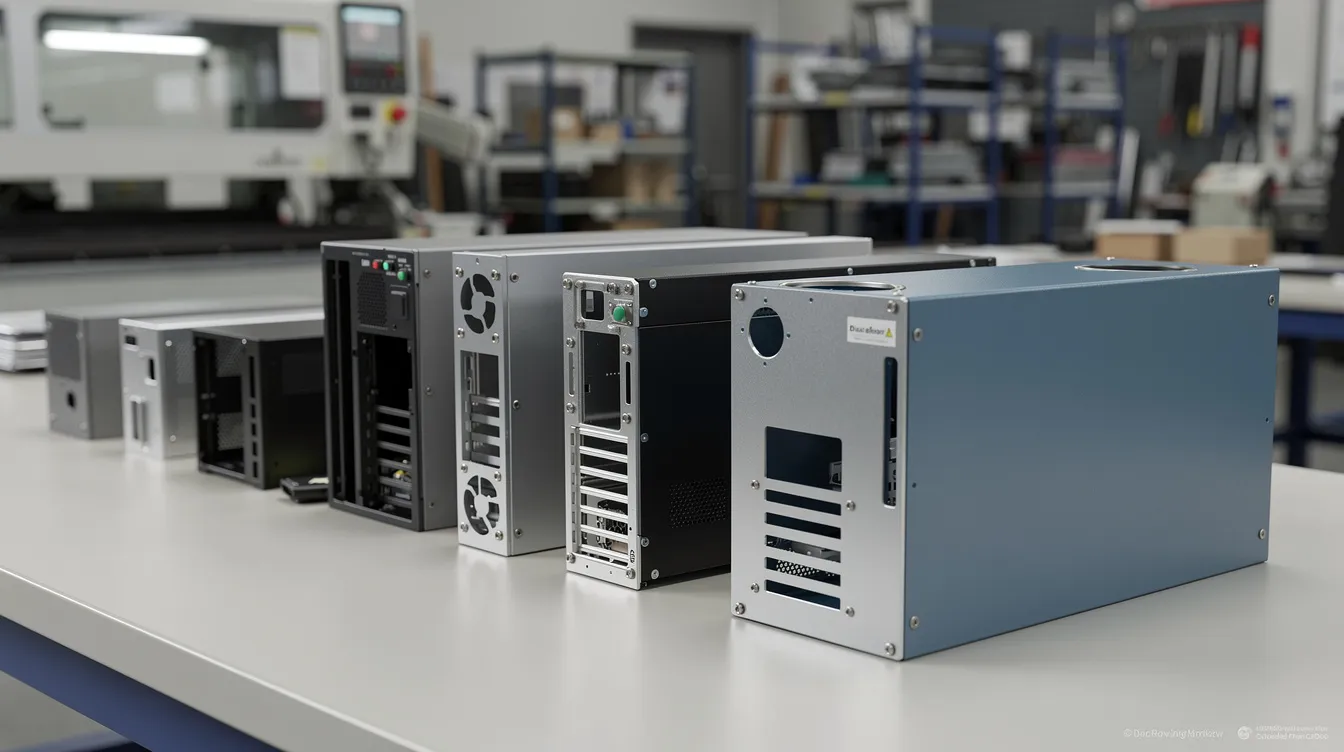
Anebon supports similar applications from rapid prototyping through to production, especially for complex assemblies mixing sheet metal and precision parts.
How to Work Effectively with a Chinese Precision Sheet Metal Partner
This section offers practical collaboration advice for engineers and sourcing managers working with Chinese custom metal fabrication suppliers.
Provide complete technical data. Supply 2D drawings with tolerances, GD&T callouts, and material specs. Include 3D CAD files (STEP/IGES), finishing requirements, and reference samples. Incomplete data is the single largest source of quality issues in cross-border projects.
Agree on inspection criteria early. Define critical dimensions, cosmetic zones, acceptable surface defects, and packaging standards before production begins. Reference ISO 2768 or ASME Y14.5 where relevant.
Establish communication routines:
-
Designate a primary contact on each side
-
Set response-time expectations (e.g., 24 hours for technical questions)
-
Request weekly production updates with photos and inspection data for ongoing orders
Embrace DFM feedback. Be open to supplier suggestions on bend radii, hole-to-edge distances, and joint design. Small adjustments can reduce production costs by 10–20% while improving part reliability. Anebon regularly provides DFM recommendations and prototype feedback to international buyers, helping shorten development cycles and avoid redesign loops. This is where an industry leader in precision cnc machining and sheet metal can add the most value beyond simply manufacturing your design.
Conclusion: Shortlisting Precision Sheet Metal Fabrication Companies in China
China offers hundreds of precision sheet metal options, but careful selection by capability, technology, and quality control separates reliable partners from risky ones.
Recap the essentials:
-
Verify process range: laser cutting, cnc bending, robotic welding, surface treatment, and cnc machining services under one roof
-
Confirm tolerance capability with test parts, not just spec sheets
-
Check QC systems, certifications, and export packaging experience
-
Assess automation level, equipment age, and digital workflow maturity
-
Evaluate responsiveness and engineering support quality
Create a shortlist of 3–5 suppliers, request DFM-backed quotes, and order sample high precision parts before scaling to volume production. This approach minimizes risk while giving you real data to compare.
Anebon Metal Products Limited is a strong choice for overseas OEMs needing combined precision CNC machining and custom sheet metal fabrication-from rapid prototyping through mass production-in Dongguan, China. With ISO certifications, tolerances down to ±0.002 mm, and a full suite of fabrication services and surface finishing, Anebon delivers the precision sheet metal components that demanding applications require.
Ready to start? Send your CAD files and drawings to Anebon for a detailed quotation and manufacturability review.