Best Materials for High-Precision CNC Parts
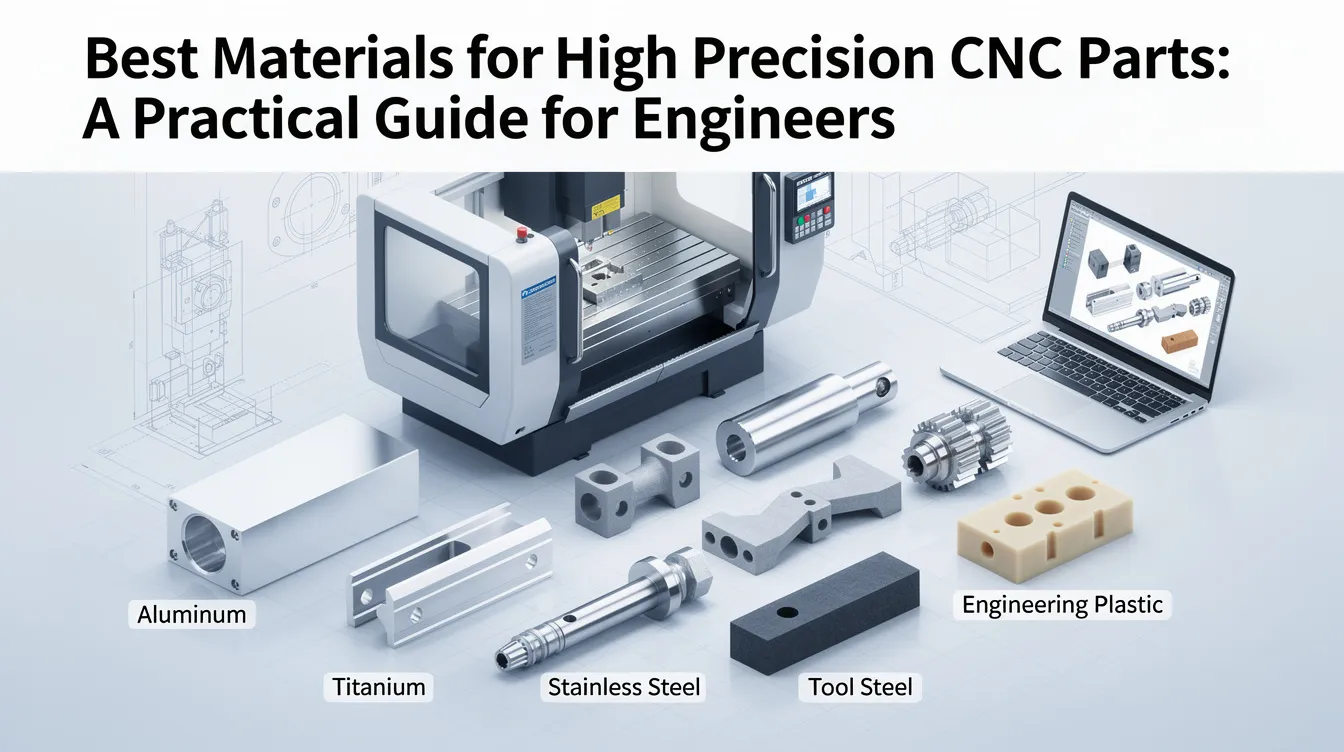
Best Materials for High-Precision CNC Parts
Introduction: Why Material Choice Decides Precision
When your CNC machined part requires tolerances of ±0.01 mm or tighter, the material you select matters as much as the machine and tooling. Precision in CNC machining depends on thermal behavior, residual stress control, and how predictably a material responds to the cutting process. Dimensional tolerance affects the accuracy of manufactured parts, and choosing the wrong material can introduce warping, tool deflection, or instability that no amount of machine calibration can fix.
This article focuses on the best materials for high precision CNC parts-not every possible CNC material, but the ones that actually deliver repeatable, micron-level results. There is no single “best material.” The right material depends on your tolerance requirements, operating environment, mechanical loads, and budget.
At Anebon Metal Products Limited, an ISO 9001:2015 and ISO 14001:2015 certified precision CNC shop in Dongguan, China, we routinely hold tolerances as tight as ±0.002 mm on both metal materials and engineering plastics. In this guide, we compare metals versus engineering plastics, outline key material selection criteria, and detail specific alloys and polymers we machine daily for precision manufacturing.
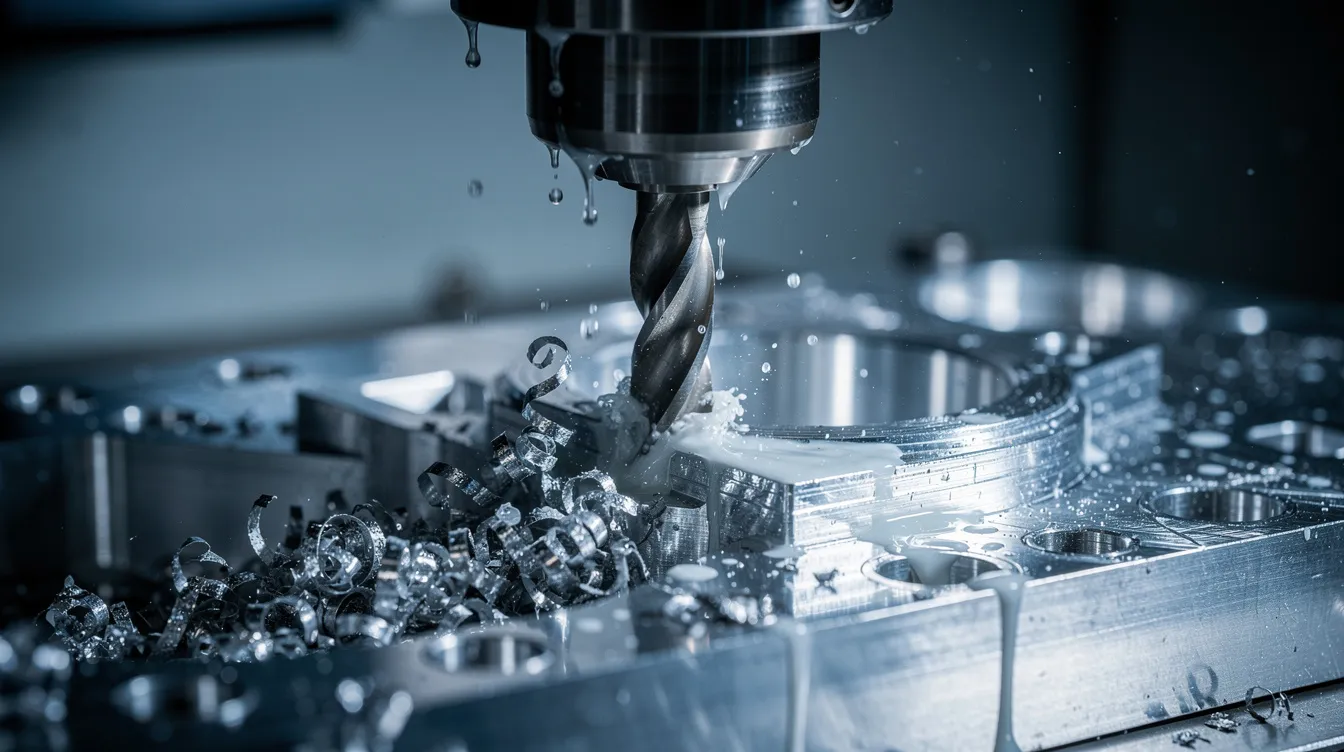
Key Criteria for Selecting the Best Materials for High Precision CNC Parts
Choosing CNC machining materials for tight tolerances requires balancing mechanical properties and machinability against cost effectiveness. Here are the criteria that matter most:
-
Machinability – Affects cutting forces, tool wear, and cycle time during CNC machining. Higher machinability means faster machining speed, lower tooling costs, and better surface quality. Machinability also affects production speed and tool wear across large batches.
-
Dimensional stability – Critical for maintaining tolerances during machining. Materials with good dimensional stability resist warping from thermal expansion, moisture uptake, and residual stresses. Dimensional tolerance impacts the choice of CNC machining materials, and materials with suitable dimensional tolerance reduce resizing costs.
-
Thermal conductivity – Determines how quickly heat leaves the cutting zone. High conductivity reduces local expansion; low conductivity concentrates heat and risks dimensional drift.
-
Strength and stiffness – Mechanical properties include tensile strength, yield strength, hardness, and toughness. Stiffer materials deform less under cutting forces, but very hard materials accelerate tool wear.
-
Wear resistance – Essential for parts subject to friction, abrasion, or repeated contact in service.
-
Corrosion resistance – Influenced by the operational environment and material choice. Marine, medical, and chemical applications demand corrosion resistant grades.
-
Electrical conductivity – Drives material selection for electrical components and RF parts.
-
Cost and availability – Cost and availability of raw materials impact the economic viability of design. Raw price, cycle time, scrap risk, and post-processing all factor in.
Thermal expansion must be accounted for to prevent warping during CNC machining. For context, a 10°C temperature shift on an aluminum part can produce several microns of dimensional change-significant when precision parts often require tight dimensional tolerances of ±0.002 mm.
Trade-offs are unavoidable: free-machining brass cuts quickly but lacks heat resistance; titanium delivers superior strength but demands slower feeds and costlier tooling; advanced plastics offer insulation but are sensitive to environmental factors. Anebon’s engineering team helps optimize material selection early through DFM feedback so you balance precision and budget before chips start flying.
Aluminum Alloys: The Most Versatile Materials for Precision CNC Machining
Aluminum alloys are often the first choice for precision CNC machining projects. They combine light weight, favorable strength-to-weight ratios, excellent machinability, and high thermal conductivity-all properties that directly support dimensional accuracy. Aluminum is one of the lightest structural metals used in CNC manufacturing, with densities around 2.70–2.81 g/cm³ compared to steel’s ~7.8 g/cm³.
These alloys are ideal for precision machined components across aerospace, robotics, electronics housings, and automation equipment. Their high thermal conductivity (~167 W/m·K for 6061-T6) dissipates heat from the cutting zone quickly and makes them natural candidates for heat sinks, supporting dimensional stability both during the machining process and in service.
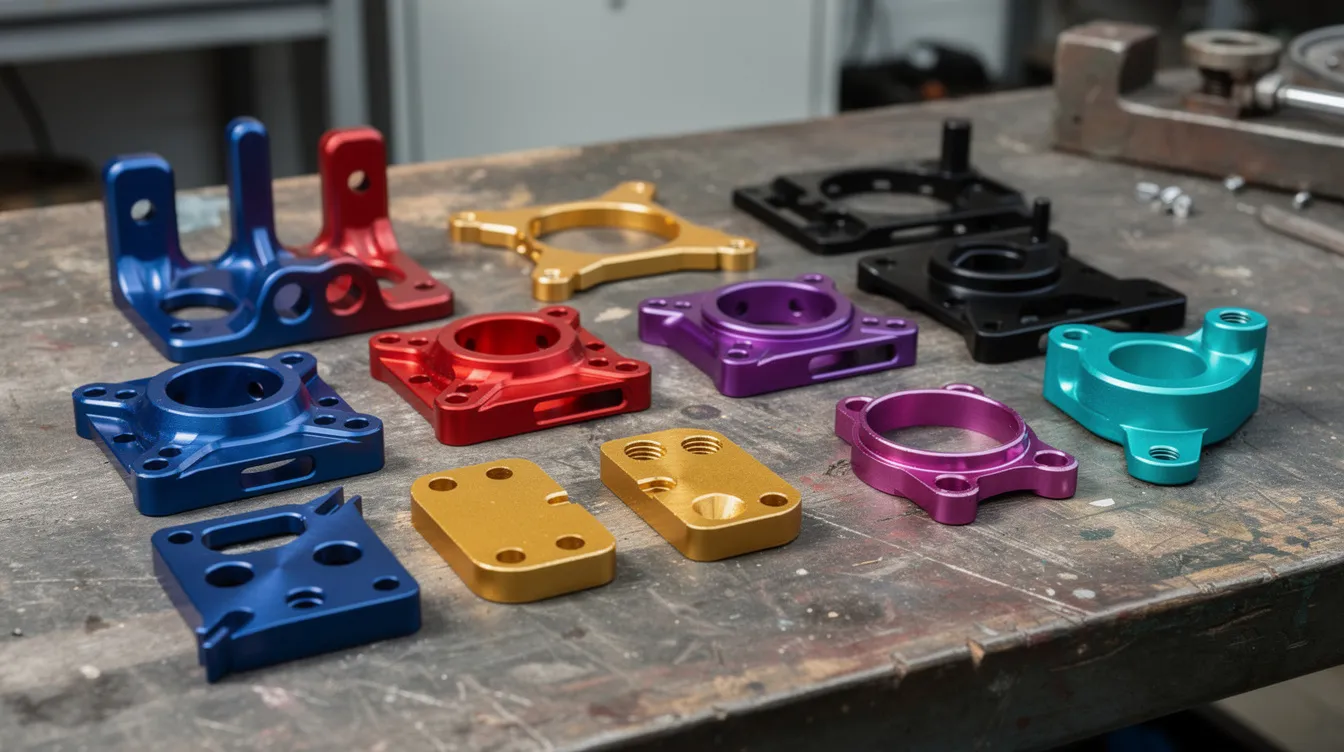
Aluminum also offers good electrical conductivity for applications that need it, and easy surface finishing-anodizing, chromate conversion, and bead-blasting are all straightforward. Anebon routinely machines 6000- and 7000-series alloys with tight tolerances using 3-, 4-, and 5-axis CNC milling and CNC turning.
Best Aluminum Alloys for High Precision CNC Parts
Here are the specific grades we recommend for high precision work:
-
6061-T6 – 6061 aluminum has a yield strength of 276 MPa, superb machinability, good corrosion resistance, and excellent thermal conductivity. It is the most cost-effective aluminum for tight-tolerance work-commonly used for fixtures, structural brackets, automotive components, jigs, and general housings. For many CNC machining projects, this is the best CNC material to start with.
-
6082-T6 – Slightly higher strength than 6061, popular in European-spec structures and machine frames. Commonly found in industrial components for transport and heavy machinery.
-
7075-T6 – 7075 aluminum has a yield strength of 503 MPa, comparable to some steels at a fraction of the weight. Typical for aerospace fittings, motorsport parts, and drone frames. However, it is more challenging to machine, with higher tool wear and stress-corrosion risk-not ideal for severe corrosive environments without proper finishing.
-
2024-T351 – Excellent fatigue resistance, used for aircraft components, clevises, and couplings. Offers good precision but needs surface treatment (anodizing or cladding) to protect against corrosion.
Choosing the right aluminum grade affects tool life, achievable smooth surface finish, and long-term stability of the final product. Among the best aluminum alloys, 6061 is the versatile default; 7075 steps in when strength cannot be compromised.
Stainless Steels: Corrosion-Resistant Workhorses for Precision Machined Components
When high strength, excellent corrosion resistance, and cleanliness are non-negotiable, stainless steel is among the best materials for precision CNC machining. These alloys are widely used for medical devices, medical equipment, food and beverage equipment, marine hardware, and precision instrumentation.
Stainless steels are harder to machine than aluminum-cycle times and tooling costs rise. But they deliver excellent durability and long service life. Good thermal stability and low distortion under load make stainless a strong candidate for mechanical components under stress. Anebon has deep experience machining common stainless grades (303, 304, 316, 17-4 PH) for overseas OEMs in medical, robotics, and industrial machinery.
Key Stainless Steel Grades for High Precision CNC Parts
|
Grade |
Relative Machinability |
Typical Tolerance |
Primary Applications |
|---|---|---|---|
|
303 |
~78% (vs mild steel) |
±0.005 mm |
Fittings, valve components, bushings |
|
304 / 304L |
~45% |
±0.01 mm |
Food, consumer products, industrial housings |
|
316 / 316L |
~40% |
±0.01 mm |
Marine hardware, surgical devices, chemical processing |
|
17-4 PH |
~48% (annealed) |
±0.01–0.02 mm |
Aerospace actuators, shafts, high-load components |
-
303 – 303 stainless steel has additives (sulfur, phosphorus) that improve machinability for high-precision parts, making it excellent for complex geometries and small precision fittings with excellent machinability.
-
304 / 304L – 304 stainless steel is commonly used for its corrosion resistance and is commonly used for medical applications. 304L is preferred where welding and reduced distortion are needed.
-
316 / 316L – 316 stainless steel is ideal for marine applications due to its excellent resistance to chlorides and harsh chemicals. It is the go-to for surgical devices and chemical processing components requiring high corrosion resistance.
-
17-4 PH – Precipitation-hardened stainless combining superior strength (tensile >1100 MPa in H900 condition) and good corrosion resistance. Heat treatment causes dimensional growth, so the tolerance stack-up must account for aging.
Grade selection directly affects machining speed, tool wear, and achievable surface quality-all feeding back into cost effectiveness and lead time for your machining project.
Titanium and High-Performance Alloys: When Strength-to-Weight and Extreme Conditions Matter
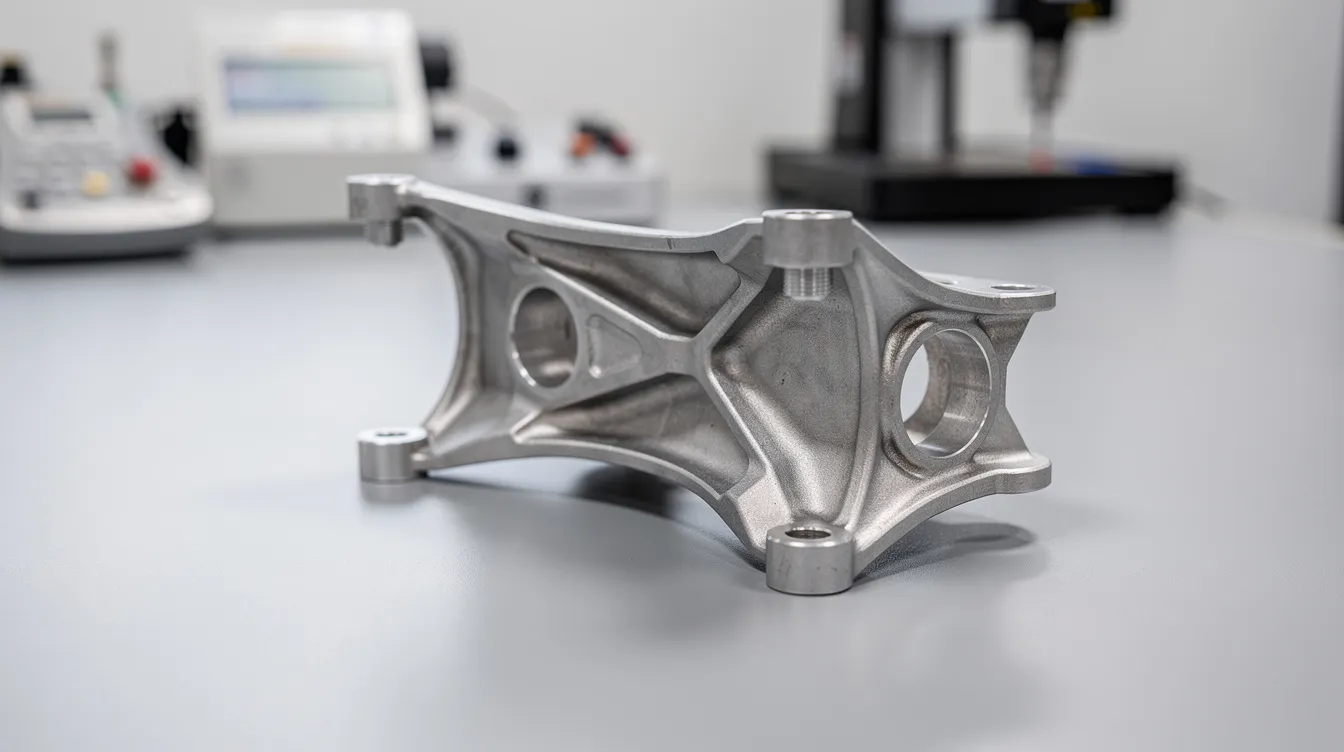
Titanium and specialty alloys enter the picture when conventional alloy steel, carbon steel, or aluminum cannot meet combined demands for temperature, corrosion resistance, and weight. Titanium alloys are known for their exceptional strength-to-weight ratios, with a density of just ~4.43 g/cm³ paired with yield strengths of 800–900 MPa.
Grade 5 Titanium (Ti-6Al-4V) delivers unmatched strength-to-weight ratio and corrosion resistance, along with biocompatibility that makes it essential for medical implants. Titanium is biocompatible and used for medical implants, surgical tools, and dental devices.
Machining challenges are real: titanium has low thermal conductivity (~7 W/m·K), a tendency to work harden, and strong affinity for cutting tools. This means optimized feeds, speeds, and rigid fixturing are mandatory-affecting price and delivery. For high temperature environments and corrosive conditions (turbomachinery, chemical processing), nickel-based alloys like Inconel offer high temperature applications and creep strength, though they are extremely demanding to machine.
Anebon supports titanium grades such as Ti-6Al-4V for precision CNC machining and can quote select nickel alloys for OEMs with critical industrial applications.
Typical High-Precision Applications for Titanium and Alloys
-
Aerospace and motorsport – Ti-6Al-4V components for brackets, drone frames, and aircraft components where every gram matters. Titanium’s high melting point also ensures stability at elevated temperatures.
-
Medical and dental – Implants, instrument housings, and surgical tools leveraging biocompatibility and excellent corrosion resistance. Titanium is biocompatible for medical implants in both load-bearing and non-load-bearing applications.
-
Energy and high-temperature – Housings, rings, and flanges in nickel alloys where heat resistance, creep strength, and oxidation resistance are key.
-
Tolerance strategy – These materials demand more conservative roughing and semi-finishing passes, stress relief before final machining, and rigorous inspection plans for micron-level precision CNC work.
Engineering Plastics: Lightweight, Stable Options for Precision CNC Parts
For many precision machined components, the right material is not metal but an engineering plastic-especially when weight reduction, electrical insulation, or chemical resistance are priorities. Not every plastic resin qualifies: only those with good rigidity, low creep, and the ability to hold tolerances under temperature and humidity changes are suitable for precision CNC milling.
Non metallic materials and plastic materials offer inherent advantages: low density, corrosion resistance without coatings, electrical insulation for electrical components, noise reduction, and often good wear properties with the right fillers. However, environmental factors-moisture absorption, continuous use temperature, CTE values of 50–150 ×10⁻⁶/°C-matter far more for plastics than metals when targeting tight tolerances.
Anebon machines a wide range of engineering plastics including PEEK, acetal (Delrin), nylon, ABS, PMMA, and others for precision CNC parts.
Best Engineering Plastics for High Precision CNC Machining
-
PEEK – PEEK is a high-performance plastic used in aerospace applications, with continuous use temperatures up to ~250°C. PEEK has excellent chemical resistance and high-temperature stability, plus high dimensional stability (low moisture absorption <0.5%). Ideal for semiconductor, medical devices, and oil and gas parts. PEEK is resistant to chemicals and high temperatures, making it the premium choice among advanced plastics.
-
Acetal / Delrin (POM) – Delrin offers low friction and excellent machinability, with low moisture absorption and high stiffness. Acetal is FDA compliant for food processing applications. Common for precision gears, bushings, and manifolds-an impact resistant material for wear-intensive roles.
-
Nylon (PA6, PA66) – Nylon is lightweight, flexible, and wear-resistant, widely used for gears and structural components. However, its higher moisture absorption (1–5%) means ultra-tight tolerances require conditioning and environmental control.
-
ABS – ABS is impact-resistant and commonly used for rapid prototyping. Tough, inexpensive, and well-suited for functional prototypes and low-volume housings in the manufacturing industry.
-
PMMA (acrylic glass) – Transparent, rigid, and capable of a smooth surface finish. Best for clear windows, light guides, and optical housings where aesthetics and scratch resistance matter.
Thermal Conductivity, Electrical Conductivity, and Their Impact on Precision
Thermal conductivity and electrical conductivity influence both machining behavior and in-service performance of every CNC machined part.
Materials with high thermal conductivity-aluminum (~167 W/m·K), copper, brass-dissipate machining heat rapidly, reducing local thermal expansion and supporting tight tolerances during the cutting process. C36000 brass possesses superior machinability and natural lubricity, making it a favorite for high-volume turned parts. Low-thermal-conductivity materials like titanium and some plastics concentrate heat at the cutting zone, increasing risk of tool wear and dimensional drift.
For electrical conductivity, copper and brass are preferred for connectors, bus bars, and RF components where excellent electrical conductivity is required. Insulating plastics are selected where isolation from current is mandatory. Anebon uses CAM strategies, coolants, and fixturing tuned to each material’s thermal behavior to protect precision and surface quality across all material options.
Comparing Major CNC Material Options for High Precision Parts
Here is how the major CNC materials stack up for precision work:
By application pattern:
-
Aerospace and UAVs – 7075, 2024 aluminum, titanium alloys, PEEK
-
Medical devices – 316L, 17-4 PH stainless, titanium, PEEK
-
Automotive and motorsport – 6061, 7075 aluminum, carbon steel for automotive parts and automotive components, POM for wear parts in automotive applications
-
Electronics – 6061 aluminum, copper, brass, engineering plastics for insulation
By selection driver:
-
Lightweight structural precision → aluminum alloys (6061, 7075)
-
Corrosion resistance and hygiene → stainless steel (304, 316, 17-4 PH)
-
Electrical conductivity and easy machining → brass and copper
-
Extreme strength-to-weight and biocompatibility → titanium
-
High-performance precision plastics → PEEK and acetal with high dimensional stability
Cost effectiveness means looking beyond raw material price. Tool life on titanium is a fraction of what it is on aluminum; cycle time on 316L is roughly double that of 303. The right CNC machining material balances all these factors against your total project cost.
How to Choose the Right Material for Your Precision CNC Project
Follow this practical checklist to find the right material for your next CNC project:
-
Define functional requirements – What loads, service temperature, chemical exposure, and expected life does the part face? Is it for high temperatures or benign indoor use?
-
Set tolerance levels – Are you targeting ±0.05 mm (standard), ±0.01 mm (precision), or ±0.002 mm (ultra-precision)? Prototype or serial production?
-
Prioritize properties – Rank strength, weight, corrosion resistance, thermal and electrical conductivity, and aesthetics. No material excels at everything.
-
Shortlist 2–3 candidates – For example, compare 6061 vs 7075 vs 304 stainless rather than fixating on one option early.
-
Account for downstream processes – Anodizing, passivation, plating, and heat treatment all affect dimensions and add cost.
-
Check availability and budget – Standard bar and plate stock ships faster and cheaper than custom sizes.
Quick example: A robotic arm bracket needs high stiffness, low weight, and outdoor corrosion resistance.
-
6061-T6: Good strength (276 MPa yield), fast machining, excellent if anodized. Most economical.
-
7075-T6: ~80% stronger (503 MPa yield), lighter feel, but more expensive tooling and lower corrosion resistance.
-
17-4 PH stainless: Excellent strength and corrosion resistance, but significantly heavier with slower machining.
Involving your machining partner at the CAD stage prevents over-engineering or under-specifying your machining materials. Anebon provides DFM consultation with every quote.
Design Tips to Maximize Precision Regardless of Material
Even the best materials for CNC machining need design support to achieve micron-level results in precision machining. A few practical rules:
-
Avoid overly thin walls and deep pockets in hard-to-machine materials (titanium, stainless). These create deflection, vibration, and thermal accumulation.
-
Keep consistent wall thickness to reduce distortion from residual stress and machining heat.
-
Use generous radii in internal corners to match tool diameters and reduce chatter during precision CNC milling.
-
Plan fixturing and inspection access when defining features-critical tolerance considerations should drive geometry, not the other way around.
-
Apply tight tolerances only where functional; leave looser tolerances elsewhere. This single practice often cuts 20–30% from cycle time and cost.
Material behavior under clamping and cutting-especially with plastics and thin aluminum-should inform every design decision. Anebon provides DFM feedback with every quote to optimize geometry and material simultaneously.
Why Anebon for High Precision CNC Machining Materials
Anebon Metal Products Limited is a one-stop partner for precision CNC machining, die casting, and sheet metal fabrication with deep material expertise across the manufacturing industry.
-
Machining capabilities – CNC milling, CNC turning, and 5-axis machining supporting tolerances as tight as ±0.002 mm on metals and plastics.
-
Material range – Aluminum (6061, 6082, 7075, 2024), stainless steels (303, 304, 316, 17-4 PH), carbon and alloy steel, brass, copper, titanium, PEEK, acetal, nylon, ABS, PMMA, and more materials for CNC machining.
-
Certifications – ISO 9001:2015 and ISO 14001:2015 certified with in-house CMM inspection and full material traceability.
-
Scale – From rapid prototyping to full-scale production for aerospace, medical, automotive, electronics, robotics, and industrial machinery.
The right CNC machining material is not the strongest or cheapest-it is the one that meets your tolerance, environment, and budget requirements simultaneously. Upload your CAD files or drawings to Anebon for a fast, engineering-driven quote and tailored material selection advice for your next high precision CNC project.