Best High Tolerance CNC Manufacturers Certified China
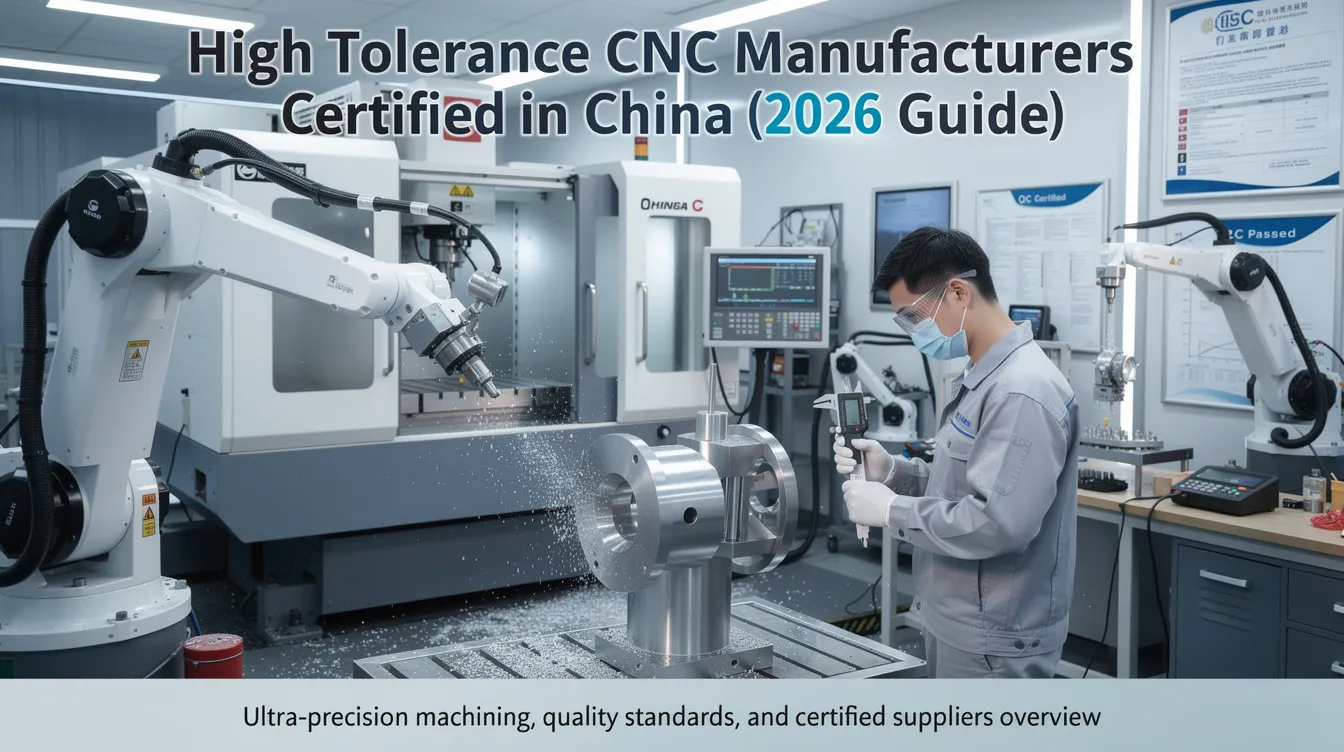
High Tolerance CNC Manufacturers Certified in China (2026 Guide)
If you are sourcing precision parts for aerospace, medical, automotive, or electronics applications, finding a certified high-tolerance CNC manufacturer in China can cut your costs, accelerate delivery, and meet the tightest specs your engineering team can draw up. This guide breaks down exactly who can deliver, what “high tolerance” actually means in practice, and how to evaluate suppliers so you make confident sourcing decisions.
Quick Answer: Who Are the High-Tolerance, Certified CNC Manufacturers in China?
Anebon Metal Products Limited, based in Dongguan, Guangdong Province, is a high-tolerance, ISO-certified CNC machining manufacturer serving overseas OEMs across aerospace, medical devices, automotive, robotics, and consumer electronics. Founded in 2010, Anebon operates advanced cnc machines covering 3-axis through 5-axis milling, precision turning, sheet metal fabrication, and die casting under one roof, with documented tolerances down to ±0.002 mm on controlled features.
Other vetted cnc machining companies in China worth comparing include Runsom Precision, Gensun Precision Machining, DEK, Junying Metal Manufacturing, XTJ CNC, Sanluo Precision, and CRELU. Each has different strengths in terms of process specialization, certification scope, and target industries. However, Anebon’s combination of integrated manufacturing capabilities, ISO certifications, and direct OEM engagement sets it apart from platforms and trading companies.
When we say “high tolerance” in this guide, we mean repeatable dimensional accuracy down to approximately ±0.002 mm (2 microns) in controlled conditions. Only a subset of Chinese CNC machining companies can reliably achieve this at scale, and the key differentiators are certifications, metrology investment, and process discipline, not just the machines on the floor.
Here is a quick snapshot of Anebon:
-
Founded in 2010, located in Dongguan, Guangdong, China
-
ISO 9001:2015 and ISO 14001:2015 certified
-
3-axis, 4-axis, and 5-axis CNC machining centers, precision turning, wire EDM, sinker EDM, grinding
-
In-house sheet metal fabrication, die casting (aluminum and zinc), and surface finishing
-
Serves aerospace, medical, automotive, robotics, industrial machinery, and consumer electronics OEMs
Certifications like ISO 9001, IATF 16949, AS9100, and ISO 13485, combined with rigorous process control and calibrated metrology, separate true high-tolerance shops from generic cnc machining factories. If your project requires sub-10-micron repeatability, start your search with manufacturers who can document that capability, not just claim it.
Ready to test Anebon’s capabilities? Request a quote with your CAD files and tolerance specs for a no-obligation DFM review.
What “High Tolerance” CNC Machining Really Means in Practice
In engineering terms, tolerance defines the permissible deviation from a nominal dimension. Tight tolerances of ±0.01 mm are critical for precision parts in mechanical assemblies, while high precision machining pushes this to ±0.005 mm (5 microns) or even ±0.002 mm (2 microns) for features like bearing bores, sealing surfaces, and mating interfaces. For context, ±0.01 mm equals roughly ±0.0004 inches, and ±0.002 mm is about ±0.00008 inches. Chinese manufacturers achieve tight tolerances of ±0.005 mm routinely in controlled setups, and cnc machining services can achieve tolerances as tight as ±0.001 mm on specialized grinding or lapping operations.
Typical commercial machining companies in China and elsewhere work at around ±0.05 mm to ±0.01 mm for general-purpose parts such as housings, brackets, and covers. High-tolerance cnc machining manufacturers serve a different tier entirely: aerospace components requiring positional accuracy on bolt patterns, medical devices demanding concentricity for implants, and semiconductor tooling where micron-level form control determines yield. The cnc machining process that enables these results involves multi-stage roughing and finishing, controlled thermal environments, and rigorous inspection at every step.
The machining processes most relevant to high tolerance include five-axis machining, which allows for complex geometries and tight tolerances on compound-angled features; precision turning on Swiss-type lathes for high-concentricity shafts and pins; jig grinding for sub-micron form accuracy; and wire EDM for intricate profiles in hardened steels. Sheet metal fabrication with CNC-controlled bending and laser cutting also achieves tight bend tolerances for enclosures and chassis. Part types that commonly demand these capabilities include valve bodies, orthopedic implants, camera gimbals for consumer electronics, high-speed spindle housings, and sensor enclosures.
What many buyers underestimate is that environment, tooling, metrology, and operator skill matter as much as the nameplate specification of the CNC machine itself. A five-axis machine in a poorly controlled shop with uncalibrated tools will not produce ±0.005 mm parts reliably.
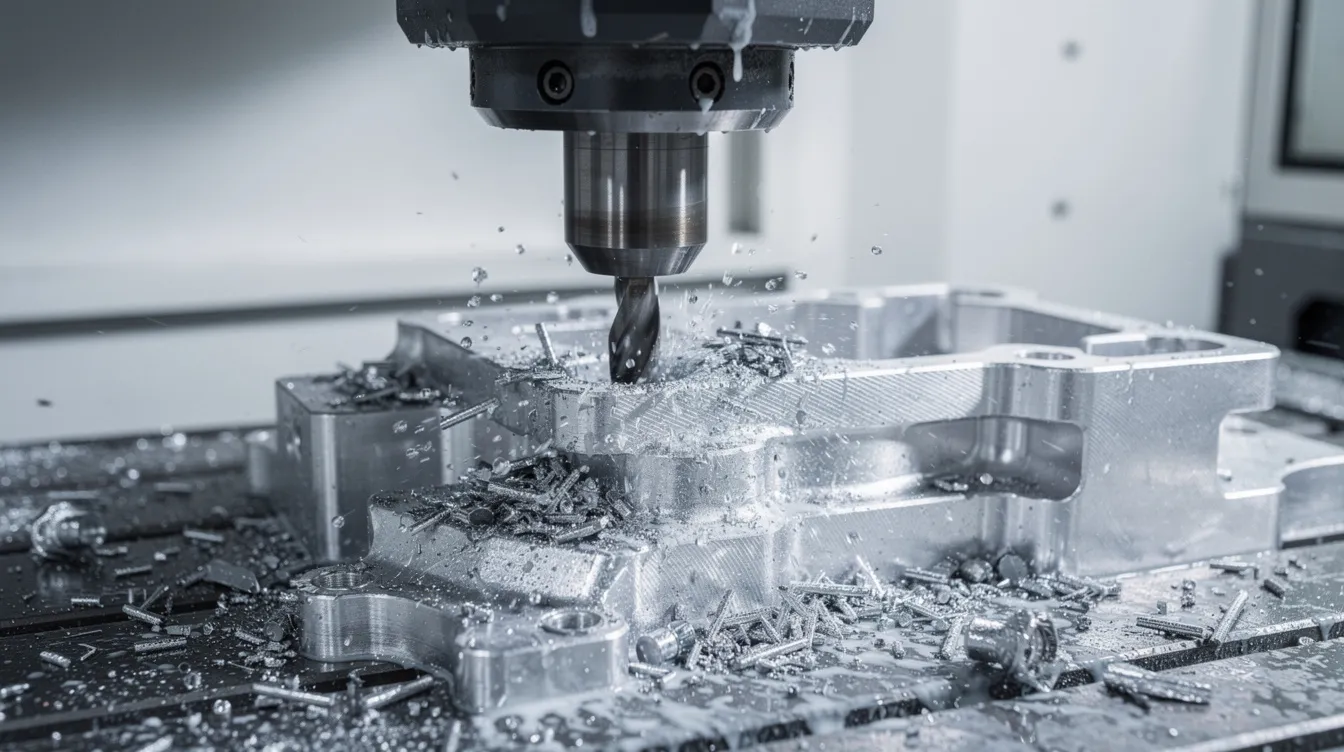
Why China Is a Hub for High-Tolerance CNC Machining in 2026
China has firmly established itself as the world’s largest base for cnc machining and precision manufacturing. China’s CNC machining market is expected to reach over $23 billion by 2026, driven by domestic demand and a strong export orientation. In 2024 alone, China’s machine tool sector generated approximately USD 157 billion in demand, with around 13.9% of output exported globally. Tool exports grew over 10% year-on-year, reflecting sustained international confidence in Chinese manufacturing capabilities.
Regional clusters in Guangdong (particularly Dongguan and Shenzhen), Jiangsu, and Zhejiang concentrate thousands of precision cnc machining shops alongside material suppliers, finishing houses, and tooling specialists. This density creates supply chain advantages that are difficult to replicate elsewhere, from same-day material sourcing to rapid turnaround on surface treatments. Advanced machines in China ensure cost-effective product development, and leading machining companies in china combine competitive pricing with automation including robots, AI-driven inspection, and IoT monitoring to sustain both quality and scale. AI-driven quality inspections now achieve defect rates below 0.2% in top-tier facilities.
Overseas OEMs, from European robotics startups to US consumer electronics brands, routinely source custom cnc machining and sheet metal from China for both prototypes and production. However, for high-tolerance work, buyers should focus on certified cnc machining factories with documented experience and verifiable inspection data, not on generic trading companies or unverified workshops.
Anebon Metal Products Limited – Certified High-Tolerance CNC Manufacturer in Dongguan, China
Anebon Metal Products Co Ltd is a specialized B2B OEM machining partner focused on high precision cnc machining parts rather than generic job-shop work. The company was founded in 2010 and is located in Huangjiang Town, Dongguan, Guangdong. Anebon holds ISO 9001:2015 certification for quality management and ISO 14001:2015 for environmental management. Its facility houses 3-axis, 4-axis, and 5-axis CNC machining centers, precision turning equipment, wire and sinker EDM, grinding machines, and integrated sheet metal fabrication and die casting lines.
Anebon’s typical production tolerances sit at ±0.01 mm for standard precision parts, with ±0.005 mm achievable on critical features and ±0.002 mm on controlled dimensions where geometry, fixturing, and process planning permit. Surface roughness targets of Ra 0.8 µm are standard for many automotive and consumer applications, with finer finishes available.
The company serves major industries including aerospace (structural brackets and housings), medical devices (surgical instrument components, implant-adjacent parts), automotive (fixtures, housings, sensor mounts), robotics (frames and actuator housings), and consumer electronics (heatsinks, structural enclosures, and precision mechanisms). Anebon provides design-for-manufacturing feedback, material selection support across aluminum, stainless steel, titanium, copper alloys, and engineering plastics, and coordinates surface finishing from anodizing to electroplating.
If you are an overseas OEM, design engineer, or R&D team, share your CAD models with Anebon for a feasibility assessment and lead-time estimate.
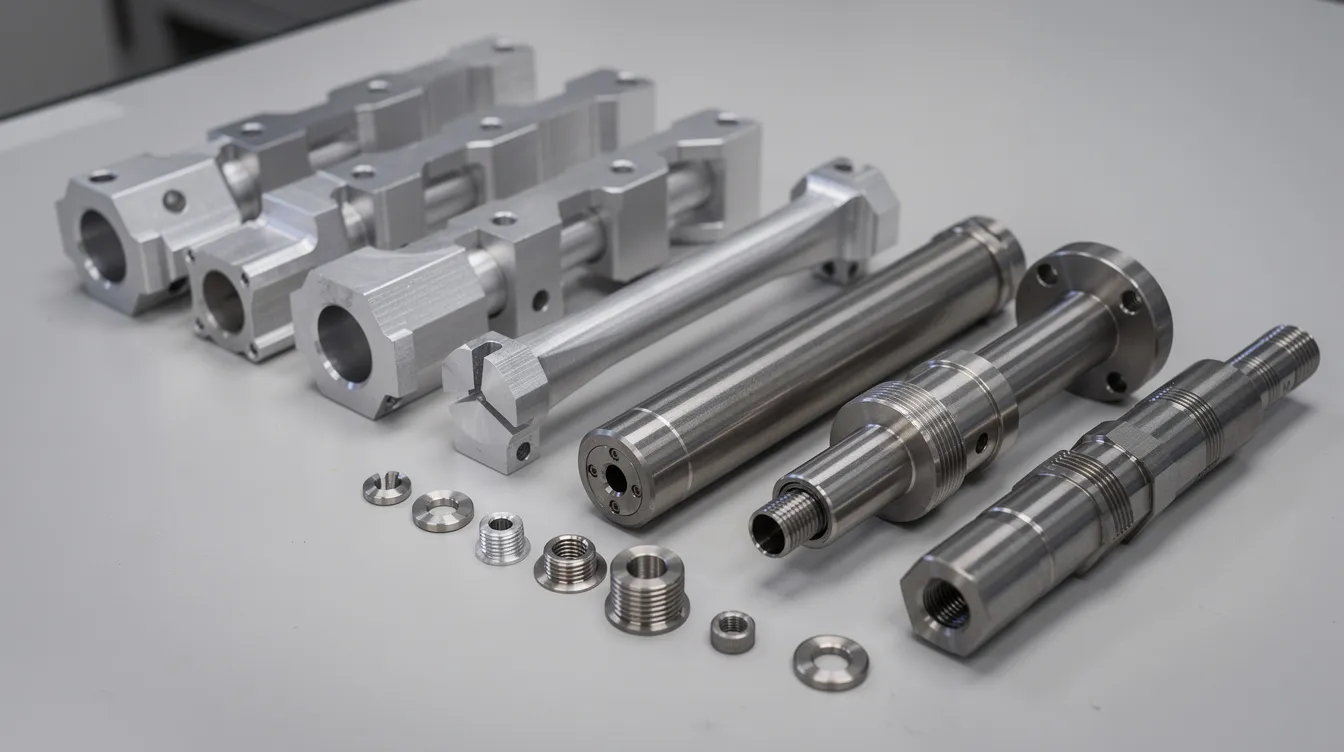
Anebon’s Core Capabilities: From Custom CNC Machining to Sheet Metal Fabrication
Anebon is not just a cnc machining company but a full precision metal manufacturing partner covering CNC, die casting, and sheet metal under one roof. CNC machining companies should offer multiple manufacturing services to reduce handling between vendors, and Anebon’s integrated approach directly addresses that need.
CNC milling capabilities span 3-axis through 5-axis machining on vertical and horizontal centers, handling complex housings, manifolds, structural parts, and custom parts with intricate pocket and contour features. Batch volumes range from single prototypes to thousands of units. Chinese CNC machining companies provide advanced multi-axis machining capabilities, and Anebon’s equipment supports multi axis machining for features that would require multiple setups on simpler machines.
Precision turning on CNC lathes and turn-mill centers delivers high concentricity for shafts, bushings, fasteners, and medical device components. Achievable surface roughness on turned diameters reaches Ra 0.4 µm or better. CNC machining includes milling, turning, and 3D printing services, and Anebon can coordinate additive manufacturing for geometries better suited to that manufacturing process.
Sheet metal fabrication covers laser cutting, bending, forming, tapping, and welding of aluminum and steel enclosures, brackets, and chassis for consumer electronics, telecom, and industrial equipment. Complementary processes include die casting for aluminum and zinc housings, post-machining of castings to high tolerance, and integration with CNC operations for cost efficiency. Injection molding is a common service offered by CNC companies, and Anebon can coordinate molded plastic components alongside machined metal parts for complete assemblies. Vacuum casting is also available for low-volume plastic prototyping needs.
High-Tolerance Workflow: How Anebon Controls Every Micron
Anebon’s end-to-end workflow starts at the RFQ stage and follows a disciplined path: RFQ receipt, DFM review, process planning, CNC programming via CAM software, first article inspection, stable production, and final QA release. CNC manufacturers often provide Design for Manufacturing reports, and Anebon’s DFM feedback at the front end catches tolerance conflicts, finish interactions, and feature accessibility issues before any chips are cut.
Advanced CAD/CAM software with simulation capabilities optimizes toolpaths for 5-axis and multi-operation parts, minimizing tool deflection and thermal distortion. Robots and AI enhance efficiency in CNC machining processes, from automated part loading to adaptive feed-rate control based on cutting forces.
Statistical process control is commonly employed in production runs of CNC machining, and Anebon tracks capability indices like Cp and Cpk to ensure processes remain centered within tolerance bands. Real-time data from machines and inspection stations feeds back into production, allowing operators and engineers to catch drift before it produces nonconforming parts.
Fixture and tooling strategies include custom fixtures with hardened locators, in-process probing on machining centers, and dedicated setups for repeat production orders. These measures reduce tolerance stack-up and enable repeatable positioning across batches. Temperature-controlled inspection rooms, coolant quality management, and scheduled machine calibration complete the control environment.
Certifications and Quality Systems That Matter for High-Tolerance CNC Parts
Certifications are the clearest way to differentiate high-tolerance cnc machining companies from generic shops. Quality management systems are validated through formal certifications in CNC manufacturing, and ISO certifications indicate adherence to international quality standards that buyers can independently verify.
Anebon holds ISO 9001:2015 for quality management and ISO 14001:2015 for environmental management. ISO 9001 ensures quality management in CNC machining by requiring documented procedures, internal audits, corrective actions, and continuous improvement. ISO 14001 certification focuses on environmental management standards including waste handling, coolant disposal, and emissions control. Many Chinese CNC companies are ISO 9001 certified for quality assurance, but buyers should verify the scope of that certification covers the actual machining and finishing processes they need.
For industry-specific requirements, buyers should look for IATF 16949 for automotive supply chains, AS9100 certification, which is essential for aerospace industry compliance, and ISO 13485, which is important for manufacturers producing medical devices or healthcare components. While Anebon’s current certifications are ISO 9001 and ISO 14001, the company adheres to customer-specific requirements from aerospace, automotive, and medical clients through PPAP documentation, first article inspection, and full material traceability where contracts demand it.
Verify certificates through the issuing body (such as SGS or TÜV) and confirm the scope covers CNC machining, not just assembly or packaging.
Typical quality tools Anebon provides include PPAP packages, control plans, detailed inspection reports with dimensional data, and material test certificates available on request.
Industries Best Served by High-Tolerance CNC Manufacturers in China
Not every industry requires sub-10-micron tolerances, but several rely heavily on them and represent the core demand for precision cnc machining manufacturer capabilities in China.
High-precision CNC machining serves industries such as aerospace, medical devices, and automotive manufacturing. In aerospace, applications include structural brackets, actuator housings, and precision actuation components where positional tolerances must hold across temperature cycles and vibration loading. AS9100 certification is essential for aerospace industry compliance, and parts often require 100% dimensional verification.
For medical devices, ISO 13485 certification is crucial for medical device manufacturing. Applications range from surgical instrument handles to orthopedic implant components and dental abutments. Biocompatible materials like titanium and 316L stainless steel dominate, and surface finish requirements often reach Ra 0.1 µm or better for implant-adjacent surfaces.
Automotive and e-mobility sectors demand IATF 16949-level process discipline for sensor housings, EV battery enclosures, and drivetrain components. Industrial automation and robotics require precision parts for actuator assemblies, encoder housings, and linear motion components where dimensional accuracy directly impacts system performance. Consumer electronics OEMs source small, high precision cnc parts and sheet metal chassis for smartphones, cameras, wearables, and laptop structures where both cosmetic appearance and dimensional tolerances matter equally.
Anebon has direct experience working with overseas OEMs across all these sectors, from rapid prototyping through full production.
Tolerances, Materials, and Surface Finishes: Getting the Spec Right
Specifying tolerances, materials, and finishes correctly is critical to high-tolerance cnc machining success and cost control. Overspecifying non-critical features drives up cost; underspecifying functional interfaces leads to assembly failures.
Typical achievable tolerances at Anebon by process:
|
Process |
Standard Tolerance |
Critical Feature Tolerance |
|---|---|---|
|
CNC Milling |
±0.01 mm |
±0.005 mm |
|
Precision Turning |
±0.01 mm |
±0.002 mm (diameters) |
|
Wire EDM |
±0.005 mm |
±0.003 mm |
|
Sheet Metal (formed) |
±0.1 mm |
±0.05 mm (machined features) |
|
Grinding |
±0.005 mm |
±0.002 mm |
Materials used in CNC machining include aluminum, steel, titanium, and high-performance plastics. Anebon supports aluminum alloys (6061, 7075), stainless steels (304, 316, 17-4PH), carbon steels, brass and copper alloys, titanium grades, and engineering plastics (ABS, POM, PEEK, PC). Surface treatments include anodizing, hard anodizing, powder coating, bead blasting, polishing, passivation, electroplating, PVD coating, and laser etching.
Certain finishes directly affect tolerance. Anodizing adds dimensional growth of 0.01–0.025 mm per side depending on alloy and type. Heat treatment can introduce warpage. This is why Anebon recommends DFM reviews before locking drawings, so critical dimensions can be planned around post-processing effects.
Cost Efficiency and Competitive Pricing for High-Tolerance Work
High-tolerance precision machining does not automatically mean prohibitive cost if the cnc machining company optimizes process and design. CNC machining in China is often 30% cheaper than local suppliers in North America or Europe. Chinese manufacturers offer competitive pricing due to lower labor costs, integrated supply chains, and high equipment utilization. China’s CNC machining costs are significantly lower than Western countries, even for tight-tolerance work.
Specific cost drivers include tolerance tightness (each step from ±0.05 mm to ±0.01 mm to ±0.005 mm adds inspection and process cost), material choice (titanium machines roughly 5–8 times slower than aluminum), part geometry (thin walls and deep pockets require specialized tooling), required surface finish, and batch size. Relaxing non-critical tolerances from ±0.01 mm to ±0.05 mm on cosmetic or non-mating features can reduce machining time by 20–40%.
Anebon leverages its Dongguan location, integrated services spanning CNC plus sheet metal fabrication plus die casting, and established supply chain to maintain competitive pricing for overseas customers. The company can propose alternative processes, such as machining from die cast blanks instead of billet, or combining machined and formed sheet metal, to improve cost efficiency while meeting functional specs.
Share your target volumes and cost goals early so Anebon can balance process choice, tooling investment, and production method to hit your budget without compromising quality.
Serious high-tolerance projects should prioritize total cost of quality, including scrap, delays, and rework, over the cheapest line-item machining quote.
How to Evaluate High-Tolerance CNC Machining Companies in China
Due diligence is critical when selecting any cnc machining company in China for tight-tolerance custom machined parts. The gap between claimed and actual capability can be wide, and a systematic evaluation process protects your project.
Key evaluation aspects include certifications and their verified scope, the equipment list with specific machine brands and models including 5-axis centers and CMMs, staff expertise (ask about programming and inspection team qualifications), sample quality from trial orders, and existing export track record in your industry. Choosing the right machining vendor is about matching capabilities to your specific tolerance, material, and volume requirements.
Request sample cnc machined parts or run a small pilot order to validate capability before committing to large programs. During the RFQ and DFM stages, evaluate responsiveness, language skills, and technical communication quality. Compare inspection reports, dimensional results, and packaging quality from different suppliers, not just their quoted price.
Anebon serves as a reference model in this process: transparent equipment and certification information, detailed quotes with process breakdown, and willingness to share process details for complex projects.
Key Equipment and Metrology Used by True High-Tolerance Shops
High-tolerance performance is directly tied to equipment and metrology capabilities. CNC machining companies use advanced machine tools for precision, but the measurement infrastructure is equally important, because you cannot control what you cannot measure.
A high-tolerance cnc machining manufacturer should operate modern 4-axis and 5-axis machining centers, high-precision CNC lathes, Swiss-type turning machines, surface grinding machines, cylindrical grinders, and EDM equipment. Milling machines must have thermal compensation, direct-drive spindles, and linear scale feedback rather than just encoder-based positioning.
Coordinate Measuring Machines (CMM) are used for precision inspection in CNC machining, and top shops maintain CMMs from brands like Zeiss or Mitutoyo alongside optical comparators, surface roughness testers, height gauges, and laser measurement systems. Manufacturers utilize advanced metrology equipment to ensure quality and precision, and advanced CNC machines improve production efficiency and accuracy when paired with proper calibration programs.
Anebon maintains calibrated metrology equipment in a temperature-controlled inspection room and provides detailed inspection reports with each batch. Some leading shops, including Anebon, integrate in-process probing and automated inspection to reduce variation and scrap on tight-tolerance runs.
Ask potential suppliers for their equipment list with brands and models, and confirm they have measurement tools matched to the tolerances on your drawings.
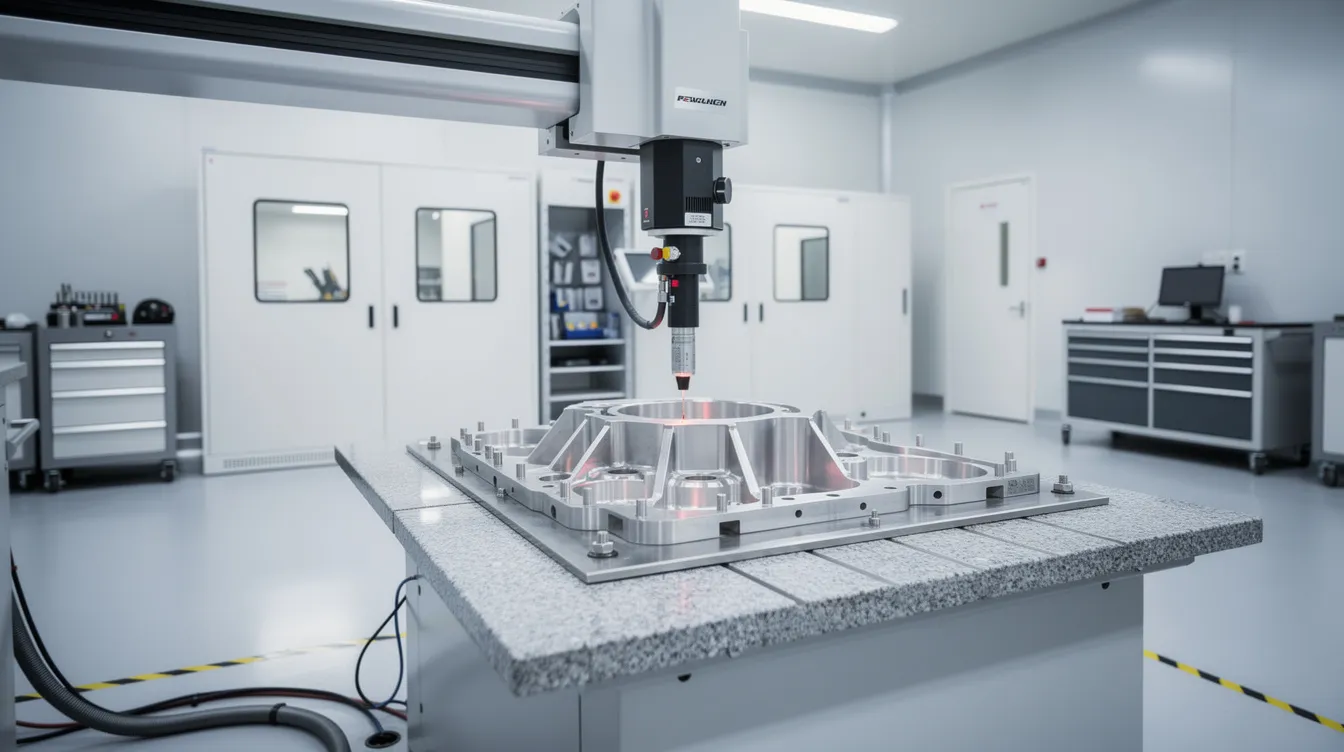
From Prototyping to Mass Production: Scaling With a Single CNC Machining Partner
Working with one cnc machining company from prototype to series production delivers consistent quality, reduced onboarding time, and shared process knowledge that compounds over time. CNC machining in China offers rapid prototyping and mass production under the same roof, and CNC machining can handle both low and high-volume production, from single pieces to tens of thousands.
Anebon runs one-off prototypes, bridge quantities in the tens to hundreds range for low volume production and low volume manufacturing validation, and mass production runs of thousands or more for high volume production using appropriate combinations of CNC machining, sheet metal fabrication, and die casting. Rapid prototyping can be completed in 5-7 days depending on complexity, giving R&D teams fast feedback on fit and function. Learn more about how rapid prototyping works to plan your development timeline.
Tolerances and process setups evolve naturally from prototyping to production. Initial prototypes may use more manual operations and flexible fixturing, while production parts get dedicated fixtures, optimized toolpaths, and potentially cast or forged preforms to reduce machining time and cost.
Consider this scenario: a consumer electronics housing starts as fully machined aluminum prototypes during R&D, then moves to die casting plus CNC post-machining for scale and cost efficiency once the design is locked. This transition from rapid manufacturing to mass production is seamless when your partner has both capabilities in-house.
Overseas OEMs should plan scalability during the first RFQ by sharing their expected roadmap from prototype to annual volumes so the production process can be designed accordingly.
Case-Style Examples of High-Tolerance Projects (Anebon and Market)
These anonymized examples illustrate how process selection, tooling, and inspection combine to solve real tolerance challenges.
Aerospace aluminum bracket – ±0.01 mm positional tolerance. A European drone manufacturer needed 5-axis machined 7075-T6 brackets with 12 precision bolt holes held to ±0.01 mm true position. Anebon programmed the parts in a single setup using axis cnc machining to eliminate re-fixturing error, validated dimensions with CMM, and scaled from 10 prototypes to 3,000+ units per year. Custom fixtures with hardened locating pins maintained repeatability across batches.
Medical device stainless steel component – mirror finish and tight concentricity. A 316L surgical instrument shaft required concentricity within 0.005 mm and a polished surface of Ra 0.2 µm. Precision turning followed by centerless grinding achieved the form tolerance, while electropolishing delivered the finish. Every piece underwent 100% inspection with documented traceability, meeting the client’s ISO 13485-aligned requirements.
Consumer electronics sheet metal chassis – tight flatness and cosmetic anodizing. A European consumer electronics OEM needed anodized aluminum chassis with flatness within 0.05 mm over a 300 mm span and consistent color matching. Anebon used laser cutting plus CNC bending with stress-relief steps, followed by machined datum surfaces and Type II anodizing. Delivery to the client ran on a 10-day lead time for a new product launch, supporting their high quality prototyping phase.
Have a tolerance challenge? Share your drawings with Anebon to explore feasible process routes and get a detailed quotation.
Comparing Anebon With Other Well-Known CNC Machining Companies in China
The Chinese precision manufacturing ecosystem includes many capable companies in china. This section provides factual context without endorsing any competitor over Anebon.
RapidDirect operates a 20,000 square meter facility for various machining services and positions itself as an online manufacturing platform. WayKen has over 20 years of experience in CNC machining services and focuses on rapid prototyping and bridge production. Gensun Precision Machining achieves tolerances of ±0.005 mm in CNC machining across multiple metal alloys. PARTMFG offers precision tolerances as tight as ±0.001 mm on specialized grinding operations. Junying metal manufacturing and DEK each have sector-specific strengths in automotive tooling and precision grinding respectively.
Many of these top cnc machining companies position themselves as online platforms or multi-process service networks. Anebon takes a different approach: direct factory engagement with a dedicated engineering team, not a quoting algorithm. The company’s differentiators include tight in-house tolerance capability down to ±0.002 mm, ISO-certified quality and environmental management, and strong DFM collaboration for overseas OEMs.
Buyers should look beyond brand recognition to concrete capabilities, achieved tolerances, certification scope, and sample results when choosing a partner. Consider a dual-source strategy initially, with Anebon plus one other supplier, to benchmark performance and risk, then consolidate based on data.
How Overseas OEMs Typically Collaborate With Anebon
The typical engagement process follows a clear path: initial outreach with drawings and 3D models, DFM review and quotation, prototype run, feedback and refinement, and ramp-up to production. Strong customer support enhances project success in CNC machining, and Anebon provides English-language engineering support via email and video calls with time-zone-aligned project management.
Typical lead times for prototypes run 5–10 business days depending on complexity and material, while production batches generally ship within 2–4 weeks after approval. Anebon handles NDAs and IP protection agreements for sensitive engineering projects from Europe, North America, and Asia-Pacific clients.
Flexible incoterms including EXW, FOB, CIF, and DAP are supported, along with logistics coordination, certificates of origin, and customs documentation. Anebon functions as a long-term OEM custom machining services partner rather than a one-off job shop, building institutional knowledge of each client’s requirements over successive orders.
Checklist: Choosing a High-Tolerance, Certified CNC Machining Partner in China
When evaluating a chinese cnc machining company for tight-tolerance work, work through these decision points systematically.
Start by verifying ISO certifications through the issuing body and confirming the scope covers CNC machining and related processes. Request the complete equipment and metrology list, including machine brands, models, and CMM specifications. Confirm reference projects in your specific industry, and ask to review actual inspection reports from comparable work, not marketing samples.
Run a pilot order of 5–10 parts to validate dimensional accuracy, surface finish, and packaging quality before committing to production volumes. Evaluate DFM feedback depth and response times during the quoting stage. Ask directly about achievable tolerances by feature type and material, and how the shop manages temperature, tool wear, and inspection frequency during the production process.
Include commercial checks: payment terms, warranty on quality, rework policies, and typical on-time delivery performance. Rank potential suppliers, including Anebon, against these criteria in a simple internal scorecard to support procurement decisions.
Anebon is ready to provide the necessary documentation, sample parts, and detailed process information to support this kind of structured evaluation.
Frequently Asked Questions About High-Tolerance CNC Manufacturers in China
What tolerance levels can Chinese cnc machining companies realistically achieve? Leading cnc machining factories in China routinely achieve ±0.01 mm on standard precision parts and ±0.005 mm on critical features. Specialized operations like grinding and EDM can reach ±0.002 mm or tighter. The best machining methods combine multi-stage finishing with controlled environments to maintain these levels across batches.
How do I verify a supplier’s certifications? Request a copy of each certificate and check the certificate number with the issuing body (SGS, TÜV, BSI, etc.). Confirm the scope includes the processes you need, such as CNC machining, turning, and finishing, not just assembly or trade.
Can I order a single prototype part? Yes. Anebon accepts single-piece prototype orders through to high volume production. CNC machining in China offers rapid prototyping and mass production, and prototype lead times typically run 5–7 business days.
What is the typical lead time for tight-tolerance cnc parts? Prototypes generally take 7–15 business days depending on material availability and complexity. Production batches run 2–4 weeks after first article approval. Lead times compress for repeat orders where fixtures and programs already exist.
How is IP protected when outsourcing to China? Reputable chinese manufacturers like Anebon sign NDAs and IP protection agreements before receiving drawings. Data is stored on secured servers, and access is restricted to project-assigned personnel.
What information do I need to send for an accurate quote? At minimum, provide 3D CAD models (STEP or IGES), 2D drawings with GD&T callouts, material specifications, surface finish requirements, and target quantities. Sharing your production capacity roadmap and cost goals helps Anebon recommend the most cost-effective manufacturing process.
Does Anebon support aluminum extrusion or metal stamping? Anebon’s core capabilities center on CNC machining, sheet metal fabrication, and die casting. For aluminum extrusion and metal stamping requirements, Anebon can coordinate with vetted partners within its Dongguan supply chain to deliver custom solutions as part of a complete project.
Contact Anebon directly with project-specific questions not covered here.
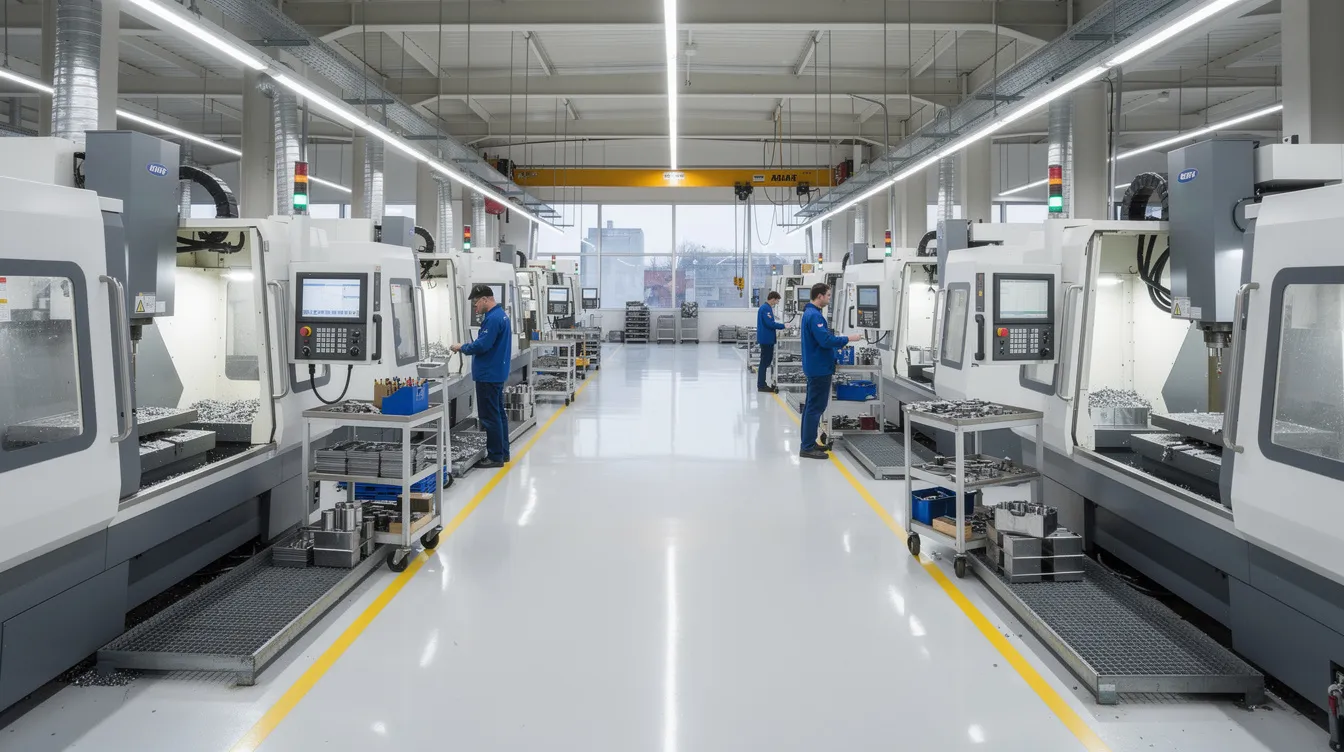
Conclusion: Partnering With Certified, High-Tolerance CNC Manufacturers in China
Selecting the right precision engineering partner in China comes down to documented capability, certified quality systems, and a collaborative approach to DFM and process optimization. The Chinese market offers unmatched depth in cnc machining companies, with Anebon Metal Products Limited standing out as a reliable, ISO-certified OEM partner in Dongguan that delivers dimensional accuracy down to ±0.002 mm alongside integrated manufacturing capabilities.
Successful projects combine precise specifications, the right materials and finishes, and collaboration with an experienced cnc machining company that invests in advanced equipment, metrology, and process control. Anebon offers custom cnc machining, precision turning, sheet metal fabrication, die casting, and finishing services for sectors including aerospace, medical devices, automotive, robotics, and consumer electronics, delivering high quality products with consistent quality from prototype through mass production.
Move from research to action. Share your CAD models and requirements with Anebon for a no-obligation DFM review and quotation. Request a quote or schedule a technical consultation today and see why leading OEMs trust Anebon as their first choice among high-tolerance cnc machining factories in China.