Finding the Best CNC Parts Suppliers for Your Manufacturing Needs
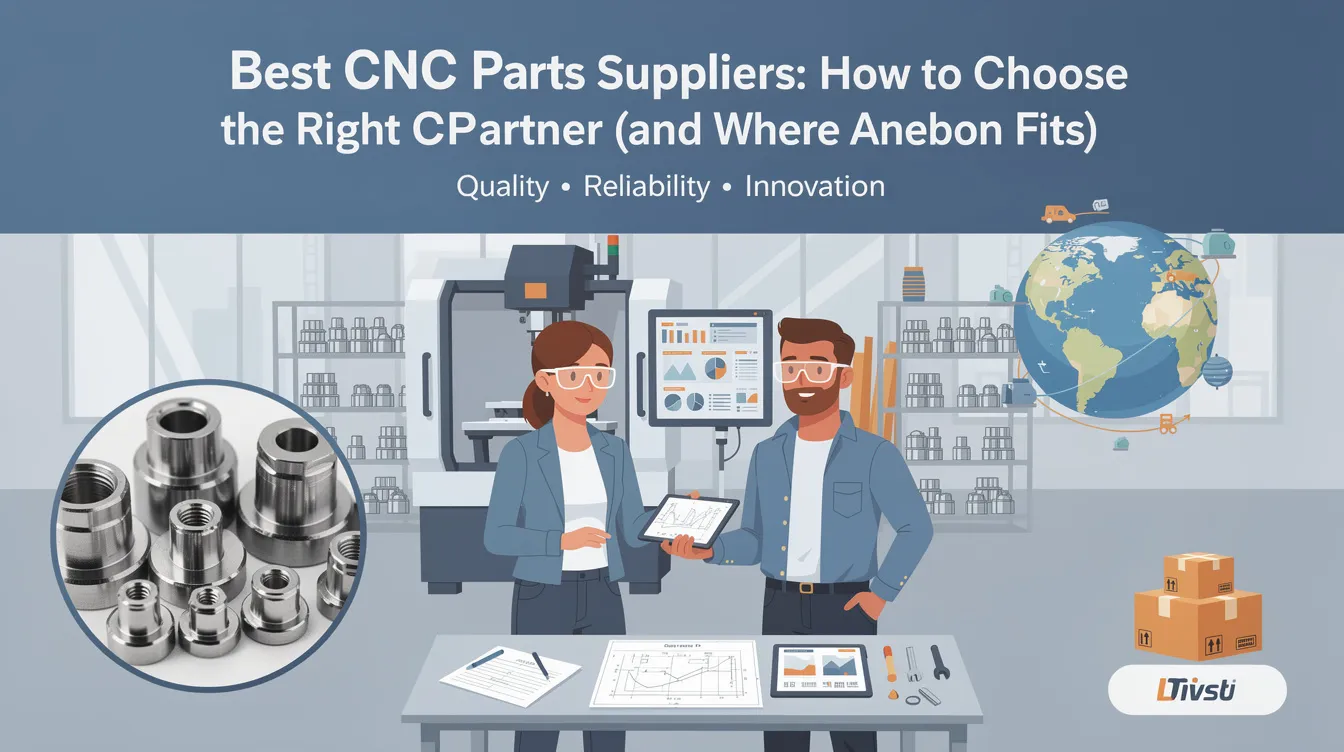
Best CNC Parts Suppliers: How to Choose the Right CNC Partner (and Where Anebon Fits)
Choosing from the best CNC parts suppliers can feel overwhelming. There are thousands of CNC machining companies worldwide, each claiming precision, speed, and competitive pricing. The real challenge is separating genuine capability from marketing noise. This guide walks you through exactly what to evaluate-from tolerances and materials to communication and quality systems-so you can confidently pick the right supplier for your project.
Quick Answer: What Makes the Best CNC Parts Supplier?
The best CNC parts supplier delivers consistent dimensional accuracy, predictable lead times, and clear communication across both CNC milling and CNC turning projects. That sounds simple, but few shops consistently hit all three.
Here’s what “best” means in practice:
-
Verified tolerances on every drawing, confirmed by machine capability data-not just a claimed number on a website.
-
Reliable CMM inspection reports shipped with every batch of CNC machining parts, including dimensional charts against your specifications.
-
Low scrap and rework rates, typically under 3–5% for complex precision machining work.
-
Same-day or within-24-hour RFQ replies, with clear lead time windows: roughly 5–7 business days for simple aluminum 6061 prototypes, and 12–20 days for complex 5-axis parts that include finishing.
-
Modern CAD/CAM workflows driving 3- to 5-axis CNC milling and multi-axis CNC turning centers, minimizing setups and reducing both cost and datum error.
-
Cutting edge technology like Swiss machining and turn-mill centers for micro-diameter shafts and intricate features.
Anebon Metal Products Limited fits these criteria: founded in 2010, ISO 9001:2015 and ISO 14001:2015 certified, and capable of holding tolerances as tight as ±0.002 mm on critical dimensions. ISO 9001:2015 certification ensures quality management standards, while ISO 14001:2015 certification indicates environmental management standards-both independently audited.
Define Your CNC Part Requirements Before You Pick a Supplier
The fastest way to find the best CNC parts supplier is to define your own needs first. Without a clear specification, quoting is guesswork-and you’ll waste weeks comparing apples to oranges.
Key requirement categories to lock down:
-
Target material: aluminum 6061-T6 for general structural parts, stainless steel 316L for corrosion resistant food-contact brackets, PEEK for high-temperature medical components, or ABS for rapid prototyping of electronics housings.
-
Estimated annual volume: are you ordering 5 prototypes, a 100-piece pilot run, or planning high volume production of thousands per month?
-
Acceptable lead time: how fast do you need prototypes versus production parts, and what’s the true cost of delay?
-
Special compliance needs: aerospace (AS9100), medical devices (ISO 13485 interfaces), automotive (PPAP/APQP), or food-grade and RoHS requirements.
Prepare a complete RFQ package: 3D CAD files (STEP/IGES), 2D technical drawings with GD&T callouts, surface finish requirements (e.g., Ra 0.8 µm on sealing faces), and flagged critical dimensions.
Real examples that sharpen your scope: drone frames in 7075-T6 requiring thin-wall CNC milling, stainless steel 304 brackets for food processing equipment, or ABS housings for consumer electronics prototypes. A precise scope helps you distinguish generic CNC machining service providers from the genuinely best CNC machining companies for your project.
Core Capabilities to Expect from the Best CNC Machining Companies
Capability is more than machine count. It’s about the range and depth of CNC machining services a CNC shop can deliver repeatably-across materials, geometries, and production volumes.
-
3-axis and 4-axis CNC milling for most prismatic parts: plates, brackets, pockets, and housings.
-
5-axis CNC machining for complex geometries, freeform surfaces, and single-setup machining that eliminates datum transfer errors. 5-axis machining allows for complex geometries and intricate details that would otherwise require multiple setups.
-
CNC turning with live tooling for shafts, bushings, threaded connectors, and housings with cross-holes or flats machined in one cycle.
-
Swiss turning for micro-diameter shafts and long slender parts common in medical and electronics applications.
-
Supplemental processes: wire EDM for fine features in hardened materials, surface grinding for tight flatness and parallelism, and sheet metal fabrication for enclosures and brackets.
-
CNC machining services can include 3-, 4-, and 5-axis capabilities, and machining capabilities should include multi-axis operations for complex geometries.
Concrete benchmarks to look for: ability to hold ±0.01 mm routinely and ±0.002 mm on critical features, with bore sizes from under 1 mm micro holes up to 500 mm flanges. CNC machining can achieve tolerances as tight as ±0.0001 inches. Strong CNC machining companies handle prototypes as low as 1–5 pieces and can ramp to produce over 10,000 parts per month without sacrificing consistency. Always ask potential suppliers about their capabilities in secondary operations like finishing and assembly.
Anebon offers 3- to 5-axis CNC milling, CNC turning, die casting, and sheet metal fabrication in Dongguan, China-allowing combined mechanical assemblies from a single supplier and eliminating multi-vendor coordination headaches.
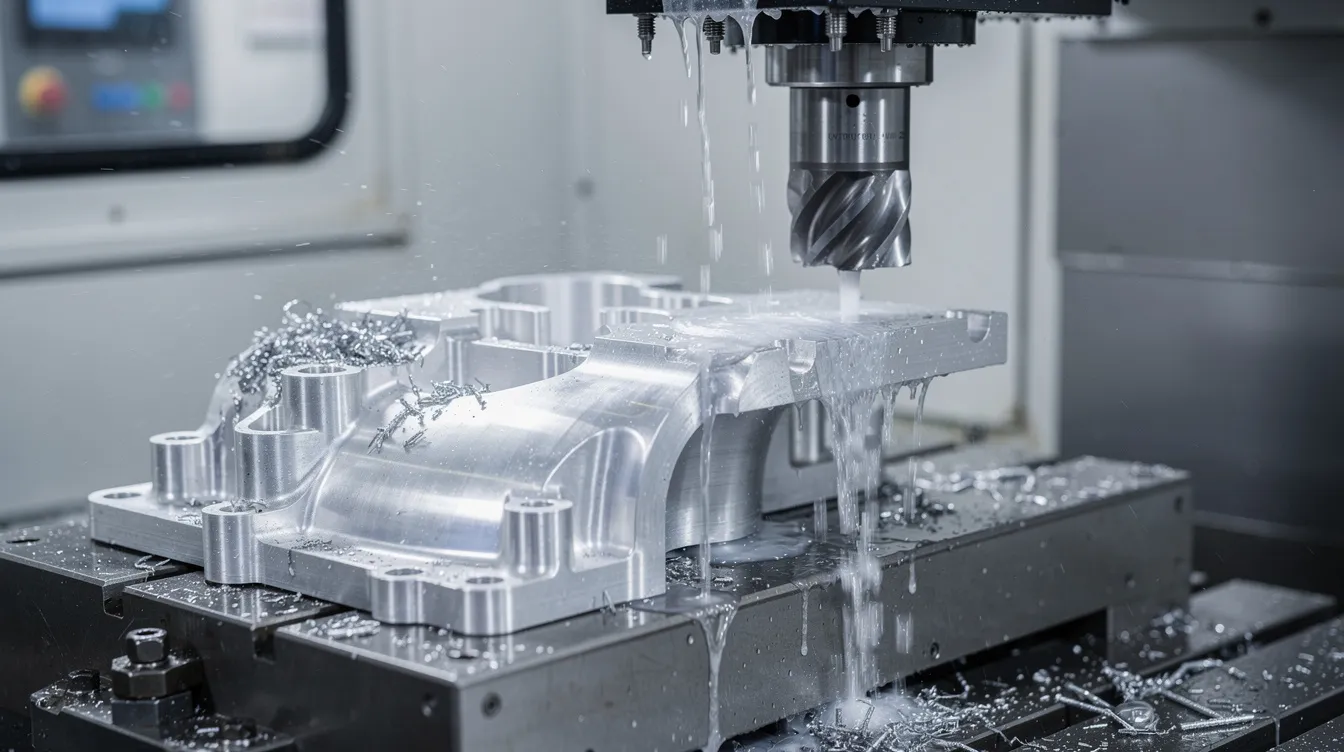
Materials Expertise: Metals and Plastics Your CNC Parts Supplier Should Handle
The best CNC parts suppliers are not limited to one or two alloys. They can confidently machine a wide spectrum of metals and engineering plastics, each demanding different cutting speeds, tooling, and coolant strategies. Leading materials for CNC machining include aluminum, titanium, and engineering plastics. CNC machining supports a wide range of materials including aluminum and titanium.
Metals your supplier should handle:
-
Aluminum alloys (6061-T6, 7075-T6, 2024): Aluminum 6061 is widely used for its strength and machinability and offers lower cost for structural parts. Aluminum 7075 offers high strength and is commonly used in aerospace applications like drone arms and actuator housings.
-
Stainless steel (303, 304, 316L): known for its excellent machinability and corrosion resistance, making it ideal for food-contact and marine environments.
-
Steel alloy grades (4140, tool steels): for high-strength tooling and fixtures.
-
Titanium (grade 2, grade 5): favored for its strength-to-weight ratio and corrosion resistance, widely used in aerospace components and medical components. Its low thermal conductivity demands specialized tooling and slower cutting speeds.
-
Brass: easy to machine and resistant to corrosion, commonly used for brass inserts and electrical fittings.
-
Copper: highly conductive and corrosion-resistant, but weldability is moderate-important to factor in for assemblies.
Engineering plastics:
-
ABS and polycarbonate for low-cost prototypes and impact-resistant covers.
-
Delrin (POM) for gears, bearings, and wear parts-economical and holds tolerances well.
-
PEEK and PEI (Ultem) for high-temperature and chemical resistance applications in regulated industries.
-
PMMA for optical parts; PTFE for low-friction seals.
Material choice can affect CNC pricing by 5–10 times-PEEK stock costs 7–20x more than Delrin. A qualified CNC parts supplier helps you choose: recommending 6061 for cost-efficient structural parts versus 7075 for high-load applications. Understanding the supplier’s experience with specific materials is essential for project success.
Anebon routinely machines aluminum, stainless steel, titanium, brass, and engineering plastics for aerospace, medical device, and robotics clients. Real-world examples include stainless 316L surgical brackets and PEEK medical components that must withstand autoclave sterilization cycles.
Quality Systems, Tolerances, and Inspection: Getting CNC Parts That Actually Fit
The “best CNC” reputation hinges on verifiable quality systems-not marketing claims. When a CNC parts supplier says they hold tight tolerances, you need documented proof, not promises. High-quality suppliers will validate that their machines can maintain the required tolerances for your parts through documented capability studies.
Essential certifications and documentation:
-
ISO 9001:2015 for quality systems: document control, calibration, non-conformance handling.
-
ISO 14001:2015 for environmental management, increasingly required by OEMs in regulated industries.
-
First article inspection (FAI) or PPAP/FAIR for aerospace and automotive programs. Regular evaluations against industry standards like AS9100 can enhance supplier reliability in regulated industries.
-
CNC suppliers should provide material certificates for traceability. Material traceability and comprehensive documentation are important when sourcing CNC parts.
Inspection equipment that matters:
-
Coordinate Measuring Machines (CMMs) for verifying multi-axis tolerances on complex features. Inspection capabilities should include tools like Coordinate Measuring Machines for verifying tolerances.
-
Height gauges, surface roughness testers, pin gauges, and thread gauges for in-process checks.
-
Suppliers should provide comprehensive inspection reports and material certifications for quality assurance. Quality assurance includes inspections and certifications at multiple stages.
Concrete tolerance ranges and their cost impact:
|
Tolerance Level |
Typical Application |
Cost Impact |
|---|---|---|
|
±0.05 mm |
General commercial parts |
Baseline |
|
±0.01 mm |
Precision jigs, aerospace interfaces |
Moderate increase |
|
±0.005 mm |
Swiss-machined medical/aerospace |
35–50% premium |
|
±0.002 mm |
Ultra-precision critical features |
50–75% premium |
Tighter tolerances increase CNC machining costs significantly through higher scrap rates, more frequent tool changes, extended inspection time, and thermal stability requirements. CNC machining can achieve tolerances as tight as ±0.002 mm, but specifying that everywhere is wasteful.
Anebon uses CMM inspection and detailed reports-including dimensional charts and material certificates-for overseas OEM customers who cannot visit the factory in person. Repeatability (same result on the 500th part as on the 1st) is what separates the best CNC parts supplier from low-cost but risky options.
Lead Times, Instant Quotes, and Pricing Transparency
Reliable schedules and clear pricing are as important as per-piece cost when comparing CNC machining services. Fast lead times and transparent communication are essential for reliable suppliers.
Realistic lead time ranges:
-
Simple CNC milling prototypes: 3–7 business days. Typical lead times for CNC prototypes are 3–7 days.
-
Medium-complexity CNC turning and milling: 7–14 days.
-
Multi-operation production parts with anodizing, plating, or painting: 15–25 business days. Complex assemblies may require 10–20 days for production.
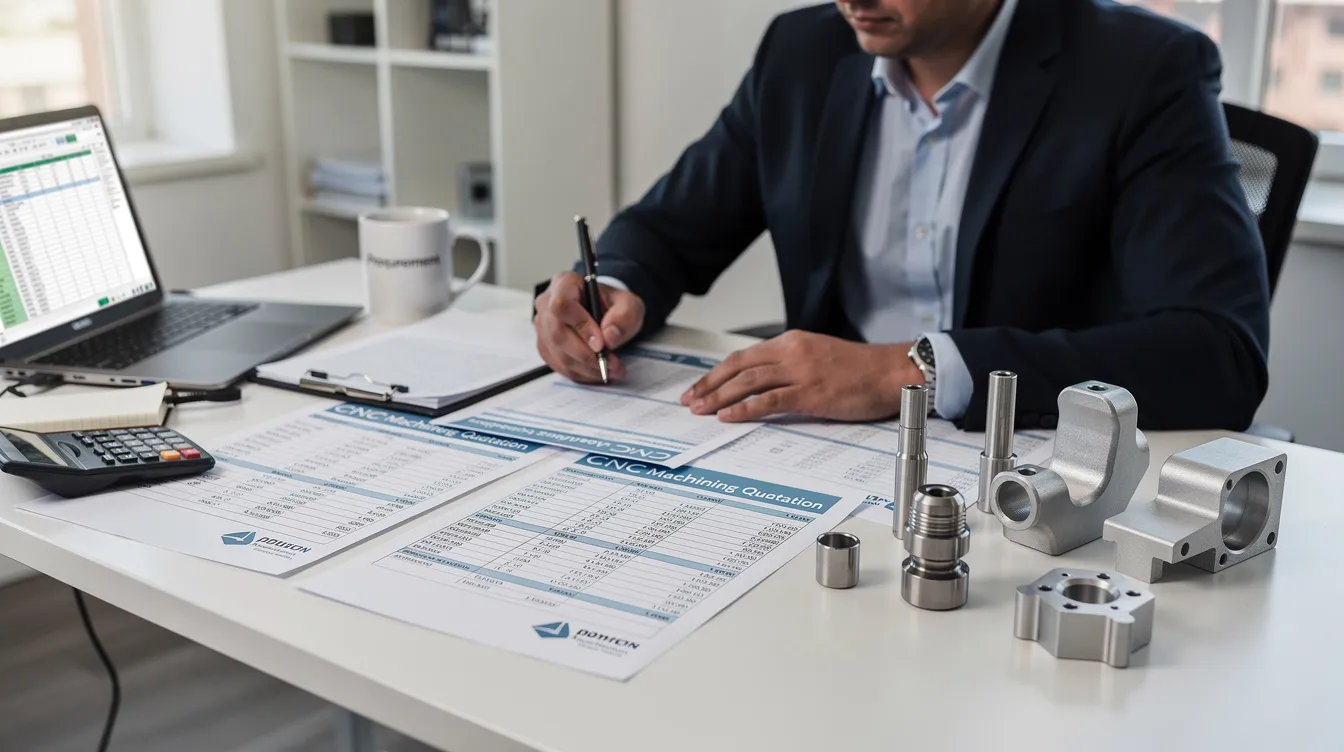
What a transparent CNC machining quote should show:
-
Material cost (stock price per kg or bar)
-
Machining time (roughing + finishing cycles)
-
Setup and programming costs
-
Surface treatments and coating
-
Inspection level (sampling vs. full report)
-
Shipping method and incoterms (air vs. sea)
Digital quoting systems help streamline CNC pricing and lead times. Some best CNC machining companies offer automated quote portals, but the strongest CNC parts suppliers still perform human DFM reviews before locking pricing. The 2024–2026 trend is toward hybrid systems: automated baseline quotes plus engineer review to catch geometry or tolerance issues that silently inflate cost.
Anebon typically responds to RFQs within 24 hours with line-item pricing and lead times, avoiding unrealistic “next-day” delivery promises on complex CNC parts. Treat extremely low prices or suspiciously short lead times as red flags-ask follow-up questions about capacity, shift policies, and whether finishing is done in-house or outsourced.
Domestic vs Overseas CNC Parts Suppliers
Both domestic and overseas CNC machining companies can be “best” depending on your budget, timeline, and compliance needs. The right supplier depends on your specific project constraints.
Domestic advantages:
-
Same or similar time zone for real-time communication.
-
Easier factory visits and audits.
-
Simpler IP protection enforcement.
-
Faster shipping for urgent reworks and rapid prototyping cycles.
Overseas advantages:
-
Lower labor and overhead costs-often 20–40% savings on volume lots, delivering significant cost efficiency.
-
Broad material capabilities and 24/7 machine utilization.
-
Manufacturing hubs like Dongguan and Shenzhen offer dense supplier ecosystems with modern equipment (DMG MORI, Mazak, Makino machines are common). Nearly 40% of audited Chinese CNC factories now operate premium 5-axis machines.
Risk mitigation for overseas sourcing:
-
Sign NDAs before sharing CAD files.
-
Run sample or pilot batches before committing volume.
-
Require first article inspection reports and material certs.
-
Ship via trackable air freight (3–5 days door-to-door for small batches).
Anebon is a China-based CNC parts supplier that has been serving overseas OEM clients since 2010, combining lower cost advantages with ISO-backed quality systems. A practical hybrid sourcing model works well: use local shops for emergency prototypes and qualification, then partner with an overseas supplier like Anebon for validated production runs and cost-sensitive programs.
Evaluating Communication, Engineering Support, and DFM
The best CNC machining service is collaborative. Engineers and machinists should help optimize your designs-not just run G-code and ship whatever comes off the machine.
Signs of a strong CNC machining partner:
-
RFQ acknowledgements within hours, not days.
-
Clear questions on ambiguous drawings instead of silent assumptions.
-
Proactive status updates at key milestones: programming complete, machining started, finishing underway, shipment booked.
DFM feedback is a critical component of choosing a CNC supplier for improved design and cost efficiency. Concrete DFM examples include:
-
Adjusting fillet radii to match standard end mills, reducing tool deflection and cycle time.
-
Relaxing unnecessary ±0.01 mm tolerances on non-functional surfaces to cut inspection overhead.
-
Converting deep blind holes to through-holes for better chip evacuation.
-
Suggesting material swaps (e.g., 6061 instead of 7075 where loading allows) for lower cost.
Anebon’s engineers provide DFM feedback in English, often recommending geometry or material tweaks that reduce machining time by 10–30% while keeping function intact. A practical tip: test any supplier’s communication quality with a small prototype order before committing large production volumes. How many clarifying questions do they ask? Do they propose improvements? That tells you everything about their engineering support capacity.
Key Processes: CNC Milling, CNC Turning, and Beyond
Understanding basic processes helps you match your parts to the right CNC machining services. CNC machining processes can encompass various operations including turning and milling.
CNC milling: Ideal for prismatic parts-heat sinks, plates, brackets, and housings. 3-axis handles general pockets and profiles. 5-axis CNC enables complex designs with undercuts, angled features, and freeform surfaces in a single setup, dramatically reducing datum error.
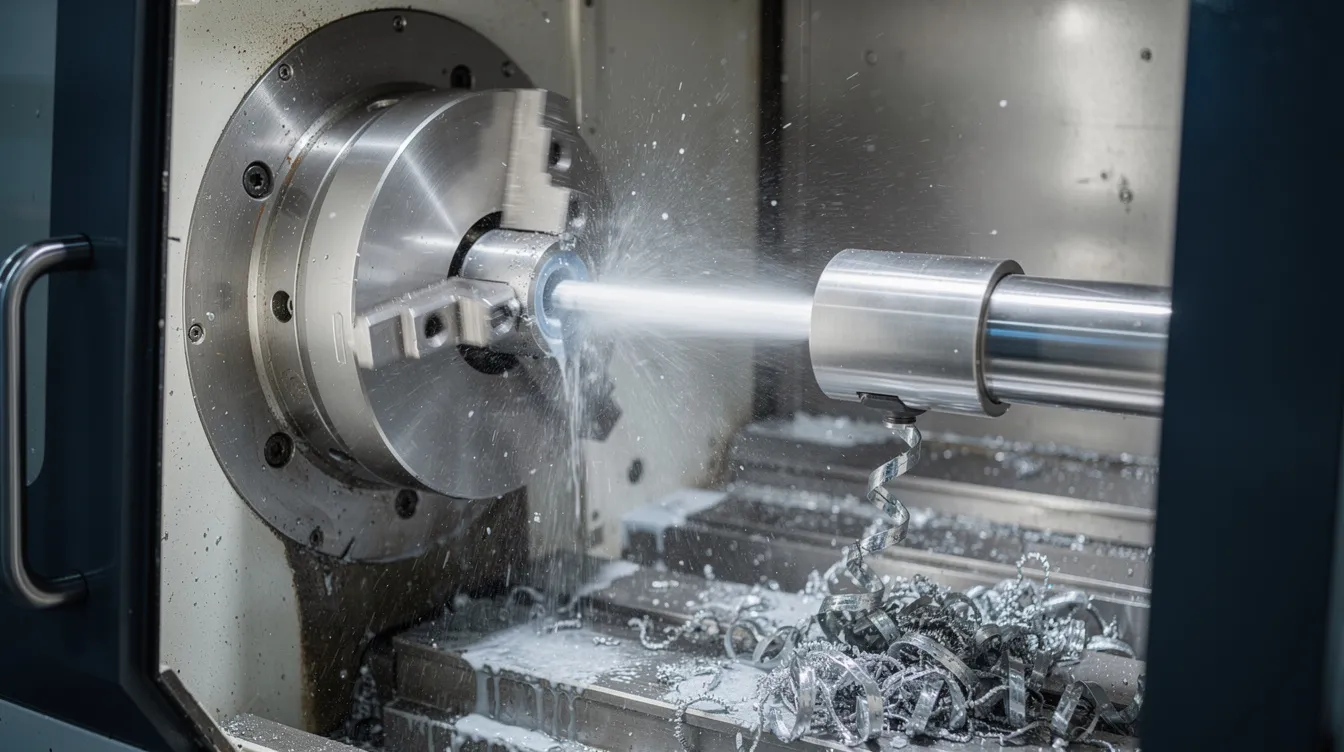
CNC turning: Best for cylindrical custom parts-CNC turning produces shafts, bushings, and threaded features. Live tooling on modern lathes adds side holes, flats, and cross-drilling in one cycle, eliminating secondary setups.
Swiss turning and turn-mill: For micro-diameter precision requirements and long slender components used in medical devices and electronics. Swiss machining can achieve ±0.005 mm on small-diameter features.
Supplemental processes: Wire EDM for intricate contours in hardened materials, surface grinding for tight flatness and parallelism, and sheet metal fabrication for enclosures and structural brackets.
Concrete use-cases: CNC turning stainless 303 sensor housings, 5-axis CNC milling drone frames in 7075 from a solid block, or combined milling and turning for automotive pump bodies. Anebon integrates CNC milling, CNC turning, die casting, and sheet metal under one roof, shortening supply chains for OEM assemblies.
Surface Finishes and Post-Processing for CNC Machining Parts
The best CNC parts suppliers deliver not just machined blanks but finished, ready-to-assemble components. Surface finish is often the difference between a prototype and a production part.
Common finishes for metals:
-
Anodizing (Type II and Type III hardcoat) for aluminum-adds wear resistance and color options.
-
Zinc and nickel plating for steel alloy parts requiring corrosion resistance.
-
Passivation for stainless steel to restore the protective oxide layer.
-
Bead blasting for uniform matte surfaces.
-
Powder coating for durable color finishes on industrial enclosures.
Typical plastic finishing:
-
Vapor polishing for PMMA optical clarity.
-
Painting and silkscreening for ABS housings.
-
Light bead blasting for functional textures on engineering plastics.
Surface finish requirements matter financially: Ra 1.6 µm (standard machined) costs far less than Ra 0.4 µm (polished sealing face). Your supplier should advise where high polish is truly necessary versus where standard finish suffices.
Anebon coordinates machining and post-processing in sequence, then inspects critical dimensions after finishing to ensure coatings or plating haven’t pushed machined parts out of tolerance. Thick plating adds to dimensions; anodizing can slightly thin features. The best suppliers account for these allowances upfront.
Industry Experience: Matching CNC Suppliers to Your Sector
Sector experience matters because aerospace, medical, automotive, and electronics all have different tolerance, documentation, and cleanliness expectations. A CNC shop with an industry track record in your sector will navigate compliance requirements faster and with fewer costly mistakes.
Typical industries served by top CNC machining companies:
-
Aerospace components: actuator housings, brackets, flight-critical fittings requiring full traceability and tight tolerances.
-
Medical devices: surgical instruments, implantable trial components, and medical components needing biocompatible materials and sterilization compatibility.
-
Automotive: engine brackets, tooling, electrical fittings, and fixtures-often requiring APQP/PPAP participation.
-
Electronics and robotics: precision enclosures, heat sinks, and consumer electronics housings with thin walls and cosmetic surface finish requirements.
The best CNC machining companies can show sample parts, anonymized drawings, or case studies from your industry. Anebon mainly serves overseas OEMs in aerospace, medical, automotive, electronics, and industrial automation, providing traceable CNC machining parts and assemblies. Ask about regulatory familiarity-even if the supplier doesn’t hold ISO 13485 directly, they should understand how to cooperate with your quality team on documentation for regulated industries.
How to Vet and Compare CNC Parts Suppliers Step by Step
Narrowing a long vendor list down to a few serious candidates requires a structured approach, not gut instinct. Choosing a CNC parts supplier requires evaluating their technical capability and quality control infrastructure.
A step-by-step comparison process:
-
Shortlist based on certifications and capabilities: verify ISO 9001 minimum, confirm the CNC machining process matches your geometry (5-axis if needed), and check material familiarity.
-
Send the same RFQ package to 3–5 CNC parts suppliers. Include full 3D CAD files, 2D drawings with GD&T, material grade, and finishing specs. Apples-to-apples comparison requires identical inputs.
-
Compare quotes for detail and clarity, not just price. Look for line-item breakdowns, explicit tolerance commitments, and realistic lead time windows.
-
Request process capability information: typical tolerances held on similar parts, sample inspection reports, and photos of past CNC machining projects.
-
Place a pilot order (10–50 pieces) with top candidates. Proper qualification of suppliers should include test runs for dimensional accuracy and certification documentation.
Anebon frequently participates in such pilot builds for new OEM clients, using them to fine-tune fixtures, toolpaths, and packaging. Document outcomes-scrap rate, deviation reports, transit damage-to make data-driven decisions about who is truly the right supplier for your needs.
Common Problems with CNC Parts Suppliers and How Top Shops Avoid Them
Every engineer who has sourced CNC parts has stories: dimensions off, deliveries late, drawings misinterpreted, or surface defects that shouldn’t exist. Here are the most frequent failure modes and how top shops prevent them.
Common failure modes:
-
Holes out of position due to worn tooling or poor datum setup.
-
Warping on thin-wall aluminum parts from aggressive feed rates-especially in 7075.
-
Incorrect threads (metric vs. imperial mix-ups).
-
Missing deburring on sharp edges, creating assembly or safety issues.
-
Inconsistent quality control between first piece and final piece in a batch.
How high-level CNC machining companies prevent these:
-
Pre-production dry runs and first-piece inspection before committing full batches.
-
In-process inspection at critical stages with in house inspection equipment.
-
Tool-life monitoring and proactive cutter changes before wear causes drift.
-
Clear internal work instructions tied to your technical drawings and datum references.
Illustrative scenarios: a 7075 enclosure warping is solved by adding intermediate rest machining steps, lighter depth of cut, and measuring between passes. Thread issues are resolved by standardizing tap libraries and using go/no-go gauging on every part. If a machine breaks or a cutter fails mid-batch, documented procedures ensure the next setup matches the first.
Anebon’s team routinely performs first-piece inspection and adjusts toolpaths before committing full batches, reducing scrap and rework for overseas clients. Ask any potential supplier how they handle non-conformances and whether they will rerun defective CNC machining parts at their own cost.
When to Move from Prototyping to Production with Your CNC Parts Supplier
The best CNC machining partner can support you from rapid prototyping through full scale production, but the transition needs deliberate planning. Suppliers should confirm whether they can handle specific production volumes like rapid prototyping or mass production. Scalability is key for suppliers to meet growing production demands.
Signals that it’s time to scale:
-
Design validated through fit, function, and field testing on prototype CNC parts.
-
Demand forecasts are reasonably stable.
-
Customers or channels are confirmed.
What to confirm before ramp-up:
-
Process capability studies on critical dimensions (Cpk values).
-
Confirmed fixtures and programs locked down for consistency across production volumes.
-
Agreed packing standards and shipping methods.
-
Capacity reservations at the supplier-especially for large runs or exotic alloys.
Anebon can start with low-volume CNC machining, then migrate stable designs into more cost-efficient processes like die casting or progressive stamping plus CNC finishing where appropriate. Use framework agreements or blanket POs with call-off schedules to secure capacity and pricing once production parts are validated. Note that while CNC machining handles most geometries, some high-volume parts may benefit from combining injection molding or casting with finish machining for optimal cost efficiency.
How Anebon Metal Products Limited Stands Out as a CNC Parts Supplier
Anebon is a China-based, ISO-certified CNC machining company founded in 2010, focused on overseas OEMs who need precision requirements met without domestic pricing.
Key technical capability:
-
3- to 5-axis CNC milling, CNC turning, die casting, and sheet metal fabrication-all in Dongguan, China.
-
Anebon holds tolerances down to ±0.002 mm on critical dimensions, verified by CMM inspection.
-
CNC machining can produce over 10,000 parts per month for volume programs.
Material capabilities:
-
Aluminum, stainless steel, titanium, brass, copper, steel alloy grades, and engineering plastics like PEEK and Delrin.
-
Industries served include aerospace, medical devices, automotive, electronics, and robotics.
Quality and service:
-
ISO 9001:2015 and ISO 14001:2015 certifications, with full material traceability on request.
-
English-speaking engineers providing DFM feedback before production.
-
Detailed 24-hour quotations with line-item pricing.
-
Flexible volumes from single prototypes to tens of thousands of CNC machining parts per year.
Anebon is positioned as a long-term strategic CNC machining partner-not a spot-buy CNC parts supplier. Their combination of precision machining depth, multi-process capability, and quality standards makes them a strong candidate for OEMs seeking to consolidate their supply chain.
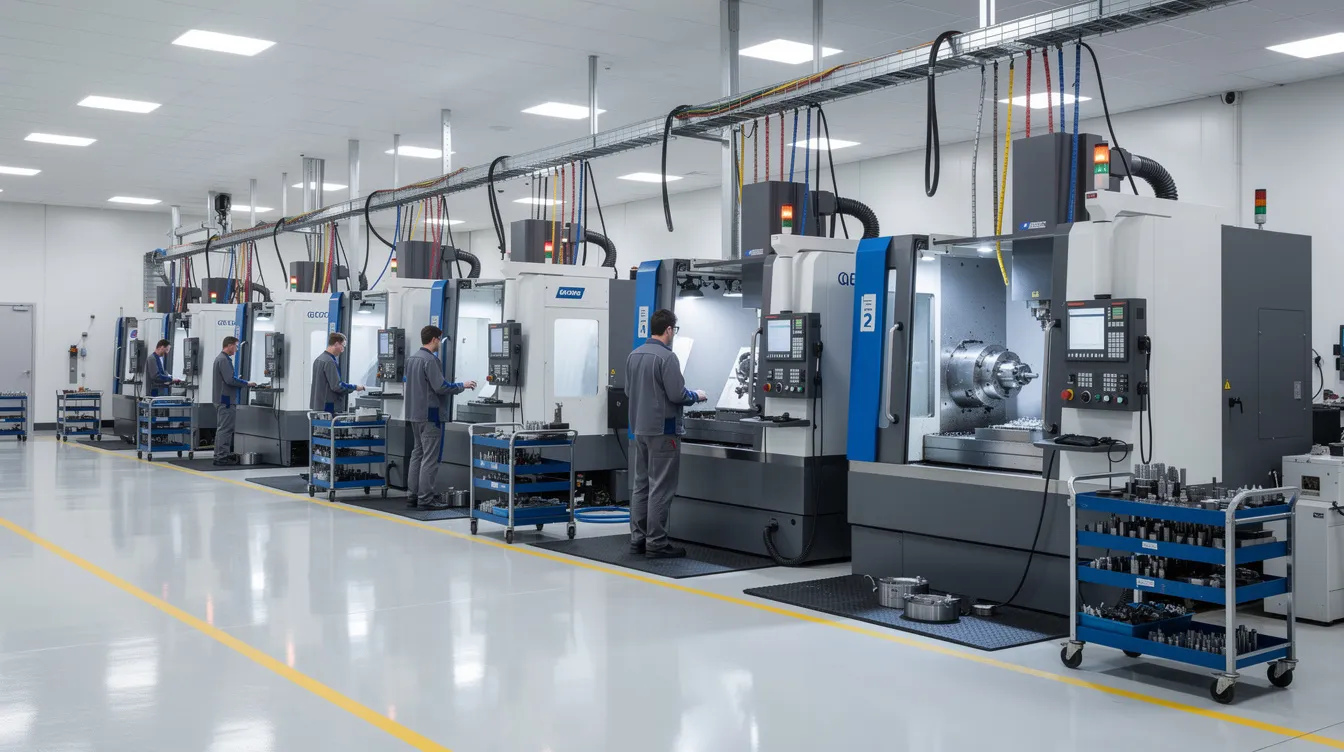
Practical Checklist for Choosing the Best CNC Parts Supplier
Here’s a condensed, action-oriented checklist you can copy directly into your sourcing process.
-
✅ Verify certifications: ISO 9001:2015 minimum. Look for quality certifications like ISO 9001 or AS9100 for industry compliance.
-
✅ Confirm CNC milling and CNC turning capabilities match your geometry-especially multi axis machining for complex designs.
-
✅ Assess material familiarity with your chosen alloys or plastics. Material selection guidance should come from experience, not guesswork.
-
✅ Inspect quote quality, not just price: look for breakdowns, clear lead times, and explicit tolerance commitments.
-
✅ Measure RFQ response time, clarity of questions, and willingness to provide DFM guidance before PO placement.
-
✅ Request sample CNC machining projects or photos of similar parts.
-
✅ Start with a pilot batch and require inspection data (CMM reports) on critical dimensions.
-
✅ Confirm the supplier handles your required surface finish and post-processing in-house or with vetted partners.
-
✅ Evaluate quality control processes: does the supplier use documented procedures, calibrated instruments, and traceable quality standards?
If you’re following this checklist and looking for a CNC parts supplier that checks every box, contact Anebon with your CAD files and drawings for a no-obligation quote.
How to Get Started with Anebon for Your Next CNC Machining Project
Whether you’re a design engineer validating a prototype or a procurement team qualifying a new production supplier, engaging Anebon early in your development cycle saves time and cost.
-
Step 1: Send 3D models (STEP/IGES) and 2D drawings with quantities, material preferences, and any precision requirements.
-
Step 2: Receive DFM feedback plus an itemized quote within approximately 24 hours.
-
Step 3: Approve a prototype or first article run. Anebon performs first-piece inspection and shares full reports before proceeding.
-
Step 4: Ramp to ongoing production orders with agreed lead times, quality standards, and packing specifications.
Anebon can support CNC milling, CNC turning, die casting, and sheet metal in one project-simplifying vendor management for complex assemblies. All customer data is handled under NDA upon request, and Anebon regularly works with clients in North America and Europe under long-term supply agreements.
Finding the right CNC machining partner isn’t about chasing the lowest quote. It’s about building a relationship with a supplier that delivers consistent quality, transparent pricing, and genuine engineering collaboration on every order. If that’s what you’re after, send Anebon your next project and see how a proven CNC parts supplier handles it.