Aluminum vs Titanium for Aerospace Components: Pros and Cons Explained
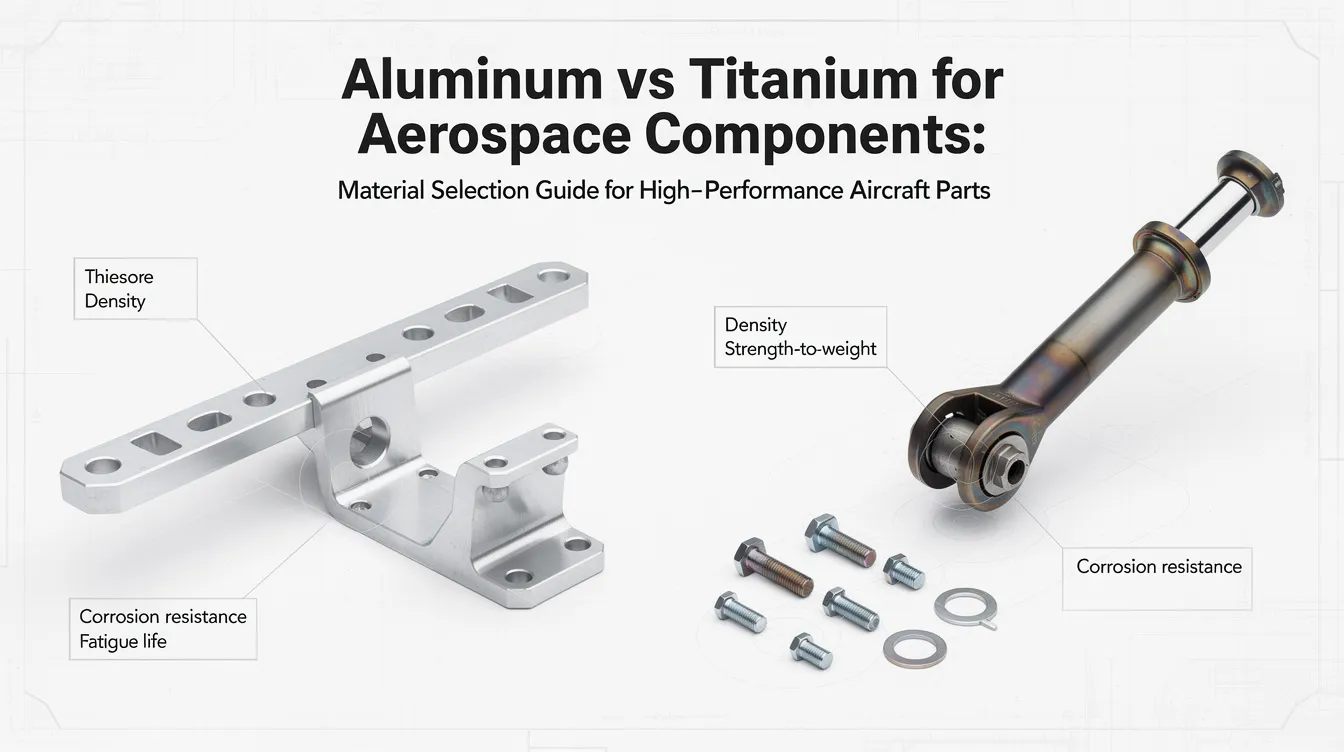
Aluminum vs Titanium for Aerospace Components: Material Selection Guide for High-Performance Aircraft Parts
Introduction: Aluminum vs Titanium in Modern Aerospace Design
When selecting materials for aerospace components, the decision between aluminum and titanium comes down to a handful of quantifiable factors: cost, weight, corrosion resistance, fatigue resistance, and tolerance to extreme heat. Getting this choice right directly influences fuel burn, payload capacity, and lifecycle cost for OEMs and Tier-1 suppliers across the aerospace industry.
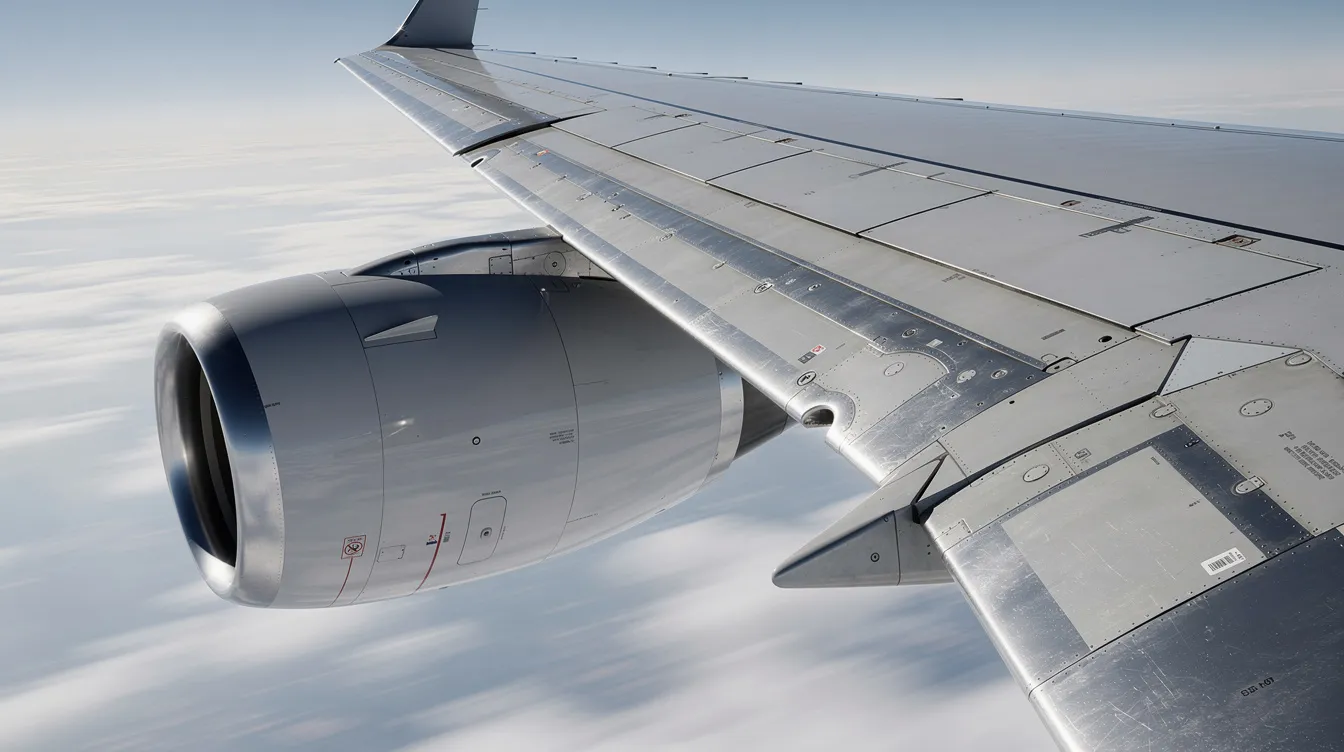
Aluminum alloys have formed the structural backbone of commercial aviation since the mid-20th century, prized for their low density, ease of fabrication, and low cost. Titanium entered widespread aerospace use with military jets in the 1950s and gained significant traction in commercial programs after 2010. The Boeing 787 Dreamliner allocates roughly 20% of airframe weight to aluminum and 15% to titanium, while the Airbus A350 pairs titanium fittings with carbon fiber composite primary structures for temperature capability and load-bearing performance near engines and attachment points. Aerospace applications often use both aluminum and titanium due to their respective advantages.
At Anebon Metal Products Limited, we serve as a precision CNC machining partner for both aluminum alloys and titanium, delivering custom aerospace components from rapid prototyping through production with tolerances as tight as ±0.002 mm, backed by ISO 9001:2015 and ISO 14001:2015 certifications.
At a high level, the two materials compare like this:
-
Aluminum: lower density (~2.7 g/cm³), affordable raw material, easy to machine, moderate strength, limited above ~150 °C
-
Titanium: higher density (~4.5 g/cm³) but superior strength, excellent fatigue and corrosion resistance, retains mechanical performance at elevated temperatures up to 500 °C or more, significantly higher cost and machining difficulty
Fundamentals: What Are Aerospace-Grade Aluminum and Titanium Alloys?
Aerospace-grade alloys are specifically formulated to deliver predictable mechanical properties under the stress, temperature, and environmental conditions aircraft encounter. Here is what defines each family.
Aerospace aluminum alloys concentrate on heat-treatable, high strength compositions:
-
2024 (Al-Cu-Mg): In T3 temper, delivers an ultimate tensile strength of approximately 483 MPa and yield strength around 345 MPa, with elongation of 14–18%. A workhorse for fuselage skins and fatigue-critical sheet structures.
-
7075 (Al-Zn-Mg-Cu): In T6 temper, reaches roughly 560–572 MPa UTS and 480–503 MPa yield strength, with lower elongation (~7–11%). Used in high strength structural members. Anebon machines this alloy regularly for custom precision 7075 aluminum CNC milling parts.
-
6061 (Al-Mg-Si): More corrosion resistant and weldable, with UTS of ~290–310 MPa. Common for brackets, housings, and interior fittings.
-
Additional alloys like 7050 and copper-lithium variants serve niche roles requiring improved toughness or strength to weight ratio.
Aerospace titanium alloys span commercially pure titanium grades through advanced beta alloys:
-
Ti-6Al-4V (Grade 5): The dominant α-β alloy in aerospace, with UTS around 900 MPa and service temperatures up to ~400–500 °C. Used in airframes, landing gear fittings, and engine hardware. The alloy ti 6al 4v accounts for a majority of aerospace titanium consumption.
-
Near-α alloys (IMI 834, Ti-6Al-2Sn-4Zr-6Mo): Designed for high temperature stability in compressor front sections up to 500–600 °C.
-
Alpha alloys (Ti-5Al-2.5Sn): Selected for cryogenic service where low-temperature toughness matters.
Titanium is about 45% lighter than steel while offering comparable or higher static strength, which explains why it has displaced steel in many high stress applications.
Alloying elements tune material properties precisely: copper, magnesium, and zinc in aluminum adjust strength, toughness, and corrosion behavior; aluminum, vanadium, and molybdenum in titanium control phase stability, creep resistance, and high-temperature strength. These alloys ship as plate, bar, forging stock, or extrusions, each form factor influencing CNC machining titanium and aluminum strategies in terms of fixturing, tool access, and chip evacuation.
Key Material Properties: Strength, Weight, Fatigue & Corrosion
Understanding the distinct properties of aluminum and titanium is essential before committing to either for structural design. The following comparison covers the metrics that matter most for aerospace components.
Density and weight savings: Aluminum has a density of approximately 2.7 g/cm³, making it one of the lightest structural metals available. Titanium has a density of about 4.5 g/cm³-roughly 67% heavier per unit volume. However, titanium showcases a higher strength-to-weight ratio compared to aluminum, meaning engineers can often achieve the same structural integrity using less material in load-critical areas, partially offsetting the density penalty and enabling weight reduction where it counts.
Tensile strength: Aluminum alloys typically have tensile strengths of 140 to 480 MPa, with high-end aerospace grades like 7075-T6 reaching approximately 570 MPa. Titanium’s tensile strength ranges from 345 to 1,380 MPa, with titanium alloys reaching up to 1,380 MPa in peak-aged or heavily worked conditions. Titanium has a higher tensile strength than aluminum across nearly every comparable scenario, which directly influences wall thickness, part weight, and structural margin.
|
Property |
Aluminum (Aerospace Grades) |
Titanium (Grade 5 / Ti-6Al-4V) |
|---|---|---|
|
Density |
~2.7 g/cm³ |
~4.5 g/cm³ |
|
Ultimate tensile strength |
140–570 MPa |
345–1,380 MPa |
|
Yield strength (typical) |
240–503 MPa |
830–880 MPa |
|
Fatigue strength (endurance) |
~97–159 MPa |
Significantly higher |
|
Corrosion resistance |
Moderate (needs coatings) |
Excellent (passive TiO₂ layer) |
Fatigue resistance: Aluminum does not exhibit a true fatigue limit-its fatigue strength continuously declines under cyclic loading. Typical endurance values sit around 97–159 MPa depending on alloy and temper, making fatigue failure a primary design concern in pressurized fuselages and wing structures. Titanium alloys deliver much higher fatigue resistance, maintaining mechanical performance under cyclic stress in high stress environments such as engine pylons, wing attachment fittings, and landing gear.
Corrosion resistance: Titanium exhibits excellent corrosion resistance in harsh environments, forming a stable, self-healing TiO₂ oxide layer that withstands de-icing chemicals, salt spray, hydraulic fluids, and aggressive chemicals without protective coatings. Certain aluminum alloys-particularly the 2xxx and 7xxx series-are highly susceptible to corrosion, including pitting, intergranular attack, and stress corrosion cracking, requiring anodizing, cladding, or conversion coatings. The 6xxx series offers good corrosion resistance but trades off peak strength.
Galvanic corrosion warning: When aluminum and titanium are joined in the same assembly, galvanic corrosion accelerates aluminum degradation in the presence of moisture or electrolytes. Aerospace engineers mitigate this through insulating bushings, sealants, coatings on the aluminum surface, and careful fastener material selection.
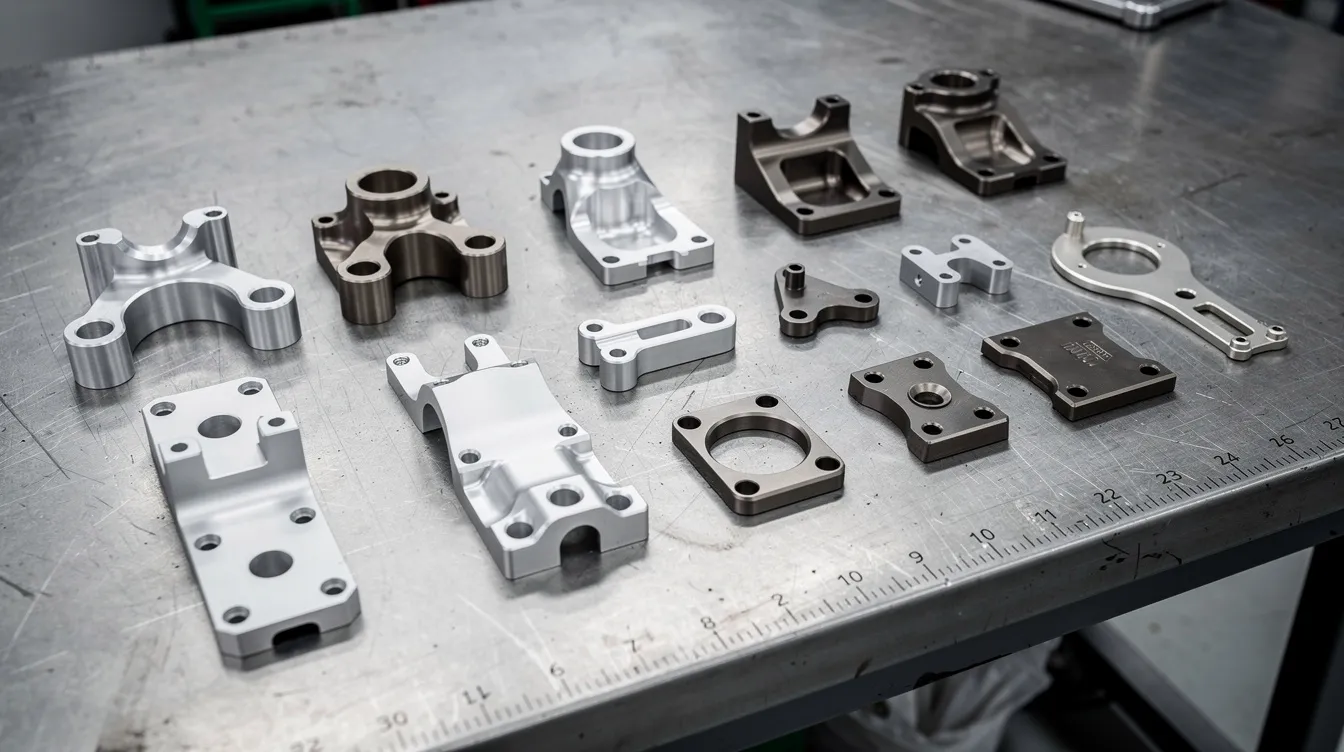
Performance in Extreme Heat and Harsh Environments
Aerospace components operate across a wide temperature spectrum-from climate-controlled cabin structures near ambient to engine nacelles and hot bleed-air ducts exceeding 400 °C. Material selection must match the thermal profile of each location.
-
Aluminum loses significant strength at temperatures above approximately 150–200 °C. For 2xxx and 7xxx series alloys, sustained exposure above 175 °C triggers over-aging and microstructural degradation. This makes pure aluminum and its alloys unsuitable as structural material near engines, exhaust paths, or bleed-air systems.
-
Titanium retains strength at higher temperatures, up to 500 °C or more for common α-β alloys like Ti-6Al-4V, and up to 600 °C for near-α compositions such as IMI 834. Titanium withstands high temperatures, making it ideal for jet engines, compressor cases, and engine mounts-components that must withstand high temperatures without dimensional distortion or strength loss.
-
Aluminum has excellent thermal conductivity of 205–235 W/m·K for pure aluminum grades, making it the preferred material for heat sinks, heat exchangers, and avionics enclosures where thermal management matters. Aluminum also provides meaningful electrical conductivity for grounding and EMI shielding.
-
Titanium’s thermal conductivity ranges from 6–20 W/m·K, making it a poor heat conductor but an effective thermal barrier. Its coefficient of thermal expansion (~9 × 10⁻⁶/°C vs aluminum’s ~23 × 10⁻⁶/°C) provides superior dimensional stability through thermal cycles in extreme environments and extreme heat conditions near engines.
These titanium properties-high temperature stability, low thermal expansion, and chemical resistance-make titanium indispensable for high temperature applications where aluminum simply cannot perform.
Manufacturing Considerations: Machinability, Forming & Cost
The manufacturing process for each material differs dramatically in speed, tooling, and cost. These differences directly affect lead time, per-part price, and production scalability for aerospace OEMs.
-
CNC machinability: Aluminum is easier to machine than titanium by a wide margin. Typical cutting speeds for aluminum alloys run 500–1,500 SFM (150–450 m/min), with excellent chip evacuation and low tool wear. Titanium cutting speeds drop to 80–150 SFM (24–46 m/min), with aggressive work-hardening near the cutting edge, shorter tool life, and need for rigid setups and high-pressure flood coolant. A part that takes 1 hour of CNC milling in aluminum may take 5 to 8 hours in titanium for equivalent geometry, according to typical cutting performance analysis of titanium alloys in CNC machining.
-
Forming and fabrication: Aluminum forms well at room temperature-cold bending, pressing, and extrusion are routine. Titanium is stiffer, exhibits springback, and often requires elevated-temperature forming or superplastic techniques, adding cost and complexity to the manufacturing process.
-
Raw material cost: Aluminum costs between $2.2 and $12 per kg, while titanium costs between $5.75 and $150 per kg depending on grade and form. Aluminum is significantly more affordable than titanium, and in some comparisons aluminum can be 30 times less expensive than titanium. Aluminum is more widely available and cost effective than titanium across global supply chains.
-
Total part cost: Machining titanium is more expensive than machining aluminum due to slower feeds, higher tool consumption, and specialized coolant requirements. Total manufactured cost for titanium parts can run 5–10× that of comparable aluminum parts when factoring both material costs and machine time. This makes aluminum a cost effective material for high volume production runs where extreme performance is not required.
-
Precision capability: Anebon leverages 5-axis CNC machining with optimized toolpaths, high-performance carbide inserts, and dimensional stability strategies down to ±0.002 mm in both aluminum and titanium, enabling high performance parts that meet aerospace tolerances regardless of material.
Typical Aerospace Applications for Aluminum Alloys
Aluminum remains the go-to lightweight material where temperature, corrosion, and fatigue demands are moderate and cost efficiency drives decisions. Aluminum is commonly used for aircraft frames and fuselage panels across a diverse range of commercial programs. Aluminum serves best for low-cost, lightweight structures, and is often chosen for cost effective aerospace applications.
-
Airframes: Fuselage skins in 2024-T3, wing ribs and stringers in 7075-T6, and structural frames throughout the Boeing 737 and Airbus A320 families. These lighter weight components reduce fuel burn across millions of flight hours. Pure aluminum cladding (Alclad) protects high-strength skins from surface corrosion.
-
Interior structures: Cabin bulkheads, seat tracks, overhead bin frames, and floor panels in 6061 alloys-weldable, formable, and low cost for large scale production.
-
Avionics and electronics: Housings, brackets, and enclosures leverage aluminum’s thermal conductivity for heat dissipation and its low density for weight savings. Aluminum is the preferred material for avionics heat sinks and EMI shielding.
-
Satellites and UAVs: Structural panels, electronic enclosures, and radiator surfaces use aluminum for its lightweight metal characteristics and thermal management capability.
Common aluminum surface treatments include anodizing (Type II and hard anodize), chromate conversion coating, and painting-each enhancing corrosion resistance and wear performance for extended service life.
Typical Aerospace Applications for Titanium Alloys
Titanium is preferable for components requiring high strength and durability in intense conditions. It dominates safety-critical and environmentally exposed aerospace structures where mechanical performance under cyclic loading, corrosive environments, or elevated temperature cannot be compromised.
-
Landing gear and high-load fittings: Titanium is commonly used for landing gear components and engine parts, including truck beams, drag braces, and axle fittings. Ti-6Al-4V provides exceptional strength to weight and fatigue resistance under the dynamic shock loads of landing cycles combined with exposure to de-icing salts and hydraulic fluids.
-
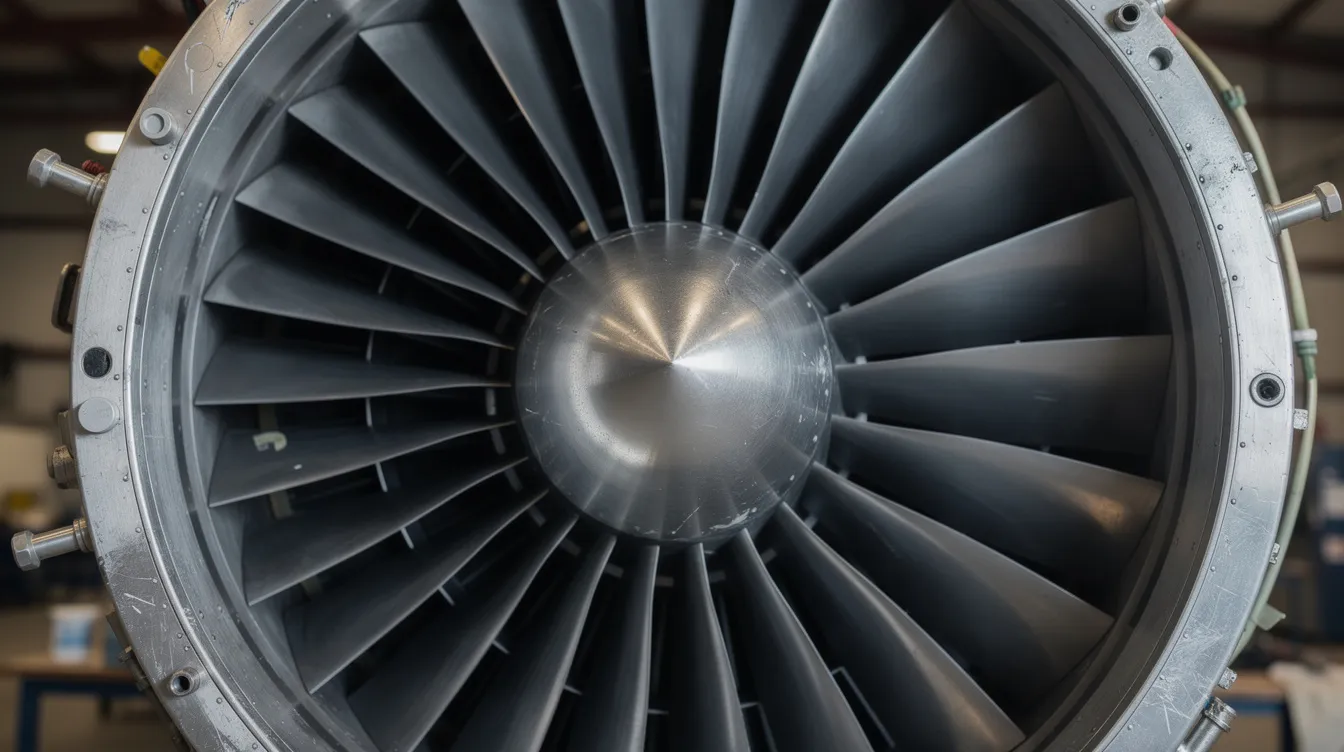
Engine hardware: Engine pylons, compressor discs, blades, and cases operate in high temperature applications where titanium’s strength retention and corrosion resistant oxide layer are essential. Engine components in the front-end compressor section use near-α alloys rated for 500–600 °C.
-
Wing-to-fuselage joints: Critical load-path fittings that transfer flight loads between wing boxes and fuselage use titanium for its superior strength and fatigue life. On modern aircraft like the Boeing 787 and Airbus A350, titanium interfaces carbon fiber reinforced polymer structures to metal hard points.
-
Fasteners and fuel systems: Titanium bolts, pins, and fittings near fuel tanks and hydraulic lines resist corrosive environments including jet fuels, oxidizers, and moisture.
-
Spacecraft and launch vehicles: Brackets, cryogenic tank fittings, and structural elements exposed to wide temperature swings-from cryogenic to extreme heat-and vacuum rely on titanium’s highly durable performance. Titanium aluminide intermetallics are emerging in advanced low-pressure turbine blades for high performance vehicles and next-generation engines.
Beyond aerospace, titanium finds use in the human body for artificial joints and medical implants, and in chemical processing equipment exposed to aggressive chemicals-applications that further validate its corrosion resistance and biocompatibility.
Design Trade-Offs: Choosing Aluminum, Titanium, or a Hybrid Approach
Selecting between these two materials-or combining them-requires weighing quantifiable engineering parameters against budget and production constraints. Both are a lightweight metal category compared to steel, but their distinct properties push them toward different roles. Here are the cost considerations and performance factors that guide the decision.
-
When aluminum is clearly preferred: Cost-sensitive interiors, non-critical brackets, avionics housings, and high volume production parts where the operating environment stays below 150 °C and loads are moderate. Aluminum delivers the same strength at far lower material and machining cost in these scenarios.
-
When titanium is justified: Critical load paths in high stress environments, long-life fatigue-critical structures, components exposed to corrosive environments or sustained temperatures above 200 °C, and parts where weight reduction in primary structure translates to measurable fuel efficiency gains over the aircraft’s service life. Titanium’s high cost is offset by longer inspection intervals and reduced maintenance.
-
Hybrid designs: Modern airframes routinely combine composites, aluminum titanium structures, and titanium fittings. A carbon fiber wing skin may attach to titanium hard points bolted to aluminum substructure. Galvanic isolation-using sealants, insulating bushings, or coated fasteners-is mandatory wherever aluminum and titanium contact each other.
Example scenarios:
-
A UAV wing joint bracket currently in 7075 aluminum undergoes frequent fatigue cracking. Swapping to Ti-6Al-4V eliminates fatigue failure at the joint, and the bracket can use less material to maintain the same structural integrity, partially offsetting the high cost of titanium.
-
A cabin interior frame on a commercial jet does not see high stress or corrosive exposure. Staying with 6061 aluminum keeps per-unit cost low and supports large scale production at the required rate.
|
Decision Factor |
Aluminum Preferred |
Titanium Preferred |
|---|---|---|
|
Operating temperature |
Below ~150 °C |
Up to 500 °C+ |
|
Corrosion exposure |
Mild (with coatings) |
Severe / uncoated OK |
|
Fatigue life requirement |
Moderate |
Very high / safety-critical |
|
Production volume |
High volume production |
Low-to-medium volume |
|
Budget priority |
Low cost per part |
Performance over price |
|
Suspension components / high load |
Secondary structures |
Primary load paths |
CNC Machining Aluminum vs Titanium with Anebon for Aerospace Components
Anebon Metal Products Limited supports the full spectrum of aluminum and titanium aerospace machining-from advanced 5-axis CNC milling for high-demand aerospace parts to CNC turning and die casting for aluminum components. Our capabilities are purpose-built for the demands of high performance aerospace parts.
-
Certifications: ISO 9001:2015 and ISO 14001:2015 certifications ensure full traceability (material lot numbers, heat treatment records), process control, and environmental compliance-meeting the quality expectations of aerospace OEMs worldwide.
-
DFM and material guidance: We support overseas OEMs and R&D teams with Design for Manufacturability feedback early in the design cycle, helping engineers evaluate whether aluminum or titanium delivers the best combination of mechanical properties, manufacturability, and cost for their specific application.
-
Surface treatments: Anodizing (Type II and hard anodize) for high precision anodized aluminum parts, passivation for titanium, shot peening for fatigue improvement, and chemical etching-all performed to aerospace specifications.
-
Rapid prototyping to production: Aluminum prototypes can ship in days; titanium prototypes follow with appropriate cycle-time planning. Both scale seamlessly to production volumes.
Conclusion: Selecting the Right Material for High-Performance Aerospace Parts
The choice between aluminum vs titanium for aerospace components is not a matter of preference-it follows directly from engineering requirements, operating environment, and lifecycle cost. Aluminum excels as a cost effective, lightweight material that is easy to machine and fabricate for the vast majority of airframe structures. Titanium is indispensable where superior strength, fatigue resistance, corrosion resistance, and high temperature capability are non-negotiable.
Material selection should never be driven by raw material price alone. The total equation includes machining cost, inspection intervals, expected service life, weight savings translated to fuel efficiency, and the cost of unscheduled maintenance or fatigue failure.
Involve Anebon early in your next aerospace project. Share your CAD files, load cases, operating temperatures, and environmental exposure data, and our engineering team will provide DFM review, material trade-off analysis, and competitive quotes for both aluminum and titanium components. Contact us today to request a quote and get fast, technical support for your high performance parts.