Affordable CNC Service for Single Part Production: Quality on a Budget
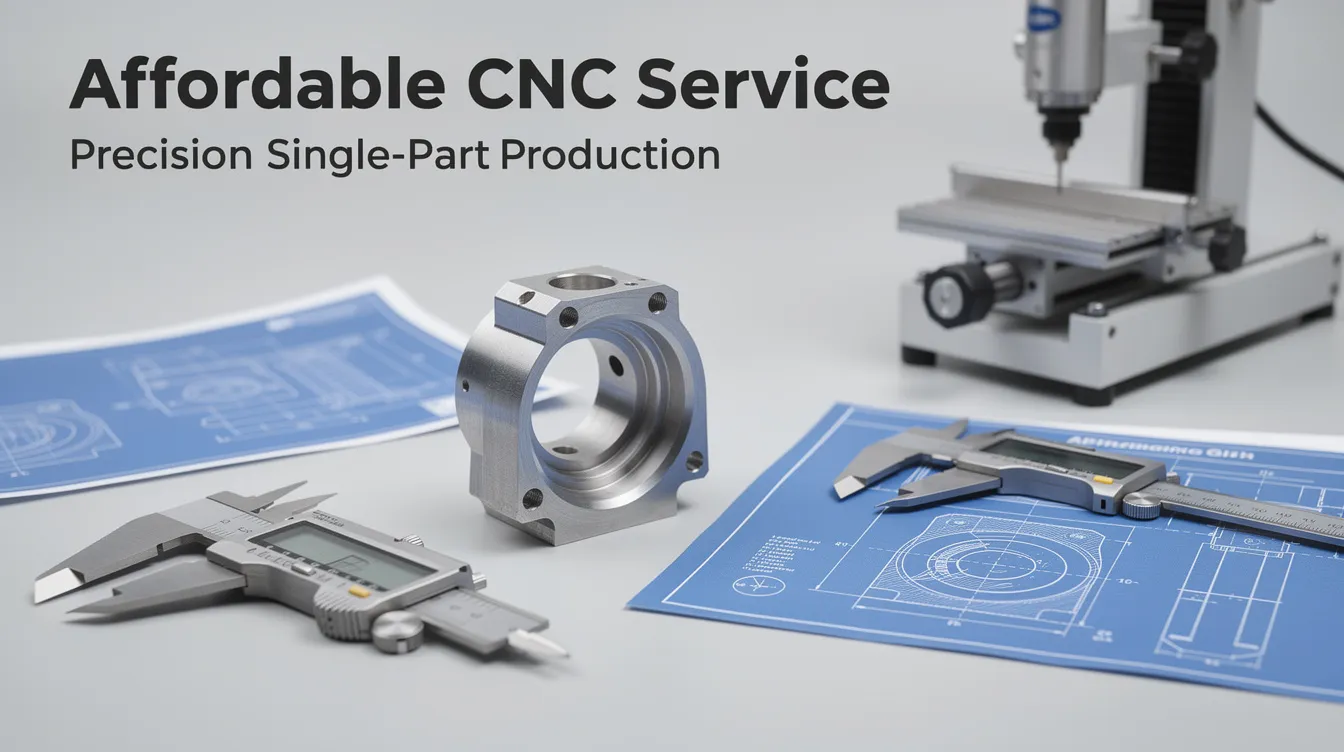
Affordable CNC Service for Single Part Production
Getting a single custom part made shouldn’t require a purchase order the size of a car payment. Whether you need one prototype bracket, a replacement shaft, or a test fixture component, the right CNC machining partner can deliver precision metal parts and plastic parts without the sticker shock. This guide breaks down exactly how to get an affordable cnc service for single part production, what drives cost, and how to make smart decisions on materials, tolerances, and finishes.
Answer First: How to Get an Affordable One‑Off CNC Part with Anebon Today
Anebon Metal Products Limited specializes in cost-effective cnc machining for single parts and very low volumes. Based in Dongguan, Guangdong, China, Anebon serves overseas OEMs, R&D teams, and design engineers who need just one prototype, a spare component, or a functional test piece. CNC machining uses computer numerical control for precision manufacturing, and Anebon applies that capability to orders as small as a single unit. CNC machining can produce parts in volumes from 1 to 100,000, and Anebon treats one-off jobs with the same rigor as production runs.
Here’s how to get started:
-
Prepare your design – export a 3D model (STEP, IGES, or native SolidWorks) and a 2D PDF drawing with key dimensions.
-
Send it to Anebon – upload or email your files for review.
-
Receive a quote – typically within 24–48 hours, including DFM feedback.
-
Confirm and produce – Anebon machines your part, applies finishing, and ships globally.
No minimum order quantities lower costs for single-part CNC production, and Anebon enforces no strict MOQ for cnc machining services. CNC machining can produce prototypes in as fast as 1 day for urgent needs, though standard aluminum parts typically ship in 3–5 working days, with complex 5-axis or multi-process jobs taking 7–10 days.
For perspective, a small 6061-T6 aluminum bracket might cost US$150–250 from a typical US or EU instant-quote platform. Through Anebon, a comparable part with finish and express shipping often lands at US$90–130, depending on geometry and surface treatment.
Why Single Part CNC Jobs Are Usually So Expensive
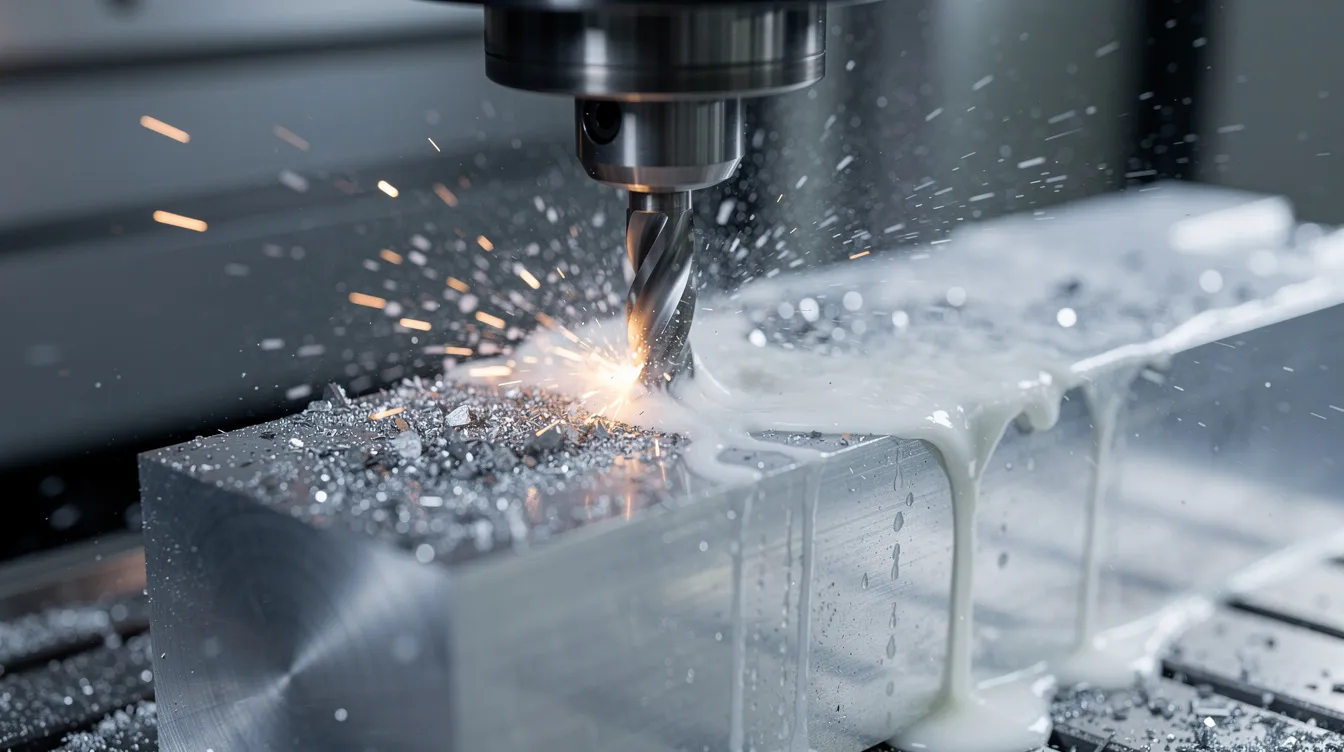
Producing individual parts incurs high setup and programming costs that would normally be spread across hundreds of pieces. Here’s where the money goes:
-
CAM programming and fixturing – creating fixtures, generating toolpaths, and validating the first piece costs US$50–250 even for simple geometry. For complex 5-axis work, this can reach US$500–1,000.
-
Operator time – machine changeovers, cutting tool loading, and zero-point setup take roughly the same time for 1 piece as for 50.
-
Material stock purchasing – buying a full bar or plate of material when the part only uses a fraction. The remaining material stock often becomes scrap or inventory overhead.
-
Administrative overhead – quotation processing, order entry, quality documentation, and shipping coordination apply regardless of quantity.
The numbers are striking. A simple aluminum bracket costs roughly US$185–310 for a single machined part. At 10 pieces, that drops to US$50–85 per unit. At 100 pieces, it falls to about US$27–45. The difference is almost entirely setup amortization.
Digital manufacturing platforms can help eliminate traditional setup fees, and instant automated quoting helps save on setup fees for CNC services. Automated machine shops now offer instant pricing from CAD files for CNC production, but even these platforms charge premiums for true one-off work.
Anebon’s processes are specifically designed to compress these costs for single-part and low-volume orders.
How Anebon Keeps One‑Off CNC Machining Costs Under Control
Anebon applies several strategies to reduce the cnc machining service cost for one-off production parts:
-
Standardized setups and modular fixturing – common part types (brackets, housings, covers, mounting plates) use pre-configured clamp systems that cut CAM and setup time.
-
Right-sized equipment selection – Anebon runs 3-axis, 4-axis, and 5-axis CNC machining platforms, choosing the most economical machine for each part’s geometry rather than defaulting to the most expensive.
-
In-house DFM review – engineers suggest small design tweaks (larger fillet radii, unified hole sizes, simplified pockets) that reduce machining time and cutting tool changes. Simplifying geometries can reduce CNC machining costs significantly.
-
Consolidated material purchasing – bulk procurement of aluminum alloys, stainless steel, brass, POM, and ABS avoids one-off raw material premiums. Using standard materials lowers CNC machining costs across the board.
-
Production nesting – single-part jobs are grouped with similar setups in production planning, sharing machine time and minimizing idle capacity.
-
Bundled surface treatments – bead blasting, anodizing, or powder coating can be completed in-house, avoiding extra logistics and markup from third-party finishers.
When CNC Is the Right Choice for Single Part Production
Despite setup costs, CNC is often the most practical manufacturing process for one-off parts. CNC rapid prototyping supports complex geometries efficiently, and prototyping can include both metal and plastic parts across a wide range of applications.
-
Tight tolerances and functional fits – when you need ±0.01–0.02 mm precision, threaded holes, or sealing surfaces, no other single-piece method matches CNC. This subtractive manufacturing process removes material from solid stock, preserving the mechanical properties of the base alloy.
-
Versus 3D printing – additive methods work for rough concept models, but most printed parts need secondary machining for flatness, holes, and mating surfaces. Rapid prototyping is suitable for over 50 materials in CNC, far exceeding most printer material libraries.
-
Versus tooling-based methods – die casting, injection molding, and forging require expensive tooling and long lead time, rarely making sense for a single part.
Concrete examples where CNC wins: a replacement shaft for a legacy packaging machine, a custom aluminum heat sink for a lab test rig, a single stainless steel bracket for a medical test fixture, or a customer-facing prototype for an investor demo requiring realistic material behavior and cosmetic quality.
Choosing the Right CNC Machining Process for a Single Part
Anebon offers multiple cnc machining applications under one roof. Selecting the right cnc machining process for your one-off part directly affects cost and lead time.
-
CNC milling – the default for prismatic custom parts like brackets, housings, faceplates, and structural components. CNC milling typically uses a 3-axis system for cutting operations, handling parts up to roughly 600 × 400 × 200 mm. Example: a one-off camera gimbal bracket in aluminum.
-
CNC turning – ideal for rotational parts: shafts, bushings, spacers, threaded adapters, and valve components. Single-setup efficiency makes turning cost-effective for cnc parts with cylindrical symmetry. Example: a stainless spindle for a filling machine.
-
5-axis machining – necessary when complex geometry or multiple angled features must be completed in a single clamping. CNC machines can achieve tolerances as tight as ±0.0001 inches on 5-axis platforms. Example: a titanium medical test component with compound angles.
-
Mill-turn combinations – Anebon often combines CNC turning and milling when it cuts overall cycle time, especially for consumer electronics and robotics components.
Common CNC Machining Applications for Single Parts
CNC machining is widely used in aerospace, medical, and automotive industries, but single-part orders come from a surprisingly broad range of scenarios:
-
R&D and product development – first article prototypes, engineering validation test parts, and custom test jigs for automotive and robotics OEMs across various industries.
-
Consumer electronics – custom enclosures, one-off aluminum heat sinks, and unique mounting features for PCB assemblies in pilot builds for industrial equipment and portable devices.
-
Medical devices – titanium and stainless steel components for trial implants, surgical jigs, and clinical evaluation batches where quality documentation is non-negotiable.
-
Industrial machinery – legacy machine replacement parts when original suppliers no longer support a model, especially in packaging, printing, and food processing lines that must handle harsh environments.
-
Aerospace and UAV – lightweight 7075-T6 brackets, structural test coupons, and one-off fixtures for wind tunnel or vibration testing requiring excellent wear resistance and fatigue strength.
Material Selection for Affordable One‑Off CNC Parts
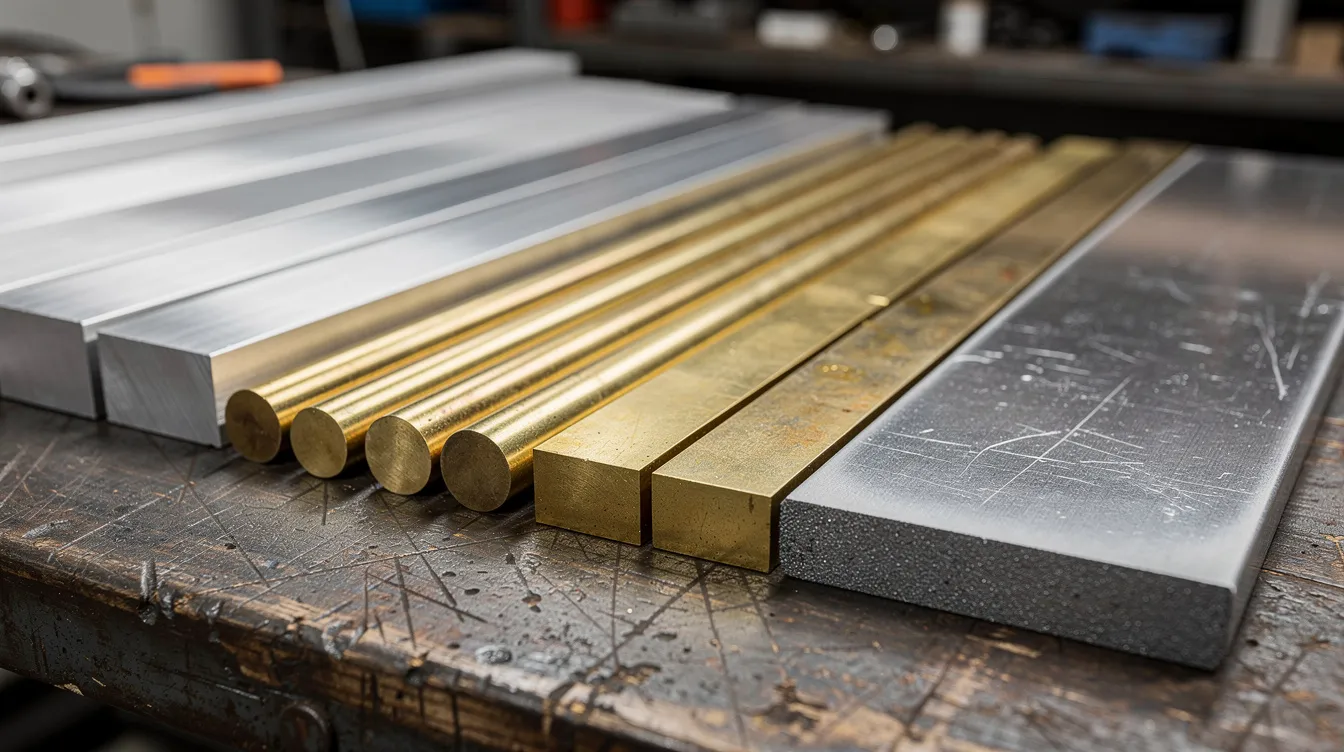
Material choice is one of the biggest cost levers in single part production. CNC machining can use over 50 metal and plastic materials, but defaulting to easy-to-machine, widely available alloys saves money without sacrificing performance.
The key principle: select mid-grade materials that meet strength, temperature, and corrosion resistance requirements without unnecessary machining difficulty. For instance, switching a prototype bracket from 7075-T6 to 6061-T6 aluminum reduces cutting tool wear and cycle time while still meeting most structural needs.
Anebon can suggest alternate materials based on end use, expected loads, and environment – whether that’s an indoor lab, an offshore platform, a sterile room, or outdoor exposure at extreme temperatures.
Affordable Metal Options for Single CNC Parts
|
Material |
Key Benefit |
Best For |
|---|---|---|
|
6061-T6 Aluminum |
Low cost, excellent machinability |
Prototypes, fixtures, light structural parts |
|
7075-T6 Aluminum |
High tensile strength, low density |
Aerospace brackets, load-bearing components |
|
303 Stainless |
Best machinability among stainless grades |
Fittings, adapters, shafts |
|
304/316 Stainless |
Excellent corrosion resistance |
Marine, food, medical applications |
|
4140 Steel Alloy |
High-load capability |
Shafts, tooling adapters |
|
Free Machining Brass (C360) |
Superior machinability, electrical conductivity |
Electrical components, RF housings |
|
Titanium Grade 5 |
High strength-to-weight ratio, biocompatible |
Aerospace, medical single parts |
Aluminum alloys like 6061 and 7075 are commonly used because they balance performance with affordability. Titanium is known for its high strength-to-weight ratio but carries significantly higher machining cost due to slow removal rates and tool wear. Carbon steel and mild steel are practical for structural parts that don’t need corrosion resistant properties, while stainless steel 304 provides excellent chemical resistance in demanding environments.
Copper offers excellent electrical conductivity for connectors, while free machining brass machines faster than almost any other materials in the shop.
Plastic Options for Budget‑Friendly CNC Prototypes
Engineering plastics offer good mechanical properties at lower machining cost than metals for many prototype and functional applications:
-
ABS – low-cost, good impact resistance, suitable for housings and covers ahead of injection molding. Works well for consumer electronics enclosures.
-
Acetal/Delrin (POM) – low friction, excellent dimensional stability, ideal for bearings, bushings, and gears where low coefficient of friction matters.
-
Nylon 6/6 – nylon has high tensile strength and low friction properties, with low moisture absorption making it reliable for automotive spacers and wear parts.
-
PEEK – PEEK is used for high-temperature and chemical resistance applications where heat resistance and sterilization cycles are required. Higher price, but often lower total program cost than metal alternatives. Offers excellent chemical resistance and high stiffness.
-
PEI (ULTEM) – electrical insulation, uv resistance, and performance at high temperatures. An excellent electrical insulator for aerospace and medical applications.
-
PVC polyvinyl chloride – chemical resistance and electrical insulation for fluid handling and chemical processing components.
-
PMMA and Polycarbonate – clear plastics for optical prototypes, instrument windows, and display components.
Epoxy resin based composites can also be CNC machined for specialized tooling and fixture applications requiring high stiffness.
Finishing Options that Add Value Without Blowing the Budget
CNC machining offers various surface finishing options that range from zero added cost to moderate investment. The key is matching finish to function.
-
As machined – standard surface finish is as-machined: 125 Ra or better. Tool marks visible but acceptable for internal components, functional prototypes, and parts hidden from view. No additional cost.
-
Bead blasting – creates a uniform matte appearance on aluminum and stainless steel, hiding tool marks. Adds roughly US$2–8 per small part and 1–2 days.
-
Anodizing – anodizing creates a corrosion-resistant finish for aluminum parts with color options (clear, black, red, blue). Type II adds 5–25 µm oxide layer; Type III hard anodize reaches ~50 µm for excellent wear resistance.
-
Powder coating – powder coating provides a durable layer for CNC machined parts with extensive RAL color options, ideal for brackets, panels, and enclosures.
-
Electropolishing – electropolishing improves surface finish and corrosion resistance, particularly valuable for stainless steel medical and food-contact components.
-
Zinc plating and electroless nickel plating – protective coatings for steel and iron parts requiring corrosion resistance without the cost of stainless steel.
For affordability on one-off parts, limit finishing to one operation. A comprehensive guide to surface treatments can help you weigh options.
Design for Manufacturability: Simple Changes that Cut One‑Off CNC Costs
Before sending your cad file to Anebon, a few DFM adjustments can meaningfully reduce cost:
-
Use standard drill sizes and thread types – M3, M4, M6, or UNC/UNF custom threads that match existing tooling inventory eliminate special tool purchases.
-
Add generous internal radii – pockets and corners with larger fillet radii allow bigger, faster tools. Avoid sharp edges that require small end mills and extra passes.
-
Maintain consistent wall thickness – avoid very thin sections (<1.0–1.5 mm in metals) that cause chatter, deflection, or scrap risk.
-
Simplify cosmetic details – reduce unnecessary chamfers, engravings, or complex 3D contours that add machine time without functional value.
-
Minimize setups – design so most features are accessible from one or two orientations, reducing repositioning and fixturing complexity.
These changes don’t compromise function but can reduce the total CNC machining cost by 15–30%.
How to Prepare and Send Your CAD Data for a Single CNC Part
Getting from design to quote efficiently requires clean data:
-
Accepted formats – STEP, IGES, Parasolid, or native SolidWorks files. Include a 2D PDF with technical drawings showing key dimensions and general tolerances.
-
Mark critical features – clearly identify sealing faces, bearing fits, and mating surfaces. Don’t over-tolerance non-critical areas.
-
Specify everything on the drawing – custom threads, surface finish requirements, deburring, edge breaks, and grain direction. This reduces back-and-forth during quoting.
-
DFM feedback – Anebon reviews every file and will flag unnecessarily expensive features, suggesting alternatives before finalizing the quote.
-
IP protection – NDA agreements and secure file transfer methods are available for sensitive OEM designs.
Use the material drop down or specify your preferred alloy directly. The more complete your submission, the faster and more accurate your quote.
Managing Tolerances for Cost‑Effective One‑Off CNC Parts
Tight tolerances increase CNC production costs significantly, so applying them strategically is essential.
-
General tolerances for metals are typically ±0.005 inches (±0.127 mm), which Anebon holds economically on all standard features.
-
Precision capability – CNC machining can hold tolerances of ±0.002 mm on critical dimensions. CNC machining achieves tolerances as tight as +/- 0.001 inches for demanding applications. CNC machining tolerances can be as tight as ±0.0001 inches on specialized equipment, though this drives cost substantially.
-
Apply tight tolerances selectively – shaft diameters, bearing bores, and critical alignment features justify precision. General surfaces don’t.
-
Secondary operations – very tight flatness, parallelism, or positional tolerances may require surface grinding, lapping, or CMM inspection, adding cost and lead time.
-
Practical example – relaxing a bore tolerance from H7 to a slightly looser fit often reduces cycle time and scrap risk without impairing function.
Anebon follows ISO 2768 or customer-specified standards. Competitors like Xometry can achieve tolerances of sub ±0.001 inches on their platforms as well, so comparing quotes from multiple providers can lead to better pricing.
Comparing Online CNC Machining Services for Single Parts
When evaluating online cnc machining services for one-off work, compare these criteria:
|
Criteria |
Instant-Quote Platforms (US/EU) |
Anebon |
|---|---|---|
|
Single-part pricing |
Often higher due to platform overhead |
Competitive, including shipping |
|
Lead time |
3–10 days |
3–10 days + express shipping |
|
Materials |
Broad catalog |
50+ metals and plastics |
|
MOQ |
Usually 1 |
No strict MOQ |
|
DFM support |
Automated only |
Engineer-reviewed |
|
Certifications |
Varies |
ISO 9001:2015, ISO 14001:2015 |
|
Finish options |
Standard set |
Full in-house capability |
Many online cnc machining platforms are optimized for batches and quote higher for single pieces. Anebon’s model focuses on custom cnc machining for overseas OEMs, often providing more competitive pricing for single to low-volume production parts including shipping.
Xometry offers inspection options for quality assurance, as do other major platforms. The key differentiator is evaluating not just unit price but technical support, DFM assistance, and the ability to transition from one-off to small batch or full custom manufacturing production.
Case Study: Turning a Single Prototype into a Small Production Run
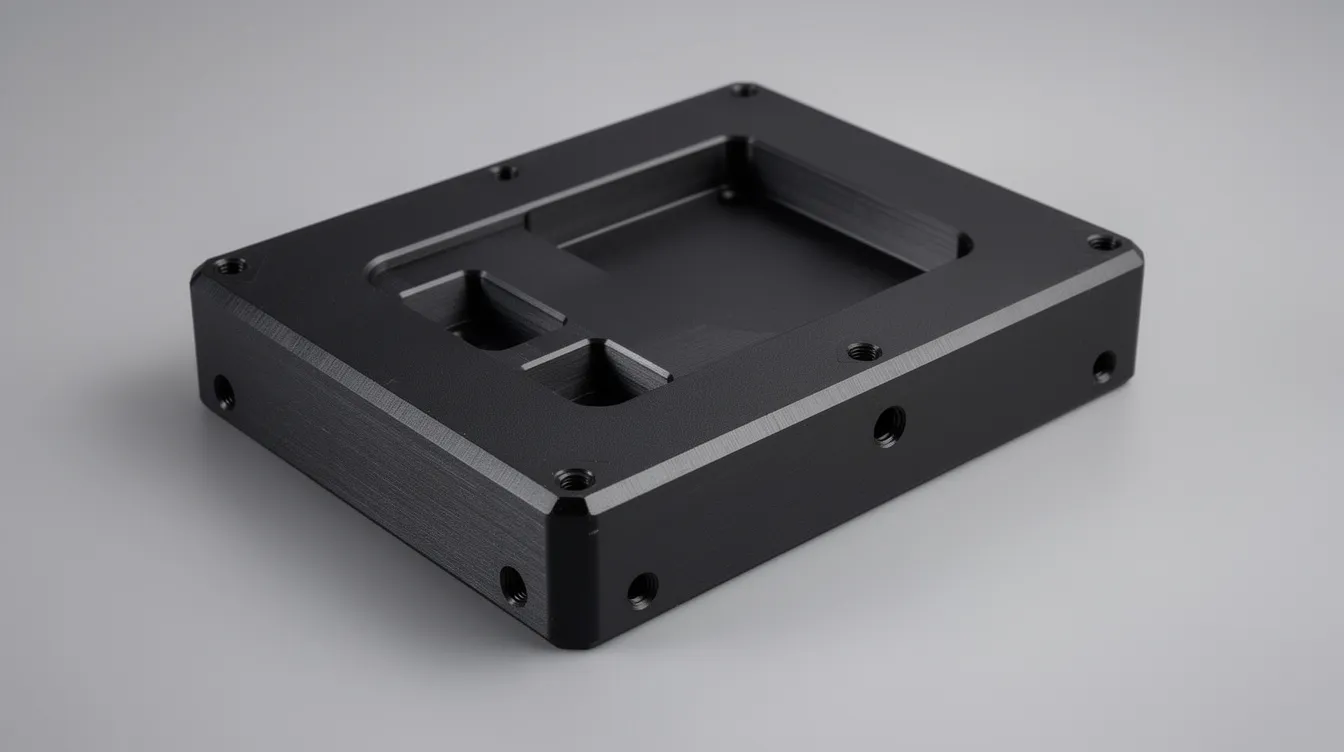
A European consumer electronics startup needed a single CNC milled aluminum enclosure for functional testing of a new IoT sensor module. The design had tight internal clearances, complex pocketing for a PCB, and required both bead blasting and black anodizing.
Anebon’s DFM review suggested three changes: increasing corner radii from 0.5 mm to 1.5 mm, unifying screw holes to M3, and removing a decorative chamfer that added two tool changes. These tweaks cut estimated machining time by roughly 25%.
The first CNC prototype shipped in 8 working days at a landed cost well below the client’s US-based quote. After successful testing, the startup ordered 150 units for pilot production. Per-unit cost dropped by over 60% since the CAM program and fixturing already existed.
Timeline: first part delivered in ~8 working days; pilot batch shipped within 3.5 weeks after design freeze. Keeping the same supplier from prototype through pilot build eliminated re-qualification time and reduced communication overhead.
Balancing Speed and Cost for Urgent One‑Off CNC Jobs
The fastest option isn’t always the most affordable. Anebon offers flexibility:
-
Standard lead time – most economical, leveraging normal production scheduling.
-
Expedited machining – priority scheduling with overtime, typically adding 15–30% to cost.
-
Shipping optimization – sometimes standard machining paired with expedited air freight (DHL, FedEx) balances urgency and budget better than rushing the machining process itself.
A real pattern: extending delivery from 5 to 10 days allowed grouping similar setups across multiple orders, reducing the customer’s total cost by ~20%. For truly immovable deadlines – trade shows, regulatory tests, investor demos – flag these early so Anebon can prioritize accordingly.
Quality Assurance for One‑Off CNC Machined Parts
Quality control is essential even for prototype CNC work. Every single cnc machined part at Anebon goes through:
-
Incoming material verification – confirming alloy grade, dimensions, and condition of raw stock.
-
In-process checks – dimensional verification during machining to catch issues before completion.
-
Final inspection – measurement against drawing requirements using calibrated instruments.
-
Measurement reports – full CMM reports available for aerospace or medical OEMs on request.
ISO 9001:2015 certification ensures quality management systems are consistently applied. For specialized industries, relevant standards include ISO 13485 certification for medical device quality management, IATF 16949:2016 certification for automotive quality management, and AS9100D certification for aerospace quality management systems. Anebon’s ISO framework covers one-off and prototype orders with the same discipline applied to production-scale work.
Non-conformities are handled through rework, remake, or corrective action in direct communication with the customer. Robust QC on the first part prevents costly fit issues when scaling to small batch production later.
Cost Breakdown Example for a Single CNC Machined Part
Consider a 150 × 80 × 20 mm 6061-T6 aluminum mounting plate with three pockets, counterbored holes, and an anodized finish.
|
Cost Category |
Approximate Share |
|---|---|
|
Material stock |
10–15% |
|
Programming & setup |
25–35% |
|
Machine time |
25–40% |
|
Finishing (anodize) |
10–20% |
|
Inspection, packing, shipping |
5–10% |
This is a subtractive manufacturing manufacturing process – you’re paying to remove material, program the path, and verify the result. Choosing an as machined finish eliminates the 10–20% finishing cost. Simplifying pockets or reducing the number of counterbored holes would lower machine time.
Discussing these trade-offs with Anebon’s engineers before finalizing helps align the part specification with budget constraints. Instant pricing tools give a starting point, but engineer-reviewed quotes often find savings that algorithms miss.
Shipping, Duties, and Total Landed Cost
The cheapest machining quote isn’t always the lowest total cost. For international customers:
-
Shipping – Anebon uses express air services (DHL, FedEx, UPS) with tracking and insurance for single parts. Part weight and dimensions directly affect freight cost.
-
Import duties and VAT – declared value and HS codes determine duty rates. Anebon provides commercial invoices and HS codes to streamline customs processing.
-
Customs clearance – factor in 1–3 days for clearance when planning urgent deliveries into the EU or North America.
Always compare total landed cost – machining + finishing + freight + duties – when evaluating domestic vs overseas suppliers. For high-value single parts, the machining savings from an optimized offshore supplier often more than offset shipping costs.
From Single Part to Design Iteration: Rapid CNC‑Based Prototyping
Once CAM programs and fixtures exist, revising a design requires only modest reprogramming. This makes CNC ideal for rapid iteration:
-
1st prototype – proof of concept, validating basic geometry and fit.
-
2nd prototype – design refinement based on test results.
-
3rd prototype – near-production version for final validation.
Anebon’s continuity of knowledge across versions preserves critical dimensions while accommodating changes. Reusing stock sizes, materials, and finish processes keeps per-part cost predictable. When possible, bundle multiple design variants in a single order to amortize setup costs across several pieces through rapid prototyping workflows.
FAQ: Affordable CNC Service for Single Part Production
Does Anebon accept true one-off orders? Yes. No strict minimum order quantity applies. Exceptions may arise for very exotic materials requiring special procurement.
What are typical lead times? Simple aluminum cnc parts: 3–5 working days. Stainless steel or engineering plastics: 5–7 days. Complex 5-axis or multi-finish jobs: 7–10 days. Shipping adds 2–5 days via express air.
How precise can Anebon machine a single part? Standard: ±0.05 mm. Precision: ±0.02 mm. Best-case: ±0.002 mm on critical features with appropriate inspection.
Can I supply my own material? Yes, if the material meets specification and is clearly identified. This can make sense for exotic alloys or customer-certified stock.
What are payment terms for first-time customers? Typically prepayment for prototype and first-time orders. Recurring prototype programs for OEMs can be arranged with agreed terms.
Should I try a test order first? Recommended practices include placing small trial orders for quality evaluation before committing to larger programs.
How Anebon Compares to Local Job Shops for One‑Off CNC Work
Local machine shops offer proximity, but Anebon provides advantages that matter for complex one-off work:
-
Broader capability – 5-axis capacity, in-house finishing, and experience with OEM documentation that many small local shops lack.
-
Material range – access to corrosion resistant stainless grades, titanium, and other materials that local shops may not stock.
-
Consistent pricing – standardized processes deliver more predictable quotes than shops that estimate by feel.
The trade-off is shipping distance, but express air freight often narrows the delivery gap to 2–3 days. Customers currently using local job shops can trial a single part with Anebon to benchmark quality, delivery, and total cost. Anebon functions as a complementary resource, especially when local capacity is limited or specialized surface treatments are needed.
Environmental and Compliance Considerations in Single Part Machining
Anebon holds ISO 14001:2015 certification, covering waste management, coolant handling, and energy use across its cnc machining process operations.
-
Material choices matter – recyclable aluminum alloys carry a smaller environmental footprint than exotic alloys requiring more energy-intensive machining.
-
Regulatory compliance – parts shipped into the EU and other regulated markets can meet RoHS and REACH requirements. Anebon works with finishing partners who provide documentation for anodizing, nickel plating, and powder coat processes.
-
Consistent standards – environmental and compliance controls apply equally to single-piece orders and full production runs.
Checklist: Getting the Lowest Realistic Price for Your One‑Off CNC Part
Before requesting a quote, run through this list:
-
[ ] Finalize a clean 3D model (STEP preferred) and add a clear 2D drawing
-
[ ] Apply tight tolerances only where function demands them
-
[ ] Choose a standard, widely available material (6061-T6 aluminum if unsure)
-
[ ] Select one sensible surface finish – avoid stacking multiple treatments
-
[ ] Check for geometry simplifications: fewer deep pockets, larger radii, fewer setups
-
[ ] State your target budget and desired lead time so Anebon can optimize accordingly
-
[ ] Consider consolidating multiple single-part requests into a mini-batch to reduce setup cost per piece
-
[ ] Remove unnecessary sharp edges, complex contours, and decorative features that don’t serve function
Ready to get started? Contact Anebon directly for a no-obligation quote and DFM feedback on your next one-off CNC machining project. Upload your cad file, specify your material and finish, and see exactly what your single part will cost – with no surprises.