Accelerate Your Production with Rapid Castings: A Comprehensive Guide
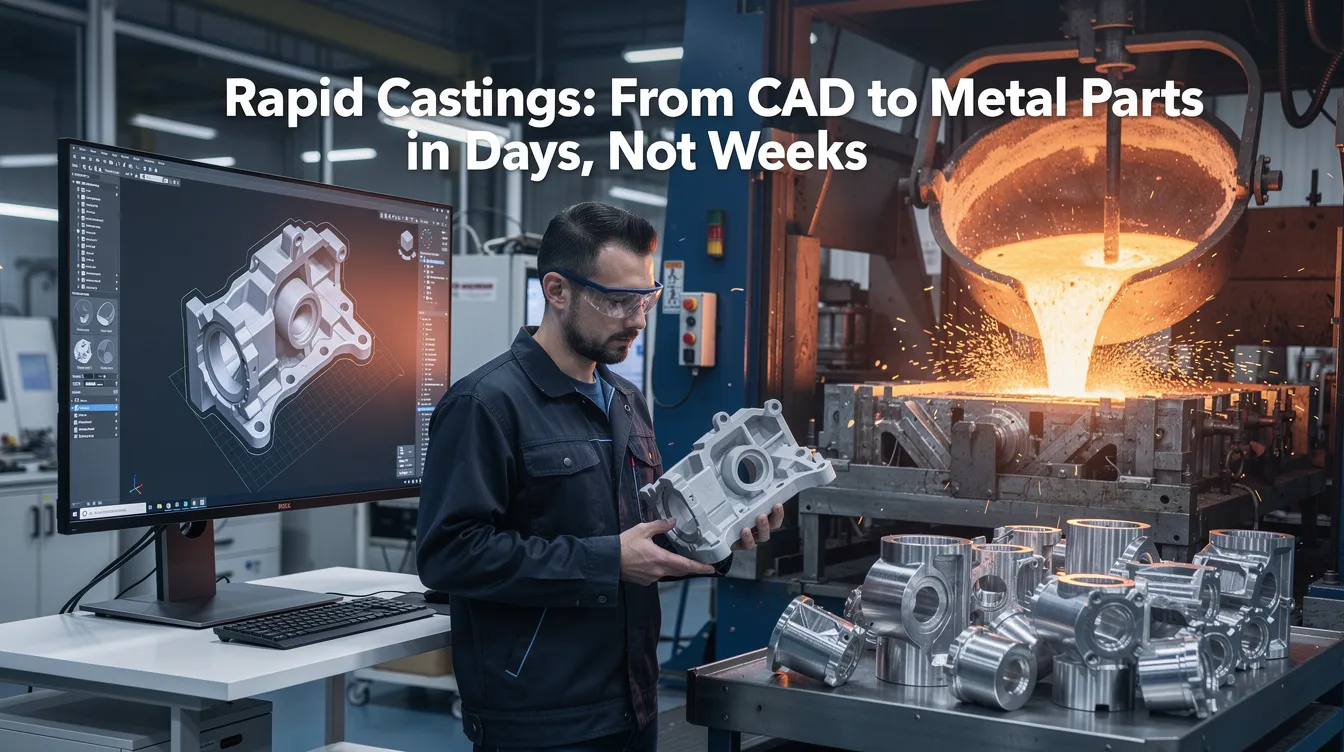
Rapid Castings: From CAD to Metal Parts in Days, Not Weeks
When your team faces pressure to deliver functional metal parts before a design release, waiting months for tooling is not an option. Rapid castings integrate 3d printing with traditional casting processes, reducing lead times from weeks to days and letting engineers validate complex metal parts on a schedule that keeps every project on track.
Rapid Casting and Rapid Prototype Investment Casting – Quick Overview
Rapid casting uses 3D-printed patterns or sand molds to directly produce metal castings without costly steel tooling. Rapid prototype investment casting is a specific method where printed resin or wax patterns replace injection-molded wax in the investment casting process, using ceramic shells and molten metal to create prototype castings with production-grade alloy properties.
At Anebon Metal Products Limited-ISO 9001:2015 and ISO 14001:2015 certified in Dongguan, China, serving overseas OEMs since 2010-our mission is to compress the path from CAD to testable casting. Whether you need aerospace bracket prototypes or EV drivetrain housings, rapid casting methods deliver results in just a few days to a few weeks, not the 6–12 weeks traditional tooling demands. Long lead times and high initial costs are key disadvantages of traditional casting that these methods completely eliminate.
|
Characteristic |
Traditional Casting |
Rapid Casting |
|---|---|---|
|
Tooling cost |
High (steel molds, weeks to build) |
Low to none (printed patterns/molds) |
|
Lead time to first part |
6–12+ weeks |
Days to 3 weeks |
|
Design change flexibility |
Costly tooling rework |
Modify CAD, reprint |
|
Ideal quantity |
Medium–high volume |
1–200 parts |
What Is Rapid Casting?
Rapid casting is the method of converting a digital CAD file into a functional metal casting by using 3D-printed molds or patterns rather than conventional hard tooling. The process starts when engineers submit a STEP or STL file; a binder-jet printer can produce sand molds in 3–5 days, eliminating tooling delays that traditionally add weeks. Rapid casting supports low-volume production of complex metal parts and allows high complexity and intricate shapes-think robotics arm joints, pump housings, or gearbox covers in aluminum, stainless steel, or tool steel. Critically, rapid casting can produce functional parts, not just prototypes, meaning engineers can rely on castings for real-world load and thermal testing. A robotics joint, for example, can move from final CAD to testable stainless steel casting in under two weeks.
What Is Rapid Prototype Investment Casting?
Rapid prototype investment casting is the investment casting process where the expendable pattern is created via rapid prototyping-typically 3D-printed castable resin-instead of wax injected into steel tooling. Rapid prototype castings use 3D printed patterns instead of wax, and the process can produce parts in a matter of days. The sequence: print pattern → build ceramic shell → burn out pattern → pour molten metal → cut and finish.
Because rapid prototype investment uses the same alloys and shell materials as production runs, parts exhibit representative strength, hardness, and corrosion behavior. Key attributes include:
-
Accuracy comparable to production investment casting
-
Surface finish suitable for many end-use applications
-
Thin walls down to ~0.7–1.0 mm for standard alloys
-
Suitability for complex geometries and internal passages
Anebon combines this casting capability with in-house 5-axis CNC machining for final precision on critical features.
How Rapid Prototype Castings Are Produced: Step-by-Step Process
The process starts with CAD receipt and DFM review-Anebon’s team provides design feedback within 24–48 hours, checking draft angles, wall thickness, and gating. Next, material and process selection determines whether sand casting or investment casting best fits the part. Pattern or casting mold fabrication follows: SLA resin patterns print in 1–3 days, while sand molds via binder jetting take 3–5 days. For investment casting, ceramic shell building adds 3–5 days before the pattern is burned out and metal is poured. After solidification, parts go through cut-off, cleaning, heat treatment, and CNC finish machining prototypes to tight tolerances. Final inspection via CMM confirms dimensions before packing and export. Accepted file formats include STEP, IGES, Parasolid, and native SolidWorks.
Main phases: Design/DFM → Pattern/Mold → Casting → Machining/Finishing → Inspection & Delivery.
Rapid Prototyping Technologies Used for Investment Casting Patterns
The quality of a rapid prototype investment casting depends heavily on the pattern technology used. Rapid casting technologies include Stereolithography, Selective Laser Sintering, and Binder Jetting-each with distinct trade-offs in resolution, cost, and burnout behavior.
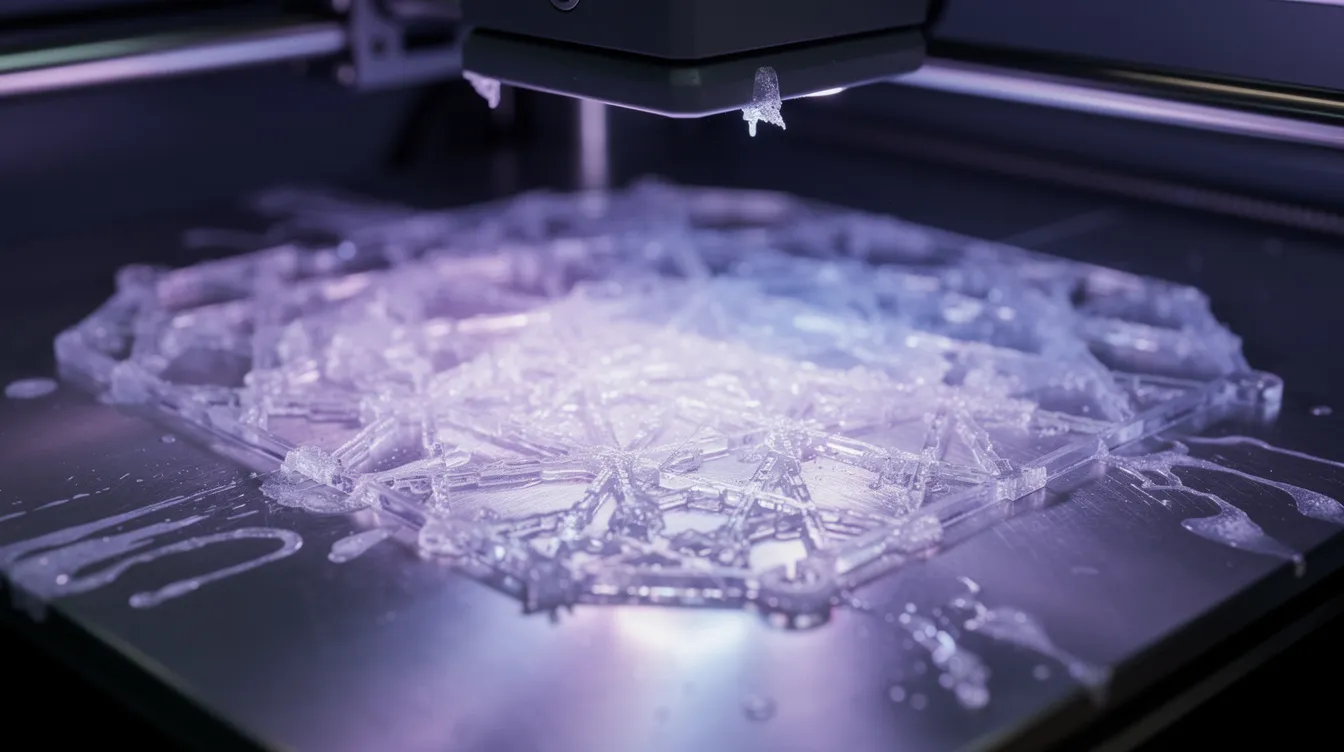
SLA (Stereolithography) Patterns
SLA cures liquid photopolymer resin layer by layer at 0.05–0.1 mm thickness, producing smooth, high-resolution patterns ideal for investment casting shells. Castable SLA resins burn out cleanly with less than 0.02% ash, preserving shell integrity. SLA is the preferred choice for medical device housings or any part requiring precision surface finish and fine detail.
FDM (Fused Deposition Modeling) Patterns
FDM extrudes thermoplastic filament (ABS, PLA, or specialty materials like PolyCast) to build patterns with visible layer lines. This approach suits larger prototype castings or early concept models in the automotive industry where speed and cost matter more than surface coating quality. FDM patterns carry higher burnout residue risk, so venting strategies and careful shell control are essential.
SLS and Other Powder-Based Pattern Options
SLS fuses powdered polymer with a laser, producing robust patterns without support structures-ideal for intricate internal passages. Pattern porosity and ash content require foundry expertise for successful burnout. Anebon evaluates whether SLS, SLA, or hybrid approaches best fit each part based on size, detail, and cost targets.
Advantages of Rapid Prototype Investment Casting and Rapid Casting
Engineers and buyers choose these methods to cut development cycles by several weeks. Production cycles shorten from 8–16 weeks down to 1–6 weeks. The speed advantage is clear: rapid prototype investment casting can reduce costs compared to traditional methods, especially for low-volume runs of 1–200 pieces where tooling amortization makes no business sense. Industries benefit from rapid casting for fast prototyping and custom solutions, with the ability to run parallel design variants. The process allows for quick design changes without tooling delays-on-the-fly design changes keep iteration velocity high.
Functional performance matters: prototype castings use the same alloy as future production parts, so thermal, mechanical, and corrosion testing data is representative. Unlike machining prototypes from bar stock, castings replicate the grain structure and material behavior of the final production part.
Limitations, Design Considerations, and DFM Tips
Rapid casting is not ideal for every scenario. Traditional casting methods provide better surface finish and material variety for certain applications, and higher costs per unit at scale make rapid methods less suitable for mass production runs. Very large parts may exceed printer build volumes.
DFM tips for engineers:
-
Maintain minimum wall thickness of ~1.0 mm for investment casting, thicker for sand
-
Add generous radii to internal corners; avoid sharp transitions
-
Specify draft angles for pattern release from ceramic shells
-
Identify critical-to-function surfaces early so Anebon applies CNC machining to reach tolerances as tight as ±0.002 mm
-
Engage Anebon’s DFM team before finalizing design to avoid costly rework
Applications and Industries for Rapid Castings
Rapid casting is most valuable where functional validation and time-to-market are critical. Rapid prototype investment casting can produce aerospace-grade parts in 6 weeks. Industries using rapid casting include aerospace, automotive, medical devices, and industrial machinery. Rapid casting is utilized for replacing legacy components in specialized machinery and is especially useful in producing complex, customized surgical instruments.
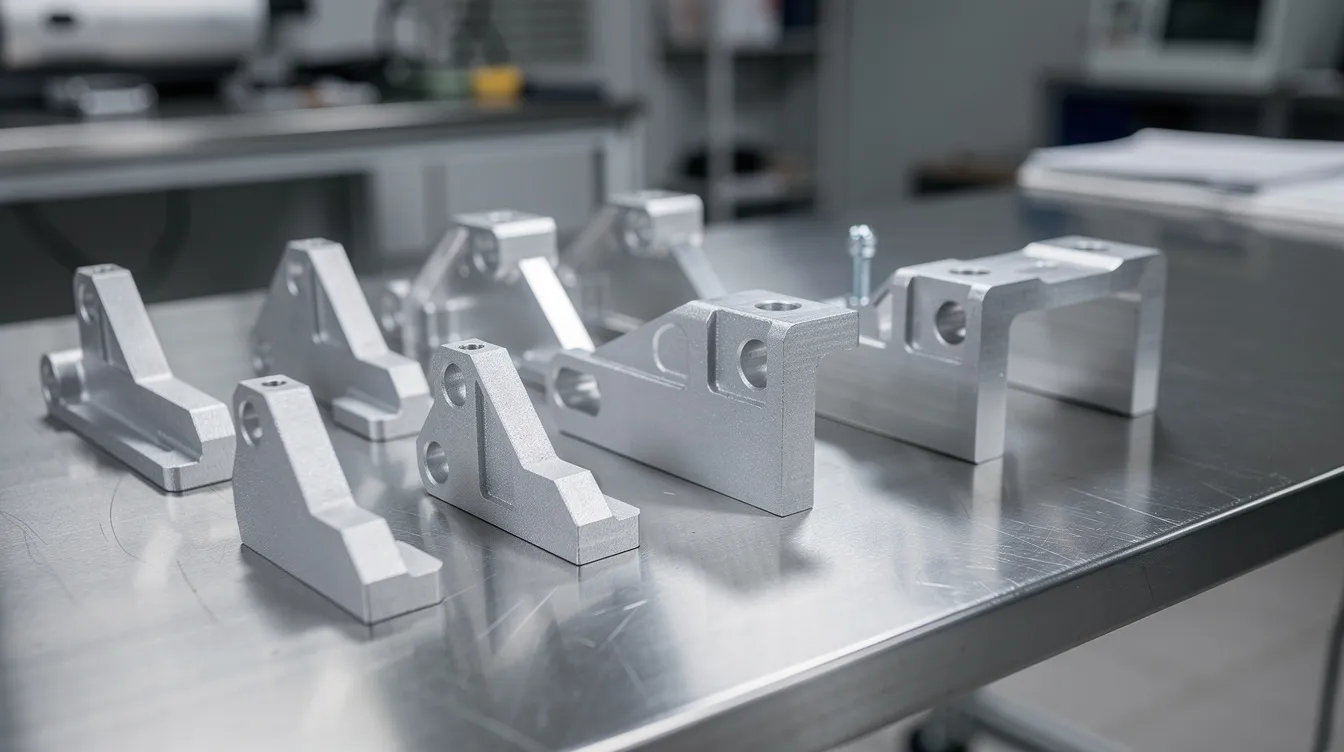
Typical lot sizes range from one-off samples to 100–300 early-build units for testing and certification. An EV startup might request five inverter housing prototypes for thermal cycling tests; an aerospace supplier might need twenty alloy bracket castings for fatigue qualification.
How Anebon Integrates Casting with CNC Machining and Finishing
Anebon is a precision manufacturing partner, not a casting broker. By integrating rapid casting with in-house CNC machining, we eliminate transfer delays between foundry and machine shop, cutting delivery times further. Our capabilities include 5-axis milling, CNC turning, drilling, tapping, and deburring-all under one roof. Secondary operations span heat treatment coordination, anodizing, powder coating, bead blasting, and passivation. ISO 9001:2015 quality systems ensure CMM-verified dimensions and material certification on every shipment, giving customers full control over part quality from rapid prototype through ramp-up quantities.
Lead Time Expectations, Pricing Drivers, and When to Move to Hard Tooling
Expect 7–15 days for simple rapid sand castings and 3–6 weeks for complex rapid prototype investment castings including machining. Pricing depends on part size, alloy, surface finish, pattern technology (SLA vs. FDM), and inspection requirements. Traditional casting is preferred for high-volume production due to its cost-effectiveness-once annual volumes exceed a few hundred parts and design is frozen, hard tooling typically becomes more economical. Use rapid prototype castings to validate your design, freeze specifications, and de-risk before committing capital to production tooling.
How to Start a Rapid Casting or Rapid Prototype Investment Project with Anebon
Ready to compress your development cycle? Engage early-even at concept stage. Send your 3D models (STEP/STP), 2D drawings, target quantity, schedule, and alloy preferences. Anebon’s team typically responds with a quote and DFM feedback within 24–72 hours. We regularly serve manufacturers across North America, Europe, and Asia via email, online RFQ, or video call for complex projects. Request a quote with your next rapid casting or rapid prototype investment casting project and get from CAD to testable metal before your competitors reach the market.