A Comprehensive Guide to Steel Machining Techniques and Applications
Steel Machining: A Practical Guide for CNC Machining Steel Parts
Introduction to Steel Machining
Steel machining is a subtractive manufacturing process that removes material from carbon and alloy steel workpieces using CNC-controlled milling, turning, drilling, and grinding operations. For design engineers and buyers sourcing precision components, understanding how steel behaves under a cutting tool is the difference between a part that ships on time and one that blows through budgets on scrapped blanks and burned inserts.
CNC machining steel has been central to automotive, aerospace, medical, and industrial equipment manufacturing since numerically controlled machines first appeared in the 1950s. Modern CNC adoption accelerated through the 1980s and 1990s, and today CNC machines are increasingly used for complex steel machining operations that once required manual setups or specialty fixtures. CNC machining uses pre-programmed computer software to control tool movements, spindle speeds, and feed rates with repeatable accuracy.
This article focuses on carbon steel, high carbon steels, and alloy steel in CNC machining-not generic metalworking or softer metals like aluminum and brass. Steel is more demanding to machine than those other materials because of its higher strength, lower thermal conductivity, and tendency to generate heat at the tool-chip interface. Selecting the correct cutting tools, cutting speeds, and heat treatment sequence matters more here than in almost any other material family. Anebon Metal Products Limited specializes in CNC machining steel parts for overseas OEM projects, handling everything from rapid prototyping to full-scale production with tolerances as tight as ±0.002 mm.
What Makes Steel Different to Machine?
Carbon steel is primarily made of iron and carbon, but the picture gets complicated fast when you add alloying elements like chromium, molybdenum, nickel, and vanadium. Each change in composition shifts the microstructure, hardness, and toughness of the raw material-and that directly affects your CNC machining strategy.
Steel varies widely in hardness and mechanical properties. Higher hardness and strength mean the cutting tools must overcome greater resistance to plastic deformation. That translates to elevated cutting forces, increased tool deflection risk at long overhangs, and the need for more conservative feed rates. High cutting forces are necessary when machining hard steel alloys, and if your setup is not rigid enough, surface quality and dimensional accuracy suffer. During every machining operation, the cutting tools remove material from the steel workpiece through controlled shearing, and the energy involved ends up largely as heat.
Thermal conductivity and work hardening behavior compound the challenge. Mild steels conduct heat reasonably well and rarely work harden, but work hardening behavior in stainless steels and certain high alloy steels complicates machining significantly-surface layers harden during cutting, accelerating tool wear and producing built-up edge.
Consider three common grades side by side. SAE 1018 (low carbon) has a machinability rating of about 78 % relative to the free machining steel AISI 1212 benchmark, and tool life is generous. SAE 1045 (medium carbon) drops to roughly 55–60 %, demanding finishing passes to hit acceptable surface finish targets. Alloy steel 4140, when quenched and tempered to 28–32 HRC, cuts even more slowly and requires coated carbide or CBN tooling for acceptable results.
Easier steels to machine:
-
Free machining steel grades like 12L14, 1117, and 1215
-
Low carbon steels such as 1018, 1020 in annealed condition
-
Any steel below approximately 200 HB
More difficult steels:
-
High carbon steels above 0.60 % C
-
Alloy steels hardened above 28 HRC
-
Stainless and tool steel grades with high work-hardening tendency
Types of Steel Used in CNC Machining
Three steel families dominate metal CNC machining projects: carbon steel for general-purpose parts, alloy steel for high-performance structural components, and tool steel for dies, molds, and tooling components. Each family brings different material properties, cost profiles, and machining behaviors.
|
Steel Family |
Typical Grades |
Properties / Hardness |
Typical CNC Machining Applications |
|---|---|---|---|
|
Low-carbon carbon steel |
1018, 1020, 1117, 1215 |
Tensile 350–550 MPa; 120–180 HB; good weldability |
Brackets, housings, fasteners, fixtures |
|
Medium-carbon carbon steel |
1045, 1050 |
Tensile 600–850 MPa; 180–230 HB annealed; up to 32 HRC after heat treatment |
Shafts, pins, gears, machinery components |
|
High-carbon carbon steel |
1075, 1095 |
>0.60 % C; up to 55–60 HRC after hardening |
Springs, cutting tool blanks, wear parts |
|
Structural steel |
A572 (Gr 42–65) |
A572 steel has five grades with yield strengths from 42 to 65 ksi |
Frames, weldments, heavy structures |
|
Alloy steel |
4130, 4140, 4340 |
Improved hardenability; 4340 can reach 46–53 HRC |
High-stress shafts, aerospace components, downhole tools |
|
Tool steel |
H13, D2, O1, A2 |
48–65 HRC after hardening; high wear resistance |
Injection molds, die casting dies, stamping tools |
Anebon regularly machines low carbon steels like 1018 and 1020, medium carbon 1045, and popular alloy grades including 4130, 4140, and 4340 via its CNC machining service. Early material choice directly impacts cost per part, cycle time, and achievable tolerances across CNC milling and turning operations.
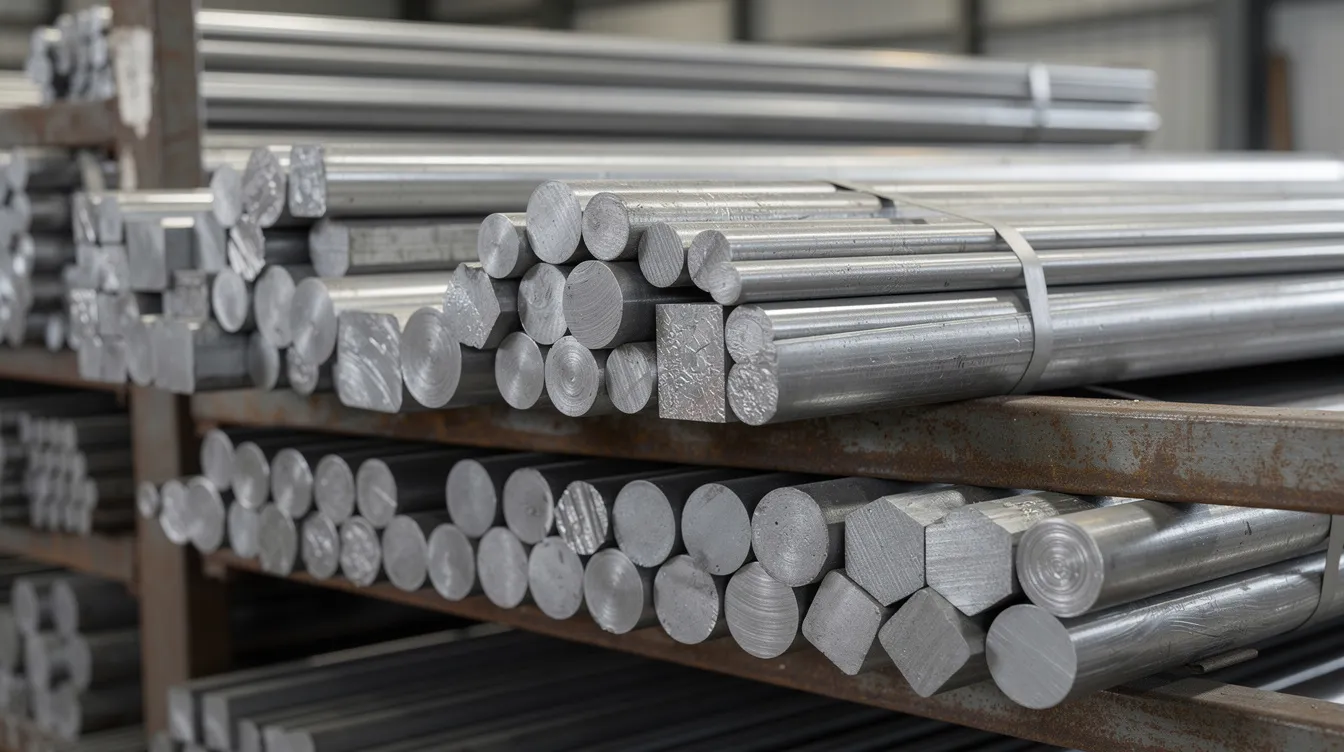
Carbon Steel for CNC Machining
Carbon steel is the most widely used steel family in CNC machining because it delivers a practical balance of cost, strength, and machinability. Your choice within the family-low, medium, or high carbon-shapes every downstream decision from cutting speed to heat treatment.
Low carbon steel (1018, 1020). With carbon content around 0.15–0.25 %, these grades offer excellent machinability, weldability, and ductility. Yield strength sits in the 350–500 MPa range, and hardness in annealed condition is roughly 120–180 HB. Expect long tool life and good surface quality at moderate cutting speeds. The main nuisance is long, stringy chips that require chip-breaking geometries or peck cycles. Common CNC machined uses include brackets, housings, and fasteners-anywhere raw metal cost and cycle time matter more than ultimate strength.
Medium carbon steel (1045, 1050). 1045 steel contains approximately 0.45 % carbon, pushing tensile strength to 600–850 MPa and annealed hardness to 180–230 HB. After heat treatment, 1045 can reach 28–32 HRC. Quenching and tempering increase the hardness of 1045 steel significantly, making it suitable for shafts, pins, gears, and pulleys that must withstand heavy loads and cyclic fatigue. Machining requires stable fixturing and finishing passes to hit target surface finish.
High carbon steels (1075, 1095). Above 0.60 % C, these grades deliver hardness beyond 55 HRC after hardening-ideal for springs, cutting tool blanks, and wear components. But their high carbon content demands slower cutting speeds, rigid setups, and conservative feeds. Wherever possible, rough machine before hardening and finish grind afterward.
When should you choose carbon steel over stainless steel or alloy steel? For agricultural machinery linkages, automotive components that don’t face corrosive environments, and general-purpose structural components, carbon steel grades offer faster machining, lower raw material cost, and shorter cycle times. If you need corrosion resistance or a higher strength to weight ratio, then stainless or alloy grades enter the conversation-but at higher cost and more demanding machining processes.
Alloy Steel and Its Advantages in CNC Machining
Alloy steel is carbon steel enhanced with deliberate additions of chromium, molybdenum, nickel, vanadium, or boron to improve hardenability, toughness, fatigue resistance, and high-temperature performance. These steel alloys are popular in steel CNC machining projects where parts face demanding service conditions.
4140 is the most commonly used steel alloy, found in shafts, gears, bolts, and downhole tools across virtually every heavy-duty industry. 4130 Cr-Mo steel serves aircraft tubing, roll cages, and drive components. 4340 nickel-chromium-molybdenum steel handles the highest stress levels-fuselage fittings, mining equipment, and engine components-where tensile strength can reach 860–1,980 MPa depending on heat treatment.
The trade-off is straightforward: alloy steel grades machine more slowly and consume more cutting tool edges than mild steels, but they deliver longer in-service life under fatigue, impact, and elevated temperature. When machining quenched and tempered 4140 in the 28–32 HRC range, best practice calls for coated carbide cutting tools (TiAlN or AlTiN), moderate cutting speeds around 60–120 m/min for CNC milling, ample flood coolant, and rigid tooling with minimal overhang. Finishing passes should use shallow depths of cut and controlled chip loads to preserve surface quality.
Tool Steel and High-Carbon Steels in Machining
Tool steels are designed for cutting and forming materials-they are engineered for hardness, abrasive material resistance, and heat resistance rather than general structural duty. High carbon steels in this category share those wear-oriented properties.
Common grades and their post-heat-treatment hardness ranges include H13 hot-work tool steel, which achieves a Rockwell C hardness of 44–52 after heat treatment; D2 cold-work steel at 58–62 HRC with very high wear resistance; and O1 and A2 oil- or air-hardening steels in the 55–62 HRC range.
During machining, these steels are abrasive, generate significant heat, and can work harden at the surface layer. Tool deflection and chatter become critical concerns. CNC machined tool steel components are common in injection molds, die casting dies, progressive stamping tools, and high-end shearing blades-anywhere the tooling itself must survive millions of cycles.
Best practices for machining tool steel:
-
Use high-quality coated carbide or cubic boron nitride (CBN) cutters with sharp cutting edges
-
Set up stable CNC milling configurations with minimal overhang
-
Apply generous cutting fluids to manage temperature
-
Consider finishing via grinding or hard turning for hardened steels above 45 HRC
Key CNC Machining Processes for Steel
CNC machining steel typically involves a combination of CNC milling, CNC turning, drilling, and grinding to transform raw material into precise components with the desired shape. Machining processes include turning, milling, drilling, boring, and grinding-each suited to different feature types and tolerance bands. CNC machining achieves high precision levels, produces minimal material waste, and allows for complex shapes to be manufactured easily. CNC technology also enables faster production times compared to manual metal machining operations.
CNC milling creates complex shapes using a rotating cutting tool that engages the workpiece from multiple angles. Roughing from billet or plate typically starts with face milling, then moves to pocketing and contouring. Anebon uses 5-axis machining to reduce setups on complex steel parts-eliminating repositioning errors and cutting cycle time. For an overview of machining techniques, consider how 3-axis versus 5-axis strategies affect both cost and geometric capability. Milling machines in high speed machining configurations can handle both roughing and finishing in a single setup when rigidity allows.
CNC turning produces cylindrical parts by rotating the workpiece against a stationary cutting tool. Shafts, bushings, fittings, and threaded parts are standard CNC turning output. Steel turning requires robust lathes with high rigidity and power because of elevated cutting forces. Water jet cutting and a drill press may handle preliminary stock preparation in some shops, but CNC turning and milling operations carry the precision burden.
Drilling creates holes in metal using rotating drill bits, often with peck cycles for deep-hole work. Reaming follows for tight-tolerance bores. CNC machining provides high-quality surface finishes across all these operations.
Grinding utilizes an abrasive wheel for precise finish and sizing on hardened steel surfaces, achieving IT6–IT7 tolerances and Ra values below 0.4 µm. Anebon’s CNC machining precision allows tolerances of ±0.002 mm on selected steel features with modern machine tools and in-process metrology, delivering unparalleled precision where it matters most.
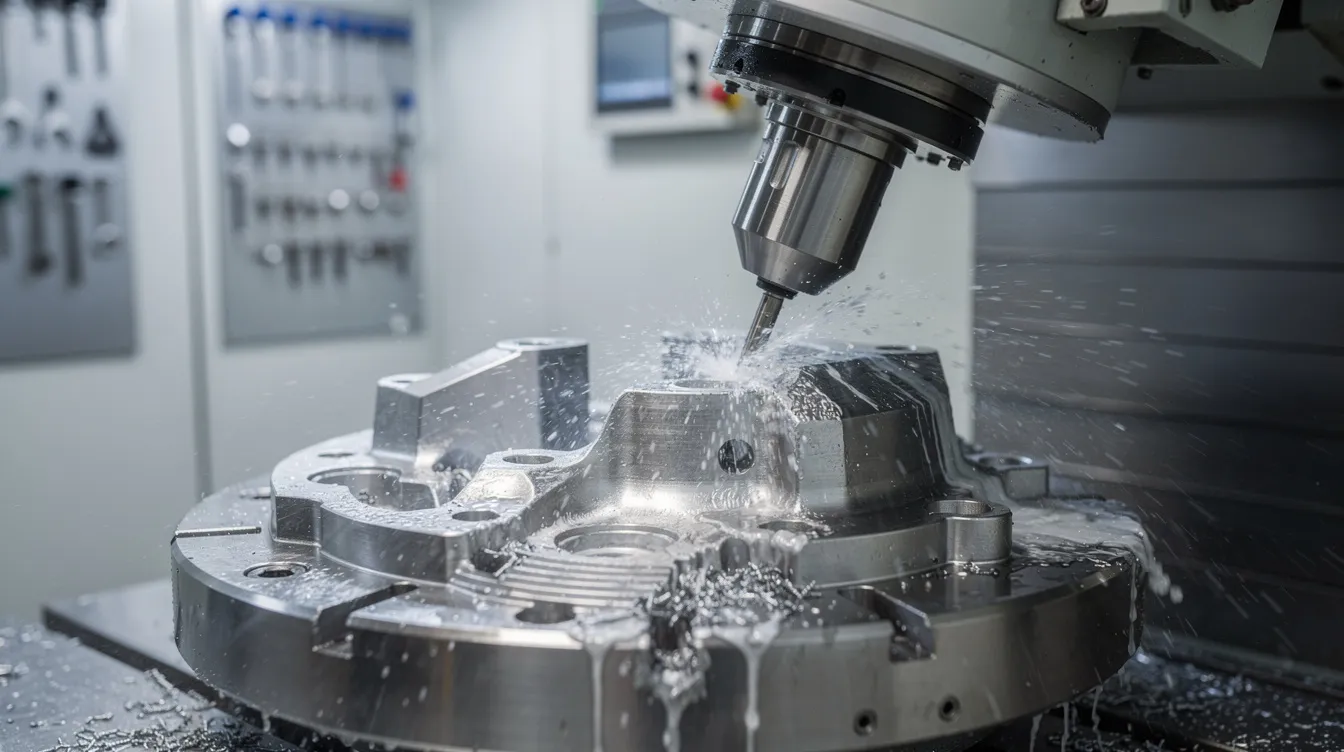
Cutting Tools, Cutting Speed, and Feed for Steel
Cutting tool choice and machining parameters are the fastest levers to improve productivity and tool life in steel machining. Getting them wrong means burned inserts, poor surface finish, and blown delivery schedules.
Cutting tool materials for steel:
-
Coated carbide (TiAlN, AlTiN, or similar PVD/CVD coatings) is the default for most metal removal on steel above mild hardness
-
High speed steel (HSS) remains useful for low-speed operations, tapping, and small-diameter drilling where tool cost or heat is manageable
-
Ceramics and CBN handle hardened steels above roughly 45 HRC for hard turning or hard milling, enhancing precision on critical surfaces
Machining parameters include cutting speed, feed rate, and depth of cut-and they must be tuned to each steel grade. For 1045 in annealed condition, milling with coated carbide typically runs at 100–160 m/min with a roughing feed per tooth around 0.10–0.18 mm. For 4140 hardened to 28–32 HRC, cutting speeds drop to 60–120 m/min and finishing chip loads fall to 0.04–0.07 mm per tooth. At high cutting speeds with inadequate tool geometry or coating, rapid tooling wear occurs due to high cutting temperatures at the tool-chip interface.
Coated tools resist heat and abrasion far better than uncoated carbide. For roughing, select inserts with robust edge preparation; for finishing, use sharper geometries and tighter nose radii to improve surface quality and material removal rates.
Quick checklist for engineers setting up steel cuts:
-
Verify machine and fixture rigidity before cutting
-
Start with vendor-recommended cutting data for the specific steel grade
-
Adjust based on chip color (blue or dark brown signals overheating)
-
Monitor tool wear patterns and spindle load
-
Run trial cuts on representative test coupons before production
Managing Heat, Chip Evacuation, and Tool Wear
Heat generation during steel machining requires effective cooling strategies-more so than with aluminum or plastics, because steel’s lower thermal conductivity traps heat at the cutting zone. Left unmanaged, this thermal expansion distorts parts, degrades surface integrity, and accelerates tool wear.
Coolant strategies:
-
Flood coolant for general carbon and alloy steel metal machining operations
-
High-pressure through-tool coolant for deep-hole drilling and reaming
-
Occasional dry cutting only with specific coated inserts designed for high-temperature operation
Cutting fluids enhance machining performance by reducing friction and heat, flushing chips away from the cut, and extending tool life. For mild steels that produce long, stringy chips, use chip-breaking tool geometry, appropriate feed rates, and peck drilling cycles. Chip control is crucial to prevent tangling and damage during machining-a wrapped chip can scratch the steel surface, gouge the part, or stall the spindle.
Common tool wear modes in CNC machining steel:
-
Flank wear: gradual edge abrasion from contact with the workpiece-normal but accelerated by insufficient speed or hard inclusions
-
Crater wear: scalloping on the rake face from excessive tool-chip interface temperature
-
Chipping or fracture: caused by interrupted cuts, vibration, or excessive feed
-
Built-up edge (BUE): material welding to the tool at low speed or with poor coating
Each pattern tells you something specific about incorrect cutting speed, feed, or coolant application. Anebon uses process monitoring, scheduled tool changes, and trials on representative test coupons to stabilize tool life before ramping up to full production volumes, keeping surface quality consistent across batches.
Heat Treatment and Machining Sequence
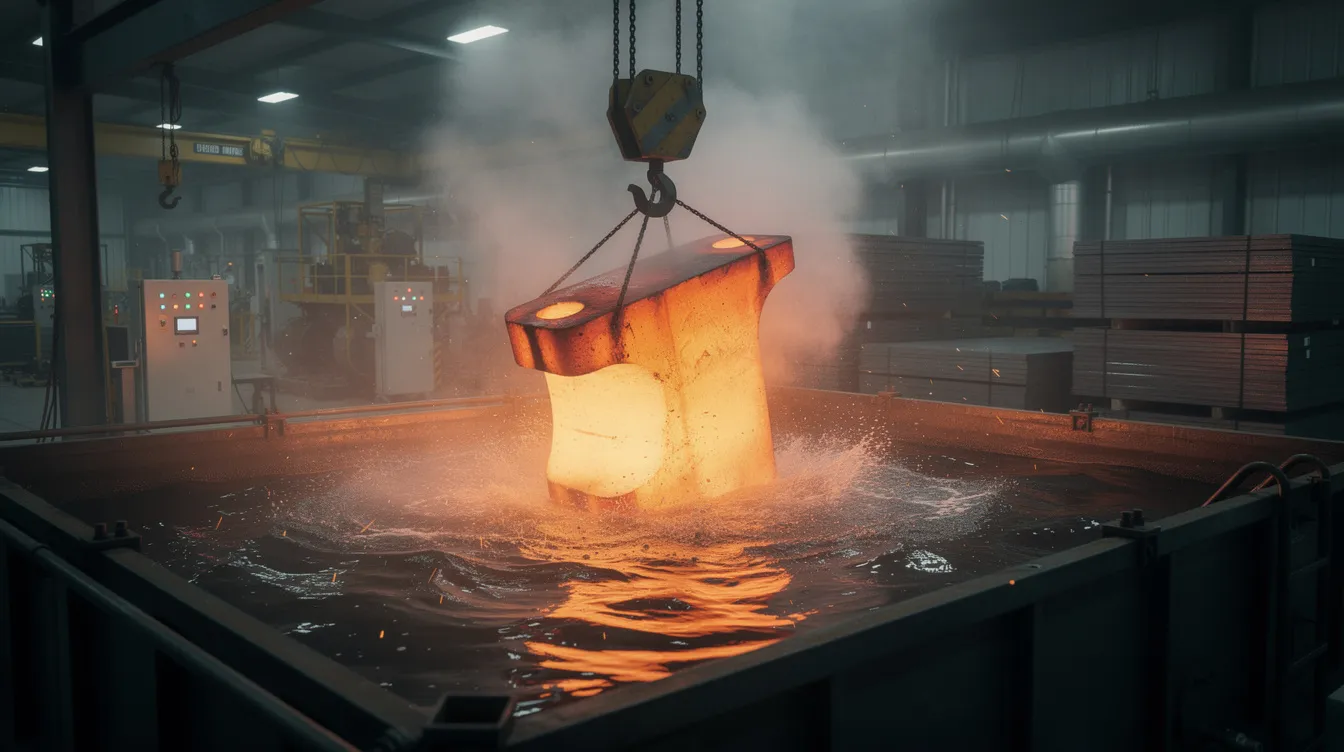
Heat treatment enhances hardness, ductility, and strength of steel, and its placement in the manufacturing process sequence determines both machining difficulty and final part accuracy. Heat treatment processes include annealing, quenching, and tempering-each shifting the microstructure and mechanical properties of the workpiece.
Two common process flows exist. The first machines the part fully in a soft (annealed or normalized) condition, then heat treats to final hardness. The second rough machines, hardens, then finish grinds or hard-turns critical features to final dimension.
Key heat treatment steps relevant to machinists:
-
Normalizing: heats steel above its critical temperature and air cools to refine grain structure and reduce residual stress
-
Annealing: slow furnace cooling to the softest, most machinable state
-
Quenching and tempering: quenching enhances steel’s mechanical properties by transforming the microstructure to martensite, then tempering reduces brittleness to a target hardness
-
Case hardening: carburizing increases surface hardness while preserving ductility in the core; nitriding achieves similar results with lower distortion
-
Heat treatment can tailor mechanical properties of 1060 steel and similar medium-high carbon grades precisely, depending on quench severity and temper temperature
Example workflow for a 4140 shaft: Start with normalized stock. Rough CNC mill and turn all features, leaving 0.2–0.4 mm finishing stock on critical diameters. Quench and temper to 30–36 HRC. Finish machine bearing seats on a CNC lathe. Grind journal surfaces to Ra < 0.4 µm and IT7 tolerance.
Anebon cooperates with local certified heat-treatment partners and manages dimensional changes-distortion and growth-through process planning and extra machining stock.
Surface Finishing and Functional Treatments for Machined Steel
Surface finish and post-processing are where fatigue life, corrosion resistance, and aesthetics come together on CNC machined steel parts. A perfectly machined dimension loses its value if the surface corrodes or wears prematurely.
Mechanical finishing includes grinding, polishing, and shot blasting to reach specified roughness targets. Sealing surfaces and sliding fits often require Ra below 0.8 µm; bearing seats may need Ra below 0.4 µm. Surface treatments enhance hardness, corrosion resistance, and wear properties of the finished part.
Chemical and electrochemical treatments:
-
Black oxide: mild corrosion protection with minimal dimensional change
-
Zinc plating: durable corrosion resistance for automotive components and hardware
-
Nickel plating and electroless nickel plating: excellent corrosion resistance, uniform thickness even on complex shapes; electroplating with nickel improves corrosion resistance and wear performance
-
Powder coating: thick protective layer for structural and decorative applications
Thermal and diffusion processes: Surface hardening techniques improve wear resistance of steel components in service. Induction hardening targets localized areas on shafts and gears. Nitriding produces a hard surface layer (60–70 HRC) with minimal distortion-ideal for precision parts that cannot tolerate post-hardening grinding.
Anebon supplies CNC machined carbon and alloy steel parts with complete surface treatment packages through audited finishing suppliers, ensuring each part meets its design intent from core to surface.
Applications of CNC Machined Steel in Industry
Steel CNC machining is indispensable across sectors where mechanical properties, durability, and precision intersect.
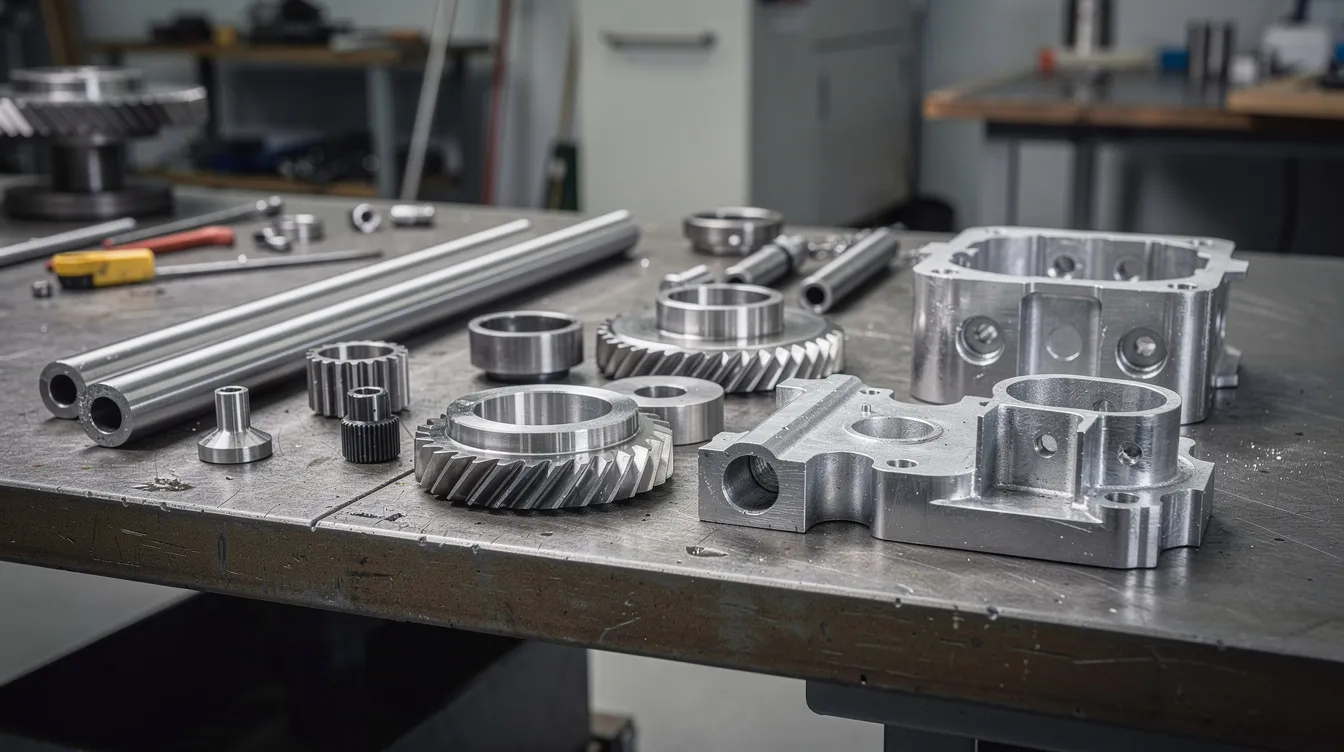
Automotive. CNC machined alloy steel transmission shafts, differential gears, and steering arms rely on grades like 1045 and 4140. Journal tolerances often fall within IT7, and surface finish targets sit below Ra 0.8 µm. These engine components and drivetrain parts must withstand heavy loads over millions of cycles.
Industrial machinery and robotics. Carbon steel frames from 1018 and 1020 provide cost-effective bases, while 4140 bearing housings and robot arm joints deliver the toughness needed for continuous operation. Precise components in these assemblies keep production lines running without unplanned downtime.
Medical and aerospace. In these sectors, stainless steel and titanium often take center stage for implants and flight hardware, but alloy and tool steel are essential for fixtures, jigs, and aerospace components tooling. The precision of the steel tooling directly determines the accuracy of the final titanium or composite part.
Anebon has supplied CNC machined steel parts and tooling for overseas OEMs in Europe and North America since 2010, covering modern manufacturing demands across electronics, robotics, and industrial machinery.
Design and Material Selection Tips for Steel Machining Projects
Involving your CNC machining supplier early can reduce cost and lead time. Early engagement enables DFM feedback on steel grade availability, heat treatment options, fixturing constraints, and achievable tolerances-before your design is locked.
High-level DFM guidance:
-
Choose the simplest steel grade that meets performance needs; avoid specifying the right steel grade at a higher alloy level than necessary
-
Standardize on a few grades across assemblies to reduce tooling changes and stock holdings
-
Use generous corner radii compatible with common end mill sizes for CNC milling operations
-
Maintain consistent wall thicknesses to avoid differential cooling and distortion during heat treatment
-
Provide tool access and avoid deep narrow slots that slow machining and increase tool wear
When to select which grade:
-
Low carbon steel (1018, 1020): high-volume, low-stress parts where weldability matters
-
Medium carbon (1045): moderate-to-high loads, fatigue, and wear-shafts, pins, machinery components
-
Alloy steel (4140, 4340): high stress, critical fatigue, or elevated temperature; expect longer cycle times but superior in-service life
-
Tool steel: only when the part itself is a die, mold, or abrasive material contact surface
Anebon offers design-for-manufacturing feedback during the quotation stage to help engineers select the optimal steel grade and CNC machining route for their project.
Why Partner With Anebon for CNC Machining Steel Parts?
Anebon Metal Products Limited is a Dongguan-based precision CNC machining, die casting, and sheet metal fabrication company founded in 2010. The company handles 3-, 4-, and 5-axis CNC milling, CNC turning centers, and combined CNC turning and milling operations across carbon steel, high carbon steels, alloy steel, tool steel, and other materials including stainless steel and aluminum.
ISO certifications demonstrate quality management in manufacturing processes. Anebon holds ISO 9001:2015 and ISO 14001:2015 certifications, uses in-house CMMs and optical measurement for quality control, and maintains full material traceability. Quality control ensures machined components meet engineering specifications from prototype through production.
The typical engagement model runs from rapid prototyping in steel through pilot runs and into full OEM production with stable processes, SPC, and documented inspection reports.
Ready to move forward? Send your CAD models and technical drawings to Anebon for a CNC machining steel quote. Whether you need a handful of prototypes in 1018 or production volumes of hardened 4140 shafts, Anebon supports international clients in aerospace, medical, automotive, electronics, robotics, and industrial machinery with the CNC machining precision your project demands.