A Comprehensive Guide to CNC Machining Techniques and Applications
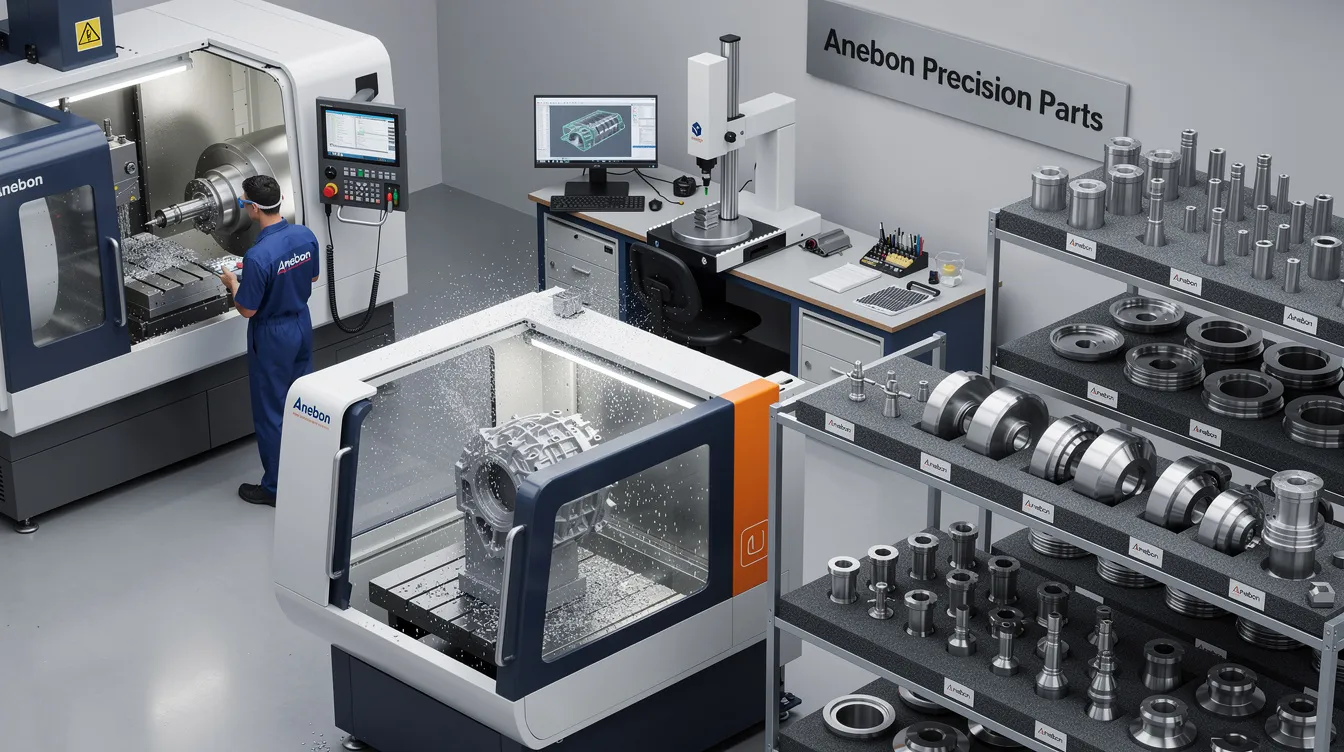
CNC Machining: Processes, Machines, and How Anebon Delivers Precision Parts
Every aerospace bracket, medical implant, and automotive housing starts as a block of raw material. Turning that block into a finished, dimensionally accurate part requires a manufacturing process that balances speed, precision, and repeatability. That process is CNC machining, and it remains the backbone of modern manufacturing for functional metal and plastic components.
This guide walks you through how CNC machining works, the main processes and machine types involved, the materials and cutting tools that make it possible, and the design guidelines engineers need to make smart sourcing decisions. Along the way, we’ll show you exactly how Anebon Metal Products Limited applies this technology to deliver high precision parts for OEM customers around the world.
What is CNC Machining?
CNC machining is a subtractive manufacturing process that uses pre-programmed computer software to direct the movement of machine tools and cutting tools, removing material from a solid block of metal, plastic, or composite to create a finished part. The term CNC stands for computer numerical control cnc, meaning every axis movement, spindle rotation, and tool change is governed by digital instructions rather than a human hand.
Here’s how it works at the highest level: CNC machining starts with a CAD model. That model is translated by cam software into machine-readable g code, which tells the CNC machine exactly where to move, how fast to cut, and when to change tools. The result is a machining process that can reproduce identical parts with minimal variation, batch after batch.
Unlike manual machining, where an operator physically guides handwheels and levers, CNC machining uses pre-programmed computer software for tool movement. This eliminates human error during the cutting process and delivers automated manufacturing precision that conventional machining simply cannot match. CNC machining outperforms traditional methods through automated precision and superior repeatability.
CNC machining can produce parts from metals, plastics, and composites, making it versatile enough for nearly any industry. It’s especially well-suited for custom parts, prototypes, and low-to-medium volume production where tight tolerances matter. At Anebon, we routinely hold tolerances as precise as ±0.002 mm for critical features, placing our work in the ultra-precision category.
How does cnc machining compare to additive manufacturing processes like 3D printing? In additive manufacturing, material is deposited layer by layer to build up a shape. While that approach excels at producing complex internal geometries quickly and at lower setup costs, CNC machining can produce parts with isotropic material properties, superior surface finishes, and verified mechanical strength. Setup costs for CNC machining are typically higher than for 3D printing, but for functional metal parts requiring tight tolerances, CNC machining is the clear winner. It’s worth noting that CNC machining is less suitable for complex geometries compared to additive manufacturing when those geometries involve fully enclosed internal channels or lattice structures.
Anebon Metal Products Limited specializes in high-precision cnc manufacturing for overseas OEMs across aerospace, medical devices, automotive, electronics, and robotics. Founded in 2010 and certified to ISO 9001:2015 and ISO 14001:2015, we provide everything from rapid prototyping to full-scale production.
Key takeaways:
-
CNC machining is a subtractive manufacturing technology that carves parts from solid stock using digitally controlled cutting tools
-
CNC stands for computer numerical control, replacing manual lathes and manual machining with automated, code-driven precision
-
Ideal for functional prototypes and production runs needing tolerances from ±0.05 mm down to ±0.002 mm
-
Produces parts with isotropic properties and excellent surface finish, unlike layer-by-layer additive methods
-
Anebon delivers precision CNC machining across metals, plastics, and composites for global OEM customers
How Does the CNC Machining Process Work?
The cnc machining process follows a repeatable sequence: design the part in computer aided design cad software, generate toolpaths through computer aided manufacturing programming, set up the CNC machine, execute the machining operations, inspect the finished part, and ship. Each step feeds the next, and skipping or rushing any stage introduces cost, delays, or quality issues. The CNC machining process includes design, programming, setup, machining, and inspection.
Design (CAD Modeling)
Every project starts in computer aided design software, where the engineer defines geometry, dimensions, tolerances, datum references, material, and surface finish requirements. A fully dimensioned model with GD&T callouts is essential. Without clear tolerancing, the cnc manufacturing process downstream becomes a guessing game, and guessing is expensive. Modifying a part in CNC machining requires updating CAD/CAM software, so getting the design right early saves significant time and rework.
CNC Programming (CAM)
Once the CAD model is finalized, cnc programming begins. The cam software converts 3D geometry into g code, the language CNC machines understand. This step defines every toolpath, feed rate, spindle speed, step-down depth, and tool engagement angle. Collision checking and simulation software enables testing and refinement of designs without producing physical prototypes, catching errors before any metal is cut. This is where experienced programmers earn their keep: optimizing for cycle time, tool life, and surface finish simultaneously.
Machine Setup
With the program loaded, the cnc operator selects workholding fixtures, locates the datum, and sets the machine’s zero point. Tool length and diameter offsets are measured and entered. A dry run, where the machine traces its path without engaging the cutter, confirms clearance and prevents crashes. For precision work at ±0.005 mm or tighter, thermal stabilization and rigid fixturing become critical variables.
Machining Execution
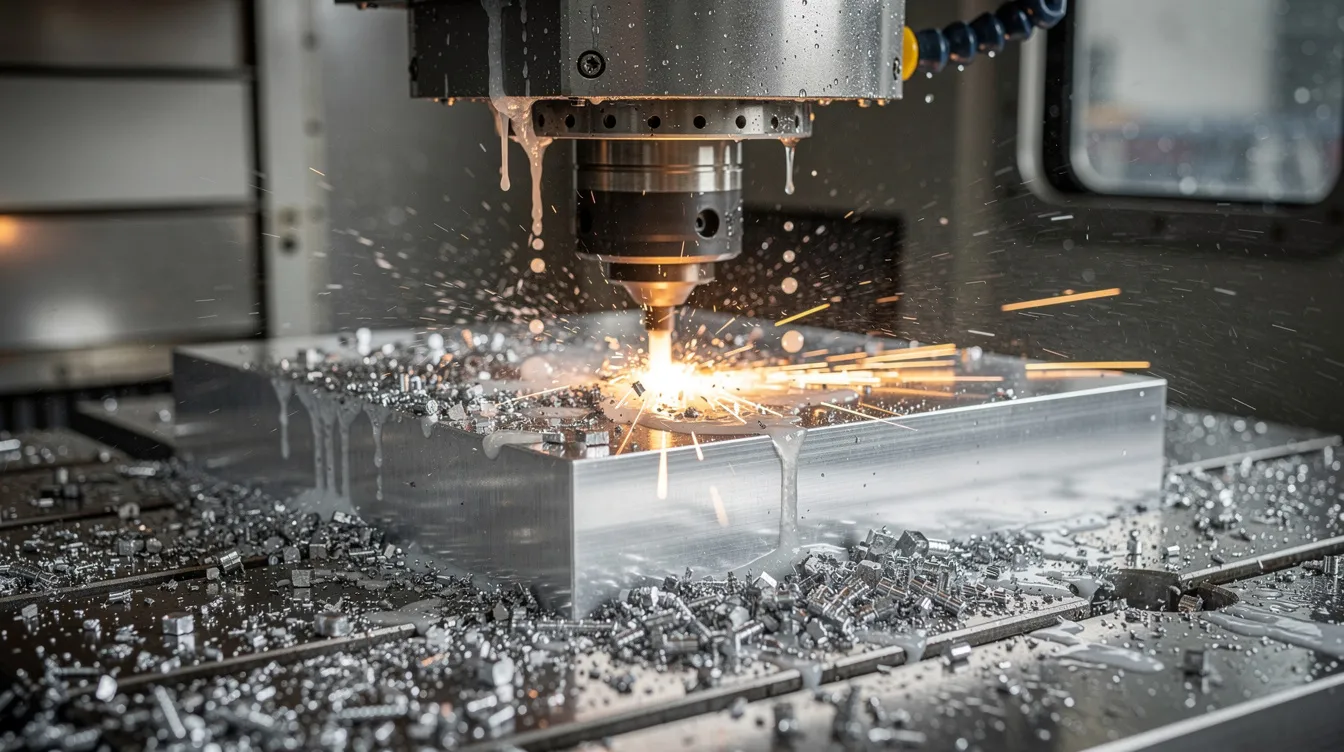
During production, modern cnc systems handle the heavy lifting. Automated tool changes swap cutters in seconds, spindle speed adjusts dynamically, and coolant is managed to control heat buildup. CNC systems can monitor tool positions 100 times per second, ensuring axis positions stay within programmed tolerances. CNC machines can operate continuously for 24 hours, and they can run 24/7 with minimal labor and reduced material waste. In-process probing or gauging can verify dimensions mid-cycle, catching drift before it becomes scrap.
Inspection and Quality Assurance
After machining, parts go to inspection. CMM (coordinate measuring machine) verification, surface profilometry for Ra measurements, and statistical process control over batch runs ensure every part meets specification. For aerospace and medical projects, first article inspections (FAI), material certifications, and full traceability documentation are standard. At Anebon, our ISO 9001:2015 and ISO 14001:2015 certified processes ensure that quality and environmental responsibility are built into every order.
From Prototype to Production
One of the strengths of the cnc process is scalability. Anebon supports rapid prototyping with typical lead times of 3–7 business days for standard-complexity parts. Simple geometries in common materials can ship even faster. Production batches follow the same validated process, with additional fixture optimization and multi-shift scheduling to meet volume demands. Low-volume production typically runs 1–4 weeks; high-volume or specialty processing can extend to 4–6 weeks depending on material availability and secondary operations.
Main CNC Machining Processes: Milling, Turning, and Beyond
CNC machining operations are subtractive by nature: rotating cutting tools or stationary tools engage a workpiece, generating chips as material is removed. The main categories of machining operations include milling, turning, drilling, and grinding, each optimized for different part geometries and tolerance requirements.
CNC Milling
A cnc milling machine uses rotating cutting tools that move across a stationary workpiece to remove material. CNC mills typically operate on three axes: X, Y, and Z. A 3-axis setup handles the majority of milling operations, producing pockets, slots, contours, profiles, and flat surfaces. For complex shapes requiring tool access from multiple angles, 5-axis cnc mills tilt and rotate the cutting tool or workpiece, allowing one-setup machining of aerospace turbine blades, medical implants, and components with undercuts or compound angles. The trade-off is higher programming complexity and machine cost, but the payoff is fewer setups, tighter tolerances, and better surface finishes.
CNC Turning
CNC turning rotates the workpiece against a stationary cutting tool that moves along linear axes. A cnc lathe is the workhorse for cylindrical parts: shafts, bushings, threaded fittings, and housings. CNC lathes are primarily used for producing cylindrical components. Modern turning centers often include live tooling, where cutting tools on the turret can rotate for milling operations on a turning machine, and sub-spindles that transfer the part to a second spindle for machining external and internal features from both ends. This allows producing complex components that combine turned and milled geometry on the same machine. Explore Anebon’s precision turned components for real-world examples.
Drilling, Boring, Tapping, and Reaming
These auxiliary cnc machining operations focus on holes and internal features. Drilling creates rough holes, reaming finishes them to precise diameters with excellent surface quality, boring handles precision internal diameters, and tapping cuts threads. Each operation uses specialized cnc tools matched to the feature’s tolerance and finish requirements.
CNC Grinding
For features demanding the tightest tolerances and lowest surface roughness, cnc grinding machines deliver. Cylindrical OD/ID grinding, surface grinding, and profile grinding can achieve tolerances of ±0.002–0.005 mm and surface finishes below Ra 0.5 µm. Grinding typically follows milling or turning as a finishing step for bearing seats, sealing surfaces, and precision bores.
Electrical Discharge Machining (EDM)
When conventional cutting tools can’t reach a feature or the material is too hard, electrical discharge machining steps in. CNC EDM machines use electrical discharges to remove material precisely, making them ideal for hardened steels, intricate cavities, and fine features. Wire EDM uses a thin wire electrode to cut complex 2D profiles, while spark machining (sinker EDM) creates 3D cavities using shaped electrodes. Both are essential for mold making, aerospace components, and precision tooling.
Complementary Cutting Technologies
Fabrication workflows often integrate laser cutting, waterjet cutting, and plasma cutters alongside CNC machining. Plasma and laser cutters use concentrated jets of plasma or lasers to slice through flat sheets of metal. CNC plasma cutters use a high-temperature plasma arc for cutting thicker plate stock, while CNC laser cutting machines provide high precision for intricate designs in thinner sheet metal. Waterjet cutting handles materials sensitive to heat. These processes complement CNC machining for sheet and plate preparation but are not substitutes when full 3D dimensional precision is required.
Anebon’s Integrated Approach
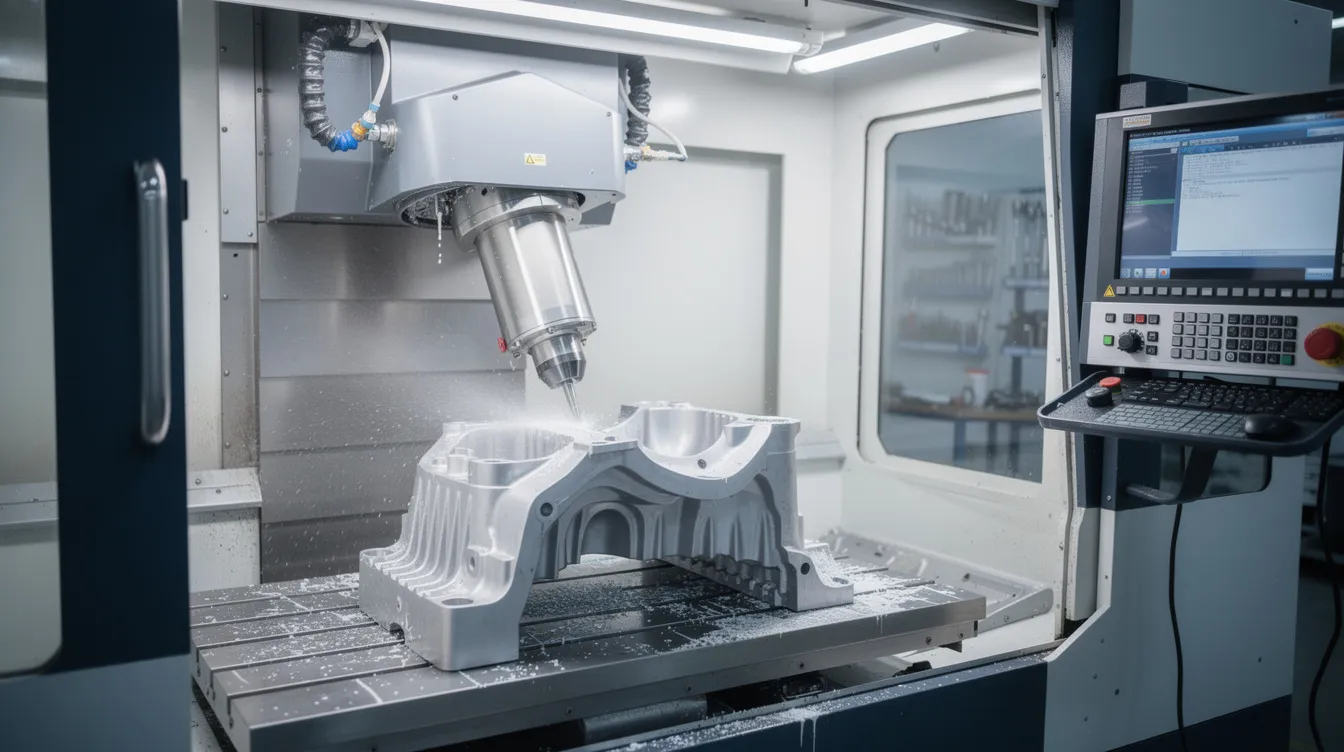
Anebon combines CNC machining with die casting and sheet metal fabrication. This means a customer can receive a near-net-shape casting with critical surfaces and mating features machined to final specification, all from one supplier. This hybrid approach reduces lead time, eliminates vendor coordination headaches, and controls quality from raw material to finished part.
Types of CNC Machines Used in Modern Manufacturing
Different types of cnc machines are optimized for different geometries, tolerances, and production volumes. Understanding the landscape helps engineers specify the right manufacturing process for their project, and helps buyers evaluate whether a supplier has the right cnc machinery for the job.
CNC technology controls a range of machines including lathes, mills, routers, and grinders. Here’s a breakdown of the primary equipment categories.
Vertical and Horizontal Machining Centers
Vertical CNC milling machines position the spindle vertically, providing easy access to the top face of the workpiece. They’re the most common type of cnc mills and handle the widest variety of general milling operations. Horizontal machining centers orient the spindle horizontally, offering superior chip evacuation and better access for deeper cuts. Work envelope varies significantly: a small vertical machine might offer X/Y/Z travel of 300 × 400 × 300 mm, while large-format machines can reach 1,600 × 1,200 × 600 mm or more.
Multi-Axis Machining Centers
Moving beyond 3-axis, 4-axis machines add a rotary table, and 5-axis machines add both tilt and rotation. Advanced multi-axis CNC machines can carve intricate three-dimensional designs in a single setup, reducing datum transfer errors and total cycle time. This makes them essential for producing complex components in aerospace, medical, and high-end industrial applications.
CNC Lathes and Turning Centers
From simple 2-axis lathes to sophisticated mill-turn machines, CNC turning centers cover the full range of cylindrical parts production. Live tooling enables drilling and milling on a rotating workpiece; sub-spindles allow the part to be transferred and machined from both ends. Mill-turn machines integrate both milling and turning under one program, reducing handling and improving concentricity.
Specialized CNC Equipment
-
CNC routers are used for cutting and engraving materials like wood, plastics, and softer metals where high speed matters more than extreme precision.
-
CNC grinding machines handle finishing operations for critical dimensions: OD/ID grinding, surface grinding, and profile grinding to sub-micron tolerances.
-
CNC laser cutting and CNC plasma cutting machines form part of broader fabrication cells, ideal for sheet and plate work before parts move to machining centers for final features.
CNC machines achieve tolerances as tight as ±0.025 mm across standard operations, with precision configurations reaching 0.005 mm to 0.01 mm. CNC machines can operate continuously without fatigue, enabling lights-out manufacturing that maximizes throughput and consistency.
What Anebon Operates
Anebon runs multiple 3-axis and 5-axis machining centers, CNC turning centers with live tooling, and high speed milling machines. Our equipment supports batch sizes from single-unit prototypes to thousands of parts per order, with routine tolerances of ±0.01 mm and ultra-precision capability to ±0.002 mm. Surface finish capability extends into the sub-micron range for premium applications.
Cutting Tools, Materials, and CNC Programming Considerations
Achieving accuracy, maximizing tool life, and controlling cost all depend on the correct combination of cutting tools, workpiece material, and cnc programming parameters. Getting one wrong cascades into the others.
Milling Cutting Tools
-
Flat end mills: general-purpose pocketing, profiling, and slotting
-
Ball nose cutters: 3D contour finishing on curved surfaces
-
Bull nose (corner radius) cutters: blend of flat and ball nose for strong corners and smooth transitions
-
Face mills: large-diameter tools for rapid material removal on flat surfaces
-
Slot cutters and drills: specialized hole-making and groove cutting
Tool materials range from uncoated carbide to coated carbide (TiN, TiAlN coatings for heat resistance) and diamond-coated tools for abrasive materials. High-feed cutters and trochoidal milling strategies allow metal cutting at higher speeds in tough materials.
Turning Cutting Tools
-
Indexable turning inserts: coated carbide or cubic boron nitride (CBN) for hardened steels
-
Grooving tools: for external and internal grooves, O-ring seats
-
Threading tools: single-point inserts for precision thread forms
-
Boring bars: for accurate internal diameters on deep features, where the workpiece rotates around a stationary cutting tool
Materials Machined by Anebon
-
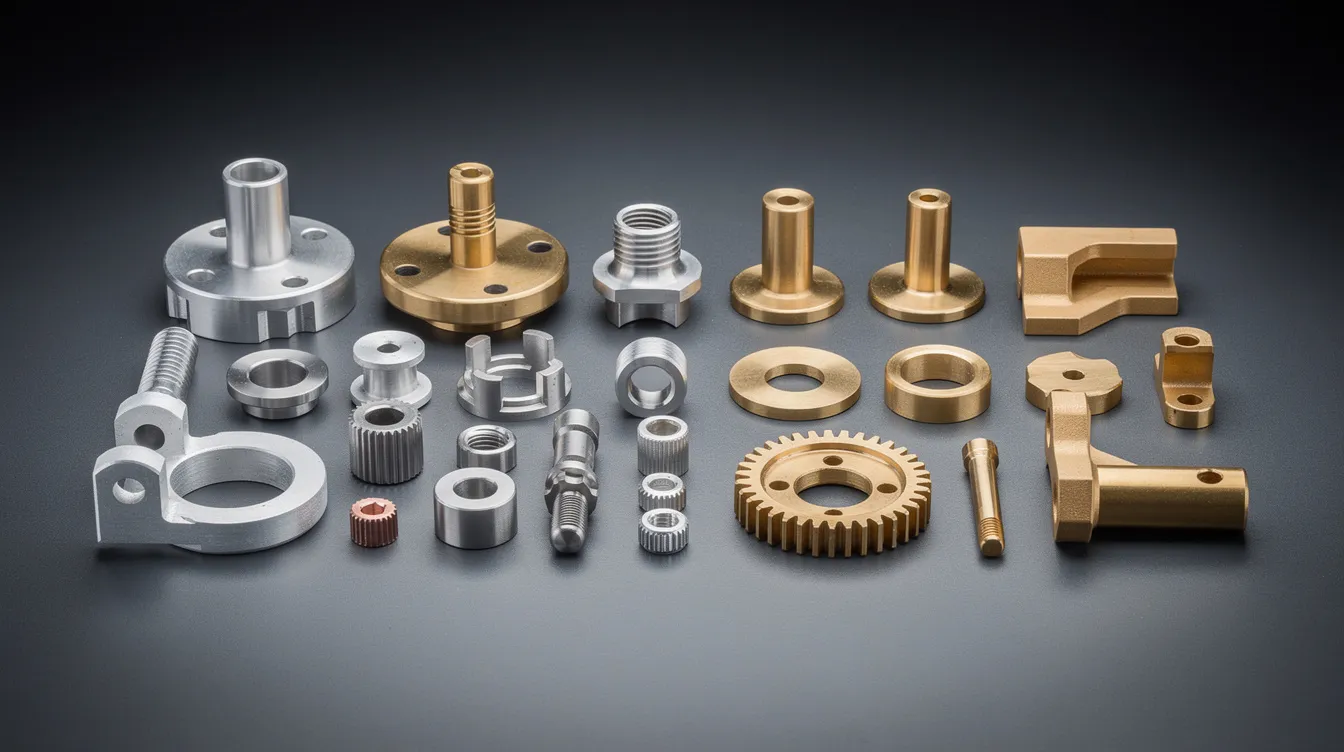
Aluminum alloys (6061, 7075): aluminum is preferred for its high machinability and low weight, making it the go-to for aerospace structures and electronics housings. Explore our aluminum 7075-T6 machining capability.
-
Stainless steels (304, 316, 17-4 PH): steel alloys like 304 stainless provide high strength for parts in food processing, marine, and medical equipment
-
Titanium (Ti-6Al-4V): titanium is used in aerospace and medical applications for its biocompatibility, excellent strength-to-weight ratio, and corrosion resistance
-
Brass and copper: for electrical connectors, RF components, and decorative hardware
-
Engineering plastics: CNC machining can process high-performance plastics like Delrin and Nylon, as well as PEEK and ABS for medical, food-grade, and prototyping applications
CNC machining uses metals like aluminum and steel as primary workpiece materials, but the process is equally capable with engineering polymers when proper tool geometry and feed strategies are applied.
How Material Properties Drive CNC Programming
Material hardness, thermal conductivity, and toughness directly affect cnc programming choices:
-
Aluminum cuts fast with low tool wear, allowing high spindle speeds and aggressive feeds
-
Stainless steel work-hardens, requiring consistent engagement and sharp tools
-
Titanium retains heat at the cutting edge and is prone to chatter, demanding lower speeds, rigid setups, and high-pressure coolant
-
Plastics are sensitive to heat; excessive speed causes melting or deformation rather than clean chip formation
The cnc operator and programmer must adjust spindle speed, feed rate, and depth of cut based on these properties. Modern cnc systems use adaptive feed control to optimize in real time.
CNC Programming Essentials
CNC machining uses g code to control machine movements across multiple axes, managing feed rates, spindle speeds, coolant activation, and tool changes through standardized commands. M-codes handle auxiliary machine functions like spindle on/off and coolant control. Today’s cam software generates collision-checked toolpaths with full simulation, dramatically reducing risk and setup time.
DFM Support from Anebon
Anebon provides design for manufacturability (DFM) feedback to help customers optimize their parts before machining begins. This includes advice on minimum wall thickness, internal corner radii that match available cutting tools, tool access constraints, and strategies to minimize setups. Early DFM review prevents costly redesigns and reduces lead time.
Design Guidelines, Tolerances, and When CNC Machining is the Right Choice
CNC machining offers excellent precision and repeatability, but every manufacturing process has practical limits. Understanding those limits helps engineers design parts that are both functional and cost-effective.
Achievable Tolerances
-
Standard CNC machining holds ±0.05 mm on general features without special effort
-
Precision machining reaches ±0.01–0.02 mm on critical dimensions
-
Ultra-precision operations (grinding, rigid setups) achieve ±0.002–0.005 mm
-
CNC machines achieve tolerances as tight as ±0.025 mm across most standard operations, and CNC machines can achieve tolerances within ±0.125 mm or even tighter on roughed features
-
CNC machines can operate with precision levels of 0.005 mm to 0.01 mm on well-maintained equipment
-
CNC machining provides high repeatability for mass production, ensuring the 1,000th part matches the first
At Anebon, we hold ±0.01 mm routinely and reach ±0.002 mm for features like bearing bores and sealing surfaces.
Design Guidelines
-
Minimum wall thickness: ~1 mm for aluminum, thicker for plastics to prevent deflection during machining
-
Internal corners: specify a radius matching available tool diameters (sharp internal corners require EDM or special processes and add cost)
-
Deep narrow pockets: cause tool deflection and heat buildup; aim for a depth-to-width ratio under 4:1 where possible
-
Undercuts and compound angles: require 5-axis access or additional setups, each adding cost and potential tolerance stack-up
Machine Accessibility: 3-Axis vs. 5-Axis
On a 3-axis milling machine, the tool approaches only from the top. Features on angled faces or undercuts need the part re-fixtured, introducing datum transfer error and added cycle time. A 5-axis cnc milling machine can reach these features in a single setup, improving accuracy but at higher hourly rates. Engineers should reserve multi-axis machining for features that genuinely require it.
CNC Machining Compare to Alternatives
How does cnc machining compare to casting, injection molding, and 3D printing?
-
vs. die casting: casting delivers near-net shapes economically at high volume production, but surfaces often need CNC machining for critical tolerances; mold tooling has long lead times and high upfront cost
-
vs. injection molding: excellent for high-volume plastic parts, but limited in metals and requires expensive molds; CNC machining is faster and cheaper for prototypes and low volumes
-
vs. 3D printing (additive manufacturing processes): additive handles complex internal geometries at low setup cost but delivers inferior surface finish, lower strength, and wider tolerances; CNC machining produces functional, load-bearing metal parts with verified properties
CNC machining enhances safety by keeping operators away from cutting tools during automated cycles. CNC machinery requires fewer skilled operators per machine, reducing labor costs compared to conventional machining setups.
Surface Finishes
-
As-machined: Ra 1.6–3.2 µm, suitable for non-cosmetic functional surfaces
-
Bead blasted: uniform matte texture, hides tool marks
-
Anodized: corrosion protection and color for aluminum (see our anodized aluminum CNC parts)
-
Powder coated or plated: for enhanced durability, conductivity, or appearance
-
Polished: for optical or sealing surfaces
Each finish adds cost and lead time, so specify only where function demands it.
When to Choose Anebon’s CNC Machining
Select CNC machining when your project requires tight tolerances (±0.01 mm or better), complex geometries in demanding materials, compliance with aerospace or medical quality standards, or a partner who can take you from DFM review through scalable production. CNC machining offers the combination of material versatility, dimensional precision, and surface quality that casting and printing alone cannot deliver.
Moving from ±0.1 mm to ±0.01 mm tolerances can increase part cost by 2–5×. Specify tight tolerances only on features that require them, and leave general features at standard tolerance to keep costs controlled.
Applications, Industries, and Anebon’s CNC Capabilities
CNC machining is the manufacturing process behind critical components in virtually every precision-dependent industry. From structural aerospace parts to miniature electronic housings, the combination of material integrity, dimensional accuracy, and surface quality makes cnc machining the preferred method for machine parts that must perform under demanding conditions.
Industry Applications
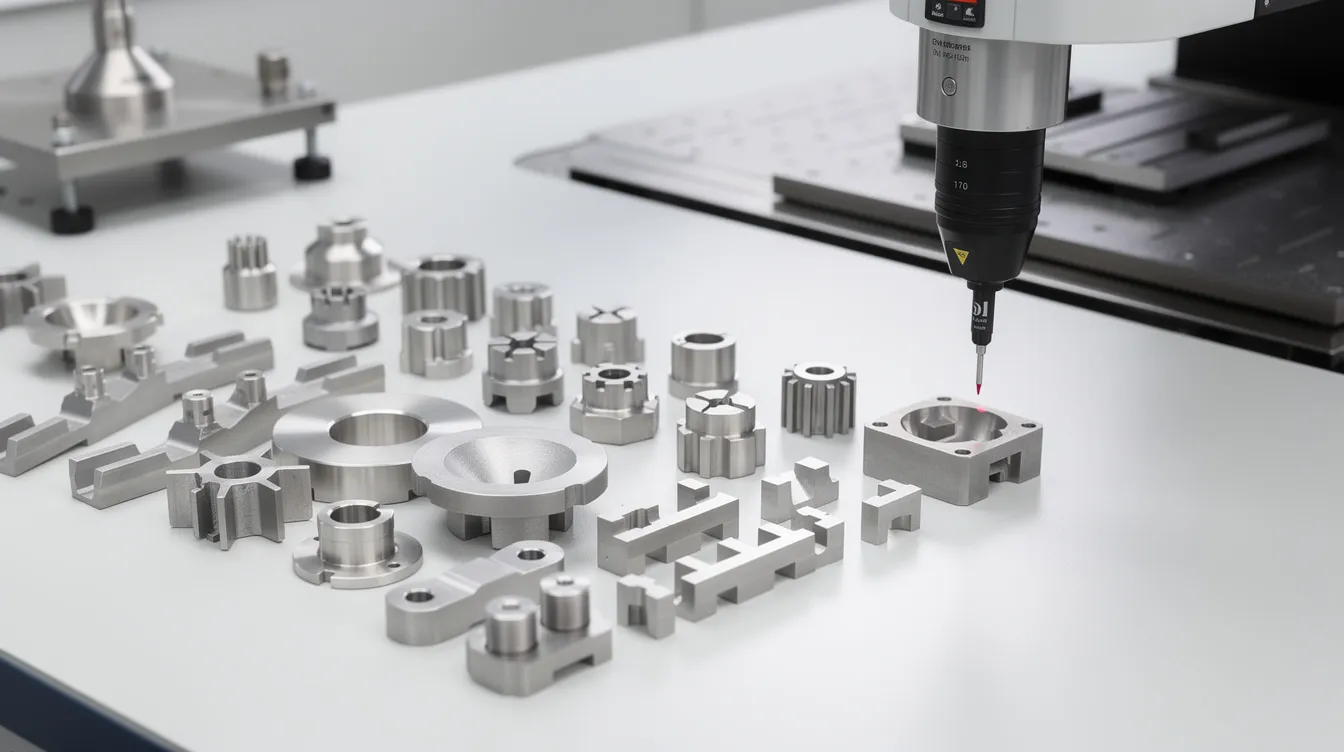
CNC machining is essential for producing aerospace components, including structural brackets machined from aluminum 7075 or titanium, turbine components, and flight-critical hardware requiring full traceability and FAI documentation. CNC machines create precise medical devices and implants from biocompatible materials like titanium and PEEK, where surface finish and dimensional accuracy directly affect patient outcomes. CNC machining produces automotive parts like engine blocks and transmissions, where repeatability across thousands of units is non-negotiable. CNC technology is used for manufacturing military equipment and components that must meet stringent government specifications. And CNC machining is vital for creating high-precision electronic components, including heat sinks, enclosures, and connector housings where thermal management and signal integrity depend on tight dimensional control.
Concrete Part Examples
-
Aerospace brackets: 5-axis milled from aluminum or titanium, tolerances to ±0.01 mm, anodized finish
-
Medical implant components: turned and milled from Ti-6Al-4V, polished surfaces, full material certification
-
Automotive housings: CNC milled from aluminum die castings, combining casting efficiency with machined precision on mating surfaces
-
Electronics heat sinks: high speed milled from aluminum 6061, fin features with tight flatness requirements
-
Robotics precision shafts: CNC turned from hardened steel, concentricity and runout controlled to single-digit microns
Anebon’s Experience and Capabilities
Since 2010, Anebon has supplied overseas OEMs with custom metal and plastic parts spanning rapid prototyping through full-scale production. Our cnc machining operations are supported by complementary services including die casting, sheet metal fabrication, and secondary operations such as tapping, threading, deburring, and surface finishing. This vertically integrated approach means fewer vendors, faster communication, and consistent quality across processes.
Quality and Traceability
Anebon’s ISO 9001:2015 and ISO 14001:2015 certifications are not just badges. They represent documented quality systems that include incoming material inspection, in-process monitoring, CMM final inspection, surface roughness verification, and full material traceability through certificates of conformance. For aerospace and medical customers, we provide first article inspection reports and can support PPAP documentation.
CNC machining cnc stands as one of the most reliable paths from concept to qualified production part. It represents a proven intersection of industrial automation, digital control, and precision engineering that the manufacturing industry relies on every day. Modern manufacturing increasingly demands this kind of verifiable, repeatable precision.
Trends Shaping CNC Manufacturing
The field continues to evolve. Greater adoption of 5-axis machining reduces setups and improves access to complex shapes. Hybrid approaches that combine additive manufacturing with CNC finishing are emerging for specific applications. Digital twin technology, real-time monitoring via servo motors and encoder feedback, and thermal compensation systems are pushing tolerances tighter while maintaining throughput. Throughout these advances, the fundamentals remain: skilled programming, proper tool selection, rigorous quality control, and a deep understanding of materials.
Ready to Get Started?
Whether you need a single prototype or a full production run of industrial components, Anebon is ready to help. Send your CAD files and drawings to our engineering team for a fast CNC machining quote and complimentary DFM review. We’ll analyze your design, recommend optimizations, confirm material and finish options, and provide a clear timeline. From first contact to finished parts, cnc machining makes it possible to turn your designs into reality with the precision your application demands.